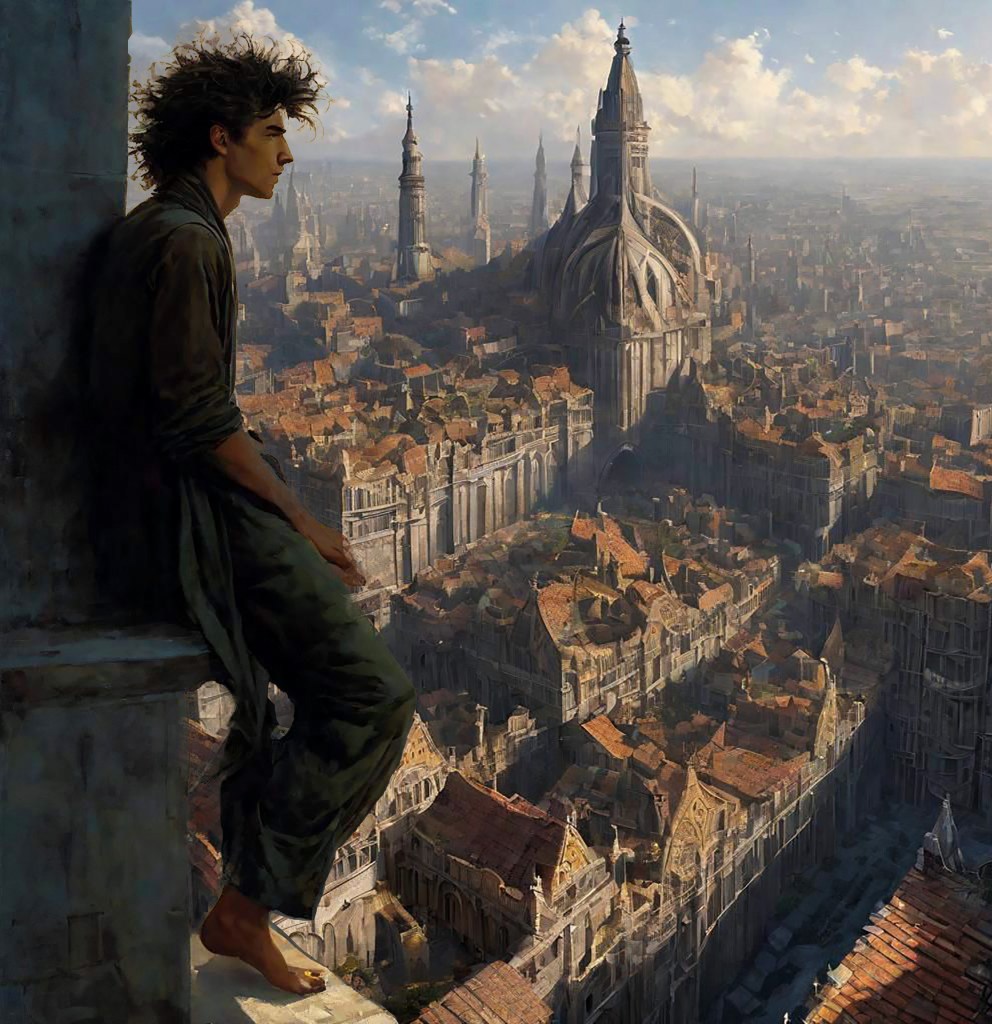
I’ve had a couple of weeks worth of a pause in a very hectic year so far and managed to dig back in to a novel in progress. This week, I had some mind-expanding epiphanies that set the whole novel on fire for me again: the exhilaration and thrill to see this story play out on paper burning with the same heat it did when they were all just ideas.
When they were all just ideas, that is, before words went to paper to ruin my dreams.
Thought I’d share that with you in case writer’s block or a blank canvas is staring back at you, or if the plot that made so much sense suddenly crumbled like burnt toast in your hands.
Mazewater: Master of Airships is a standalone story set in the Salt Mystic universe, existing at around 38k words of a planned 70-80k. The original notion was to introduce a new war marshal with the novel, which would lead the introduction of new playing cards in the Salt Mystic wargame for his faction. “Read the book, love the guy, go buy his cards.” Right?
But it grew to be a lot more than that. A whole world more!
Taking place in a wild, unruly city called the Jagganatheum, it’s the story of a sickly, asthmatic young dreamer from a doomed family and the abandoned sentient weapon he steals. When a wheezing, sickly giant is unleashed at the city’s heart, it reveals intrigues that carry him into adrenalin-fueled adventures in a shattered world and, ultimately, to the heights of legend.
Here, there are lore cards to learn more if you’re interested, all relating to elements that will appear in the novel:
- Lore card 006: The Jagganatheum
- Lore card 008: Mazewater
- Lore card 009: Vimana Station (an important locale in the story)
- Lore card 015: Oriel of Ashes (crucial to an important character’s motivations)
- Lore card 028: Daylight (here’s that giant I mentioned)
- Lore card 037: Companions (we’ll get to ride one of these in the story)
- Lore card 038: Field Guide to the Slime Trancer (of course, they’ll encounter one of these too!)
- Lore card 039: Justice Walks (and one of these!)
- Lore card 040: Casket Monk Discovery (supporting character derives from this background)
Anyway, I pretty much stopped writing on this back in February. Yes, I was busy with my day job, but the plot I had in mind just kind of fell apart for me. It stopped making sense. I really got the impression back in the dead of winter that all the dazzling imagery I had in mind, those flashes of plot points that made the book worth writing for me, they were just getting strung together with a discount plot that would obviously stall and get contrived in places.
I’m the first guy to complain about poorly written soap opera nonsense like Star Wars: The Acolyte and Amazon’s Rings of Power. Juvenile and inept attempts at high school level drama frustrate me: having lead characters just go be heroes because that’s who they are, people being angry with each other just for the dialogue the writer wanted to include, or sizzle reels glued awkwardly together with coincidences or by having characters do things they just wouldn’t normally do but need to for the plot happen, for a few examples. I truly don’t want to be associated with anything that even smells like that.
No offense if you’re into either of these, but craftmanship in plotting is an aspiration of mine. These two mainstream offerings are stinkers in my opinion.

I read three things over the years that have been screaming at me recently (only one of which I can cite so I’ll paraphrase):
- “The only thing worth writing about is people.” – Harlan Ellison
- “Villains are interesting because they are often the driver of the plot – they DO things.” -unknown
- “Marvel’s Magneto (major villain in the X-Men comics and movies) has one of the most interesting motivations in all of comics.” -unknown, but it was a writer for Wizard Magazine
What I take from all that is:
- Stick to realistic motivations and interesting, fleshed-out people who all have their own agendas and desires (not just plot supporters who don’t exist when not in the chapter)
- Have protagonists DRIVE the plot (versus villains) by their actions, which have consequences
- Make the motivations of villains make sense and be understandable and relatable, almost justified
It’s these principles that set the wrecking ball to the ideas I was holding on to. I’ll give you a few examples of what I’m talking about:
1. A train trip through the wild, jumbled Jagganatheum
Right after I started writing the novel, I caught the flu – it was a nasty one with a fever that wouldn’t go away. One night I had one of the most vivid dreams I’ve ever had. I had been trying to envision what a city two thousand years old and comprised of a single enormous building strapped to a mountainside would look like from the inside (and getting nowhere).
Then the dream – I saw Mazewater’s entire day play out. I watched him get beaten up by a guy who posed as his bully so his mom would stop trying to toughen him up. I saw him in a complex series of barter exchanges and understood how the social networks functioned. I remember being in a subway-style train station with ancient broken marble statues and skylights, hissing through massive corridors like airport concourses. It was a genius picture and made the city make so much more sense for me.
I was enamored with those images for months before I came to realize the whole series of exchanges and even the trip across the city just burned the clock and didn’t move anything. They could be trimmed without cost to the plot, and that hurt tremendously to let them go.
But I had to. And I knew it. Finally.
2. Ilianore, the loose cannon brunette
Oh, I hated to let this one go! No fever dream this time, but still she showed up in my head fully formed such that I could almost hear her voice. She had jet black hair she kept in a pony tail and worked part time for a troll-looking lady chef right out of a Studio Ghibli movie. When the lead character (who had crushed on her since they were in school together) would accidentially get her fired, Ilianore would barge into his apartment in a storm of anger, light a match and drop it to the floor, and sit to demand of him what was he thinking while his carpet burned. Just to make her point.
I found myself cramming in a romantic subplot with awkward flirting, weird secrets she would bring to the story, and a terrible confrontation after you were made to like her where she would die to drive him forward.
All nonsense and didn’t fit at all. It just wasn’t the story the core ideas needed. By keeping her, it forced certain things to happen with her or risk distractions and clutter. Unfortunately, and I breaks my heart to say this, we will not meet Ilianore in this book. We’ll likely never meet her, and I miss her already.
3. An old conspiracy uncovered
I turned this one loose just this past week. Still hurts.
Again, almost fully formed, I saw Mazewater on a stylite pillar doing a vision quest, trying to commune with the sentient weapon he’d stolen for 3 days in the rain. I knew why the pillar was there and what that had to do with the founding of the city. I knew what the weapon would say when it finally spoke, and how that would unlock an old conspiracy that turned the whole story on its head. I could have told you what that had to do with the giant’s attack on the city, what was really going on, and what happened next. I mean, this part of the story was core to the whole remainder of the novel. I really….can’t stress this enough….really didn’t see even the NEED to let this go.
So I was taking a long walk in the woods this past Tuesday, pleased that I had rewritten the work done so far into a tighter, coherent narrative with dynamic characters and that, so far, this story matched what was needed. However, some things about the bigger picture still didn’t make sense for me and felt cluttered. I was really worried heading out on that walk, fearing things might crumble again as I thought them through looking for holes. My plan was to let this walk take as long as it took to iron things out.
At one point, almost audibly, I told myself nothing was sacred. Nothing at all. What would the story look like if I just stopped holding on to cool pictures or imagined moments and let the motivations and personalities decide the course? What was it, exactly, that made me want to write this thing at all?
It turned out, the old conspiracy didn’t add anything useful at all. The weapon needs to say something else entirely. Even the vision quest was just a sizzle-reel for me that I thought was interesting, to add flavor to the history of the city but was useless in the end.
Gone! All of it. I am fascinated with where this wound up though. It’s tight and hangs together like brickwork.
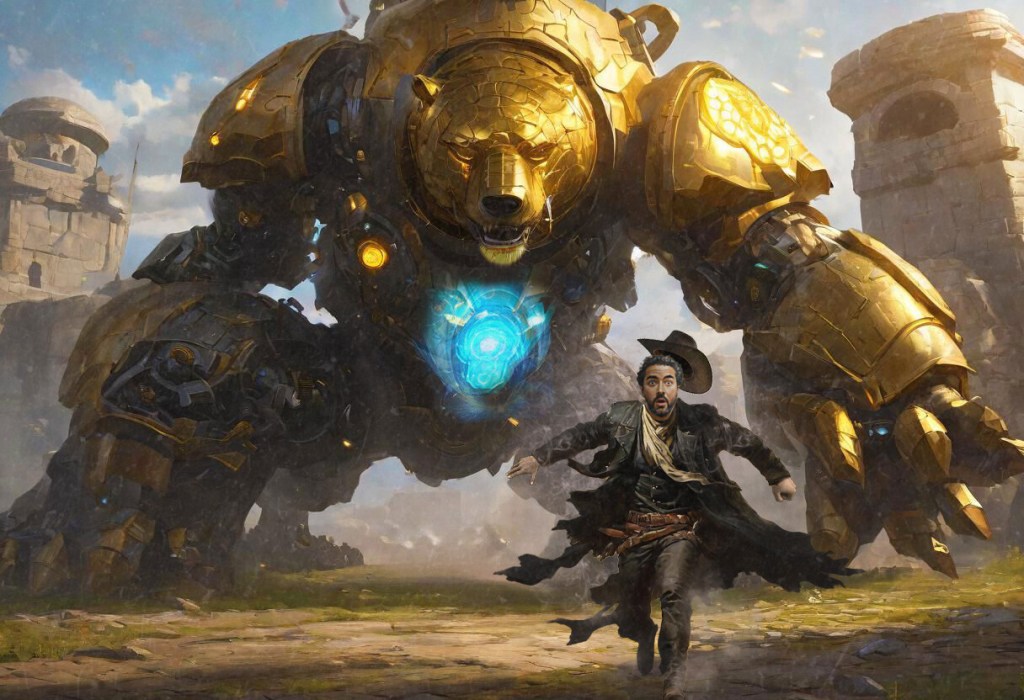
Anyway, what I wanted to offer you today is the wisdom of outtakes. I have entire an entire chapter of Ilianore that I’m keeping for my own files. I’ve got pages of notes about the old conspiracy and what I saw in that fever dream of the city, that will likely never see the light of day – but which I’ll keep.
I’m not going to delete or discard any of that, much like directors struggle to cut scenes from their movies to which they’d become attached. In their case, they might add them to Director’s Cut versions of the movie just to feel good about sharing them with the world. Whether scenes wind up in the world or not though, it was the cutting that made the difference. That’s what tightened the story and made it resonate enough with an audience that anyone would even want a Director’s Cut of it in the first place.
Turn them loose, then. Nothing is sacred. Move on, even if they’re gorgeous.
I had writer’s block for a reason, and it was because I was holding on to nonsense that felt like gold.
Let me know what you think about that. Till next time,

 Grailrunner Publishing