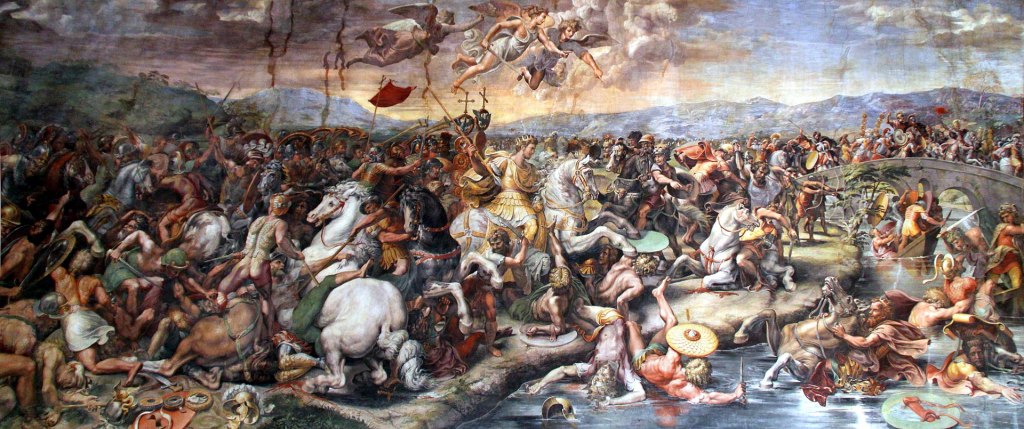
It’s October 28, 312 AD. Beyond this bridge lies Rome. You won’t even have to fight inside its gates. Just enter, and the empire is yours…the entire known world as you see it. It isn’t even a real bridge; your enemy destroyed the permanent one. What’s there now is temporary: made of wooden pontoons. The only thing between you and rule over every part of the greatest empire ever known is one army, commanded by a devious, superstitious foe who wins battles by bribing and persuading his enemy’s forces in the dead of night and hiding behind seiged walls. He’s joining battle on this side of the river, with his back against the water to signal there will be no retreats. No running.
This will be the end of the scheming and intrigue. Before the end of the day, one of you will ride into the city to be welcomed by the Senate. And they will welcome whoever comes to them. That’s how they are.
You would remake the empire, granting freedom and re-defining who the people aspire to become. You would create an optimistic world and encourage new ways of thinking, ushering in a great and brave era of humanity. Your enemy is vile, the son of a liar and a coward. He offers the empire only more of the same internal wars and greed, persecutions and oppression that almost took Rome down a generation before.
You’ve had a vision today. It isn’t your first omen, but it is the greatest: a mighty burning sign in the sky. “By this sign, conquer!” A voice in your head, promising your victory. You’ve had your soldiers paint it on their shields. They marvel at your confidence.
It’s time. Waiting only empowers the enemy. Ride and fight! The Battle of Milvian Bridge begins!
That was the stage set on October 28 in the year 312, a battle that decided how world history would play out for the next two thousand years. It helped shape civilization as we know it, and even impacted how we think and see the world today. The story has everything you could want in a thriller: palace intrigue and power schemes, a superstitious emperor shamed by his people into abandoning his seiged city walls, a supernatural vision, and a brutal, violent conflict ending in the drowned screams of the defeated army.
But some ancient sources such as church historian, Eusebius in Life of Constantine say there was a booby trapped bridge that decided the battle.
Zosimumus, for example, an imperial bureaucrat writing quite some time later but drawing from older sources, said it clearly in his New History:
“Maxentius threw a bridge over the Tiber, which was not of one entire piece, but divided into two parts, the center of the bridge being made to fasten with iron pins, which might be drawn out upon occasion. He gave orders to the engineers that as soon as they saw the army of Constantine upon the juncture of the bridge, they should draw out the iron fastenings that the enemy who stood upon it might fall into the river.”
When I learned that, I just had to go deep to know the truth. I had to get inside the minds of some of the key players, especially the guy that lost that battle and would have set the trap (if there was one).
How about I present the facts to you and we’ll see what you think. Welcome back to our series: Inspirations From History!

A little background?
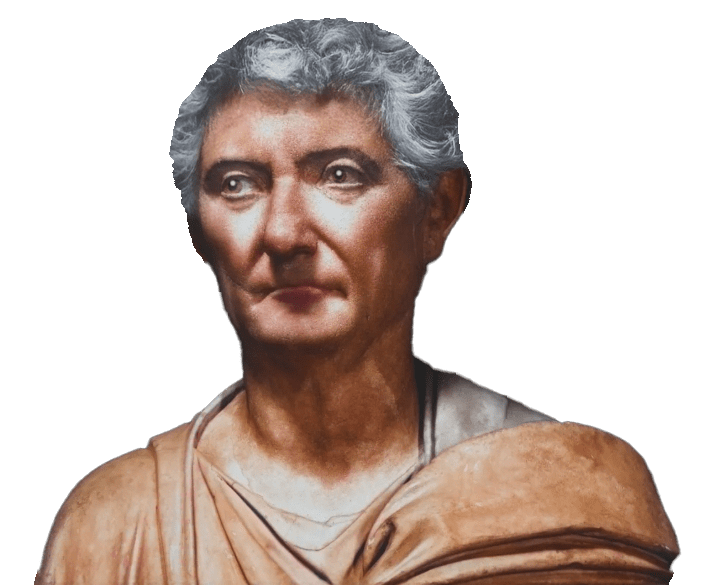
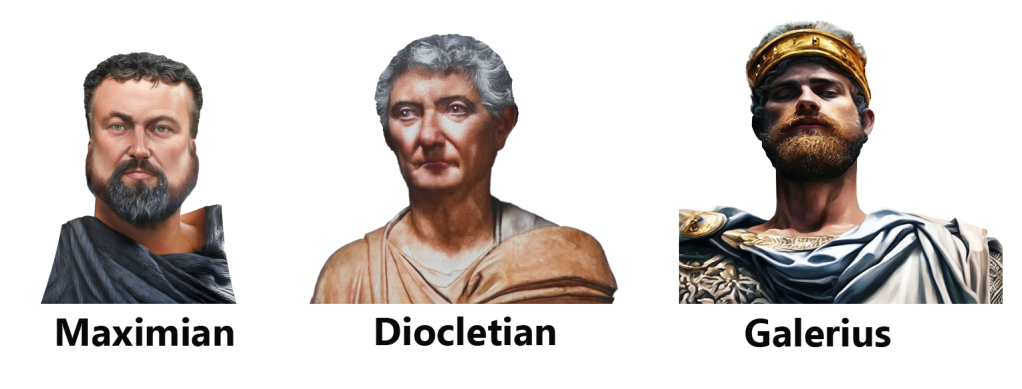
It all orbits around this guy here. His name was Diocletian, and in some ways he was the Abraham Lincoln of his day. On May 1st, in the year 305 AD on a parade ground in front of his army, he retired as emperor and was the very first to do so. He was ill and just wanted to tend to his vegetable gardens on the Adriatic shore. This was a shock to the system because he was the stabilizing force for the empire when it had all but shattered to its shakey core for 70 years before he came to power. In fact, during a 50-year period before Diocletian, there were no fewer than 60 claimants to the throne in a terrifying time of anarchy, intrigue, civil strife, plague, and foreign invasions.
And now he wanted to tend vegetables.
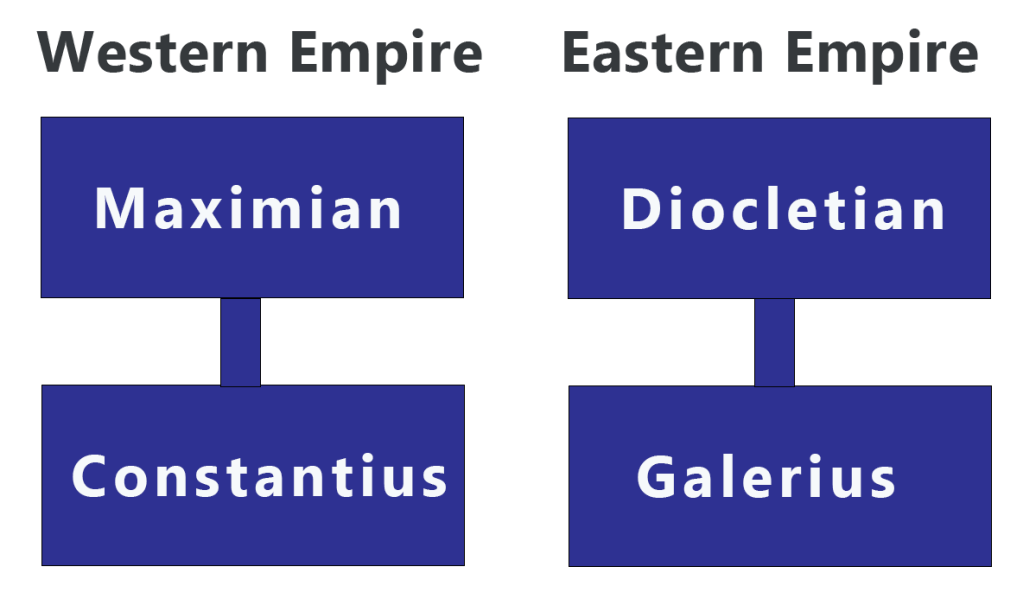
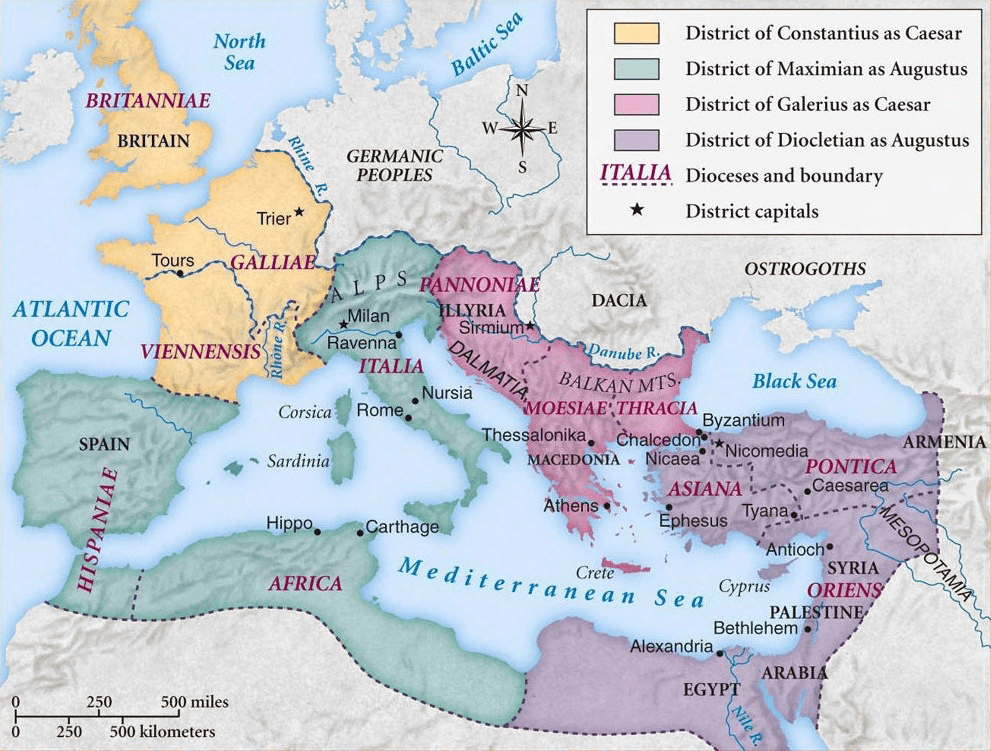
One important way he had stabilized the empire was a shared-power framework called the Tetrarchy. Although Diocletian had remained the ultimate and senior honcho, he primarily governed the eastern portion of the empire with the senior title (Augustus), aided by a junior (a schemer named Galerius, titled Caesar). His counterpart in the western portion was a fellow named Maximian (also titled Augustus), aided by his own junior: Constantius (titled Caesar).
Here’s what that all looked like:
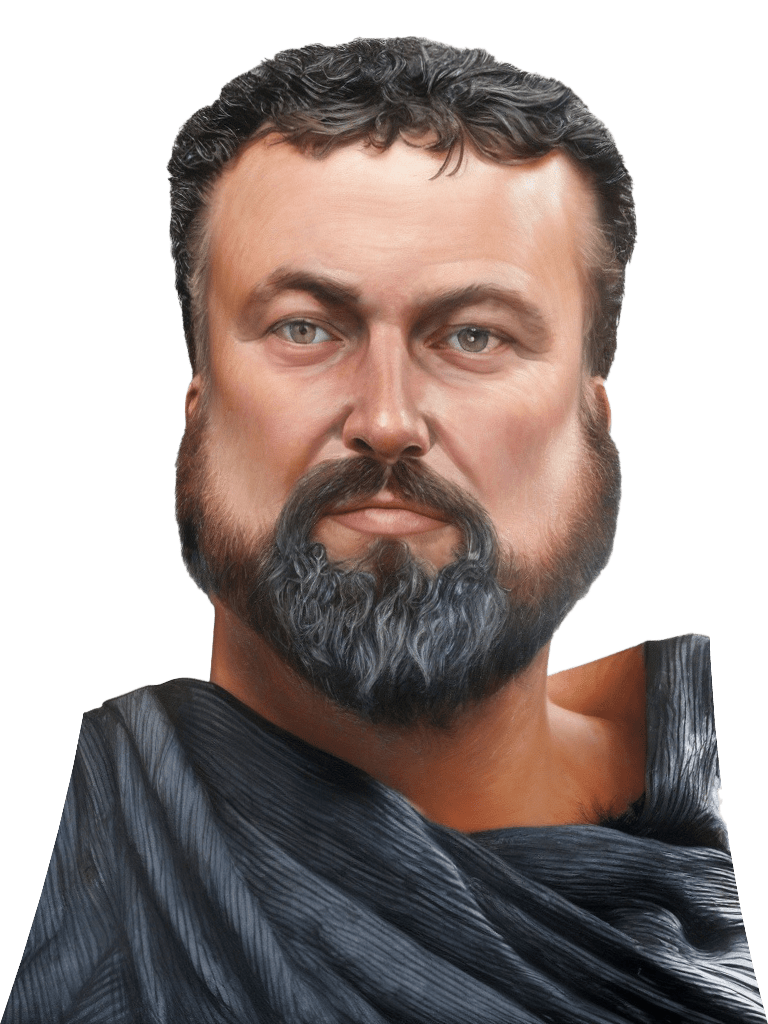
And here’s Maximian. When Diocletian announced he was retiring, he forced this poor guy to retire too. And the surprises just kept coming…
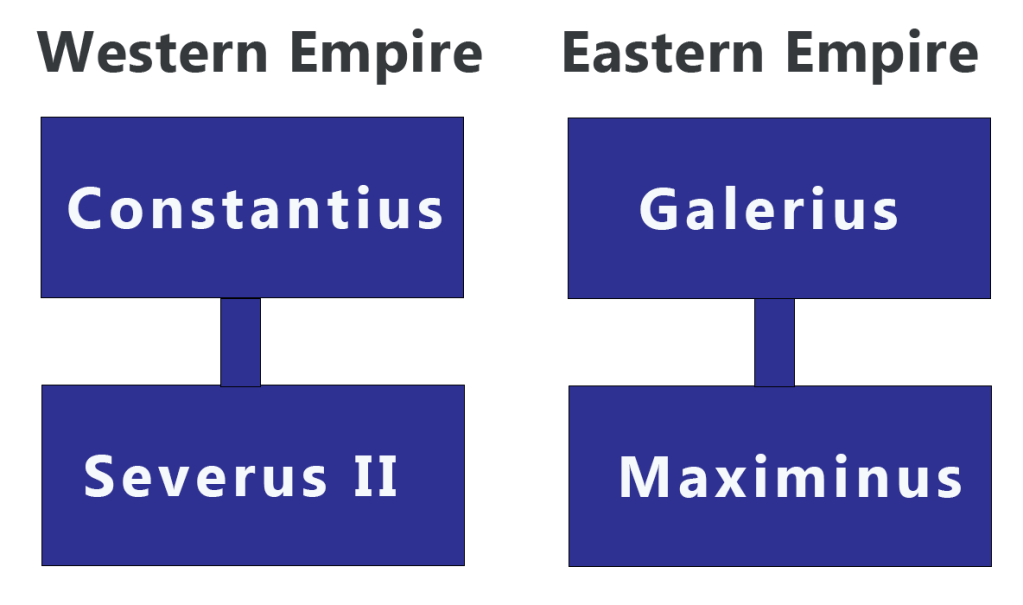
This was the new tetrarchy Diocletian announced on that parade ground. Constantius and Galerius got their promotions, but Constantine, the son of Constantius, was standing on the tribunal with these guys expecting to be named Caesar. That was the whole point of his previous 10 years, being groomed for this moment. He’d served under Galerius all but a captive to enable this promotion to happen. It was what he’d been told his whole life would happen.
Then it didn’t. Because of Galerius. This guy here:
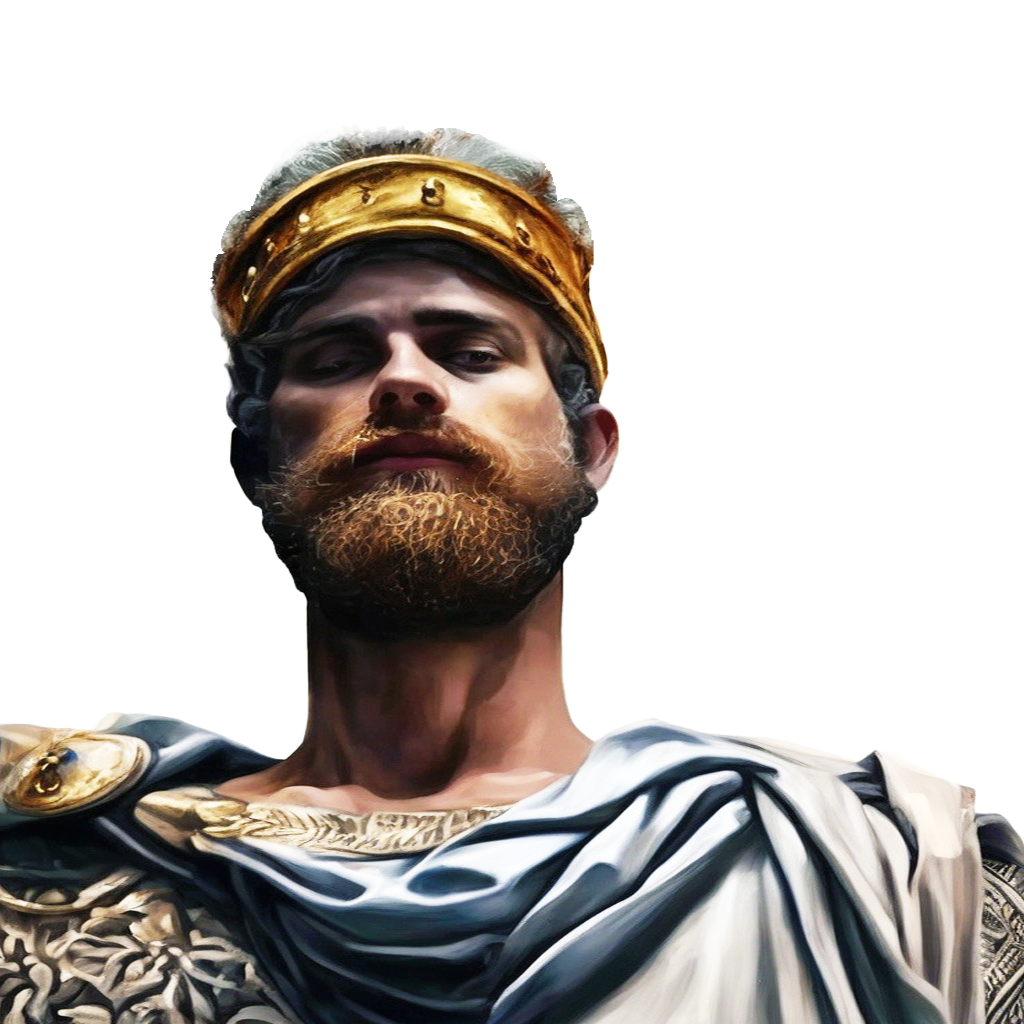
Galerius hated Constantine, and had convinced old Diocletian that the tall, handsome and well-liked young man was too ambitious and wouldn’t respect authority. So he got passed up. That fellow, Maximinus who got the Caesar job in the east was Galerius’s nephew: a puppet placeholder till Galerius’s young son was old enough to take the title. Constantine will be commanding one side at the Battle of Milvian Bridge; it’s with his perspective that I opened this article above.
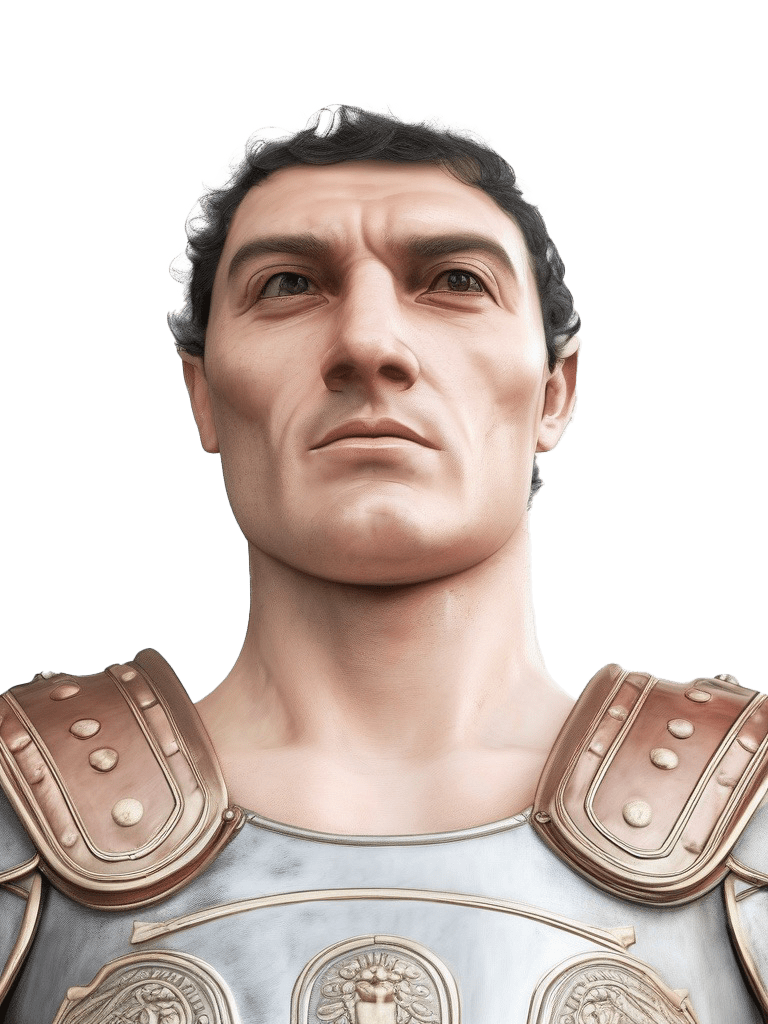
Maximian had a son, too, a devious one who was also expecting to rise to the title of Caesar, a fellow named Maxentius. Not only was Maximian forced into retirement, but his son got passed over as well.
Because of Galerius.
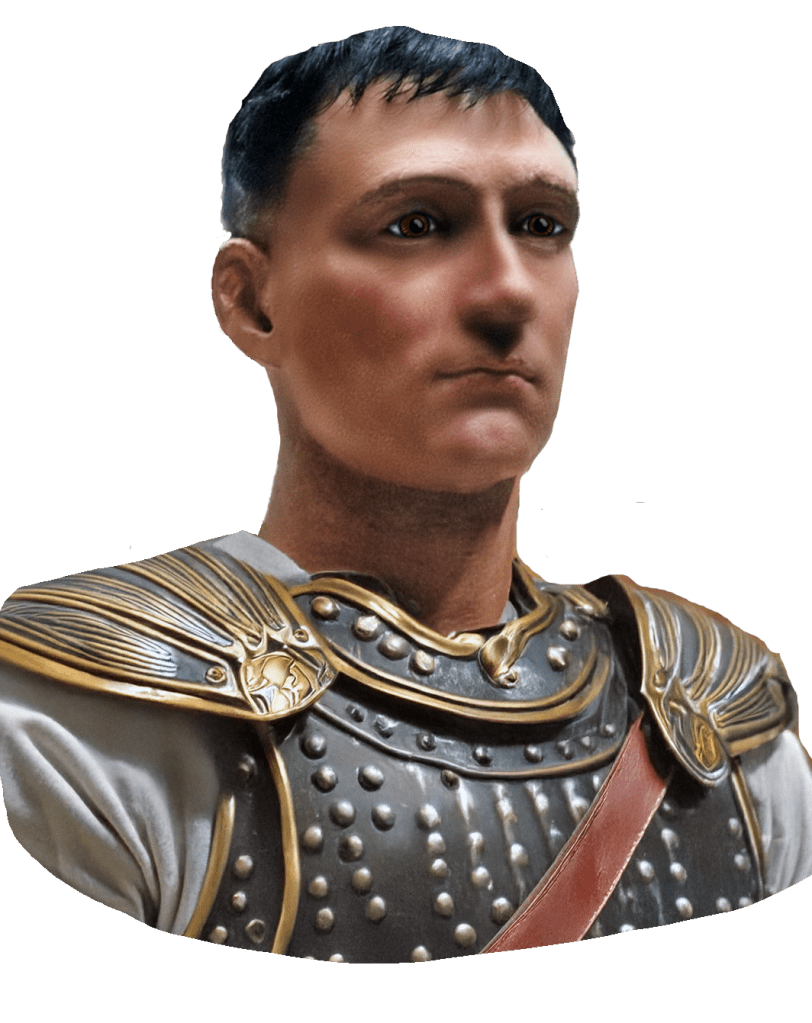
Galerius had convinced old Diocletian that Maxentius was insolent and unfit for rule, so he maneuvered his henchman, Severus into the Caesar job. And with all that intrigue, scheming Galerius wound up Augustus over the eastern empire with his nephew below him and a croney in waiting as Caesar in the west. Quite the layer cake, that Galerius! A true child of Rome.
So everyone went along with that?
Oh, no. Constantius was the only one not tied to Galerius here, and he did a thing.
That Summer, Constantius summoned his son, Constantine to his service in a campaign against the Picts. When Constantius died of natural causes about a year afterwards, Constantine was presented to the army as Augustus. Not the junior title of Caesar, mind you. Augustus: Severus’s job. Galerius was furious with this, refusing to acknowledge that title but allowing him as Severus’s junior, Caesar.
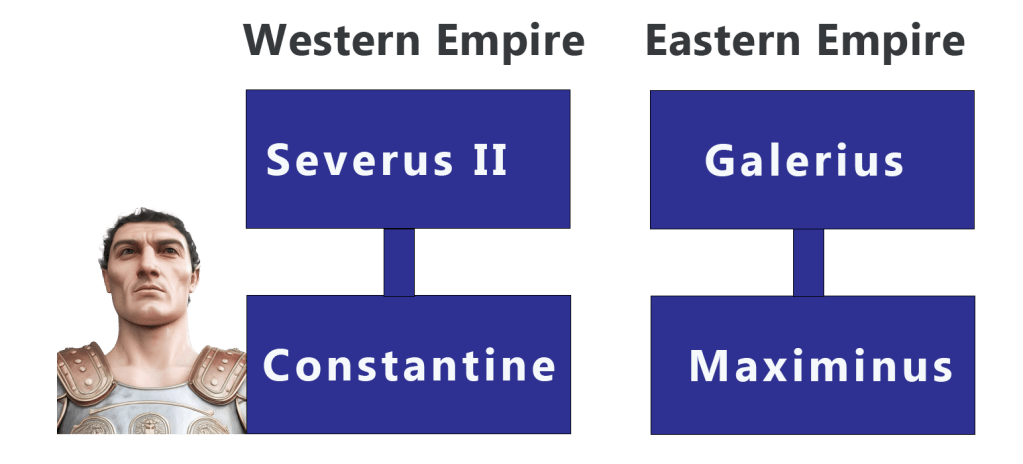
Constantine went along for the time being, pleased with his insertion into the Imperial College. But Constantine’s success here infuriated old Maximian’s son, Maxentius, who took advantage of some unrest in Rome due to new taxes and got himself an elevated title (“First Citizen”), an act that even moreso infuriated Galerius. Maxentius hated his father, but knew it would make his claim to some kind of authority legitimate if his dad came back from retirement as Augustus (yes, Severus’s title). The Roman senate went along with it despite the lack of Galerius’s backing.
Galerius ordered Severus to suppress this uprising through force in early 307, and it was in this battle outside Rome that Maxentius did something very interesting, very effective, and highly relevant to the question of whether there was a booby trap on Milvian Bridge.
He bribed and persuaded Severus’s soldiers to switch sides and just drop the seige of Rome. I imagine this as happening around campfires in the dead of night, with Severus waking up at sunrise to the bulk of his army gone. Severus was taken captive, forced to abdicate, and was dead by September.
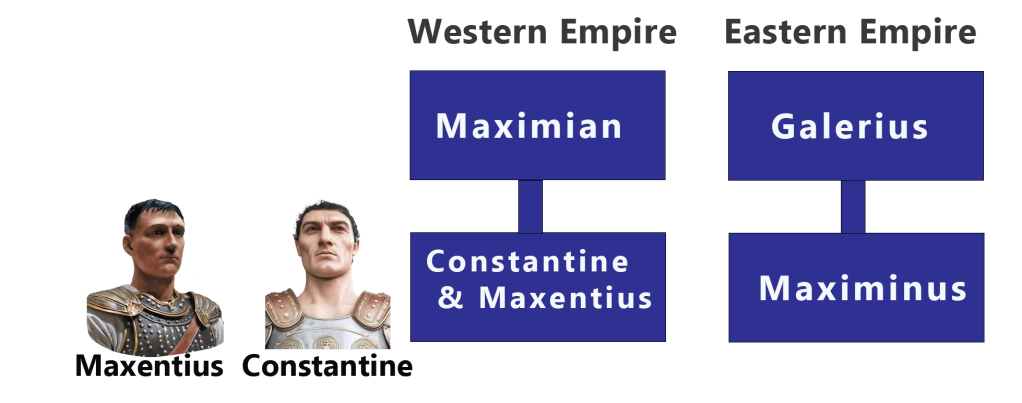
Maxentius was fast becoming a hero to the people of Rome. Crucially while Maximian was away negotiating with Constantine to keep him out of the conflicts (granting Constantine the cherished Augustus title), Maxentius faced Galerius himself who had crossed the Julian Alps to deal with this himself. Galerius was a fierce and renowned general with a glory-filled career in war, and was headed straight for Rome to settle all this and bring order back to his marvelous plans for the empire under his rule.
And Maxentius did it again. His agents infiltrated Galerius’s camp at Interamna and worked the invading soldiers with promises of rewards and promotions, and insistence that Galerius was in the wrong attacking his own son-in-law. And it worked again, with so many of Galerius’s men defecting that he was forced to retreat and leave Italy entirely without even fighting a battle!
When Maximian returned, he was dumbfounded to find his own son had declared himself Augustus and had made Maximian’s role obsolete. Maxentius ran his father out of town, driving him into the arms of Constantine for protection.
Couldn’t the old guy that retired come back and fix all this?
Galerius did, in fact, meet Diocletian in November 308 with Maximian in attendance as well to try and convince the old man to come out of retirement and use his prestige and reputation to fix the world they’d broken. But he wasn’t leaving his cabbages and proposed a revised tetrarchy that everyone should have known wouldn’t work. He named a loyal lieutenant of Galerius’s (Licinius) as Severus’s replacement Augustus, demoting Constantine to Licinius’s Caesar, and charging Licinius with putting down Maxentius. Maximian was told to retire again.
It isn’t worth diagramming that, because both Constantine and Maxentius were forces of nature that couldn’t have cared less about Diocletian’s new framework.
So we’re ready for the Battle of Milvian Bridge then?
Yes, we are. By 310, Maximian, after trying to spread a false rumor that Constantine was dead to declare himself Augustus once again, had hung himself. Galerius and Diocletian both died in 311. Licinius wound up dying at Constantine’s hands a little more than a decade later and isn’t important to the story or its impact anyway. Maximinus died of natural causes a year later and isn’t important to the story either.
In 312, Constantine struck like lightning in a raid through Italy bound straight for Rome to take out Maxentius for good. Whoever won that, honestly, got the empire with just some loose ends to clean up.
What happened?
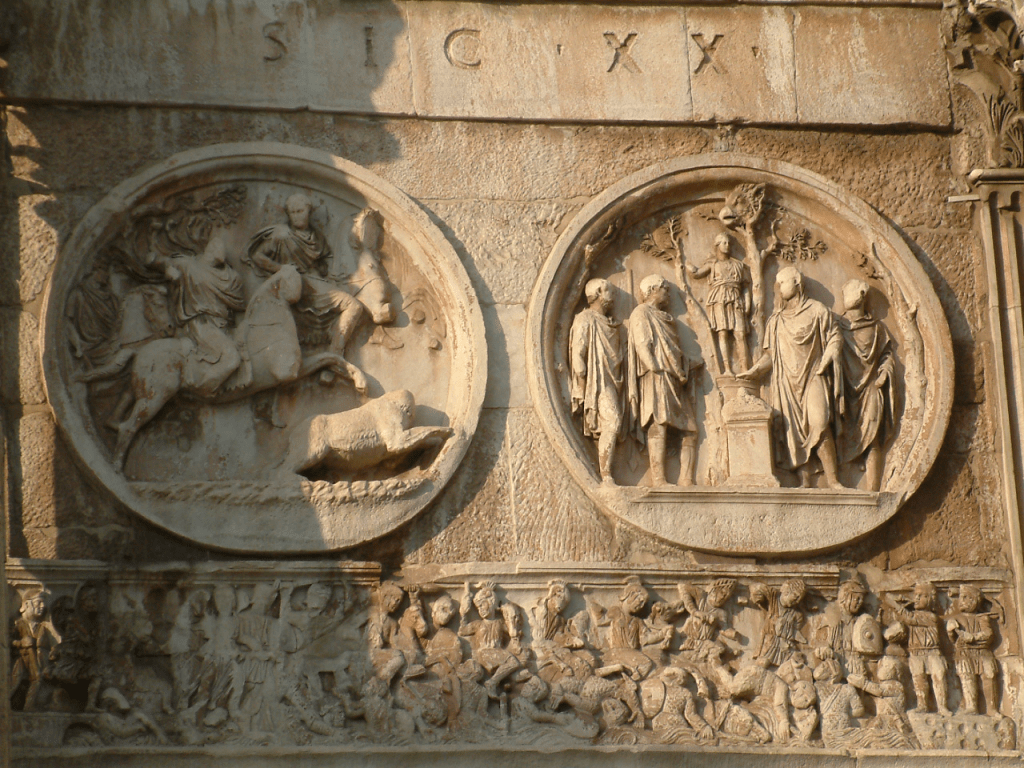
Before the battle was done, Maxentius had left the city walls (though he’d won two previous seiges through guile), lost the fight, tried to retreat (in a panic?), and drowned in the Tiber along with much of his army. His pontoon bridge had collapsed. Take a look at that stone frieze above on the Arch of Constantine to see a contemporary visual for that. It’s Constantine driving men on horses into the river.
Twenty years later, a man named Eusebius who knew Constantine personally reported that Milvian Bridge had a booby trap. That was what fascinated me about this whole story. Yet the sources don’t agree, and the oldest sources don’t mention a booby trap at all.
Maxentius was devious and could very well have planned such a trap, even trying to lure Constantine’s forces into it. And Constantine was a master of propaganda, claiming kinship with gods, which could have persuaded Maxentius’s minion in charge of a booby trap to trigger it instead against his own master.
I had to know. WAS there a booby trap at all?
In part 2, I’ll try and get you an answer on that.
Till next time,

 Grailrunner Publishing
Pingback: Was A Booby Trap At The Heart Of One Of The Most Pivotal Battles In World History? (Part two) | Grailrunner Publishing