Let’s talk to Mateusz Lenart: award-winning game director and modern-day pen & ink master

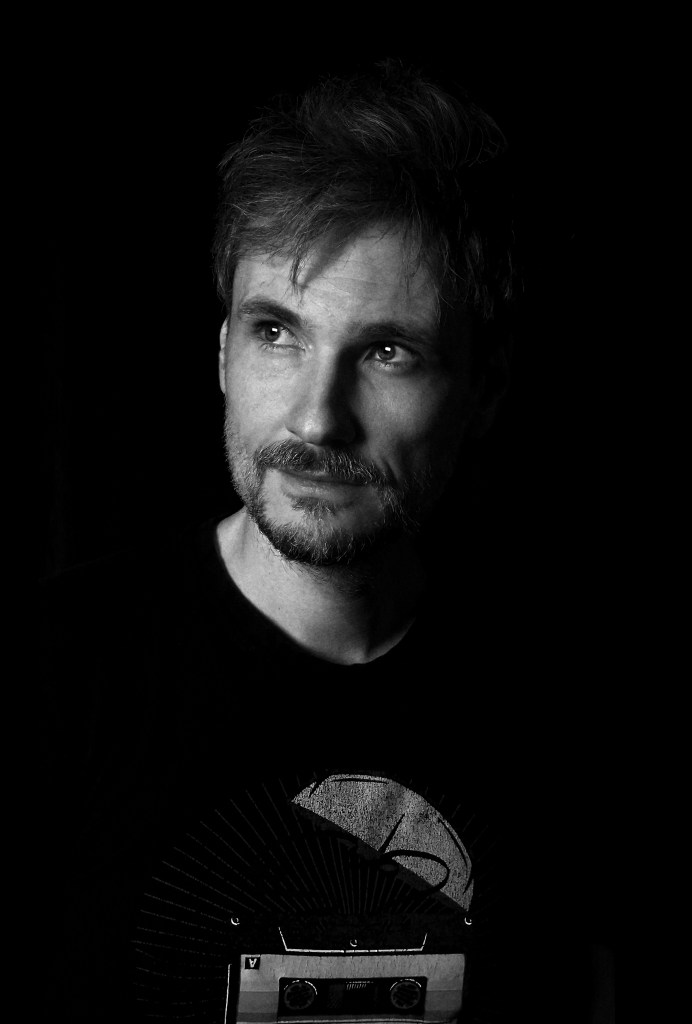
At Grailrunner we thrive on conversations that sit at the crossroads of imagination and craftmanship. Mateusz Lenart doesn’t just know the place – he’s set up shop there and is drawing crowds! From his role as Creative Director at Bloober Team (Layers of Fear, Observer, Blair Witch, The Medium, and the Silent Hill 2 remake) to his own powerhouse artwork – especially in traditional pen & ink, Lenart brings an artist’s eye, a comic reader’s energy, and a storyteller’s genius into the ever-shifting worlds of modern games and illustration.

Welcome to Grailrunner, Mateusz! And welcome to our ongoing series titled:
1. When we spoke to game designer, Jake Norwood (The Riddle of Steel), he mentioned a fascinating Polish RPG called Dzikie Pola. Polish fantasy author Krzysztof Piskorski (Tainted Grail) is a long-time target of ours for an interview to cover his incredible fantasy worlds. And if we’re talking Tainted Grail, we’re talking illustrator, Piotr Foksowicz – also Polish. And here you are, scaring the crap out of us with groundbreaking psychological horror in video games! Is there something awesome in the water over there?

Well, I can’t reveal too much just yet, but what I can say is that at Bloober Team we’re very much committed to pushing the boundaries of psychological horror. We’ve recently announced another remake in the Silent Hill franchise – this time going back to the very beginning with the first game – and not long ago we released Cronos: The New Dawn, another horror experience from our studio. Our portfolio has always been about exploring the darker corners of the human mind, and we intend to keep building on that tradition with future titles.

2. You mentioned in a previous interview that American comics from the 90’s were a big inspiration for you to get into art. Can you elaborate on which comics or graphic novels stood out for you, and especially tell us why that was?

A lot of what inspired me came from whatever I could find in the newsstands in Poland — Kioski Ruchu and the like. As most of the kids I devoured the Spider-man and Batman series in particular, even though it wasn’t always easy — my parents weren’t thrilled about me reading them! Those American comics were flashy and visceral, with dynamic art, dramatic panels, and strong emotions. Todd McFarlane’s Spider-man work was unforgettable — the exaggerated lines, the energy of the webs, the theatrical villains.


Beyond the American stuff, European comics played a big role in shaping me, too. I was deeply influenced by Thorgal by Grzegorz Rosiński, and also by the Yans series from the same author — their storytelling, the textures, the atmosphere — all of that showed me other ways comics could work. And then there were lighter, fun reads like Asterix, which taught me humour, caricature, and the power of visual pacing.
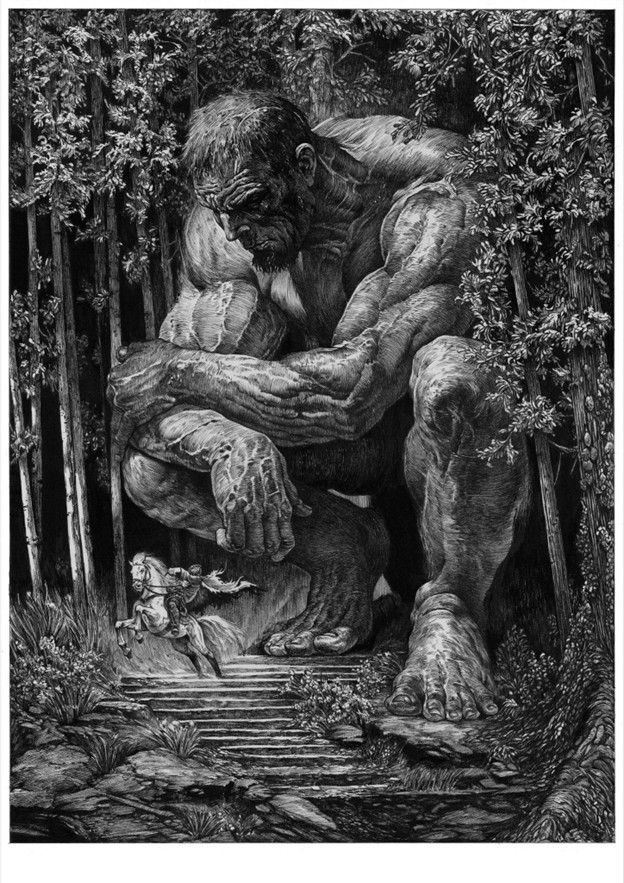
3. If I’d peeked over your shoulder as a kid, what would I have seen on the page—spaceships, monsters, superheroes, or something stranger? Why?

Honestly, a bit of everything. I was a pretty meticulous and disciplined kid — I somehow knew early on that learning anatomy would help me in the future, so you’d probably see a lot of sketches of hands, muscles, poses, often copied from anatomy books. At the same time, for fun I was constantly drawing fantasy characters — monsters, elves, knights — usually with little RPG-style stats written next to them for strength, dexterity, and so on.

You’d also find plenty of comic book pages. I loved inventing huge worlds and epic storylines, though most of them lasted maybe two or three pages before I’d abandon the project and jump to the next idea.

And, of course, there was always a darker tone in what I created. I don’t really know why — maybe because the darker stuff always felt more alive to me: more dynamic, more energetic, more full of contrast. That fascination with atmosphere and intensity stuck with me and never really left

4. Polish art, architecture, and history thread through your work. Can you share a specific real-world reference or point of inspiration, maybe even folklore, from your country that shows up in your illustration or concept art?

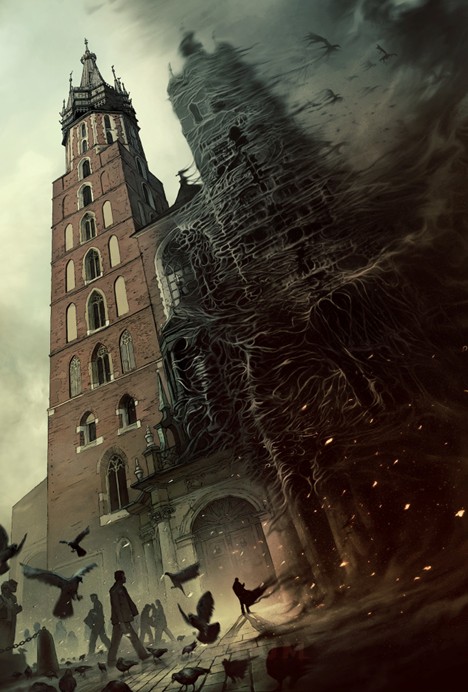
To be honest, there weren’t that many Polish references in my earlier work. Occasionally they appeared — for example, in The Medium I illustrated the towers of St. Mary’s Basilica in Kraków — but Polish architecture or folklore was never my main source of inspiration. At that time I was probably more fascinated by the topography of Middle-earth than by Poland itself.

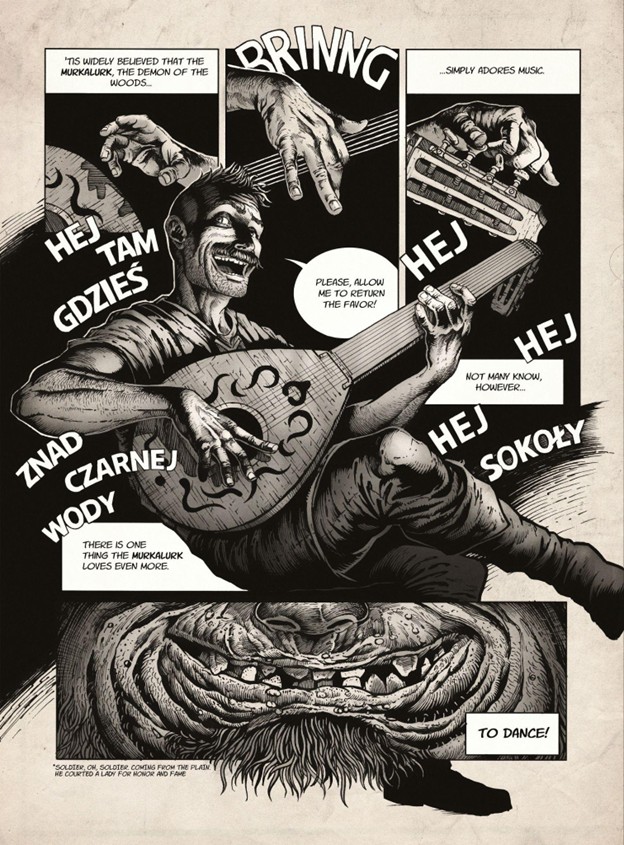
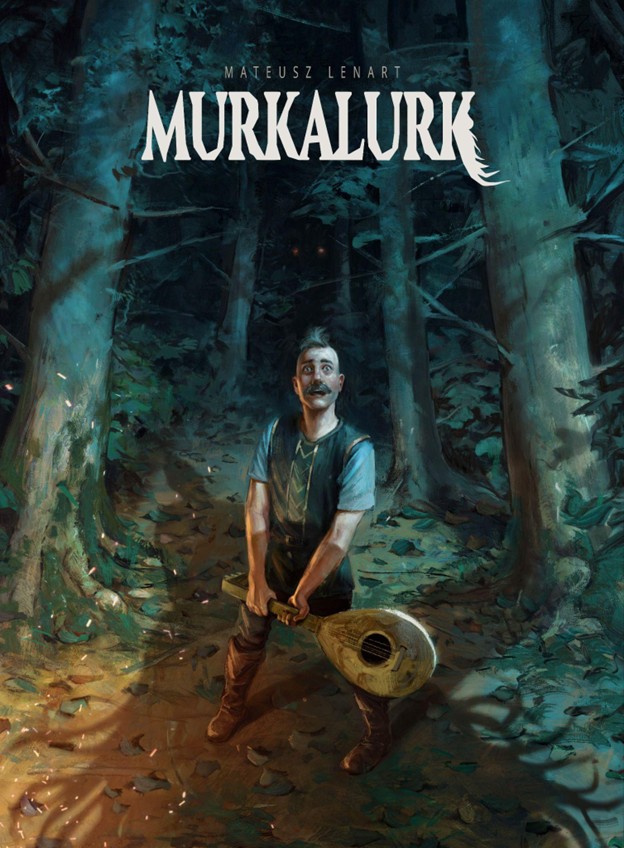
That has changed a bit in recent years. I’ve become much more interested in Slavic mythology, and it’s starting to influence the way I build my own stories. One small experiment was a short comic I created called MURKALURK, which tells the story of an unlucky bard who crosses paths with Slavic demons. Right now, I’m also working on a bigger project — a fantasy world that draws heavily from Slavic myth and culture. So you’ll definitely see more of that in my future work.
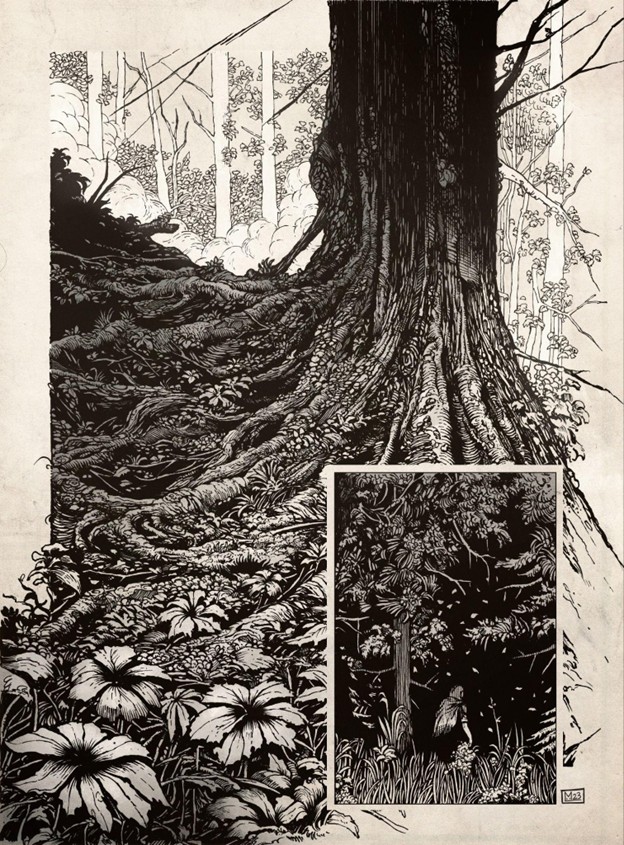
5. Awesome. Simply awesome. Why traditional pen & ink? I’ve got to say, when you mentioned 19th century master, Franklin Booth in a previous interview, I got incredibly excited. The guy was on a different level of genius! You also cited Gustave Dore, Bernie Wrightson, and Joseph Clement Coll. What is it about that kind of art that attracts you?

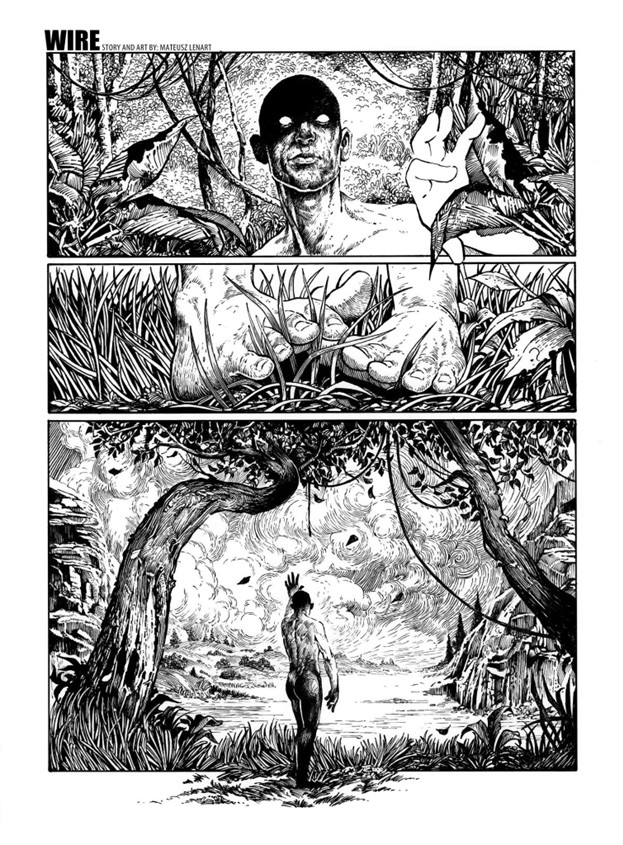
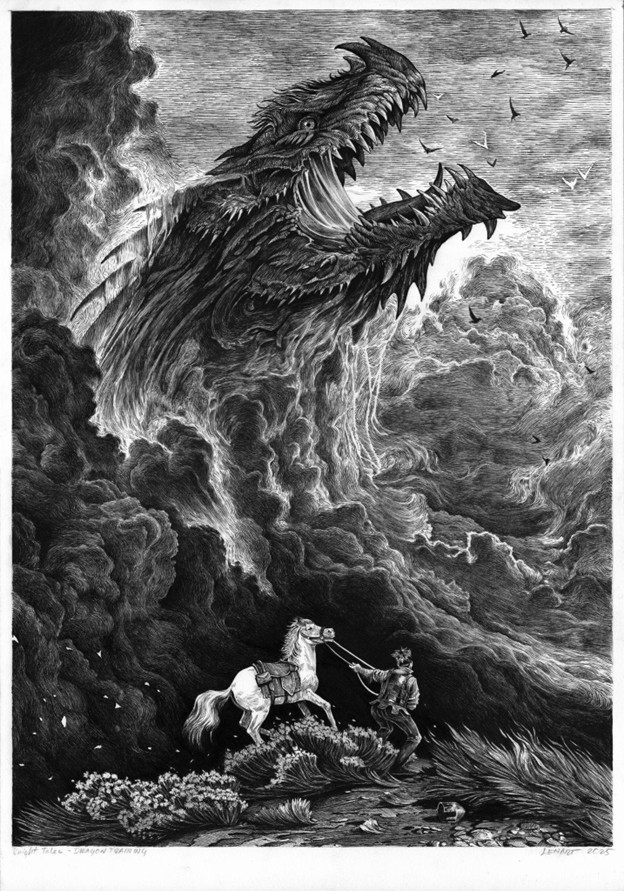
There’s something incredibly powerful about telling a story only with line and value — no color, just light and shadow, rhythm and texture. For me, pen and ink has always felt like the purest way of drawing, where every stroke is deliberate, every line carries weight.

I’ve also always been better in black and white than in color. When I discovered artists like Franklin Booth or Joseph Clement Coll, it opened my eyes to how far you could go with nothing but ink — whole worlds built out of contrast, atmosphere, and detail. There’s a timelessness to that style that I find endlessly inspiring.

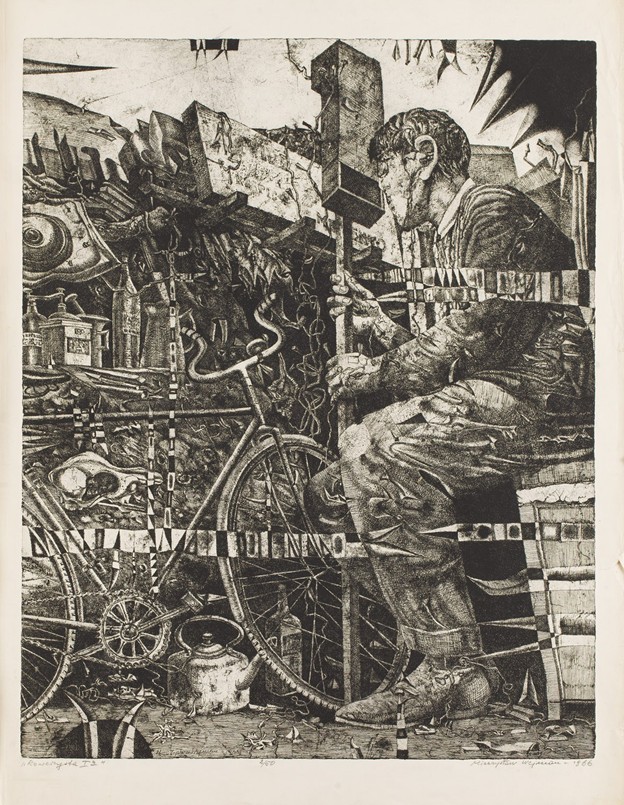
At the same time, I was very drawn to traditional printmaking techniques such as aquatint and linocut. I remember being deeply impressed by the works of Józef Gielniak, especially his Variations for Grażynka, and by Mieczysław Wejman’s aquatints like The Cyclist. When I was a student, I actually imagined myself working with those techniques professionally. But life took a different turn, and I didn’t continue down that path. In a way, pen and ink became a perfect substitute — it gives me a similar sense of precision, rhythm, and texture, without the technical limitations of printmaking.
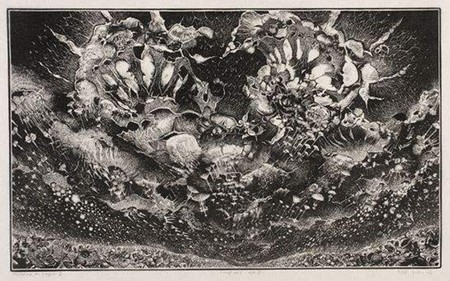
6. Re-cycle

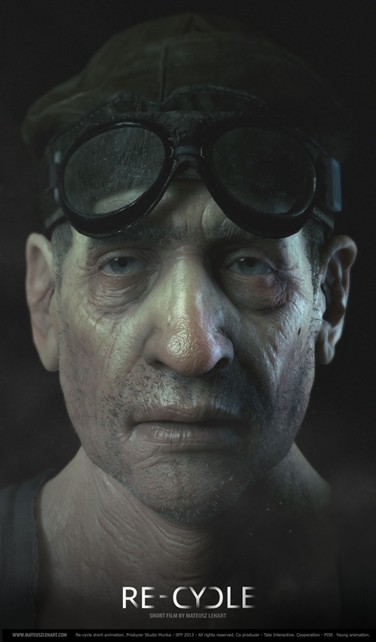
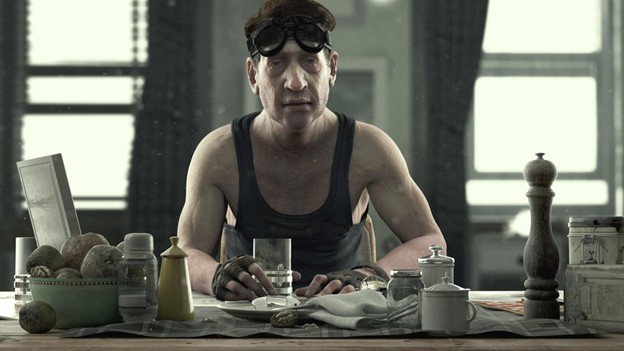
Your animated short Re-cycle is a striking, personal work. What first inspired the idea, and what challenges did you face in bringing it to life? Looking back, how did it shape or grow you as an artist?

I’ve always been someone who can’t focus on just one thing at a time — which is both a blessing and a curse. I started out as a concept artist, but quickly became fascinated with 3D, animation, design, lighting, and filmmaking. It was also a period when Polish short animation was experiencing a renaissance, with creators like Tomasz Bagiński, Damian Nenow, and Grzegorz Jonkajtys making work I deeply admired and wanted to create myself.

I honestly don’t remember exactly where the idea for Re-cycle came from, but, like many of my projects, it carries rather somber tones rather than cheerful ones. It was an interesting project — had I finished it in two years, it might have completely changed the path of my career.

In reality, it took seven years to complete because I kept being pulled into other work. By the time I finished, I was very tired of it, and the technology I had used was already outdated. Looking back, it taught me a lot about perseverance, about balancing multiple interests, and about how long-term projects shape your patience and vision. I do want to return to animation, but to do it properly I’ll need a lot of dedicated time to fully immerse myself in the craft again.
7. Our readers will kill me if I don’t ask about The Medium and Silent Hill, for which you served crucial creative and director roles. What can you tell us about those experiences bringing true psychological horror into the world that made you better as a creator? Did anything from your ink drawing practice or comic-book eye make its way into these massive productions?

Working on The Medium and Silent Hill was incredibly satisfying, but also very different experiences. On The Medium I served more as an art director — helping to shape the Other World — and getting to build an environment inspired by Zdzisław Beksiński’s work was a deeply powerful experience. Trying to translate that kind of surreal, decayed atmosphere into something the player could actually move through taught me a great deal about tone, detail and restraint.

Silent Hill was a step up in both scale and responsibility: the stakes were higher and my role covered design, art and direction. Revisiting one of the most iconic names in horror history is never easy, but it was hugely rewarding. The biggest challenge there was balancing respect for the original material with the need to bring something new and playable to a modern audience — and doing that across a large, multidisciplinary team forces you to be both precise and flexible.

My ink-drawing practice and comic-book eye absolutely found their way into those productions. The lessons of black-and-white work — composition, the economy of line, the power of contrast and negative space — translated directly into how we thought about lighting, silhouettes and level composition. Likewise, the way comics use panel rhythm to control pacing informed how we staged encounters and revealed information to the player: timing, framing and the gaps you leave for the audience’s imagination are universal storytelling tools.

Finally, these projects made me a better creator because they pushed me to scale my instincts. Working on a single illustration is a private act; working on a game means sharing to others your visual language, iterating under constraints, and learning when to cut or simplify for the sake of atmosphere. Film, comics and games aren’t as far apart as they seem — they share the same fundamentals: composition, emotion and the building of tension — and those cross-medium influences keep feeding my work.
8. When you need to design something truly frightening, what rituals or shifts of perspective get you into that mental space—and do you step back out of it deliberately, or carry it until the work is done?

It really depends on the situation. Very often, the things that frighten me most are those that aren’t meant to be frightening at all — finding that uncanny element in an otherwise ordinary scene creates the strongest tension. When you work on horror for a long time, though, you almost become numb to it. Stepping away and then returning to the work helps a little, but you can never truly see it with fresh eyes again. That’s why outside feedback is so essential — we rely on it constantly.

As for rituals, I don’t think I have any special ones. Creating horror, for me, is like any other kind of work: it’s a mix of knowledge, experience, and ideas. To paraphrase Stephen King, most of the time I feel more like a craftsman than a visionary — applying what I know to get the job done. Of course, there are moments of revelation, flashes of inspiration, and when they come you have to grab them and use them. But most of the process is simply the hard, patient work of solving problems over the course of a long production.

9. When you start concept art for a new character or environment, what’s your first step—gesture, thumbnail, written note—and how do you know when that early sketch has ‘spark’ worth pursuing?

It’s a difficult question, because the process can vary a lot. Technically, I almost always start with silhouette, shape, and energy on the page. There are countless tutorials that talk about the power of form, proportion, and so on, and those things are important — but for me the idea itself is what really pushes you forward.

Sometimes a written description of a monster or a character is already enough to spark something interesting. Other times, you have to brute-force your way toward a good idea through dozens of iterations, hoping that at some point something will ‘click.’ References also play a huge role in this stage. Collecting and studying them often triggers unexpected solutions — they can turn a generic design into something unique.

Recognizing the moment when a sketch has enough spark to move forward is always tricky. In my role as creative director, I often have to make that call, and it’s easier when you’re not personally involved in the painting itself. In my personal work, I usually just follow what excites me most, even if I can’t fully explain why. Sometimes it’s purely instinct — you sense there’s something worth pursuing, and you trust yourself to chase it. I’m also aware that, in doing so, I may be overlooking ideas that others would consider stronger.

10. Anything else you’d like to tell us about, including how we can see more of your work?

I try to stay as active as I can creatively. As I mentioned earlier, my biggest problem is that I always want to do everything at once. I’m still working at Bloober Team on our next title — it’s a long process, and one I’ll only be able to share more about in the future.

On the personal side, I recently released a comic/illustrated album called Murkalurk, which was received warmly and motivated me to start working on a larger comic project, loosely inspired by Slavic mythology. Right now, I’m deep in the stage of building characters and writing the story, which is why I haven’t shared much new work online lately.

There’s also my ongoing series The Knight’s Tale, created in traditional pen and ink. I hope to find the time to add new chapters to the story of that lost knight. As always, there’s never enough time and far too many ideas.

Hopefully, you’ll be able to see some of these new projects soon on my social channels — mainly on Instagram.

Thank you for the talk.

Thanks for your time and the wonderful art you’ve sent along for us to appreciate! Hopefully we can connect again in the future to see what you’ll have been up to!

*
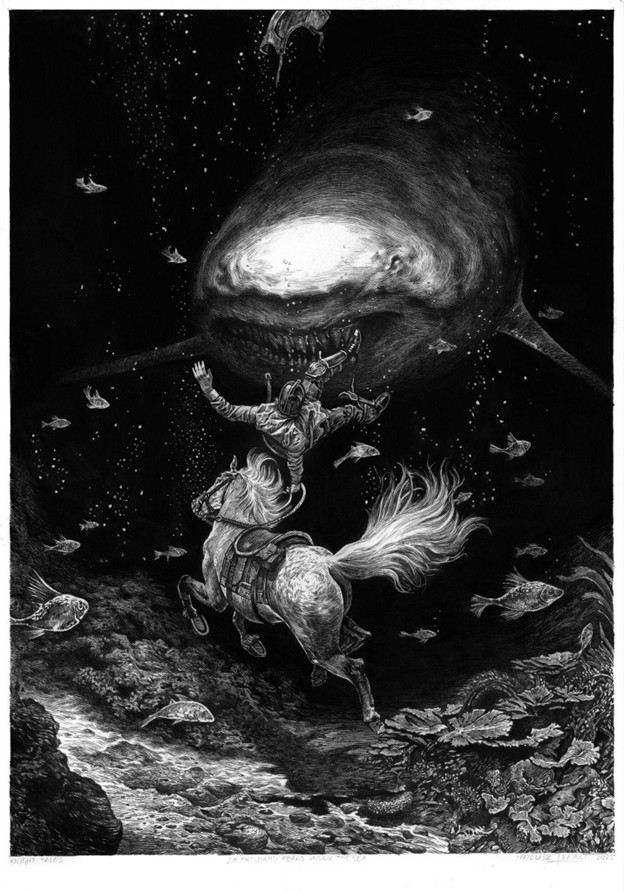
Mateusz Lenart is an impressive bridge strung between ink and pixel, between the quiet scratch of a pen and the thunder of a horror score. His work reminds us that the best creators aren’t defined by tools but by vision: a sketchbook line that can grow into a world, a half-remembered comic that becomes a camera angle, a personal short film that seeds a new way of seeing. At Grailrunner, we often say “Dreams are engines. Be fuel.” In Mateusz’s hands, those engines are ink-black, smoke-stained, and unstoppable. And we can’t wait to see where they carry him next.

Till next time,

Let’s trace 18th century sites for a shipwreck and a town’s founding!

Some glorious times when you troll around in old journals and historical accounts, you come across an adventurous soul of long ago that made the absolute best of truly magical opportunities, braved unbelieveable dangers, and came out on top.

I’ve got one for you today that became an obsessive research project ultimately leading to a road trip, locals in a town library gathering around the table with me, and a moment of awe (for me at least).

Welcome back to an ongoing series we call…

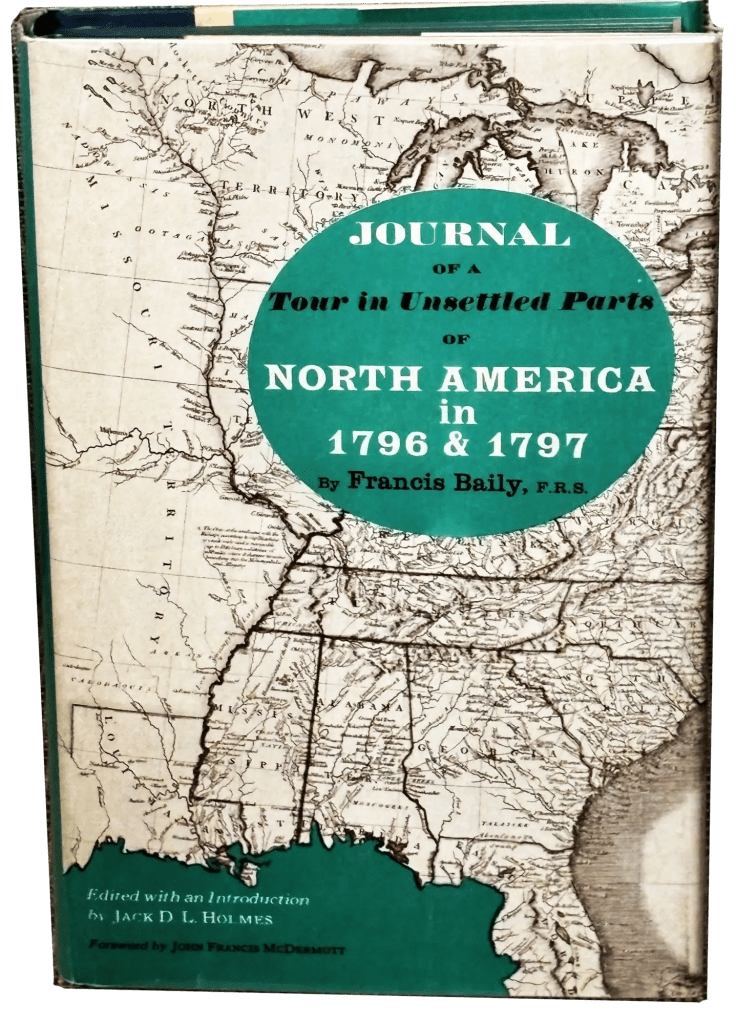
I went into my study a couple of weeks ago looking for something to read. It’s a lifetime of books collected in there, so there was no telling what I would pick up. I grabbed one titled Journal of a Tour in Unsettled Parts of North America in 1796 & 1797 by a guy named Francis Baily. Here’s a copy for free.

What’s interesting about that?

Baily was 21 years old, and for reasons he never gave, he came over from England for 2 years and visited an America that was brand new and wide open. What this guy was able to see and do in those 2 years was incandescent. It was an opportunity of a generation to go where he went, and Baily made it happen.

He landed in Norfolk, visited Baltimore and Philadelphia, describing them wonderfully such that you could all but see them in your mind’s eye. He described the road from Lancaster to Philadelphia as “paved with stone the whole way, and overlaid with gravel so that it is never obstructed during the most severe season”. Little nuances like that just popped for me – like the little museum in Philadelphia founded by a “Mr. Peale” which had just opened. I fell into the habit of leaving ChatGPT on voice mode so I could ask it as I read what became of some of the things Baily saw and people he met. (Peale’s collection got busted up later and distributed to places like the Philadelphia Academy of Natural Sciences.)

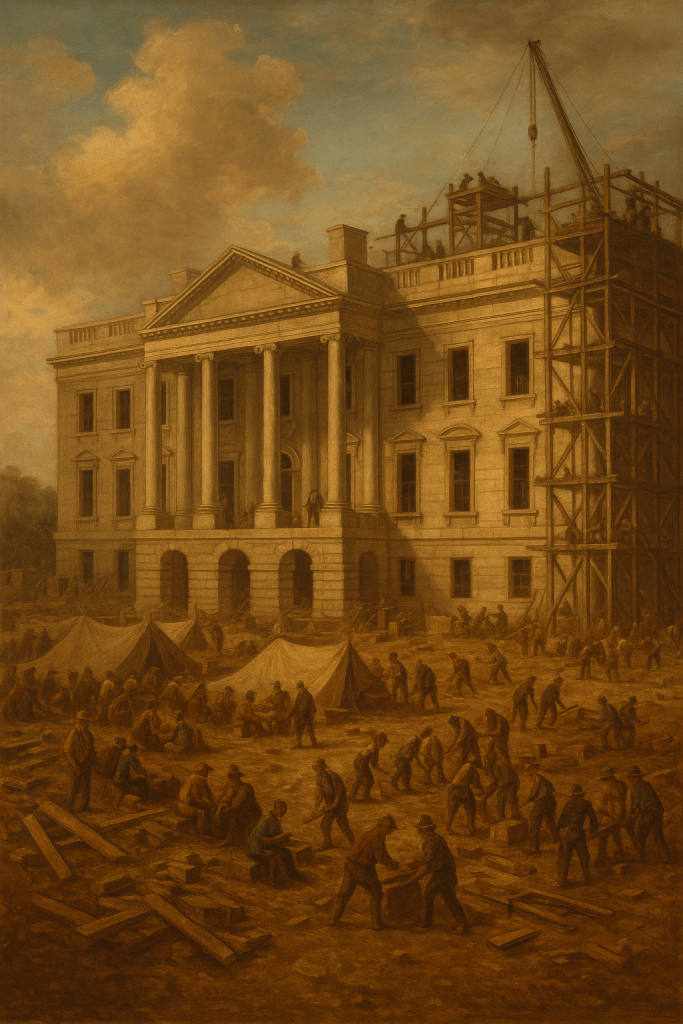
He visited “the new city of Washington” where his “first walk was to the President’s House”, which was to be the White House and was still under construction. Of Washington itself, he said “not much more than one-half the city is cleared; the rest is in woods; and most of the streets which are laid out are cut through these woods” Also, “The canal and the gardens, as well as bridges, which you see marked down in the plan, are not yet begun”. And finally, “Game is plenty in these parts, and what perhaps may appear to you remarkable, I saw some boys who were out a shooting, actually kill several brace of partridges in what will one of the most public streets of the city”.

He went to New York and said: “…it is an irregularly built place, consisting principally of little narrow streets, though some of those which are newly laid out are broad and handsome, particularly Broadway, extending nearly a mile in length.” You see something like (explaining why it’s called ‘Broadway’), then he says “The inhabitants of New York are very fond of music, dancing, and plays; an attainment to excellence in the former has been considerably promoted by the frequent musical societies”. I mean…Broadway….in 1796. Music already. Crazy!

Honestly, I marveled at every little inn or hut where he stayed as he described the meals, the ramshackle rooms, sleeping in a drafty barn with a smile on his face at what he was doing. I hadn’t read two chapters of this before I really, really liked this kid.

Okay, that does sound fun. But you mentioned a shipwreck site?

Right. Baily’s adventure really picked up once he left Pittsburgh on the Ohio River headed Northwest at first, before ultimately bending south. He’d booked passage with some people looking to found a new settlement, specifically a friend he’d made named Samuel Heighway who’d purchased some land in modern-day Ohio off the Little Miami River and was trying to get there with some agricultural equipment and a handful of settlers. Why was Baily accompanying them? Who knows! He just did, and it wound up awesome.

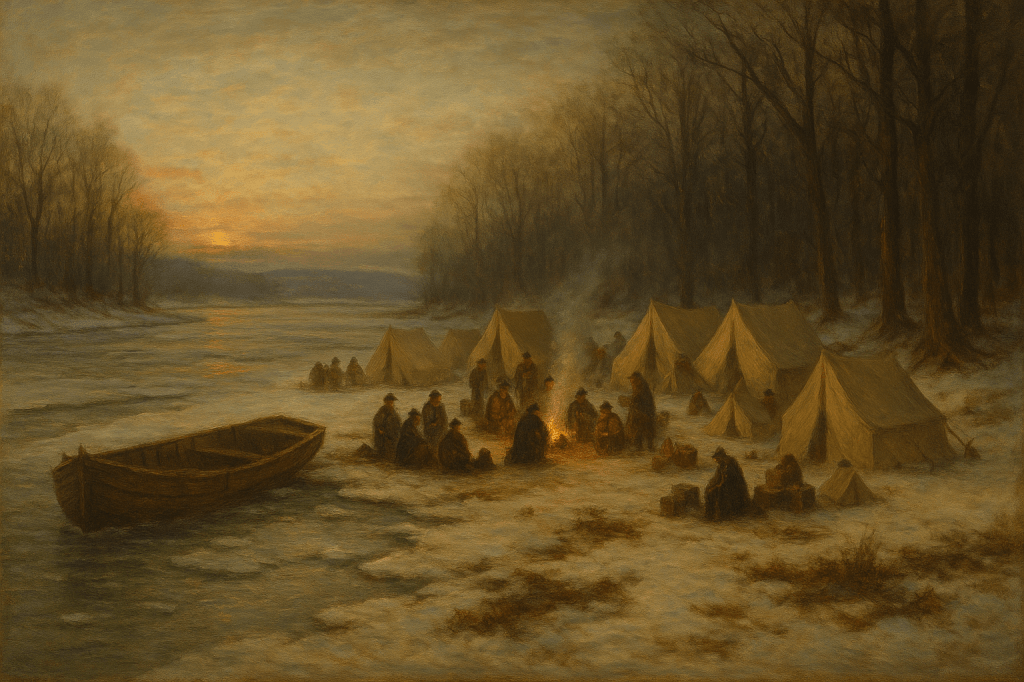
We need to keep in mind that American rivers in 1796 were crazy dangerous and nothing like the placid, dammed wonderlands they are now. At this point in the tale, it was a cold December with the Ohio half-frozen with ice blocks as big as houses sailing past at great speeds.

Dec 21, 1796: “We were awakened out of our sleep with a noise like thunder, and, jumping out of our beds, we found the river was rising, and the ice breaking up. All attempts would be feeble to describe the horrid crashing and tremendous destruction which this event occasioned on the river. Only conceive a river near 1,500 miles long, frozen to a prodigious depth (capable of bearing loaded wagons) from its source to its mouth, and this river by a sudden torrent of water breaking…Conceive this vast body of ice put in motion at the same instant, and carried along with an astonishing rapidity, grating with a most tremendous noise against the sides of the river and bearing down everything which opposed its progress – the tallest and the stoutest trees obliged to submit to its destructive fury!”

Should you decide to read this marvelous book, I won’t steal from you by describing all that happened to them at that spot in the river. I called it a shipwreck, though. Remember that much at least.

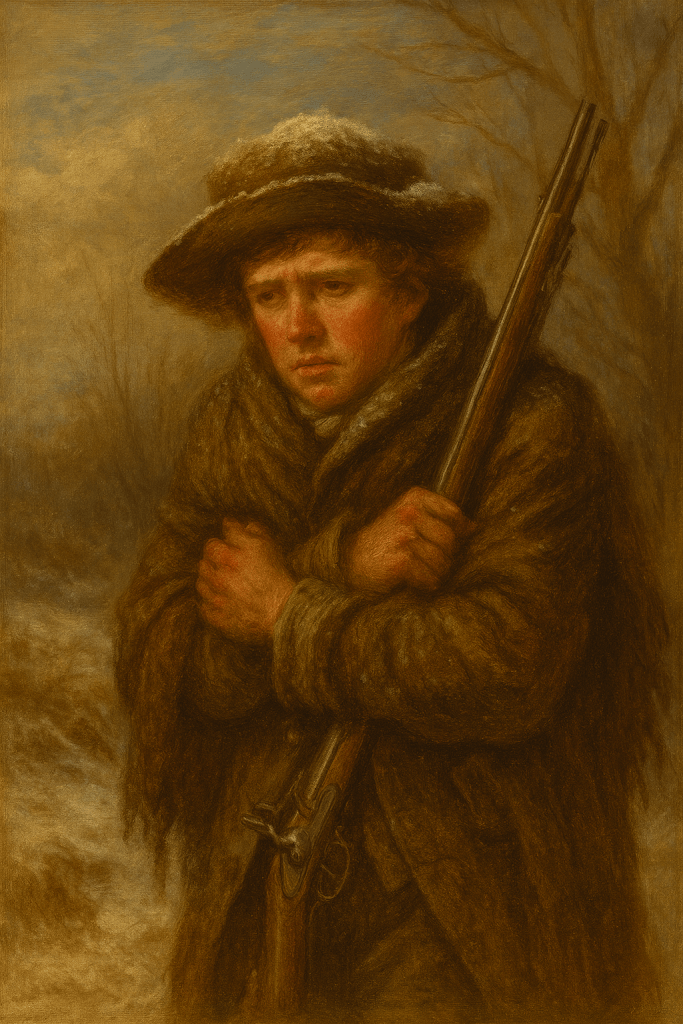
Dec 25, 1796: “Here am I in the wilds of America, away from the society of men, amidst the haunts of wild beasts and savages, just escaped from the perils of a wreck, in want not only of the comforts, but of the necessities of life, housed in a hovel that in my own country would not be good enough for a pigstye, at a time too when my father, my mother, my brothers, my sisters, my friends and acquaintance, in fact, the whole nation, were feasting upon the best the country could afford. I could not but picture to myself the fireside of my own home…”

Despite incredible danger from drowning, frostbite, starvation, and exposure, it was also on Christmas day that Baily wrote one of my favorite quotes of the entire book. Keep in mind the conditions he was under as he wrote this:

“…there is something so very attractive in a life spent in this manner, that were I disposed to become a hermit, and seclude myself from the world, the woods of America should be my retreat; there should I, with my dog and my gun, and the hollow of a rock for my habitation, enjoy undisturbed all that fancied bliss attendant on a state of nature.”

Ultimately, they constructed another boat and got underway again in February after an unforgettable winter at that lonely place on the Ohio.

You didn’t find the site of that shipwreck, did you?

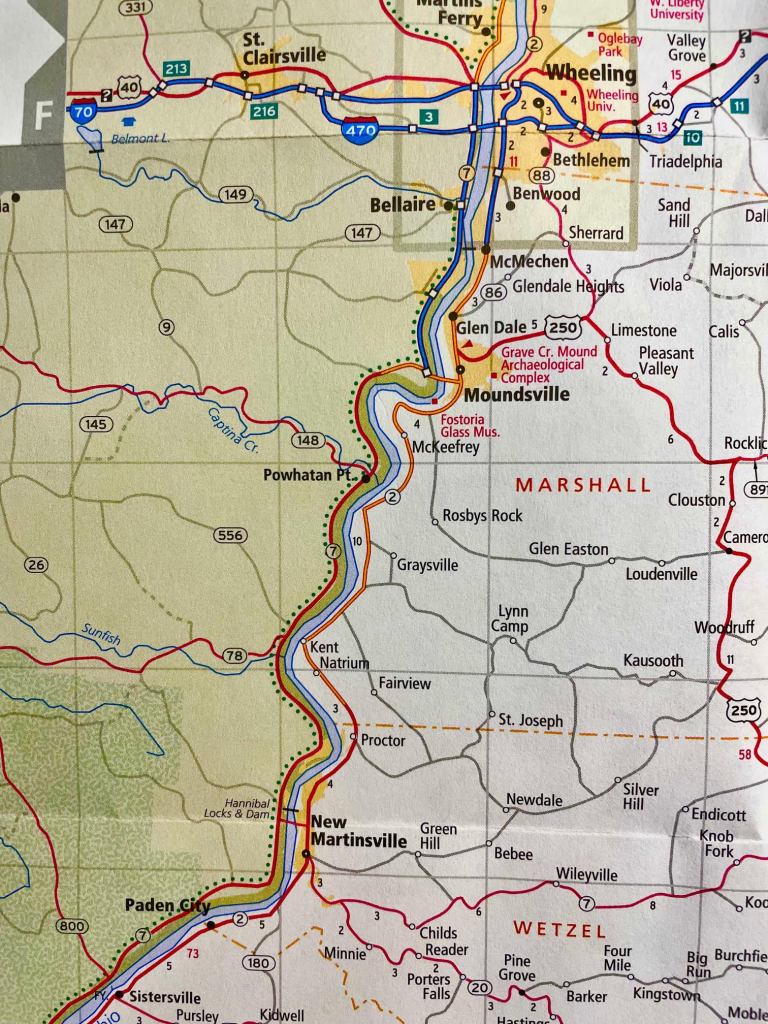
It wasn’t easy, but yes – I absolutely did. The girl at the Barnes & Noble counter who sold me a map of West Virginia asked me if I was doing some traveling. When I told her what I was looking to do – collect and trace the little clues Baily noted in his journal and leverage ChatGPT and the map to find the exact spot – she only said with eyes widened, “That sounds amazing!”

We’re talking 228 years later, with few proper names provided – and the ones that ARE provided are rarely in use today. What this looked like for me, as I was on a business trip out of town doing this, was me in a Doubletree late at night leaned over the map poring over Baily’s account and tracing any likely touchpoints with my finger, asking ChatGPT as if in conversation things like “He mentions Capteen Riffle, south of Grave Creek – what would that likely be referencing?” To which I would receive answers such as “That likely refers to modern-day Captina Island, across from Powhatan Point, Ohio.” Knowing that AI is wrong as often as it is right, I fact-checked in Google along the way to confirm each touchpoint.

  • He “got fast upon a riffle near Brown’s Island” near modern Weirton, WV
  • He passed “Buffaloe Town”, which is modern Wellsburg, WV
  • He went aground 1/2 mile above Wheeling (still exists!)
  • He put ashore near Grave Creek (near modern-day Moundsville, WV)
  • He passed “Capteen Riffle” near Powhatan Point, OH and claimed he made 9 miles that day to “Fish Creek” near modern-day Martinsville, WV. That bad estimate of his pained me somewhat later.
  • He put ashore at a plantation recently built by an Irishman named Daily (no later records), and was told the river was entirely frozen.
  • Baily and Heighway walked “about 5 miles” down the banks of the river to Fish Creek, meaning Daily and their boat (at that time, though not the final shipwreck site) were 5 miles upstream of Fish Creek (and his 9 mile estimate was wrong). 5 miles upstream of Martinsville is modern-day Proctor, WV. That’s where Daily’s plantation was.
  • Baily and Heighway went back to Daily’s after seeing that indeed, the river was frozen solid at Fish Creek and took the boat downstream to a safer place the next day, saying it was “about a mile to a place which we had observed yesterday on our walk, and which we conceived more secure from the bodies drifting downriver from the one we were in”.

Whoa. We don’t need that kind of detail. Just say what you know and how you know it.

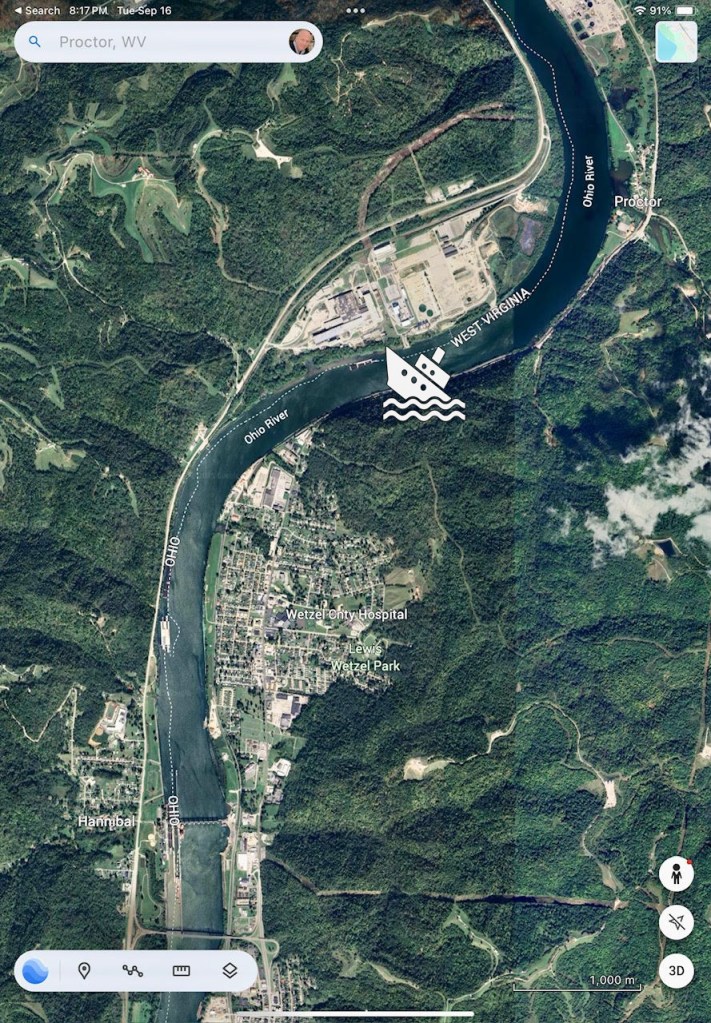
Look at that sharp bend in the river just south of Proctor, about a mile down in fact. Here it is on Google Earth:

Remember how he described the ice blasting down the river. Imagine the eddies and more stationary water just past that bend, and using the trees and shoreline of the bend itself to weather the incoming debris and ice. It makes sense that they would see the area with trees now on the southern shore, northeast of the buildings you see in Proctor and across from the Long Ridge power station on the north as safer than staying at Daily’s plantation upstream where the river was straighter. Baily reported that Grave Creek (Moundsville) was ~9 miles upstream of where they were moored, so that aligns with the site being very close to Proctor.

No, this is the place. If I’d been close enough, I’d have driven there to take a look. I chuckled and called my dad I was so excited!

You mentioned a town’s founding?

At one point, they have to leave the river and hire wagons to make it “between forty and fifty miles off” where the land Heighway had purchased “lay for the most part amidst a desert wilderness, where no wagon had ever approached”. Baily described his time with Heighway:

Mar 7, 1797: “The town he had laid out at right angles, nearly on Penn’s plan, with a square in the middle, which he told me, with a degree of exulting pride, he intended for a courthouse, or for some public building for the meeting of the legislature; for he had already fallen into that flattering idea which every founder of a new settlement entertains that his town will at some future time be the seat of government. He also described to me, and walked over, the ground where he intended to make his gardens, his summerhouse, his fishpond, his orchard…” Continuing, “I believe he was as happy as if he saw them all before him. Whereas, for myself, I could behold nothing but a wild uncultivated country, full of lofty trees and prickly shrubs; and when he showed me fishponds and his serpentine walks, I could only discover a little standing water, and a few deertracks.”

That bit absolutely fascinated me: to see the very image of a town’s founder in the very first days, with only survey sticks in the ground, and the men who’d just climbed off the wagons with him taking axes to trees to build the first houses, and the founder laughing as he walks his imagined town.

I googled Samuel Heighway and found that his town became modern-day Waynesville, Ohio. Since I wasn’t too far from Cincinnati at the time, I checked Google Maps to see how far the drive would be.

And you drove there?

Yeah, I had to. I was getting too excited about all this. That Baily was inspiring me.

And?

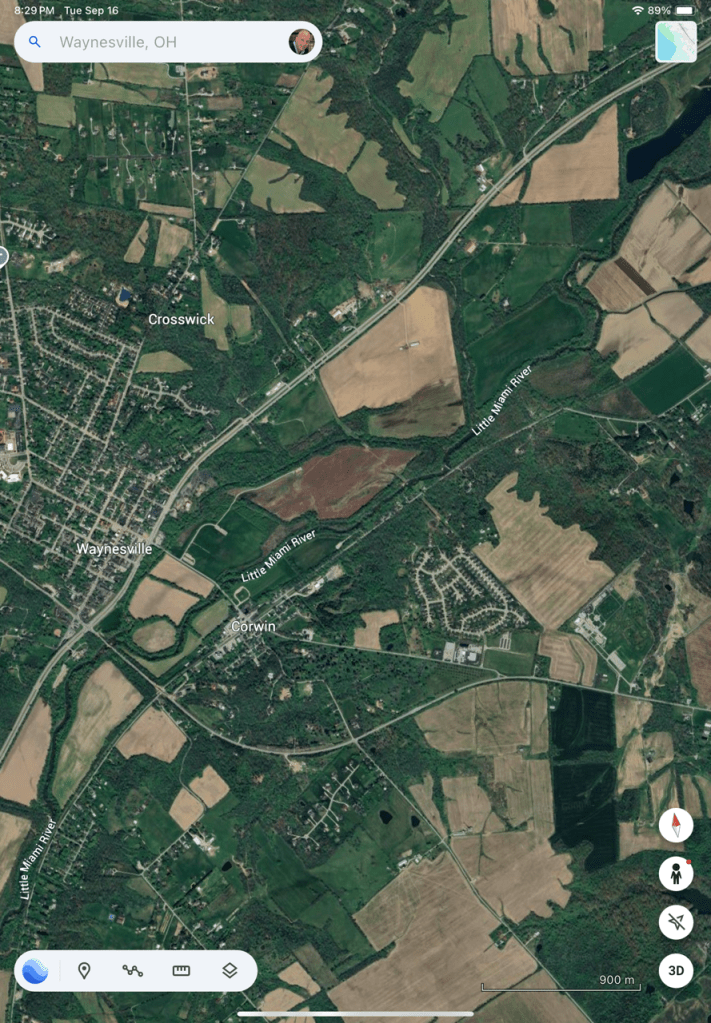
Just a little town. Nice, actually. I walked from one end to the other trying to get a feel for where these guys would have been walking…where they would have laid the first buildings. It looks like this on Google Earth (Waynesville):

I tried the Chamber of Commerce to see who managed the historical markers, to see whether there was a town historian or something. They directed me to a town historical archive in the Waynesville library. The wonderful librarians there had a similar reaction to the girl at Barnes & Noble, and I gathered a bit of a crowd telling them the story I was researching. My objective, as I told them, was to find the very spot where these men stood as they first laid out the town.

One of them ran to the back computer promising to find something. Another gave me an exhaustive tour of the archives and started pulling various items off that might be helpful. Really, those ladies were fantastic.

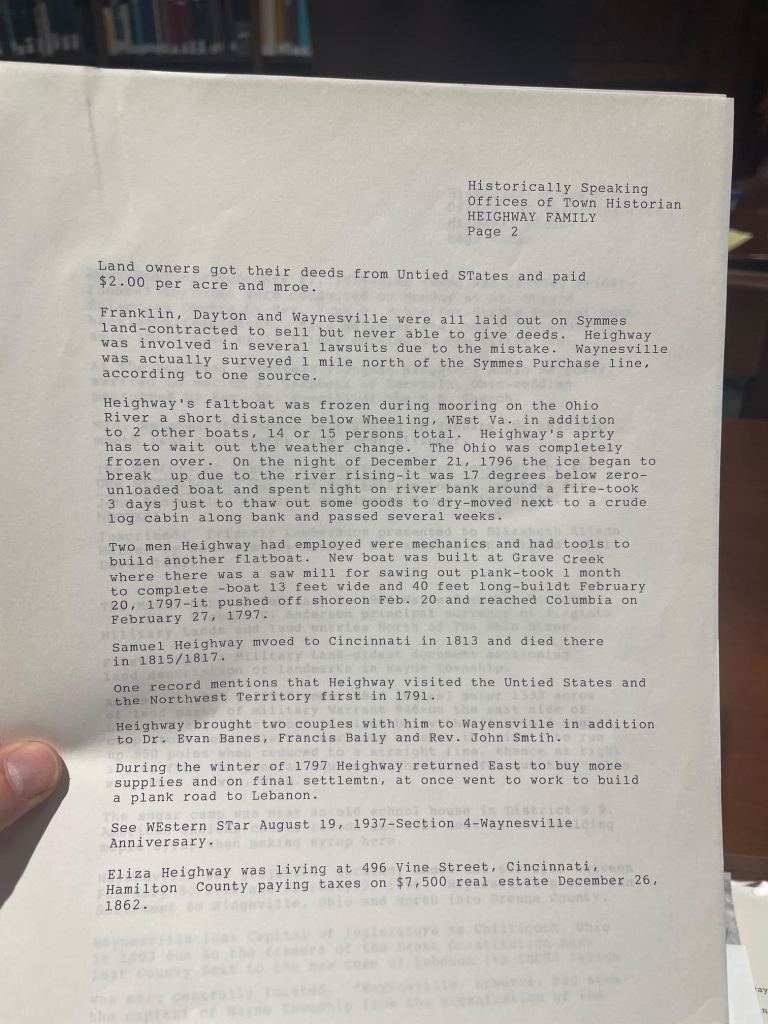
I found this:

That broke my heart a little. Heighway didn’t stay, and in fact moved to Cincinnati in 1813 and died around 1815.

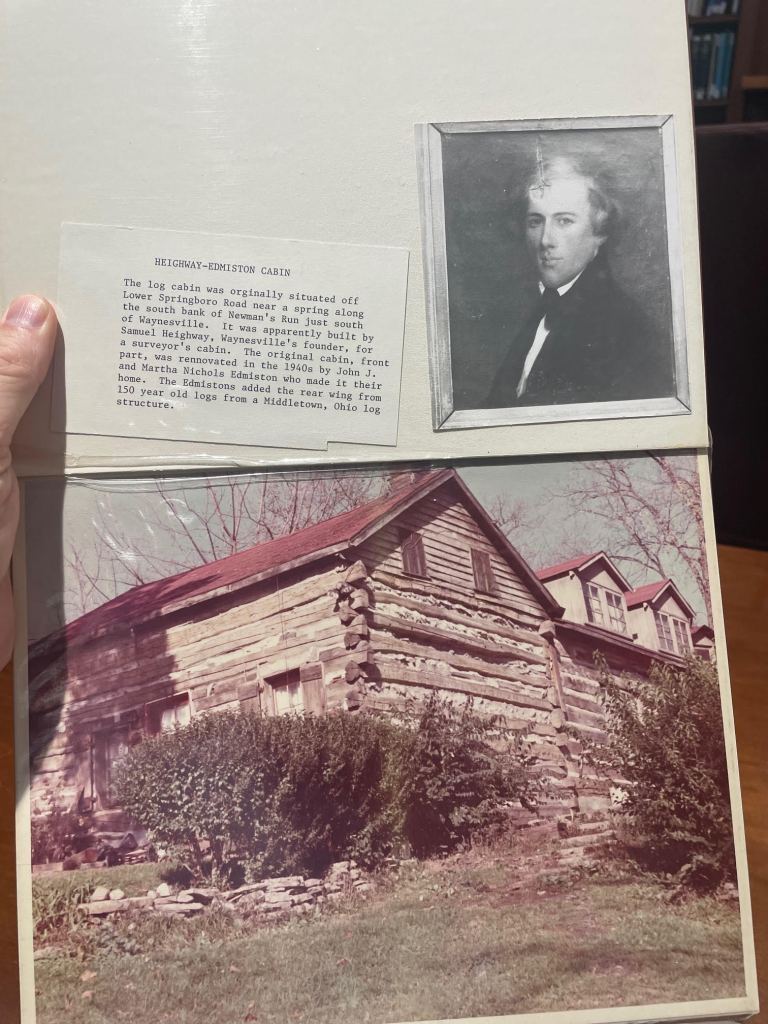
Also found this, an actual cabin Heighway built:

But what helped the most was this:

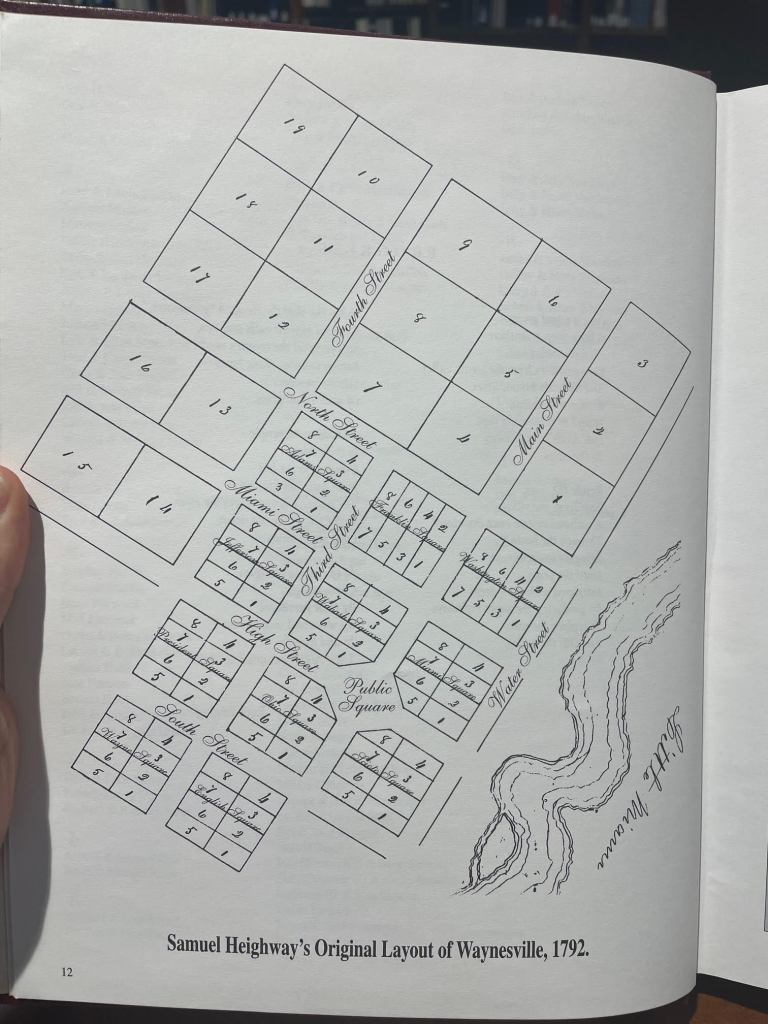
It’s a reproduction of Heighway’s original plan for the town: the one he showed Baily. Check how close the buildings are to the Little Miami River, and the fact that the first street was called “Water Street”. I saw Main Street on the map, and modern-day Waynesville is just up the hill from the river with a big old Main Street now. If that’s the same Main Street location, then where in the world was “Water Street”? I hadn’t seen it before I came to the library.

I took the plan back to the librarians and asked them what they knew about Water Street. An older lady who was sitting with them heard me and leaned back, thinking, “Water Street? We used to have a Water Street. That’s where the old mill was.”

The old mill? That sounded promising. “What happened to the mill?”

“Oh, they tore that down when they built the new highway.”

“You’re killing me. That’s what I’m looking for. I’m sure of it. Where would that have been?”

She pondered, scratching her chin maddeningly, “Oh, that’d be down in Corwin.”

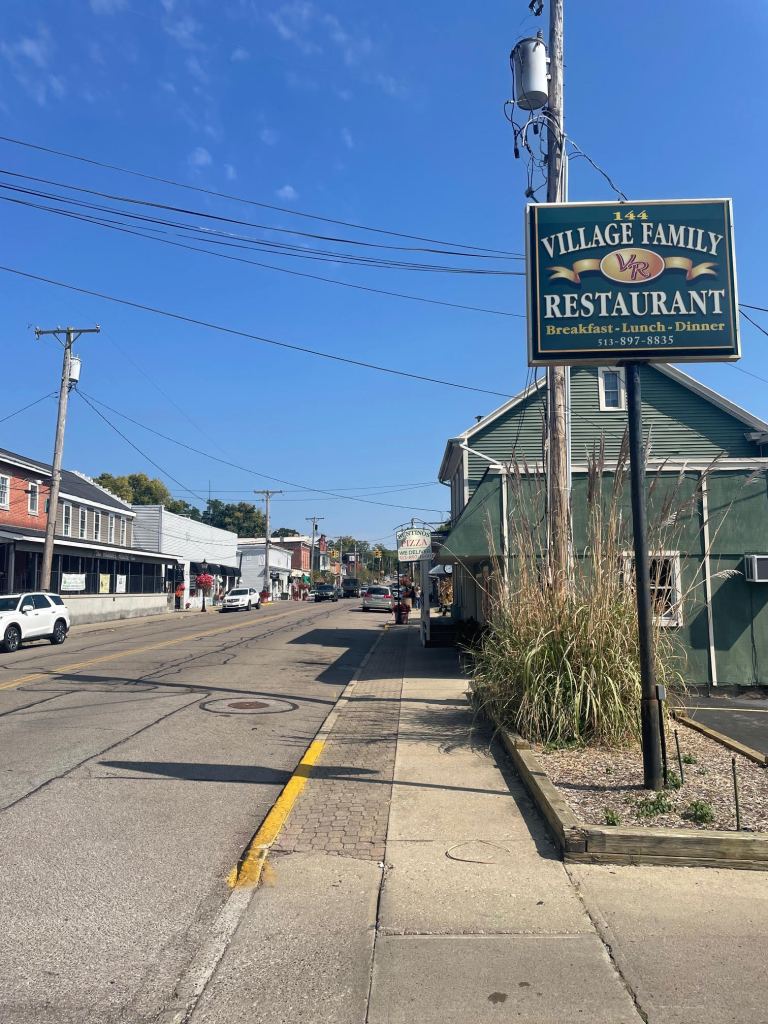
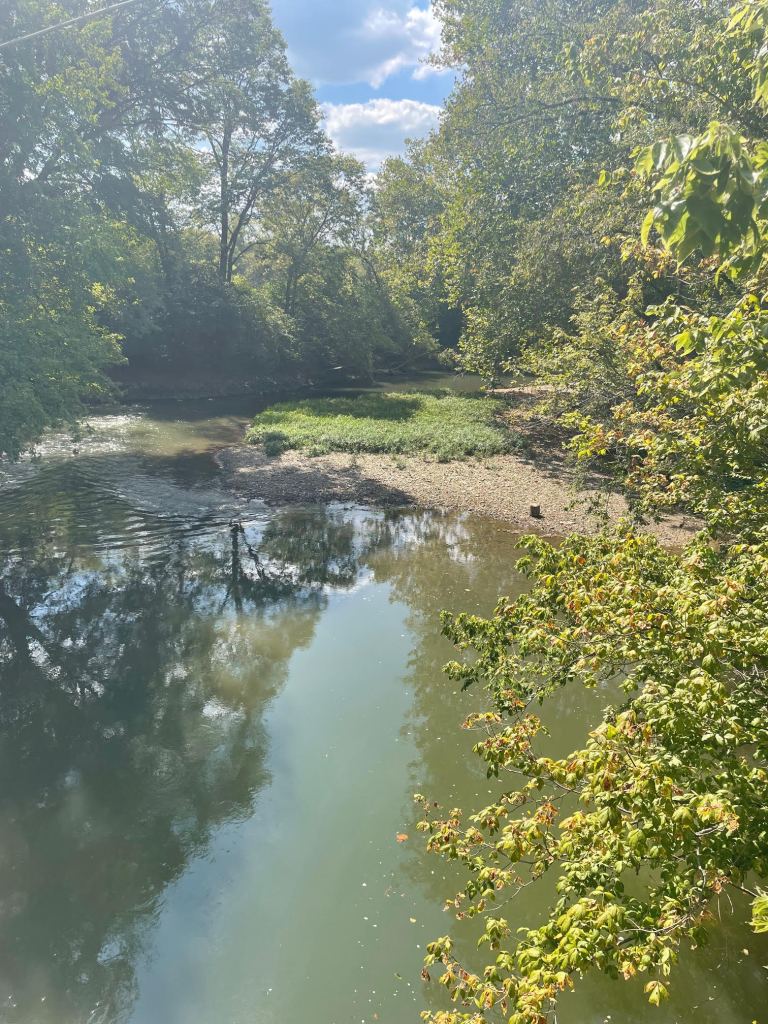
I thanked everybody and blasted back to the car to drive down hill and across the river. I say “river”, but it looks like this now:

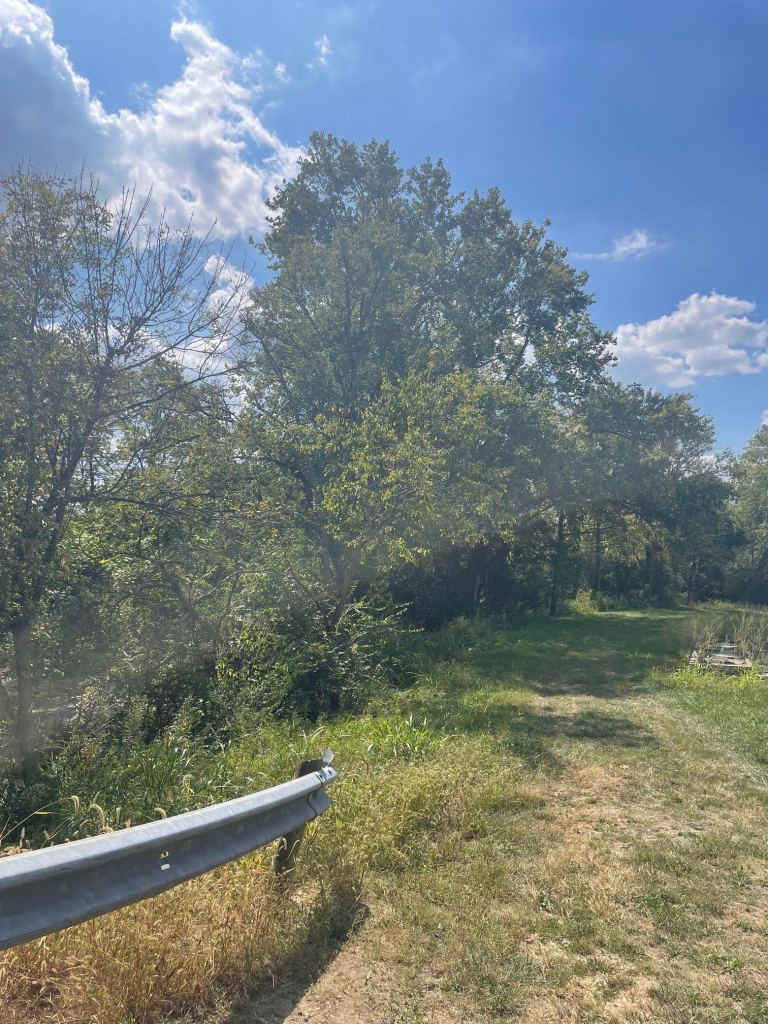
At one point, it clicked for me, stepping out of the car right across the Little Miami from Corwin and into a cornfield, why Waynesville is where it is up on the hill. The river would have flooded over the years, so they moved to higher ground. Main Street is just up the road. The plan showed Water Street and the first buildings right where I was standing.

Here:

I can’t tell you that’s the precise spot where Baily chased behind Heighway as they laughed and joked what would become of the land, amid the hammering and axe chops.

But it sure felt like it to me.

Till next time,
A game designed by Tolkien and the Monkey King (and it’s free!)

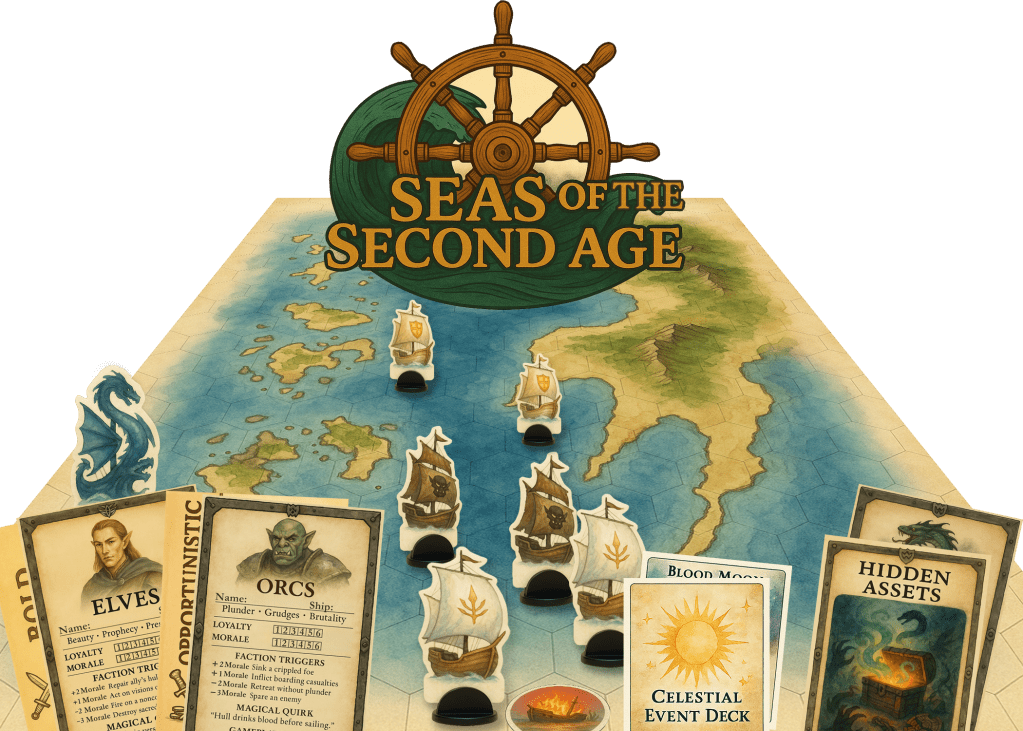
Oh, man have I got a great freebie for you today! I’ve been experimenting, pushing AI tools to their limits, these last 2 weeks to see just what’s possible in prototype gaming. I’ll tell you the story behind this, what all I did, then introduce a game which I’ll give you for free.

It has struck me recently that the future of entertainment is quite possibly on-demand, immediate & fully customizable media. I’m talking about having a random idea for a board game for example, and having the ability to describe it simply and have a color printer, 3D printer, music generation service, and AI tools spit out a polished, playable game with all its components ready for the table.

Is that what I did? Kinda sorta. That’s coming, but this was a lot more painful to bring to life than all that. AI tools are like a super creative and talented idiot whose attention wanders off while they generate random things, useless things, ripoff copies, and sometimes…some brilliant times…something magical.

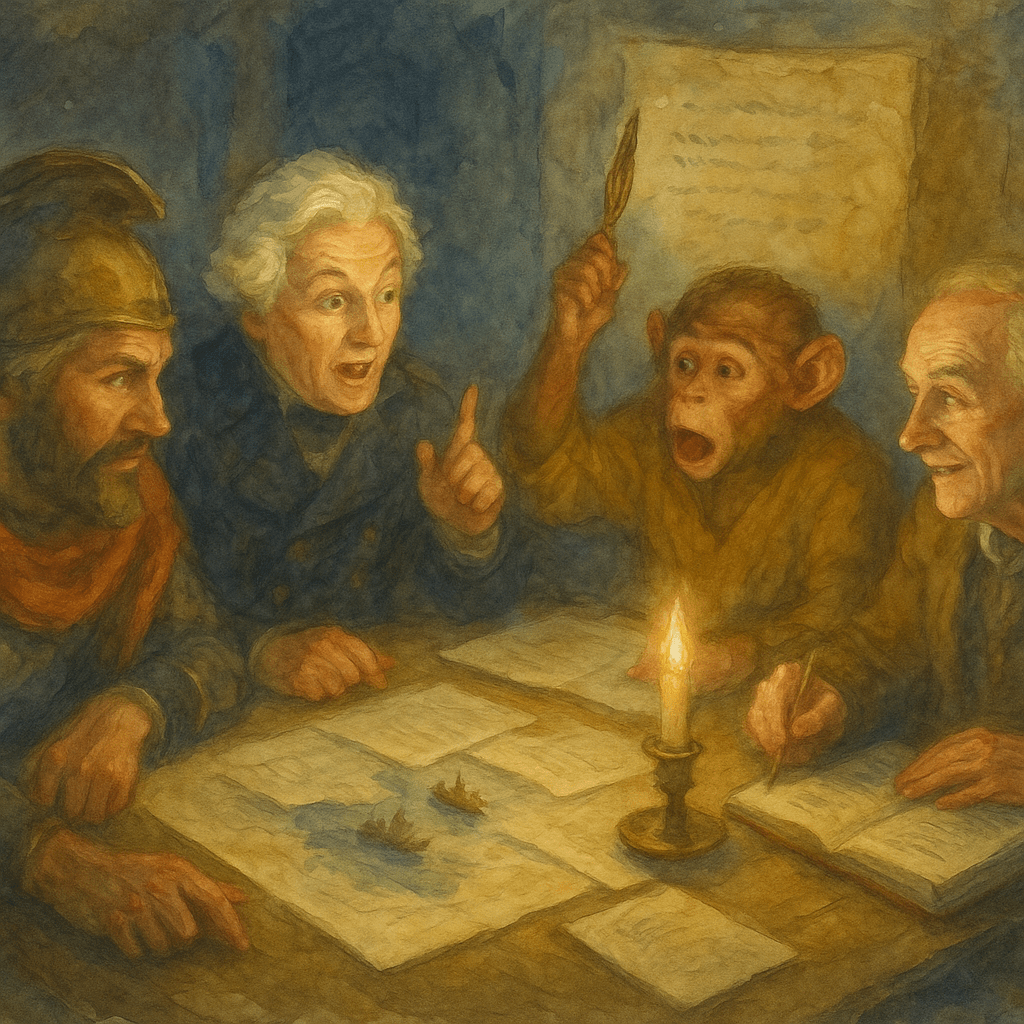
Anyway, it started with me wondering what a naval boardgame would be like if it was designed by Hannibal of Carthage, Admiral Horatio Nelson, J. R. R. Tolkien, and the Monkey King of Chinese folklore.

Welcome back to our ongoing series titled:

Where in the world do you come up with strange ideas like that?

I don’t know. It happens. Then I have to see it. Then I lose two weeks of my free time. Then you guys get free stuff.

So, who were these people and why did you choose them?

Hannibal of Carthage (c. 247–183 BC) was a brilliant Carthaginian military commander, best known for leading his forces — including war elephants — across the Alps during the Second Punic War against Rome.

I wanted the greatest, most innovative military mind in history. Arguable, I know, but I see Alexander the Great as a talented nepo-baby who inherited a lot of his advantages. I get there are others who could contend for that, but Romans used to put their babies to bed telling them to be good or Hannibal would come for them.

Horatio Nelson (1758–1805) was a British admiral and one of history’s most celebrated naval commanders. Famous for his bold tactics and inspirational leadership, he secured a string of decisive victories for Britain during the Napoleonic Wars.

This was going to be a sea warfare game set in Tolkien’s Lord of the Rings universe, so I wanted the greatest naval genius of history. His victory at Trafalgar was so resounding it established British naval superiority for a century.

J. R. R. Tolkien (1892–1973) was an English writer, philologist, and Oxford professor, best known as the author of The Hobbit and The Lord of the Rings.

This idea of sea battles in Middle Earth came to mind writing this article for Grailrunner speculating on the unfinished sequel to Lord of the Rings. It was the Professor’s setting, and he would bring unique insights to bring it to life.

The Monkey King is a Chinese folk hero from Journey to the West. A mischievous trickster with immense strength, magic, and a shape-shifting staff, he defied heaven before becoming a companion on a sacred pilgrimage — a lasting symbol of rebellion and wit.

I love trickster characters. Always have. This particular one is great for throwing the table over and over-the-top madness. I definitely wanted the rules of this hypothetical game to reflect that somehow.

And these three historical figures and a mythological simian were going to design this game then?

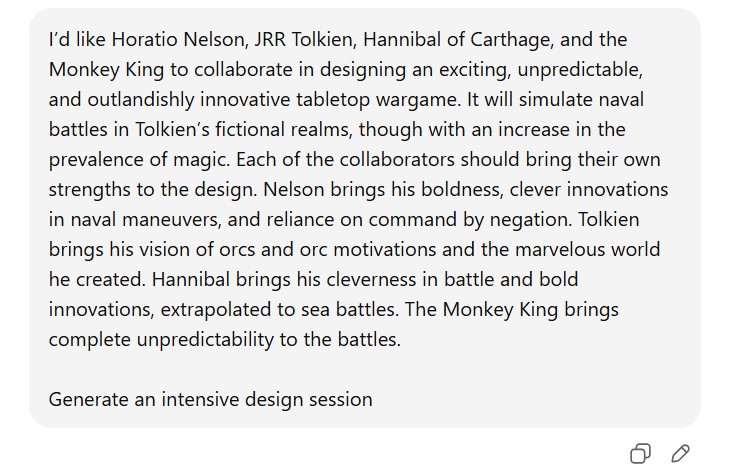
Right. This was the initial prompt. The design session was hilarious, and ChatGPT did an amazing job bringing these folks to life and crafting some basic game mechanics that applied their unique perspectives. Over the next few days in whatever free time I could manage (and during conference calls…sshh), I wound up having to exhaustively point out inconsistencies and vague points, iteratively asking for elaboration in the developing rules. Let’s say it was an ugly baking and the kitchen got messy, but the final ruleset honestly looks great and unique. Lesson here is be patient, don’t trust anything, don’t accept first outputs for anything, be super clear what you want, and give it feedback as you go.

I’m being honest in this experiment, by the way. I intentionally did NOT design or suggest any rules or game mechanics. The point was to explore what I was presented, not design it myself. All I did was ask questions and point out when the designer contradicted itself.

So you wound up with a ruleset. Nice. How about game components?

I was so fabulously surprised by the quality and consistency of the game components. I swear to you, no matter how cool these things look, I did absolutely NONE of the artwork, the graphic design, concept art, or logos. I used Photoshop like crazy, but that was only to clean these things up (like adding a “the” when ChatGPT refused to do or making a grid consistent across similar cards, that sort of thing).

I just scrutinized the rules, asking for elaboration when things didn’t make sense, and when I saw a component like a marker or a tracker of some kind get referenced, I would ask ChatGPT to design them one by one. Lessons learned here: never bother asking for a printable pdf – it’s useless at that, assume there are contradictions and inconsistencies you’ll need to fix, and only ask for designs one at a time. Once it had established a really attractive watercolor art style, I forced it to stay close to the same style for consistency in design. You be the judge on that, but these wound up some very attractive and playable components.

What is gameplay like?

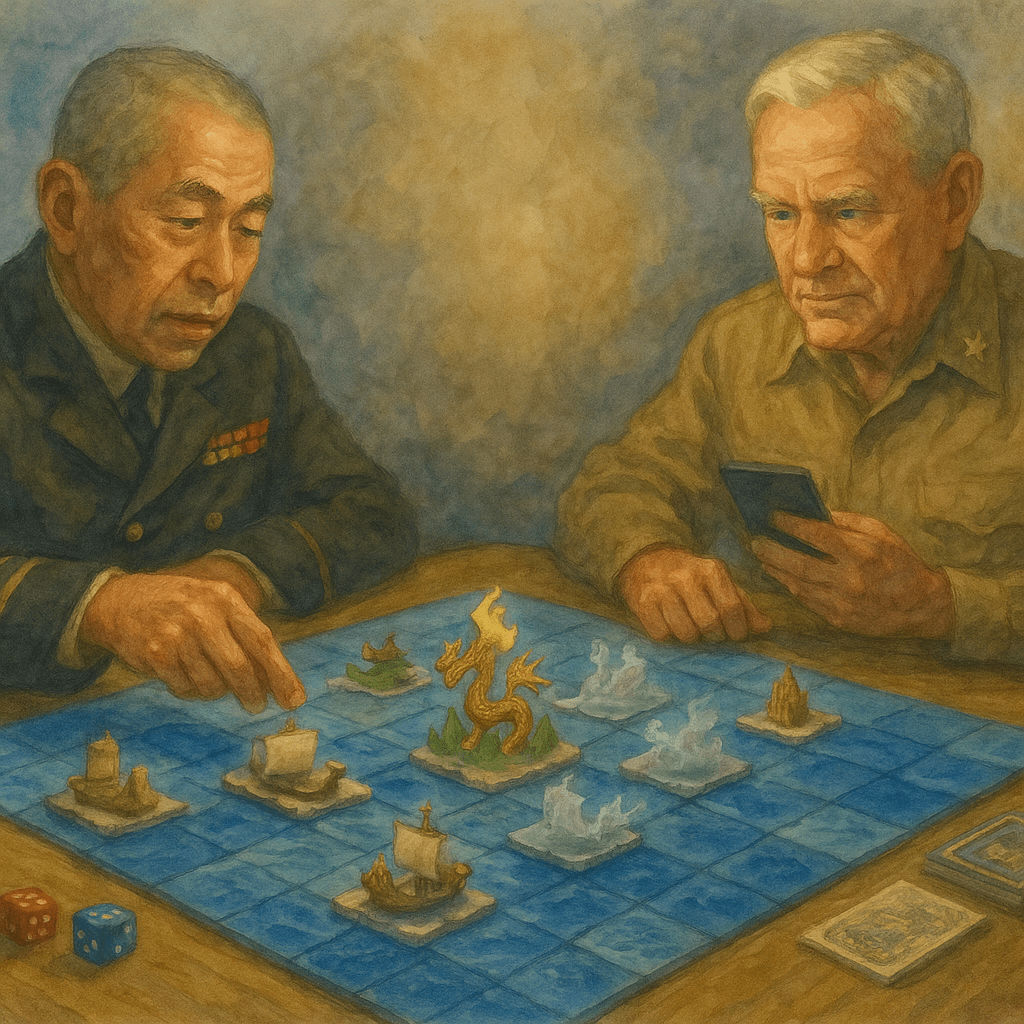
Funny, actually. I had Admiral Nimitz and Admiral Yamamoto, two more innovative geniuses of sea warfare, playtest in a simulation of the rules (just another simulation in ChatGPT, asking it to act as these two historical figures and play a game of the rules it had designed). Yamamoto chose the Elven fleet and built his game around precision strikes & ambushes. Nimitz chose Orcs and favored layered defense and overwhelming counter-punches.

Oh yeah? Who won?

Nimitz was pressing Yamamoto hard, but a Leviathan broke up his fleet and put him at a disadvantage. In the end, Yamamoto won by being more adaptable to the ever-changing conditions of the battlefield.

So how exactly are the personalities of these 4 designers reflected in the rules?

  1. Admiral Horatio Nelson

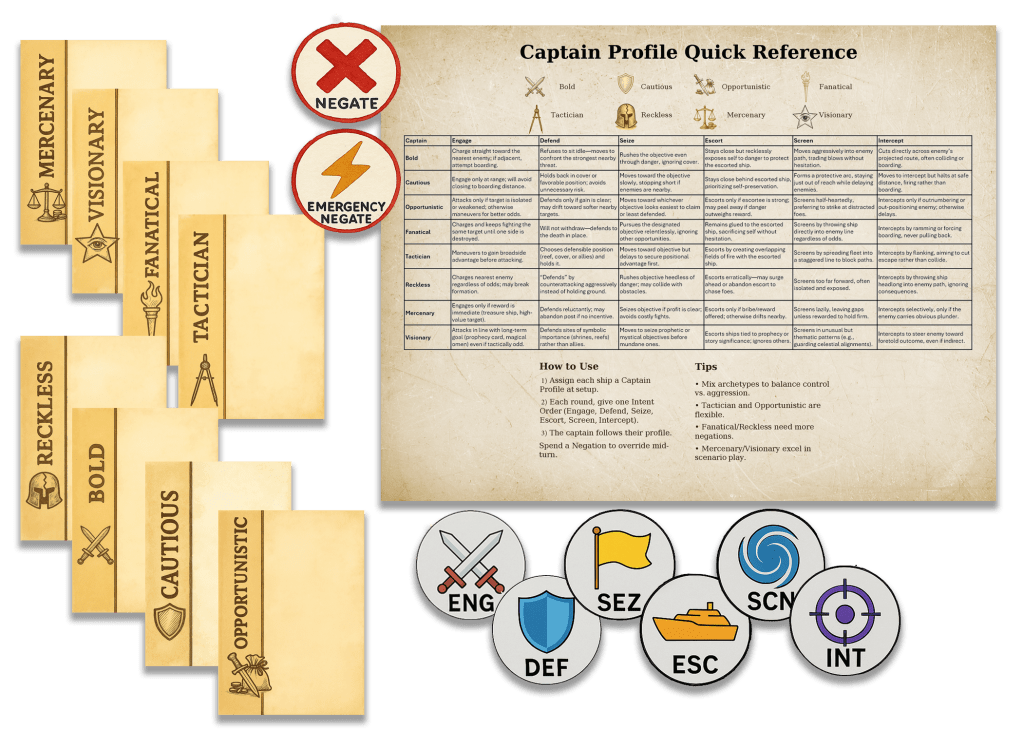
Nelson’s mechanic is command by negation, which requires the player to choose a personality profile for each ship captain and issue broad commands for each ship at the beginning of each turn. During each ship’s activation, that captain may or may not carry out the order as desired, and that is determined based on consulting a table. It flavors the strategy of the player, making you think about personality compositions of the fleet and what you’re likely to encounter. You have only so many “Negate” and “Emergency Negate” plays you can make before you have to surrender to the fog of war and trust your captains.

2. General Hannibal of Carthage

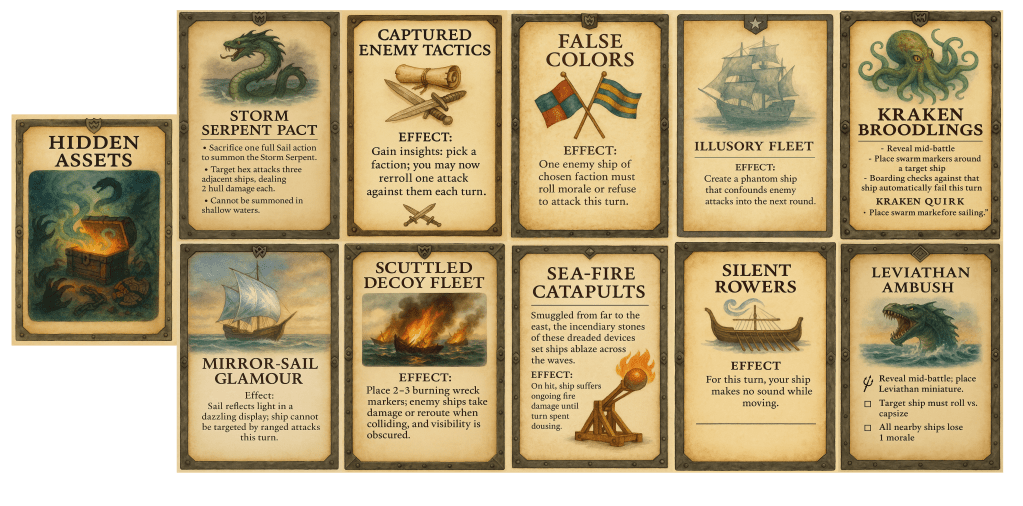
Before battle, players draw secret asset cards to recruit legendary sea-beasts, conduct some genius battle maneuver, or craft devastating magical artifacts. These assets are hidden until revealed at critical moments, enabling double-bluffs.

3. Professor J. R. R. Tolkien

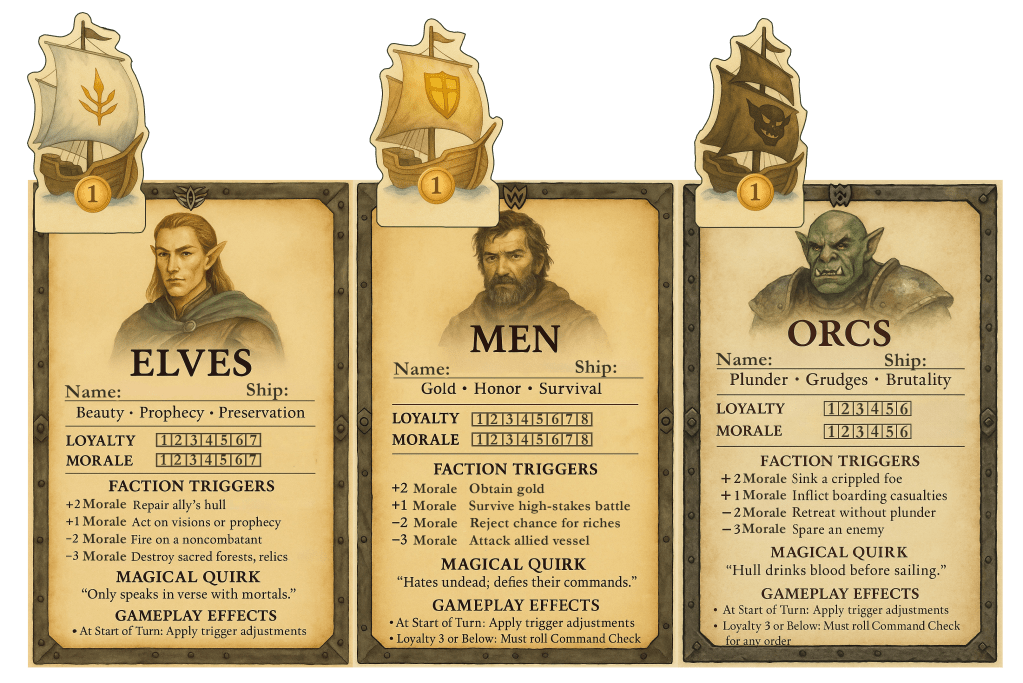
Each ship’s captain not only has the personality profile, but also dual Morale and Loyalty tracks, which are recorded on Living Loyalty cards. Orcs are motivated by plunder, personal grudges, and displays of brutality. Elves, by beauty, prophecy, and preservation. Men, by gold, honor, and survival. Disregarding a faction’s ethic by orders in battle or allowing the morale to suffer from specific battle conditions can result in mutiny or refusal to act.

4. The Monkey King

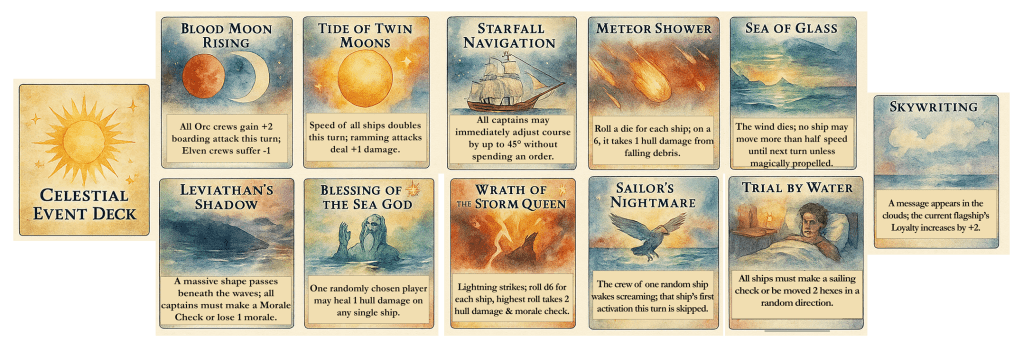
A “Celestial Event Deck” is drawn each round, representing maddeningly unpredictable supernatural occurrences that shift the seas and circumstances. It’s chaos every round, and it can turn the tide in your favor if you’re quick thinking and flexible, or it can crash your dreams into burning wrecks.

It sounds really fun. Have you played?

Some solo playtesting, yeah. It’s not perfect, and there are times you have to wing it and just go with whatever makes sense. Yet it hangs together surprisingly well. I’m not taking this any further, and we’re definitely not developing this for sale, but was super fun and satisfying.

What about the vision of immediate, on-demand game prototypes? Possible?

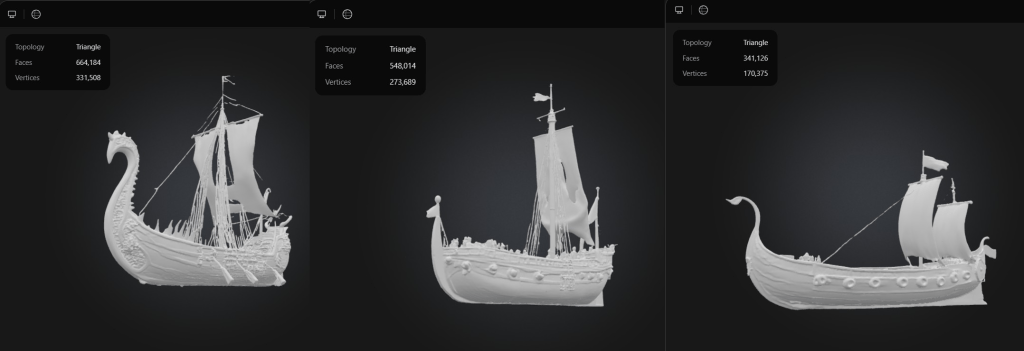
Oh yeah, just not now without a lot of manual work. I tried Meshy to generate some actual miniatures I could 3D print, and got something. I could tell at a glance they were going to need a bunch of cleanup in Blender before I tried printing them, and I was honestly exhausted with this process by that point. So nope, I went with printout standees for which you’d need the plastic stands. I stole some of those from a Gloomhaven box I had sitting around.

Still, if you’re asking me whether this on-demand, completely customizable future is possible based on this experiment, I’d say absolutely we’re headed into that world. I see a place for ChatGPT connected to a color printer with card stock, a 3D printer, and maybe a Silhouette Cameo or something like that for perforation (to avoid all that annoying scissor cutting), and you could really have something once the large language models mature a bit more.

Anything else to say before the download button?

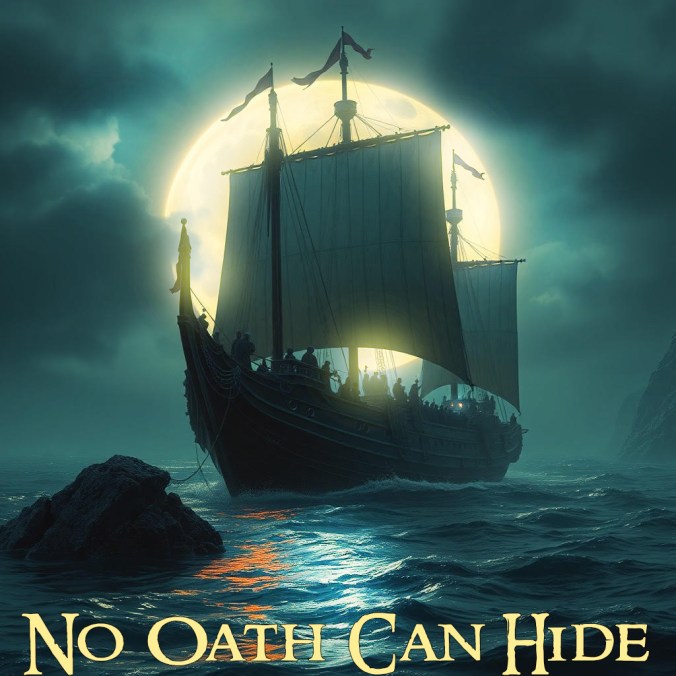
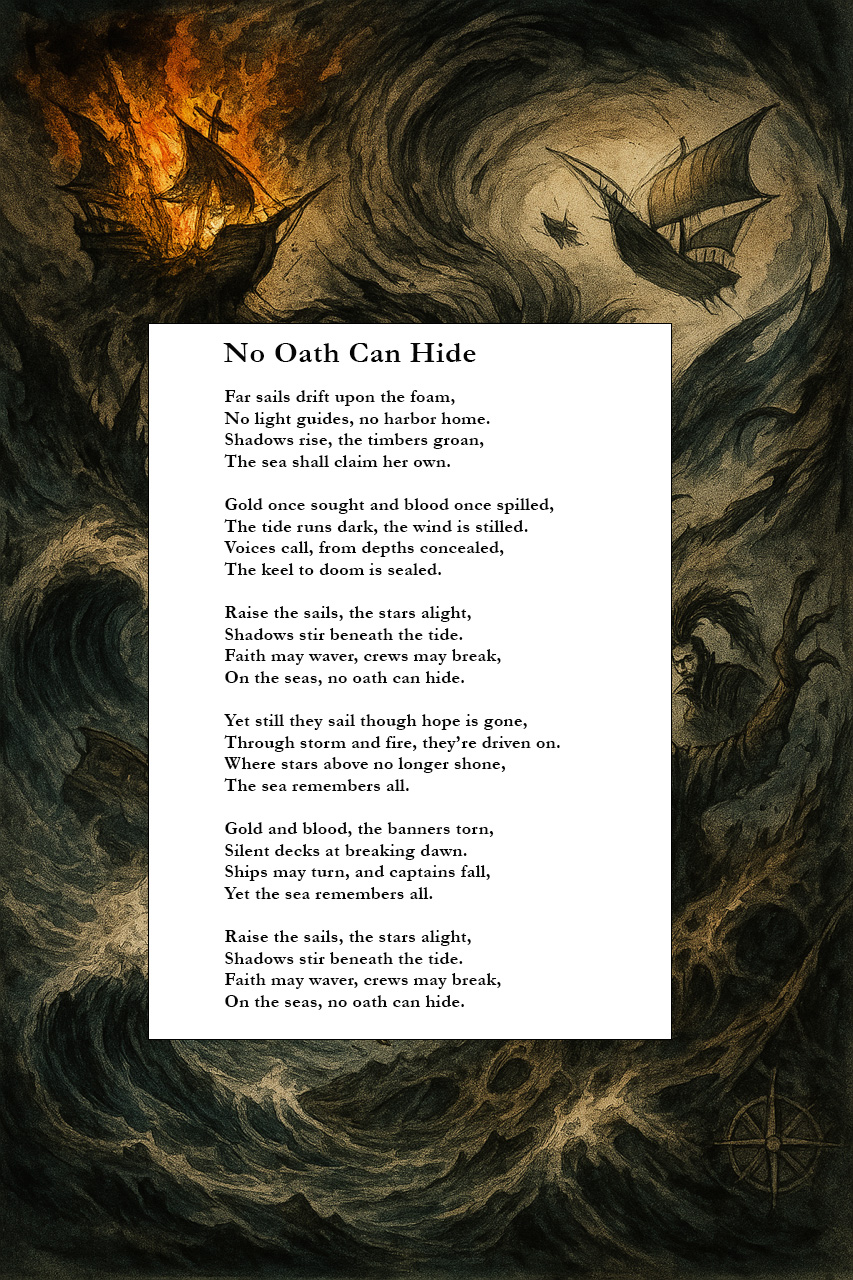
Well of course! There’s a theme song for the game. You really need to hear this. Remember, I didn’t design anything, including the logo at the top of this article. Neither did I write the lyrics or the melody. I just gave ChatGPT some direction on what sort of lyrics I was looking for with some example songs and the mood, iterating a few times for the right verses and choruses, then fed that into the Suno music generator with some more direction on Celtic, ethereal folk music and whatnot. Then I listened to a few and picked the best.

And honestly, I love it! It’s called No Oath Can Hide. Smash the button below to listen. Here are the lyrics.

Alright, then. Show me a download button!

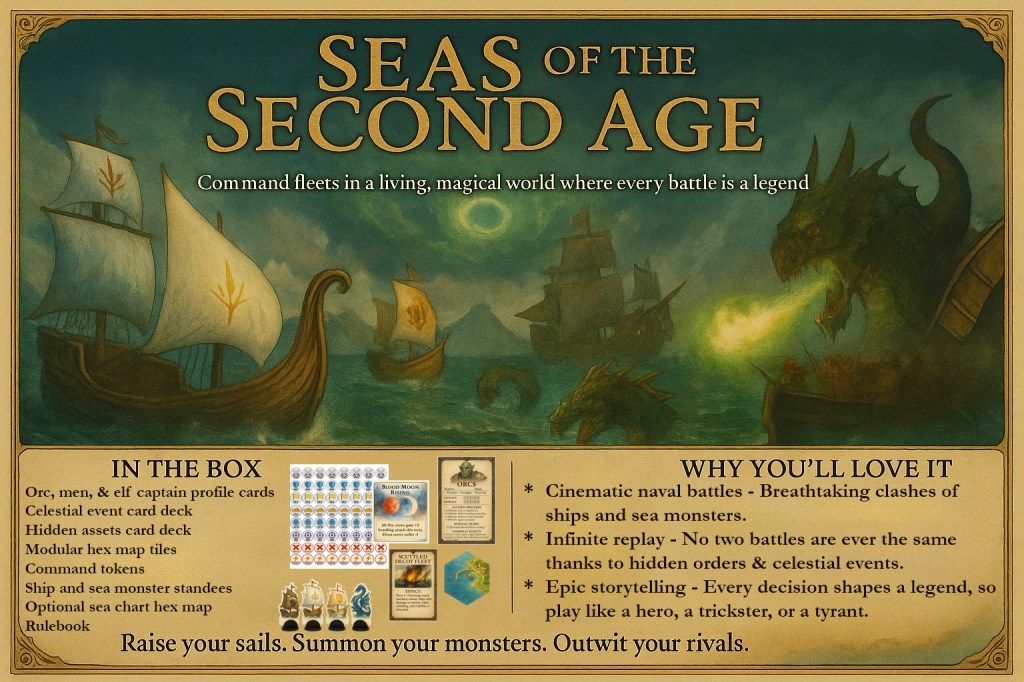
Sounds good. I hope you like it, or at least that can use some of these accessory goodies in whatever homebrewed games you’re dreaming up. The DOWNLOAD button links to a zip file containing everything you need to play apart from dice and some plastic stands for the ships, which means the stuff illustrated and listed below.

I hope you love it. What an amazing experience, and I’m looking forward to hearing what you think of all this. Don’t try to sell this anywhere though – it’s basically a glorified fan fiction that should be available for free.

Till next time,