A friend I lost years ago left me his lyrics – now here are the songs

You might think today’s topic is a bit heavy, but it really isn’t. It’s transformative, is what it is! Honestly, I did a thing with AI tools recently that blew me away. It was an experiment that has blasted daylight into a world of opportunity that can send your imagination soaring if you let it.

Welcome back to a series we call “Conversations from the Abyss”, where we use AI tools to stage new dialogues or honor creators of the past. The songs here are being made available for free – nobody’s selling you anything with this.

Back in 2017, I wrote this memorial post for a dear friend of mine who I lost to depression. He fought it hard, but he lost. And we lost something magical with that guy, I promise you. That isn’t my point today, though. Not really. His name was Tim, though we called him Droopy because his voice sounded like that cartoon dog when he spoke.

Anyway, Tim wrote lyrics. Great ones, if I’m honest. I tried too, but he showed me up because mine were always too out-there, too audacious and unrelatable, too philosophical. I was always trying to “say something” or break some kind of ground, and in the end, he’d show up with a song about wanting to take an old convertible to Florida and everybody would love it. We would jam on guitar at his house, and he’d riff crazy lyrics about girls and beaches and highways…and it was amazing.

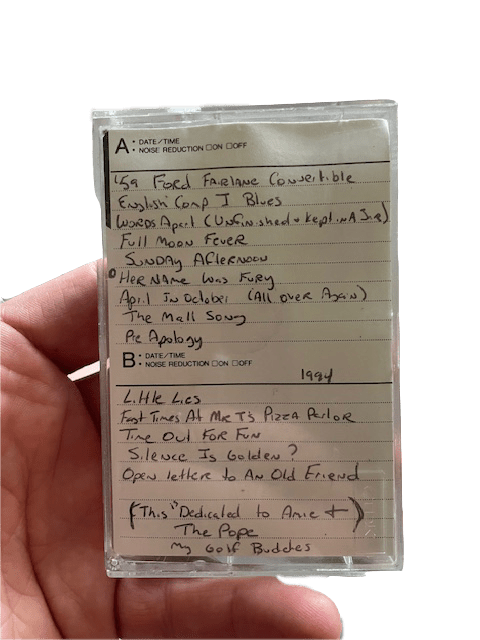
So I’m a few posts deep into this series of AI experiments, and it got me thinking about whether I could dig around in some crates and find something Tim wrote back in the day to bring to life with the help of some AI tools. And sure enough, buried in a pile of college papers and useless memorabilia in the basement, I found this:

For the youthful among you – that’s a tape. You recorded stuff onto it with ancient witchcraft. In this case, my friend had gifted me in 1994 a thing as I was going off to the Navy that now has become one of the most precious pieces of my life’s treasures. He recorded 14 original songs on an album he titled Crush, and dedicated it to me and to someone named Amie who I never met. (I was the Pope – don’t ask).

I learned not to close my eyes as I listened to it, because it felt way too much like being back in his room playing guitar and getting lost in music with one of my dearest friends. I can’t really do that right now. Maybe never.

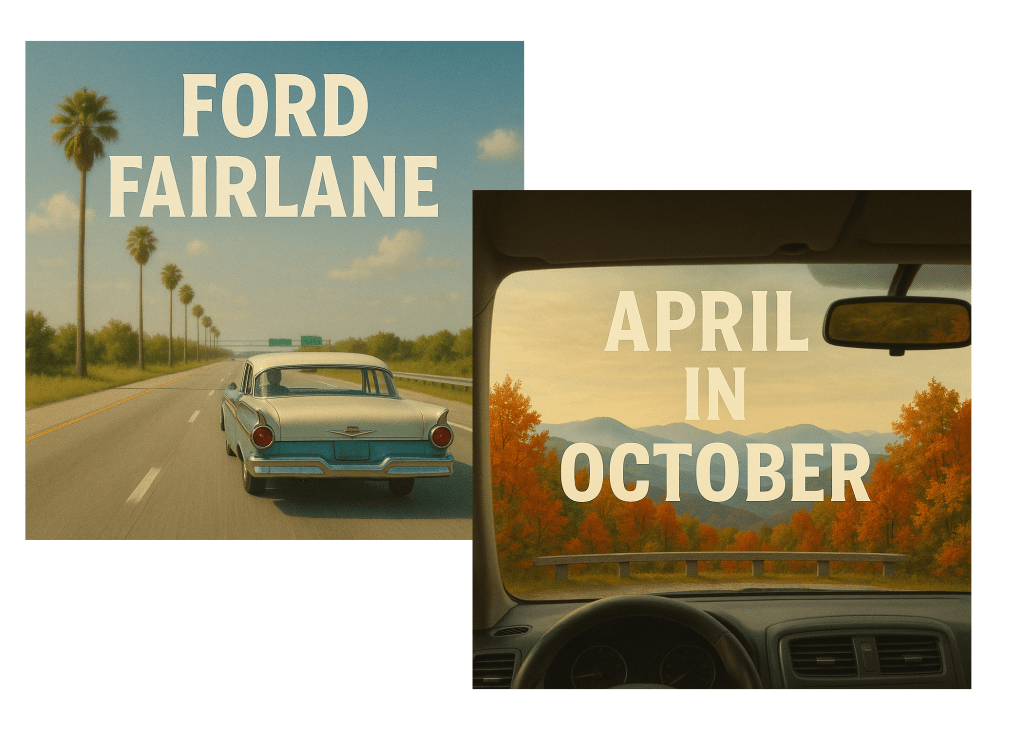
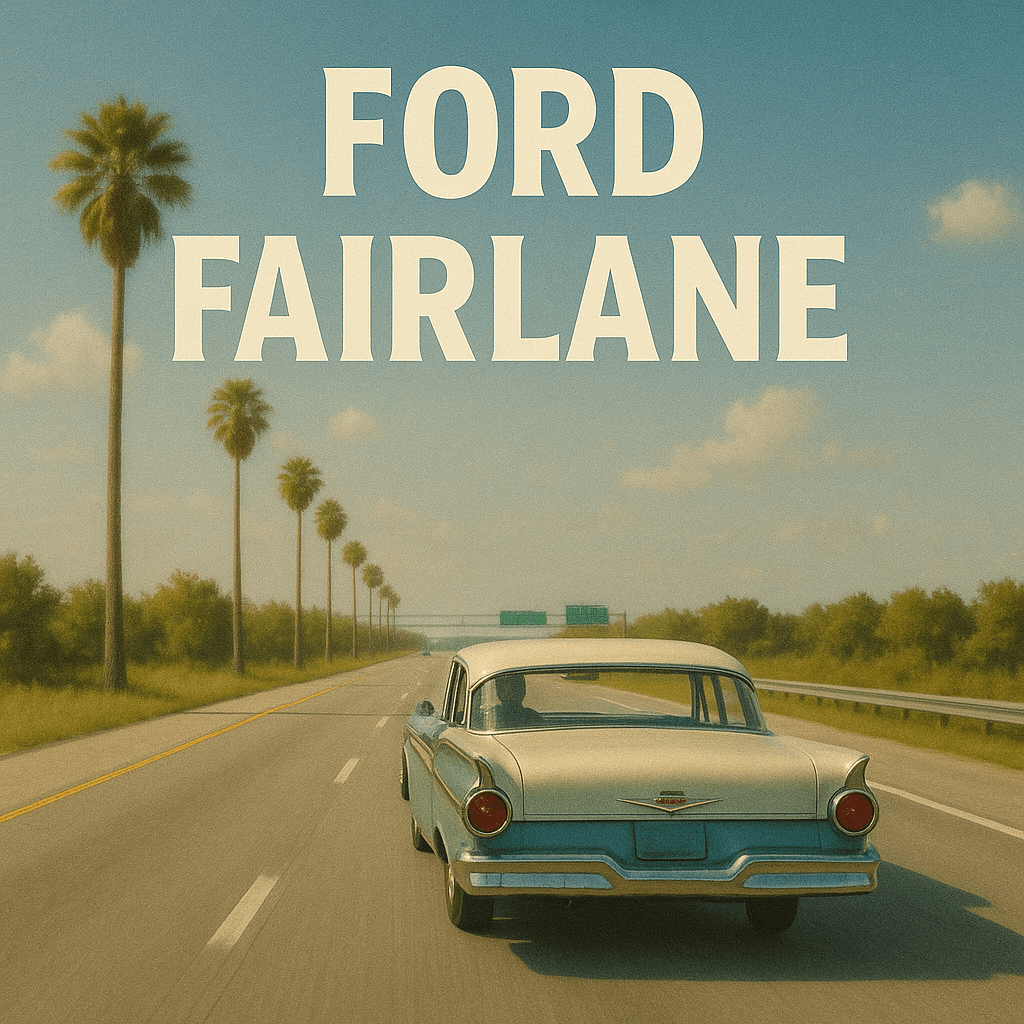
But what I DID do was amazing. I picked two of them and brought them to life with Suno, an AI application that generates songs from your lyrics and other direction. Tim would have been horrified to see his words in a country song, but that’s my little joke and he can deal with it. For my part, I think they’re incredible. I remember him singing ’59 Ford Fairlane Convertible in my dorm room, and I believe I know who April was (the girl from the second song).

How about you do me a favor then? If this topic has at all intrigued you, or if anything I’ve ever written on Grailrunner has brought you even a moment of diversion, would you do me a great favor and listen?

My friend, Tim would appreciate it.

Smash the buttons. Let me know what you think.

A resurrected Harlan Ellison helps settle the question of shock value in storytelling

Harlan would hate this. With a bullet. But it’s happening.

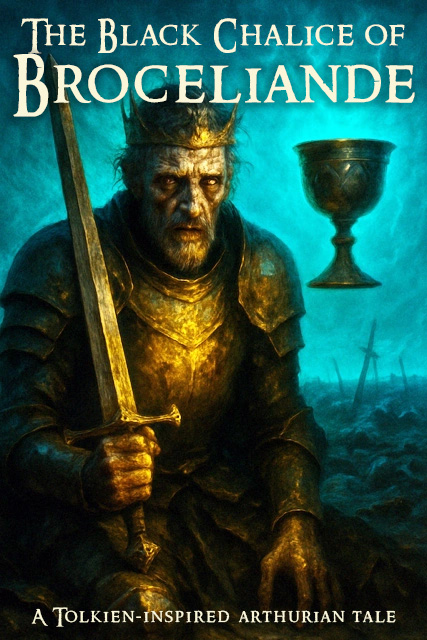
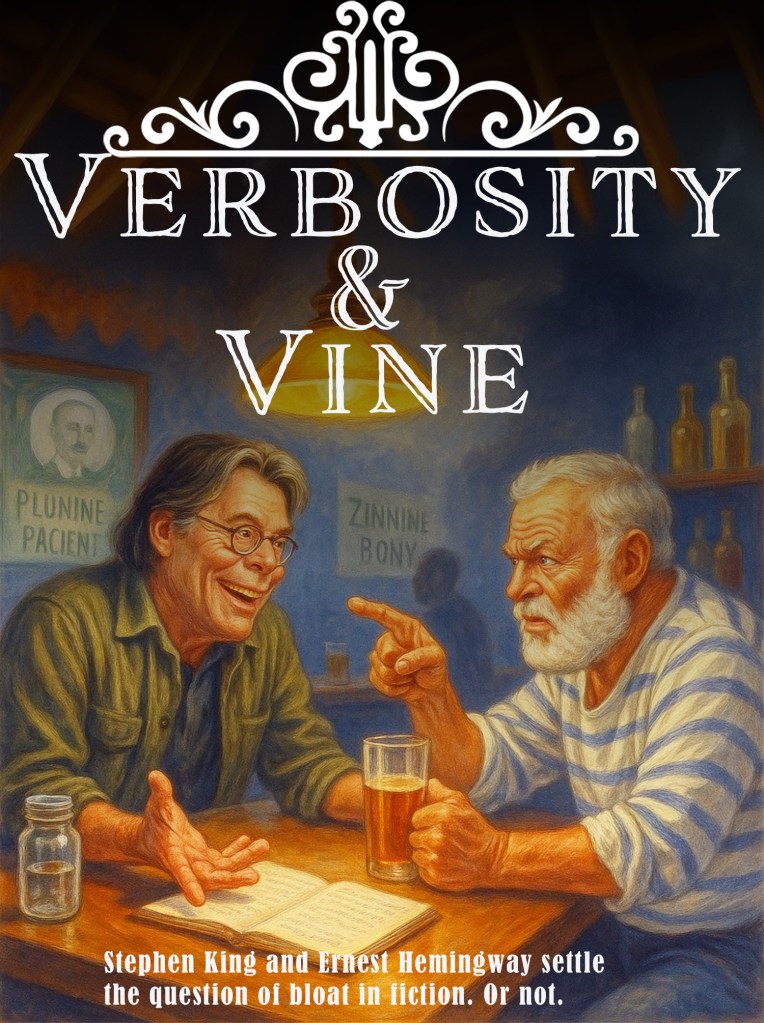
We’re making hay while the sun shines, trying out a premium ChatGPT subscription and bringing all sorts of people back to life or mashing them together into alternate realities for our entertainment. And honestly, some of these simulations of literary or artistic geniuses are surprisingly accurate to how they thought and spoke. So far, we’ve hosted a hilarious debate about conciseness in storytelling with Stephen King, Hemingway, Poe, H.P. Lovecraft, Professor Tolkien, George R.R. Martin, and Homer called Verbosity & Vine and had Professor Tolkien write a new 2,000 word King Arthur short story with an evil grail titled The Black Chalice of Broceliande. There is absolutely going to be a Seinfeld Season 10 post at some point, once I pipe Modern Seinfeld prompts into ChatGPT and let the horses run.

Anyway, welcome to a series we call:

Since the King versus Hemingway debate wound up so funny, we thought it would be a hoot to smash some more genius creators together and have them argue the merit of shock value in storytelling. To remind everyone: our policy at Grailrunner is to consider AI as powerful tools but to always call out their usage. This is for pure entertainment. Nobody’s selling you anything here.

This simulated argument was entirely written by AI with prompts from us, but really took on a life of its own. We decided who joined the conversation, and some of those choices really wound up fantastic. In fact, things really surprised us when we had Professor Tolkien join this conversation as well, as he kind of cleaned everyone’s clock on the matter at hand and got suddenly inspiring. That just happened – we can’t take credit for it! Ellison, at least for our part, stole the show though.

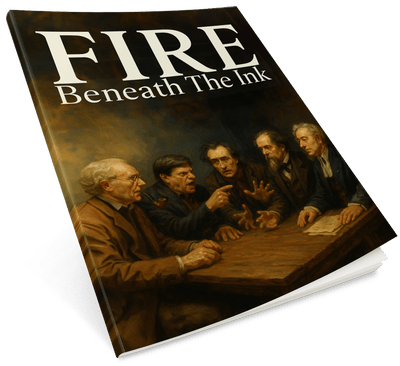
The conversation is called Fire Beneath the Ink:

Key players (all deceased) from left to right are:

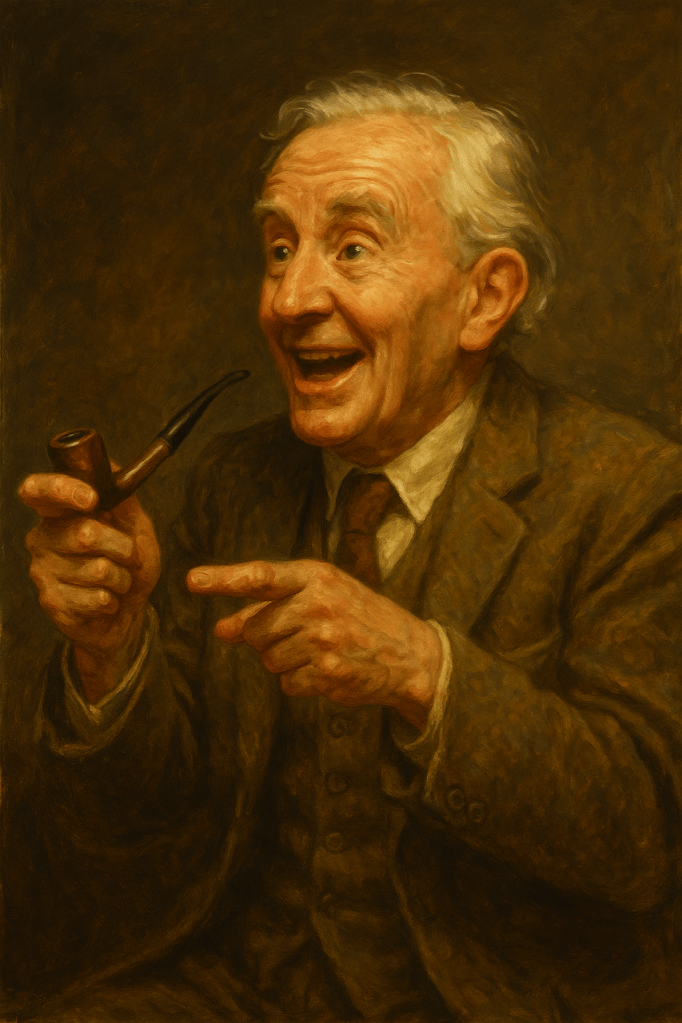
Professor J. R. R. Tolkien – author of The Hobbit and the Lord of the Rings trilogy and master craftsman of worldbuilding.

Harlan Ellison – a fiercely imaginative and outspoken American writer known for his prolific work in speculative fiction, particularly short stories, television scripts, and essays that challenged social norms and literary conventions. Also one of the finest writers to ever punch a typewriter.

Antonin Artaud – a radical French dramatist, poet, and theorist best known for developing the Theatre of Cruelty, which sought to shock audiences into confronting the deeper truths of human existence. He once threw meat at his audience.

Charles Dickens – a celebrated English novelist and social critic whose vividly drawn characters and dramatic storytelling captured the struggles and injustices of Victorian society. Nobody has ever been better at generating pathos and character empathy than this guy.

Jonathan Swift – an Irish satirist, essayist, and clergyman best known for his sharp wit and scathing critiques of politics and society, particularly in works like Gulliver’s Travels and A Modest Proposal.

Random? Maybe a little. They all seemed to suit the topic at hand though, and Artaud and Harlan got along famously! See for yourself by smashing the cover button below!

So funny! We hope you enjoyed the debate. Somehow, it was nice to hear from Harlan again, and with him in good humor, poking at people and enjoying himself. If you’re familar with him at all, surely you see how much he would loathe this entire idea and likely drive to my house and tell me so.

And what about that Professor?! Did you get tingles at the end? We sure did.

Anyway, come back often and check on us. We’re unleashing the creative hordes here.

Till next time,
I asked AI to have Tolkien write me a King Arthur story with an evil grail

So I was killing time at the airport last week, waiting on my flight. Grabbed lunch and sat down to start doom scrolling my phone since I had a couple of hours to kill. Then I thought…”Wait, I’m trying out the ChatGPT+ premium membership this month.”

I really….really need to share with you what this AI built for me with some simple prompting, all on my iPhone while I had lunch. Even the pdf I’m going to share, with the front and back covers. All of it.

On. My. Phone. During lunch.

Anyway, our policy is to consider AI as powerful tools but to always call out their usage. This is for pure entertainment. Nobody’s selling you anything here.

So I always read back in the 70’s and 80’s that “computers can’t create”, and imagination is the skill of the future. I hear it a lot now, actually, that AI is blobbing existing works together and creating nothing new, and that’s technically true. But that’s also what our brains do.

“All you need to invent is an imagination and a pile of junk.”Thomas Edison

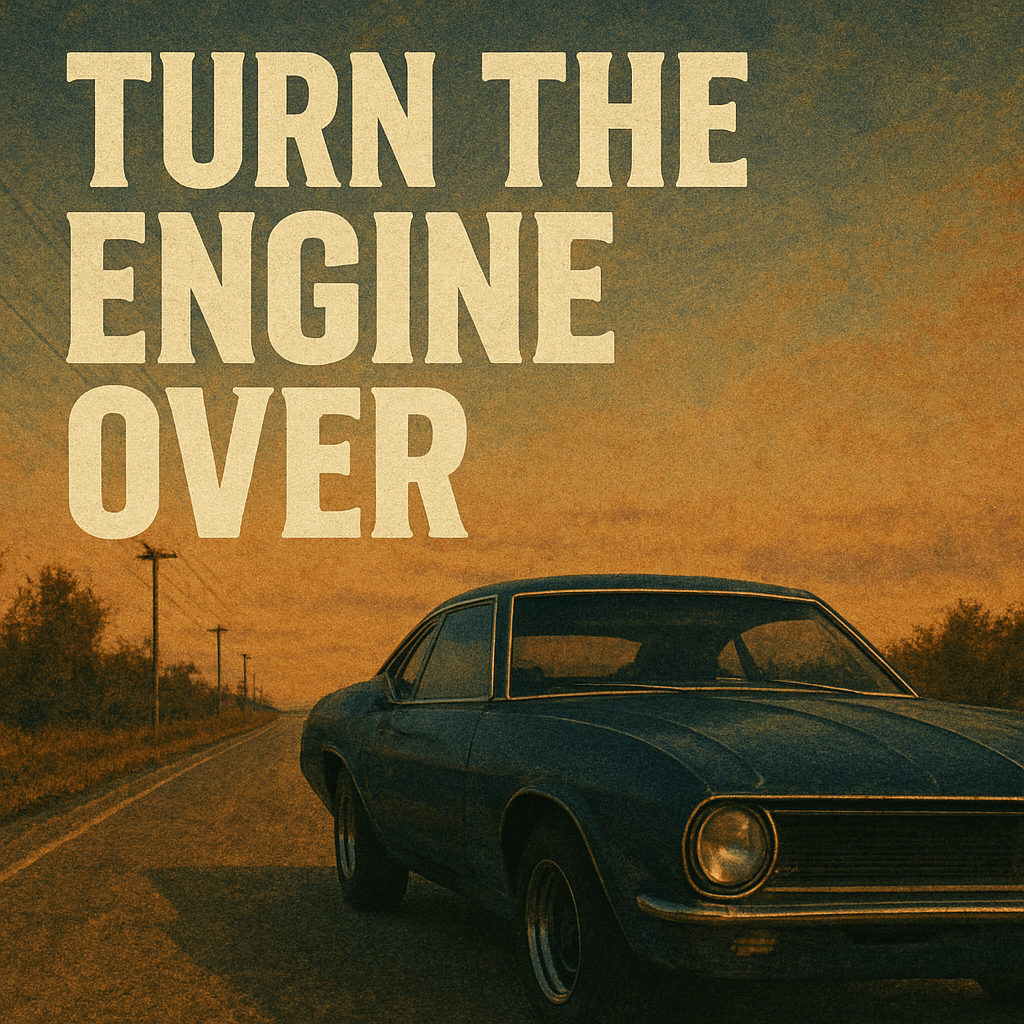
It’s one thing to see the lyrics of an imaginary Bruce Springsteen song, like “Turn The Engine Over”:

I was born on the edge of a steel town flame,
Where the smokestacks whisper your daddy’s name.
Mama lit candles, prayed hard through the storm,
While the foreman shouted, “Son, that’s just how you’re born.”
The rail yard’s rusted, the bar lights dim,
But I still see her dancin’ like a seraphim.
[Chorus]
Turn the engine over, feel the rattle in your bones,
Roll past the ghosts that call these back roads home.
Love don’t die, it just hides out in the dust,
So turn the engine over, babe—
Drive it like you still believe in us.
[Verse 2]
Jenny worked nights down at Jackson’s Grill,
Saved up dimes in a jar on the windowsill.
She said, “Someday, I’ll see the ocean tide,”
But dreams like that don’t get no free ride.
I was too scared to run, too proud to beg,
Now her name’s a tattoo on my right leg.
[Chorus]
Turn the engine over, feel the thunder in your chest,
Every mile a mercy, every town a test.
The past don’t sleep, it rides in the rearview dust—
So turn the engine over, babe—
Drive it like you still believe in us.
[Bridge]
We were kings of the lot, gods of the drag,
Laughin’ through summers in American rags.
Now I punch clocks just to quiet my mind,
But some nights I hear her, singin’ soft through the pines…
[Verse 3]
Now my hands are blistered, my boots are worn,
I’ve buried too much to mourn like I’m torn.
But this old Ford’s got one more ride,
And maybe redemption waits on the other side.
[Final Chorus]
So turn the engine over, let it roar like it’s alive,
This heart’s still beatin’ like it’s twenty-five.
Hope ain’t gone, it’s just buried in the dust—
So turn the engine over, babe—
Drive it like you still believe in us.
[Outro]
Yeah, turn the engine over, babe…
Drive it like you still believe in us.

I had Suno (different AI application) gen up a version you can listen to, which wound up a country song and nothing like the Boss, but honestly still pretty awesome. Listen to that here.

The lyrics are eerily appropriate to something the Boss might write. Not mind-blowing, I agree. But it definitely reads like him. Certainly better than anything I could do trying to emulate him.

In my case over lunch, I really felt like reading a King Arthur short story since:

  1. I love King Arthur and grail stories, in all their forms
  2. I only had a sandwich and didn’t want to deal with anything very long anyway
  3. If it sucked, it really didn’t matter. It’s just replacing futile news scrolls and will serve as a place to put my eyeballs and attention for a little while.

I think very highly of Professor Tolkien’s writing style and lament that he didn’t generate a bigger bibliography of fully formed fiction in his unmatchable voice and sense of scale, his ability to summon majestic backdrops and twinkling cities in the distance. So I added to the prompt to make the story roughly 2,000 words and in the style of Tolkien.

What I got was – honestly, not bad at all. First try. Shorter than I had asked, but still interesting. I gave it a couple of ideas to squeeze in to some new attempts, specifically about the Green Knight, and then asked for a cover image. I wanted to test if I could generate an entire pdf ebook (really a packaged short story) without needing Photoshop or other desktop tools.

Just my phone, waiting on a plane.

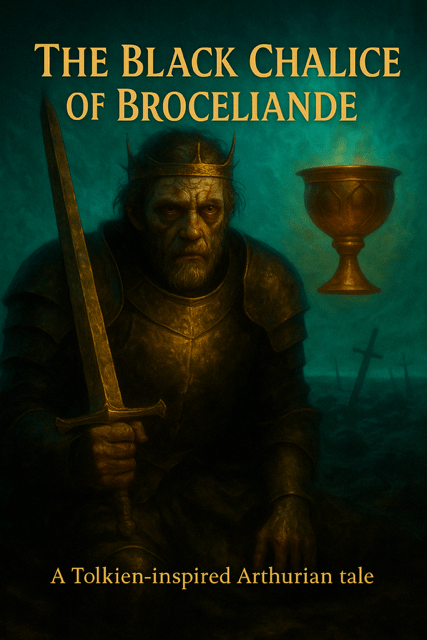
The cover kind of gave me fits and needed a lot of coaxing, though I didn’t use Photoshop at all for this. I mean, it also named the story for me, generated variations of fonts and layouts, and created the entire front cover just based on prompts (the one in the header, I did in Photoshop, so that’s cheating):

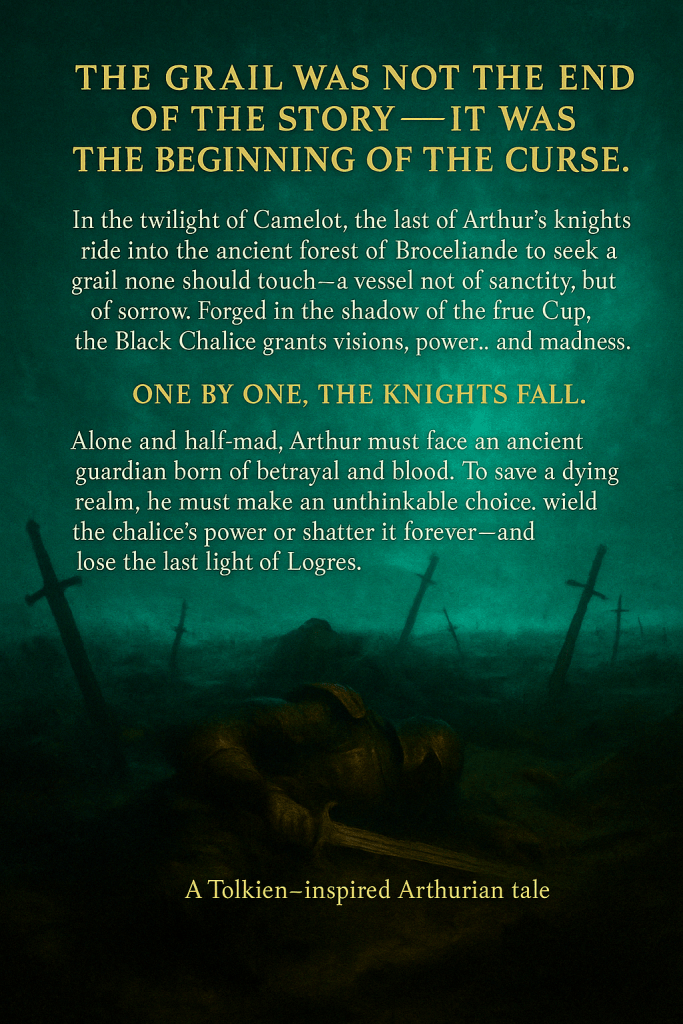
Here’s the back cover it generated for me, based on text it wrote and some prompts to stick to the theme of the story and the front cover:

And finally, having no idea if it was possible, I asked it to include all of this generated content into a pdf. And here that is.

Please keep in mind – I didn’t sit down with Indesign or Photoshop or Word. I didn’t write any of it. I didn’t paint anything. This is me waiting on a plane and punching things into my iPhone to entertain myself.

Crazy world we live in, isn’t it? I think we need to be careful with all this, for sure. Training databases should be combinations of properly licensed images and works or things in public domain. Original creators need to be paid for their work. People using AI ought to say so and be clear how.

Still, crazy world. And a wonderful way to pass some time if you’re itching for a new Tolkien story.

We’re including this post in a new ongoing series where AI is resurrecting interesting people for us to chat with, or dropping them into alternate realities to entertain us (for free). It’s called:

Till next time,
I asked AI to write a funny debate between Stephen King & Hemingway

This is funny. Seriously.

Our policy at Grailrunner is to consider AI a powerful and unavoidable tool for creative exploration, but to always call out its use explicitly and avoid licensed images for datasets. But wow – I wasn’t ready for how much things have improved since I last messed around with ChatGPT a year or so ago!

I had a couple of hours to kill today, and I took a random magazine from Barnes & Noble to a steakhouse. The guy that sat me saw the magazine’s headline about ChatGPT and told me awkwardly how he generated a conversation between two of his favorite characters from some video game (the game’s name eludes me – ‘Borderlands’, maybe.

Anyway, it got me thinking. Who wouldn’t want to listen to Stephen King, master of long-winded, verbose fiction get into a heated argument with Ernest Hemingway, the craftsman known for his crystalline precise and minimal prose?

I mean, right?

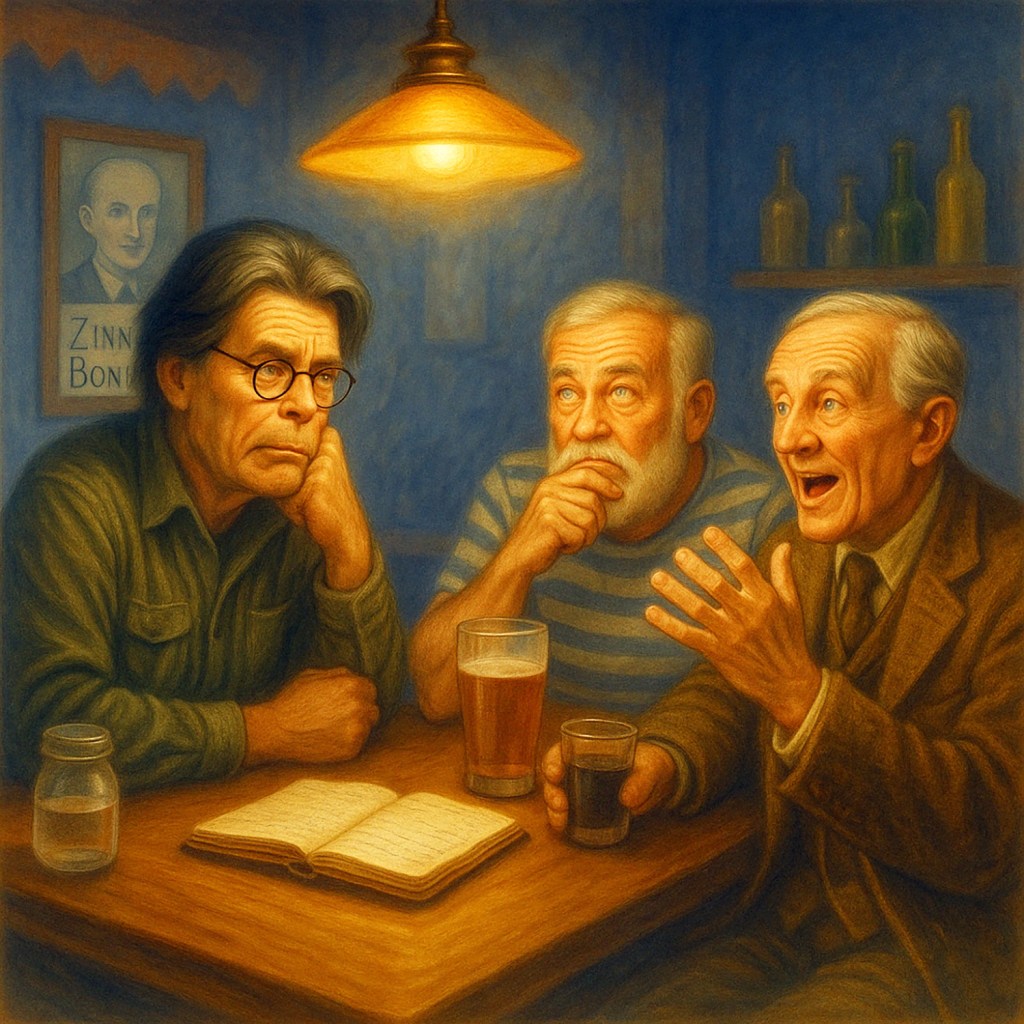
So I signed up for ChatGPT+ to avoid a bunch of annoying limits and played around with some prompts to get things going. They were coming to a resolution too quickly, so I juiced the scene by adding Tolkien. Then Edgar Allan Poe and H.P. Lovecraft and George R. R. Martin. Then Virginia Woolf showed up uninvited. That’s on her – I didn’t prompt that one! Then I had Homer rise up from the bar floor to give his thoughts and quiet everyone since he’s the original boss.

As a twist, I had King step up and propose a means of settling the entire debate. Not maybe what anyone would expect, but satisfying from my perspective at least.

Then I asked Shakespeare to come in with an after-credits scene. He even wrote some poetry for the occasion.

I used ChatGPT to illustrate the conversations too, which was a bit of a pain. It’s kind of random with safety content filters, but it seems if you end the chat and start a new one, filters that have kicked in and start shutting down everything seem to go away. I cleaned them up a little in Photoshop, but honestly – not that much.

The cover was a quick gen-up in Photoshop too, then I made the pdf in Microsoft Word because I didn’t have the energy to do it right in Indesign. Was just amusing myself, anyway. Nobody’s selling anything here.

Take a look by smashing the button here.

Isn’t that just hilarious? Surprisingly hilarious? I remember a couple of years ago asking this same software to write a new adventure with King Arthur and a dark, evil grail to see if it would be amusing and I was incredibly irritated how generic and nonsensical it was. That wasn’t that long ago – crazy how much better this content is.

Anyway, I just wanted to offer you something amusing today. Let me know what you think.

We’re going to make this another ongoing series, just to bring some folks back from the dead or drop them into alternate realities where some fascinating chats can take place. Come back and check that out!

Till next time,
One Month Into Book Launch: How’s That Going?

It’s been a month since we published SALT MYSTIC: BOOK OF LOTS, a solo roleplaying game based on our multi-media Salt Mystic setting. There are some bright spots, some hopeful notes, and a world of pain. Overall, we’re still incredibly proud of the product and seeing and hearing people appreciate it in the wild is an experience like nothing else!

We thought it would be helpful for anybody thinking of putting your own book out to see what we tried: what worked, and what didn’t…and what still might. Care to come along?

Way back in 2016, I wrote a short article defining some indie publishing principles based on lessons from the launch of my first book: TEARING DOWN THE STATUES. The principles were consolidated into the acronym “MCGRAW”, suggesting the key elements necessary for publishing success (Mainstream recognition, an eye-catching Cover that looks like it belongs with books like it, a popular Genre, as many Reviews on major listing sites as possible, Awards to add validation that the book merits attention, and Word of Mouth.) We kept these in mind this launch and tried to incorporate what we could, although the genre of tabletop roleplaying is so saturated and so dominated by Dungeons & Dragons that we were working uphill and digging holes from the beginning.

Still, hope springs eternal, and this is a product we believe in mightily, knowing from its ideation that nobody else was doing anything like it.

What was the pre-launch like?

February was a hot mess, finalizing the proofs and shaking trees to try and get attention from bloggers and gaming news sites. Short of providing free pizza delivered by cosplayers who do magic tricks, I’m not sure what else we could have done to get mentions from some of these guys – we reached out to 20 and got one “No, Thanks” and absolute crickets otherwise. That’s offering a free physical copy for review, by the way. Local gaming store wasn’t interested, and I didn’t have the heart to cold call others. My ego can only take so much bruising!

I pushed my Photoshop skills to the breaking point generating ad assets to use in social media and ad campaigns, stirring up some images that I think really popped! Here’s my favorite, though we had to switch it out to juice the click rate after things got rolling.

I’m a big fan of Absolute’s 3d cover generator and Envato’s PlaceIt – both to generate mock up’s of the cover in various places. We generated this one below for banners through RPG Geek and some other sites:

We came SOOOO close to hiring an artist we’ve been targeting for years now, and he might yet come on board for a promotional poster, so I won’t jinx anything by saying more. That would be amazing, so wish us luck! Anyway, he was swamped with other things, so the heavy lifting on graphics was still in-house.

How did you handle distribution setup?

The book is available at booksellers globally through Ingram Spark, and also on Amazon thru Kindle Direct Publishing, as well as the pdf on Drivethru RPG. We got the barcode direct from Bowker to retain full distribution rights – there are strings attached to the freebies. Honestly, setup was fairly painless for Kindle Direct, but I thought at one point Ingram was going to leave me with facial tics!

The cover file was a high res jpg I’d built in Adobe Illustrator, and it included some transparent png images (the title and the Grailrunner logo). The art was done with Daz Studio for the figures, some Blender and Photoshop filters for the forearm weapons, and some AI help for the background, everything composited and color graded in Photoshop then dropped into Illustrator for the text and placements. This is what that looks like, front and back:

Weird white outlines were appearing in the digital proof around anything that was a png in the image. Maddening! Nobody at Ingram Customer Service was responding, and internet advice was kind of all over the place. I tried various export presets and never resolved it, at last approving the digital proof even with the outlines in hopes that it was in fact a screen artifact only (as some advice suggested). Thankfully, the issue didn’t show up in the physical version.

As for offering a physical version through Drivethru RPG, I basically gave up. They seem to be saying they use the same print house as Ingram, though a different division or something? I dunno. Anyway, much worse issues with anything that was a png, including the interior art! A true disaster! I’m sure they would say it’s my fault, but I bailed entirely and just offer the digital version through them. My blood pressure thanked me immediately!

How did you advertise?

We ran campaigns on Facebook, through Google, Amazon, and on RPG Geek. The book is also listed this month on Ingram’s home page and in the World Reader, iCurate Connection, and Indiewire newsletters, all via Ingram (~28,000 circulation for the newsletters). Through the Independent Book Publishers Association, the book will be represented at the American Library Association conference in Philadelphia this June. We’ll see how all that works out, but here are some initial experiences:

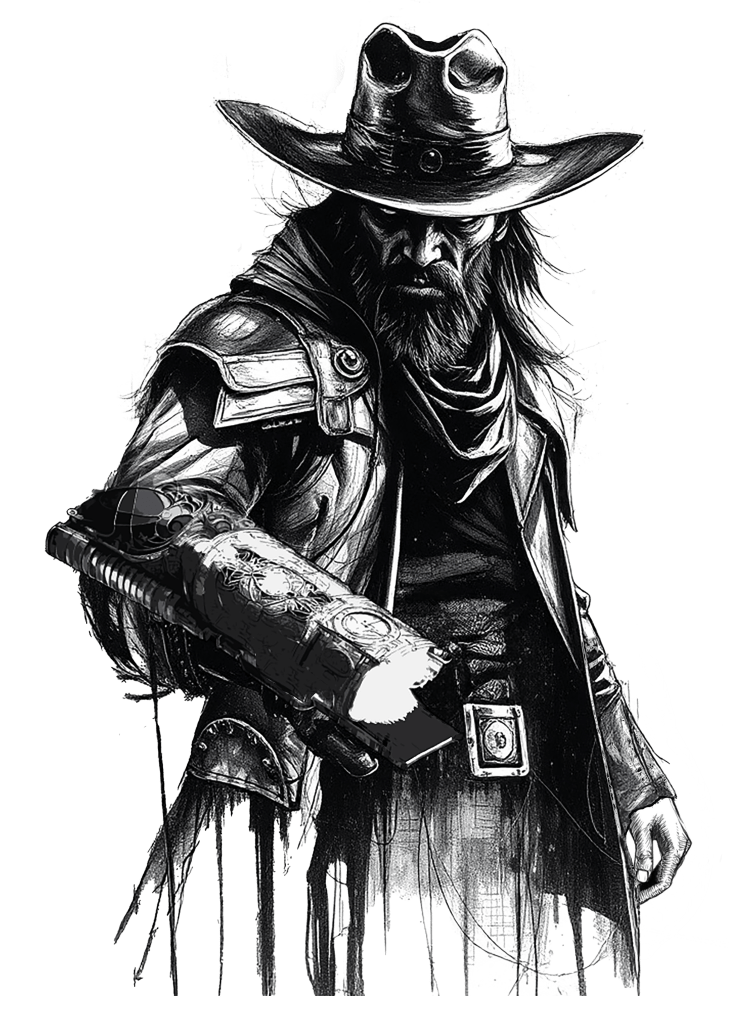
Meta (Facebook) started at 2.1% click rates with tens of thousands of impressions as well as loads of shares and likes and bookmarks. It all felt great until we saw that precious little of that was converting to sales. Internet research was suggesting a good click rate was 2% for search ads and 0.1% for display ads like banners, but for us it was just a lot of activity with poor conversions. By changing the graphics out to a grinning gunslinger and tweaking the copy a bit, we doubled the click rate to 4.2%. We’ll see if all those bookmarks and shares pay off down the line!

Google Ads was impressive, as their algorithm learns as you go, tweaking things to improve the reach. We wound up with a 5.1% click rate by the campaign’s end, which we view as solid. We even had one day peak at the end at 8.1%! All campaigns led to the same Amazon listing, so we can’t separate sales by campaign but I thought a lot of this experience overall.

RPG Geek was a little disappointing. Multiple banner and display ads dominated the site for a month. The thinking here was that this site entirely specializes in roleplaying games, so you couldn’t find a more on-the-nose target audience! Still, click rates flatlined at 0.1% for two weeks, till the same changes as above doubled that to a paltry 0.18% by campaign end.

Amazon: We only launched the Amazon ads in the last week or so – it’s a little early to report any results. I’d also never added any A+ content to a listing before, so that was new. Of course, I added that gunslinger since he seems to catch eyeballs, along with a very short description of the book.

So, was it a good launch?

Could have done more on pre-launch to get some mentions, honestly. We need to work on a solid email list and social media following though the new content required for that is a bit threatening when everyone has day jobs. Reviews remain super difficult to get, though some favorables have popped up that we didn’t arrange. Overall, sales are ramping up very slowly. Glacially, you might say.

What’s next?

I submitted SALT MYSTIC: BOOK OF LOTS for consideration in the 2025 Ennie Awards, which is the Super Bowl of RPG’s! Any mentions at all would be high octane fuel for me. That’s a long shot, of course, just because of the ridiculous amount of talent in the field these days. Still, you never know…

*

I hope some of this was helpful or at least entertaining. Warts and all, this is how things have gone so far and the plan going forward. I’m sure the outside observer can find all manner of beasties and stinking swamps herein, but from the inside, it’s a wild, crazy bucking bronco we’re just happy to hold onto!

Till next time,
Innovations in Music and Mythmaking (and how to link them!)

I’m told my reading habits are a little out there. I get that. I do.

However, it intrigues me that in almost any field of human endeavor, there is a specific type of personality that thrives on breaking its rules and forging incandescent new ways of doing things. If you’re new here, that’s almost entirely what we do here – find, spotlight, analyze, and celebrate innovation in the creative process.

So I was reading this book about 1960’s beach music:

I don’t like that sort of music at all. I especially detest men singing falsetto and lyrics obsessing over the teenage emotional range. However, I had heard that the Beach Boys album, Pet Sounds, was considered the greatest and most influential album in music history. Knowledgeable people say that. I wanted to understand why in the world that would be, given its niche genre, its terrible album cover and name, and the fact that it isn’t chock full of top 10 hits.

What was so special? And once I knew that, I would of course ask: what inspired it?

I’ll cut to the chase since the answers to those questions don’t actually comprise my point today. I want to extend some of these lessons over to mythmaking and storytelling since that’s my main jam. (If you’re into this crossover of music and storytelling, I wrote about this sort of thing in an article called “Aesthetic Puzzles: When Bach Met Shakespeare”, which you can go catch here.)

Why is Pet Sounds a big deal?

Brian Wilson was the main creative driver behind the 1960’s-era pop band, the Beach Boys, and took a break from touring in 1965 to focus on creating “the greatest rock album ever made”. Till then, their songs were bubble-gum melodies of no real sophistication and lyrics aimed like a piledriver at teenagers having fun, especially in and around the rapidly-growing fad of surfing. Wilson was enamored with the “wall of sound” production techniques of music producer, Phil Spector, which involved using echo chambers and physical studio arrangements augmenting studio manipulation of recorded tracks to generate robust, layered textures of sounds that would come across richly on a jukebox. Spector’s stated logic behind his own innovation was:

“I was looking for a sound, a sound so strong that if the material was not the greatest, the sound would carry the record.”

So it was mono (versus stereo) playback technology and the limited fidelity of speakers available at the time that prompted Spector to layer sounds together and experiment with ways of making the sounds more textured. Wilson felt the Beatles album, Rubber Soul contained some of the most mature lyrics yet for the band, and from these two launch points, he wanted to get more emotional with his lyrics and more experimental with his production techniques to surpass them all.

Wilson wound up innovating in all areas, and indeed developing intriguing ways of making the studio itself an instrument: combining, for example, multiple instruments simultaneously into a blended and new quality that sounded nothing like any of them. He introduced novel instruments like bicycle bells, a variation on the theremin, among others, in a rogue recording marathon of studio musicians while the actual band was out touring. Nobody had done that before, or even went off the trail of a small ensemble like that to make an album that couldn’t actually be played live. He also experimented with chord voicings, meaning how different chords are brought together (a little out of phase, for example, so there’s a slightly noticeable tremor) or avoiding a definitive key signature. By all accounts, Wilson’s efforts with the band surpassed anything Spector had done or would do. He took the inspiration and ran with it.

Studio musicians involved said of the time that they knew something very different was happening. Something important. It was interesting to me, reading what it felt like for the other guys there, the ones just hired to do a thing and realizing they were part of something.

So the idea to hold in your head then, for my point to land, is this: an approach towards recording music where all manner of frequencies and qualities of instruments and voices are layered over each other in a rich texture of sounds that you could listen to a multitude of times with headphones on and the volume turned up and still catch new things.

Texture. That’s the thing to remember. Innovating with texture.

What’s all this got to do with storytelling?

I’ve spent the last 3 years working on an approach to storytelling and tabletop roleplaying that I engineered to be as innovative as I could manage. I tried to rethink how narrative games like Dungeons & Dragons function and streamline everything down to core essentials.

“The awe and danger of exploration inside the covers of a book.” That was my compass. It’s here, called SALT MYSTIC: BOOK OF LOTS. I’m not trying to sell you that right now, though. I want to talk about using it as a recording studio like Wilson did.

This idea now of texture and layered elements building a rich tapestry to transform a familiar art form into something different and new prodded a new question for me:

Can the elements of mythology and storytelling play the same role for the written word that musical notes, chords, and rhythms play? Instead of playing for the ear a rich tapestry like that, can archetypes and themes be arranged to play for the emotions?

Here are the commonly accepted themes of mythology and folklore in a table, arranged into numbered entries appropriate for a roll of D100 dice:

Here are the common character types of mythology, similarly arranged:

And finally, here are the common situational types of mythology:

SALT MYSTIC: BOOK OF LOTS is designed in a similar manner, with appendix tables for all manner of characters, encounters, and places arranged along the 100-scale like this, appropriate for idle shopping, dice rolls, or use of the bibliomancy mechanic core to the book’s function. The concept with the book is to forge a solo adventure and tell yourself an amazing, resonating story.

The analogy I’m drawing today is that themes and types of mythology have a power and resonance very much like the comforting, stable floor of bass in music. A deep, low melody on bass grounds a melody and makes it richer, makes it seem more important. That’s how myths work. I’m imagining incorporating elements from these tables into a solo tabletop adventure to make them play the same role…

…to summon them so they must work their magic.

I picture roleplaying game rulesets like the one in the BOOK OF LOTS as recording studios: an engine of creation that wasn’t available to previous generations that we can bend to dazzling new heights like Wilson did.

I see elements of oracle tables like those in BOOK OF LOTS or Ironsworn, Starforged, the Dungeon Dozen volumes 1 and 2, and other amazing sourcebooks as chords and notes.

And I see the solo player as a crazy artist, just messing with things to see what new comes out of it all. Telling new stories. Jamming new jams.

My head is swimming at the thought of this. I wonder if it’s too much coffee or if there’s something to be said, truly, about combinations of mythic elements arranged like music. Intriguing idea for me today, at least, to bring it to you today.

Till next time,
Let’s Visit Larry Niven’s Integral Trees

One of my first obsessions was Larry Niven‘s science fiction. Back in the day, we had a pool table in a big living room where the air conditioning was a box unit embedded in the wall. That AC made the most comforting white noise you could imagine, and to lay on my belly under that pool table reading A HOLE IN SPACE, NEUTRON STAR, CONVERGENT SERIES, RINGWORLD, and PROTECTOR (still on my shelf, so I can read off the names for you) was amazing.

I knew he was extrapolating from hard science. Some of what he was describing was just beyond my reach, but I could make out enough at 10 or 12 years old to know this was fascinating stuff. The naughty bits were cool too, and he seemed to revel in those things. I was his target audience.

Then in probably 1983 or 1984, I talked my mom into buying me his latest: a book called INTEGRAL TREES.

The text on the back hooked me entirely: “Critics long thought Niven would find it difficult to surpass his Hugo-winning novel RINGWORLD – the story of an artificial world, a ribbon of unreasonably strong material 1 million miles wide and 600 million miles long. They were right. Until now, that is. In THE INTEGRAL TREES Niven presents a fully fleshed culture of evolved humans who live without real gravity in the gas torus that rotates about a neutron star. This is the novel his fans have been awaiting!”

I remember flattening the hardback so I could make out the entire cover image to try and understand better what I was reading, and it’s a real dazzler by the great Michael Whelan:

Unfortunately, I didn’t know what an integral sign was shaped like. I didn’t know what a “torus” or a “tuft” was, and even when I looked these things up in the dictionary (dictionary?!), I couldn’t visualize anything in what I was reading beyond people could float weightlessly. Honestly, it seemed this would be awesome if I knew even half of what these sciencey words meant, but I was 10. So I bailed.

I hated that book for years because of that. On a side note, I went on and earned a Physics degree and worked in nuclear engineering for a while, and now I’ve packed in another 40 years beyond when I first laid beneath that pool table to try and visit Niven’s fascinating setting.

For no other reason than I came across its title on Youtube randomly, a couple of weeks ago, it was time to try again.

I’ve finished THE INTEGRAL TREES as well as its unfortunate sequel, THE SMOKE RING, and I believe I’m prepared to describe the visuals and dynamics to you so you can have an easier time than my early self (and from what I understand from reviews and people on-line, many, many others!). I’m a big fan of environmental science fiction like RENDEZVOUS WITH RAMA, RINGWORLD, RIVERWORLD, SCAVENGER’S REIGN, and others, so if that’s you at all – hang on, here. There’s good and bad, my friend. Good and bad.

Let’s head to a faraway binary star system where a neutron star (Voy) and a Sun-like star play gravity tug-of-war with each other, locking in a dead planet (Gold). The planet had a thick atmosphere once, but that’s being stripped away by the tidal forces making a stable doughnut-shaped gas torus that, believe it or not, is breathable and inhabitable within a specific zone.

Picture yourself climbing up a thick tree canopy, in fact so thick that people have established tunnels through it and built huts inside. It’s easy for you, as gravity seems to be much lighter than you’re accustomed to here on Earth. You come up on an enormous tree limb and realize this is no normal tree. In fact, as you make your way along its length to the trunk, you find the trunk itself is so incredibly large it appears to be a flat wooden wall. It must be 60 miles long to have a trunk this size.

You press on, climbing upwards to find the top of the canopy and hopefully understand better where you are. There’s light up there, sparkling through the leaves. Bright clouds. Maybe a strong wind – you start to feel a stiff breeze against your skin. A wet mist, like that near a big waterfall, tickles the skin of your forearms as you approach the light. You poke your head up through the canopy and:

Indeed, the tree is bigger than you imagined, stretching into the distance above you as far as you can see, with a yellow sun way up there making a halo around its fuzzy far end. You squint and can just make out against the glare that the massive tree is bare along the bulk of its trunk above your canopy here though it appears to have a similar clump of foliage on the opposite side of the trunk from yours though that’s just a thin hair-like black silhouette to you this far away. The entire tree is shaped like a planetoid-sized elongated “S” with you clinging to the bottom left-hand curve of it. Your tree limb juts off the main trunk, though it’s so large a hundred others like you could just live here.

The wind against your face is strong and constant. You can squint against it, but honestly, it’s easier to just look in the opposite direction. That’s when you notice that the very sky here, blue and hazy and beautiful, is full of life and trees just like this one. In fact, perhaps thousands of such trees drift like spokes inside this gas ring and all around you, all oriented radially so they point down at the neutron star far below your feet.

Whale-looking beasts and birds with sharp blades for beaks soar past like airplanes. It’s a bountiful frontier, seemingly ready for hunters. A ball-shaped jungle appears:

In the hazy blue-gray, you see the silhouettes of tall, thin people tied to lines and floating in the sky weightlessly, aiming harpoons at something among the trees of the jungle. It dawns on you that you can stand here atop this mighty tree limb and gaze upwards at them, but were you to climb this trunk, the pull of gravity would fade to nothing.

So you start climbing, because that sounds awesome.

It takes no time at all before you’re having to hold on to knurls and warps in the trunk to avoid drifting into the sky. High above you, people are swimming in a raindrop as big as a sky scraper. It’s a lake, pulled into an elongated sphere by surface tension. And they’re swimming inside!

This place is perhaps the most beautiful thing you’ve ever seen. That’s what you’re thinking as you make it far enough to at least glimpse the far end of the tree, the end closest to the yellow sun. And you realize as other settlements come into view that they’re upside-down to you! The pull of the yellow sun is their down. The pull of the neutron star below was yours.

Now, here in the center, there is no such thing as down.

The thought of jumping into the sky is too much for you. It’s terrifying, but thrilling. You wave at one of the folks in the distance, and a hazy-gray silhouette waves back. You think you can make it to them. At the very least, they might toss you a rope and pull you in.

What the heck! Maybe that big old whale-thing will take you on its back. Whatever! You jump and don’t look back.

*

Anyway, that’s how I saw it. The setting for these two books is amazing, and it gets better as the main characters start exploring and also as you can better visualize where they’re going and what it would look and feel like.

The issue is the writing. The plot of the first book is great until it isn’t. Way too much time is spent in a location and with a plot point that is just annoying and a terrible decision. I believe if you’re going to make the environment the lead, it’s just wrong-headed to add a host of extraneous sideways quests and traps that don’t really add to the feeling many of us were drawn to in the first place. (I’m taking that advice, by the way, in the book I’m writing now based on this very experience!).

The characterization is nonsense too. Everyone speaks the same, and that’s like Larry Niven. An orbital mechanics textbook would have more interesting dialogue. I especially cringe when people obsess over “mating” and “making babies” in Niven’s effort to head off questions about gene pool viability. Ladies in these books are cartoon-like in their willingness to pleasure or be impregnated by pretty much any male. Again, I was the target audience for that sort of thing back in the day. Now, it’s just embarrassing and silly.

Please avoid the sequel, THE SMOKE RING. No reason to read that. You’re not going to get any more great exploration or insight into the ecosystem. Just the idea of growing a round tree. Everything else is silly and very, very difficult to plod through.

So if the writing is so bad, why am I heartily recommending you read THE INTEGRAL TREES?

You know the answer! This setting is incredible and unforgettable. It would make a compelling anime setting, or a video game background. I just wish a stronger story with better characters inhabited it.

Anyway, that’s what I wanted to bring you today. Let me know what you think if you take the plunge too.

Till next time,
Science Fantasy Adventures Fueled By A Bibliomancy Oracle

Back in October of 2023, we celebrated being at the halfway mark in completing a thrilling new project at Grailrunner. Incredibly, and I can’t believe I’m finally typing this, we’re finished! This puppy is ready to run!

March 1st, 2025, we are launching SALT MYSTIC: BOOK OF LOTS, a roleplaying game & supplement aimed at the solo player providing western-themed science fantasy adventures through a bibliomancy oracle.

Who are we?

If you’re new around here, we’re Grailrunner, an indie publisher of science and speculative fiction fiction and games. Our driving passion and special emphasis is on the creative process – innovations in immersive storytelling. Read about that here.

What is the BOOK OF LOTS?

The spirit behind the whole project was to provide the thrill and danger of exploration and adventure inside the cover of a book and to open a fully realized world accessible through the fortune-telling mechanics of bibliomancy.

Contents of this 265 page book include an introduction to a far-future setting (western-themed, so plasma-gauntlet dueling cowboys delving pocket worlds), a simple, streamlined set of rules enabling a player to use no ruleset at all or even dice outside of the book, and a 40,000+ word set of short passages, consulted via bibliomancy to judge outcomes and events, adding story prompt flavor to judgements. Also included are a map and atlas descriptions of locations in the setting, 13 traditional nested oracle tables to further drive events in the story and a detailed index.

How does it work?

We walk you through it in a prologue with a detailed Quick Start example, but the general idea is to use the setting descriptions, the atlas and map, and the oracles tables to build out the skeleton of a character and story following a framework we call the Five Questions. Then, either use the roleplaying game rules of your choice (like D&D or Free League’s Year Zero system) or use the barebones, streamlined rules of this book to start experiencing your story.

Either once per in-game day or as you see fit, consult the lots by holding a specific question in your mind and turning to a random passage on a random page, locating a 1 -3 line passage (called a “lot”) and its number. A question might be “What will I find on the other side of this hill?” or “What happens when I try to climb the walls of these ruins?”

The rules provide for YES/NO answers as well as more sophisticated outcome judgements, but, more importantly, add a layer of story prompt-style chaos and randomness to what happens.

Where will this be available?

Available on Amazon here. Available globally through Ingram, so hundreds of booksellers around the world (though all in English). On Barnes & Noble here. On Drivethru RPG here.

How about the cover?

Here are the front and back:

What next?

Shoot me a comment here on this article if you’d like to know more or if you’re interested in a review copy.

Since we’re a teensie little indie publisher, it’s super hard to get attention and drum up interest in new products, especially if they’re very different or not related to dungeons. If you’re willing to post something for yourself linking to this announcement, it would be tremendously appreciated!

Every little kind word helps!

*

Anyway, that’s the big announcement. I hope you can feel some of the excitement here on our side. This has been an incredible and life-changing amount of work. It’s nice to start telling people about it.

Till next time,
Was A Booby Trap At The Heart Of One Of The Most Pivotal Battles In World History? (Part two)

If you haven’t read the first part of this double-header, click here for part one. This is the final wrap-up of a two-part deep dive into the ancient Battle of Milvian Bridge in 312 AD, to determine whether there was indeed a booby trap at the heart of the battle as some historical sources suggest.

Welcome back to our series called Inspirations From History!

The purpose of part one was to set the stage for why the battle happened and put its importance in context. We also met the key players: Constantine and Maxentius, and roughed out a psychological profile to probe the mystery at hand. If Maxentius really was a wily coward, superstitious and cautious, who relied on subterfuge and undermining enemy forces for victory, then yeah – he might have laid a booby trap. Instead, if Constantine was just lucky and bold and a good propagandist willing to use superstition and religion to advance his agenda and to inspire his men, then maybe no – the booby trap could have just been his insulting re-framing of the battle afterwards.

Well, which was it?

Pretty sure I have a good answer to that. There are 8 key historical sources to examine, all with solid claims to people who were there, spoke with those who were there, or otherwise had access to credible sources. I got my hands on all of them.

(1) Latin Panegyric 12, from an anonymous author and dating to 313 AD, only a year after the battle and representing the words of a speech made directly to Constantine

    The author describes Maxentius as growing gloomy and bitter at Constantine’s approach, rushing into a foolish formation, and panicking in his retreat. The narrowness of the bridge hindered the retreat, and the river “snatched up their leader himself in its whirlpool and devoured him when he attempted in vain to escape with his horse and distinctive armor by ascending the opposite bank“.

    No mention of a booby trap.

    (2) On the Deaths of the Persecutors by Lactantius, dating to 315 AD

    Chapter 44 describes Maxentius as staying behind in Rome at the games while his men fought the battle until he was shamed to ride out to fight and received what he thought was a favorable oracle. “Led by this response to the hopes of victory, he went to the field. The bridge in his rear was broken down. At sight of that, the battle grew hotter.” Then on seeing he was losing, Maxentius “fled towards the broken bridge; but the multitude pressed on him. He was driven headlong into the Tiber.”

    Still no mention of a booby trap, nor even Maxentius scheming by doing anything to the bridge.

      (3) Ecclesiastical History (between 312-324 AD) & Life of Constantine (337 AD), both by Eusebius and both would have been read by Constantine

      In the older work, Eusebius says Maxentius and his men drowned “when he fled” as he “passed through the river which lay in his way, over which he had formed a bridge with boats, and thus prepared the means of his own destruction“. Further, “Thus, then, the bridge over the river being broken…immediately the boats with the men disppeared in the depths“. No mention of a booby trap here either, but a casual reference that might be made more clear as we go here. Stick with me on this longer quote below.

      In his retelling of the story years later, the same author says of Maxentius, quoting more fully since it’s what inspired this entire quest):

      “…when in his flight before the…forces of Constantine, he essayed to cross the river which lay in his way, over which making a strong bridge of boats, he had framed an engine of destruction, really against himself, but in the hope of ensnaring thereby him who was beloved by God.” Later, “…one might say he had made a pit and fallen into the ditch which he had made. His mischief will return upon his own head..under divine direction, the machine erected on the bridge, with the ambuscade concealed therein, giving way unexpectedly before the appointed time, the bridge began to sink and the boats with the men in them went…to the bottom.”

      Constantine knew Eusebius well, and they would have definitely discussed this battle and its details, especially with Eusebius writing the guy’s biography. I can’t escape this account – the guy clearly says there was a booby trap.

      Is that the answer, then?

      Unclear so far. Let’s keep going. The other, equally old sources said nothing about it, in fact just the opposite.

      (4) Latin Panegyric 4, by Nazarius, dating to 321 AD

      Here, Maxentius is said to have arrayed his forces with disadvantage because he was “mad with fear“, in a “desperate state of mind and confused in counsel since he chose a location for the fight that would cut off escape and make dying a necessity.” The author’s first speech (now lost) would have covered more details, but he describes at least here the Tiber “filled with heaps of bodies” and an unbroken line of carnage “moving along with weakened effort among high-piled masses of cadavers, its waters barely forcing their way through“.

      No mention of a booby trap here, just a panicked retreat. Constantine wasn’t actually present when this speech was made, but he would have surely received the text and, I imagine, people who saw the battle would have been there to hear it and challenge anything said that was incorrect.

      (5) Origin of Constantine by an anonymous author, dating to 337 AD

      This account, though brief, sums up the battle as follows: “…when Constantine had arrived at the city, Maxentius, leaving the city, chose a plain above the Tiber in which to fight. There, defeated, with all his men put to flight, he perished amidst the straits of the people who were surrounding him, thrown from his horse into the river.” 

      No mention even of the bridge itself, nor in fact a collapse or breaking of the bridge. It just says he was thrown from his horse in a presumed retreat. Definitely no booby trap mentioned here.

      (6) The Caesars by Aurelius Victor, dating to 361 AD

      A short recount from this source describes the battle as follows:

      Maxentius, growing more ruthless by the day, finally advanced with great difficulty from the city to Saxa Rubra, about nine miles away. His battle line was cut to pieces and as he was retreating in flight back to Rome he was trapped in the very ambush he had laid for his enemy at the Milvian Bridge while crossing the Tiber in the sixth year of his tyranny.”

      Strangely, the recount of this senior bureaucrat in imperial service who possibly had access to good sources mentions an “ambush” but no booby trap. Eusebius had mentioned an ambush but said it was hidden by the booby trap.

      (7) Epitome of the Caesars by an anonymous author, dating to the 360’s AD

      This recount presents a very different twist to the story:

      Maxentius, while engaged against Constantine, hastening to enter from the side a bridge of boats constructed a little above the Milvian Bridge, was plunged into the depth when his horse slipped; his body, swallowed up by the weight of his armor, was barely recovered.

      No booby trap here either, though it’s thirty years later and this author is first to suggest Maxentius was possibly headed TO the battle, crossing the intact bridge, when his horse slipped. I can’t give any credence to this one due to its later date and its crucial variance from much older sources.

      (8) New History by Zosimus, dating to the 5th & early 6th century but with access to much older sources

        In part one of this series, I quoted the Zosimus passage describing the booby trap and its iron fastenings. The author continues describing the battle: “As long as the cavalry kept their ground, Maxentius retained some hopes, but when they gave way, he tied with the rest over the bridge into the city. The beams not being strong enough to bear so great a weight, they broke; and Maxentius, with the others, was carried with the stream down the river.

        So even though Zosimus had just described the booby trap as real, he doesn’t credit its triggering with killing Maxentius. Instead, it’s that the “beams” gave way.

        Okay, so what’s the answer? Was there a booby trap?

        No, it would seem there was not. Since most sources agree it was a rushed retreat and collapse of a temporary bridge, that’s likely what happened.

        Where did the booby trap story originate, then?

        This is something I learned as I researched this series: Constantine was a shrewd manipulator and propagandist. He had leveraged a supernatural vision before, and that wasn’t a Christian god. He leveraged a vision at Milvian. He painted himself as divine inevitability. This fellow knew Eusebius (a bishop) and the explosive new religion of Christianity as what they could do for him. It was very much to his benefit that he be the hero and liberator versus a wicked, scheming coward in Maxentius as this story was locked into history.

        Constantine made it up. That’s my conviction after poring through these sources. He just made it up. And I’m here two millenia later half-believing it.

        *

        Anyway, this has been intriguing for me and a long-time interest I enjoyed researching for you. Apologies for going long on it, but the background seemed important. Let me know what you think and if you believe the question is settled or not.

        Till next time,
        Was A Booby Trap At The Heart Of One Of The Most Pivotal Battles In World History? (Part one)

        It’s October 28, 312 AD. Beyond this bridge lies Rome. You won’t even have to fight inside its gates. Just enter, and the empire is yours…the entire known world as you see it. It isn’t even a real bridge; your enemy destroyed the permanent one. What’s there now is temporary: made of wooden pontoons. The only thing between you and rule over every part of the greatest empire ever known is one army, commanded by a devious, superstitious foe who wins battles by bribing and persuading his enemy’s forces in the dead of night and hiding behind seiged walls. He’s joining battle on this side of the river, with his back against the water to signal there will be no retreats. No running.

        This will be the end of the scheming and intrigue. Before the end of the day, one of you will ride into the city to be welcomed by the Senate. And they will welcome whoever comes to them. That’s how they are.

        You would remake the empire, granting freedom and re-defining who the people aspire to become. You would create an optimistic world and encourage new ways of thinking, ushering in a great and brave era of humanity. Your enemy is vile, the son of a liar and a coward. He offers the empire only more of the same internal wars and greed, persecutions and oppression that almost took Rome down a generation before.
        You’ve had a vision today. It isn’t your first omen, but it is the greatest: a mighty burning sign in the sky. “By this sign, conquer!” A voice in your head, promising your victory. You’ve had your soldiers paint it on their shields. They marvel at your confidence.

        It’s time. Waiting only empowers the enemy. Ride and fight! The Battle of Milvian Bridge begins!

        The Arch of Constantine frieze showing the battle (at bottom)

        That was the stage set on October 28 in the year 312, a battle that decided how world history would play out for the next two thousand years. It helped shape civilization as we know it, and even impacted how we think and see the world today. The story has everything you could want in a thriller: palace intrigue and power schemes, a superstitious emperor shamed by his people into abandoning his seiged city walls, a supernatural vision, and a brutal, violent conflict ending in the drowned screams of the defeated army.

        But some ancient sources such as church historian, Eusebius in Life of Constantine say there was a booby trapped bridge that decided the battle.

        Zosimumus, for example, an imperial bureaucrat writing quite some time later but drawing from older sources, said it clearly in his New History:

        “Maxentius threw a bridge over the Tiber, which was not of one entire piece, but divided into two parts, the center of the bridge being made to fasten with iron pins, which might be drawn out upon occasion. He gave orders to the engineers that as soon as they saw the army of Constantine upon the juncture of the bridge, they should draw out the iron fastenings that the enemy who stood upon it might fall into the river.”

        When I learned that, I just had to go deep to know the truth. I had to get inside the minds of some of the key players, especially the guy that lost that battle and would have set the trap (if there was one).

        How about I present the facts to you and we’ll see what you think. Welcome back to our series: Inspirations From History!

        A little background?

        Diocletian

        It all orbits around this guy here. His name was Diocletian, and in some ways he was the Abraham Lincoln of his day. On May 1st, in the year 305 AD on a parade ground in front of his army, he retired as emperor and was the very first to do so. He was ill and just wanted to tend to his vegetable gardens on the Adriatic shore. This was a shock to the system because he was the stabilizing force for the empire when it had all but shattered to its shakey core for 70 years before he came to power. In fact, during a 50-year period before Diocletian, there were no fewer than 60 claimants to the throne in a terrifying time of anarchy, intrigue, civil strife, plague, and foreign invasions.

        And now he wanted to tend vegetables.

        One important way he had stabilized the empire was a shared-power framework called the Tetrarchy. Although Diocletian had remained the ultimate and senior honcho, he primarily governed the eastern portion of the empire with the senior title (Augustus), aided by a junior (a schemer named Galerius, titled Caesar). His counterpart in the western portion was a fellow named Maximian (also titled Augustus), aided by his own junior: Constantius (titled Caesar).

        Here’s what that all looked like:

        Maximian

        And here’s Maximian. When Diocletian announced he was retiring, he forced this poor guy to retire too. And the surprises just kept coming…

        This was the new tetrarchy Diocletian announced on that parade ground. Constantius and Galerius got their promotions, but Constantine, the son of Constantius, was standing on the tribunal with these guys expecting to be named Caesar. That was the whole point of his previous 10 years, being groomed for this moment. He’d served under Galerius all but a captive to enable this promotion to happen. It was what he’d been told his whole life would happen.

        Then it didn’t. Because of Galerius. This guy here:

        Galerius

        Galerius hated Constantine, and had convinced old Diocletian that the tall, handsome and well-liked young man was too ambitious and wouldn’t respect authority. So he got passed up. That fellow, Maximinus who got the Caesar job in the east was Galerius’s nephew: a puppet placeholder till Galerius’s young son was old enough to take the title. Constantine will be commanding one side at the Battle of Milvian Bridge; it’s with his perspective that I opened this article above.

        Constantine

        Maximian had a son, too, a devious one who was also expecting to rise to the title of Caesar, a fellow named Maxentius. Not only was Maximian forced into retirement, but his son got passed over as well.

        Because of Galerius.

        Maxentius

        Galerius had convinced old Diocletian that Maxentius was insolent and unfit for rule, so he maneuvered his henchman, Severus into the Caesar job. And with all that intrigue, scheming Galerius wound up Augustus over the eastern empire with his nephew below him and a croney in waiting as Caesar in the west. Quite the layer cake, that Galerius! A true child of Rome.

        So everyone went along with that?

        Oh, no. Constantius was the only one not tied to Galerius here, and he did a thing.

        That Summer, Constantius summoned his son, Constantine to his service in a campaign against the Picts. When Constantius died of natural causes about a year afterwards, Constantine was presented to the army as Augustus. Not the junior title of Caesar, mind you. Augustus: Severus’s job. Galerius was furious with this, refusing to acknowledge that title but allowing him as Severus’s junior, Caesar.

        Constantine went along for the time being, pleased with his insertion into the Imperial College. But Constantine’s success here infuriated old Maximian’s son, Maxentius, who took advantage of some unrest in Rome due to new taxes and got himself an elevated title (“First Citizen”), an act that even moreso infuriated Galerius. Maxentius hated his father, but knew it would make his claim to some kind of authority legitimate if his dad came back from retirement as Augustus (yes, Severus’s title). The Roman senate went along with it despite the lack of Galerius’s backing.

        Galerius ordered Severus to suppress this uprising through force in early 307, and it was in this battle outside Rome that Maxentius did something very interesting, very effective, and highly relevant to the question of whether there was a booby trap on Milvian Bridge.

        He bribed and persuaded Severus’s soldiers to switch sides and just drop the seige of Rome. I imagine this as happening around campfires in the dead of night, with Severus waking up at sunrise to the bulk of his army gone. Severus was taken captive, forced to abdicate, and was dead by September.

        Maxentius was fast becoming a hero to the people of Rome. Crucially while Maximian was away negotiating with Constantine to keep him out of the conflicts (granting Constantine the cherished Augustus title), Maxentius faced Galerius himself who had crossed the Julian Alps to deal with this himself. Galerius was a fierce and renowned general with a glory-filled career in war, and was headed straight for Rome to settle all this and bring order back to his marvelous plans for the empire under his rule.

        And Maxentius did it again. His agents infiltrated Galerius’s camp at Interamna and worked the invading soldiers with promises of rewards and promotions, and insistence that Galerius was in the wrong attacking his own son-in-law. And it worked again, with so many of Galerius’s men defecting that he was forced to retreat and leave Italy entirely without even fighting a battle!

        When Maximian returned, he was dumbfounded to find his own son had declared himself Augustus and had made Maximian’s role obsolete. Maxentius ran his father out of town, driving him into the arms of Constantine for protection.

        Couldn’t the old guy that retired come back and fix all this?

        Galerius did, in fact, meet Diocletian in November 308 with Maximian in attendance as well to try and convince the old man to come out of retirement and use his prestige and reputation to fix the world they’d broken. But he wasn’t leaving his cabbages and proposed a revised tetrarchy that everyone should have known wouldn’t work. He named a loyal lieutenant of Galerius’s (Licinius) as Severus’s replacement Augustus, demoting Constantine to Licinius’s Caesar, and charging Licinius with putting down Maxentius. Maximian was told to retire again.

        It isn’t worth diagramming that, because both Constantine and Maxentius were forces of nature that couldn’t have cared less about Diocletian’s new framework.

        So we’re ready for the Battle of Milvian Bridge then?

        Yes, we are. By 310, Maximian, after trying to spread a false rumor that Constantine was dead to declare himself Augustus once again, had hung himself. Galerius and Diocletian both died in 311. Licinius wound up dying at Constantine’s hands a little more than a decade later and isn’t important to the story or its impact anyway. Maximinus died of natural causes a year later and isn’t important to the story either.

        In 312, Constantine struck like lightning in a raid through Italy bound straight for Rome to take out Maxentius for good. Whoever won that, honestly, got the empire with just some loose ends to clean up.

        What happened?

        Before the battle was done, Maxentius had left the city walls (though he’d won two previous seiges through guile), lost the fight, tried to retreat (in a panic?), and drowned in the Tiber along with much of his army. His pontoon bridge had collapsed. Take a look at that stone frieze above on the Arch of Constantine to see a contemporary visual for that. It’s Constantine driving men on horses into the river.

        Twenty years later, a man named Eusebius who knew Constantine personally reported that Milvian Bridge had a booby trap. That was what fascinated me about this whole story. Yet the sources don’t agree, and the oldest sources don’t mention a booby trap at all.

        Maxentius was devious and could very well have planned such a trap, even trying to lure Constantine’s forces into it. And Constantine was a master of propaganda, claiming kinship with gods, which could have persuaded Maxentius’s minion in charge of a booby trap to trigger it instead against his own master.

        I had to know. WAS there a booby trap at all?

        In part 2, I’ll try and get you an answer on that.

        Till next time,