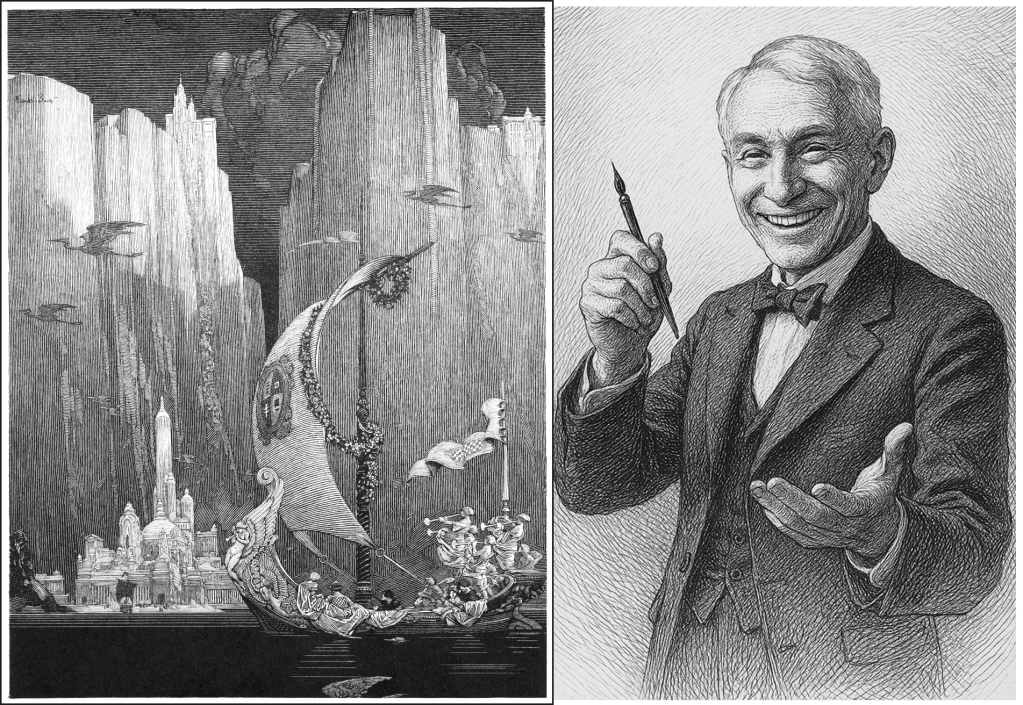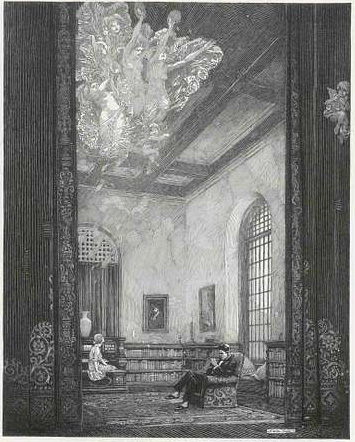
Harper’s Volume 80: an illustration master class from 1890

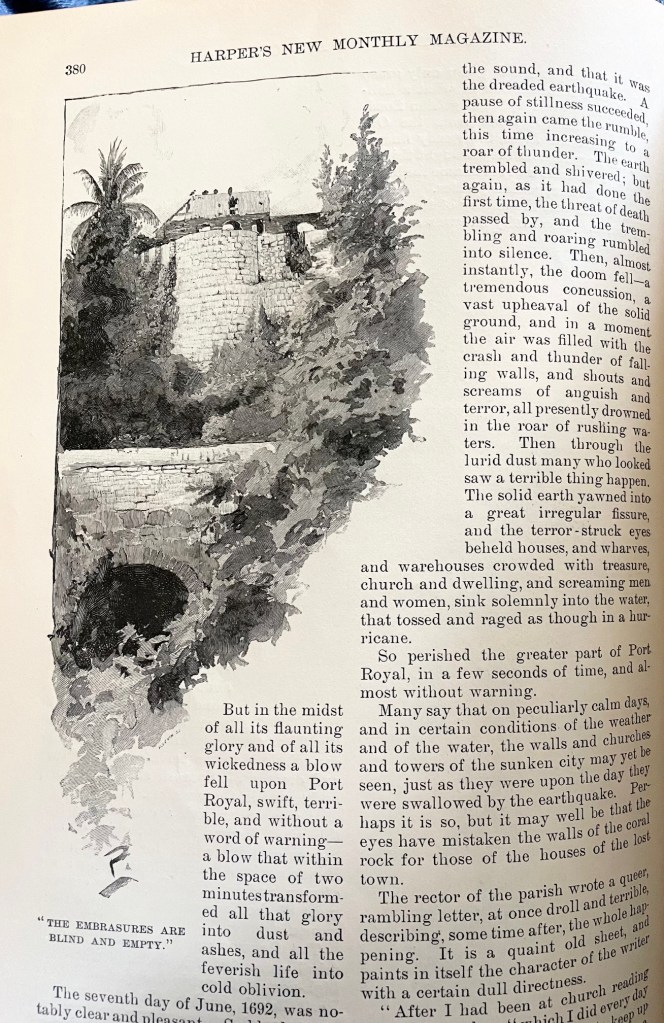
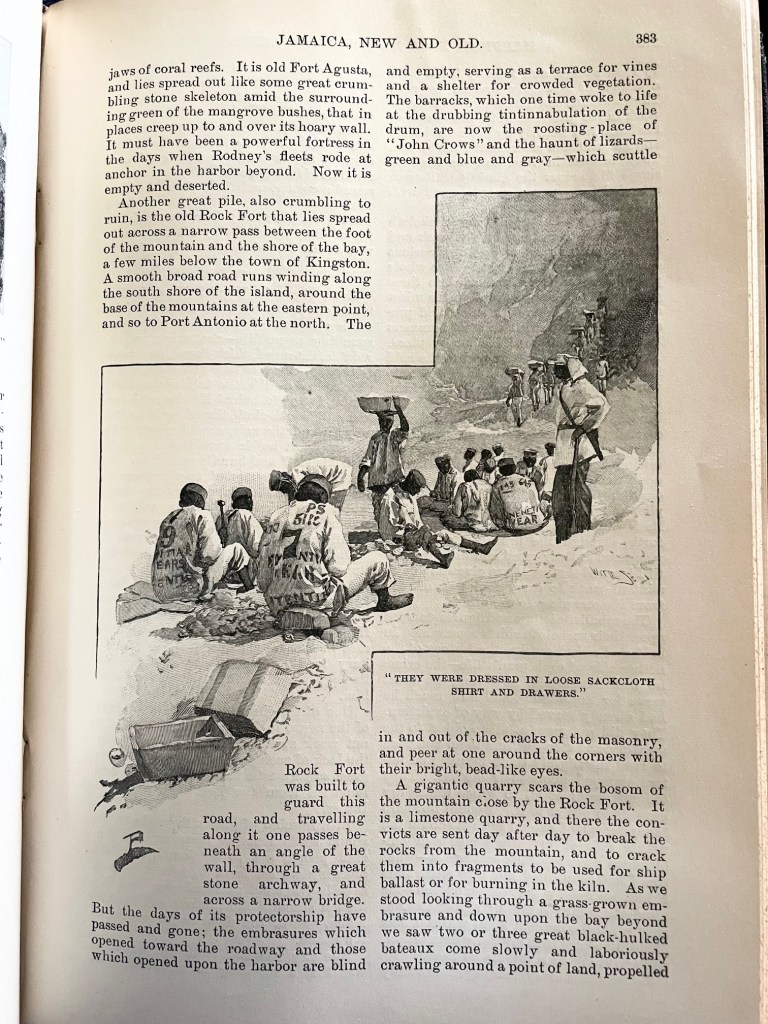
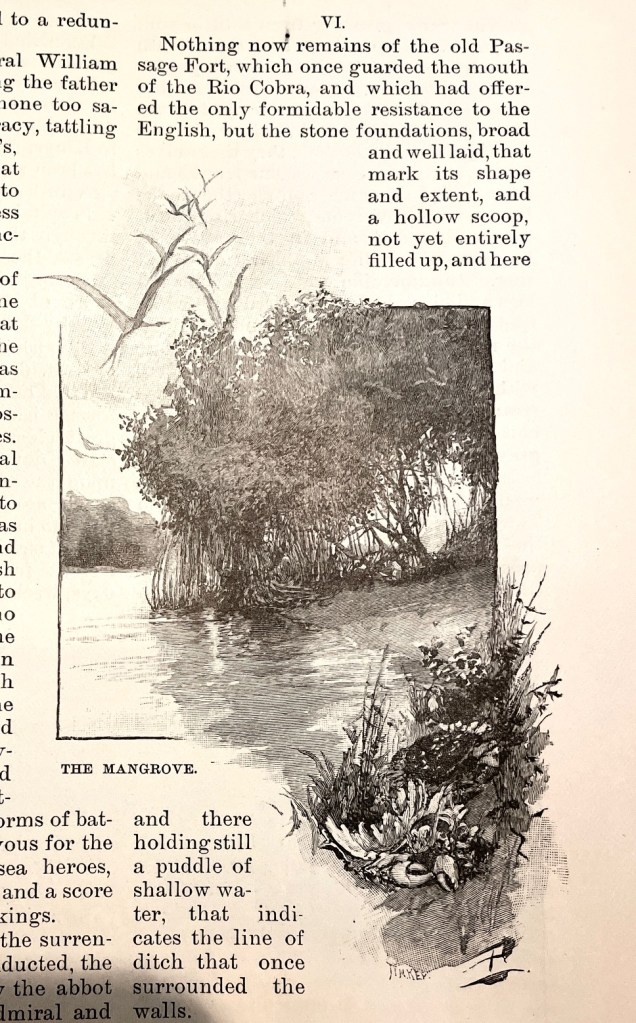
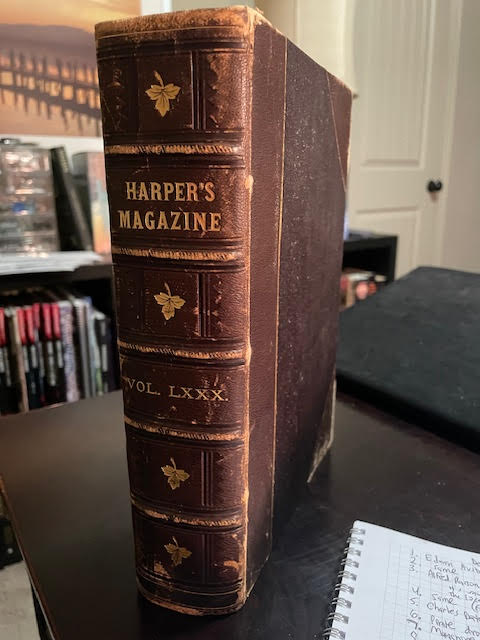
Last July, I told you about a hardback bound volume of Harper’s New Monthly Magazine from the 1890’s that I’d found in an old antique mall and which contained the most face-melting pen & ink illustration I’d ever seen. Check that out here. I’m still obsessing, of course, and that’s why I’m here again with another round of highlighted drawings from the golden age of illustration.

I thought I’d go back a bit, possibly to collect a good thirty year expanse, and showcase some of the more inspiring artwork and exquisite pen & ink craftsmanship. I’ve gotten my hands on Volume 80, covering Dec 1889 to May 1890. Welcome back, and I hope you enjoy perusing these master works as much as I did discovering them. Flipping these pages is an exploration I can’t get enough of!

Shall we head inside?
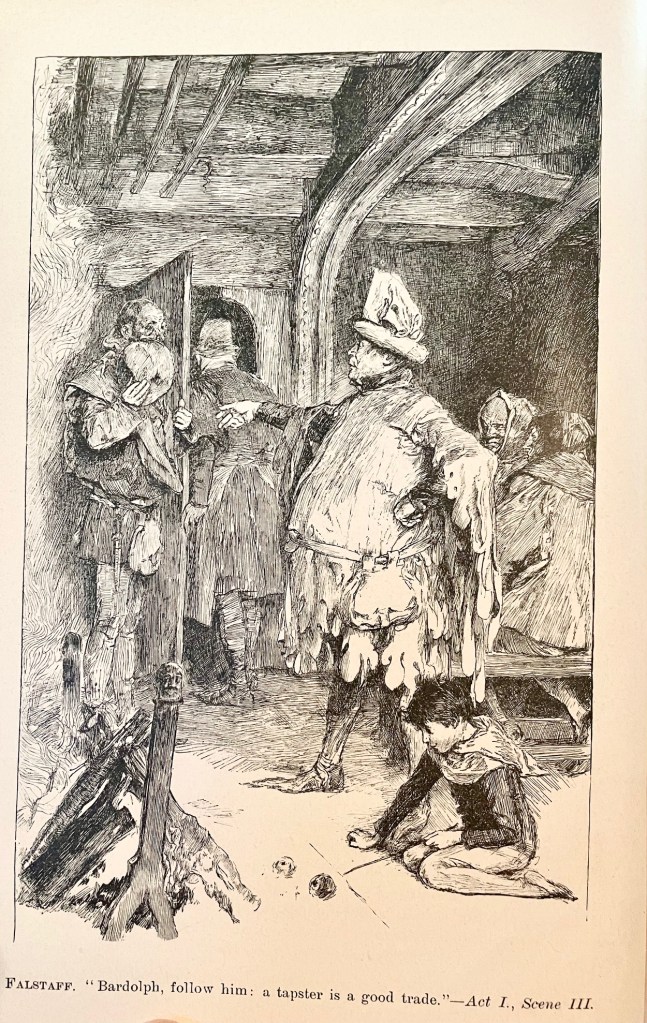
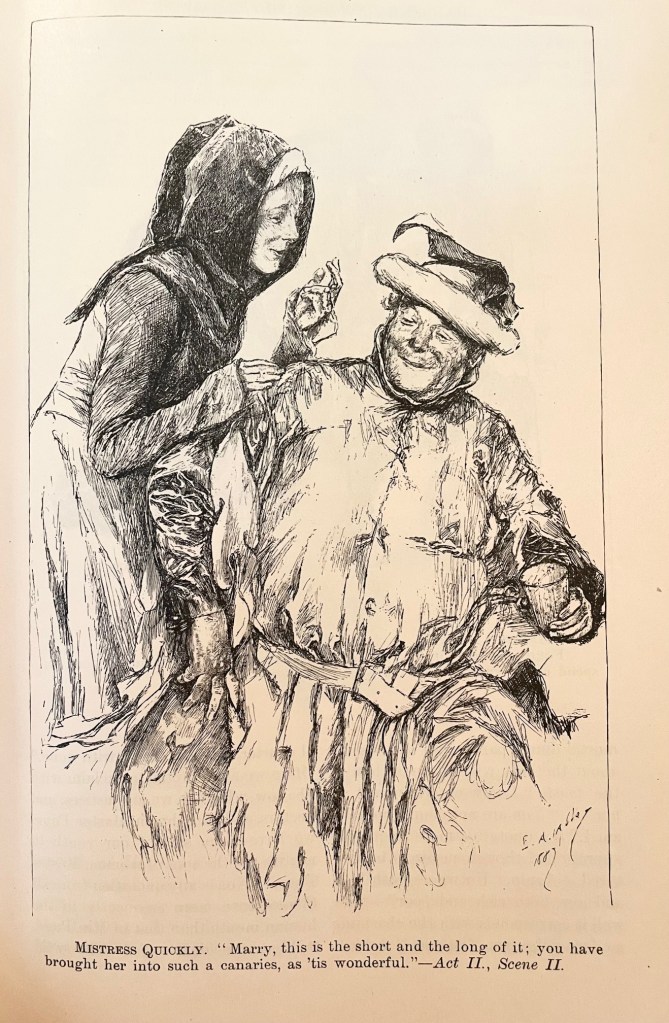
Here are two by Edwin Austin Abbey, best known for his Shakespearean and Victorian images, illustrating scenes from The Merry Wives of Windsor. Hands and fabric folds drive me crazy, and Abbey makes it look effortless.
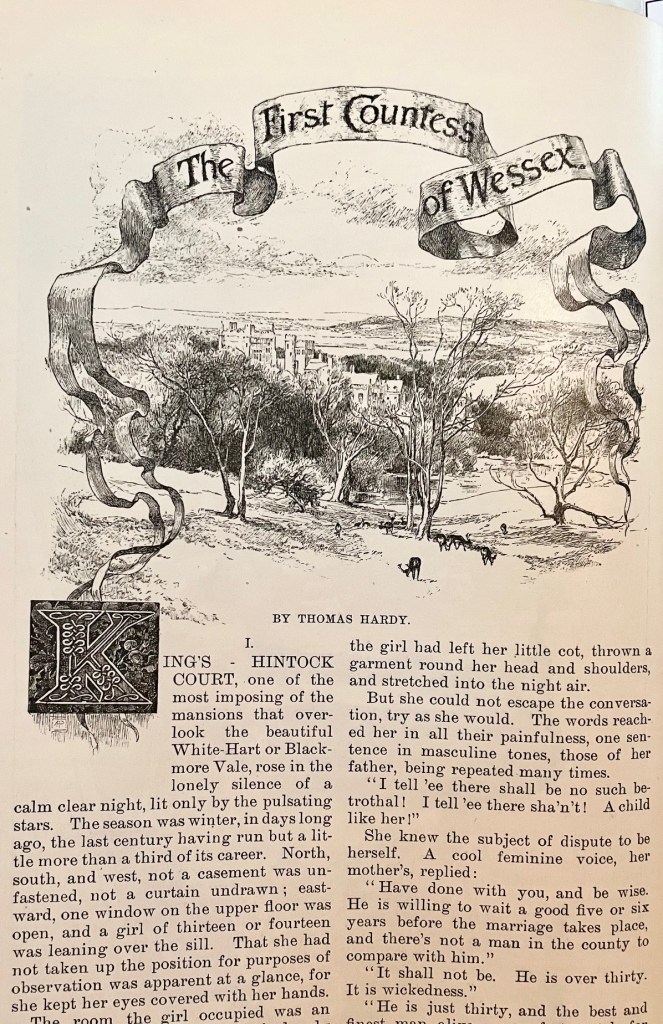
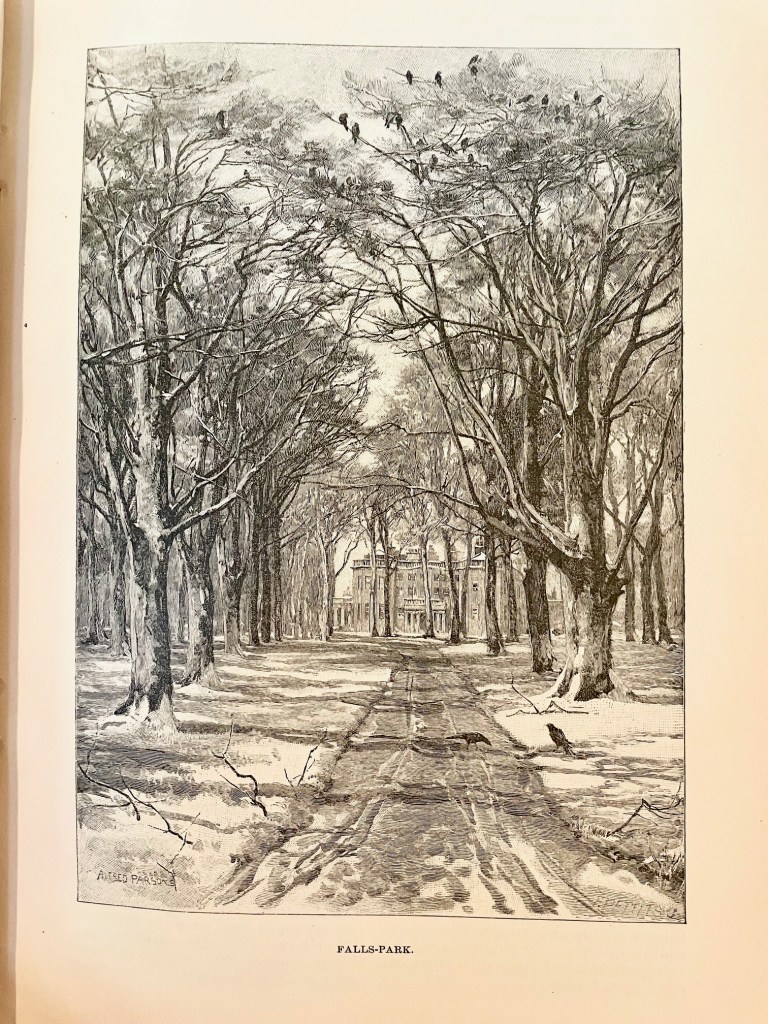
Here are two by Alfred Parsons, who was an illustrator, landscape painter, and garden designer. I found a citation suggesting that the author of the article (Thomas Hardy) took Parsons to the location so he could depict it accurately. You’ll find engraver signatures in the lower right-hand corner of some of these, as in the majestic estate scene on the right, but the original artwork was Parsons all the way.
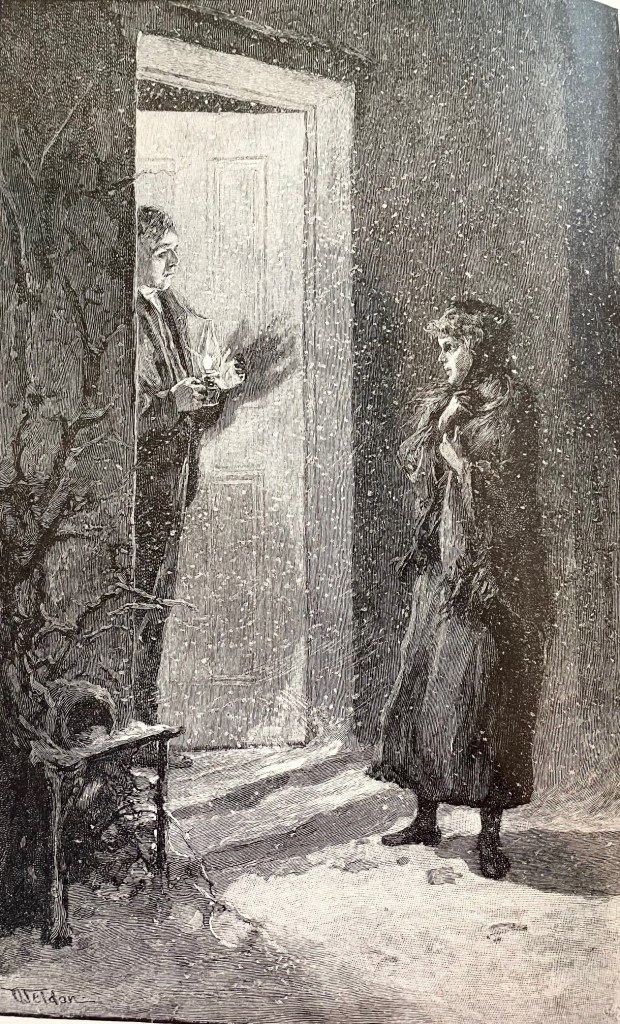
This masterpiece was by Charles Dater Weldon, and it’s the first I’ve come across anything by him (that I remember). He seems to have struggled for the kind of attention some of his peers found at Harper’s, but this drawing is a master class in leaving white space for effect. Zoom in and check out how he depicted the snow!
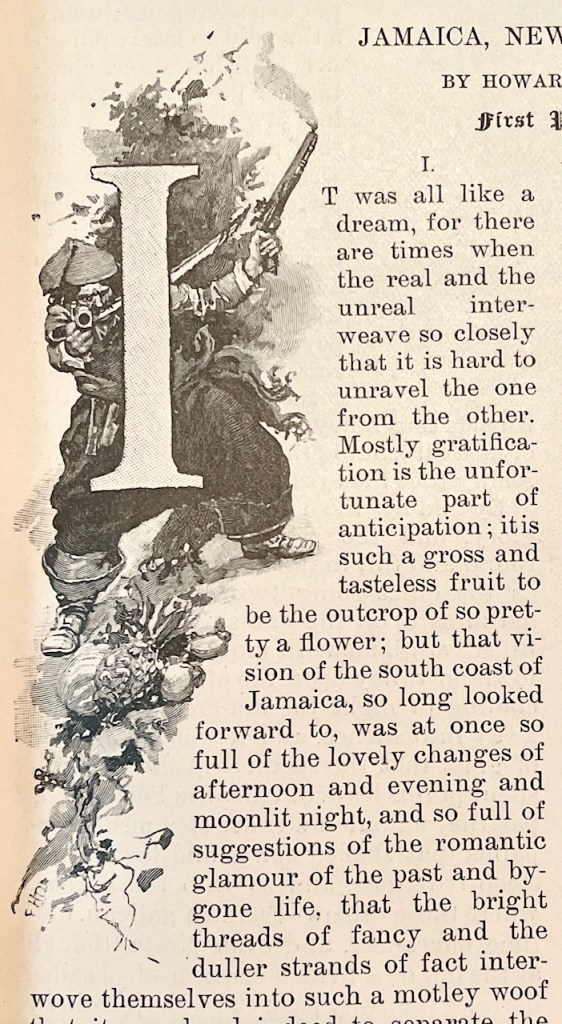
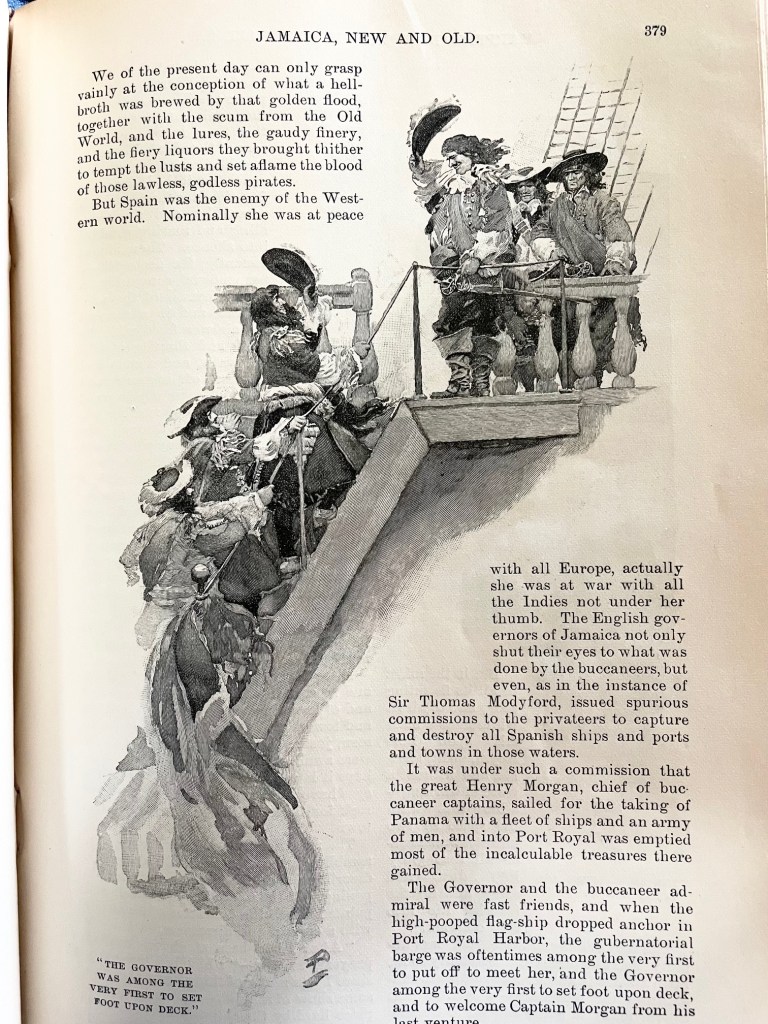
And now we come to Howard Pyle, and he was a genius. A groundbreaking genius. Not only are his drawings tiny little masterpieces all their own, but he cultivated the entire experience on the page. He would sometimes write, illustrate, and design the layout all in an integrated fashion to drive the effect he wanted. Pay special attention to how he forms the text around the drawings. The pirate drop-cap is especially fascinating – apparently these are called ‘historiated initials’.
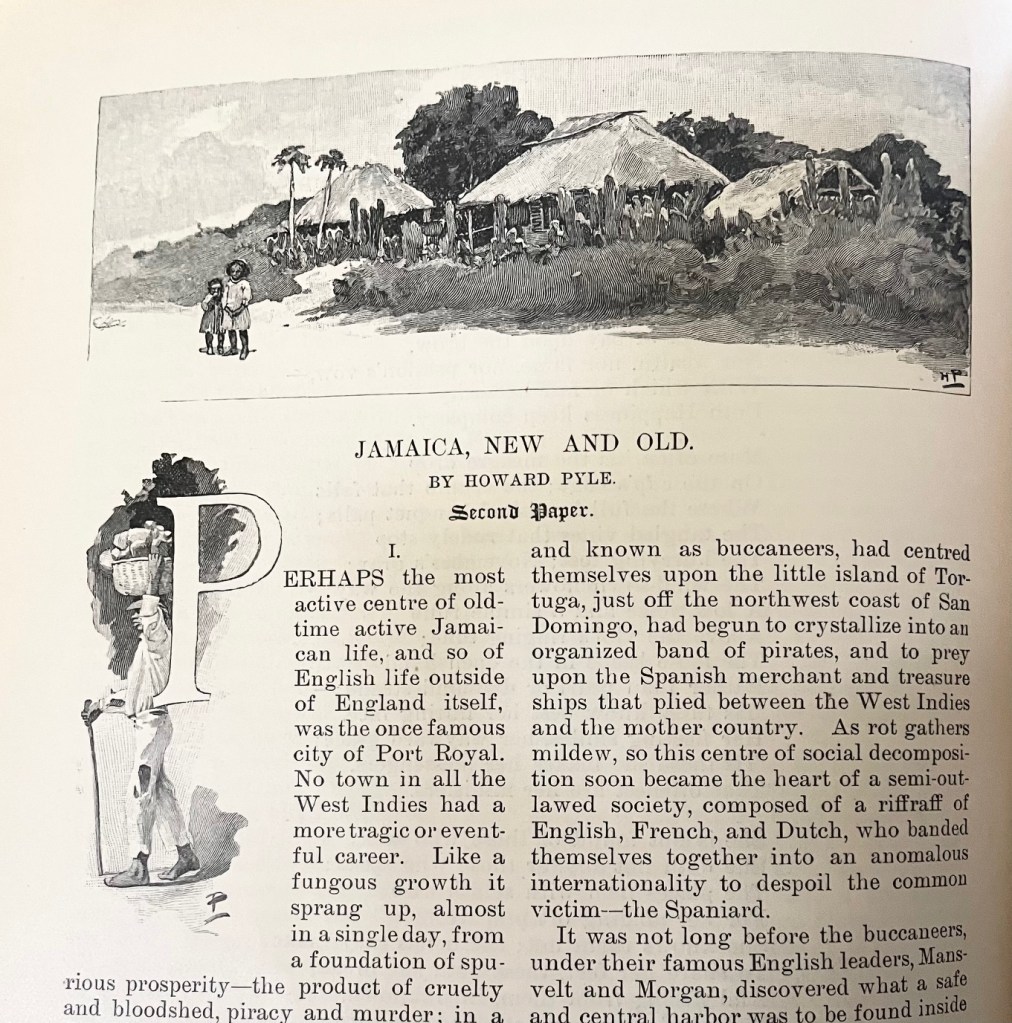
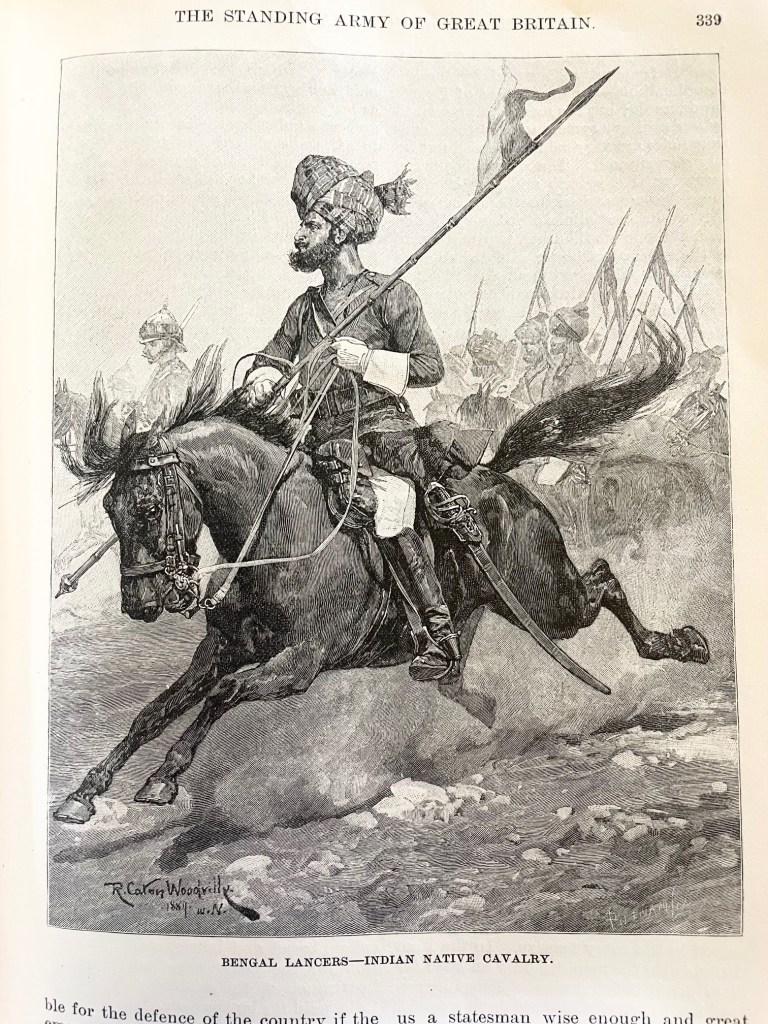
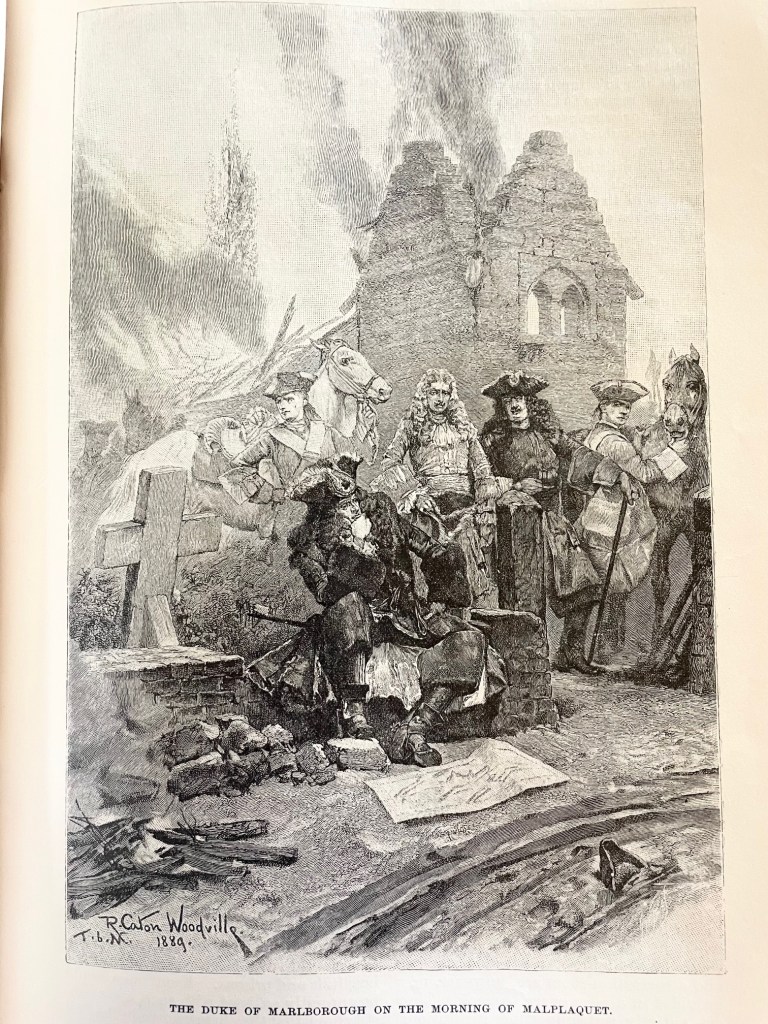
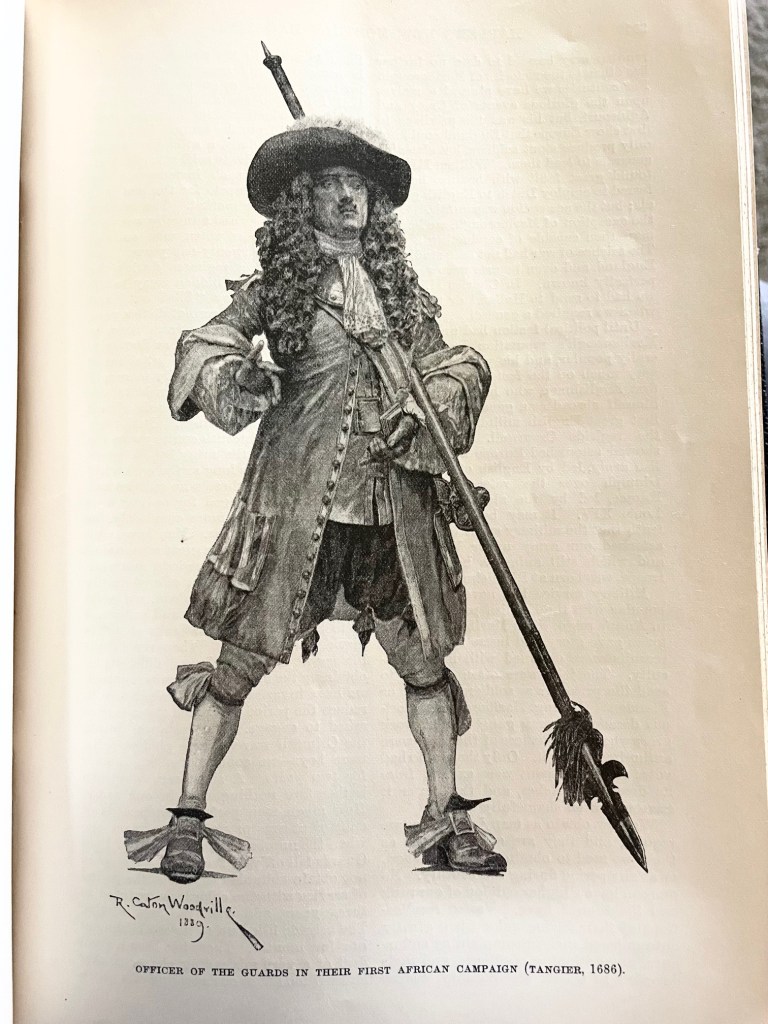
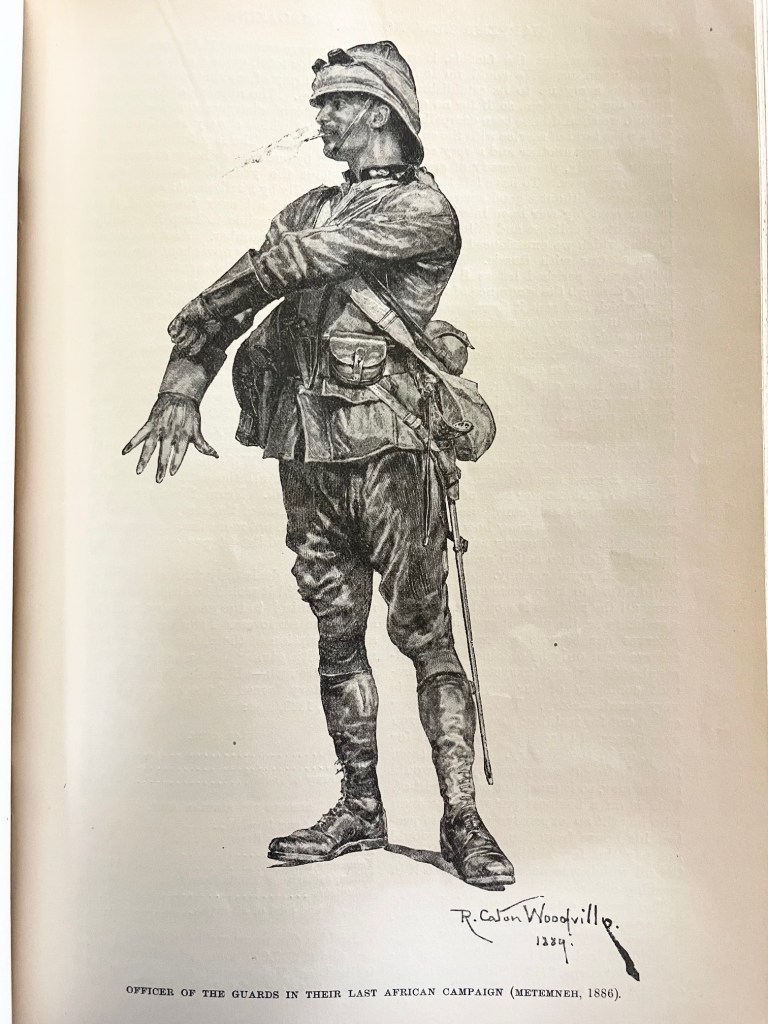
These next four were by Richard Caton Woodville, an artist renowned for his depictions of battle and military scenes. That last one is especially impressive for its perspective and scope, the strategic hatching and shading to draw your attention to the central figure, and – I don’t know why – but for the shadows and texture on the map lying on the ground. I really love it!
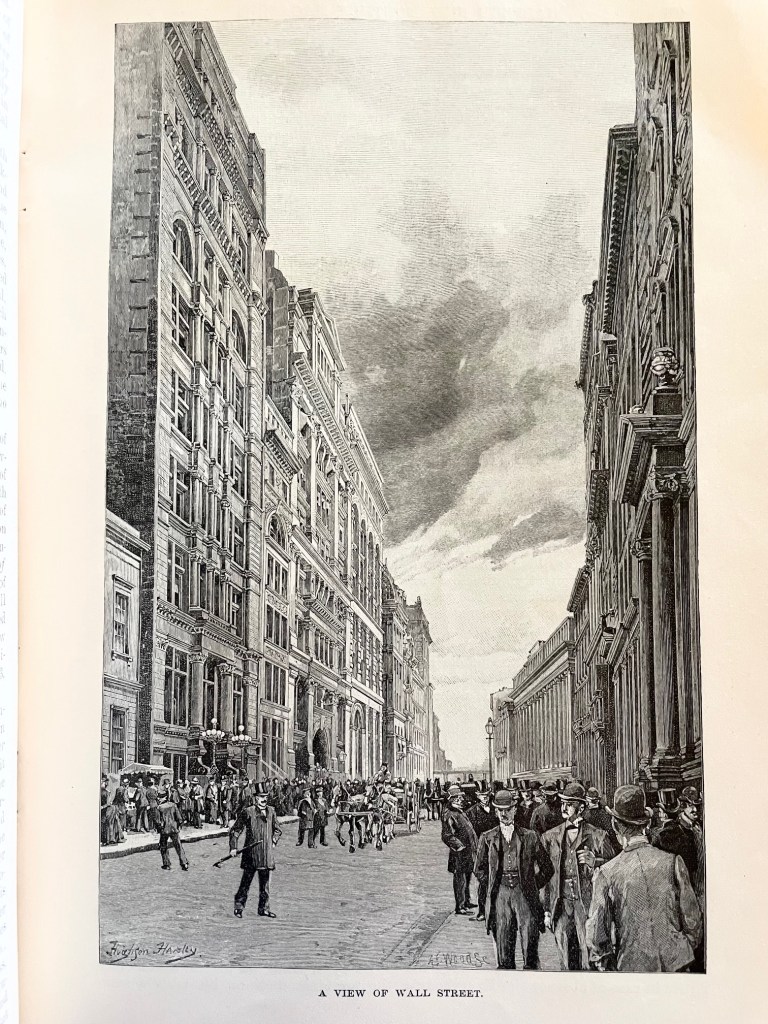
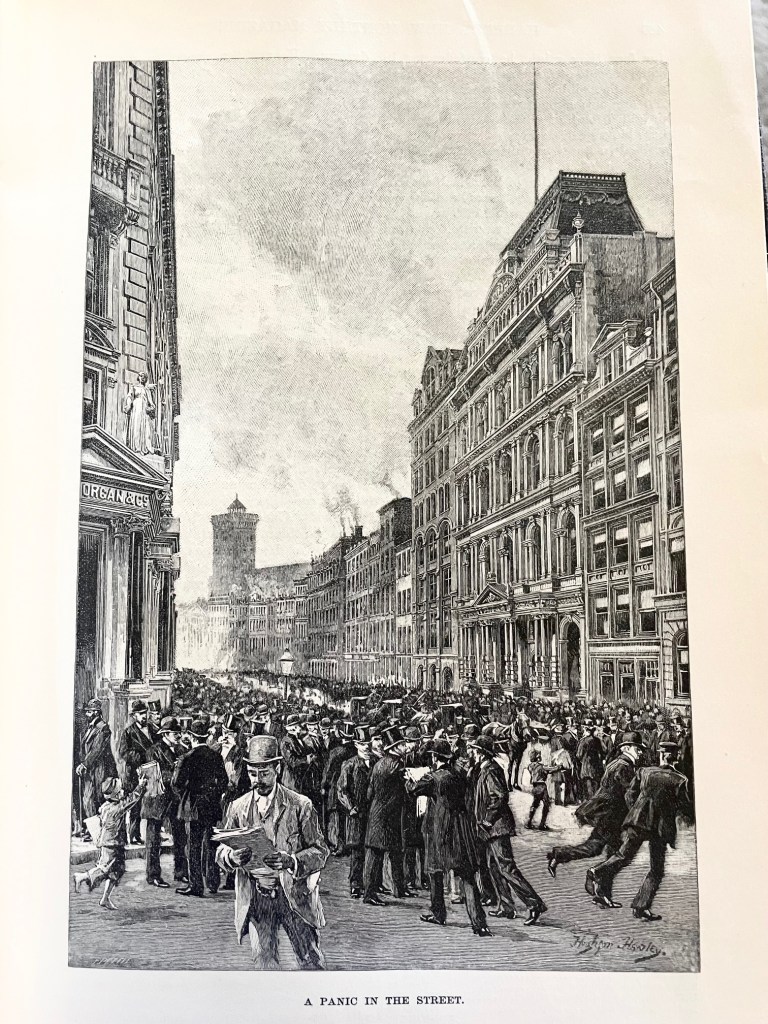
These two were by Hughson Hawley, who started his career as a scenery painter for Christmas pantomimes at Covent Garden in London. He was known for his architectural renderings. The illustrations accompanied an article about Wall Street, and their vertical orientation with exposed sky and building details make them really shine!
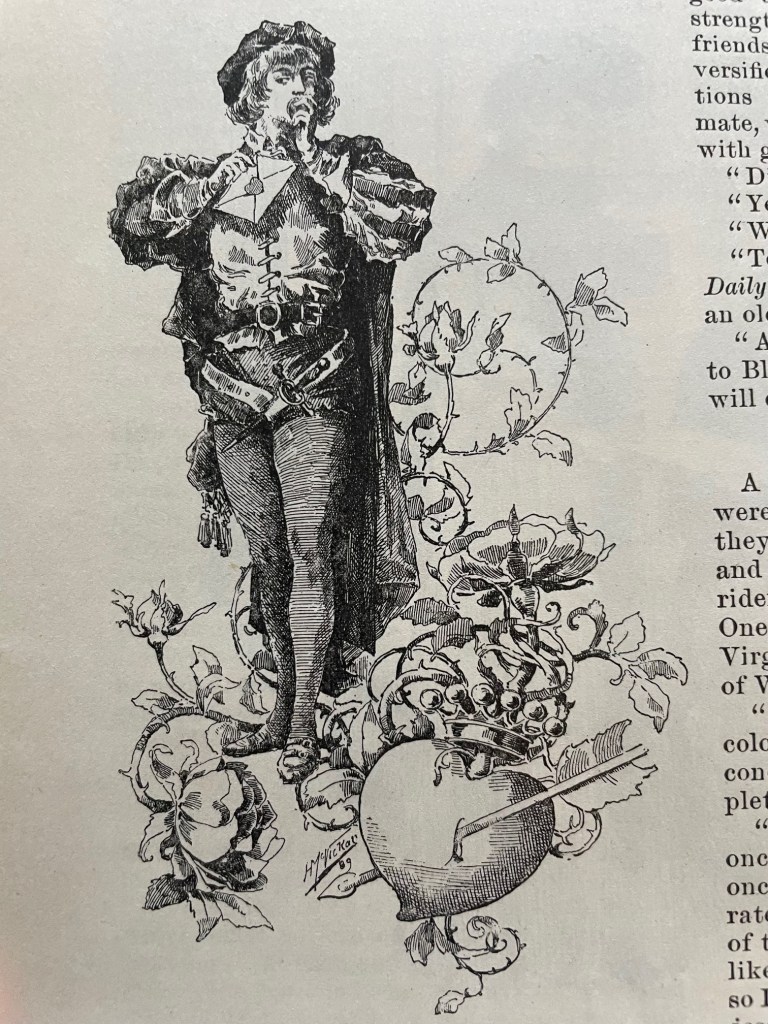
This is the only one I’m showing from Harry Whitney McVickar, an artist, illustrator, and real estate investor. He was also one of the founders of Vogue Magazine. This piece was just a flourish embellishing an article, but it stood out to me for its wonderful hatching and detail.
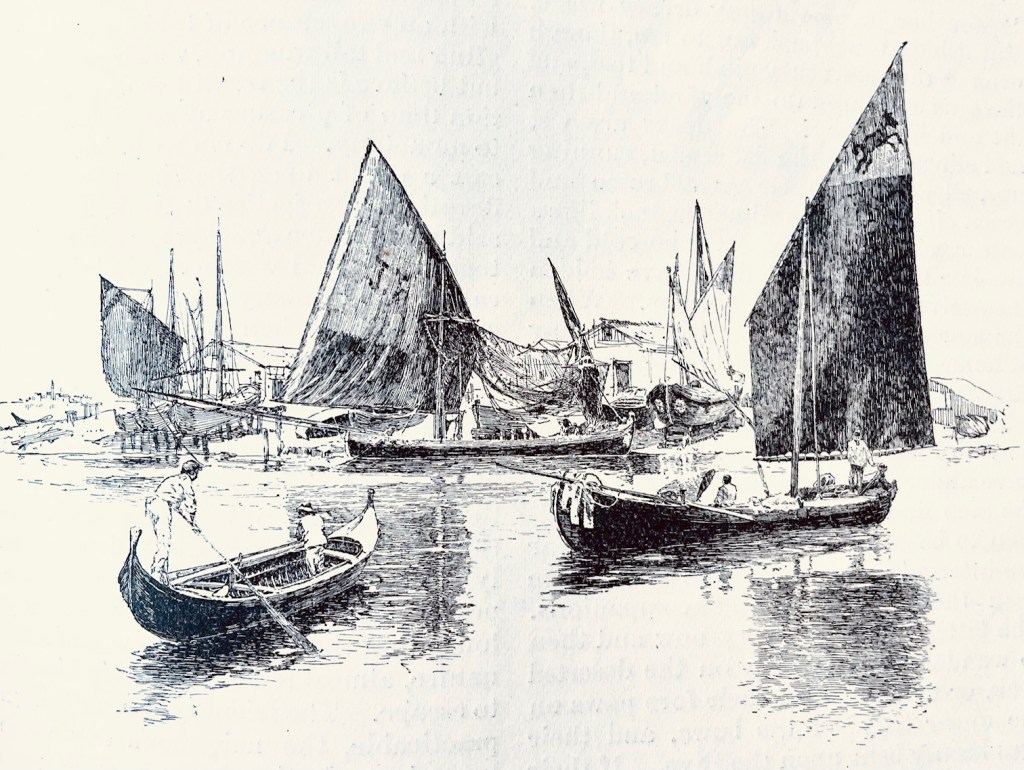
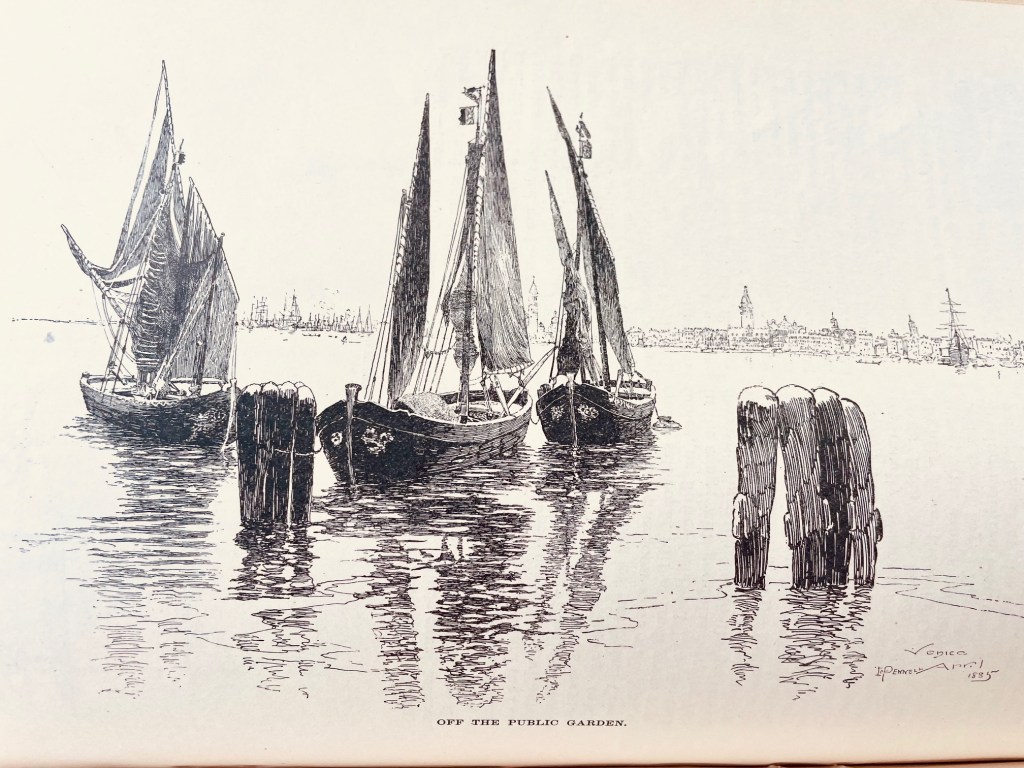
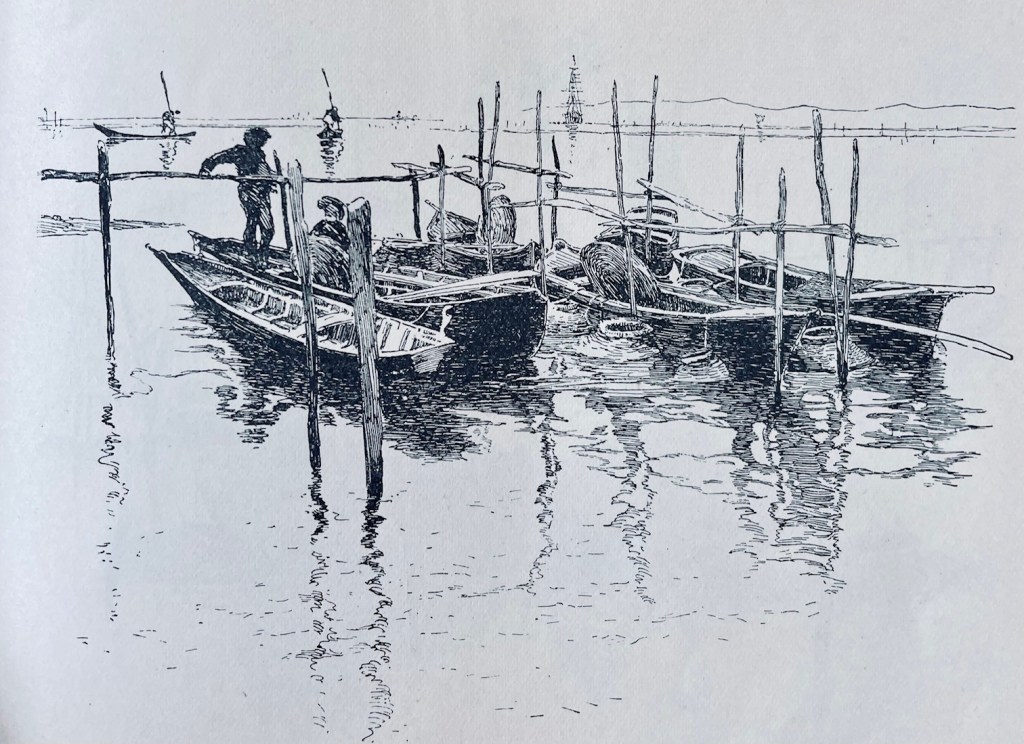
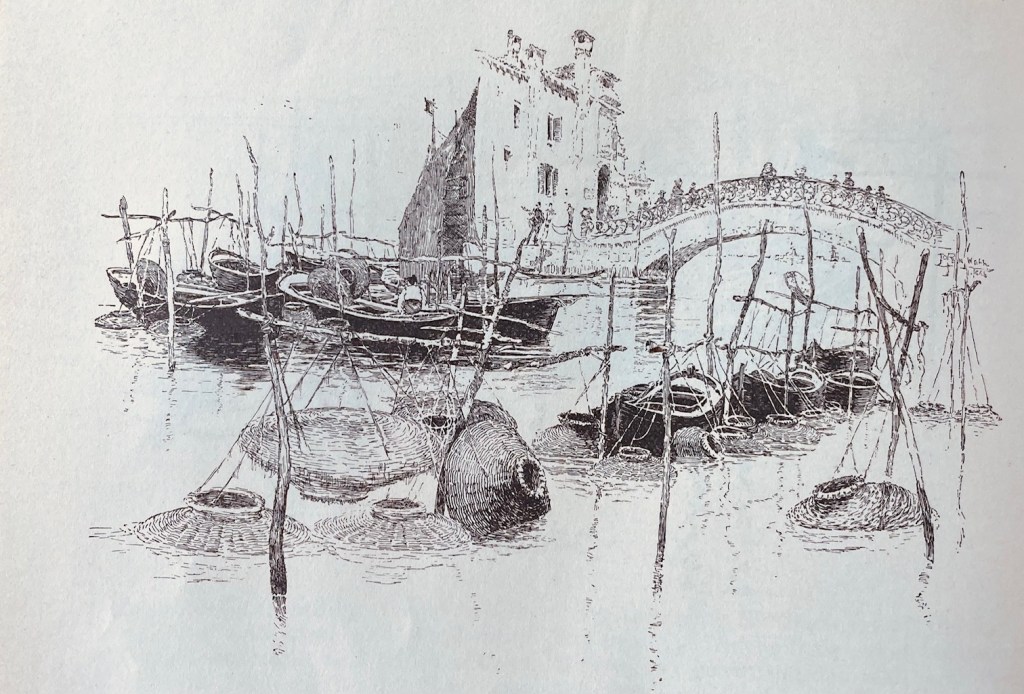
These next four are by Joseph Pennell, who was known for his on-location immediacy over polished artwork. Imagine him hurriedly dashing these off in open air at the scene he’s illustrating! The water reflections alone make these worth studying, but the hatching on the sails is equally impressive.
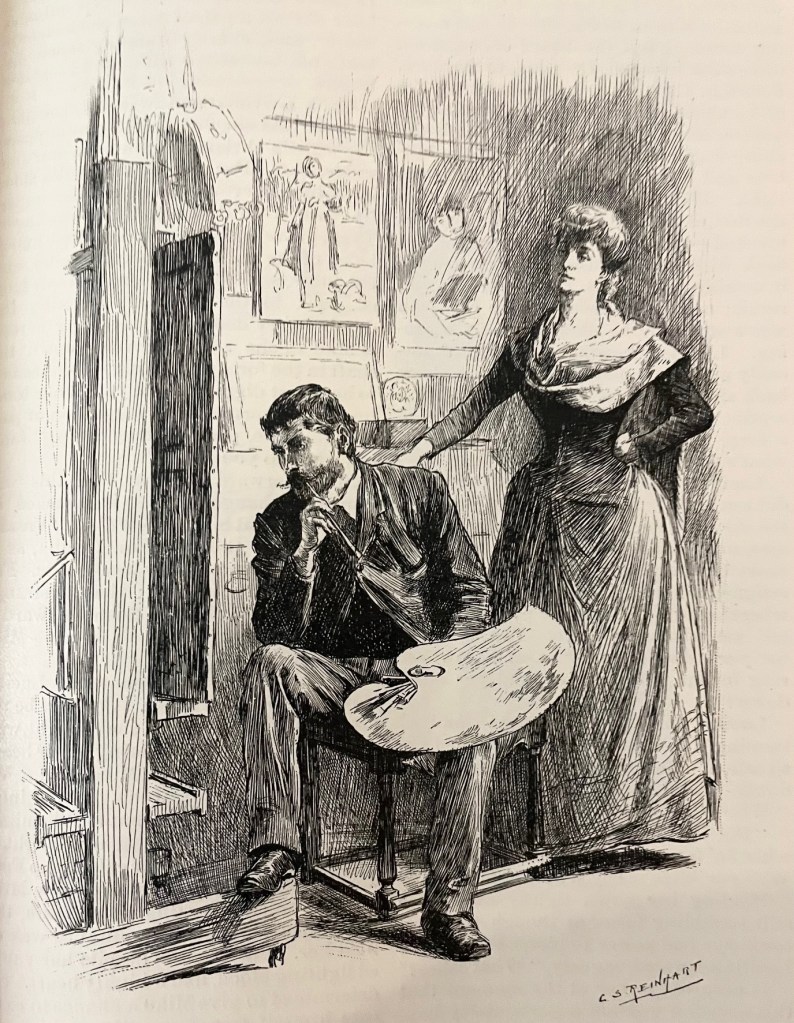
C. S. Reinhart was known for his character depictions, and that’s usually where Harper’s hired him. Here’s an especially well-done illustration of an artist in contemplation. Notice how he’s creating folds, shadows, and texture with his hatchwork. That’s super difficult!
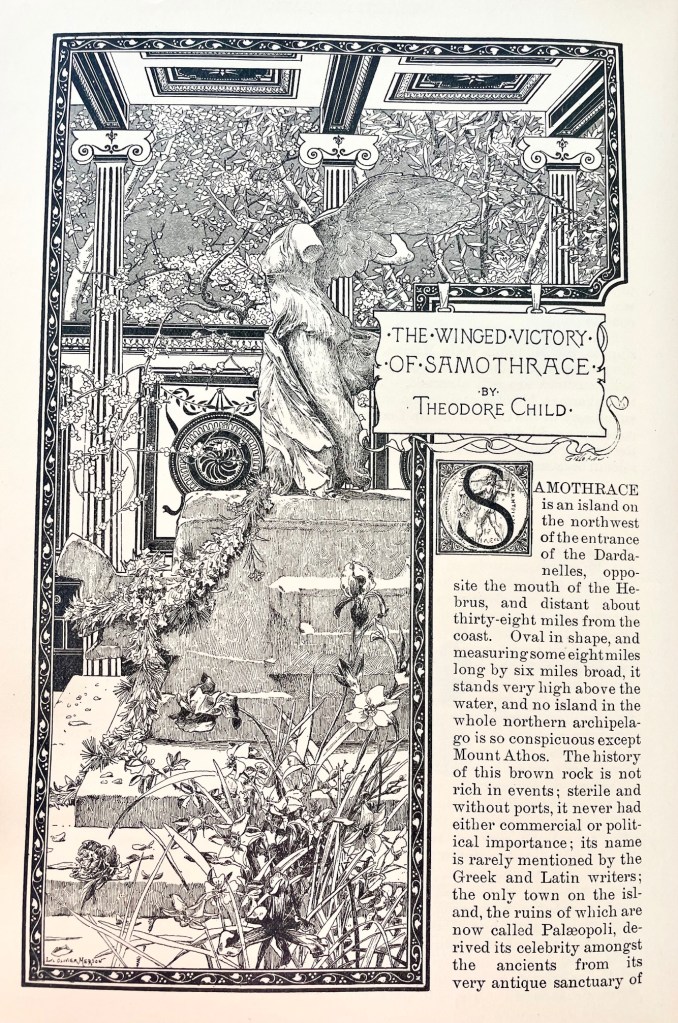
Our last highlight is a stunning splash page by Luc-Olivier Merson, who became known for his postage stamp and currency illustrations. It’s one of the most astounding introductory pages for an article in the entire volume. The border and roof design are both gorgeous, and the florals jump off the page!
*

Anyway, I was worried when I ordered this volume off eBay that it wouldn’t recreate the experience of that first volume, stumbling in awe across forgotten masterpieces on every other page. But I wasn’t disappointed. It’s a shame so many of these craftsmen are forgotten today.

I hope you found something to impress and inspire. As always at Grailrunner, that’s why we’re here.

Till next time,

Franklin Booth: Engraver of Light

I have some marvelous freebies for you today, so stick with me.

I’ve been burrowing into a particular rabbit hole these recent weeks, studying and practicing traditional pen & ink drawing. It started with this:

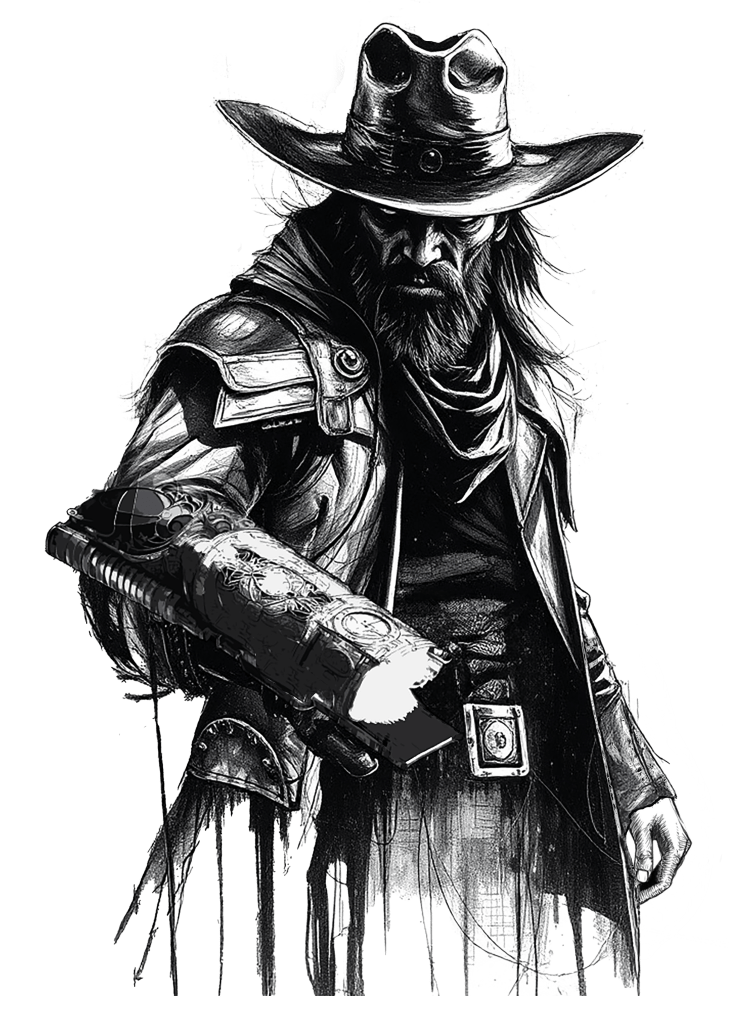
That’s interior art for SALT MYSTIC: BOOK OF LOTS. I did it, but I cheated. The base gunslinger was a couple of AI-generated pieces, drained of color and mashed together, cleaned up a bit, and mashed into an original 3D render of the plasma weapon on his forearm. I composited all that into the one image for a splash page as you first open the book.

But it got me thinking that this idea of grungey ink drawings as interior art looks really great and could be a nice distinguishing factor in future Grailrunner books. So I started practicing and studying the great ink masters (which you can read about here) to hone my craft and work directly Pigma Micron and Pentel Brush Pen on paper. No blending modes, no AI bases, no 3d paintovers or stock image composites. No digital tricks at all. Just pen and ink and paper and the satisfying swoosh sound that makes.

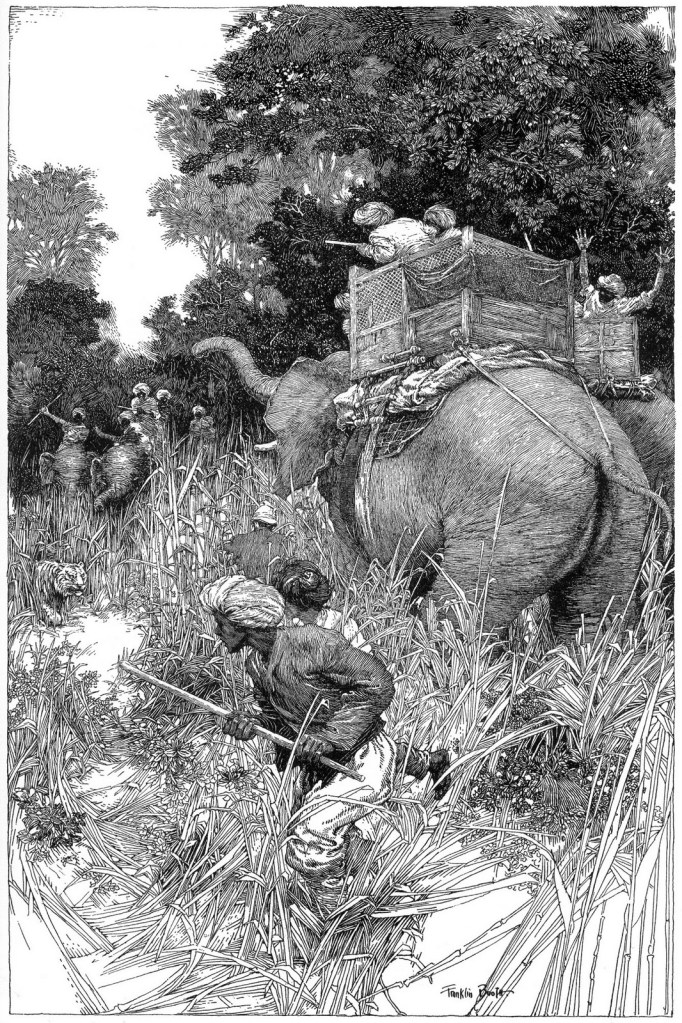
It’s a life changer, honestly. But anyway, it led me to Bernie Wrightson and Sergio Toppi and the guy I want to talk about today: Franklin Booth.

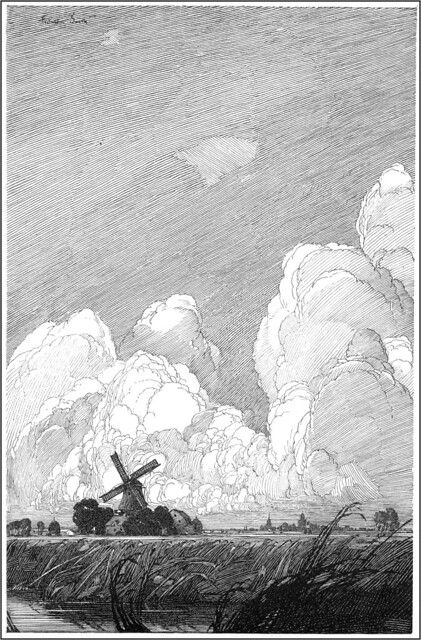
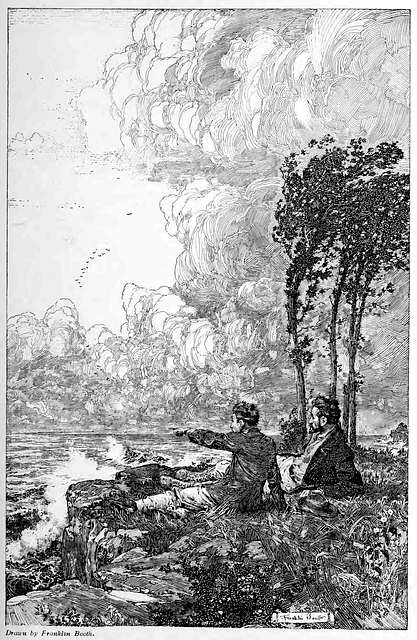
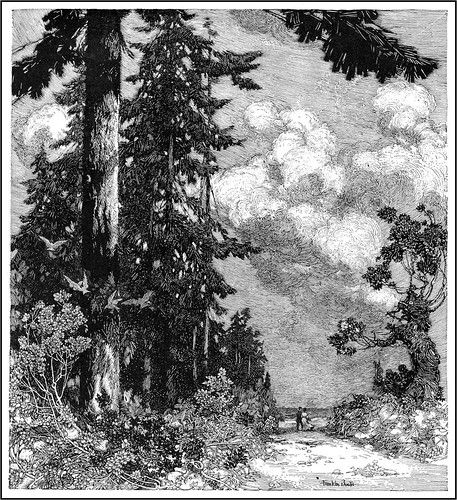
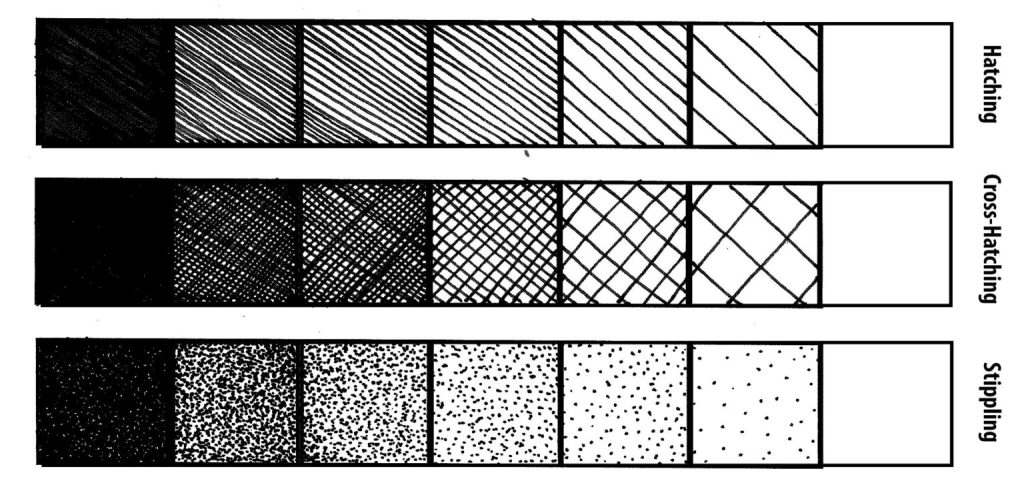
I’d ask you to keep in mind that the pen & ink artist has exactly one way to generate values and shadows, and that’s with black marks. Usually, lines. If they want shades of gray, they draw lines.

Like this:

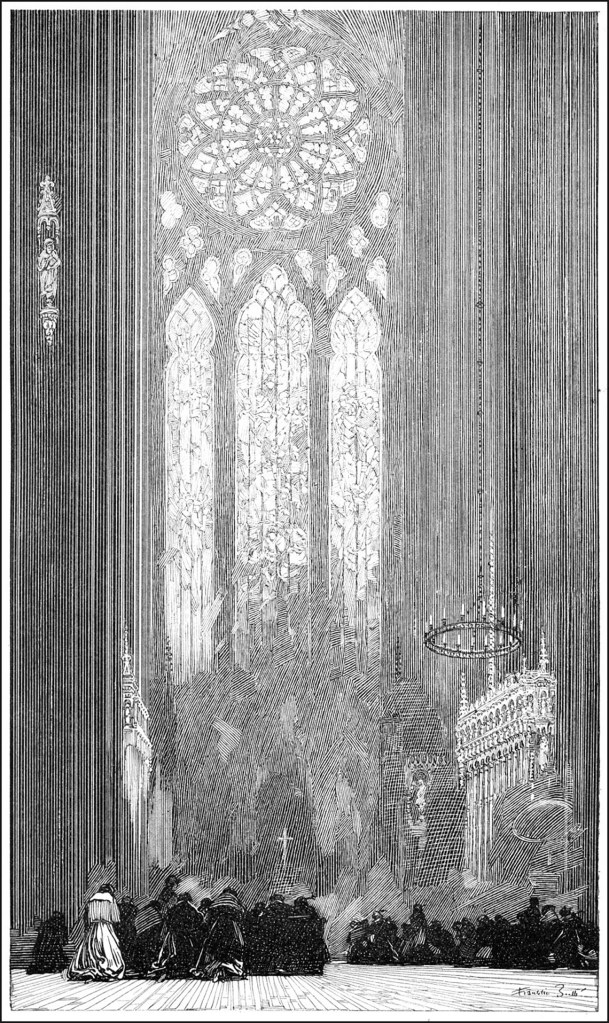
I mean, just take a look at some of those drawings by Booth! The patience and craftmanship is insane! Honestly, I wanted to learn more about the guy and found that it’s kind of difficult to do that. He didn’t make much of a splash with his personality or how he lived his life – just with his work. Here’s a great, though short, overview of him and his work on Youtube.

We’re also several posts in to a new ongoing series here on Grailrunner called CONVERSATIONS FROM THE ABYSS where we’re applying AI tools in some innovative ways as a sort of experimental lab. That got me thinking I’d like to read a decent, illustrated biography of Booth and get to know him a little better, mainly to understand his influences and how he learned to do what he did. So I had ChatGPT write me one and it was terrible. I asked for a 50k word detailed biography and got slop. Seriously, at one point I even asked it why the final product was so bad when it suggested we work section by section in much shorter passages with me approving things along the way.

Yes, I could just buy Silent Symphony from Flesk Publications, but that’s beside the point!

I tried iterating section by section, making my own suggestions as we went till it started to take a kind of shape that might be worth reading. Then I scavenged the internet and the Internet Archive specifically to grab public domain images that were either referenced in the sections or appropriate to the time period being described, all done by Booth himself. We’re not selling you anything here – the final product will be the last download button on this post. I included them as well throughout the text.

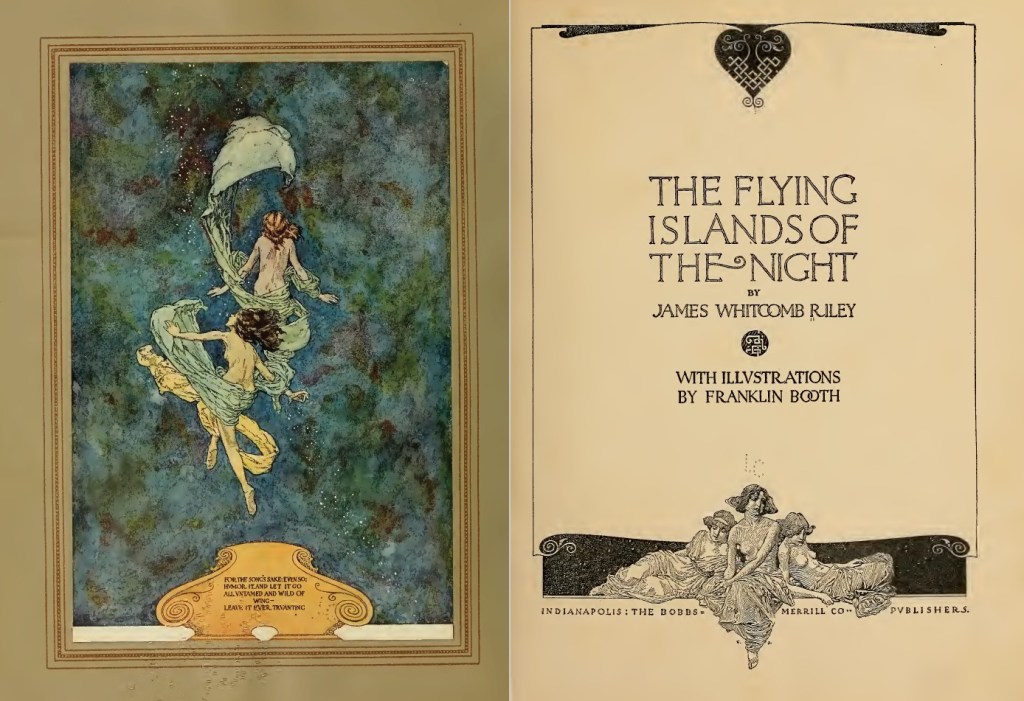
In all that, I learned about the fantasy play he illustrated titled Flying Islands of the Night by James Whitcomb Riley, which you can peruse below by smashing the splash page below. It’s vintage beauty at its finest.

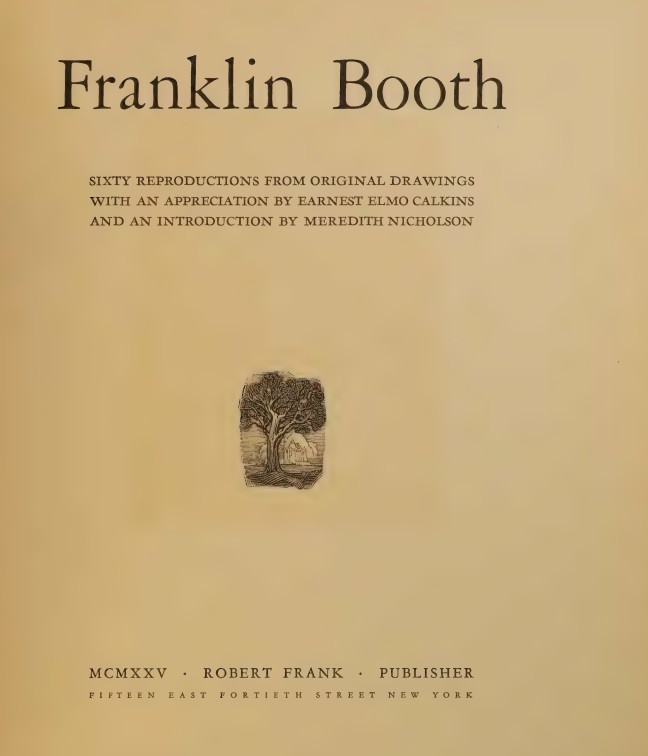
I found a scan of a 1925 book containing 60 reproductions of Booth’s drawings with sourcing and titles, details which are almost impossible to find on the internet (as everyone just posts the pictures out of context). That’s available by smashing the title page here:

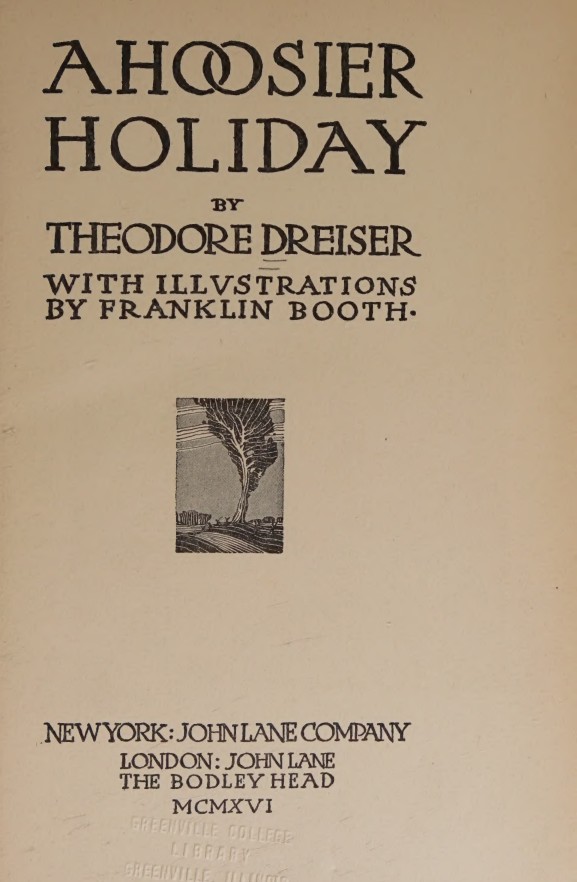
And here’s a real gemstone that I found which took on an entirely different function than its author intended: a 1916 travelogue written by Theodore Dreiser where he went on a road trip with Booth himself! It’s called A Hoosier Holiday, available by smashing the title page button below:

Where Dreiser thought he’d describe the trip and his musings along the way, I found an intimate and first-hand means of hearing Booth’s exact words, descriptions of his facial expressions and the fact that he ate all the popcorn he could get his hands on, things and sites he found interesting, and even charcoal sketches he made along the way. I found Dreiser to be an arrogant nuisance, but Booth seemed genuinely like a guy I’d road trip with. I liked him even more after reading it.

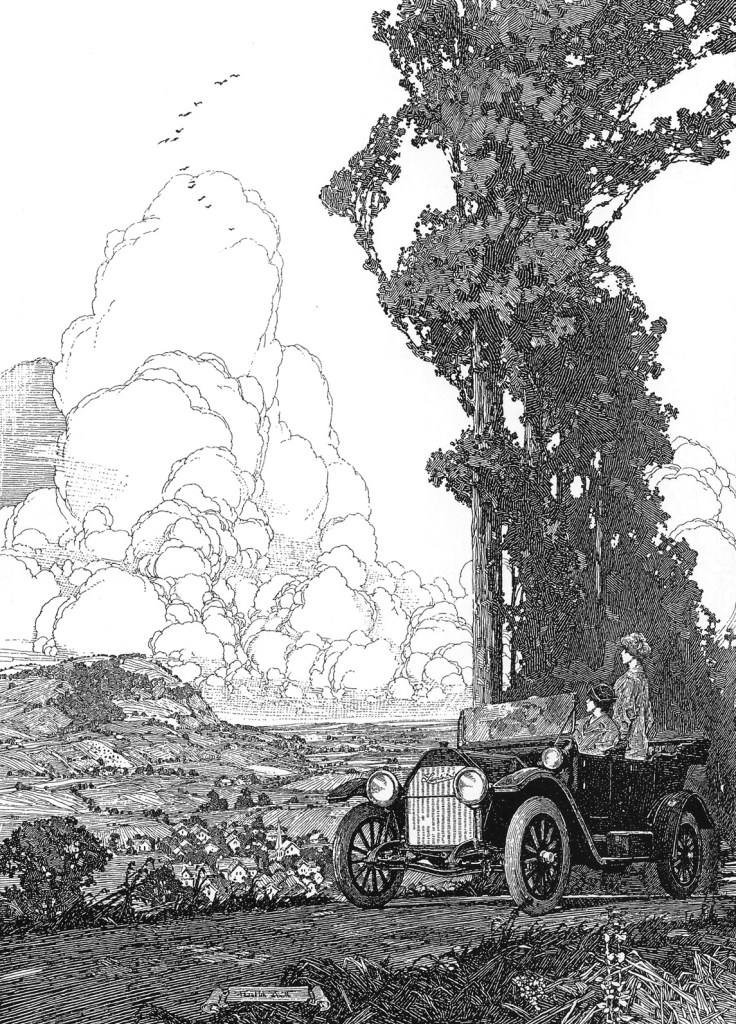
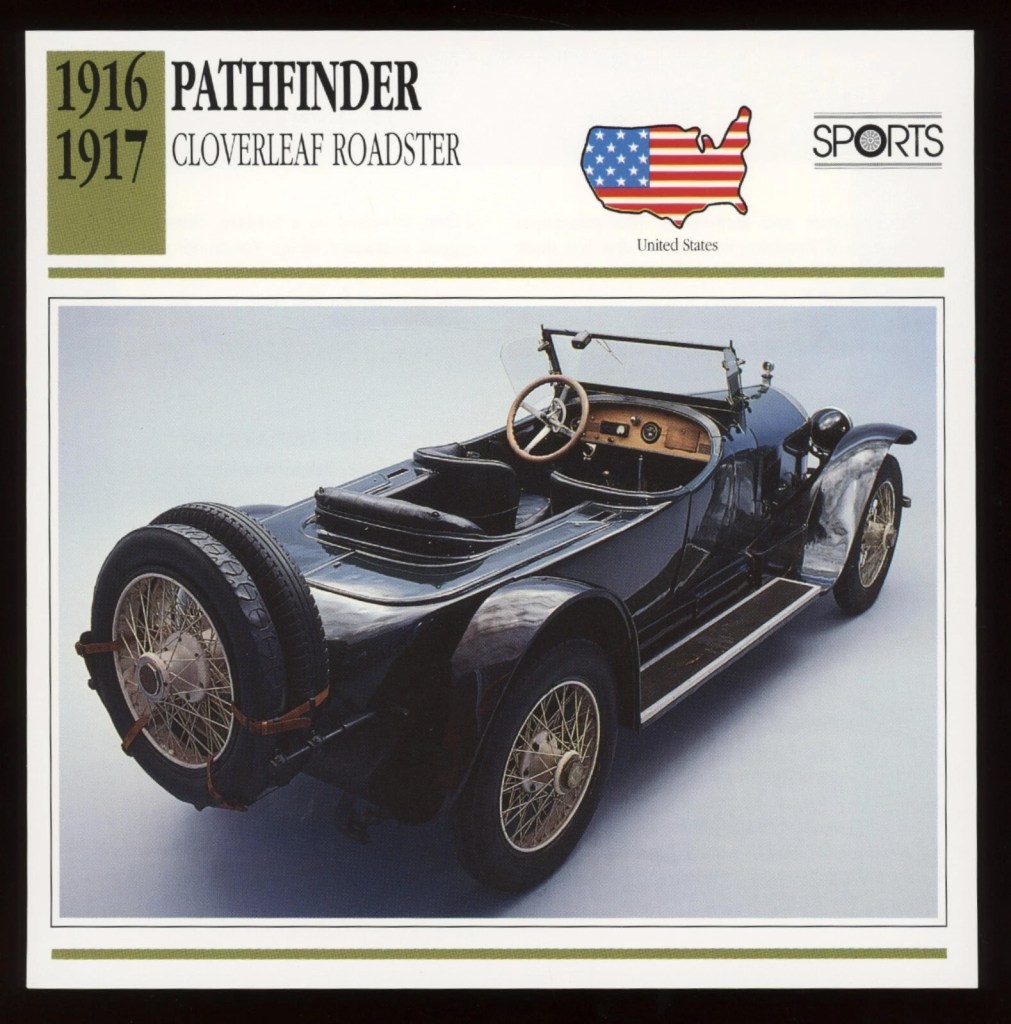
It was Booth’s 1916 Pathfinder, by the way, which he paid $3k for ($100k in today’s money), and they had a chauffeur as well. Booth was doing pretty well for himself, it seemed.

Quick and painful anecdote – ChatGPT was including factual errors. Some were easy to find, like a bold statement that Booth never married when that was demonstrably untrue. It provided several explicit quotes, which I asked it to source. Each time I called out something like that, it bailed and said it made those up. I think that’s my fault, as I’d named some historians I like as the basis for the voice and tone the software should take to write the text, and it took that to mean it should hallucinate.

Anyway, I wanted to find and include Booth’s very first published illustration. Turned out, the first amateur publication was in a newspaper, which I found in a publicly available scan and screenshotted to included in the book. That was a great find. But ChatGPT was telling me his first professional published work was in a trade magazine called The Inland Printer. I eyeballed 6 years worth of that stupid magazine and found zippo from Booth, eventually going back to call ChatGPT out on that as well. Sheepishly, it admitted that internet claims suggest he appeared in that magazine but since I’d looked and couldn’t find it, it supposed that was incorrect.

But the book I wanted to read was taking shape and becoming something worth spending time reading. The illustrations were helpful and interesting. I liked what I was getting, but it needed one final flourish.

I asked Booth to comment on his own biography.

By instructing ChatGPT to analyze everything we knew about Booth’s personality and values, I asked it at last to speak in his voice and comment on the book we’d produced about his life. That’s the final section of the book.

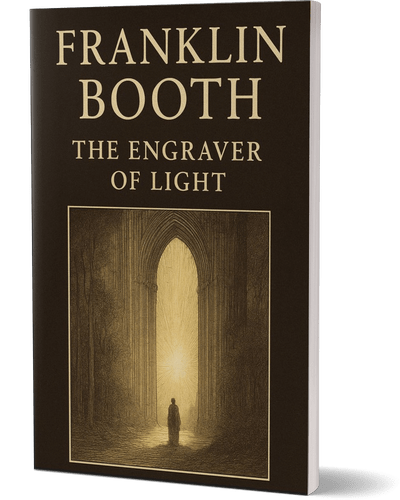
Here is the final product, titled FRANKLIN BOOTH: ENGRAVER OF LIGHT.

What a great journey that was! I really enjoyed the immersion and learning about this fascinating guy. Take a look and let me know what you think.

[UPDATE July 8, 2025]

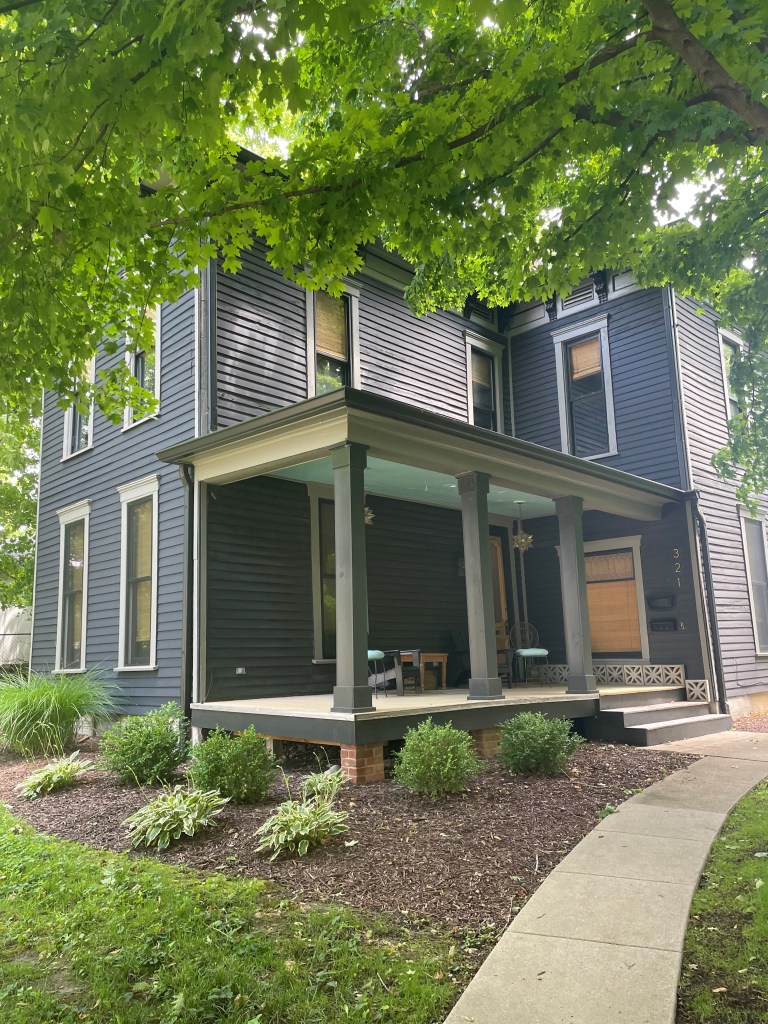
I found myself in Indianapolis for business and with a half-day free, so I drove to Carmel, Indiana to the boyhood home of Franklin Booth, which is listed as a historical site though also is still a private home (in surprisingly good shape). It’s super close to a beautiful downtown, in fact walking distance…a quiet and cozy neighborhood with no sign whatsoever that a famous artist lived and worked there. Not even a plaque.

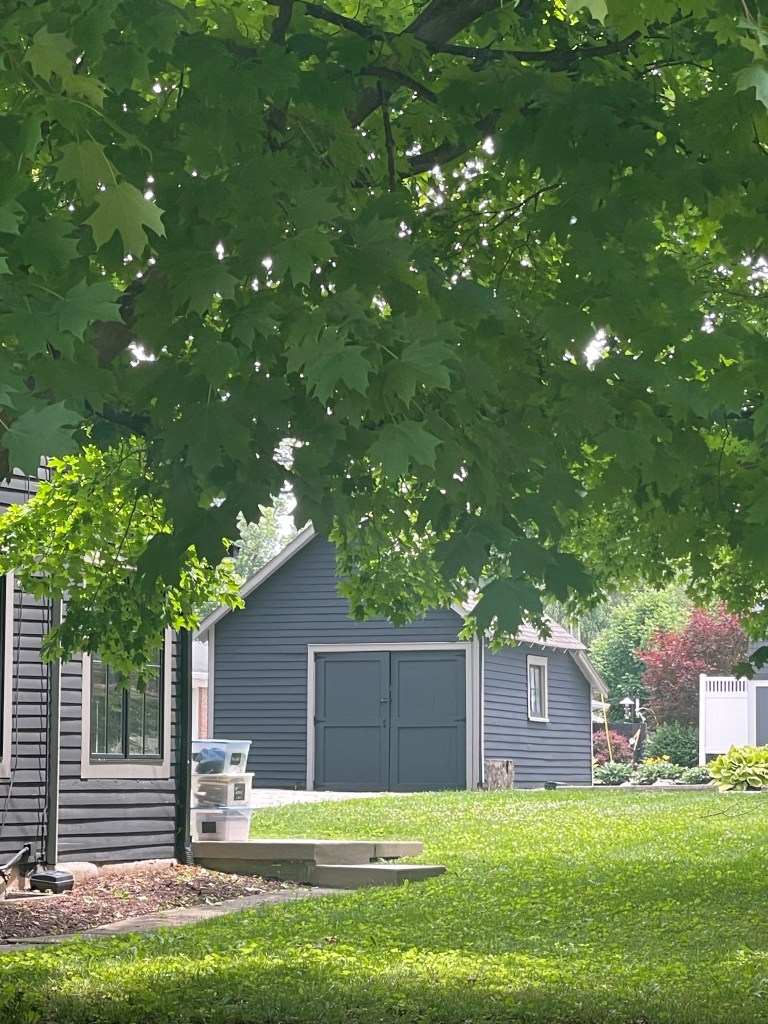
And I understand the backyard shed was where he maintained the workshop which he visited every summer and completed so many of those famous works I’ve highlighted here.

This one:

Pretty cool. Anyway, till next time,