Innovations in Music and Mythmaking (and how to link them!)

I’m told my reading habits are a little out there. I get that. I do.

However, it intrigues me that in almost any field of human endeavor, there is a specific type of personality that thrives on breaking its rules and forging incandescent new ways of doing things. If you’re new here, that’s almost entirely what we do here – find, spotlight, analyze, and celebrate innovation in the creative process.

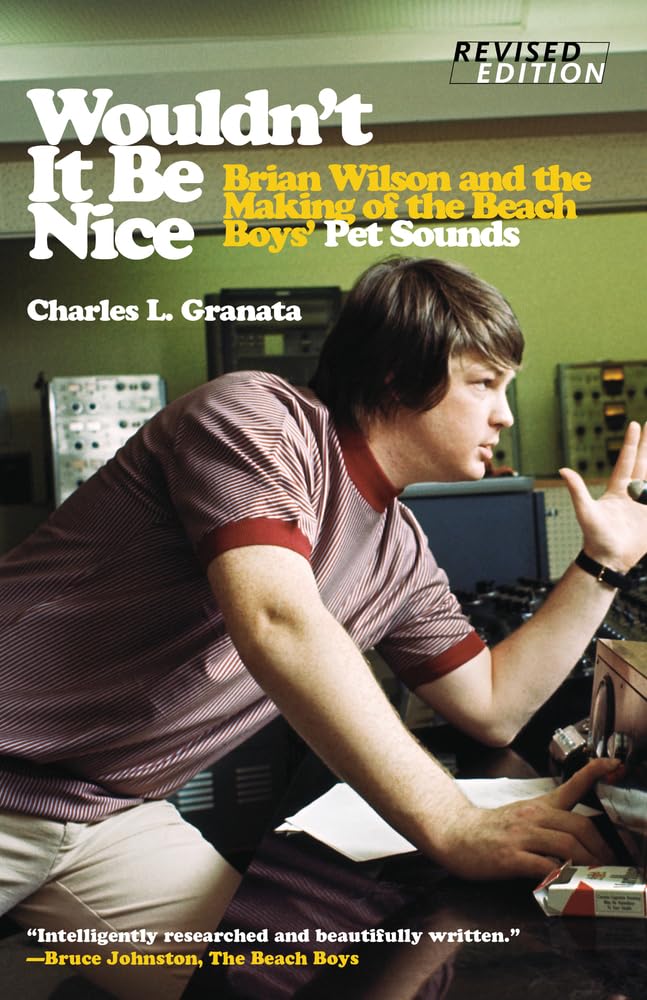
So I was reading this book about 1960’s beach music:

I don’t like that sort of music at all. I especially detest men singing falsetto and lyrics obsessing over the teenage emotional range. However, I had heard that the Beach Boys album, Pet Sounds, was considered the greatest and most influential album in music history. Knowledgeable people say that. I wanted to understand why in the world that would be, given its niche genre, its terrible album cover and name, and the fact that it isn’t chock full of top 10 hits.

What was so special? And once I knew that, I would of course ask: what inspired it?

I’ll cut to the chase since the answers to those questions don’t actually comprise my point today. I want to extend some of these lessons over to mythmaking and storytelling since that’s my main jam. (If you’re into this crossover of music and storytelling, I wrote about this sort of thing in an article called “Aesthetic Puzzles: When Bach Met Shakespeare”, which you can go catch here.)

Why is Pet Sounds a big deal?

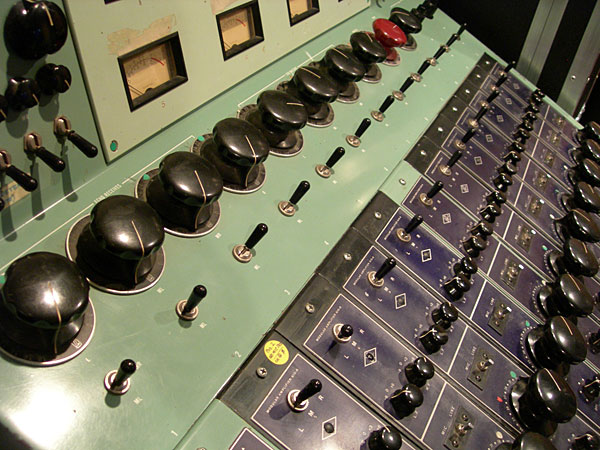
Brian Wilson was the main creative driver behind the 1960’s-era pop band, the Beach Boys, and took a break from touring in 1965 to focus on creating “the greatest rock album ever made”. Till then, their songs were bubble-gum melodies of no real sophistication and lyrics aimed like a piledriver at teenagers having fun, especially in and around the rapidly-growing fad of surfing. Wilson was enamored with the “wall of sound” production techniques of music producer, Phil Spector, which involved using echo chambers and physical studio arrangements augmenting studio manipulation of recorded tracks to generate robust, layered textures of sounds that would come across richly on a jukebox. Spector’s stated logic behind his own innovation was:

“I was looking for a sound, a sound so strong that if the material was not the greatest, the sound would carry the record.”

So it was mono (versus stereo) playback technology and the limited fidelity of speakers available at the time that prompted Spector to layer sounds together and experiment with ways of making the sounds more textured. Wilson felt the Beatles album, Rubber Soul contained some of the most mature lyrics yet for the band, and from these two launch points, he wanted to get more emotional with his lyrics and more experimental with his production techniques to surpass them all.

Wilson wound up innovating in all areas, and indeed developing intriguing ways of making the studio itself an instrument: combining, for example, multiple instruments simultaneously into a blended and new quality that sounded nothing like any of them. He introduced novel instruments like bicycle bells, a variation on the theremin, among others, in a rogue recording marathon of studio musicians while the actual band was out touring. Nobody had done that before, or even went off the trail of a small ensemble like that to make an album that couldn’t actually be played live. He also experimented with chord voicings, meaning how different chords are brought together (a little out of phase, for example, so there’s a slightly noticeable tremor) or avoiding a definitive key signature. By all accounts, Wilson’s efforts with the band surpassed anything Spector had done or would do. He took the inspiration and ran with it.

Studio musicians involved said of the time that they knew something very different was happening. Something important. It was interesting to me, reading what it felt like for the other guys there, the ones just hired to do a thing and realizing they were part of something.

So the idea to hold in your head then, for my point to land, is this: an approach towards recording music where all manner of frequencies and qualities of instruments and voices are layered over each other in a rich texture of sounds that you could listen to a multitude of times with headphones on and the volume turned up and still catch new things.

Texture. That’s the thing to remember. Innovating with texture.

What’s all this got to do with storytelling?

I’ve spent the last 3 years working on an approach to storytelling and tabletop roleplaying that I engineered to be as innovative as I could manage. I tried to rethink how narrative games like Dungeons & Dragons function and streamline everything down to core essentials.

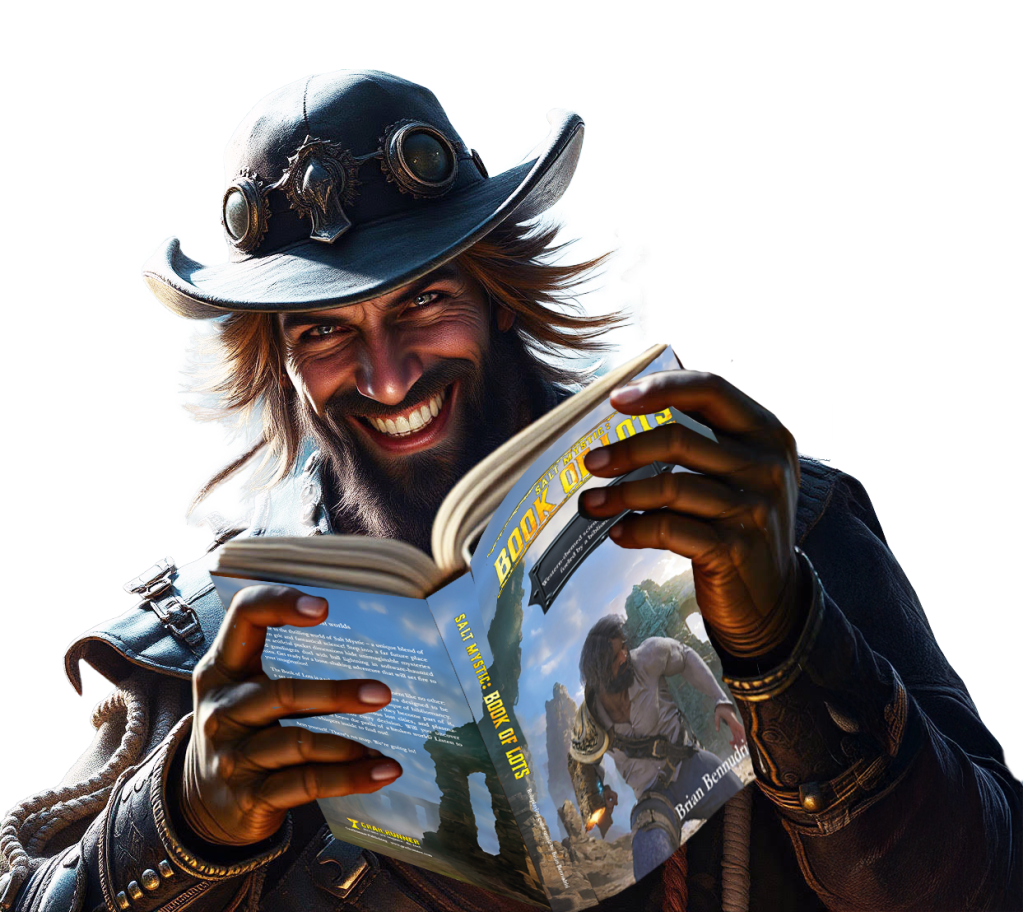
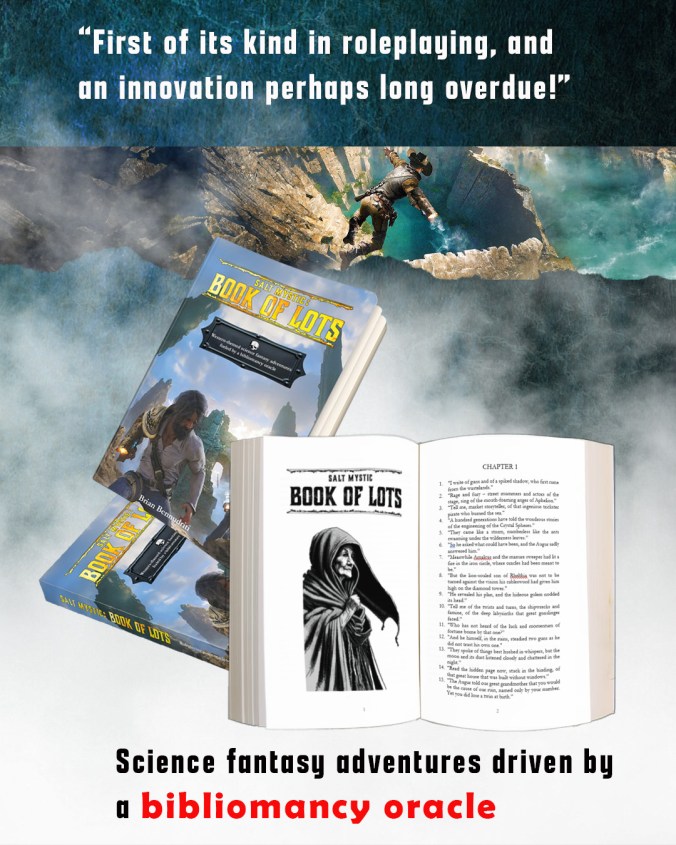
“The awe and danger of exploration inside the covers of a book.” That was my compass. It’s here, called SALT MYSTIC: BOOK OF LOTS. I’m not trying to sell you that right now, though. I want to talk about using it as a recording studio like Wilson did.

This idea now of texture and layered elements building a rich tapestry to transform a familiar art form into something different and new prodded a new question for me:

Can the elements of mythology and storytelling play the same role for the written word that musical notes, chords, and rhythms play? Instead of playing for the ear a rich tapestry like that, can archetypes and themes be arranged to play for the emotions?

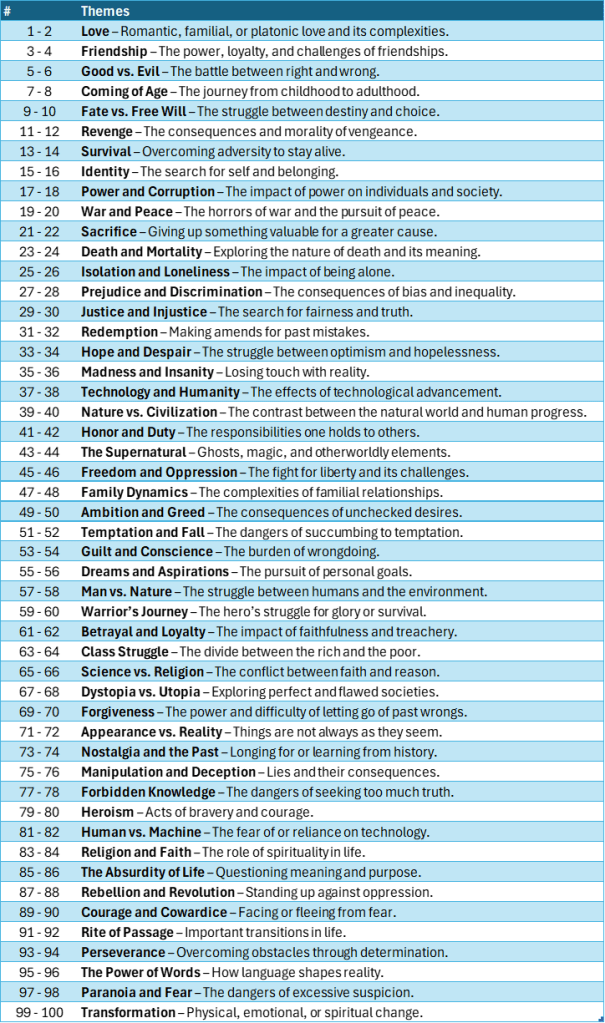
Here are the commonly accepted themes of mythology and folklore in a table, arranged into numbered entries appropriate for a roll of D100 dice:

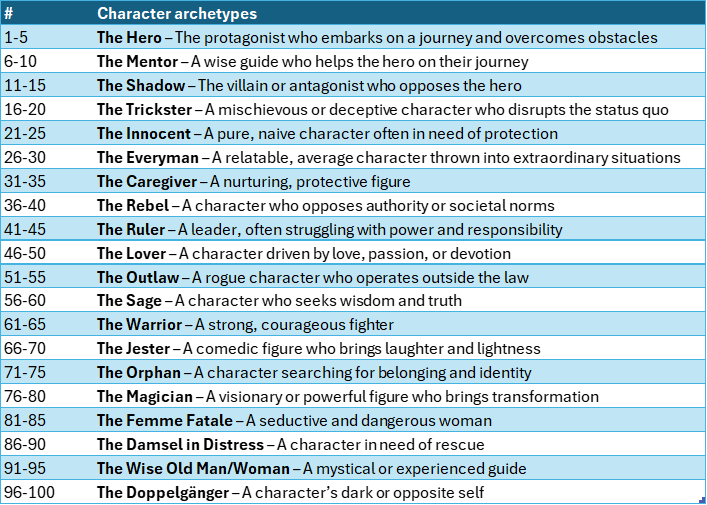
Here are the common character types of mythology, similarly arranged:

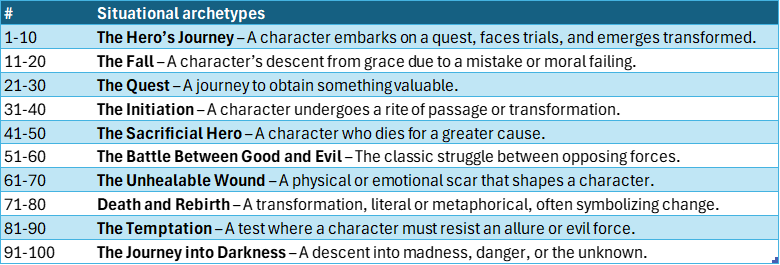
And finally, here are the common situational types of mythology:

SALT MYSTIC: BOOK OF LOTS is designed in a similar manner, with appendix tables for all manner of characters, encounters, and places arranged along the 100-scale like this, appropriate for idle shopping, dice rolls, or use of the bibliomancy mechanic core to the book’s function. The concept with the book is to forge a solo adventure and tell yourself an amazing, resonating story.

The analogy I’m drawing today is that themes and types of mythology have a power and resonance very much like the comforting, stable floor of bass in music. A deep, low melody on bass grounds a melody and makes it richer, makes it seem more important. That’s how myths work. I’m imagining incorporating elements from these tables into a solo tabletop adventure to make them play the same role…

…to summon them so they must work their magic.

I picture roleplaying game rulesets like the one in the BOOK OF LOTS as recording studios: an engine of creation that wasn’t available to previous generations that we can bend to dazzling new heights like Wilson did.

I see elements of oracle tables like those in BOOK OF LOTS or Ironsworn, Starforged, the Dungeon Dozen volumes 1 and 2, and other amazing sourcebooks as chords and notes.

And I see the solo player as a crazy artist, just messing with things to see what new comes out of it all. Telling new stories. Jamming new jams.

My head is swimming at the thought of this. I wonder if it’s too much coffee or if there’s something to be said, truly, about combinations of mythic elements arranged like music. Intriguing idea for me today, at least, to bring it to you today.

Till next time,
AI Tools For Roleplaying Game Exploration

I know. I know. AI for artists and writers and pretty much every creator these days seems big and scary and threatening. I’m not ignoring that, I promise. For people who make their living off bringing new things into the world, the shocking advance in the quality and capabilities of AI tools in the last few short months can be terrifying.

However, Grailrunner’s position on AI chat and art generation tools is that we are seeing the beginnings of an unstoppable wave of technology that isn’t going away. It isn’t. In fact, more is coming, and the world of creators is turning upside down rapidly. Let’s find a way to strike the balance and live together. Astounding things are becoming possible.

For instance, today I thought I’d bring you a short overview of how to quickly and painlessly generate elements for use in roleplaying games. I was just messing around, and startled myself with the quality of what I was producing.

Here is ChatGPT. If you’ve not played with this incredible mechanism yet, please go do so. Let me show you what it can do (and stay till the end for a freebie!):

I was exploring Free League Publishing’s Coriolis roleplaying game ruleset and wondered if ChatGPT knew those rules and could generate a spaceship for me quickly with the stats and everything. It seemed a bit exotic and unlikely to me, but wow.

Name: Al-Kahf Class: Light Freighter
The Al-Kahf was built on the planet of Jabel, known for its rugged terrain and harsh climate. The ship was designed to be a reliable and durable vessel, capable of handling the toughest conditions and making long journeys through the Third Horizon.
The ship was commissioned by a wealthy merchant, who wanted a vessel that could transport his goods across the Third Horizon without relying on a large crew. The Al-Kahf was fitted with the latest technology and a state-of-the-art navigation system, making it one of the most advanced light freighters in the Third Horizon. The Al-Kahf quickly became known for its reliability and efficiency, and its owner became one of the most successful merchants in the Third Horizon. However, the ship’s owner soon retired, and the Al-Kahf was put up for sale. The ship was purchased by a group of adventurers, who saw the Al-Kahf as the perfect vessel for their expeditions into the unknown reaches of the Third Horizon. The adventurers made several modifications to the ship, adding weapons systems and upgrading the engines, making the Al-Kahf even more capable and versatile.
The Al-Kahf quickly became renowned for its daring exploits and daring rescues, earning the respect and admiration of the people of the Third Horizon. The ship and its crew became legends, known for their bravery and their ability to handle any challenge that came their way.Despite its many adventures, the Al-Kahf remains a reliable and sturdy vessel, always ready for its next journey into the unknown. The ship is a true symbol of the spirit of exploration and adventure, and a testament to the ingenuity and determination of its crew.

Speed: 7 Handling: 6 Armor: 5 System Strain: 4 Crew Quarters: 3 Cargo Hold: 8 Fuel Capacity: 9

Speed: Refers to the ship’s maximum velocity and maneuverability. A score of 7 means the Al-Kahf is a relatively fast and agile ship, able to make quick turns and escape danger.

Handling: Refers to the ship’s ease of control and responsiveness. A score of 6 indicates that the Al-Kahf is easy to control and responds well to inputs from the pilot.

Armor: Refers to the ship’s durability and protection against damage. A score of 5 means that the Al-Kahf has average armor for a light freighter, able to withstand some damage but not designed for heavy combat.

System Strain: Refers to the ship’s ability to handle stress and strain during high-stress situations, such as combat or high-speed travel. A score of 4 means that the Al-Kahf is capable of handling moderate stress, but may struggle during intense situations.

Crew Quarters: Refers to the ship’s accommodation for crew members. A score of 3 means that the Al-Kahf has basic crew quarters, providing a comfortable place to sleep but not much else.

Cargo Hold: Refers to the ship’s storage capacity for goods and supplies. A score of 8 indicates that the Al-Kahf has a large and spacious cargo hold, capable of storing a significant amount of goods and supplies.

Fuel Capacity: Refers to the ship’s ability to store fuel and make long journeys without refueling. A score of 9 means that the Al-Kahf has an impressive fuel capacity, allowing it to make long journeys without worrying about refueling.

I am a huge fan of the way Shawn Tomkin manages dice tables for solo roleplaying in his Ironsworn and Starforged roleplaying games. His philosophy of ‘creative interpretation’ at work when we roll some dice with a particular context in mind is fascinating. Basically, we bring baggage to the dice table result, and the game mechanics bring it all to life in a unique way. I wanted to see if ChatGPT could generate a 100-entry encounter table of monsters, which it did no problem at all. So I pushed a little harder and asked for a 66-entry dice table of different types of space ports. And I got this:

  1. Commercial spaceport
  2. Military spaceport
  3. Research spaceport
  4. Smuggling den
  5. Trading outpost
  6. Asteroid mining station
  7. Gas mining platform
  8. Refueling station
  9. Communications relay station
  10. Repair and maintenance station
  11. Luxury space resort
  12. Cargo transfer station
  13. Private spaceport
  14. Space museum
  15. Black market hub
  16. Planetary defense platform
  17. Medical station
  18. Terraforming station
  19. Scientific research facility
  20. Space elevator
  21. Zero-gravity training facility
  22. Space tourism port
  23. Space manufacturing facility
  24. Cryonics storage center
  25. Astrobiology research station
  26. Interstellar gateway
  27. Wormhole research station
  28. Cargo hub
  29. Passenger terminal
  30. Habitat ring station
  31. Interstellar trade hub
  32. Orbital defense platform
  33. Space colony supply depot

34. Colony ship docking facility
35. Refugee processing center
36. Galactic news agency headquarters
37. Mercenary outpost
38. Pirates’ haven
39. Alien embassy
40. Emergency response center
41. Planetary observation post
42. Interstellar prison
43. Military research facility
44. Debris clearing station
45. Terraformed planet terminal
46. Space observatory
47. Space casino
48. Interstellar sports stadium
49. Weapon testing range
50. Hyperspace testing facility
51. Cosmic phenomenon research center
52. Space-time anomalies research station
53. Galactic archives
54. Intergalactic judiciary court
55. Space monastery
56. Zero-gravity art gallery
57. Space academy
58. Celestial navigation training center
59. Smuggler’s warehouse
60. Orbital refinery
61. Astro-mining hub
62. Interstellar advertising platform
63. Space advertising platform
64. Space entertainment center
65. Space hotel
66. Interstellar luxury cruise liner.

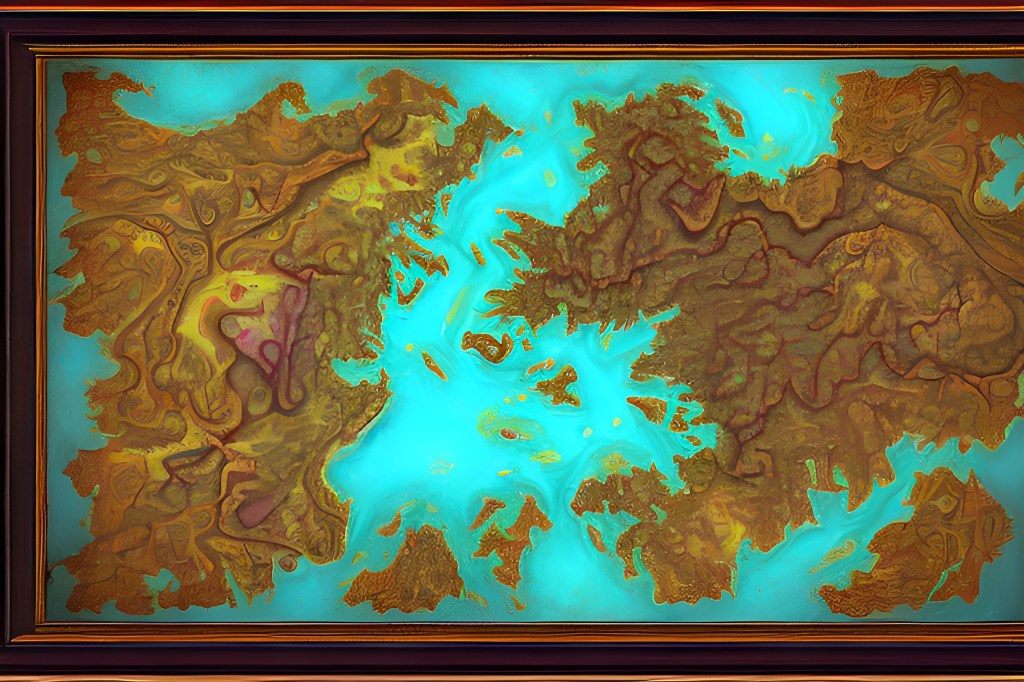
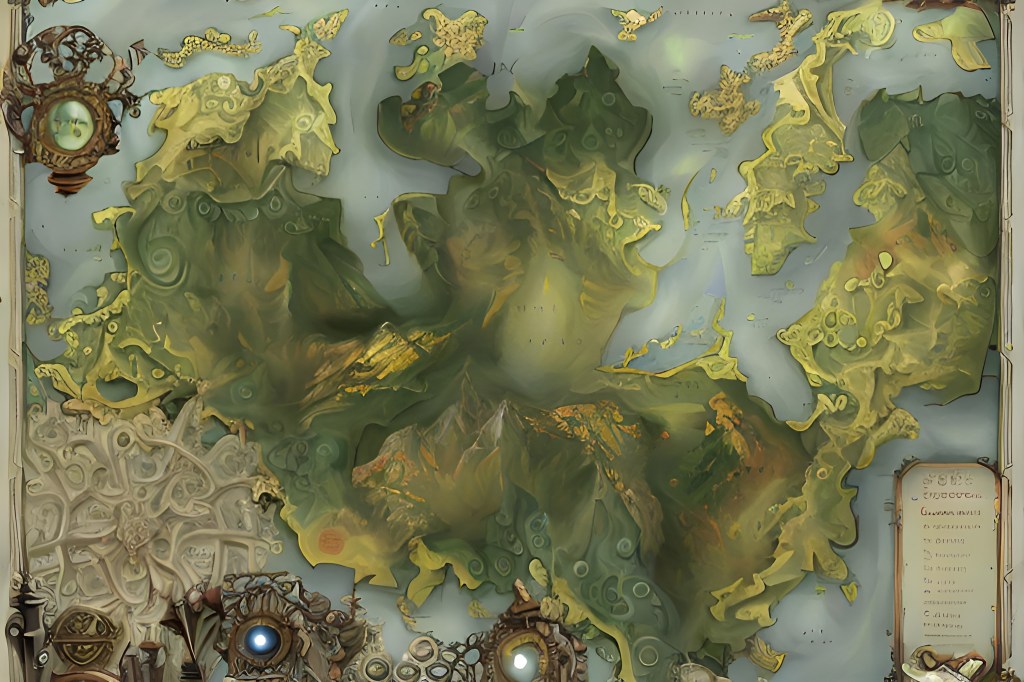
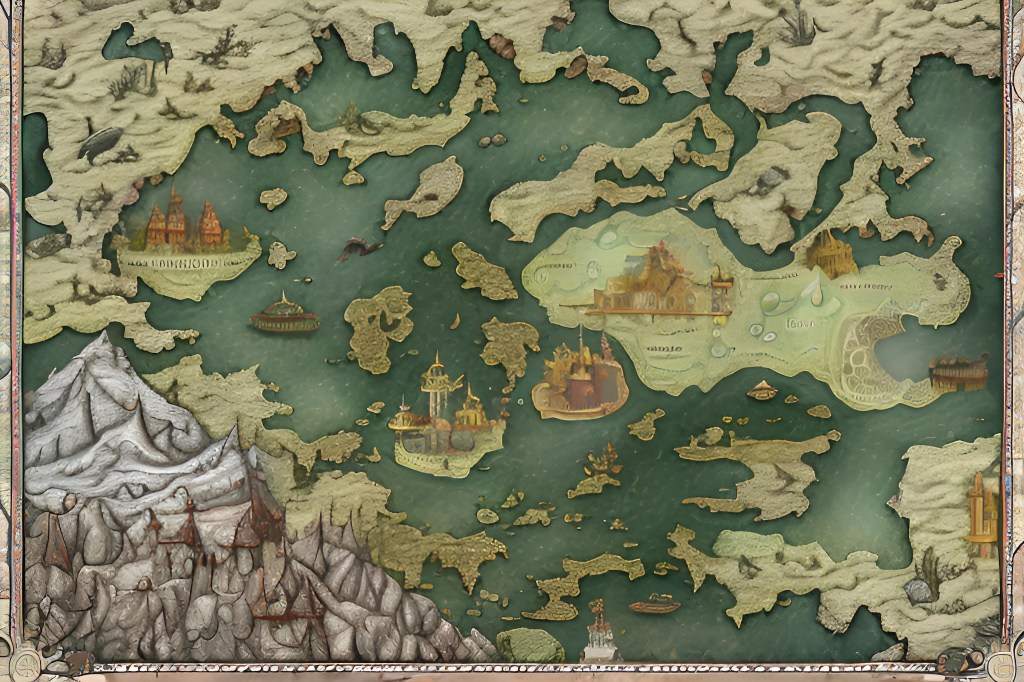
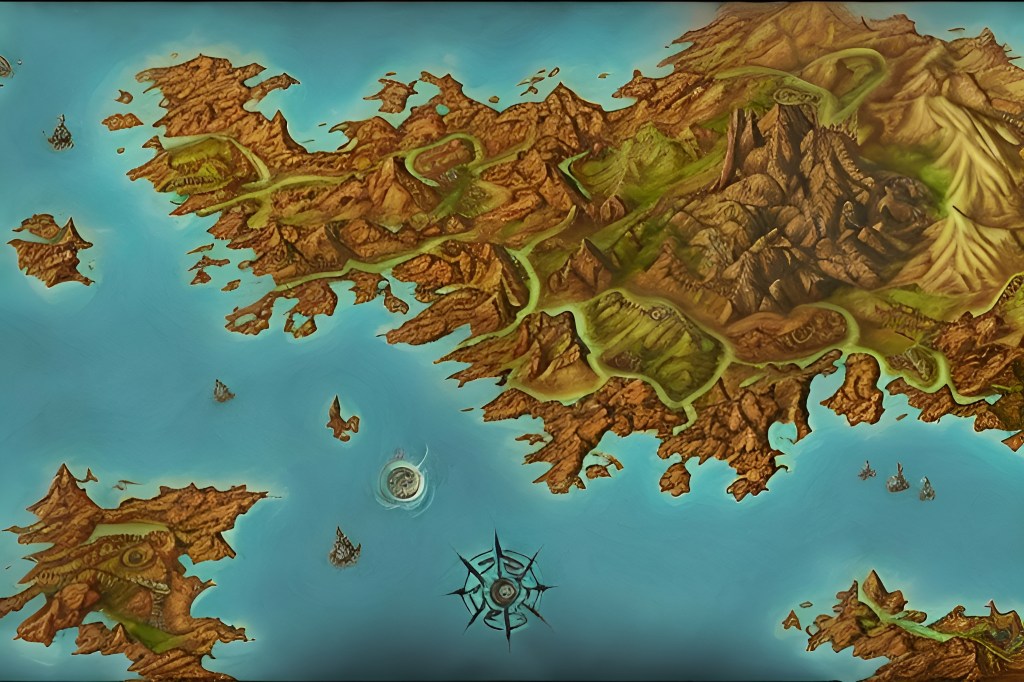
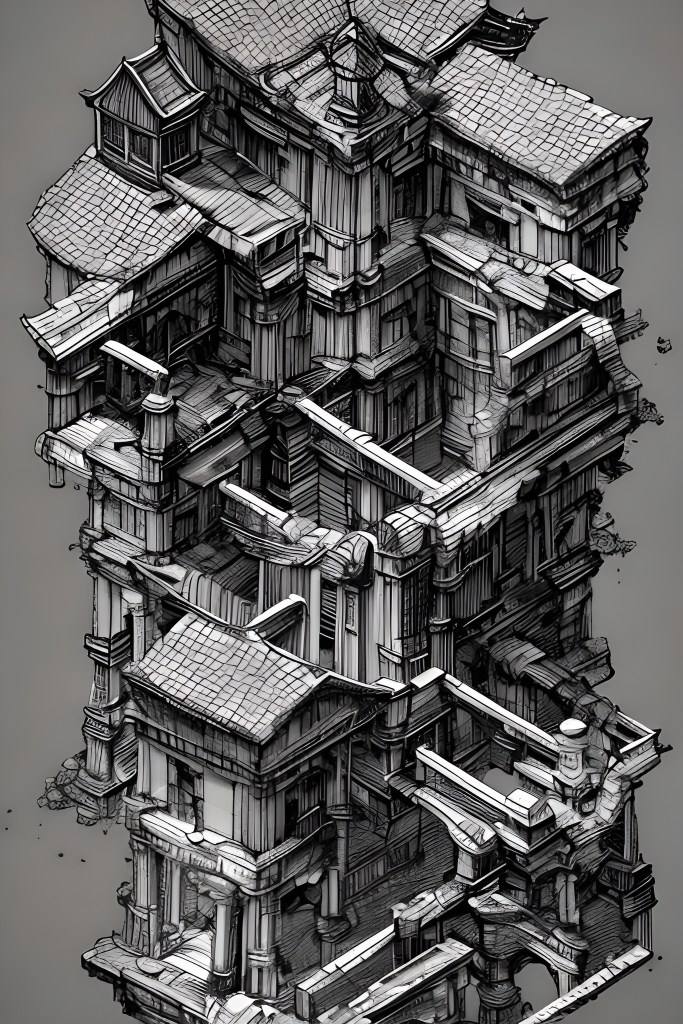
Finally, I was curious whether one of the many art generators out there, like Codeway’s Wonder app or Stable Diffusion can generate maps. And the answer is sort of. Here are some results as they were generated by Wonder without any editing whatsoever and based solely on precisely worded text prompts:

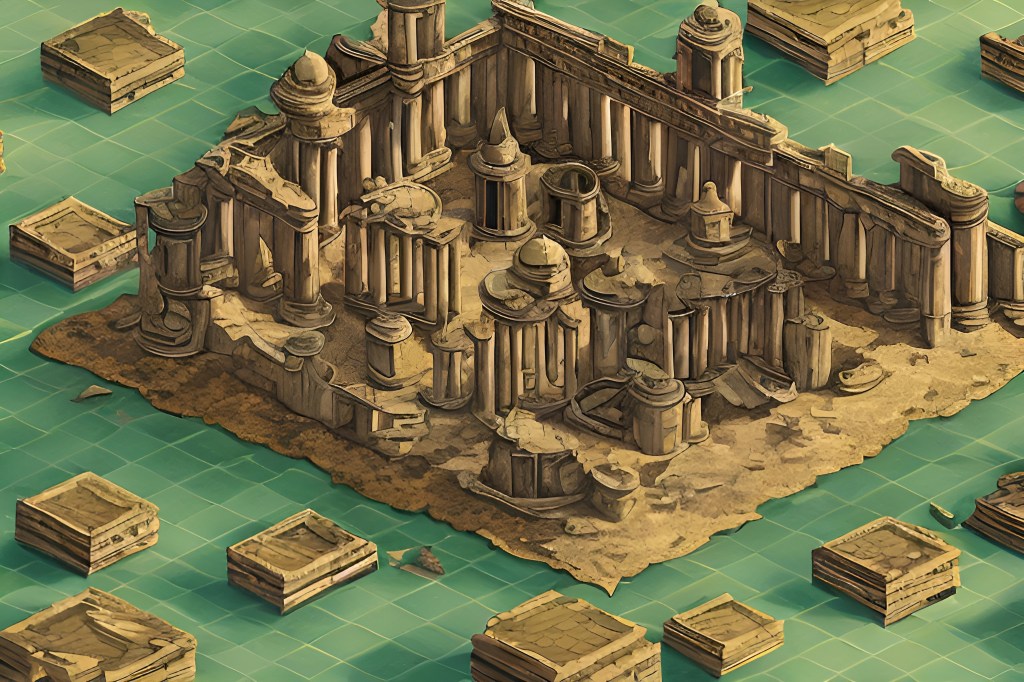
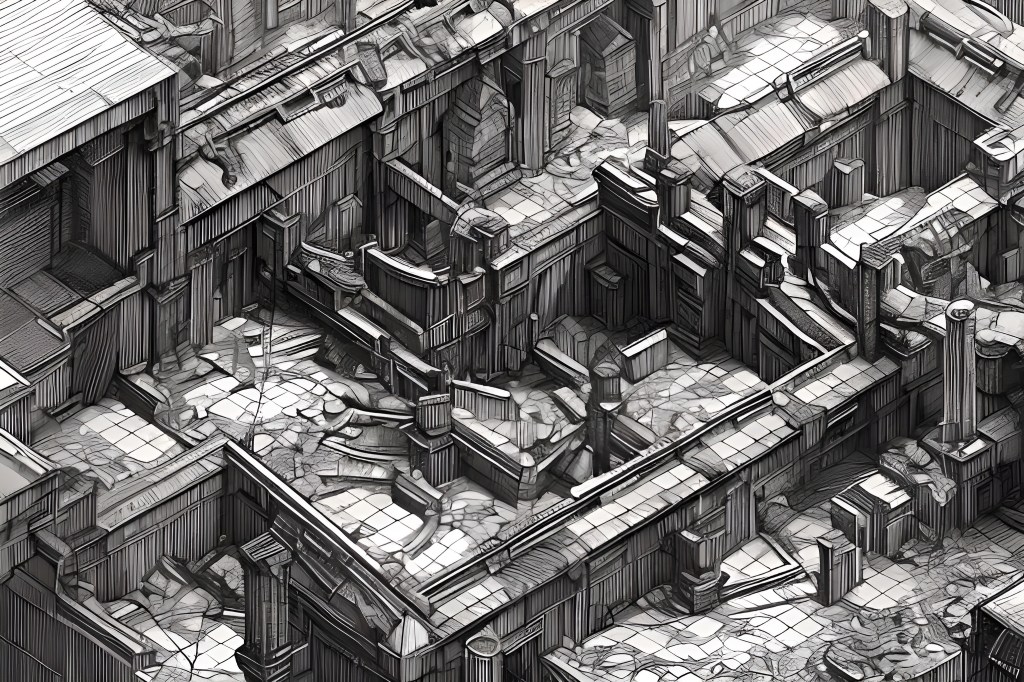
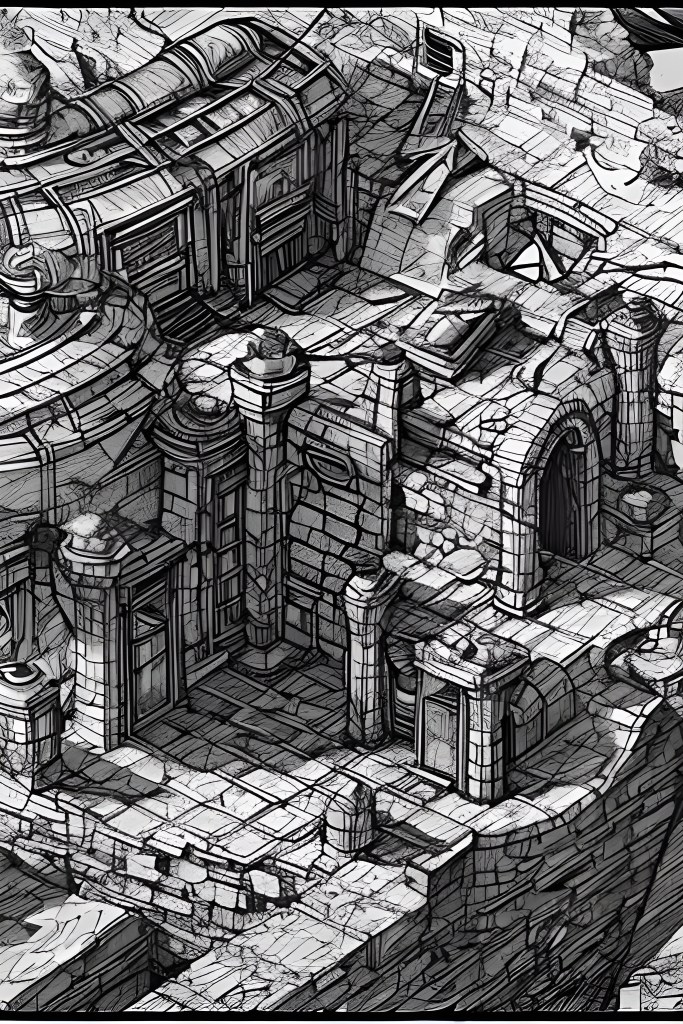
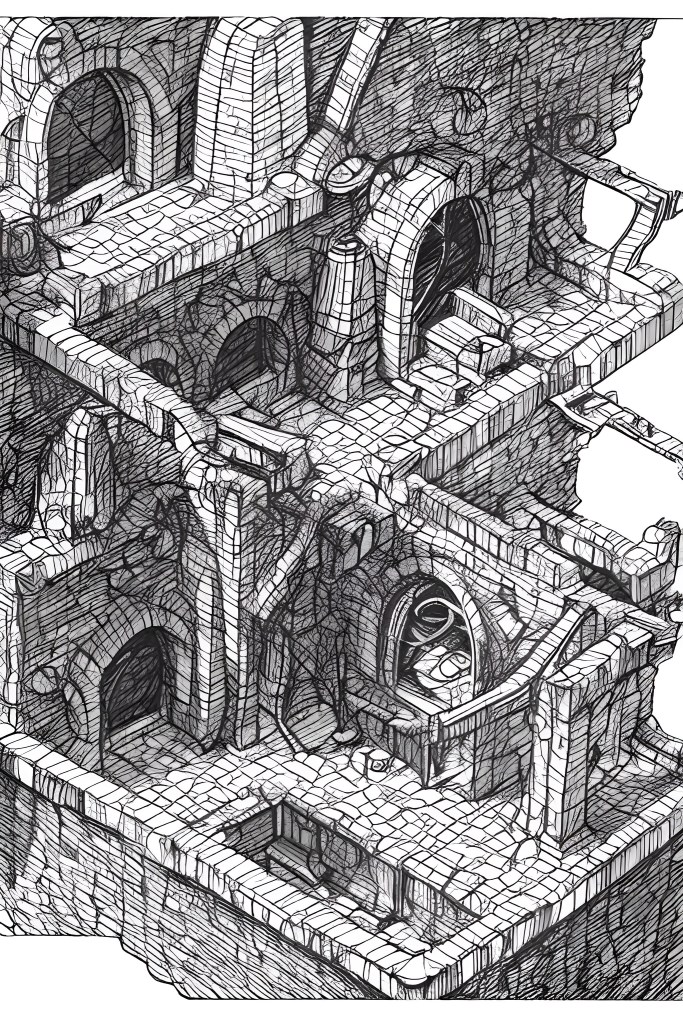
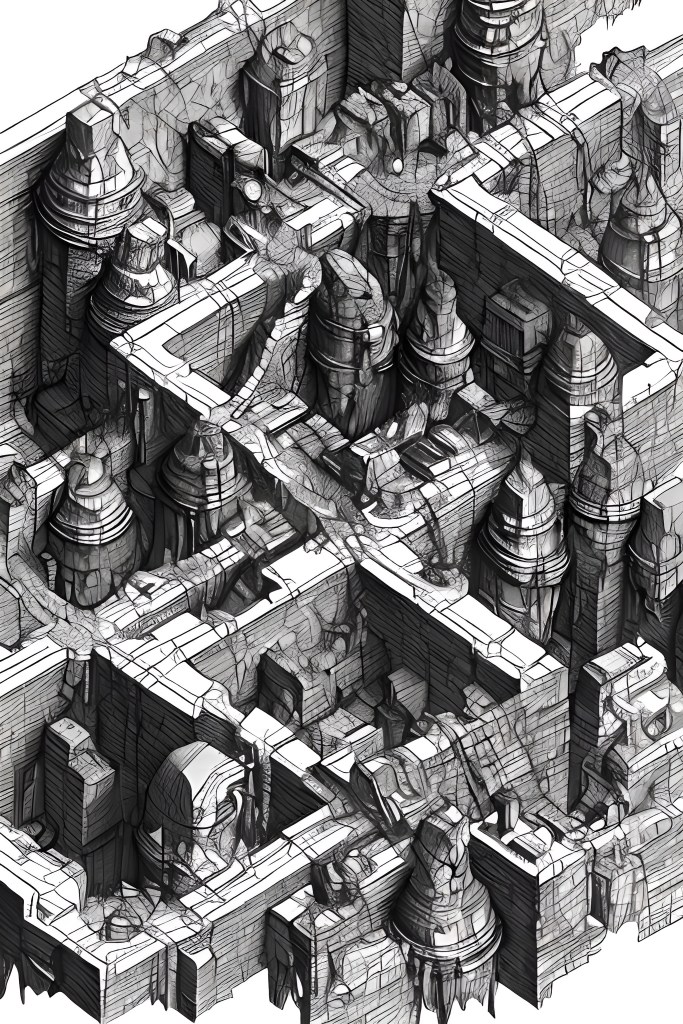
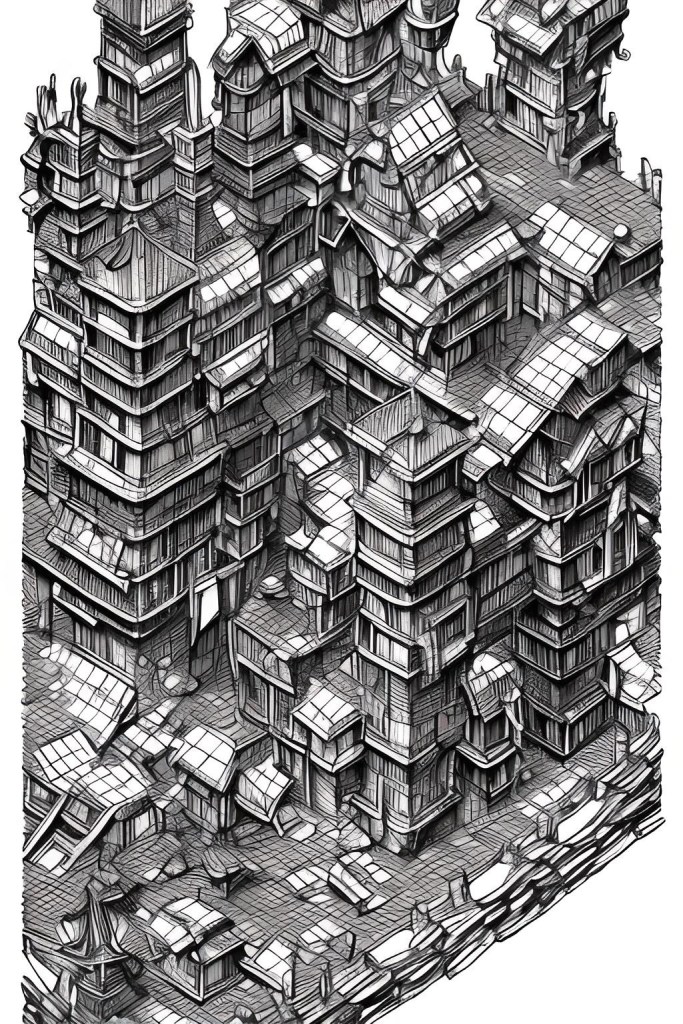
Just extrapolating, I requested some isometric maps for some lower level, grittier encounters. Again, these are from Wonder and with absolutely no editing whatsoever:

Come on! That’s incredible, right?!

I’m not ignoring that this is a delicate issue for people who make maps or write encounter tables for a living. But for my part, I see this incredible new technology as pushing me to be better, to be competitive and push the boundaries of my craft so I can stand above works that are jumbles of previous works.

Just ask ChatGPT to tell you a story, and you’ll see what I mean. They’re the most plain vanilla, generic fan fiction you can imagine. It’s terrible, no matter what you do with the prompts. And that’s the point I’m making here. If I worked with isometric maps for a living, I’d probably know these images for being generic and predictable. But I don’t, and I think they’re amazing, practically ready to use in a game with some minor adjustments.

Now for the freebie I promised you (click the image to download this in pdf). I present to you a set of adventure-building dice tables entirely built in ChatGPT:

Anyway, delicate but intriguing topic today. Go explore and let me know what you come up with!

Till next time,