‘Google Translate’ For Dream-Speak: Beginning With Pictures

1302f02a89040c7990e2ddbb0090f598.jpg

I’ll tell you something interesting about how your subconscious works; and I’ll do it without referencing Jung. Maybe. Anyway, there was this girl in my elementary school that I thought was kind of cool and who’d call me every once and a while. She was pretty and one of the popular kids, so I was into that but not because I had any great fascination for her. She often forgot how good a friend I was when we were back in school on Monday anyway, strangely; but we’ll just let that lie there. It’s important to my point here that you get this – I wasn’t in love or like or even considering it until a particular turning point. A dream.

Nothing nasty here. I just had a dream about her one night where we were hanging out on a farm looking at the stars or something when she tried to kiss me. That was all, seriously. I can still describe to you now, however, the incredible attraction she had in that dream…like a mask with the power of all of human myth behind it just hanging over the dreamwork cardboard cutout of this girl. She was everything about girls in that dream, all girls who are fascinating and maddening. From that point on, I had a thing for her I couldn’t understand at all. Weird, yeah? Hold on to that. I’ll come back to it.

A nightmare I had when I was probably thirteen is as clear to me now in my forties as it was the night I dreamed it. The plot is thin; and you probably won’t get what’s spooky about it. I was outside my house bouncing a basketball alone; and it echoed. I remember it echoed. I knew in the dream no one else was home. Yet when I felt someone watching me, I turned around to look up in the second story living room window. The curtains were split open; and a pale old man was grinning widely back at me. The end. I chilled up just now typing that because of the malevolent feeling I had about that guy up there. It wasn’t what happened or that I recognized him or even knew his intentions. It was the mythic power of everything that’s dark and frightening and wicked pasted into a mask hung over the cardboard cutout of a stranger in my living room window. It was the feeling then that is still with me now.

I understand that my subconscious has these basic universal ideas about the feminine mystique and about bad things and a host of other patterns that are incredibly fundamental to how we perceive and filter information. The feeling of adventure and new horizons, for example. What it means to me to be a man. You can imagine others. One thing that happens to me and which I know happens to many other authors is we either have these patterns laid over an image we encounter by happenstance, or we dwell on an image we find striking on its own and overlay the pattern ourselves to make something of it.

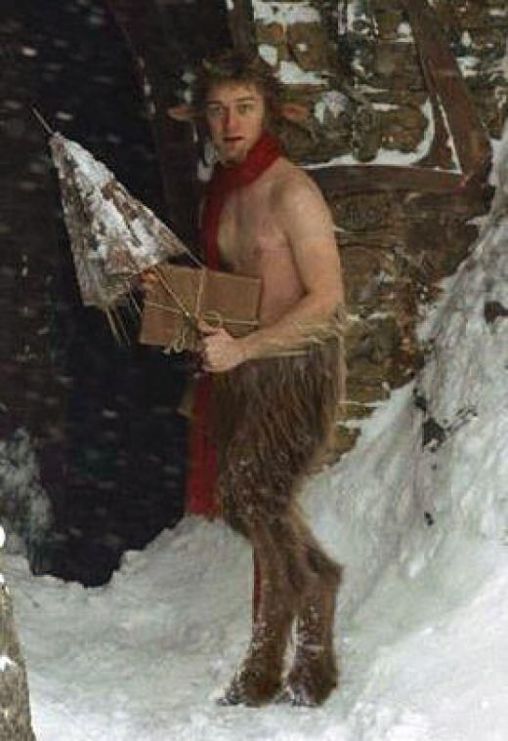
In It All Began With A Picture, C. S. Lewis explained that he carried around a picture in his head of a faun carrying parcels in the snow with no idea what it meant for years…till he finally sat down to ask questions about it. I imagine it carried the sense of adventure with it, which is why it stuck around. George Lucas explains in Star Wars: The Annotated Screenplay that he really just wanted to remake Flash Gordon because he was looking to recapture the sense of exploration and adventure from the serials he watched as a kid. Stephen King explains in one of his introductions to Wizard And Glass that he walked out of The Good, The Bad, And The Ugly pondering the unearthly western imagery he’d seen and knowing he needed to recapture the way it made him feel watching it – a journey that gave us the amazing Dark Tower series. What I’m offering you is that images we find interesting are all around us or inside our heads. What we can do as writers is poke and prod on them a little to see why they’re lingering with us…which mythic pattern overlays best on them and makes them most real. They fit like a lock and key when you figure that out.

In my case, I was in a rock gorge in Oman with some friends particularly missing John Wayne movies on a long Navy deployment and making my way through the first three Dune books. The picture of a guy in a torn and dirty uniform slamming open saloon doors and drawing all eyes on him came to my mind all on its own. Everyone in the bar was afraid of him though he was unarmed. I knew him to be a leftover of some war, and that somehow he had people with him. He felt tired to me, and dangerous…desperate. That came with the picture. I held on to that for a long time, till I ultimately sat down to write Tearing Down The Statues and put him in a different setting to answer all my questions about him, and just what those people were frightened of.

See? No Jung. Now go think of an image that’s stuck around in your own head and start asking which pattern did it bring with it to unlock whatever story it’s trying to tell.

Imagery With Teeth: Learning To Write For Millenials From Treehugging Haiku Poets

1565561

Call me a dork if you want; but haiku is like a cherry Starburst for me. When you’re in the mood and they’re just right, it’s like a shot of happiness straight to your cortex. My point here is going to be that this poetry form and its old masters have plenty to teach a 21st century wordslinger how to write fiction. Try this one, from Matsuo Basho (1644-1694):

A bee

staggers out

     of the peony.

No picture needed. The word choice is fascinating because the bug isn’t said to just be there; and its little hairs or whatever aren’t described. He says the little guy is staggering in the center of a flower after blasting down a bunch of nectar. If you’re at all like me – and this is one of his famous ones so I’m not alone here – then this image pops right into your head like zooming in with your iPhone. I basically stole this one for a Salt Mystic quote in chapter 5 of Tearing Down The Statues. Here’s another one I stole from (Sylhauna’s gift in chapter 9):

First snow

falling

     on the half-finished bridge

And another (chapter 9 again, referenced in the computronium ruins they sail past):

Summer grass –

All that’s left

     of warriors’ dreams

Give me a minute on this. Hear me out. We’re bombarded by pictures in all our entertainment now and have been for a while. Most of us think in pictures. We absorb information more quickly that way. Interesting images grab us as readers and stick around maybe even after the plot has faded. I read something from a cyberpunk guy (maybe William Gibson, not sure) way back in the nineties that I couldn’t begin to tell you the title or story or even the point of it all. I just remember a line where the narrator described some rain on a lake as ‘furring it over with needles’. The image popped for me and was really an interesting way to describe that. I saw it and liked the way he said that. If you’ll just stop playing around and go read either Viriconium or Light by M. John Harrison, you’ll see what I mean about crazy-cool ways of describing imagery that are uniquely wired to the way our brains work…basically interesting images that are pregnant with stories.

The classic example of an image pregnant with a story is the six word flash fiction (probably) wrongfully attributed to Hemingway:

For sale: baby shoes, never worn.

Ugh, man. That’s heartbreaking. Lean and straight for the jugular! Their baby died and never got to wear the freaking shoes. That’s awful. Usually haiku isn’t trying to rip your heart in pieces like that, but is often saying something more than what you’re looking at. How about this one by Kobayashi Issa (1763 – 1827):

     The old dog

leads the way

     visiting graves.

Dogs are always awesome. I can see a loyal little guy with his tongue hanging out and that fuzzy white fur on his snout, not even knowing this is a sad thing, being in the graveyard. Since he knows the way, he’s been there many times before. That leads my mind off into all sorts of imaginings about the dog’s master, and just which graves he’s going back again and again to visit. I may have to wipe my eyes here – hold on.

If we’re wired for images, if we absorb information more effectively and make it stick more effectively with images, and if a writer can successfully convey an important message through that mechanism – or at least resonate with an important theme, then the work has a shot at immortality in someone’s mind. That’s what this whole gig is all about, right?

Here’s what I get from all this:

  1. Stay lean, avoid a bunch of useless words that don’t add value
  2. Craft a striking image that’s memorable and describe it in a novel way
  3. Consider resonating the image with a theme from the story – make it mean more than the picture itself if you can

If you’re ever stuck for coming up with something, go steal from Basho and Issa. They won’t mind.

‘Sun Of Suns’ by Karl Schroeder

sun-of-suns

What do you REALLY ask of a book, anyway? Isn’t it true that if you can just get lost in some cool world, check out of this one for a while, maybe run into some chin-scratching ideas along the way, meet some fictional folks who you care about one way or the other – love or hate or whatever, then it’s all cool? Me too. Here’s one.

So I tried a different Schroeder book a while back (‘Lady Of Mazes’) and saw enough potential to try him again, though his style was bugging me. Seemed to ramble a bit. Don’t point at me, I’m the one typing here. This one was worlds better though. I’ll prove it – see what you think. It’s called, ‘Sun Of Suns’, by Karl Schroeder, first in his, ‘Virga’ series.

Virga is a massive fullerene balloon three thousand kilometers in diameter but filled with air. There are spherical lakes and massive chunks of floating rock – all aimless. The people living in Virga form and ignite their own little fusion suns for light and heat; but that leaves huge swathes of the atmosphere left in winter where there are no towns. There isn’t a single government or even a single planetoid where these folks live either – they’re on individual floating towns made from huge wood and rope wheels, spun for centripetal gravity. You can jump from one to the other if they’re close enough. You can fly from one to the other on hover bikes. It takes a few pages to get used to what he’s painting for you; but I haven’t come across such memorable imagery for a while. Would be amazing to see maybe in anime if not live action.

The story centers on a guy named, Hayden whose tiny town was slaughtered by a larger town six years ago when they tried to set off their own sun to gain independence. Hayden’s looking for revenge, targeting the Admiral who he’s almost certain (but not entirely certain) led the attack. He of course gets in the fireworks and intrigue of something larger with everyone he’s mad at, but also with a mysterious lady who is impossibly not even from Virga at all. The Admiral’s wife is beautiful but conniving and nasty; and Hayden tags along with her for a sizeable chunk of the narrative. She’s also the subject of the second book in the series, ‘Queen Of Candesce’.

When I was a kid in summertime, I’d ride my bike down our long driveway and around the yard imagining I was on a hover bike, stopping in at a floating maintenance shop and spying for somebody preparing for the revolution or whatever. This book had every bit of that, which smoked my mind a little because how the heck could something so weird in my head show up in print now? Schroeder did an ‘Inception’ on me. That was fun to see.

One scene in the book made my Physics mini-me flinch a bit; but he redeemed himself and nailed something down that is incredibly unique and worth the price of admission on its own. I don’t think it’s a spoiler; but you may think so. If you’re worried about that, skip the next paragraph and join me at the end. I’ll wait for you there.

The key characters pay a visit to a small town that has inserted itself into a massive spherical ball of water. They used a water-repellent cone the size of a freaking town and wedged it into the sphere, carving out a place where they constructed their buildings and hide away from all the intrigue and conflict within Virga. Flinch, read it, stick with where he’s going…incredible idea, maybe could work…wouldn’t want to live there…hope they don’t fire any guns at the walls.

My point is this then: great book! I read a lot of pulp science fiction from the 1930’s and 1940’s like ‘Brigands Of The Moon’ by Ray Cummings or ‘The Metal Monster’  or ‘The Ship Of Ishtar’ by Abraham Merritt. ‘Sun Of Suns’ has that feel of fun and danger and outlandish technology. Don’t look for deep philosophical musings or ominous quests or galactic battles here, you won’t find them. Read my first paragraph again up there…if those things make it happen for you, then give this book a shot. Let me know what you think.

Why You Should Be Reading R. A. Lafferty: The Madman Of Oklahoma

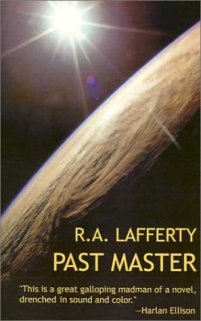
lafferty-past-master

You’ve probably heard R.A. Lafferty quoted if you haven’t read him. I came across him first when Neil Gaiman said a particularly good line he’d used in his, ‘Sandman’ series was a Lafferty line. Maybe you recall it – the creepy witches called ‘The Kindly Ones’ said something like, ‘They can kill you; but we can kill you worse’. That’s actually a chapter title in Lafferty’s, ‘Fourth Mansions’. A rocking book, if you haven’t read it, about four secret societies vying to take control of the future of humanity. The reason you read it is not the plot, because you know…whatever…I can’t really say what’s going on; and I’ve read it twice. You read it because he drops these word-nuggets that sparkle. The title of the first chapter is, ‘I Think I Will Dismember The World With My Hands’. The ninth chapter is, ‘But I Eat Them Up, Federico, I Eat Them Up’. If you don’t love that kind of thing, then take a pass on the guy I guess; but you’re missing out. At least try, ‘Past Master’ because its plot is good too, there’s a great story, and there are more sparkling quotes for you.

Here are some quotes, see what you think:

  • ‘It looks like a good year for monsters’ – Fourth Mansions
  • ‘I’d like to be gentle to you with with a meat cleaver, Justin’ -The Emperor’s Shoestrings
  • ‘It is an awful and sickening thing to see a good man grow rich and respected.’ – The Underneath Man
  • ‘The first implement made by man was not a scraper or celt or stone knife, it was a crutch.’
  • ‘My magic can whip your magic; and my dog can whip your dog’ -All The Skies Are Full Of Fish
  • ‘Most of the trouble that comes to people in this world comes from reading the wrong books.’ -Try To Remember
  • ‘I have certain riddles to ask the woods and the mountain, and they do not speak when others are present’
  • ‘Which was first, you, or the belief in you?’ -Past Master

So back to what I view as his masterpiece, though everybody you talk to who digs this guy has a different view on that. For me, it’s, ‘Past Master’. A description from the interwebs:

‘Past Master is set in the year 2535 on the world of Astrobe, a utopian Earth colony that is hailed as Golden Astrobe, “mankind’s third chance”, after the decline of both the Old World and New World on Earth. Despite idealistic intentions, it is suffering moral and social decline that may be terminal for both Astrobe and the human race.

In an attempt to save their dying civilization, its leaders use time travel to fetch Sir Thomas More (chosen for his fine legal and moral sense) from shortly before his death in the year 1535 to be the president of Astrobe. More struggles with whether to approve of the Astrobian society, noting its possible connections to his own novel Utopia. His judgements soon lead him into conflict both with destructive cosmic forces on Astrobe and with its leaders who thought him a mere figurehead who could be manipulated.’

End quote. If you’ve ever read Harlan Ellison’s short story, ‘Repent, Harlequin Said The TickTock Man’, and loved it because the trickster guy in the story is thumbing his nose at the people who think they’re in charge, then this book may just work for you like it does me. Thomas More sticks it to the man, if you know what I mean. By the way, if you haven’t read Ellison’s story, what the crap, man!? Get that done, then come back. Sheesh, you’re lucky we found that out!

Lafferty, man. Go read this guy. He saved himself from alcohol through his writing; and he made the world a better place because of it. You owe him at least a look. Let me know what you think!