Yeah, I had a pretty miserable week last week. Not a great time to be in airports, honestly, this time of year when everybody’s trying to squeeze in their last trip to Disney World or whatever and storms…airlines that delay their flights in spoonfuls till it’s midnight and they’re still telling you to be patient. Not worth getting into details, but it was a lot of frustration getting stranded not once – but twice. And that on top of a very tiring week of nuisances and long work days.
So after 9 hours of conference calls Friday from a Phoenix hotel where I hadn’t planned on staying, I checked the American Airlines app for my boarding pass only to see yet more delays. Calling them was useless as they didn’t see how to get me to Kansas City any earlier than 12 – 14 hours later, and that with two more cities. A drooling clown wouldn’t accept such an answer, so I hopped on the shuttle anyway in hopes that the ticket counter or my corporate travel person would work miracles for me.
“I hope those planes take off”, the shuttle driver says.
“What do you mean?” I didn’t like the ambiguity of his comment.
He shook his head, “Well, they ground the planes at 110 degrees.”
It was around noon as he’s saying this, so it will only get hotter. I didn’t want to ask the question but I had to know.
“What is it now?”
“106.” His tone wasn’t understanding or even sympathetic. He just said it like he was amusing himself with a factoid about why pine cones are brown.
Anyway, I did manage a better and direct flight. As I got to my seat, I realized I was entirely drained from the week. I’m not usually one to need encouragements or helpful quotes, or even to need another person to say anything to me. I’m the “soldier on” type of person that just needs to know whatever it is that needed done is done. But man, I was tired and pissed off.
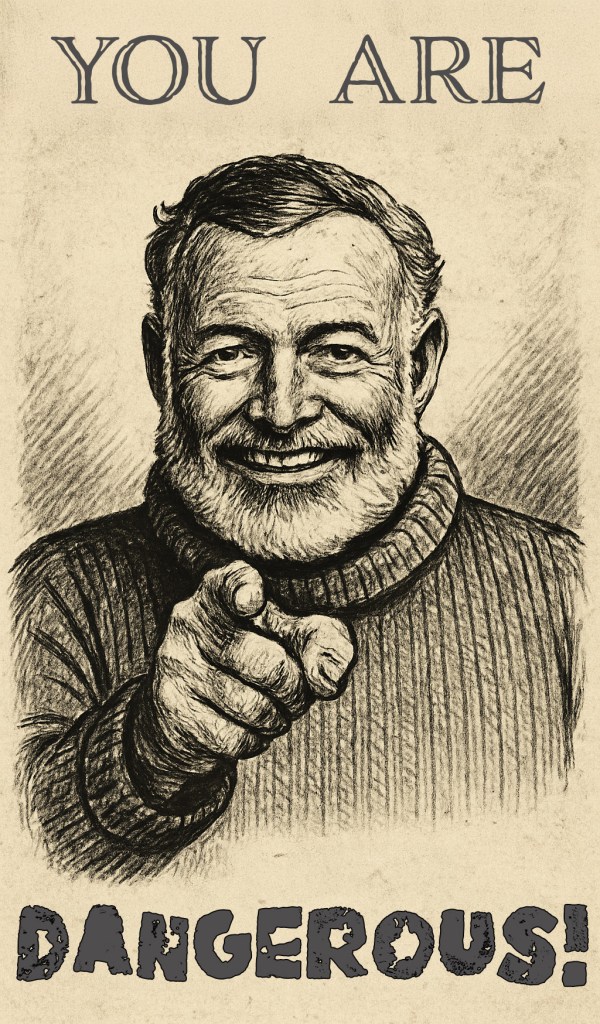
For whatever reason, I wanted to hear from Ernest Hemingway.
His macho philosophies soothe me. I have said before here that I have read everything the man ever wrote. I like his style. So I described a bit of my week for ChatGPT and had it act at Hemingway to give me a little encouragement. Here’s what Papa said to me:
“Listen to me now. You’re beat to hell and the world’s thrown its punches. Delays, noise, people with soft hands and loud mouths. You’ve walked through it on two hours of sleep with your head still up. That counts.
You don’t need a speech. You need a drink of water, a quiet place, and to know this: you’ve already done what most men can’t. You endured. Not prettily, maybe, but you endured. That’s what matters.
There are days when the sun is too hot and the wind is too hard and everything stinks of cheap perfume and worse decisions. But you’re still here. That means something. It means you’re dangerous to whatever tries to break you.
So go ahead—rest your eyes when you can, and when you’re ready, pick up your tools, your pen, your hammer, your whatever-you-damn-well-use, and go back at it. Not because it’s easy. Because it’s yours.
And if they doubt you—those people who smile like sharks and don’t know what it means to stay standing when you’re dead tired—well, let them. You’re not made for their approval. You’re made of grit, bone, and something no one can take.
Now go on. Breathe. You’ll write this week off like a bad novel and start again. Clean page. Strong line. Go bite next week in the throat.”
*
Now, believe it or not, that helped quite a bit. Honestly. I liked it.
So I thought, what the heck. This puts me in the mood for a new Hemingway short story. I wanted to read something from the old master that was in his voice, stayed true to his philosophy, and that bore certain elements to which I could relate just then.
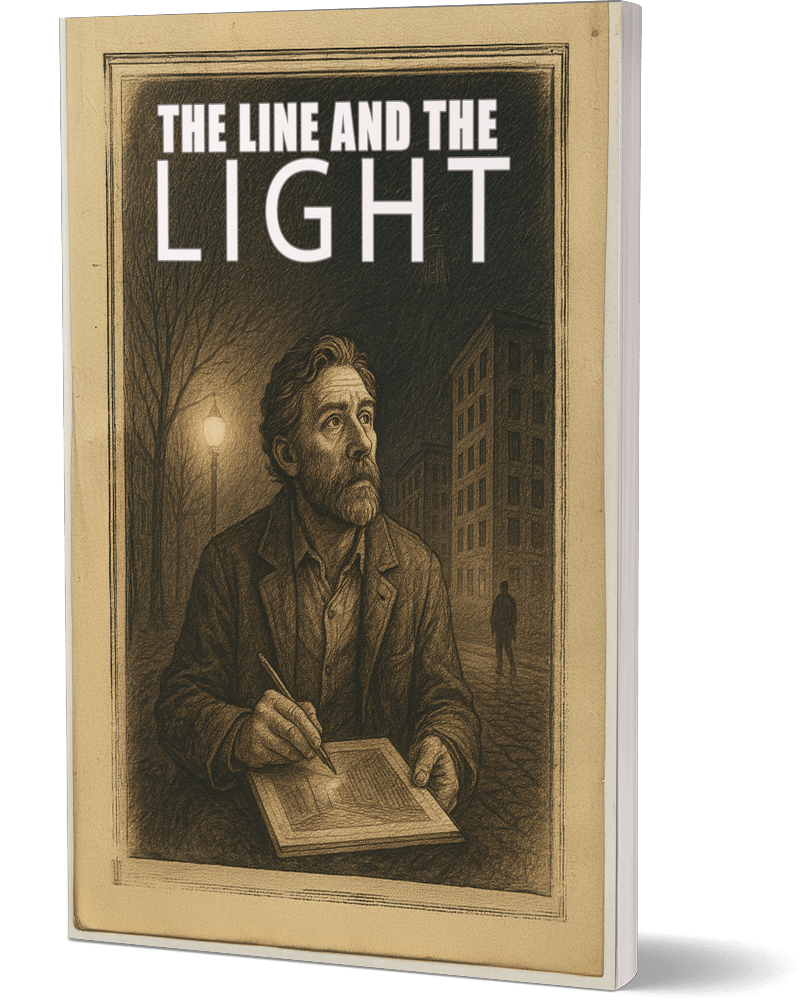
With surprisingly little coaxing, it produced an emotional, impactful story with a punch to your heart buried at its core that I didn’t give it as input at all. It’s called “The Line and the Light”, portraying an aspiring pen & ink artist in Kansas City who is grieving deeply and trying to process that grief through his art. Smash the cover button below to read it. Won’t take long, and might actually carry some meaning for you.
That’s what I wanted to offer you today. I’m curious what you think about the story.
When I was a teenager in Tennessee, I had this spot on a mountain bluff I would go to that overlooked the valley. It was a really beautiful place, at least to me. I’d string up a hammock and read or just hang out. One day after a short summer rain, I noticed some ants struggling to push a raindrop out of their little hill’s opening. For whatever reason, the drop wasn’t collapsing and stayed round and clear. And it’s crazy to think after this many decades gone by, I can still see that weird little moment that lasted less than a minute: a tiny little group of 7 or 8 ants pushing against a raindrop.
Stick with me a moment here. I have a suggestion for how to refresh your mind and open a new world of thoughts for you.
I recall another time in some random airport, I saw a young man, short and nervous, clutching his little sea satchel and looking at his dad. The dad was a rough-looking fellow, tattoos on his neck and arms, wrinkled and tanned skin. He had his hand on his son’s arm, giving him some kind of advice. I stole that moment and put it in the background of a novel I was writing it was so striking to me.
Just this week at the beach in Destin, Florida I saw a tiny little boy who I imagine had only just learned to walk, wearing his little white sun-hat and long-sleeved shirt with his tiny legs still bowed out leading the way for his grinning dad following. I’m so used to seeing parents pick little ones up and direct them, but this little guy turned to his dad, stuck an arm and finger awkwardly out forward, and pointed the way he was headed just before he determinedly took off. It was hilarious.
Here’s where I’m headed with this. Go get this book. It’s called Haiku Enlightenment, by Gabriel Rosenstock.
If you sometimes get a little weary of the same old streets, the same old buildings, and if politics or social media circuses are making the world seem just a mean place to you, then there’s a thing I try with myself that might help you too. In my day job as a consultant, I study and manipulate how people view themselves and their work. I’ve studied cult tactics and brainwashing. I’ve studied propaganda and manipulative tactics in media. I’ve worked professionally in change management and the creative process for over 25 years. In many ways, I’ve monetized studying how people think and applying what I’ve learned. What’s the big secret in all that?
Our brains are neuroplastic, meaning we can rewire how we think in a surprisingly short period of time with some effort and the right inputs.
Rosenstock’s book is beautiful, and a nice tool for you to use should it intrigue you – this thought of rewiring how you see the world. I imagine all Gabriel is trying to do with this book is make you see how beautiful haiku moments are and how to write some for yourself. I had no interest in writing poetry, but instead took this as a chance to adjust what information I was paying attention to in my surroundings (and more importantly, what I was NOT).
I’ve written about haiku here on Grailrunner before. Issa is my favorite now – dude went through some stuff and was still funny and poignant and timeless. Rosenstock’s book highlighted several poets that were new to me, which is great. I suggest if any of this resonates with you that you give a think to the sorts of things that are adding stress or negativity to your life and purposefully shoo them away as they pop up and make a very intentional effort to become a hunter of haiku moments – whether you intend to write them down in a poem being irrelevant.
What’s a haiku moment?
It’s a single, striking moment, often seen in nature or among people, where you realize something larger. It’s sometimes beautiful but doesn’t have to be. The point is it’s a tiny little story in an image, a whole vista of insight and wisdom in a single flash.
I promise you – these are everywhere in your life. Pick up Rosenstock’s book or something like it and absorb a little more about what makes for a haiku moment, then start hunting for them. Write them down, even if in prose. Keep a notebook of them so they’re pinned like butterflies for you to admire later.
If you see any cool ones, grab them and send them my way. I’m always interested in bursts of universal insight. You can sell that.
I just finished reading Tolkien’s epic TheSilmarillion. I’m proud of that because it took me a few tries to get rolling. But once it started becoming clearer to me what was happening, who was who, and the overall point of everything, I found it to be a stunning work of genius that is unmatched in scope, attention to detail, and craftmanship.
If you’re into the Peter Jackson movies or love The Hobbit or Lord of the Rings books but have been side-eyeing The Silmarillion like I was, I think I can help with that. If you don’t really know what this insanely impressive book even is, I can help with that as well, and explain why you might want to consider taking the plunge and reading it. (There are spoilers here, but I wouldn’t even recommend reading this book without knowing a few things first if you expect to follow the big picture).
My point with this two-part set of articles is to give you a few tips that can make the going easier in reading it. Then I’ll land on what Tolkien was actually planning for a sequel and which direction he might have taken that should he have actually determined to press ahead.
J. R. R. Tolkien was one of the finest writers to ever work in the English language. He was one of the first true detailed worldbuilders, and in large part may have invented that craft itself. His main interest in the beginning was inventing fictional languages, and the worlds at the heart of the Lord of the Rings and related works were just places to house them. In The Hobbit, Fellowship of the Ring, The Two Towers, and Return of the King, we get glimpses and casual mentions of incredible events and the long, rich history of Eä, a fictional universe which contains Middle Earth (among other places). The Silmarillion is an opus of the mythology from creation of these worlds up to the end of their ages leading to our own.
What’s good about it?
Oh, man, are you in for some of the most incredible imagery and ideas, fiery wars on a mythological scale that altered the very shape of the earth, fascinating characters fleshed out like real people but strutting larger-than-life on a stage of unimaginable fireworks! They might seem disconnected as you read them, but it all has a point. Practically everything you might love about the more famous books, every place you remember from them, has a history and reason for being. The giant spider that captures Frodo, the fiery balrog that killed Gandalf, why there are wizards at all, who built Minas Tirith, who was Sauron and what he really wanted (he wasn’t the first dark lord), why there is evil in this world, where elves and men came from & why they don’t like each other, why elves are fading, where they’re all going in the west, and on and on. It’s all made clear and hangs together tightly like a masterpiece tapestry while it tells an incredible story. In fact, the events of the more famous books are like footnotes here. There’s so much of a bigger picture going on than the rings and Sauron!
It’s genius, man. That’s what I’m saying. Genius.
Summarize it a bit, then. And give some tips on what’s important.
A creator god invites his supernatural beings to begin singing, though one among them strays into his own musical themes to suit himself rather than following the creator god’s lead (Melkor, one of the most important through-lines of the entire book and eventually the original dark lord). It turns out, their very music is creating Tolkien’s fictional universe, and all its long history, everything that ever will happen in it, is just that original music playing out. The creator god offers for them to enter into this new universe, and some take the invitation.
This new world is waking up with life and light, and the beings that entered it build a magical place called Valinor. Very much of what happens in The Silmarillion, and what is going on behind the scenes in the later books relates to this magical land to the west. Pay attention to everything that happens in Valinor and any time somebody enters there or leaves there.
Elves are the first newly created beings to appear in this world (in a place outside Valinor called Middle Earth), and most of action of the book is telling their early history. Most of the characters are in fact various types of elves, split up by various events and decisions and so with different tribal names. But elves nevertheless. Humans come into the picture, though a bit later and ultimately are the point of the music and everything else.
And the jewels?
Three magical jewels (called the silmarils) are created by a craftsman elf (Feonor), and that drives an incredible chain of events that serve as the backbone of practically everything that happens. Pay close attention to Feanor, why the jewels glow like that (light from the trees of Valinor), what happened to those trees (Melkor’s dark deeds), and the terrible oath sworn regarding who will own these jewels. That’s the engine of the story, these jewels. That’s why the book is called what it is.
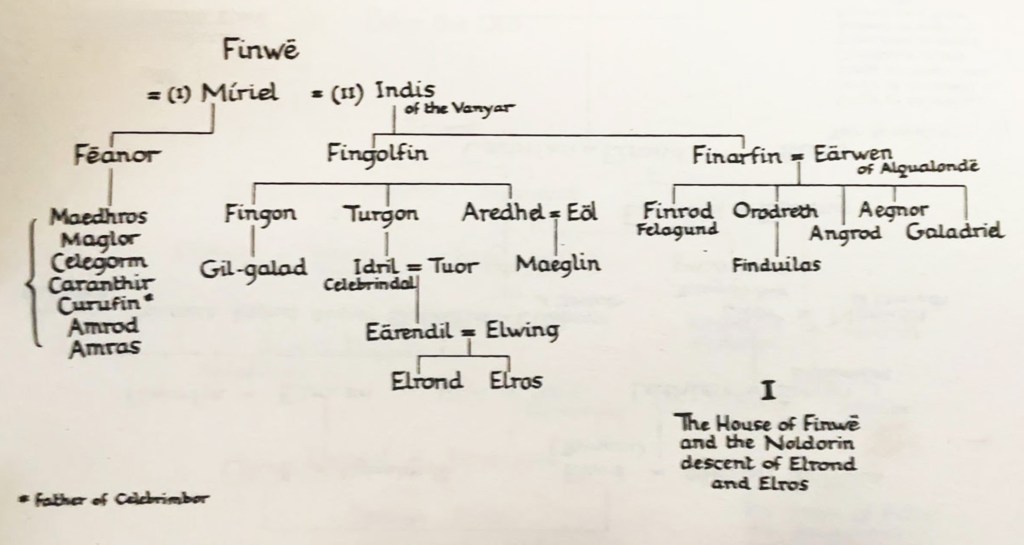
One family tree is really core to the book. This one:
Feanor made the jewels – he and his sons swear the oath, which carries supernatural weight and leads to the dooms of many. For anybody that chases those jewels, there are problems. In this family tree, there’s a connection eventually to the rings of power (Celebrimbor), Elrond and Galadriel (who you know from the movies), and a lot of the main events that happen in The Silmarillion. Aragorn traces his ancestry back to here as well. A lot of people are turned off by the firehose blast of names in this book (and I get that), so ticking off a few important names for yourself (and a few important places) is key in enjoying the book. Feanor and his sons matter a lot.
Over a biblical scale of time, long-lived elves (occasionally with supernatural help) fight Melkor and his dark armies of beasts. Here, you get orcs, balrogs, and the first dragon (who you get to watch grow up), werewolves, and giant spiders. Earthshaking battles and incredible conflicts rage, often to deal with Melkor’s evil or to struggle for those jewels.
Wait. Werewolves?
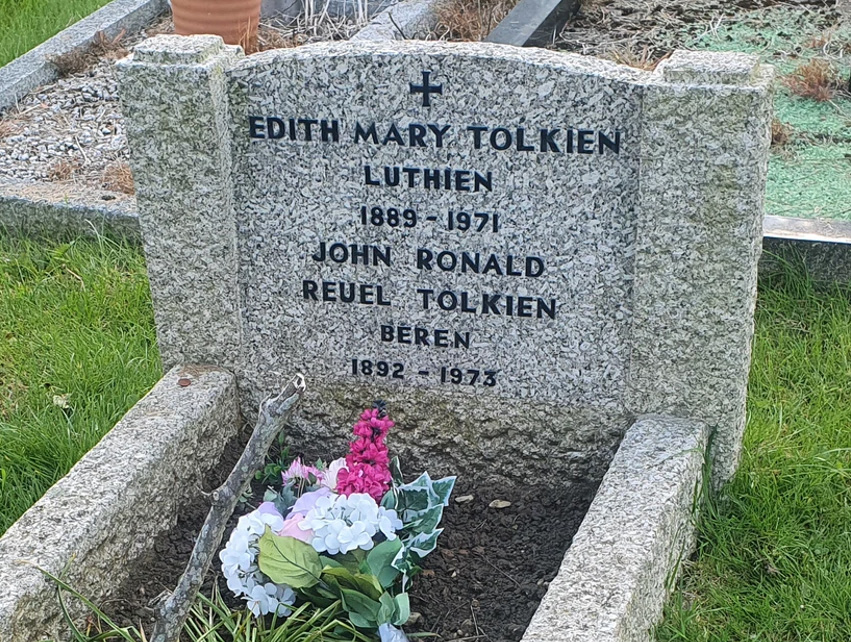
There are werewolves in Tolkien, yes. They’re mainly in the story of Beren and Luthien which is one of the most central parts of the entire tapestry. It’s a story that is gorgeous and mythical. Let me blow your mind a bit, if you didn’t know this:
That’s the gravestone for Tolkein and his wife. Here’s a quote from the Tolkien society:
“…the story has a personal significance to Tolkien. In 1917, a young Ronald (as Tolkien was known) saw his wife Edith dancing in a glade near Roos, Yorkshire; this scene was the germ of the story as Beren also first espies Lúthien whilst dancing in Doriath.”
[Beren And Luthien is available as a standalone book itself, which I’ve also read, and it’s worth your time as well. This is even more of a composite study done by Tolkien’s son than The Silmarillion, and is a bit more like piecing the tale together through notes than a somewhat polished work.]
Beren is human, Luthien, elf, and her father challenges Beren to bring him a silmaril for her hand. Unfortunately, the dark lord himself has all three of them by this point embedded in his crown where he sits on a throne in a dark and impregnable fortress protected by every manner of vile beast you can imagine and endless armies of orcs. This part of the story is key, so key in fact that Aragorn tells it to Frodo, as they are his ancestors.
Wrap this up, then. How does The Silmarillion end?
This book is a world, so it isn’t really that simple. There are several threads going on tangential to the big picture, like the Atlantis city of Numenor and its upheaval, the hidden city of Gondolin and its fall, and the tragedy of Hurin and his children (also available as a standalone work and also worth your time). I name these threads for a reason – pay attention to Numenor’s role and why it was destroyed, how and why Gondolin was destroyed, and Hurin’s son, Turin and his adventures. Still, they’re like side quests.
However, The Silmarillion tells at last of the fall of Melkor and the eventual fate of the silmarils. If you just keep your eye on Melkor (also named Morgoth) and the silmarils, you’ll get the main flow of everything going on with this incredible book. Towards its end, there is a concise summary of events leading up to the world we know from the more famous books.
Okay, so what was that you said about a sequel to Lord of the Rings that Tolkien was planning?
Ahhh, that’s interesting. It will be the point of the second part of this set of articles. A year and a half ago, I found out Tolkien had begun writing a sequel to be called The New Shadow. The scrap of it that exists is chapter 16 in a compilation called The Peoples of Middle Earth.
That’s honestly why I went deep on Tolkien in the first place. I rewatched the six movies (extended editions) and read all these books I’ve mentioned here, originally because I wanted to solve the mystery for myself of what was going to happen in that sequel should the professor have gone on to continue the story as he at one point planned. He explained clearly why he stopped, so I’ll briefly recap that for you in the second part of this series.
But what’s more interesting for me is where he would have taken the tale if he’d really decided he would press on with it. I believe he would have returned to the background of The Silmarillion, the big picture of that music from the very beginning and how it decided everything that was to happen, and point of humanity’s coming into this world in the first place.
*
I hope this whetted your apetite should you have interest in this amazing book. If it helped, let me know. If you love the book already, let me know that too. It was a transformative experience for me, going this deep into such a rich world.
Bach never met Shakespeare. Sorry about the clickbait title. Stick around though, because as always with this site we’re probing the creative process and what inspires it. In the past few weeks I’ve personally been going down a deep well with Johann Sebastian Bach, father of western music, and how his mind worked. I’m finding useful lessons there that I thought you might find helpful if you’re a creator yourself. Special focus here is on writing, hence the Shakespeare reference.
And you don’t have to know a thing in the world about music.
Bach composed music primarily for Sunday church services and often wrote the music for existing hymns or verses written by someone else. It was an aesthetic puzzle for him to solve, and sometimes a difficult one. Certain notes clash with one another and can sound harsh. We (somehow) almost universally feel kind of sad with certain notes and sequences and kind of happy with others. We (again, somehow) expect certain notes to show up after others or else it feels weird and lacking closure. For whatever reason, western ears generally agree on quite a bit about how musical notes should string together into music. Strange, but true.
Bach knew his craft well, understood these basic principles and expectations, and steered his listeners like a sailing ship by leveraging them in his works. He didn’t settle for just solving these aesthetic puzzles but broke every rule and went to places with his imagination that suited his own dazzling, soaring intellect in the process. That helped lay the foundations for western music as we know it today.
I noticed the more I read about Bach’s compositional tactics that those who were analyzing the music would very often say things along the lines of “you expect this, but he does that”. Once you get your head around these fundamental expectations I’m talking about above, it gets a bit clearer what Bach was doing, and what it can mean for a writer or creator in different fields than his.
Here’s an example: Jesu, Joy of Man’s Desiring. This (in my opinion) is one of the most beautiful pieces of music ever written. Bach fit this masterpiece on top of some stanzas written over 60 years earlier by a minister and musician named Martin Janus in 1661. It opens with Bach’s melody, followed by the first phrase of Janus’ chorale, then shortly thereafter the 2nd phrases of both works coincide flawlessly. The freedom with which he went gonzo with his own melody yet managed to fit without seams over the hymn is my point.
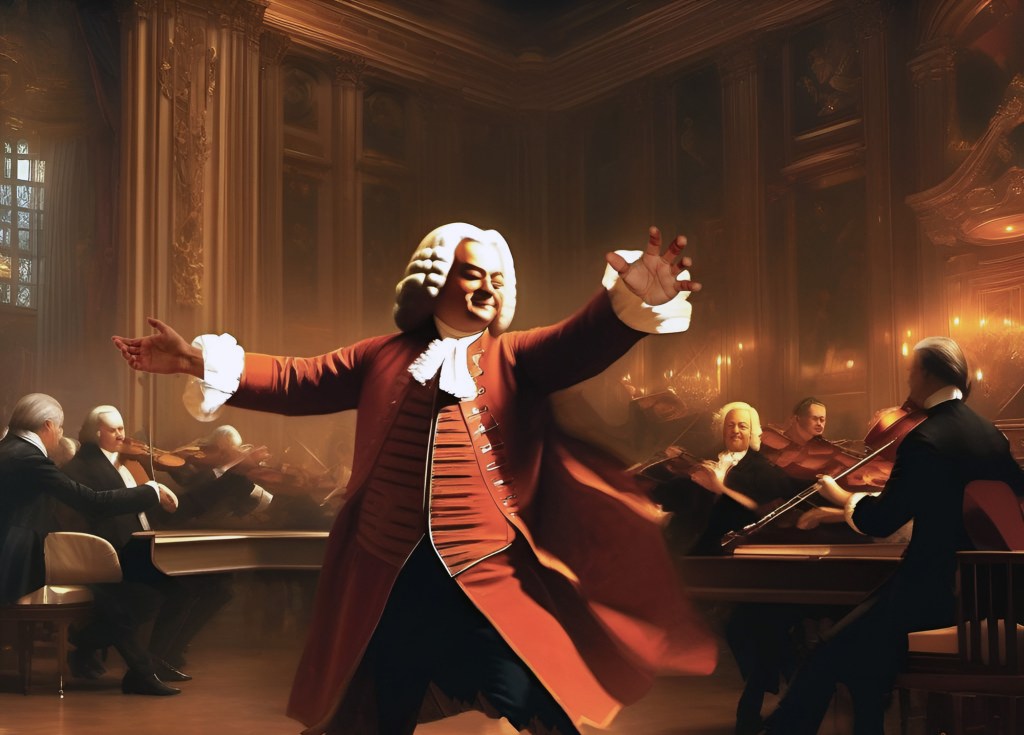
Bach was dancing.
Another example is particularly moving and gets to the heart of the spirituality and emotions that moved him when he was composing.
Sleepers Awake, a Voice Is Calling: An obscure 16th century pastor named Philipp Nicolai had just taken the job in the town of Unna when plague struck and killed half its people. His parsonage overlooked the cemetery. Suffering deeply, yet wishing to record his meditations to encourage the survivors, Nicolai wrote a collection he called “Mirror of Joy” which emphasized shining your own light in expectation of great things, not terrible ones. Bach built his own work on top of Nicolai’s hymn in a masterclass of weaving musical compositions.
In his piece, Bach presents his new melody entirely, then repeats the first three phrases (with 2nd and 3rd swapped) but with Nicolai’s melody in the choral part underneath. Again, separately they sound nothing alike, yet together they are flawless. At one point, Bach’s melody repeats its first phrase over Nicolai’s phrase that does not.
Did you catch that?
Bach wrote something that can repeat its melody and match perfectly in two different places on another melody. In this perfect weave, he was also weaving Nicolai’s times and his own – for Bach’s audience too was being encouraged to shine their own lights into a world that needed hope.
Last example, and another gorgeous one:
Air from the 2nd movement of Bach’s Orchestral Suite No. 3 in D Major. Click the link and listen to the incredibly talented Evangelina Mascardi (who has said she spent up to 6 months at a time learning Bach’s songs). You can stop after the first half when she pauses and moves on to ‘Gavotte’ to see my point here.
Listen closely for the melody – you’ll catch it right away. It’s really beautiful and poignant. People tend to describe this as, not sad…not happy…but something rather that reminds them of happy times, good memories, good friends. Keep listening though. You want him to repeat it. He doesn’t, not exactly. He adds all manner of embellishments and hesitations and dances around the melody he knows you want to hear again.
He gives you what you want, but embroiders it.
So what’s all this got to do with writing?
Recently, I came across a thorough article describing 49 effects possible in literature. At the time I first read it, I was just starting to examine Bach’s approach to composition and his freedom to innovate with tuning, different instruments, and other elements. I was seeing him play with his listener’s expectations, creating tension and dissonance and delaying resolution till it suited his dramatic purposes.
And I was seeing the same possibilities in this list of literary effects, such as pathos, irony, comedy, and others. Readers most certainly have common expectations and tropes, which can be similarly placed in opposition to each other. Bach mastered the elements of his craft and innovated wildly, though always staying in close view of what he knew were his listener’s expectations of resolution.
Maybe some principles apply here:
Consider your characters and their dynamics. Anticipate the readers’ expectations and play with that. Don’t shortcut and focus on “subverting”, which is obnoxious and unpleasant.
Innovate, but stay in view of the compelling engine driving the story…the central character dynamics. Don’t mess that up in your desire to make the plot happen.
Break the attention barrier with something energetic and wild. Bach’s church audience was rude, reading papers, talking loudly, ogling women, endlessly walking in late and leaving early. He demanded their attention with his craft. We should do the same.
Know the elements of your own craft. Be a professional – no obvious mistakes with grammar or plot holes, terrible dialogue or vague character motivations. It breaks the magic.
Feel it. Bach felt it in his soul. He was talking to God. If we’re going to try and make something new for the world, at least we could try and feel it as we do so.
Anyway, I hoped you enjoyed a layman’s take on Bach. Impressive genius, even if you don’t really understand all the nuances of what he was doing.
You likely know if you’ve been here at Grailrunner before that we obsess over the creative process. In fact, the whole point of the company, this site, and essentially anything we’ve produced is to dissect, pick apart, rewire, engineer, and shove ammo clips into the imagination. It’s in the logo, man.
Dreams are engines. Be fuel.
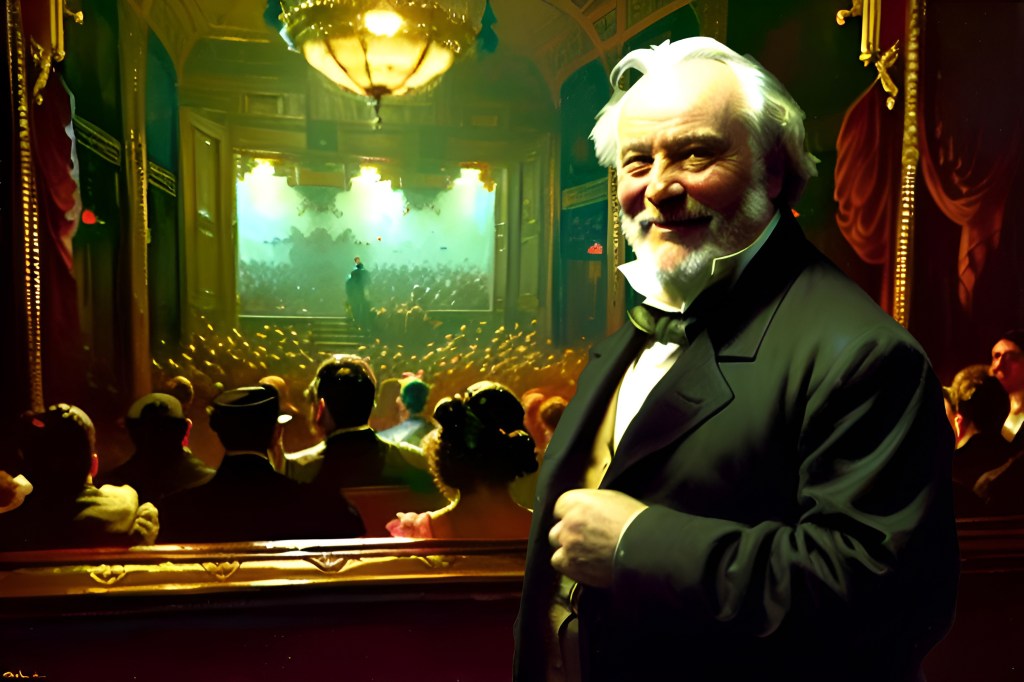
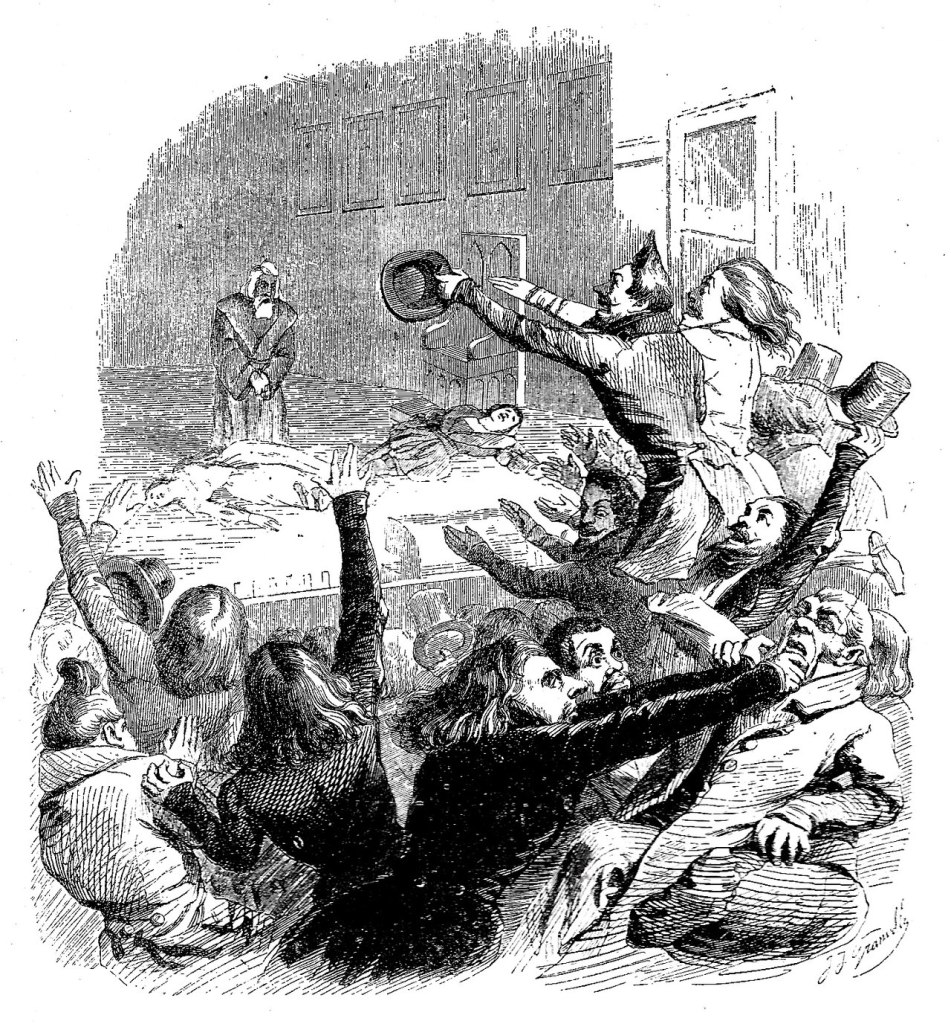
Anyway, there was an interesting riot at a theater on February 25, 1830 in Paris that has a few things to teach us about how to break ground in creative work. And as creators right now, with the looming and worldshaking onset of AI disrupting every outlet of creative work and threatening that age-old security we were all told that computers can’t create, it’s more important than ever that we get really, really good at doing new things.
New things, man. New things. Now AI can’t really do that.
What is the context on this Hernani thing?
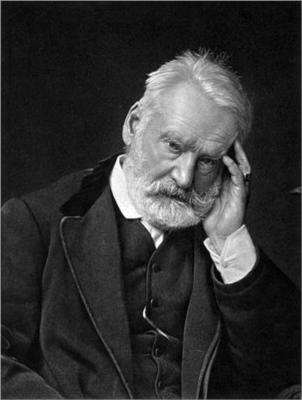
Victor Hugo wrote Les Miserables and the Hunchback Of Notre Dame. That’s where you might know him from.
This guy:
He was a playwright too though, and in his day the structure and content and expectations of plays were widely agreed and rigid. You didn’t mess around with these things if you wanted to be treated seriously and not look like a disrespectful clown. After all, Aristotle analyzed storytelling in tragic drama at an almost divine level 2,000 years before in his Poetics and designed the perfect tragedy, defining the unities:
Unity of time: the action of the play must unfold over a single day
Unity of place: the action must take place in a single setting
Unity of action: the play should comprise only one plot
If you abided by these principles with your play, which was the norm for hundreds of years in Europe, then Aristotle’s intense study of impact and memorability and propriety assured you that you had a well-constructed play. Why deviate from that – you think you know better than Aristotle?
Another non-negotiable was the clear definition of genre: comedy or tragedy. More than just branding, this was crucial to the audience’s interpretation of your work. Is it supposed to be funny, and so pratfalls and misunderstandings and goofy idiots abound? Or is it supposed to be sad, and so have larger-than-life people make key mistakes based on their natures and lose it all?
And finally, you didn’t show things that were grotesque, things that were compulsively ugly or distorted. It was just improper and undignified.
Oh no, what did Victor do?
Well, he wrote this. It’s the preface to a play called Cromwell. It pissed a lot of people off and set the stage for the riots to come later. A few tastes of his blasphemy:
“But the age of the epic draws near its end. Like the society that it represents, this form of poetry wears itself out revolving upon itself. Rome reproduces Greece, Virgil copies Homer, and, as if to make a becoming end, epic poetry expires in the last parturition. It was time. Another era is about to begin, for the world and for poetry.”
“…the grotesque is one of the supreme beauties of the drama.“
“‘But,’ the customs-officers of thought will cry, ‘great geniuses have submitted to these rules which you spurn!’ Unfortunately, yes. But what would those admirable men have done if they had been left to themselves? At all events they did not accept your chains without a struggle.”
Victor was saying that the unities of time and place arbitrarily handicapped the dramatic potential. Check pages 15 and 16 for his blast on unity of place – it being silly to think so much important action would happen in this one spot, and what blah-blah is needed to tell the audience what’s going on elsewhere! He continues on pages 16 and 17 destroying unity of time – it being equal nonsense to expect important events all to happen in a day.
And wow, is that one something Hollywood sequel writers should read!
In summary, he felt the rigid genre conventions of comedy and tragedy were limiting his ability to express wide ranges of emotion and experience, the unities were unnecessary constraints that forced silly adjustments, and, most importantly, he didn’t care for the convention of avoiding the grotesque. He called for a new genre to explore the essentials of life, with beauty and ugliness, good guys and monsters, gold-laid parlors and miserable alleys.
“These rules, man! They’re cramping my style!”
What was Hernani then?
Well, Cromwell was too big in scope to even be staged. It’s 400 pages long and at one point needs the British parliament to enter the stage. His next attempt got banned. Then he wrote Hernani, which censors possibly felt was too ridiculous to bother with.
Plot? Two noblemen and a mysterious bandit are in love with the same woman. A conspiracy is in play, and things get dark ending with a wedding and poison.
Rules broken? Well, the story unfolds over 6 months at various settings. That was naughty of him. You weren’t supposed to show death, violence, or intimate scenes. Hernani opens in the lady’s bedroom and closes with three suicides. Equally naughty. You were supposed to adhere strictly to your chosen genre: comedy or tragedy, but he incorporated farcical dialogue and had a king hiding in a wardrobe. Language should have been clean and high-minded, but he included lines like:
“Is this the stable where you keep the broomstick you ride at night?”
You weren’t supposed to let your lines of a sentence from one line of verse to another, but that happened too. Characters were supposed to be one-note caricatures generally who didn’t change, to represent some trait or concept, though he fleshed them out far more than was typical and allowed transformations (such as Don Carlos becoming a good emperor). And he used stage directions like a madman, which was also strange.
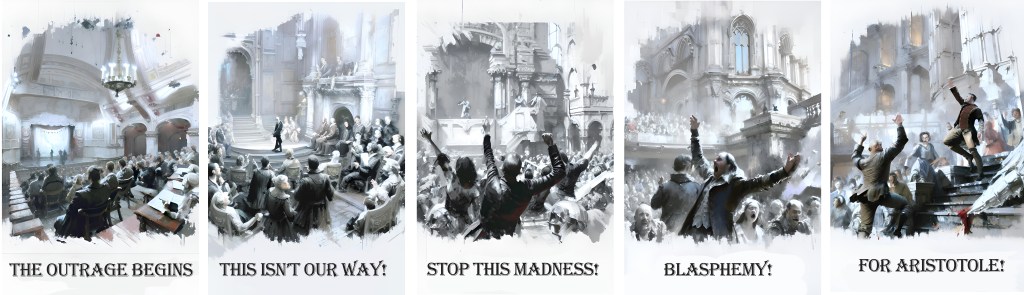
So this happened:
Why was there a riot though?
These Parisians had been through revolutions and guillotines, deaths and restorations of kings, and were reading on a daily basis about massive changes in nations such as Italy and Germany where entire systems of government were being born while others faded. France was still in turmoil politically and censorship was a powerful tool to shut down free thinkers and radicals. Breaking rules in art was linked to breaking other rules, perhaps those tied to abiding by norms set by those in charge.
Today in a politically split country we might feel threatened by those who question gender norms or who bend traditional family structures because we fear what a loss of those foundations might mean for the country’s future, what impact it might have on our children. You see how mad everybody gets about that every day on Twitter. Here in Paris, it was perhaps as scary for them.
In fact, many of those same rioters a few months later in July ousted King Charles X and replaced him with “Citizen King” Louis-Philippe.
Why is this a big deal?
My point today is that it was risky and insightful for Victor Hugo to see these literary conventions as the limiting factors they were and to dare to break them. And when he broke them, it wasn’t for shock value as so many charlatans today offer instead of talent. Victor didn’t break the rules because he was a renegade, he felt they limited his storytelling.
He kept his eye on the point behind what he was doing: telling an impactful story. Maybe Hernani’s plot is nonsense, but that wasn’t what he wanted anybody to take away from it anyway. Read the Cromwell preface. He wanted a new genre free of limits.
Impressive. Impressive to even notice the limits. How many conventions do we abide by and not even notice. Are our prison walls invisible?
What does this have to do with AI ?
AI writing tools like ChatGPT are not going away. They’re seeping into our marketing copy, our kids’ essays, blog and social media posts, even podcast scripts. As creators, there is one important fact behind any AI-based technology like these which can be an asset for us. They are trained on data sets and those data sets include conventions and limitations like those Victor Hugo raged against.
Ask ChatGPT to write you a story about King Arthur or a D&D scenario and it’s painfully generic. We as creators are in an arms race then, as those tools get better. We have to get better.









 Grailrunner Publishing