A game designed by Tolkien and the Monkey King (and it’s free!)

Oh, man have I got a great freebie for you today! I’ve been experimenting, pushing AI tools to their limits, these last 2 weeks to see just what’s possible in prototype gaming. I’ll tell you the story behind this, what all I did, then introduce a game which I’ll give you for free.

It has struck me recently that the future of entertainment is quite possibly on-demand, immediate & fully customizable media. I’m talking about having a random idea for a board game for example, and having the ability to describe it simply and have a color printer, 3D printer, music generation service, and AI tools spit out a polished, playable game with all its components ready for the table.

Is that what I did? Kinda sorta. That’s coming, but this was a lot more painful to bring to life than all that. AI tools are like a super creative and talented idiot whose attention wanders off while they generate random things, useless things, ripoff copies, and sometimes…some brilliant times…something magical.

Anyway, it started with me wondering what a naval boardgame would be like if it was designed by Hannibal of Carthage, Admiral Horatio Nelson, J. R. R. Tolkien, and the Monkey King of Chinese folklore.

Welcome back to our ongoing series titled:
Where in the world do you come up with strange ideas like that?

I don’t know. It happens. Then I have to see it. Then I lose two weeks of my free time. Then you guys get free stuff.

So, who were these people and why did you choose them?
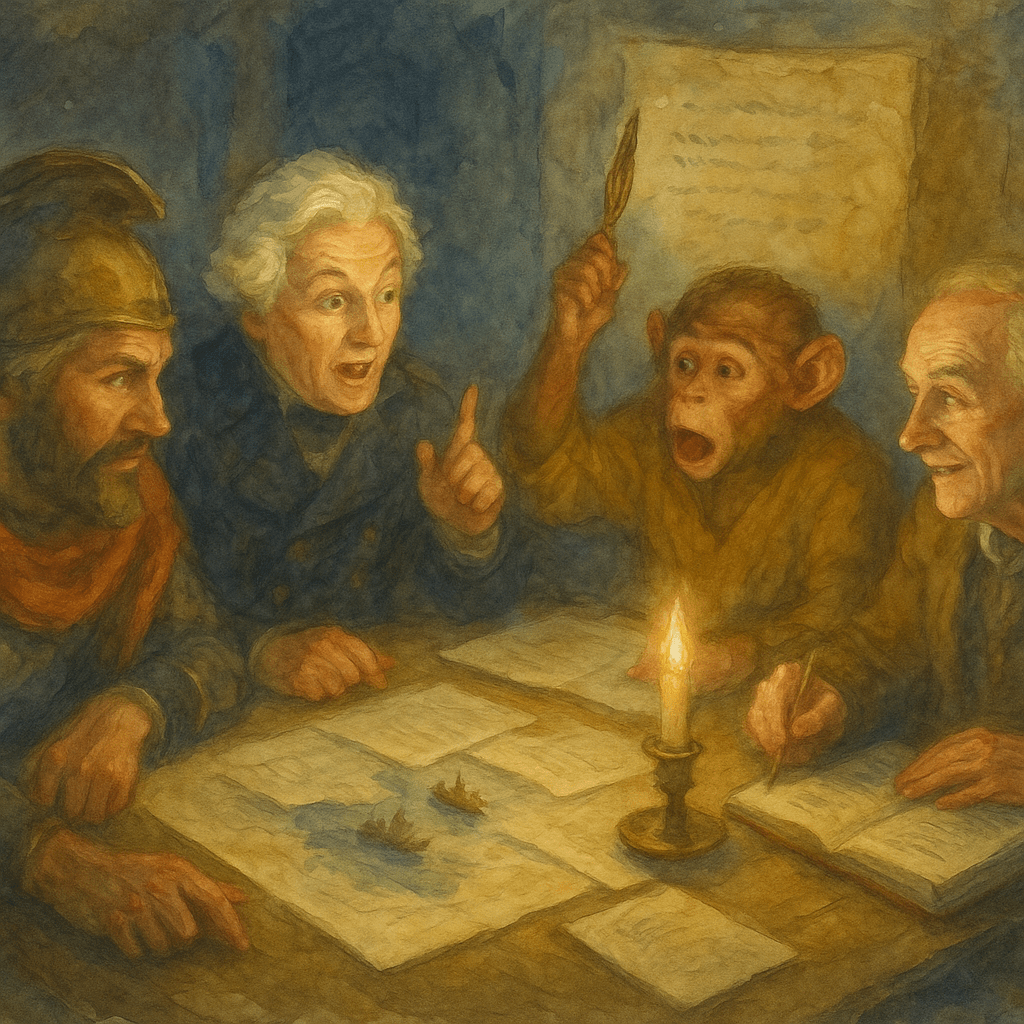
Hannibal of Carthage (c. 247–183 BC) was a brilliant Carthaginian military commander, best known for leading his forces — including war elephants — across the Alps during the Second Punic War against Rome.

I wanted the greatest, most innovative military mind in history. Arguable, I know, but I see Alexander the Great as a talented nepo-baby who inherited a lot of his advantages. I get there are others who could contend for that, but Romans used to put their babies to bed telling them to be good or Hannibal would come for them.

Horatio Nelson (1758–1805) was a British admiral and one of history’s most celebrated naval commanders. Famous for his bold tactics and inspirational leadership, he secured a string of decisive victories for Britain during the Napoleonic Wars.

This was going to be a sea warfare game set in Tolkien’s Lord of the Rings universe, so I wanted the greatest naval genius of history. His victory at Trafalgar was so resounding it established British naval superiority for a century.

J. R. R. Tolkien (1892–1973) was an English writer, philologist, and Oxford professor, best known as the author of The Hobbit and The Lord of the Rings.

This idea of sea battles in Middle Earth came to mind writing this article for Grailrunner speculating on the unfinished sequel to Lord of the Rings. It was the Professor’s setting, and he would bring unique insights to bring it to life.

The Monkey King is a Chinese folk hero from Journey to the West. A mischievous trickster with immense strength, magic, and a shape-shifting staff, he defied heaven before becoming a companion on a sacred pilgrimage — a lasting symbol of rebellion and wit.

I love trickster characters. Always have. This particular one is great for throwing the table over and over-the-top madness. I definitely wanted the rules of this hypothetical game to reflect that somehow.

And these three historical figures and a mythological simian were going to design this game then?
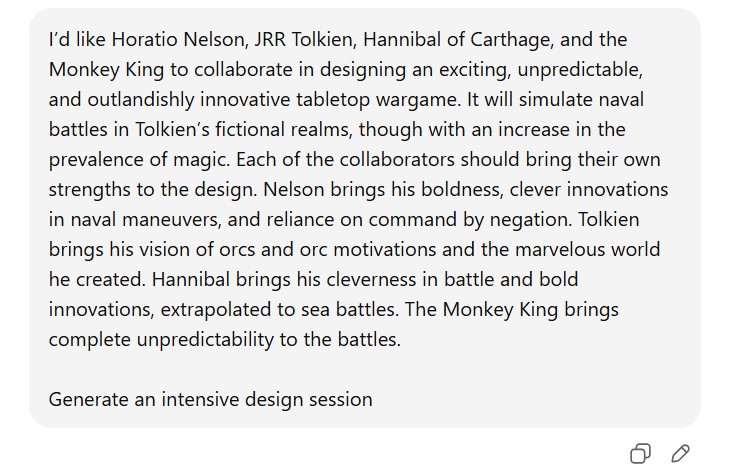
Right. This was the initial prompt. The design session was hilarious, and ChatGPT did an amazing job bringing these folks to life and crafting some basic game mechanics that applied their unique perspectives. Over the next few days in whatever free time I could manage (and during conference calls…sshh), I wound up having to exhaustively point out inconsistencies and vague points, iteratively asking for elaboration in the developing rules. Let’s say it was an ugly baking and the kitchen got messy, but the final ruleset honestly looks great and unique. Lesson here is be patient, don’t trust anything, don’t accept first outputs for anything, be super clear what you want, and give it feedback as you go.

I’m being honest in this experiment, by the way. I intentionally did NOT design or suggest any rules or game mechanics. The point was to explore what I was presented, not design it myself. All I did was ask questions and point out when the designer contradicted itself.

So you wound up with a ruleset. Nice. How about game components?
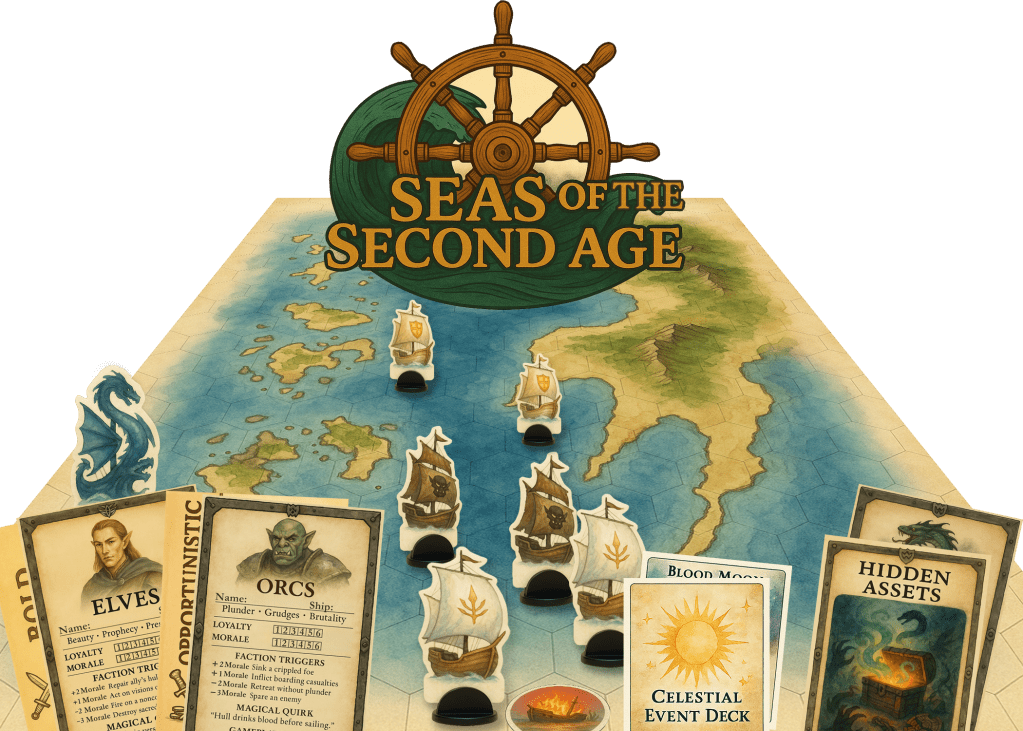
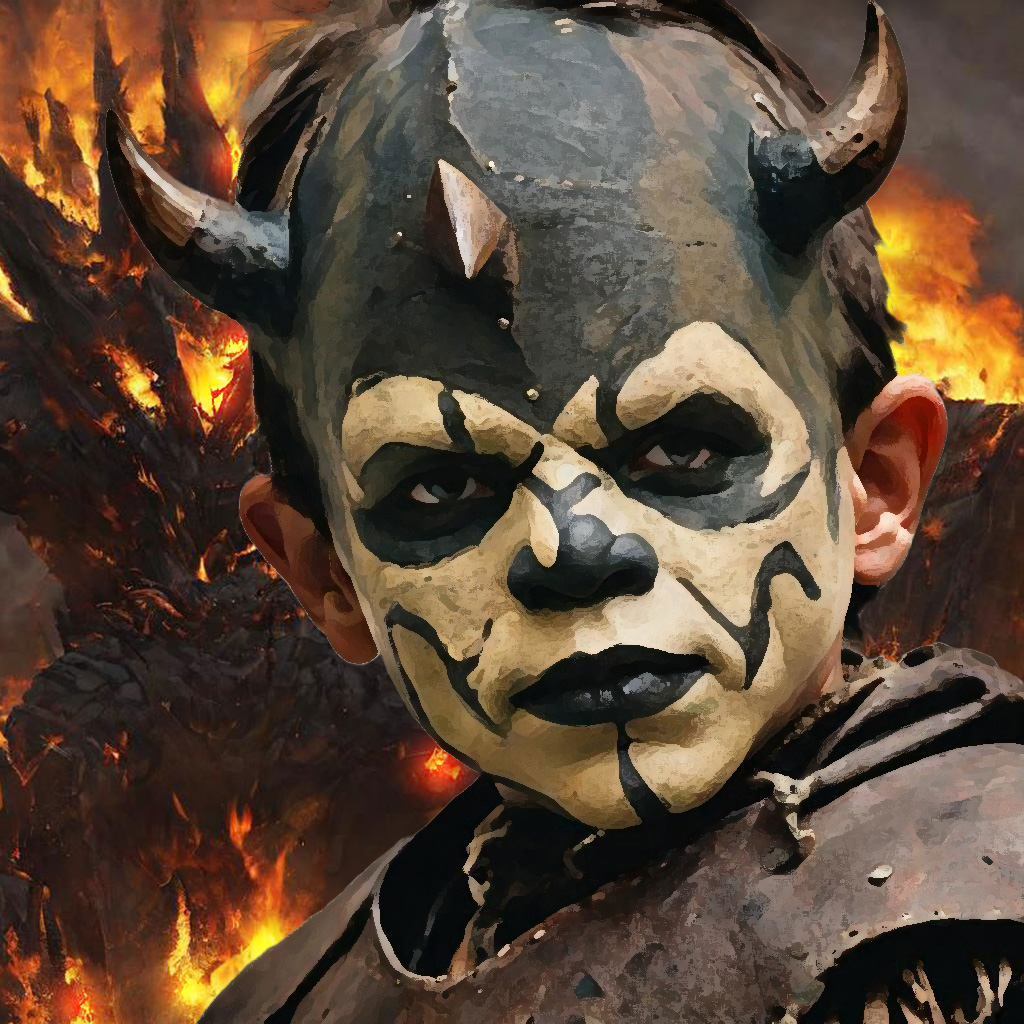
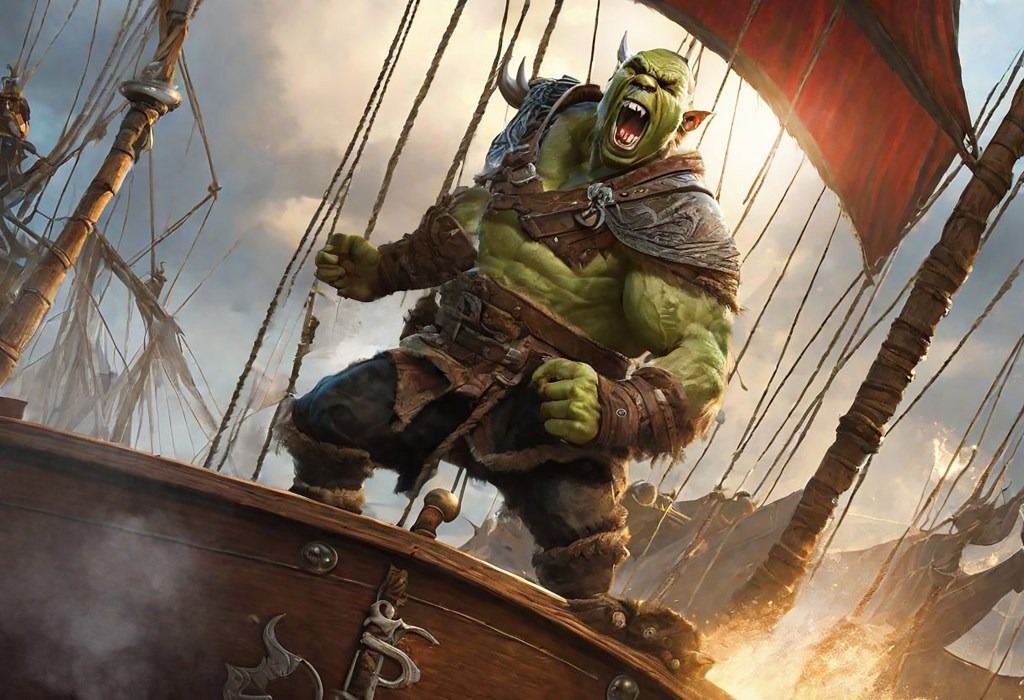
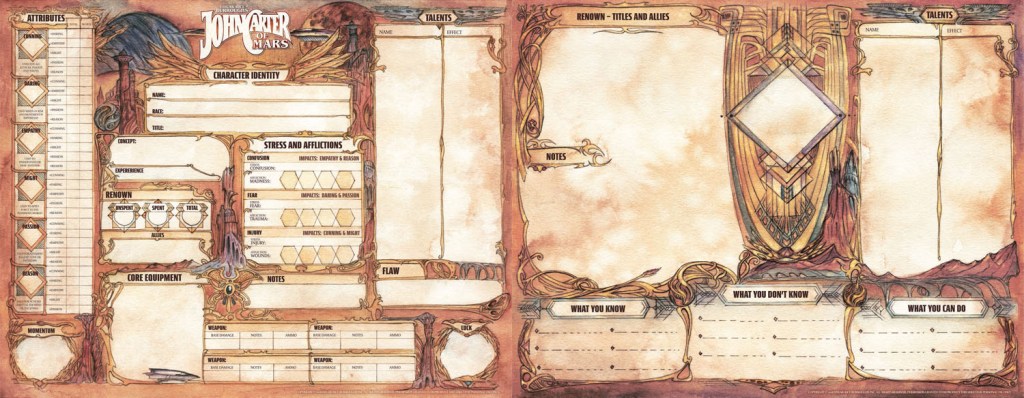
I was so fabulously surprised by the quality and consistency of the game components. I swear to you, no matter how cool these things look, I did absolutely NONE of the artwork, the graphic design, concept art, or logos. I used Photoshop like crazy, but that was only to clean these things up (like adding a “the” when ChatGPT refused to do or making a grid consistent across similar cards, that sort of thing).

I just scrutinized the rules, asking for elaboration when things didn’t make sense, and when I saw a component like a marker or a tracker of some kind get referenced, I would ask ChatGPT to design them one by one. Lessons learned here: never bother asking for a printable pdf – it’s useless at that, assume there are contradictions and inconsistencies you’ll need to fix, and only ask for designs one at a time. Once it had established a really attractive watercolor art style, I forced it to stay close to the same style for consistency in design. You be the judge on that, but these wound up some very attractive and playable components.

What is gameplay like?

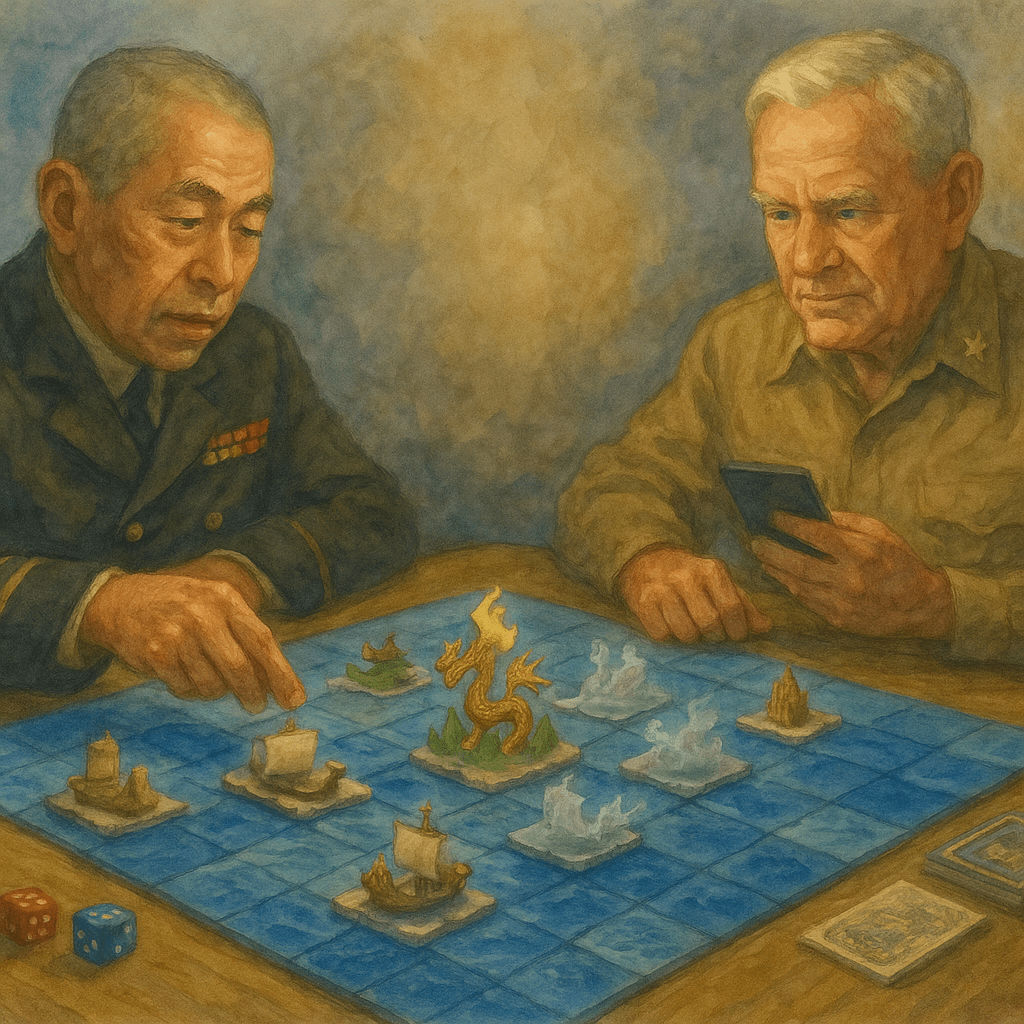
Funny, actually. I had Admiral Nimitz and Admiral Yamamoto, two more innovative geniuses of sea warfare, playtest in a simulation of the rules (just another simulation in ChatGPT, asking it to act as these two historical figures and play a game of the rules it had designed). Yamamoto chose the Elven fleet and built his game around precision strikes & ambushes. Nimitz chose Orcs and favored layered defense and overwhelming counter-punches.
Oh yeah? Who won?

Nimitz was pressing Yamamoto hard, but a Leviathan broke up his fleet and put him at a disadvantage. In the end, Yamamoto won by being more adaptable to the ever-changing conditions of the battlefield.

So how exactly are the personalities of these 4 designers reflected in the rules?

  1. Admiral Horatio Nelson

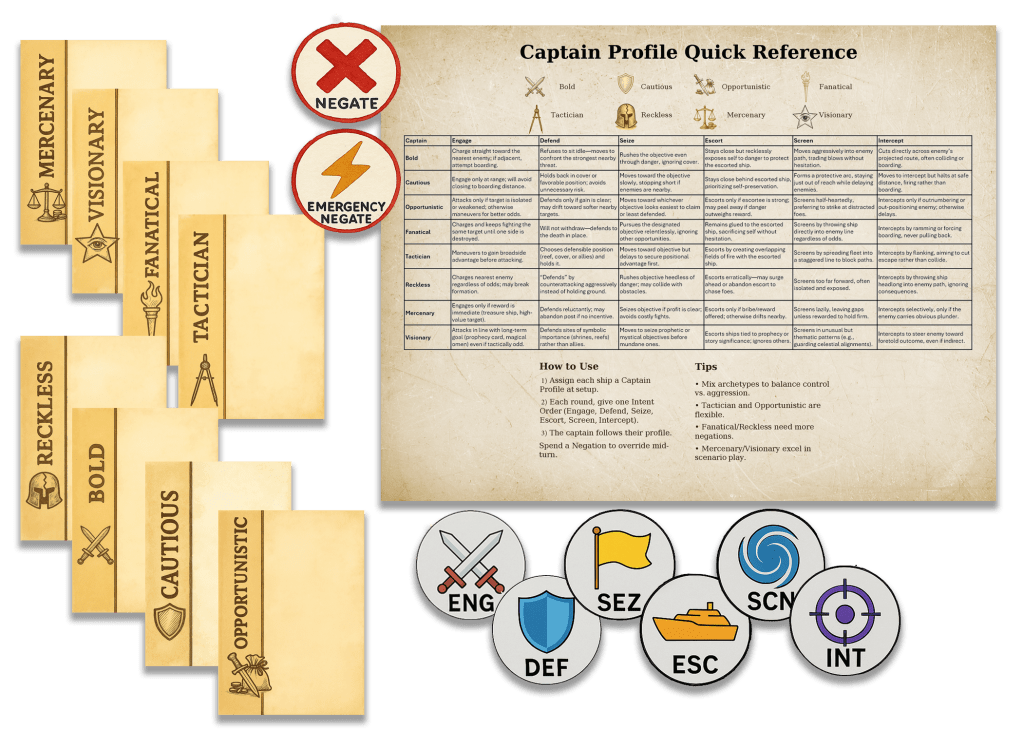
Nelson’s mechanic is command by negation, which requires the player to choose a personality profile for each ship captain and issue broad commands for each ship at the beginning of each turn. During each ship’s activation, that captain may or may not carry out the order as desired, and that is determined based on consulting a table. It flavors the strategy of the player, making you think about personality compositions of the fleet and what you’re likely to encounter. You have only so many “Negate” and “Emergency Negate” plays you can make before you have to surrender to the fog of war and trust your captains.
2. General Hannibal of Carthage

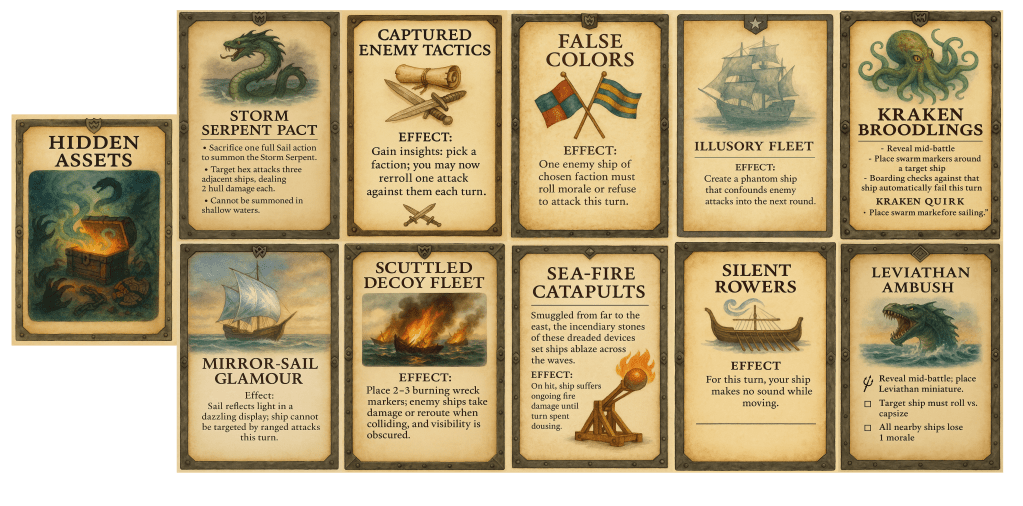
Before battle, players draw secret asset cards to recruit legendary sea-beasts, conduct some genius battle maneuver, or craft devastating magical artifacts. These assets are hidden until revealed at critical moments, enabling double-bluffs.
3. Professor J. R. R. Tolkien

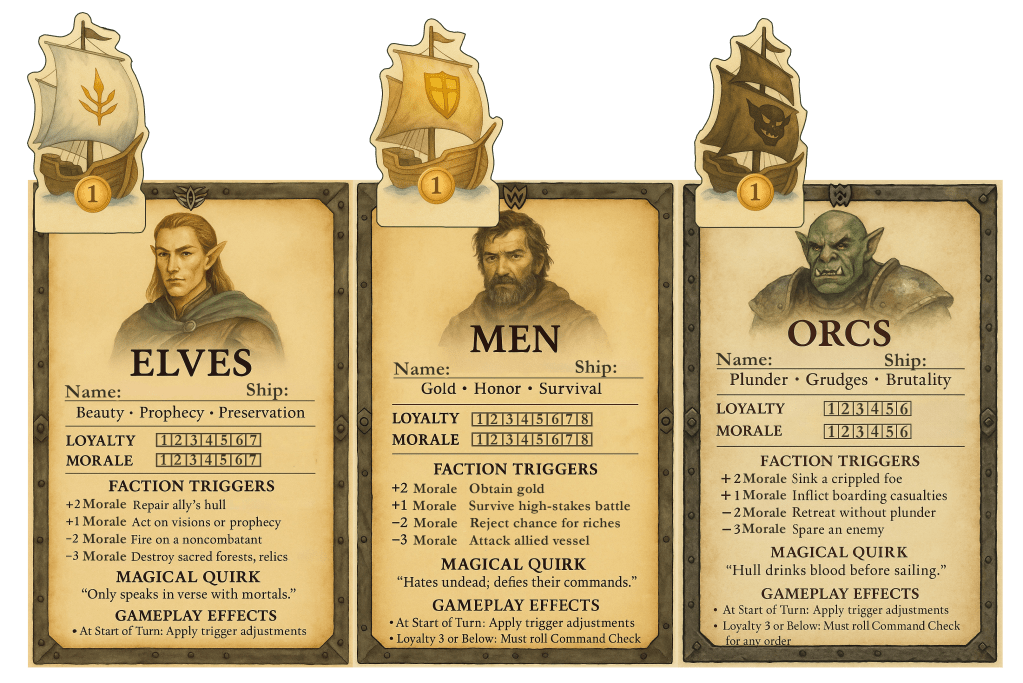
Each ship’s captain not only has the personality profile, but also dual Morale and Loyalty tracks, which are recorded on Living Loyalty cards. Orcs are motivated by plunder, personal grudges, and displays of brutality. Elves, by beauty, prophecy, and preservation. Men, by gold, honor, and survival. Disregarding a faction’s ethic by orders in battle or allowing the morale to suffer from specific battle conditions can result in mutiny or refusal to act.
4. The Monkey King

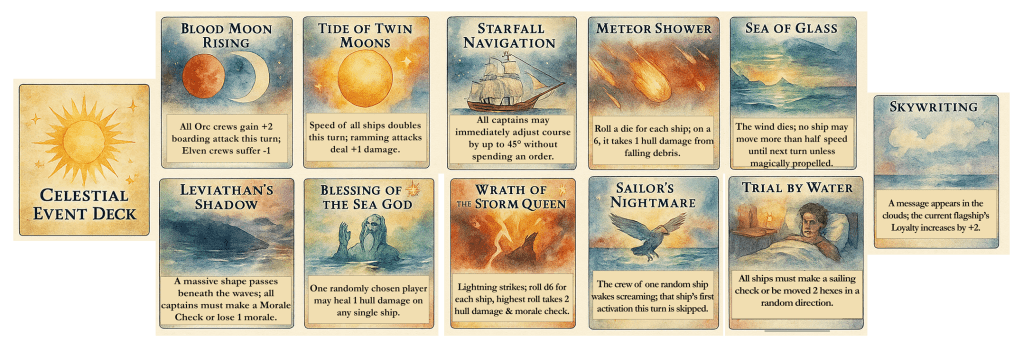
A “Celestial Event Deck” is drawn each round, representing maddeningly unpredictable supernatural occurrences that shift the seas and circumstances. It’s chaos every round, and it can turn the tide in your favor if you’re quick thinking and flexible, or it can crash your dreams into burning wrecks.
It sounds really fun. Have you played?

Some solo playtesting, yeah. It’s not perfect, and there are times you have to wing it and just go with whatever makes sense. Yet it hangs together surprisingly well. I’m not taking this any further, and we’re definitely not developing this for sale, but was super fun and satisfying.

What about the vision of immediate, on-demand game prototypes? Possible?

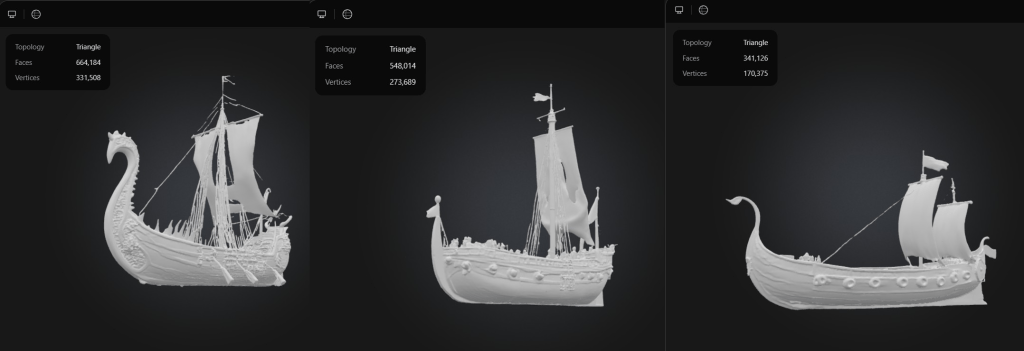
Oh yeah, just not now without a lot of manual work. I tried Meshy to generate some actual miniatures I could 3D print, and got something. I could tell at a glance they were going to need a bunch of cleanup in Blender before I tried printing them, and I was honestly exhausted with this process by that point. So nope, I went with printout standees for which you’d need the plastic stands. I stole some of those from a Gloomhaven box I had sitting around.

Still, if you’re asking me whether this on-demand, completely customizable future is possible based on this experiment, I’d say absolutely we’re headed into that world. I see a place for ChatGPT connected to a color printer with card stock, a 3D printer, and maybe a Silhouette Cameo or something like that for perforation (to avoid all that annoying scissor cutting), and you could really have something once the large language models mature a bit more.
Anything else to say before the download button?

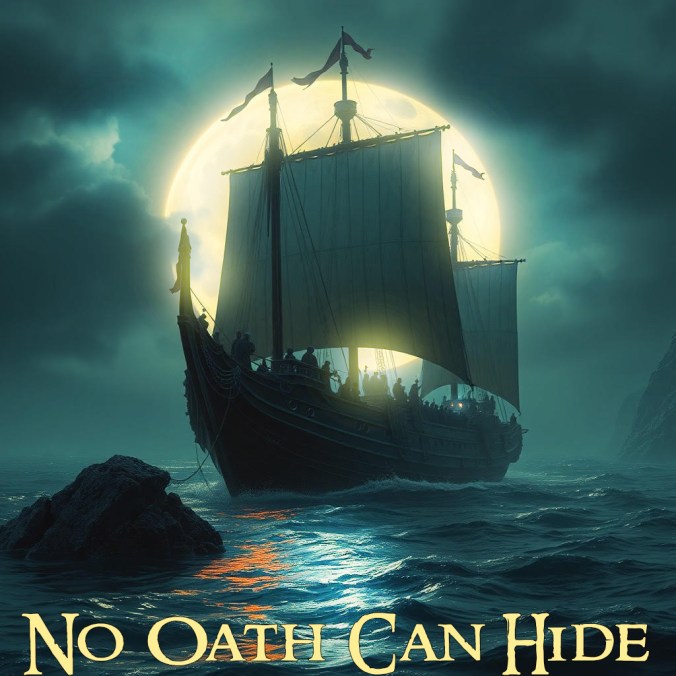
Well of course! There’s a theme song for the game. You really need to hear this. Remember, I didn’t design anything, including the logo at the top of this article. Neither did I write the lyrics or the melody. I just gave ChatGPT some direction on what sort of lyrics I was looking for with some example songs and the mood, iterating a few times for the right verses and choruses, then fed that into the Suno music generator with some more direction on Celtic, ethereal folk music and whatnot. Then I listened to a few and picked the best.

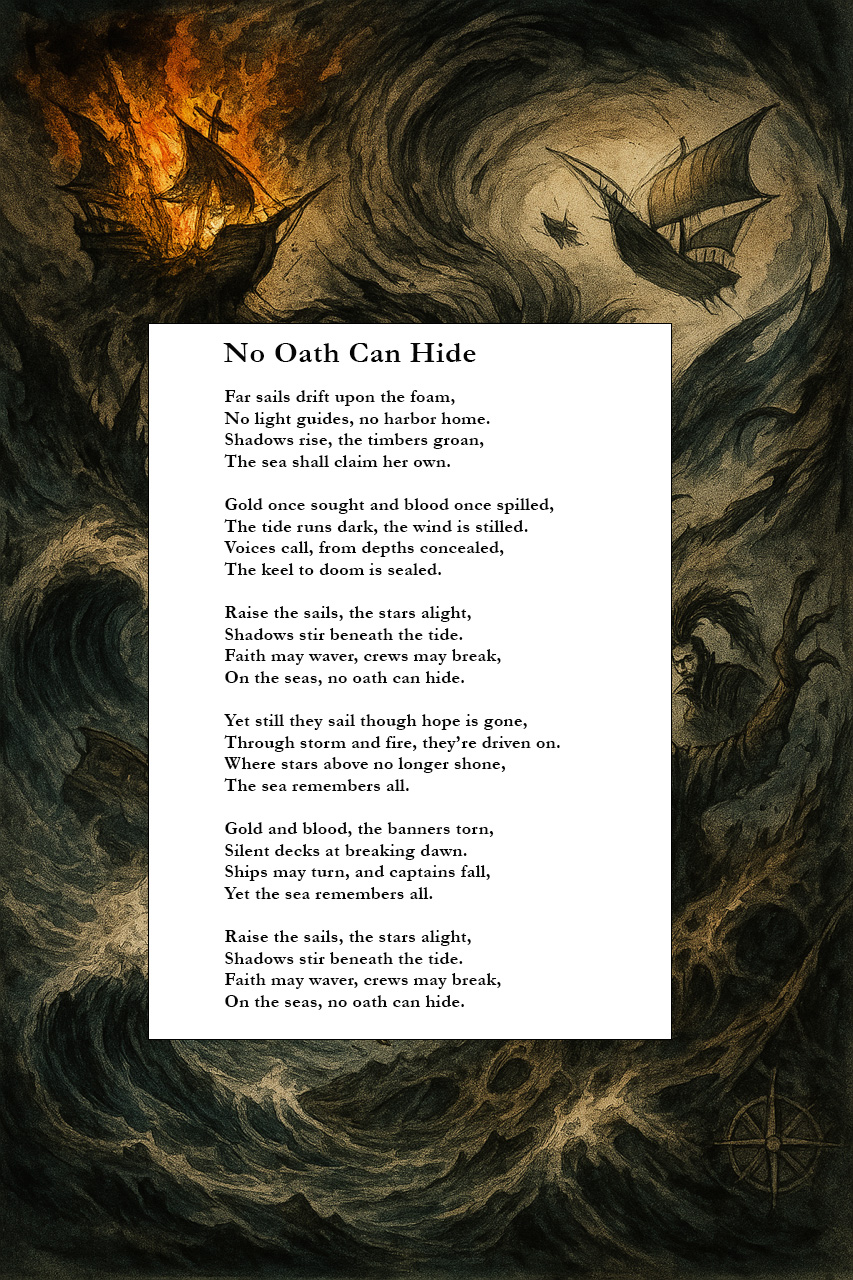
And honestly, I love it! It’s called No Oath Can Hide. Smash the button below to listen. Here are the lyrics.
Alright, then. Show me a download button!

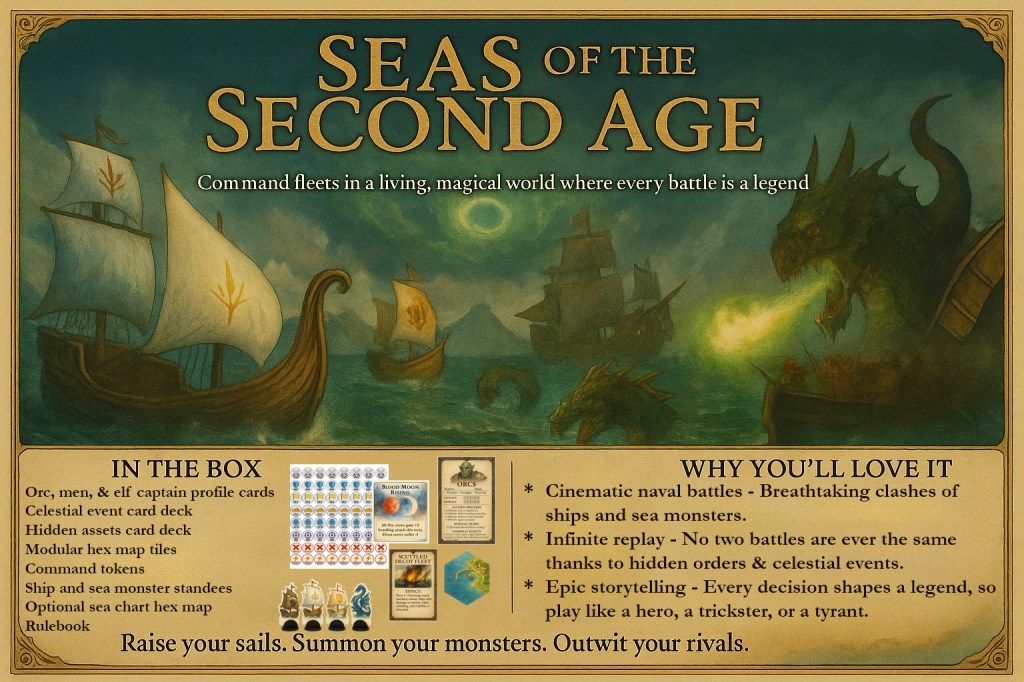
Sounds good. I hope you like it, or at least that can use some of these accessory goodies in whatever homebrewed games you’re dreaming up. The DOWNLOAD button links to a zip file containing everything you need to play apart from dice and some plastic stands for the ships, which means the stuff illustrated and listed below.
I hope you love it. What an amazing experience, and I’m looking forward to hearing what you think of all this. Don’t try to sell this anywhere though – it’s basically a glorified fan fiction that should be available for free.

Till next time,

Uncovering The Plot Of Tolkien’s Unwritten Sequel To “Lord Of The Rings”

If you love the rousing, unmatchable tales of JRR Tolkien’s Middle Earth (cinematic or book form), then it’s only natural to marvel at the thought that Professor Tolkien did actually consider a sequel. He even said partly what it would be about and wrote about 13 pages of a beginning to it called “The New Shadow”.

I recently finished reading The Hobbit, the LOTR trilogy, and The Silmarillion as well as The Letters of JRR Tolkien and in honor of that experience, I’ve set the task for myself to determine as accurately as possible what would that full story have been. I’ll try and defend my points along the way, but it’s all speculation since he stopped purposefully (which I’ll explain shortly).

Care to come along for the ride?

What do we know for sure about it?

The full text of the aborted sequel is available in The Peoples of Middle Earth. You can read it there. A summary though:

It’s been 100 years since the fall of Sauron. King Aragorn’s son, Eldarion rules over Gondor. Elves and hobbits and the fantastic bestiary of years ago haven’t been seen in all that time. It’s the Fourth Age, a time of peace. The Age of Man. The War of the Ring and the great events of those many years ago are just stories, fading in memory.

By a river below the sprawling towers of Minas Tirith, an old man named Borlas is talking to a younger, easily agitated fellow named Saelon. Borlas is the son of Beregond, the white guard captain assigned to Peregrin Took before the Battle of Pelennor Fields, and Saelon is the childhood friend of Borlas’ absent son. They speak of the growing evil in the hearts of men. And of Orcs.

Saelon recounts harsh words the old man had had for him years ago, in correcting the boy for stealing apples and damaging trees as “Orc’s work”. That word, Orcs, had fascinated him. The harsh words had angered him.

“Don’t speak to me of orc’s work, or I may show you some”, Saelon says. “You turned my mind to them. I grew out of petty thefts … but I did not forget the Orcs. I began to feel hatred and think of the sweetness of revenge. We played at Orcs, I and my friends, and sometimes I thought: ‘Shall I gather my band and go and cut down trees? Then he will think that the Orcs have really returned.’” The boy’s sudden anger and resentment perhaps surprise the old man.

They speak of Herumor, the vile leader of a growing cult called The Dark Tree that worships Sauron and his predecessor, the original dark lord, Melkor. Unrest is spreading: discontent with the reign of Eldarion. There is news of missing ships, and Borlas’ son is away at sea.

Suddenly, the boy, Saelon makes a mysterious invitation to the old man. If he will return to this spot tonight clad all in black, he will learn everything.

Before the fragment ends, Borlas smells the air. In the Professor’s words,

“The door under the porch was open; but the house behind was darkling. There seemed none of the accustomed sounds of evening, only a soft silence, a dead silence. He entered, wondering a little. He called, but there was no answer. He halted in the narrow passage that ran through the house, and it seemed that he was wrapped in a blackness: not a glimmer of twilight of the world outside remained there. Suddenly he smelt it, or so it seemed, though it came as it were from within outwards to the sense: he smelt the old Evil and knew it for what it was.”

Why didn’t Tolkien finish the book?

Oh, he explained that in detail.

Here, in a letter to Colin Bailey, dated May 13, 1964:

“I did begin a story placed about 100 years after the Downfall [of Mordor], but it proved both sinister and depressing. Since we are dealing with Men it is inevitable that we should be concerned with the most regrettable feature of their nature: their quick satiety with good. So that the people of Gondor in times of peace, justice and prosperity, would become discontented and restless – while the dynasts descended from Aragorn would become just kings and governors – like Denethor or worse, I found that even so early there was an outcrop of revolutionary plots, about a centre of secret Satanistic religion; while Gondorian boys were playing at being Orcs and going round doing damage. I could have written a ‘thriller’ about the plot and its discovery and overthrow – but it would be just that. Not worth doing.”

In a letter to Douglas Carter dated June 1972, he said:

“…the King’s Peace would contain no tales worth recounting; and his wars would have little interest after the overthrow of Sauron; but that almost certainly a restlessness would appear about them, owing to the (it seems) inevitable boredom of Men with the good; there would be secret societies practicing dark cults, and ‘Orc cults’ among adolescents”

What he was saying is that he’d wrapped up the supernatural bits with the close of the War of the Ring, and all that was left was politics and intrigue. It wasn’t what he wanted to write, so he left it there. His real passion remained publishing The Silmarillion into which he’d thrown his heart and soul his entire life, but no publisher would have it in its condition: a dense narrative that can read at times like a technical history book full of difficult names and a flood of events.

In a letter dated July 1938 when he was supposed to be writing a sequel to The Hobbit, he said:

“…my mind on the ‘story’ side is really preoccupied with the ‘pure’ fairy stories or mythologies of The Silmarillion…and I do not think I shall be able to move much outside it – unless it is finished”

In an epic letter to Sir Stanley Unwin dated Sep 14, 1950, he said of the finality of Lord of the Rings that it:

“…concludes the whole business – at attempt is made to include in it, and wind up, all the elements and motives of what has preceded: elves, dwarves, the Kings of Men, heroic ‘Homeric’ horsemen, orcs and demons, the terrors of the Ring-servants and Necromancy, and the vast horror of the Dark Throne”

It was disheartening for me, reading the Letters of JRR Tolkien, his final years after his retirement and when his dear wife, Edith passed away, that he was desperately still trying to find time to collate the materials for The Silmarillion and despairing he would ever accomplish it. His mind wasn’t really on a sequel.

That seems to close the business then. What’s the point of this article and exercise?

Okay, hear me out. He was super passionate about the elf histories and lore of The Silmarillion; in fact that was the whole point of his worldbuilding his entire life. Yet the market wanted hobbits and heroic myth. If the Professor had gotten The Silmarillion published ten years before, seen a relatively poor reception for it, and had maintained the energy to give it another go, I believe in my heart he would have gone back to the core of his magnum opus to redeem it.

My point is – he stopped because of his viewpoint on what would happen next, but I believe if he actually made the decision to proceed with a sequel, that wouldn’t have been the direction he would take the book. He and C.S. Lewis agreed long before that if they couldn’t find the books they wanted to read, they’d have to write them. He enjoyed heroic poetry and long, exciting tales of adventure. So that’s what he would have found a way to write. It so happened, that’s what the market wanted anyway.

But how on earth can we know what change in direction he would have taken with the sequel?

Ahhh. I believe I can trace the steps on what his thought process would have been given his personal tastes, the groundwork he’d laid for The New Shadow, his fascination with The Silmarillion lore, and how he approached writing the first sequel: Lord of the Rings. Of course, there is wild speculation here. But I can back some of it up.

OK, so what would have happened?

A few building blocks first, please. Humor me.

  1. No allegories or basis in world events

From Tolkien’s foreward to Fellowship of the Ring, 2nd edition:

“I cordially dislike allegory in all its manifestations…I much prefer history, true or feigned, with its varied applicability to the thought and experience of readers”

2. Not all the supernatural beasts and creatures need be absent from the story

Letter to Naomi Michison dated Apr 25, 1954 (referencing Balrogs): “They were supposed to have been destroyed in the overthrow of Thangorodrim, his fortress in the North. But it is here found (there is usually a hang-over especially of evil from one age to another) that one had escaped and taken refuge under the mountains…”

In fact, we could have dragons.

“Dragons. They had not stopped; since they were active in far later times, close to our own. Have I said anything to suggest the final ending of dragons? If so it should be altered.”

3. A dark entity can in fact be guiding events, just not in a physical body, and most likely surrounding itself with a confusion of good intentions and lies

Letter to Robert Murray dated Nov 4, 1954: “…for or course the Shadow will arise again in a sense (as is clearly foretold by Gandalf), but never again…will an evil daemon be incarnate as a physical enemy; he will direct Men and all the complications of half-evils, and defective-goods, and the twilights of doubt as to sides, such situations as he most loves”

That tells me no new dark lord. Herumor will be a man, but a man possibly being directed by an evil entity if he’s not the entity itself. It is highly unlikely Tolkien would have reopened Sauron or Melkor as a direct influence, as he very much disliked retreading old ground and cheapening the sacrifices of Lord of the Rings. In order to avoid the focus on politics and intrigue that turned the Professor off to the story in the first place, Herumor would likely have some form of magical objects or access to a lore of some kind to influence events – such as he might be using to take out those ships that were going missing. Herumor MUST have something from Sauron’s days that he’s using.

4. There would be connections to the previous books

Letter to Chrisopher Bretherton dated Jul 16, 1964 (regarding his process for writing a sequel to The Hobbit): “The magic ring was the one obvious thing in The Hobbit that could be connected with my mythology. To be the burden of a large story it had to be of supreme importance. I then linked it with the (originally) quite casual reference to the Necromancer…whose function was hardly more than to provide a reason for Gandalf going away and leaving Bilbo and the Dwarves to fend for themselves...”

In this same letter, he explains at length how he pulled from his existing mythology in materials from The Silmarillion as part of his creative process. That’s key for me, by the way. It is precedent for him going back to the massive well of those materials to make sense of the story he wants to tell. I’ll come back to that in a big way shortly.

5. Elves are gone and almost certainly would NOT appear. However, Elrond could still play a role.

Elrond appeared in The Silmarillion, The Hobbit, and in much of the Lord of the Rings. Part man, part elf, and present in the major events of Tolkien’s entire history, this character was incredibly pivotal. Yet elves wouldn’t return; that’s clear. However…

Letter to Sir Stanley Unwin dated Sep 14, 1950 (footnote): “Elrond symbolizes throughout the ancient wisdom, and his House represents Lore – the preservation in reverent memory of all tradition concerning the good, wise, and beautiful. It is not a scene of action, but of reflection. Thus it is a place visited on the way to all deeds, or ‘adventures’. It may prove to be on the direct road…but it may be necessary to go from there in a totally unexpected course.”

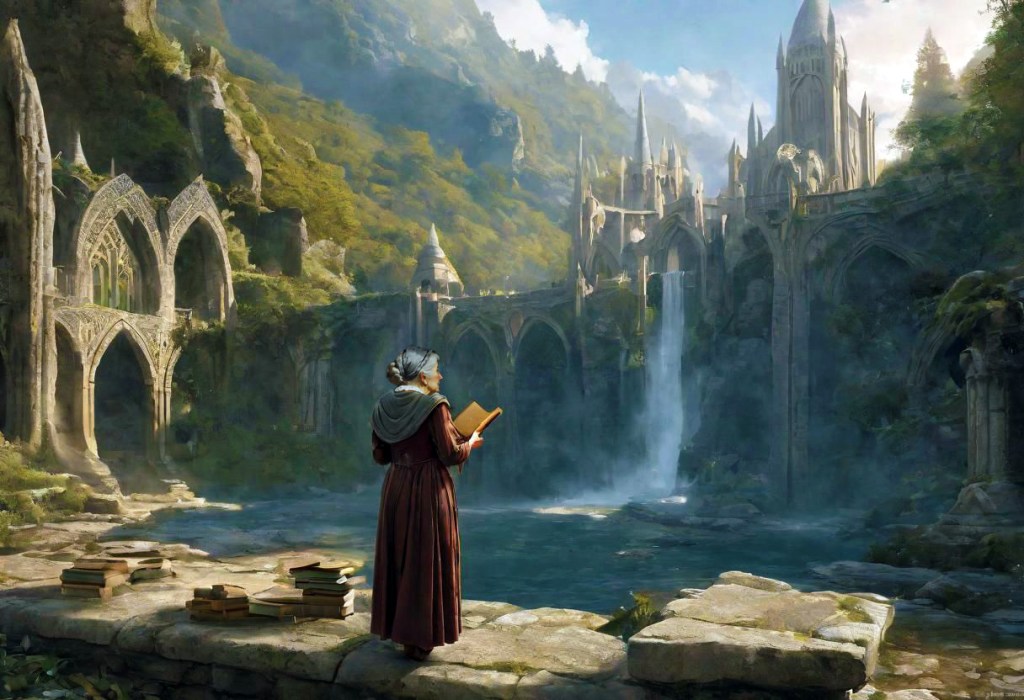
So how could Elrond play any role at all then if elves are entirely gone? I speculate that Tolkien would have created a character enamored with Elvish lore who even perhaps has books with lost lore written by Elrond if not living in the ruins of Rivendell. That gives a reason to visit Rivendell, a means of Elrond adding to the tale, and gives Tolkien a chance to expound on his beloved Elf legends.

And it could be key in the heroes (whoever they might have wound up being) unlocking the secrets they will need to defeat the new shadow.

6. No Ents. No Entwives. These are the walking, talking trees who it is explained lost their wives. I thought at one point I had something here and we could revisit the Ents, but…

Letter to Naomi Mitchison dated Apr 25, 1954: “I think that the Entwives had disappeared for good, being destroyed with their gardens in the War of the Last Alliance…when Sauron pursued a scorched earth policy and burned their land…Some, of course, may have fled east, or even have become enslaved…If any survived so, they would indeed be far estranged from the Ents, and any rapprochement would be difficult.

7. Someone humble and unlikely will play the most important heroic role.

Letter to Sir Stanley Unwin dated Sep 14, 1950: “A moral of the whole…is the obvious one that without the high and noble the simple and vulgar is utterly mean; and without the simple and ordinary the noble and heroic is meaningless.”

Tolkien wouldn’t likely bring back Hobbits, but he could still create a humble, lovable goofy character who has to be brave to win the day and whose adventures bring them to the noblest and mightiest.

8. It could be that we see Men transformed physically into Orcs, or at least an effort to make that so.

This might be too dark even for the Professor. Yet it fits with Melkor’s original intentions to distort Iluvatar’s plan for Men and the nature of all that has come from Melkor’s scheming and influences through the centuries.

Letter to Forrest Ackerman June 1958: “The Orcs are definitely stated to be corruptions of the ‘human’ form seen in Elves and Men.”

Letter to Christopher Tolkien May 6, 1944 (referring to World War 2 still being fought): “…we are attempting to conquer Sauron with the Ring. And we shall (it seems) succeed. But the penalty is, as you will know, to breed new Saurons, and slowly turn Men and Elves into Orcs.”

If anybody’s turning Men into Orcs, it’s Herumor. Given the groundwork here then, he’s learned that craft from Sauron’s lore. And it’s probably how he’s waging war on the high seas such that those ships are missing.

Ships like the one Borlas’ son was on.

9. The New Shadow mentions missing ships, and now we have Herumor and his dark lore from Sauron’s days potentially building him a navy of Orcs who used to be Men, fed by a growing secret cult convincing young restless men they actually want to be Orcs.

So I’m saying that we could have gotten ORCS AT SEA in naval battles with dragons.

10. There would be a supernatural object

Tolkien used the Silmaril jewels and a terrible oath regarding them to drive events in The Silmarillion. He used the Arkenstone to drive events in The Hobbit. He used the One Ring to drive events in Lord of the Rings. In tracing his creative process writing LOTR, he definitively looked for a clear thread to tie his many varied elements together, easily made manifest in objects like this. I don’t know why he would break from that pattern in a sequel.

Since he’d already used jewels and gold, I imagine he would use something silver. What else is incredibly precious other than jewels and gold? I’m speculating, so it’s as good a choice as any.

But a silver what?

11. The supernatural object core to the story would be tied to the lore of The Silmarillion

In the very beginning of The Silmarillion, the God-character, Iluvatar has his created gods (The Ainur) sing with him and for him. Melkor, the original dark lord and Sauron’s future master and inspiration, deviated from the musical themes set by Iluvatar. Melkor wanted to do his own thing, and that was the original sin in the universe Tolkien created. Iluvatar corrected Melkor’s deviations by singing a new musical theme. The big deal here though, was that everything they were singing actually became manifest.

Their singing created the world we know from all of Tolkien’s stories, as well as the entire history that would play out in it. It turned out that Iluvatar’s part of the song created Elves and Men. That was his plan all along, it seemed. And Elves were to be temporary, required to fade into the west at some point in the future to make way for the Age of Men.

So Men were very important to Iluvatar’s plan of creation. He had a purpose for creating them, one that corrected whatever sins Melkor was introducing.

Letter to Robert Murray dated Dec 2, 1953: “The LOTR is of course a fundamentally religious and Catholic work; unconsciously so at first, but consciously in the revision….the religious element is absorbed into the story and the symbolism.

Letter to W. H. Auden dated May 12, 1965: “I don’t feel under any obligation to make my story fit with formalized Christian theology, though I actually intended it to be consonant with Christian thought and belief.”

This perspective tells me Tolkien might very well have asked himself what was the original purpose of Iluvatar creating all this for Men and for indeed creating Men at all? In Christian belief, it was to commune together with humanity and for them to make a free will choice to do so with God. I believe Tolkien’s faith would have informed the decision on this supernatural object’s nature.

Iluvatar created Men to commune with him. Iluvatar does so in song; there’s precedent for that. The Ainur didn’t really have a choice. Men do.

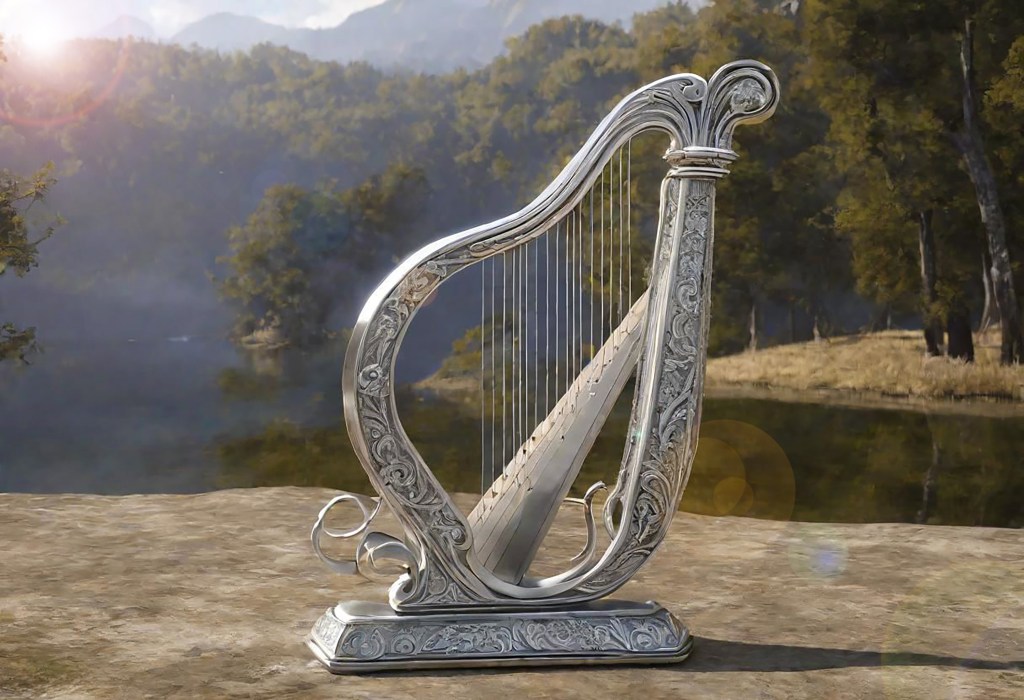
I believe the object would be a musical object, one allowing its player to sing (excluding pipes and other wind instruments). I assume then, a silver lyre.

12. The silver lyre would be necessary to resolve the almost certain fall of Men under their own efforts.

Letter to Miss J. Burn dated Jul 26, 1956: “No, Frodo failed. It is possible that once the ring was destroyed he had little recollection of the last scene. But one must face the fact: the power of Evil in the world is not finally resistable by incarnate creatures, however good.”

Sarumon and Gandalf were both sent to assist in the fight against Sauron, but Sarumon was a disaster in this. Gandalf died in the process and earned his rest. I don’t believe Tolkien would have provided for another supernatural assistant like that in resolving events in The New Shadow. Given that the silver lyre is now assumed to be critical to the story, I’m imagining Iluvatar sent this object as the aid.

Accordingly, the creator god has provided the means for Men to help themselves. In line with Christian belief then, it is up to Men to finish the job.

*

So whats the story of the New Shadow?

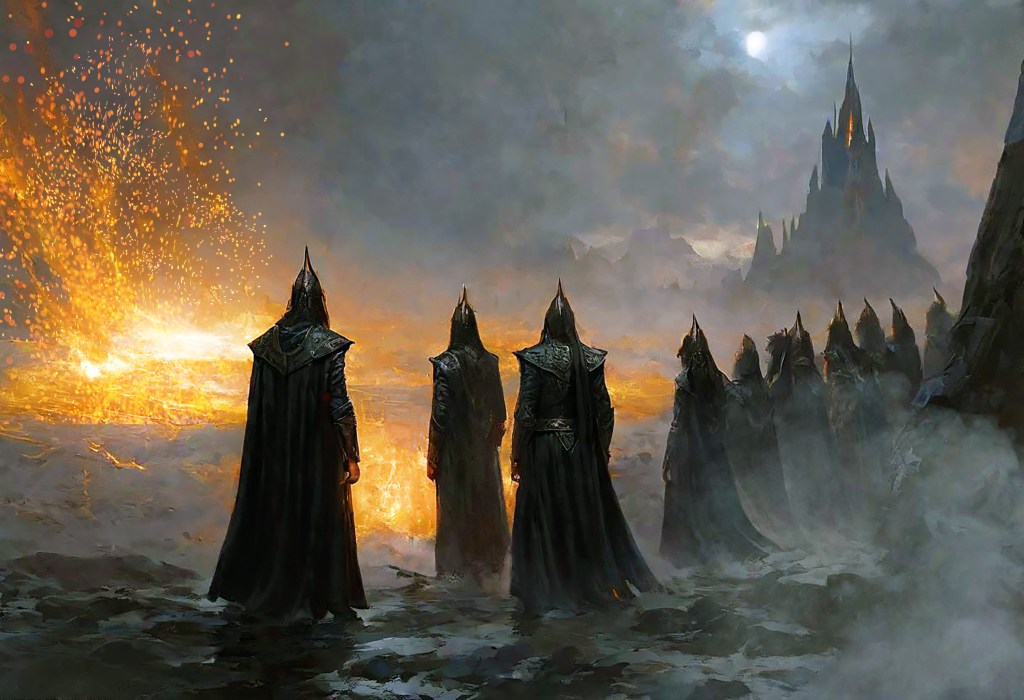
Tying all this together, I envision a small and disparate group of human characters (embodying natures of Elves and Hobbits perhaps, though physically Men and Women) must undertake a mission to find the silver lyre as their only hope in turning the tide against Herumor and his growing Dark Tree cult. Raging battleships crewed with screaming Orcs are pillaging and plundering port towns all across Middle Earth, establishing beach heads. Youths are disappearing from every village. Almost certainly, Borlas goes along (and possibly Saelon). Word spreads that Herumor has recruited dragons, who fly along with his Orc fleets.

The new fellowship makes their way to the ruins of Rivendell to consult with the old scholar there, in hopes of learning the lyre’s whereabouts. Secrets are revealed, and a betrayal occurs, though not from the one we expected.

As Herumor’s dark forces spread, seemingly growing beyond imagination, vile beasts from older days awaken to serve a dark lord, or at least one who deems himself such, one last time. Terrible fates befall hapless towns who’d grown slothful and fat in the long peace. It seems no one has an army or navy able to stand against the black tide of evil sweeping over the lands and seas.

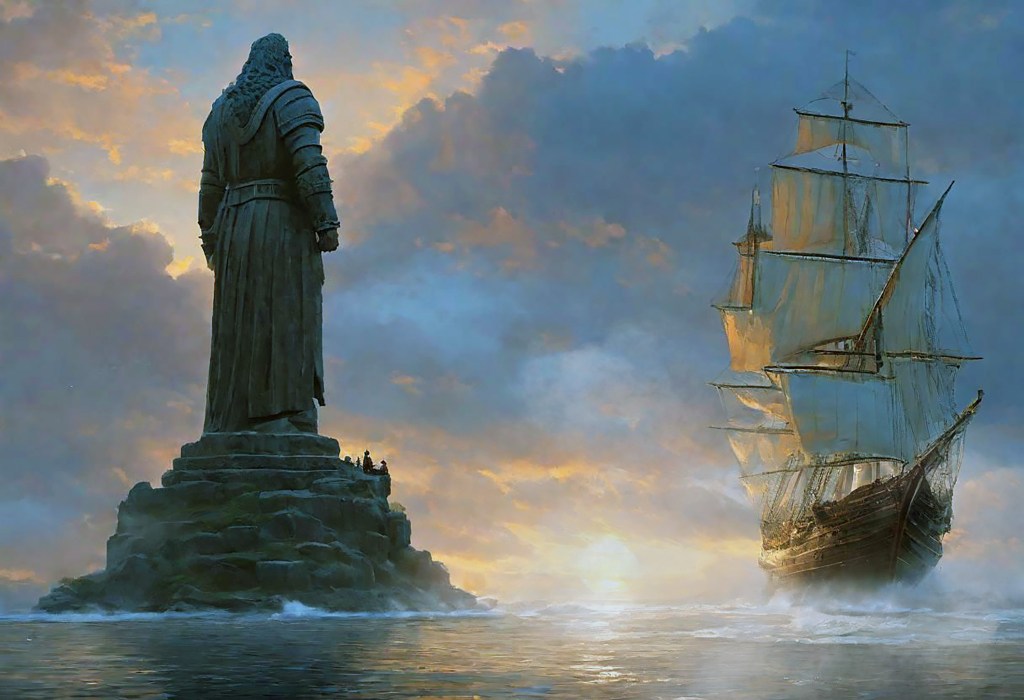
But the lyre is found, and its music summons mighty fighting ships, though no magical beings to crew them. It is up to the least of the new fellowship to inspire and recruit those who will sail these ships.

A mighty battle is fought on the roiling seas, flaming dragons and screaming Orcs versus mystical ships and desperate Men and Women. At the darkest hour, everything turns because of the courage (and potentially the sacrifice) of the most precious of the new fellowship – one who we thought might become a King or Queen. It was that selflessness that redeemed Men in their Age.

The battle is won. Herumor and his fleets are destroyed as the very sea rises up like a man to swallow them whole.

And in the very end, there is music as Men sing to the skies.

*

Anyway, I hope you liked this musing and speculation. What a great experience this has been. I’d love to know what you think – and your own ideas about where the Professor would have taken all this.

Till next time,
Understanding The Silmarillion (and what it may tell us about Tolkien’s Sequel To Lord of the Rings) – Part One

I just finished reading Tolkien’s epic The Silmarillion. I’m proud of that because it took me a few tries to get rolling. But once it started becoming clearer to me what was happening, who was who, and the overall point of everything, I found it to be a stunning work of genius that is unmatched in scope, attention to detail, and craftmanship.

If you’re into the Peter Jackson movies or love The Hobbit or Lord of the Rings books but have been side-eyeing The Silmarillion like I was, I think I can help with that. If you don’t really know what this insanely impressive book even is, I can help with that as well, and explain why you might want to consider taking the plunge and reading it. (There are spoilers here, but I wouldn’t even recommend reading this book without knowing a few things first if you expect to follow the big picture).

My point with this two-part set of articles is to give you a few tips that can make the going easier in reading it. Then I’ll land on what Tolkien was actually planning for a sequel and which direction he might have taken that should he have actually determined to press ahead.

Cool?

What is The Silmarillion?

J. R. R. Tolkien was one of the finest writers to ever work in the English language. He was one of the first true detailed worldbuilders, and in large part may have invented that craft itself. His main interest in the beginning was inventing fictional languages, and the worlds at the heart of the Lord of the Rings and related works were just places to house them. In The Hobbit, Fellowship of the Ring, The Two Towers, and Return of the King, we get glimpses and casual mentions of incredible events and the long, rich history of Eä, a fictional universe which contains Middle Earth (among other places). The Silmarillion is an opus of the mythology from creation of these worlds up to the end of their ages leading to our own.

What’s good about it?

Oh, man, are you in for some of the most incredible imagery and ideas, fiery wars on a mythological scale that altered the very shape of the earth, fascinating characters fleshed out like real people but strutting larger-than-life on a stage of unimaginable fireworks! They might seem disconnected as you read them, but it all has a point. Practically everything you might love about the more famous books, every place you remember from them, has a history and reason for being. The giant spider that captures Frodo, the fiery balrog that killed Gandalf, why there are wizards at all, who built Minas Tirith, who was Sauron and what he really wanted (he wasn’t the first dark lord), why there is evil in this world, where elves and men came from & why they don’t like each other, why elves are fading, where they’re all going in the west, and on and on. It’s all made clear and hangs together tightly like a masterpiece tapestry while it tells an incredible story. In fact, the events of the more famous books are like footnotes here. There’s so much of a bigger picture going on than the rings and Sauron!

It’s genius, man. That’s what I’m saying. Genius.

Summarize it a bit, then. And give some tips on what’s important.

A creator god invites his supernatural beings to begin singing, though one among them strays into his own musical themes to suit himself rather than following the creator god’s lead (Melkor, one of the most important through-lines of the entire book and eventually the original dark lord). It turns out, their very music is creating Tolkien’s fictional universe, and all its long history, everything that ever will happen in it, is just that original music playing out. The creator god offers for them to enter into this new universe, and some take the invitation.

This new world is waking up with life and light, and the beings that entered it build a magical place called Valinor. Very much of what happens in The Silmarillion, and what is going on behind the scenes in the later books relates to this magical land to the west. Pay attention to everything that happens in Valinor and any time somebody enters there or leaves there.

Elves are the first newly created beings to appear in this world (in a place outside Valinor called Middle Earth), and most of action of the book is telling their early history. Most of the characters are in fact various types of elves, split up by various events and decisions and so with different tribal names. But elves nevertheless. Humans come into the picture, though a bit later and ultimately are the point of the music and everything else.

And the jewels?

Three magical jewels (called the silmarils) are created by a craftsman elf (Feonor), and that drives an incredible chain of events that serve as the backbone of practically everything that happens. Pay close attention to Feanor, why the jewels glow like that (light from the trees of Valinor), what happened to those trees (Melkor’s dark deeds), and the terrible oath sworn regarding who will own these jewels. That’s the engine of the story, these jewels. That’s why the book is called what it is.

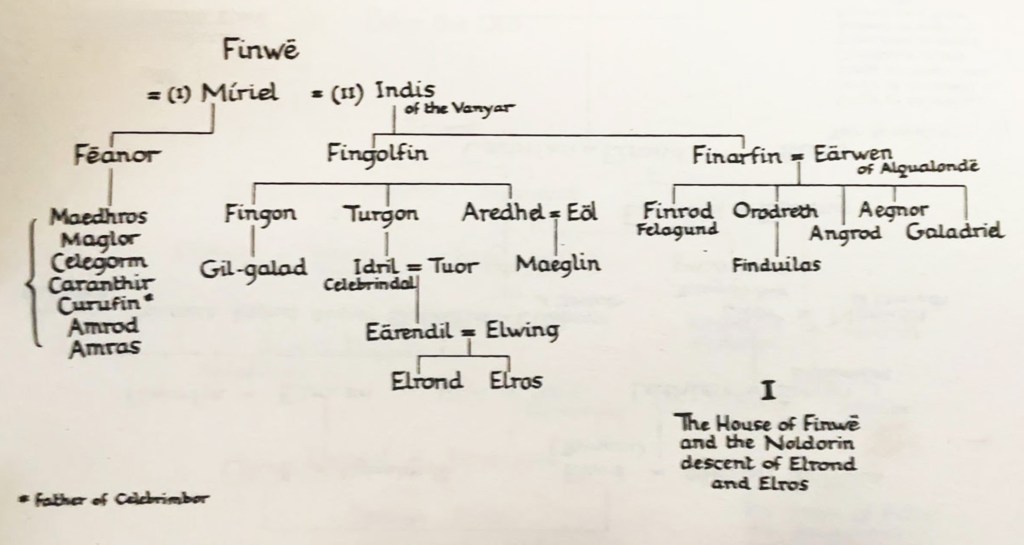
One family tree is really core to the book. This one:

Feanor made the jewels – he and his sons swear the oath, which carries supernatural weight and leads to the dooms of many. For anybody that chases those jewels, there are problems. In this family tree, there’s a connection eventually to the rings of power (Celebrimbor), Elrond and Galadriel (who you know from the movies), and a lot of the main events that happen in The Silmarillion. Aragorn traces his ancestry back to here as well. A lot of people are turned off by the firehose blast of names in this book (and I get that), so ticking off a few important names for yourself (and a few important places) is key in enjoying the book. Feanor and his sons matter a lot.

Over a biblical scale of time, long-lived elves (occasionally with supernatural help) fight Melkor and his dark armies of beasts. Here, you get orcs, balrogs, and the first dragon (who you get to watch grow up), werewolves, and giant spiders. Earthshaking battles and incredible conflicts rage, often to deal with Melkor’s evil or to struggle for those jewels.

Wait. Werewolves?

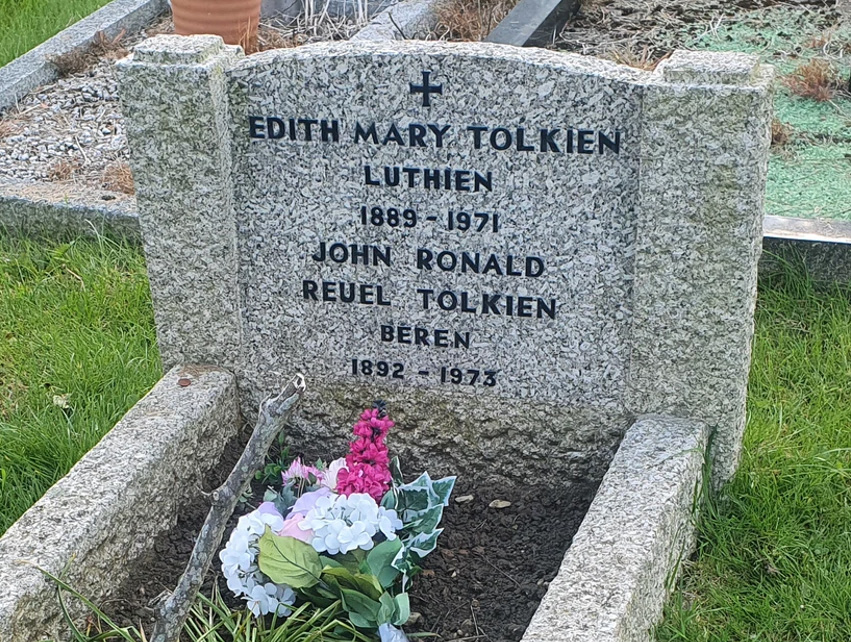
There are werewolves in Tolkien, yes. They’re mainly in the story of Beren and Luthien which is one of the most central parts of the entire tapestry. It’s a story that is gorgeous and mythical. Let me blow your mind a bit, if you didn’t know this:

That’s the gravestone for Tolkein and his wife. Here’s a quote from the Tolkien society:

“…the story has a personal significance to Tolkien. In 1917, a young Ronald (as Tolkien was known) saw his wife Edith dancing in a glade near Roos, Yorkshire; this scene was the germ of the story as Beren also first espies Lúthien whilst dancing in Doriath.”

[Beren And Luthien is available as a standalone book itself, which I’ve also read, and it’s worth your time as well. This is even more of a composite study done by Tolkien’s son than The Silmarillion, and is a bit more like piecing the tale together through notes than a somewhat polished work.]

Beren is human, Luthien, elf, and her father challenges Beren to bring him a silmaril for her hand. Unfortunately, the dark lord himself has all three of them by this point embedded in his crown where he sits on a throne in a dark and impregnable fortress protected by every manner of vile beast you can imagine and endless armies of orcs. This part of the story is key, so key in fact that Aragorn tells it to Frodo, as they are his ancestors.

Wrap this up, then. How does The Silmarillion end?

This book is a world, so it isn’t really that simple. There are several threads going on tangential to the big picture, like the Atlantis city of Numenor and its upheaval, the hidden city of Gondolin and its fall, and the tragedy of Hurin and his children (also available as a standalone work and also worth your time). I name these threads for a reason – pay attention to Numenor’s role and why it was destroyed, how and why Gondolin was destroyed, and Hurin’s son, Turin and his adventures. Still, they’re like side quests.

However, The Silmarillion tells at last of the fall of Melkor and the eventual fate of the silmarils. If you just keep your eye on Melkor (also named Morgoth) and the silmarils, you’ll get the main flow of everything going on with this incredible book. Towards its end, there is a concise summary of events leading up to the world we know from the more famous books.

Okay, so what was that you said about a sequel to Lord of the Rings that Tolkien was planning?

Ahhh, that’s interesting. It will be the point of the second part of this set of articles. A year and a half ago, I found out Tolkien had begun writing a sequel to be called The New Shadow. The scrap of it that exists is chapter 16 in a compilation called The Peoples of Middle Earth.

That’s honestly why I went deep on Tolkien in the first place. I rewatched the six movies (extended editions) and read all these books I’ve mentioned here, originally because I wanted to solve the mystery for myself of what was going to happen in that sequel should the professor have gone on to continue the story as he at one point planned. He explained clearly why he stopped, so I’ll briefly recap that for you in the second part of this series.

But what’s more interesting for me is where he would have taken the tale if he’d really decided he would press on with it. I believe he would have returned to the background of The Silmarillion, the big picture of that music from the very beginning and how it decided everything that was to happen, and point of humanity’s coming into this world in the first place.

*

I hope this whetted your apetite should you have interest in this amazing book. If it helped, let me know. If you love the book already, let me know that too. It was a transformative experience for me, going this deep into such a rich world.

Till next time,

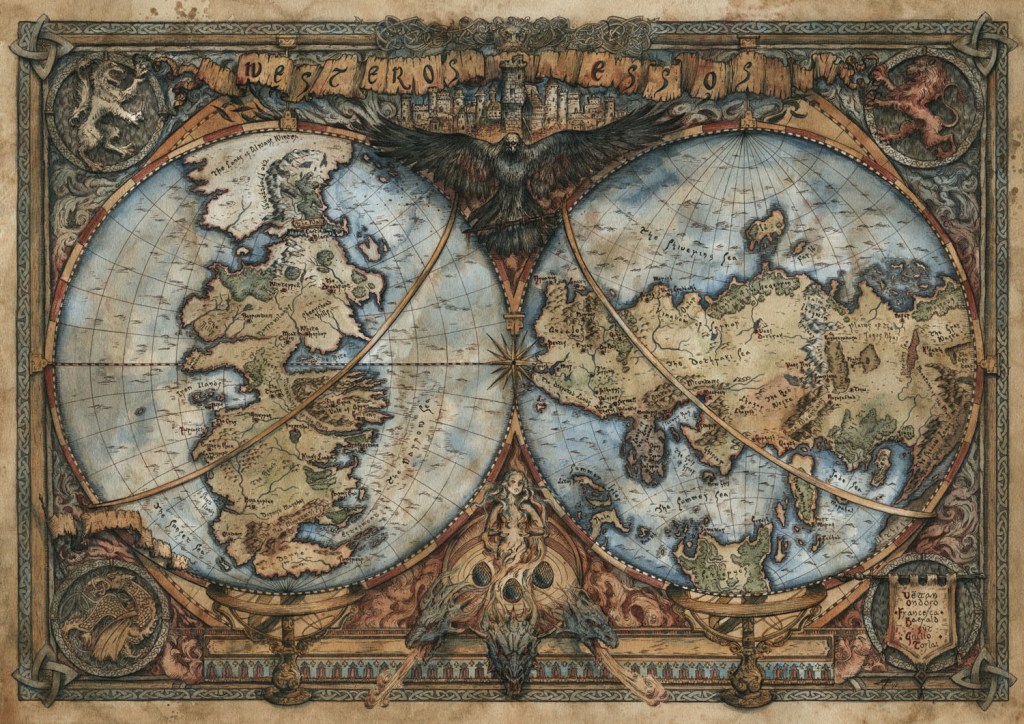
Let’s Talk To A Fantasy Cartographer! Meet Francesca Baerald.

Welcome back to Grailrunner’s Inspirational Creator Series where we dig in with some of the most fascinating creators around and ask what sorts of things inspire them, hear about their creative process, and generally just admire people who have very, very cool jobs.

Previous interviews have included a mind-blowing artist and game designer who created the Grimslingers tabletop series of games, a science fiction writer who’s also a professional futurist, a martial arts video game designer who’s studied his craft for over 3 decades but is also a Diagnostic Pathologist, and the influential and intriguing writer who created D&D’s Spelljammer.

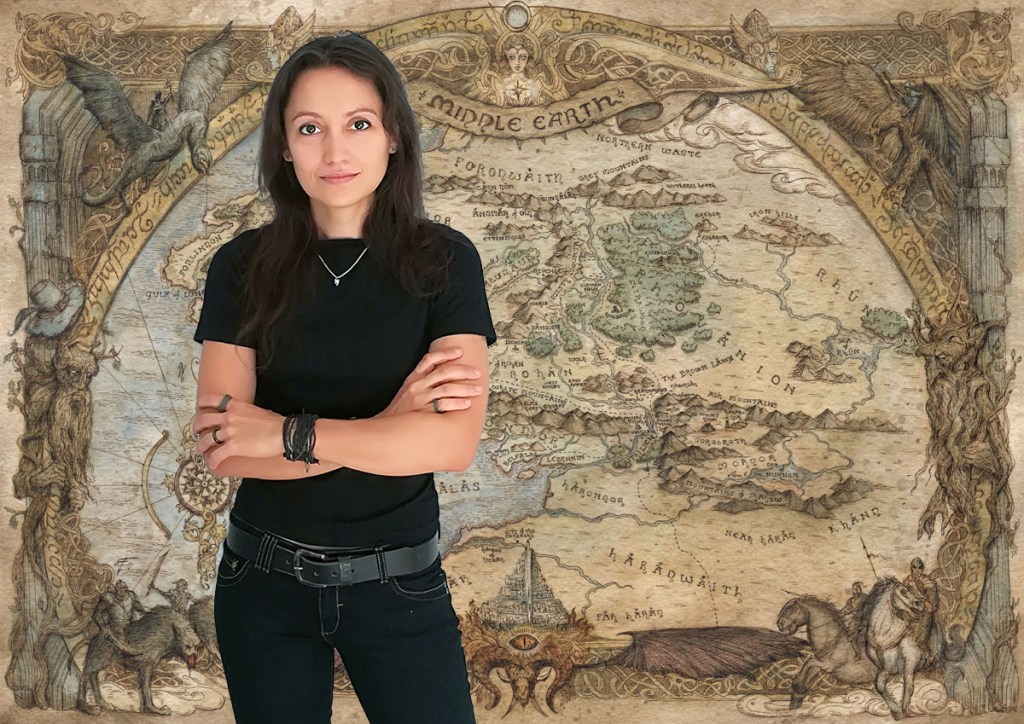
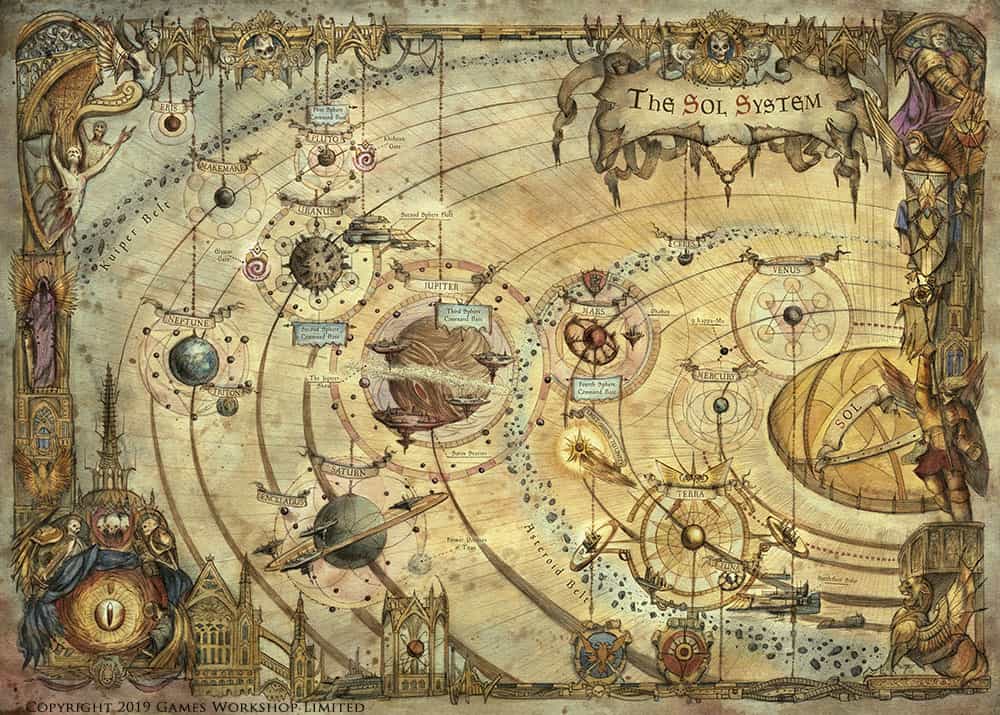
This week, we’ll meet a fantasy cartographer, painter and illustrator who’s produced mesmerizing works for clients like Wizards Of The Coast, Games Workshop, publishers Random House and Simon & Schuster, and game producers Blizzard and Square Enix! Her name is Francesca Baerald, and you need to hear from her not just because she’s kind and inspiring and incredibly responsive to her many fans, but because she makes imaginary lands come to glorious, color-filled life with her bare hands.

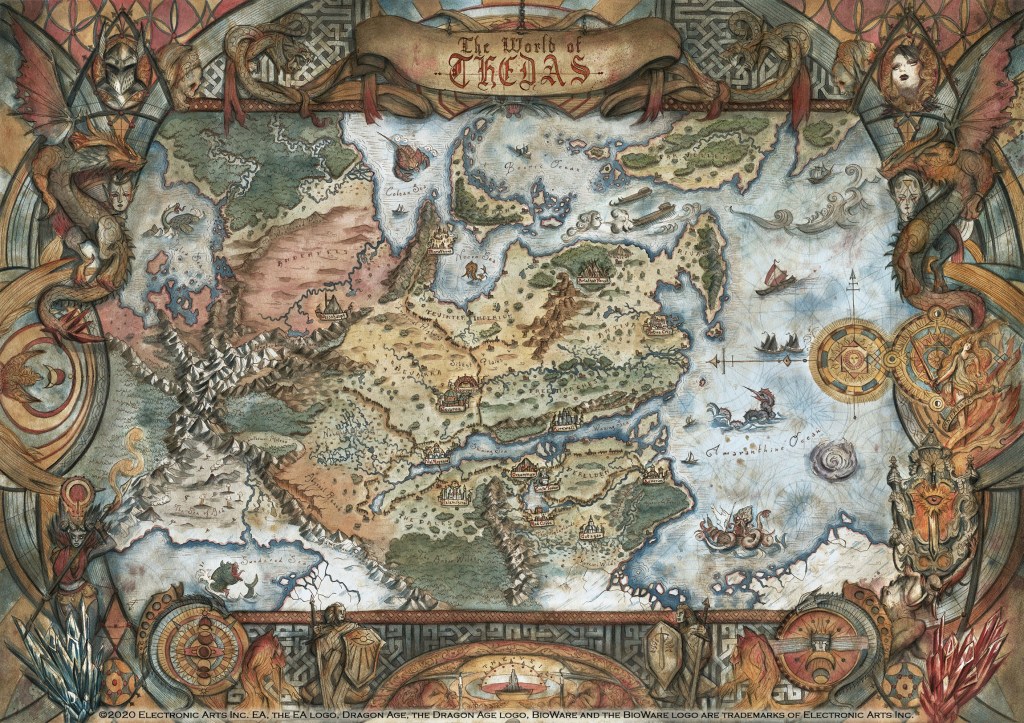
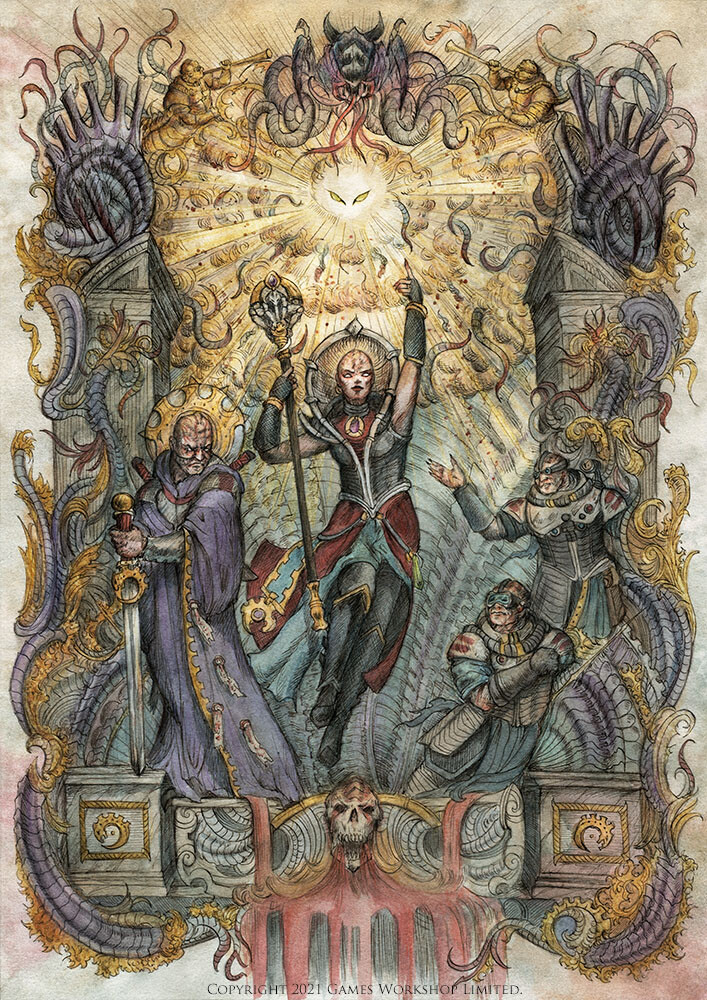
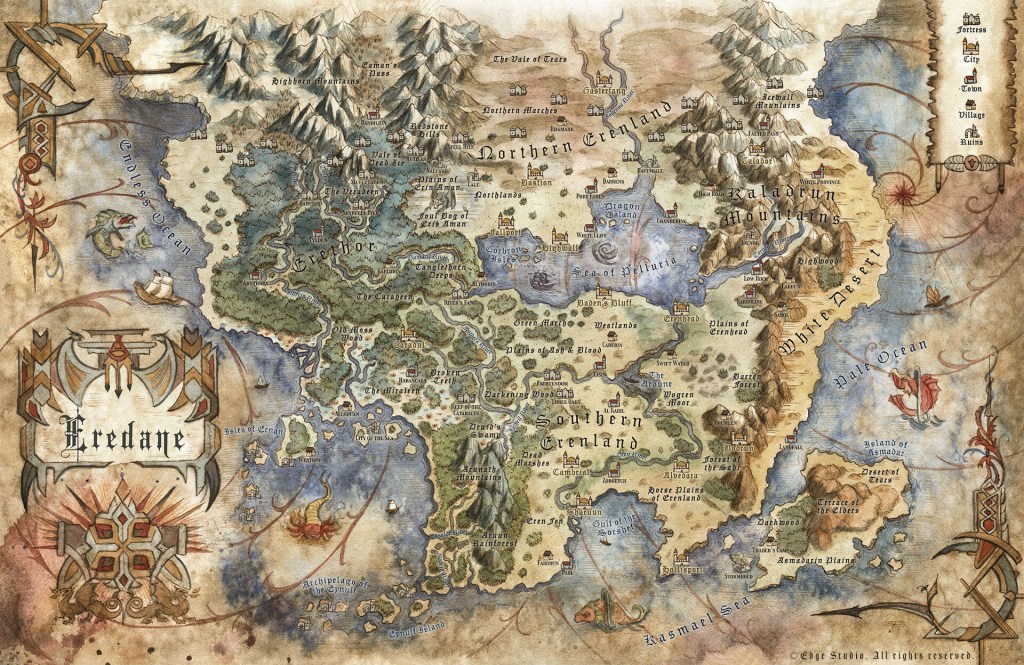
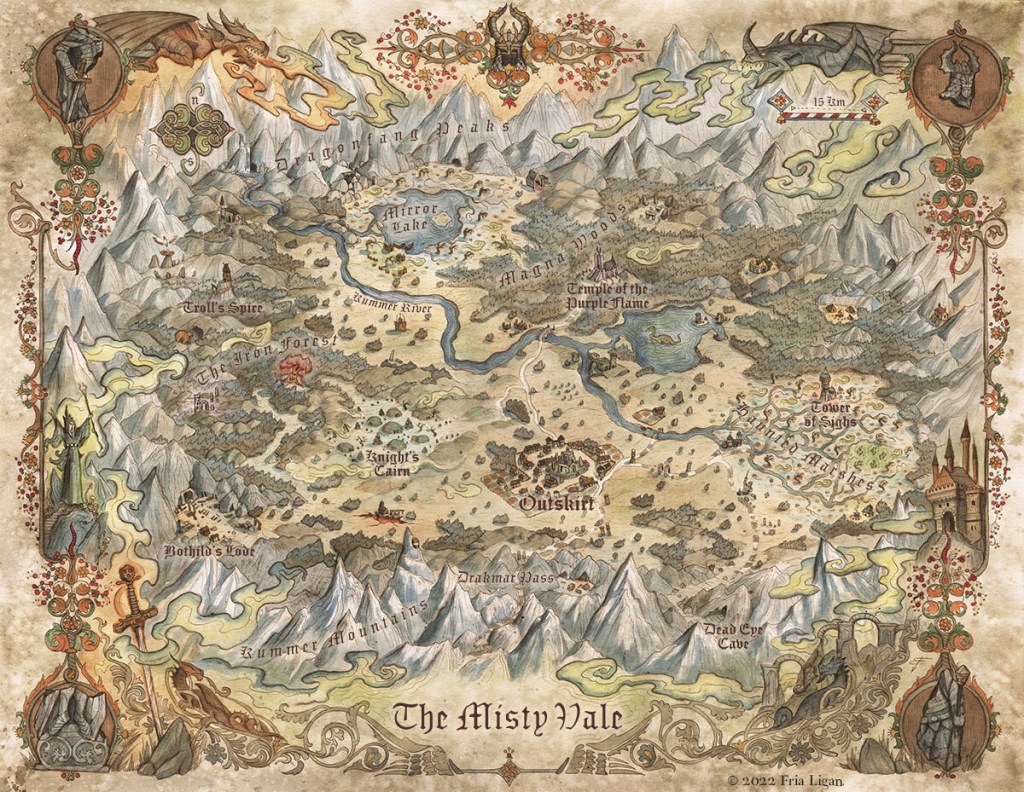
We’ll be featuring some of her work throughout the interview, so take a look as we chat.

Francesca, welcome!

The breadth of your experience is incredible, representing some of the biggest and most exciting names in gaming and speculative fiction right now. Congratulations on that, and thanks for making time to give us a glimpse into what you do and what inspires you!

Thank you so much! Games were the first thing that started my passion for the job I do today, so as you can imagine it’s incredible for me to have the chance to contribute with my art to games such as D&D, Warcraft, Diablo and books like Game of Thrones.

A year or so ago, I saw a job posting for “Vice President Of Dungeons & Dragons” and thought that was the coolest job title possible. That was obviously before I gave thought to a “Fantasy Cartographer”. As an artist and mapper of imaginary worlds, tell us what you do and why you do it.

Vice President of D&D, that would be so cool (no pressure!). I love my job as a fantasy cartographer. My mother always said that I have too much creativity and this job gives me the opportunity to be creative at my fullest. It’s fantastic to contribute to developing worlds, inventing places and stories. I believe that the role of the cartographer is fundamental in making a fictional setting look real and plausible. I really enjoy immersing myself in new unexpected worlds and do my best to make them real.

You graduated from the International School Of Comics (I believe in Florence), which sounds like a blast. I’m imagining a bunch of wide-eyed artists sketching on iPads at the bases of gorgeous fountains). Sheesh…I had to study calculus and field equations. Tell us about that.  

I graduated in Reggio Emilia, which is not Florence, but nevertheless is a very nice city. Here in Italy you can find inspiration in every corner. Ancient history is on each building and statue. But we also have lovely landscapes to get inspiration from. And the beauty of it is that everything is a stone throw away.

Attending an illustration course was the best choice I’ve ever made. At the time I was working at a warehouse, I knew nothing about drawing. But learning how to draw has always been a dream of mine, so I quit my job and went on this adventure. During the three years of study I encountered many challenges but also a lot of eye-opening experiences.

So, a thrilled, exhausted Francesca graduated from illustration school and headed off to seek her fortune – I believe your first paying art gig was for an Italian RPG. How did you approach that job and what was that experience like?

When I started the illustration course, transforming my passion for drawing into my daily job never crossed my mind. I was just dying to learn how to draw and express myself. At the end of the course I understood that perhaps I could try to make my way as an artist. So I started to attend Italian conventions, trying to get some commissions (I didn’t even think about international clients at the time). I showed my portfolio to so many publishers! But they were quite skeptical in hiring an artist that used traditional media and with little work experience. I then began submitting my work to online job requests and contests. It took time, but little by little I began to work with more companies.

I started my career as a fantasy illustrator, not a cartographer. I always loved drawing maps in my spare time and once I decided to share one of my maps online. One of my connections noticed it and introduced me to an Italian publisher that was looking for a cartographer. That was my first map commissioned for a published project.

I believe you prefer traditional materials for your artwork versus strictly digital: watercolors, ink, acrylics, and oil. What do you like about that?

As I mentioned, at first publishers here in Italy were very cautious in hiring a traditional artist. But I’m a passionate person that has a strong physical bond with art and creativity. Believe me, when I was looking for work at the beginning and with no job on the horizon, I started to learn digital painting. But I really couldn’t do it, because I wasn’t happy while drawing on a PC monitor. Digital and traditional tools are both great. Digital simply doesn’t work for me. I knew that if I had to make this my daily job, it would have to be with traditional media. The feeling of shaping something with my hands, touching it and loving it even with its faults and mistakes is unique.

Pick just one of your absolute favorite art pieces you’ve done (apart from maps, we’ll get to that), and tell us what makes you pick that one?

I think that I have a special connection with my painting “The Butterfly Effect”. It’s a self-portrait in some way and it’s the first time that I believe I “exposed” myself with one of my works. I often try to remind what my father taught me: life is special, even in difficult times. And that even a little change can have an effect on life in the long term.

And so we come to fantasy and science fiction maps! What a marvelous job you have. It’s unique and very much in demand. What attracted you to mapmaking?

Playing games while growing up really intensified my love for drawing little maps, dungeons and labyrinths. Diablo in particular and its dungeons were of great inspiration. How I loved exploring! I ventured through every corner of almost all the many games I’ve played… and I know level designers have fun hiding easter-eggs in secret places! After the course I didn’t know that cartography could be a daily job for me. My hope was to find commissions as a fantasy artist and illustrator for games. The opportunity of making a map came by chance and then everything changed. I love painting illustrations and creating maps at the same level. I’m grateful that I can do both today.

Can you describe your process for making fantasy maps?

Essentially I “live” my maps. When I start a new map the goal for me is to make those places real in my mind. So I begin by carefully reading the art brief I receive and finding out as much info as possible on the setting. Depending on the kind of map, I take inspiration from publications and nature (inspiration can come from anything) and do my best to mix everything with my personal vision and experience. I start with a first sketch to nail down my ideas. Then I move on with a more detailed drawing and submit it to the client. Once all the feedback changes are done, I start inking and in the end coloring the map.

Anything you’re working on now is super-secret, but what can you tell us about any projects coming out soon?

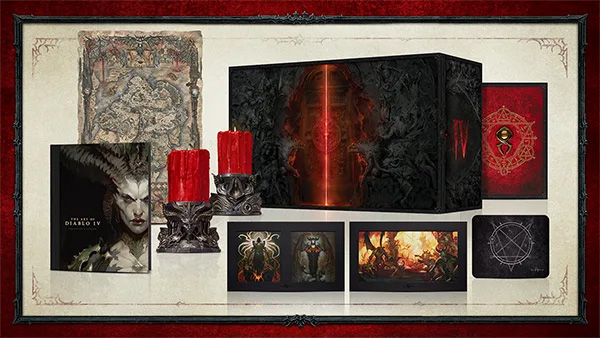
Because of NDAs, what artists show you today is probably from a couple of years back! However I’m happy to tell you about a map I’m particularly excited about. And that’s the map I made for the Collector’s Edition of Diablo IV. There are many other exciting new works of mine that will be published later this year, but I can’t talk about them yet. It will be an amazing 2023!

Diablo IV: Collector’s Edition featuring cloth map of Sanctuary by Francesca Baerald

Where can we find more about what you’re up to?

I share all the news about my work on Twitter, Facebook and Instagram. If you’d like to keep updated and see some of my work in progress, you can find me there. I’ve also just finished updating my Artstation page.

Anything else you’d like to let us know?

I’ve seen the world of fantasy cartography expanding a lot in the last few years. This makes me really happy. I’d like to take the opportunity to say to new cartographers to thrive to become the better expression of themselves, to be unique! Because in an increasingly automated world we need to be reminded of our faulty humanity (in a positive way!).

Francesca, it’s been amazing! Thanks so much for making time for us and for the inspiration to get out and make something new. Best of luck to you in the new year!

Till next time, guys.

Maps In Books And Other Things We Need

Tolkien’s Middle Earth

Boy, was I wrong!

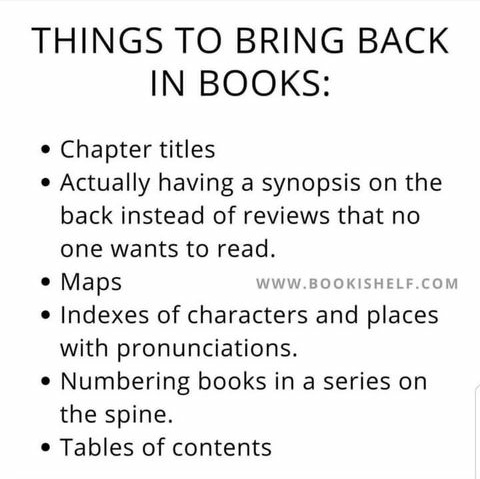
I need your opinion on something, so bear with me. I saw a post the other day that really got me thinking about supplemental materials in immersive storytelling, and now I’m happily hip-deep in Lord Of The Rings lore and can’t get enough. So I’ll want to ask you for your take, but let’s take a look at the post from The Bookish Elf:

I’ve spent a lot of time looking into what makes stories work, what great writers and myth-tellers did with their structure, their connections, how they introduce them, and immersive techniques. And I’m not sure how I missed this, or how I got the opinion that character lists at the front of a novel are for kids or Shakespeare but not for today’s ‘serious writers’. But I did.
I always had this nagging sense that as much as I hated books with too many characters that introduced them poorly, or with poor distinctiveness between them, that I still shouldn’t include character lists up front because no one does that. I’ve quoted George Lucas before with his intentional introductions of the cast in Episode 4: A New Hope because I think it’s genius:

I could not get out of my mind that poetically speaking I really wanted to have this clean line of the robots taking you to Luke, Luke taking you to Ben, Ben taking you to Han, Han taking you to Princess Leia. I wanted each character to take you to the next person.”Star Wars: The Annotated Screenplays

Outlandishly successful pulp author, Lester Dent relied on what he called ‘tags’ for character distinctiveness:

It means the character is equipped with something that the reader can readily recognize each time the actor appears on the scene. A simple example of an external tag for purposes of illustration might be the one-legged old rascal in Treasure Island. The wooden leg is the thing that is remembered…” -Lester Dent in 1940 essay, Wave Those Tags

Dent described tags as peculiarities of appearance, manner, voice, clothing, hobby, and so on. I thought about this when I read (or re-read) Dickens’ Pickwick Papers, where the gentlemen all have their own distinctive quirks. I saw it in the Dostoevsky’s Brothers Karamazkov as each brother was brought onto the stage. My point here is this sort of wordcraft of character introductions and distinctiveness was where my head’s been at forever on this point of supplemental materials.

Then I started reading Games Workshop’s Black Library and experienced The Horus Heresy (or at least seven books in the series, it’s a lot to get through!). I used those character lists constantly, flipping back and forth to see who someone was. I’m not saying their characters aren’t distinctive or introduced properly at all, just that life’s busy and there is a lot competing for my attention. If people read books straight through without interruptions, maybe I’d feel differently about the difficulty of keeping fictional paper-people separate in my head.

But I found those character lists up front to be tremendously helpful, like a guilty pleasure that I appreciated but maybe shouldn’t.

Then I stumbled across a few Lord Of The Rings nerds on Youtube who were spelling out all the connections and backstories in Tolkien’s towering intellectual achievement. Honestly, I’d always viewed those adventures the same way I might a random Dungeons & Dragons adventure – just beasties those hapless folks come across without patterns or histories and a winding, questy adventure tale. I’m into Tolkien’s, The Silmarillion now, and can now say definitively that nothing is random, that everything is connected flawlessly, and everything…absolutely everything…has a backstory.

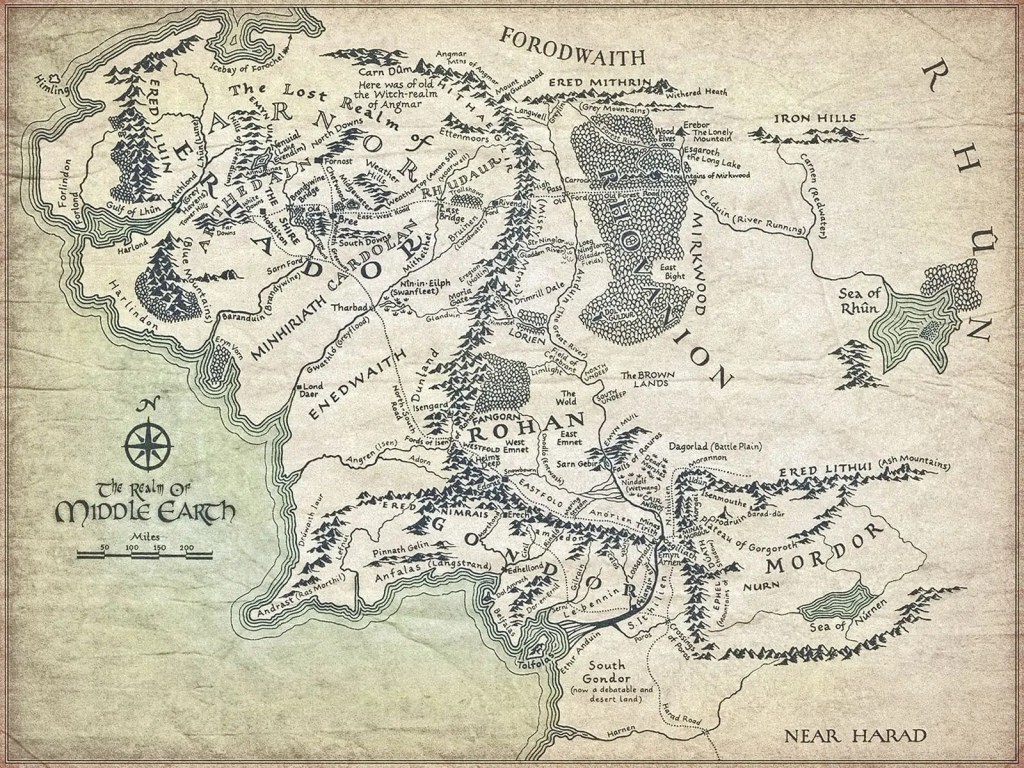
And a map.

I wrote Tearing Down The Statues and the Salt Mystic Sourcebook and Core Rules without a defining map. I mean, I knew generally where these places were located, and major landmarks and visuals as I told the tales. But the definitive layout, the connections, who and what exactly were located adjacently and through what sort of lands….nada. Hadn’t seen the point of defining it that clearly. I liked the openness of it.

But the deeper I went into Tolkien and his miraculous achievements, laying the template for all worldbuilding to follow, it struck me how important all those connections are. When I sat down to stitch together all the histories and geographical references in the published tales and the game cards, in the character backstories on the art, it opened entirely new tales based on the geographies. Seriously, it feels like a Renaissance with huge new possibilities, just because I’ve defined the map itself. Amazing. That’s as a writer, I can imagine the utility for the reader even more so.

And that’s the question for you for today – what say you on the inclusion of maps, character lists, maybe even pronunciation guides for character or place names in books you’re reading?

I’m generally curious, and it would help set my direction. Just reply here or on the Facebook Page. You can email me directly if you like, as some of you do (brian at grailrunner.com).

Let me know what you think. Till next time…