If you love the rousing, unmatchable tales of JRR Tolkien’s Middle Earth (cinematic or book form), then it’s only natural to marvel at the thought that Professor Tolkien did actually consider a sequel. He even said partly what it would be about and wrote about 13 pages of a beginning to it called “The New Shadow”.
I recently finished reading The Hobbit, the LOTR trilogy, and The Silmarillion as well as The Letters of JRR Tolkien and in honor of that experience, I’ve set the task for myself to determine as accurately as possible what would that full story have been. I’ll try and defend my points along the way, but it’s all speculation since he stopped purposefully (which I’ll explain shortly).
Care to come along for the ride?
What do we know for sure about it?
The full text of the aborted sequel is available in The Peoples of Middle Earth. You can read it there. A summary though:
It’s been 100 years since the fall of Sauron. King Aragorn’s son, Eldarion rules over Gondor. Elves and hobbits and the fantastic bestiary of years ago haven’t been seen in all that time. It’s the Fourth Age, a time of peace. The Age of Man. The War of the Ring and the great events of those many years ago are just stories, fading in memory.

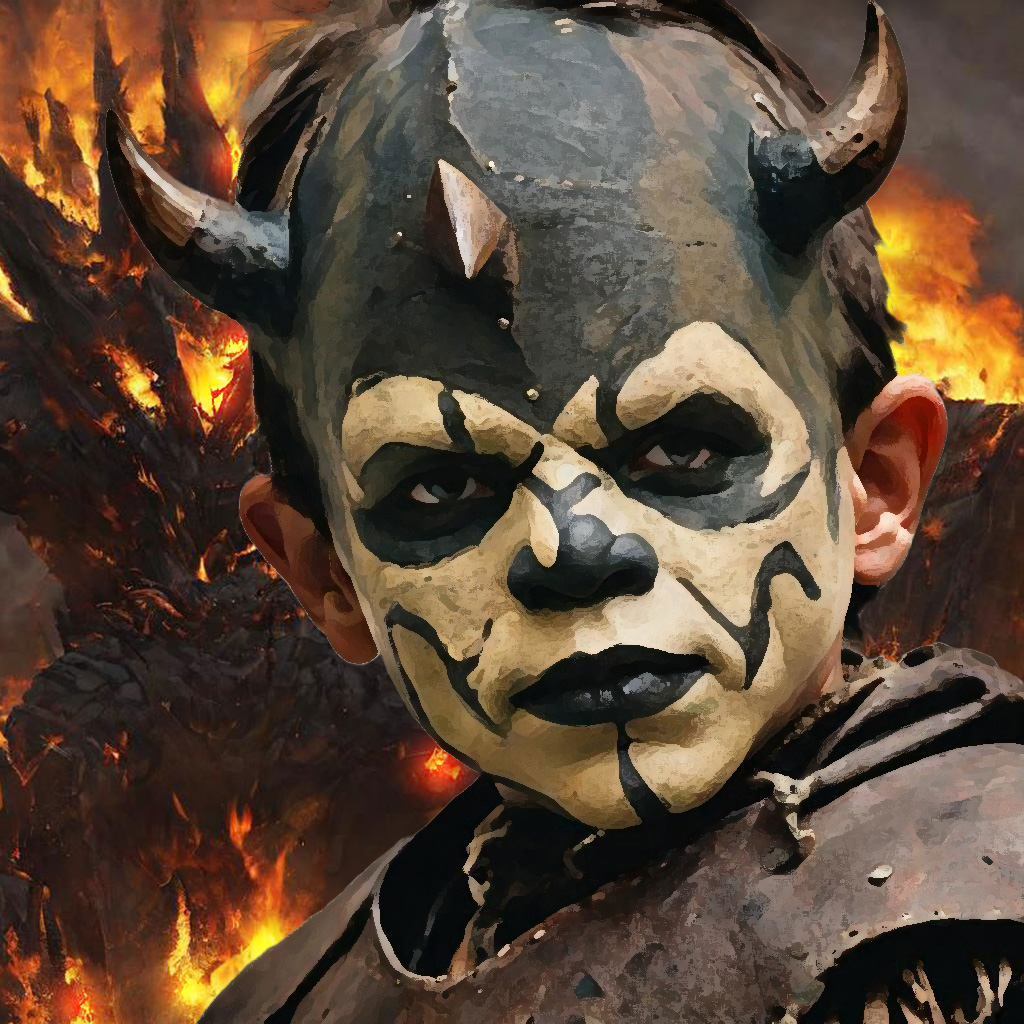
By a river below the sprawling towers of Minas Tirith, an old man named Borlas is talking to a younger, easily agitated fellow named Saelon. Borlas is the son of Beregond, the white guard captain assigned to Peregrin Took before the Battle of Pelennor Fields, and Saelon is the childhood friend of Borlas’ absent son. They speak of the growing evil in the hearts of men. And of Orcs.
Saelon recounts harsh words the old man had had for him years ago, in correcting the boy for stealing apples and damaging trees as “Orc’s work”. That word, Orcs, had fascinated him. The harsh words had angered him.
“Don’t speak to me of orc’s work, or I may show you some”, Saelon says. “You turned my mind to them. I grew out of petty thefts … but I did not forget the Orcs. I began to feel hatred and think of the sweetness of revenge. We played at Orcs, I and my friends, and sometimes I thought: ‘Shall I gather my band and go and cut down trees? Then he will think that the Orcs have really returned.’” The boy’s sudden anger and resentment perhaps surprise the old man.
They speak of Herumor, the vile leader of a growing cult called The Dark Tree that worships Sauron and his predecessor, the original dark lord, Melkor. Unrest is spreading: discontent with the reign of Eldarion. There is news of missing ships, and Borlas’ son is away at sea.
Suddenly, the boy, Saelon makes a mysterious invitation to the old man. If he will return to this spot tonight clad all in black, he will learn everything.
Before the fragment ends, Borlas smells the air. In the Professor’s words,
“The door under the porch was open; but the house behind was darkling. There seemed none of the accustomed sounds of evening, only a soft silence, a dead silence. He entered, wondering a little. He called, but there was no answer. He halted in the narrow passage that ran through the house, and it seemed that he was wrapped in a blackness: not a glimmer of twilight of the world outside remained there. Suddenly he smelt it, or so it seemed, though it came as it were from within outwards to the sense: he smelt the old Evil and knew it for what it was.”
Why didn’t Tolkien finish the book?
Oh, he explained that in detail.
Here, in a letter to Colin Bailey, dated May 13, 1964:
“I did begin a story placed about 100 years after the Downfall [of Mordor], but it proved both sinister and depressing. Since we are dealing with Men it is inevitable that we should be concerned with the most regrettable feature of their nature: their quick satiety with good. So that the people of Gondor in times of peace, justice and prosperity, would become discontented and restless – while the dynasts descended from Aragorn would become just kings and governors – like Denethor or worse, I found that even so early there was an outcrop of revolutionary plots, about a centre of secret Satanistic religion; while Gondorian boys were playing at being Orcs and going round doing damage. I could have written a ‘thriller’ about the plot and its discovery and overthrow – but it would be just that. Not worth doing.”
In a letter to Douglas Carter dated June 1972, he said:
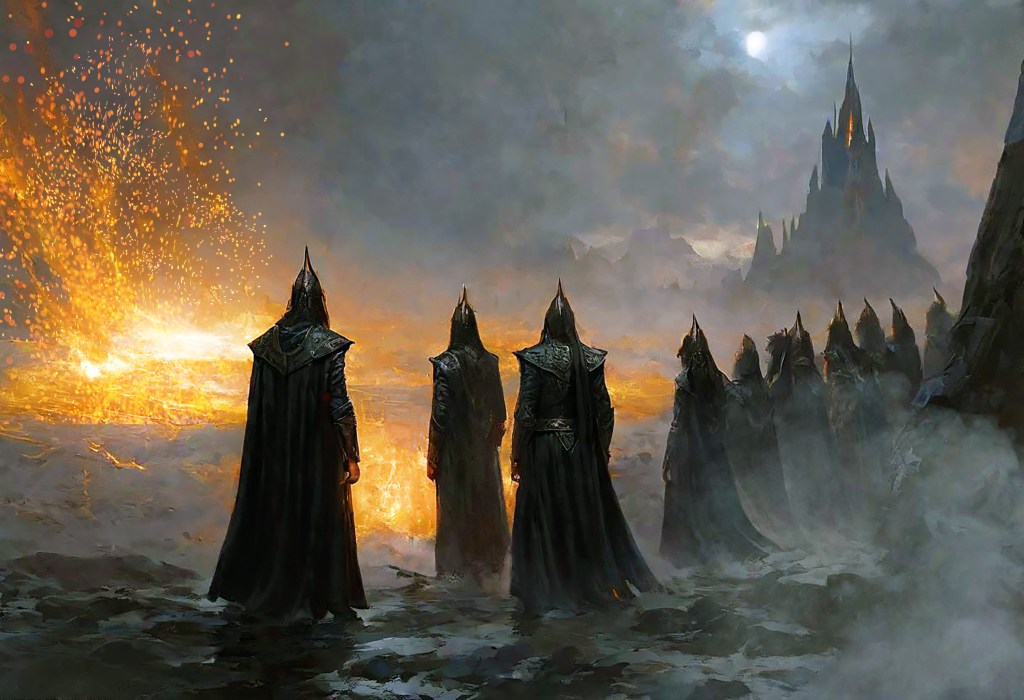
“…the King’s Peace would contain no tales worth recounting; and his wars would have little interest after the overthrow of Sauron; but that almost certainly a restlessness would appear about them, owing to the (it seems) inevitable boredom of Men with the good; there would be secret societies practicing dark cults, and ‘Orc cults’ among adolescents”
What he was saying is that he’d wrapped up the supernatural bits with the close of the War of the Ring, and all that was left was politics and intrigue. It wasn’t what he wanted to write, so he left it there. His real passion remained publishing The Silmarillion into which he’d thrown his heart and soul his entire life, but no publisher would have it in its condition: a dense narrative that can read at times like a technical history book full of difficult names and a flood of events.
In a letter dated July 1938 when he was supposed to be writing a sequel to The Hobbit, he said:
“…my mind on the ‘story’ side is really preoccupied with the ‘pure’ fairy stories or mythologies of The Silmarillion…and I do not think I shall be able to move much outside it – unless it is finished”
In an epic letter to Sir Stanley Unwin dated Sep 14, 1950, he said of the finality of Lord of the Rings that it:
“…concludes the whole business – at attempt is made to include in it, and wind up, all the elements and motives of what has preceded: elves, dwarves, the Kings of Men, heroic ‘Homeric’ horsemen, orcs and demons, the terrors of the Ring-servants and Necromancy, and the vast horror of the Dark Throne”
It was disheartening for me, reading the Letters of JRR Tolkien, his final years after his retirement and when his dear wife, Edith passed away, that he was desperately still trying to find time to collate the materials for The Silmarillion and despairing he would ever accomplish it. His mind wasn’t really on a sequel.
That seems to close the business then. What’s the point of this article and exercise?
Okay, hear me out. He was super passionate about the elf histories and lore of The Silmarillion; in fact that was the whole point of his worldbuilding his entire life. Yet the market wanted hobbits and heroic myth. If the Professor had gotten The Silmarillion published ten years before, seen a relatively poor reception for it, and had maintained the energy to give it another go, I believe in my heart he would have gone back to the core of his magnum opus to redeem it.
My point is – he stopped because of his viewpoint on what would happen next, but I believe if he actually made the decision to proceed with a sequel, that wouldn’t have been the direction he would take the book. He and C.S. Lewis agreed long before that if they couldn’t find the books they wanted to read, they’d have to write them. He enjoyed heroic poetry and long, exciting tales of adventure. So that’s what he would have found a way to write. It so happened, that’s what the market wanted anyway.
But how on earth can we know what change in direction he would have taken with the sequel?
Ahhh. I believe I can trace the steps on what his thought process would have been given his personal tastes, the groundwork he’d laid for The New Shadow, his fascination with The Silmarillion lore, and how he approached writing the first sequel: Lord of the Rings. Of course, there is wild speculation here. But I can back some of it up.
OK, so what would have happened?
A few building blocks first, please. Humor me.
- No allegories or basis in world events
From Tolkien’s foreward to Fellowship of the Ring, 2nd edition:
“I cordially dislike allegory in all its manifestations…I much prefer history, true or feigned, with its varied applicability to the thought and experience of readers”
2. Not all the supernatural beasts and creatures need be absent from the story
Letter to Naomi Michison dated Apr 25, 1954 (referencing Balrogs): “They were supposed to have been destroyed in the overthrow of Thangorodrim, his fortress in the North. But it is here found (there is usually a hang-over especially of evil from one age to another) that one had escaped and taken refuge under the mountains…”
In fact, we could have dragons.
“Dragons. They had not stopped; since they were active in far later times, close to our own. Have I said anything to suggest the final ending of dragons? If so it should be altered.”

3. A dark entity can in fact be guiding events, just not in a physical body, and most likely surrounding itself with a confusion of good intentions and lies
Letter to Robert Murray dated Nov 4, 1954: “…for or course the Shadow will arise again in a sense (as is clearly foretold by Gandalf), but never again…will an evil daemon be incarnate as a physical enemy; he will direct Men and all the complications of half-evils, and defective-goods, and the twilights of doubt as to sides, such situations as he most loves”
That tells me no new dark lord. Herumor will be a man, but a man possibly being directed by an evil entity if he’s not the entity itself. It is highly unlikely Tolkien would have reopened Sauron or Melkor as a direct influence, as he very much disliked retreading old ground and cheapening the sacrifices of Lord of the Rings. In order to avoid the focus on politics and intrigue that turned the Professor off to the story in the first place, Herumor would likely have some form of magical objects or access to a lore of some kind to influence events – such as he might be using to take out those ships that were going missing. Herumor MUST have something from Sauron’s days that he’s using.
4. There would be connections to the previous books
Letter to Chrisopher Bretherton dated Jul 16, 1964 (regarding his process for writing a sequel to The Hobbit): “The magic ring was the one obvious thing in The Hobbit that could be connected with my mythology. To be the burden of a large story it had to be of supreme importance. I then linked it with the (originally) quite casual reference to the Necromancer…whose function was hardly more than to provide a reason for Gandalf going away and leaving Bilbo and the Dwarves to fend for themselves...”
In this same letter, he explains at length how he pulled from his existing mythology in materials from The Silmarillion as part of his creative process. That’s key for me, by the way. It is precedent for him going back to the massive well of those materials to make sense of the story he wants to tell. I’ll come back to that in a big way shortly.
5. Elves are gone and almost certainly would NOT appear. However, Elrond could still play a role.
Elrond appeared in The Silmarillion, The Hobbit, and in much of the Lord of the Rings. Part man, part elf, and present in the major events of Tolkien’s entire history, this character was incredibly pivotal. Yet elves wouldn’t return; that’s clear. However…
Letter to Sir Stanley Unwin dated Sep 14, 1950 (footnote): “Elrond symbolizes throughout the ancient wisdom, and his House represents Lore – the preservation in reverent memory of all tradition concerning the good, wise, and beautiful. It is not a scene of action, but of reflection. Thus it is a place visited on the way to all deeds, or ‘adventures’. It may prove to be on the direct road…but it may be necessary to go from there in a totally unexpected course.”
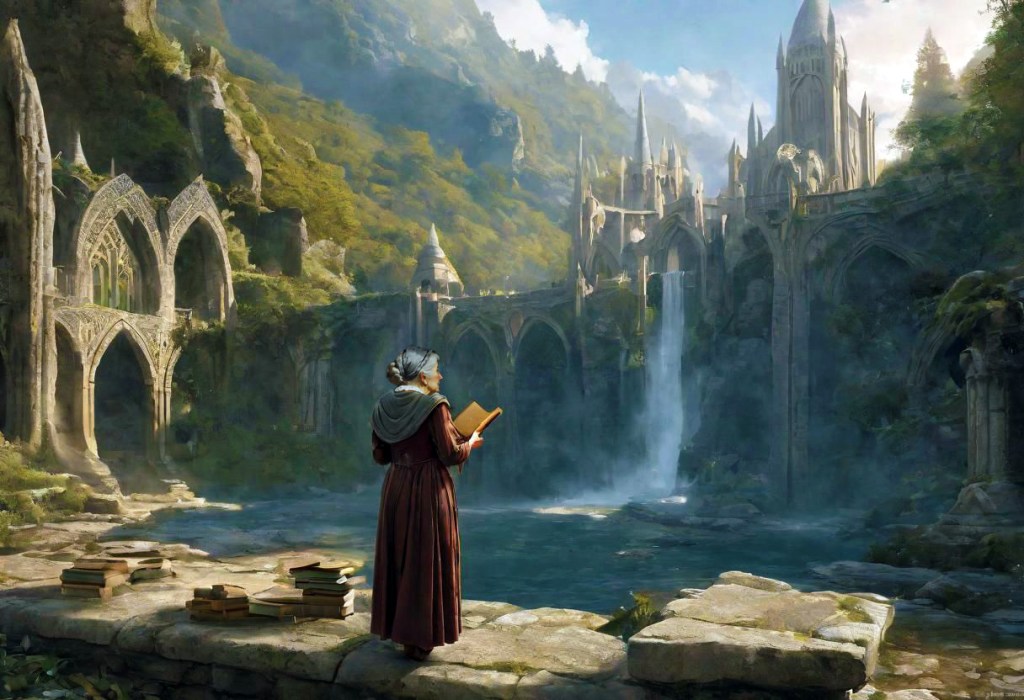
So how could Elrond play any role at all then if elves are entirely gone? I speculate that Tolkien would have created a character enamored with Elvish lore who even perhaps has books with lost lore written by Elrond if not living in the ruins of Rivendell. That gives a reason to visit Rivendell, a means of Elrond adding to the tale, and gives Tolkien a chance to expound on his beloved Elf legends.
And it could be key in the heroes (whoever they might have wound up being) unlocking the secrets they will need to defeat the new shadow.
6. No Ents. No Entwives. These are the walking, talking trees who it is explained lost their wives. I thought at one point I had something here and we could revisit the Ents, but…
Letter to Naomi Mitchison dated Apr 25, 1954: “I think that the Entwives had disappeared for good, being destroyed with their gardens in the War of the Last Alliance…when Sauron pursued a scorched earth policy and burned their land…Some, of course, may have fled east, or even have become enslaved…If any survived so, they would indeed be far estranged from the Ents, and any rapprochement would be difficult.“
7. Someone humble and unlikely will play the most important heroic role.
Letter to Sir Stanley Unwin dated Sep 14, 1950: “A moral of the whole…is the obvious one that without the high and noble the simple and vulgar is utterly mean; and without the simple and ordinary the noble and heroic is meaningless.”
Tolkien wouldn’t likely bring back Hobbits, but he could still create a humble, lovable goofy character who has to be brave to win the day and whose adventures bring them to the noblest and mightiest.
8. It could be that we see Men transformed physically into Orcs, or at least an effort to make that so.
This might be too dark even for the Professor. Yet it fits with Melkor’s original intentions to distort Iluvatar’s plan for Men and the nature of all that has come from Melkor’s scheming and influences through the centuries.
Letter to Forrest Ackerman June 1958: “The Orcs are definitely stated to be corruptions of the ‘human’ form seen in Elves and Men.”
Letter to Christopher Tolkien May 6, 1944 (referring to World War 2 still being fought): “…we are attempting to conquer Sauron with the Ring. And we shall (it seems) succeed. But the penalty is, as you will know, to breed new Saurons, and slowly turn Men and Elves into Orcs.”
If anybody’s turning Men into Orcs, it’s Herumor. Given the groundwork here then, he’s learned that craft from Sauron’s lore. And it’s probably how he’s waging war on the high seas such that those ships are missing.
Ships like the one Borlas’ son was on.
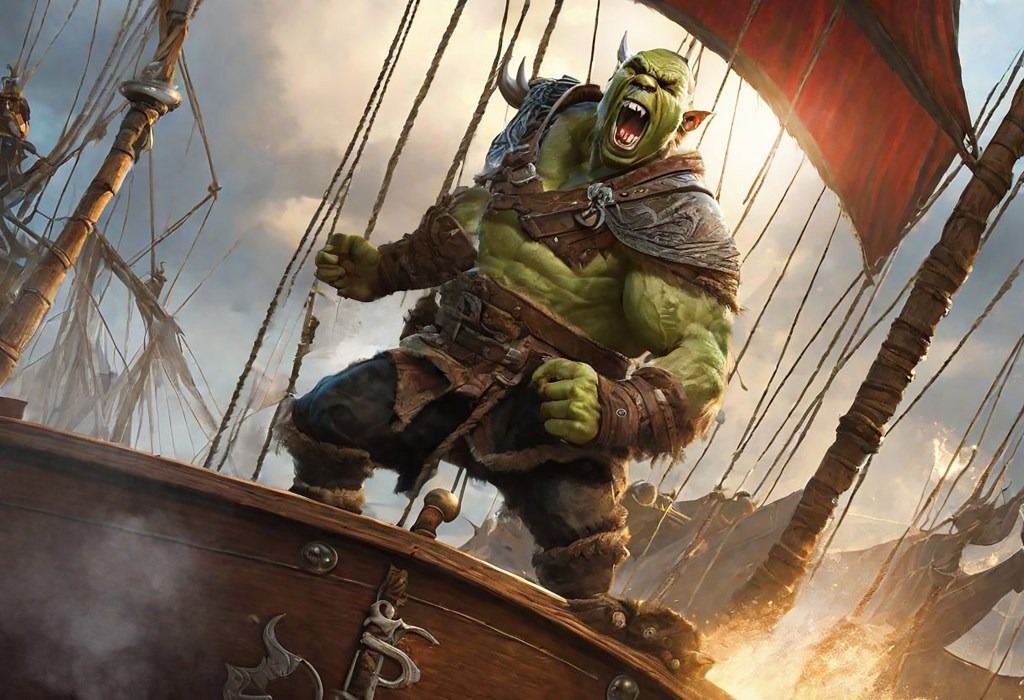
9. The New Shadow mentions missing ships, and now we have Herumor and his dark lore from Sauron’s days potentially building him a navy of Orcs who used to be Men, fed by a growing secret cult convincing young restless men they actually want to be Orcs.
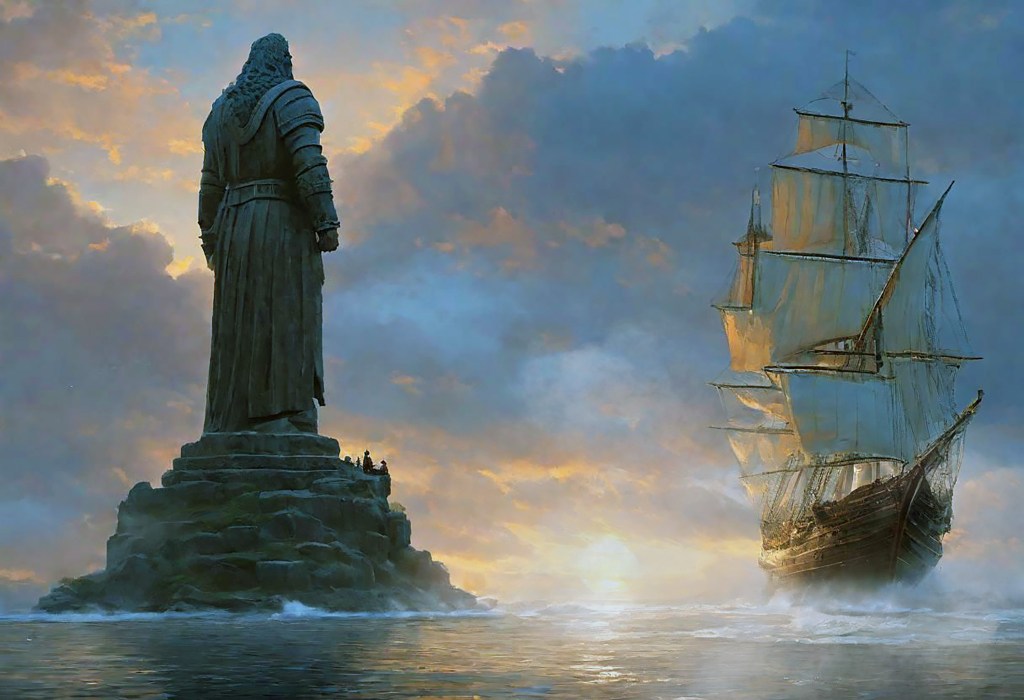
So I’m saying that we could have gotten ORCS AT SEA in naval battles with dragons.
10. There would be a supernatural object
Tolkien used the Silmaril jewels and a terrible oath regarding them to drive events in The Silmarillion. He used the Arkenstone to drive events in The Hobbit. He used the One Ring to drive events in Lord of the Rings. In tracing his creative process writing LOTR, he definitively looked for a clear thread to tie his many varied elements together, easily made manifest in objects like this. I don’t know why he would break from that pattern in a sequel.
Since he’d already used jewels and gold, I imagine he would use something silver. What else is incredibly precious other than jewels and gold? I’m speculating, so it’s as good a choice as any.
But a silver what?
11. The supernatural object core to the story would be tied to the lore of The Silmarillion
In the very beginning of The Silmarillion, the God-character, Iluvatar has his created gods (The Ainur) sing with him and for him. Melkor, the original dark lord and Sauron’s future master and inspiration, deviated from the musical themes set by Iluvatar. Melkor wanted to do his own thing, and that was the original sin in the universe Tolkien created. Iluvatar corrected Melkor’s deviations by singing a new musical theme. The big deal here though, was that everything they were singing actually became manifest.
Their singing created the world we know from all of Tolkien’s stories, as well as the entire history that would play out in it. It turned out that Iluvatar’s part of the song created Elves and Men. That was his plan all along, it seemed. And Elves were to be temporary, required to fade into the west at some point in the future to make way for the Age of Men.
So Men were very important to Iluvatar’s plan of creation. He had a purpose for creating them, one that corrected whatever sins Melkor was introducing.
Letter to Robert Murray dated Dec 2, 1953: “The LOTR is of course a fundamentally religious and Catholic work; unconsciously so at first, but consciously in the revision….the religious element is absorbed into the story and the symbolism.“
Letter to W. H. Auden dated May 12, 1965: “I don’t feel under any obligation to make my story fit with formalized Christian theology, though I actually intended it to be consonant with Christian thought and belief.”
This perspective tells me Tolkien might very well have asked himself what was the original purpose of Iluvatar creating all this for Men and for indeed creating Men at all? In Christian belief, it was to commune together with humanity and for them to make a free will choice to do so with God. I believe Tolkien’s faith would have informed the decision on this supernatural object’s nature.
Iluvatar created Men to commune with him. Iluvatar does so in song; there’s precedent for that. The Ainur didn’t really have a choice. Men do.
I believe the object would be a musical object, one allowing its player to sing (excluding pipes and other wind instruments). I assume then, a silver lyre.
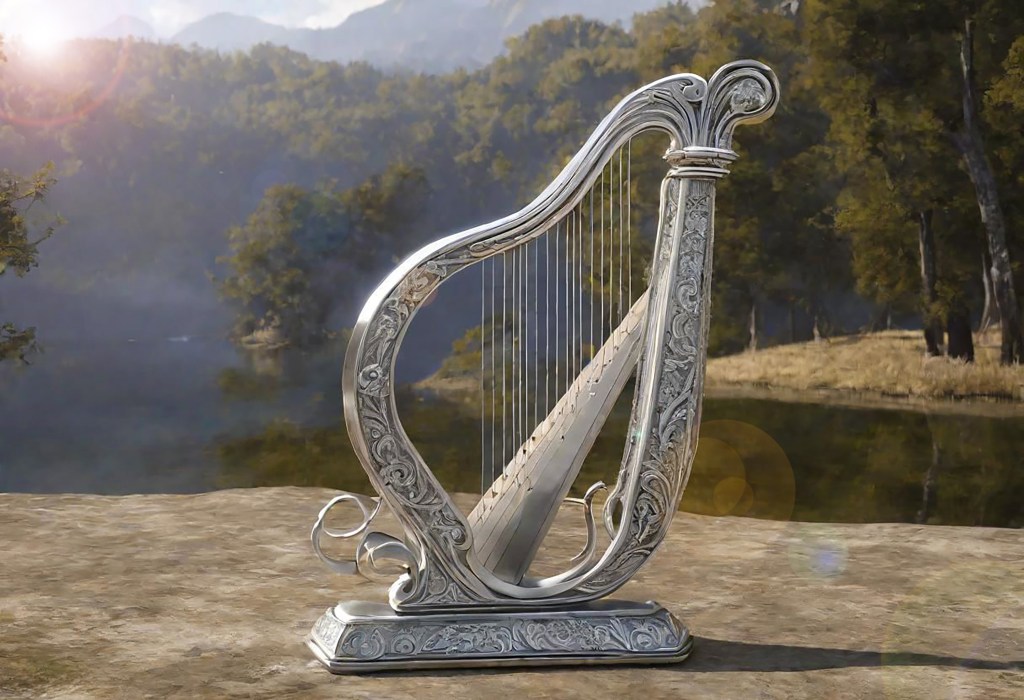
12. The silver lyre would be necessary to resolve the almost certain fall of Men under their own efforts.
Letter to Miss J. Burn dated Jul 26, 1956: “No, Frodo failed. It is possible that once the ring was destroyed he had little recollection of the last scene. But one must face the fact: the power of Evil in the world is not finally resistable by incarnate creatures, however good.”
Sarumon and Gandalf were both sent to assist in the fight against Sauron, but Sarumon was a disaster in this. Gandalf died in the process and earned his rest. I don’t believe Tolkien would have provided for another supernatural assistant like that in resolving events in The New Shadow. Given that the silver lyre is now assumed to be critical to the story, I’m imagining Iluvatar sent this object as the aid.
Accordingly, the creator god has provided the means for Men to help themselves. In line with Christian belief then, it is up to Men to finish the job.
*
So whats the story of the New Shadow?
Tying all this together, I envision a small and disparate group of human characters (embodying natures of Elves and Hobbits perhaps, though physically Men and Women) must undertake a mission to find the silver lyre as their only hope in turning the tide against Herumor and his growing Dark Tree cult. Raging battleships crewed with screaming Orcs are pillaging and plundering port towns all across Middle Earth, establishing beach heads. Youths are disappearing from every village. Almost certainly, Borlas goes along (and possibly Saelon). Word spreads that Herumor has recruited dragons, who fly along with his Orc fleets.
The new fellowship makes their way to the ruins of Rivendell to consult with the old scholar there, in hopes of learning the lyre’s whereabouts. Secrets are revealed, and a betrayal occurs, though not from the one we expected.
As Herumor’s dark forces spread, seemingly growing beyond imagination, vile beasts from older days awaken to serve a dark lord, or at least one who deems himself such, one last time. Terrible fates befall hapless towns who’d grown slothful and fat in the long peace. It seems no one has an army or navy able to stand against the black tide of evil sweeping over the lands and seas.
But the lyre is found, and its music summons mighty fighting ships, though no magical beings to crew them. It is up to the least of the new fellowship to inspire and recruit those who will sail these ships.
A mighty battle is fought on the roiling seas, flaming dragons and screaming Orcs versus mystical ships and desperate Men and Women. At the darkest hour, everything turns because of the courage (and potentially the sacrifice) of the most precious of the new fellowship – one who we thought might become a King or Queen. It was that selflessness that redeemed Men in their Age.
The battle is won. Herumor and his fleets are destroyed as the very sea rises up like a man to swallow them whole.
And in the very end, there is music as Men sing to the skies.
*
Anyway, I hope you liked this musing and speculation. What a great experience this has been. I’d love to know what you think – and your own ideas about where the Professor would have taken all this.
Till next time,

 Grailrunner Publishing