If you’ve never played Salt Mystic before, take a quick diversion here and see what the fuss is all about. You can pick up the free basic rules there or take the deep dive with the Sourcebook And Core Rules. Simply said, it’s a terrain-based wargame played on a tabletop with cards, dice, and some basic elements representing terrain. It’s a little more “beer and pizza” than most wargames out there, and is quick to pick up and just start bashing each other for a Friday night’s delight.
One type of card (and a core piece of the lore) is called the “Tomb Trapper”. Take a look at the respective entry from the Sourcebook below.
So in summary, this is a type of character you can have on your tabletop in the game who uses the goodies in that satchel to build amazing traps that lock down your opponent’s characters and give you an edge. That little dial apparatus in the sourcebook entry’s image is a key tool – set the proper code and programmable matter oozes out and builds the desired trap mechanics.
I wish I could pick one of those up somewhere, would love to see it work (and have a few people in mind for it)!
Anyway, one comment we’ve gotten from folks is they want more options in traps and flexibility in using Tomb Trappers on the tabletop. The cards come with default traps designed to be tough without being impossible and easy to set up & execute using only a small number of dice. This is simulating a situation where the trapped character card is locked down in place and struggling to free themselves. With some skill and/or luck, they just might do that!
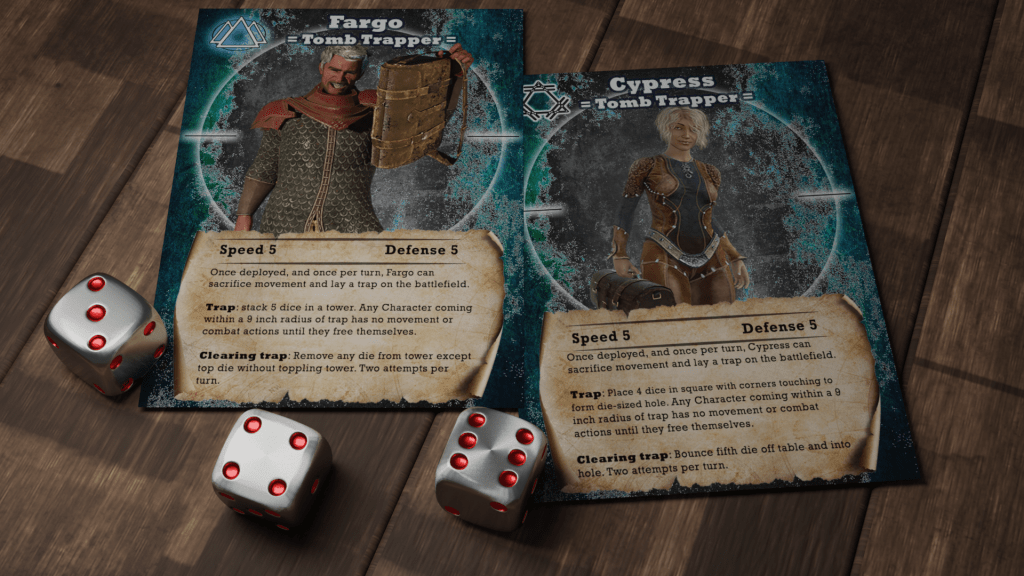
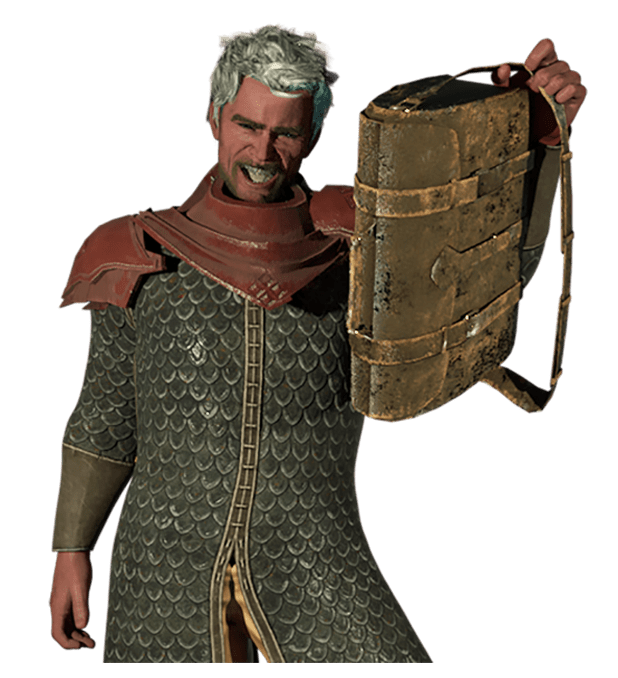
Here’s Fargo, Tomb Trapper for the Mountains faction:
Once deployed, and once per turn, Fargo can sacrifice movement and lay a trap on the battlefield.
Trap: stack 5 dice in a tower. Any Character coming within a 9 inch radius of trap has no movement or combat actions until they free themselves.
Clearing trap: Remove any die from tower except top die without toppling tower. Two attempts per turn.
And here’s wily Cypress, from the Salt Flats:

Once deployed, and once per turn, Cypress can sacrifice movement and lay a trap on the battlefield.
Trap: Place 4 dice in square with corners touching to form die-sized hole. Any Character coming within a 9 inch radius of trap has no movement or combat
actions until they free themselves.
Clearing trap: Bounce fifth die off table and into hole. Two attempts per turn.
But hey, let’s hack this! Let’s break out of the default traps and deployment mechanic to bring a new level of play to the table.

Pre-staged and hidden traps
The whole point of the Salt Mystic game is to tell an engaging story. There’s always a narrative framing the battle, and the challenges and dynamics of interaction between the terrain and the people IS the engine driving everything. So let’s make the terrain more interesting using the Tomb Trappers.
Imagine a grid on the tabletop running 1 – 12 horizontally and 1 – 12 vertically:
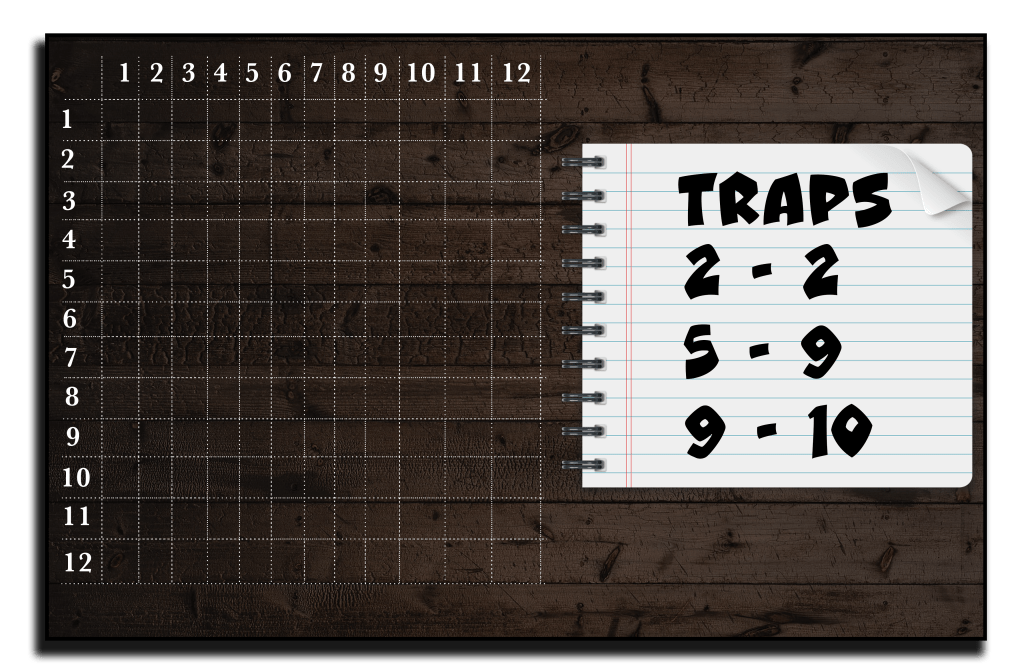
We’ll read rows, then columns when referencing these, and we’re picking 12 so that two 6-sided dice can reference them in a solo game. In this example, a player has chosen three locations for hidden traps during setup, prior to gameplay. The locations are written down and concealed so no one can change their minds later.
The key difference between this deployment mechanic and the default one obviously is that the opposing player can’t know where the traps are and thereby avoid them. Anybody moving is in jeopardy of getting trapped. Just call out the trap when you’ve lured your opponent into the right spot and grin deviously as they struggle to free themselves!
Considerations:
-Agree up front on how many traps are allowed, and whether sacrificing a card from the starting battle deck is necessary for each trap.
-The Wolfpack Mode for solo Salt Mystic game play requires a roll of two 6-sided dice each turn for the phantom player anyway. To simulate the phantom player having pre-staged traps, check for a trap each time that initial roll contains a “1”. Roll against the grid to determine the location and compare it to where your characters are located.
Example:
The phantom player’s Wolfpack turn roll was 1 and 5. That roll was required anyway, since that’s how the phantom player’s deployments and moves are determined in the Wolfpack rule set. Since there was a 1 on at least one of the dice however, additional rolls are needed to check for traps. First roll: 4 + 7 = 12, Second roll: 3 + 6 = 9. We reference rows, then columns, so there is a trap at row 12, column 9. Any friendly characters in that grid square are trapped. Trap locations change each turn (how devious!).

Alternate traps
You can really let your imagination run wild on this one! Basically, anything your wicked little mind can conjure here is fair game. Consider the spirit of the traps though:
- Traps should be difficult, but not impossible
- Easy to set up & execute using only a small number of dice or other readily available supplies
- Should require a little luck, a little skill
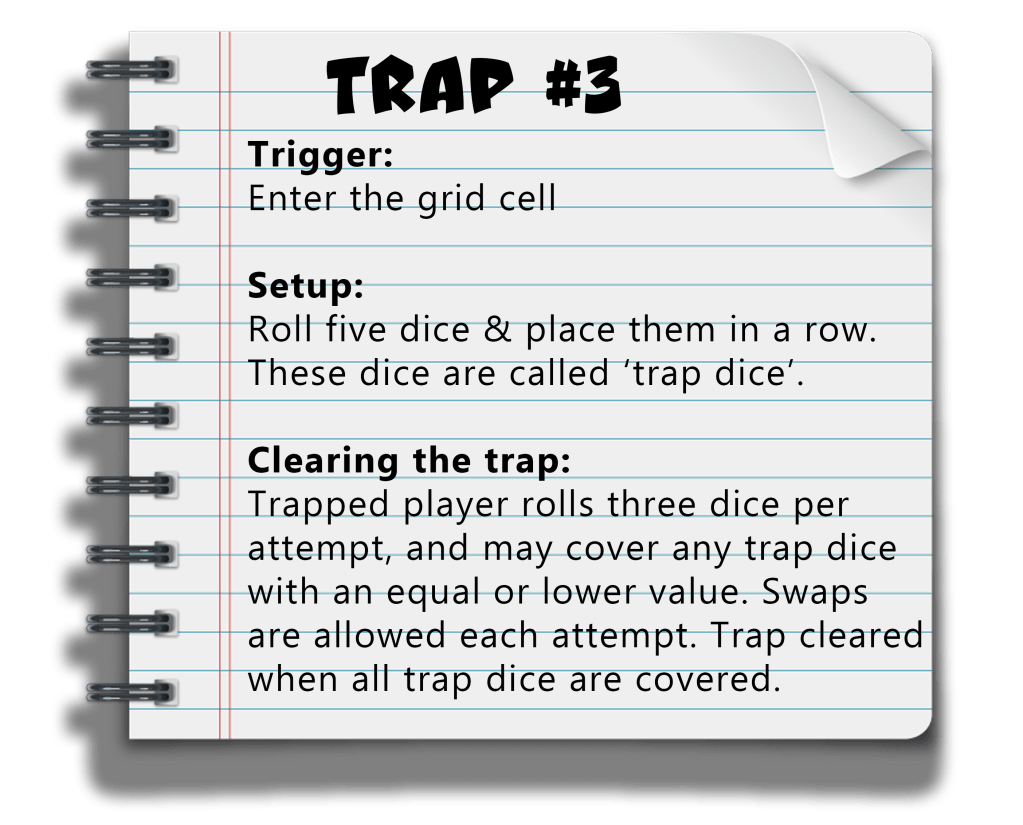
Design a trap by answering three questions:
- What triggers your trap? Example: approach within 9 inches, etc
- How should the trap be set up on the tabletop?
- How does the opposing player clear the trap?
Feel free to enhance the narrative a bit by outlining a little more detail to the hideous nature of your invention: (programmable matter collapses into quicksand, massive pincers the size of a horse spring from the ground, the ground tilts into a spiked pit, and on it goes…)
Let’s try it. Here’s what happens should the opposing player enter the respective grid cell per hack number one above – and up springs a cloud of geometrically poisonous vapor contained in a thin film that pops if he moves.
Considerations:
-Agree up front on the deployment mechanic as described either in the default card text or in hack number one above
-In the case where you’ve designed multiple custom traps, agree up front on how to select which trap has been sprung
So let us know what you think. Loads of potential here with the Tomb Trappers.
While I was writing this, we talked about maybe hacking the core rules a bit and staging an unbalanced scenario where one character (any card with an Expertise stat) goes up against an opponent at slightly reduced strength (10 less cards in the starting battle deck) – trying to escape a building entirely loaded with traps (at least 6). Objective would be to get to a specific spot on the table without dying. Seems like it would be a hoot if the opposing player is required to deploy all their Vehicles and Vehicle Attachments out in the open so the lone wolf can try and take them.
Here’s the art and flash fiction that inspired that:
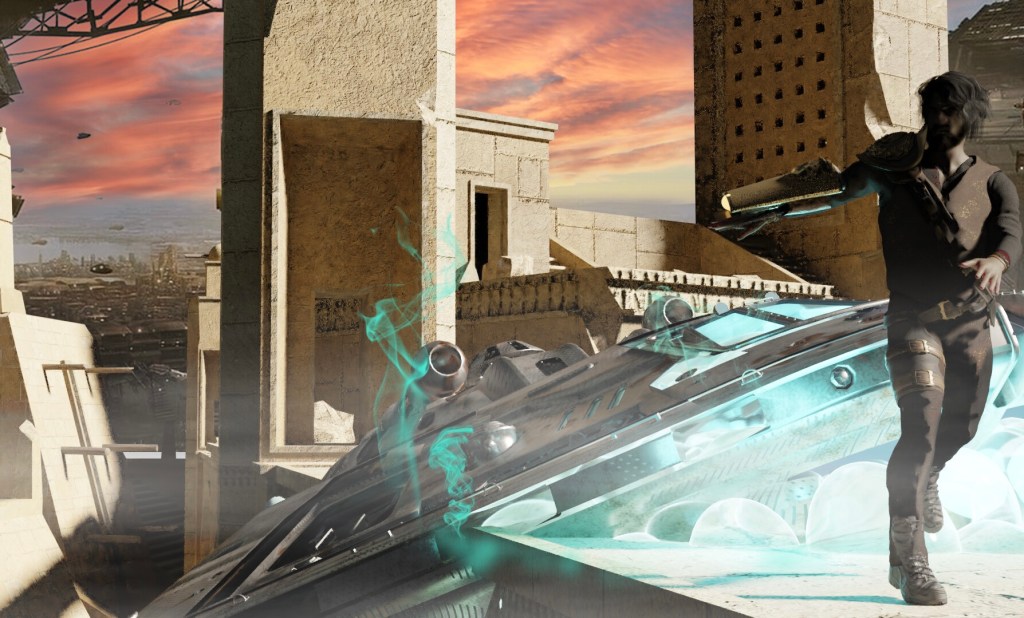
A carbine gunslinger on the run. A Dirt Wraith rises, ghost-like through the very walls. Its quantum foam bubbles sizzle as loud as a waterfall. They knew he was here all along. She lied. And that will cost her. They’ll have traps all in the building, every corridor. Watchmen are patrolling the streets below. If there’s a Dirt Wraith, then maybe they’ll have something deadly down there he can seize and turn against them. Time is short, and they are many. He’ll have to be fast and unpredictable.
What would you do?
Till next time, guys. We’re always looking for feedback and ideas. Shoot them our way. And Merry Christmas!


 Grailrunner Publishing