You likely know if you’ve been here at Grailrunner before that we obsess over the creative process. In fact, the whole point of the company, this site, and essentially anything we’ve produced is to dissect, pick apart, rewire, engineer, and shove ammo clips into the imagination. It’s in the logo, man.
Dreams are engines. Be fuel.
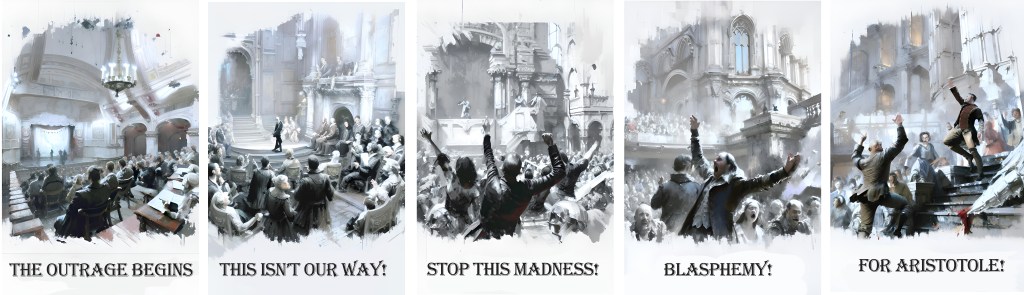
Anyway, there was an interesting riot at a theater on February 25, 1830 in Paris that has a few things to teach us about how to break ground in creative work. And as creators right now, with the looming and worldshaking onset of AI disrupting every outlet of creative work and threatening that age-old security we were all told that computers can’t create, it’s more important than ever that we get really, really good at doing new things.
New things, man. New things. Now AI can’t really do that.
What is the context on this Hernani thing?
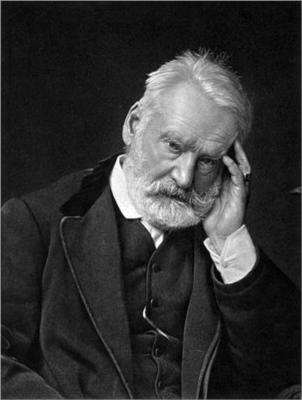
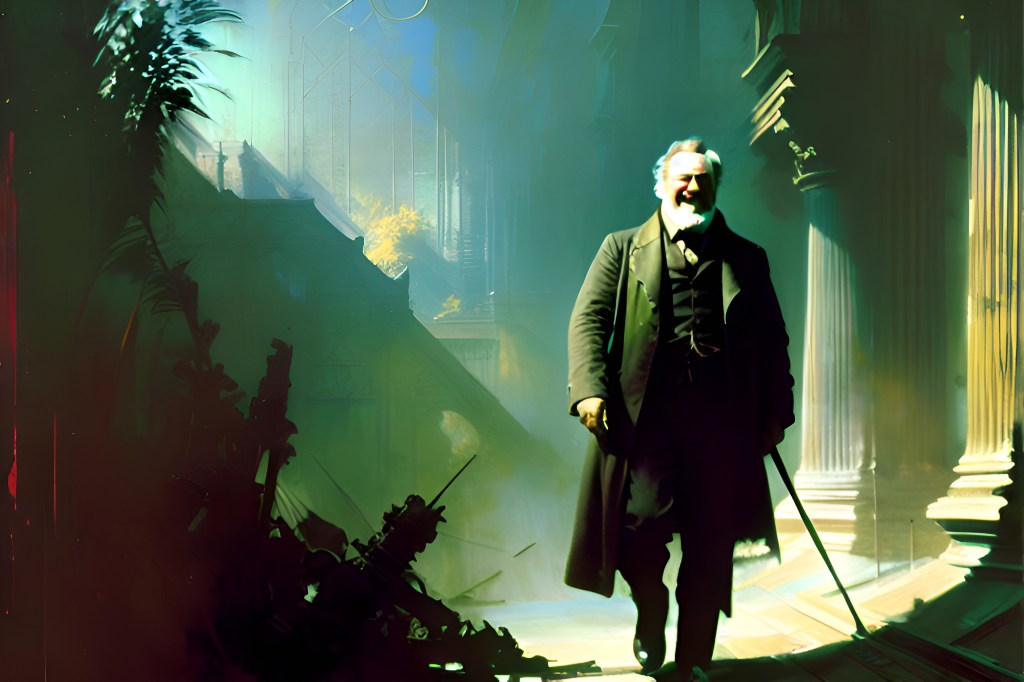
Victor Hugo wrote Les Miserables and the Hunchback Of Notre Dame. That’s where you might know him from.
This guy:
He was a playwright too though, and in his day the structure and content and expectations of plays were widely agreed and rigid. You didn’t mess around with these things if you wanted to be treated seriously and not look like a disrespectful clown. After all, Aristotle analyzed storytelling in tragic drama at an almost divine level 2,000 years before in his Poetics and designed the perfect tragedy, defining the unities:
- Unity of time: the action of the play must unfold over a single day
- Unity of place: the action must take place in a single setting
- Unity of action: the play should comprise only one plot
If you abided by these principles with your play, which was the norm for hundreds of years in Europe, then Aristotle’s intense study of impact and memorability and propriety assured you that you had a well-constructed play. Why deviate from that – you think you know better than Aristotle?
Another non-negotiable was the clear definition of genre: comedy or tragedy. More than just branding, this was crucial to the audience’s interpretation of your work. Is it supposed to be funny, and so pratfalls and misunderstandings and goofy idiots abound? Or is it supposed to be sad, and so have larger-than-life people make key mistakes based on their natures and lose it all?
And finally, you didn’t show things that were grotesque, things that were compulsively ugly or distorted. It was just improper and undignified.

Oh no, what did Victor do?
Well, he wrote this. It’s the preface to a play called Cromwell. It pissed a lot of people off and set the stage for the riots to come later. A few tastes of his blasphemy:
“But the age of the epic draws near its end. Like the society that it represents, this form of poetry wears itself out revolving upon itself. Rome reproduces Greece, Virgil copies Homer, and, as if to make a becoming end, epic poetry expires in the last parturition. It was time. Another era is about to begin, for the world and for poetry.”
“…the grotesque is one of the supreme beauties of the drama.“
“‘But,’ the customs-officers of thought will cry, ‘great geniuses have submitted to these rules which you spurn!’ Unfortunately, yes. But what would those admirable men have done if they had been left to themselves? At all events they did not accept your chains without a struggle.”
Victor was saying that the unities of time and place arbitrarily handicapped the dramatic potential. Check pages 15 and 16 for his blast on unity of place – it being silly to think so much important action would happen in this one spot, and what blah-blah is needed to tell the audience what’s going on elsewhere! He continues on pages 16 and 17 destroying unity of time – it being equal nonsense to expect important events all to happen in a day.
And wow, is that one something Hollywood sequel writers should read!
In summary, he felt the rigid genre conventions of comedy and tragedy were limiting his ability to express wide ranges of emotion and experience, the unities were unnecessary constraints that forced silly adjustments, and, most importantly, he didn’t care for the convention of avoiding the grotesque. He called for a new genre to explore the essentials of life, with beauty and ugliness, good guys and monsters, gold-laid parlors and miserable alleys.
“These rules, man! They’re cramping my style!”
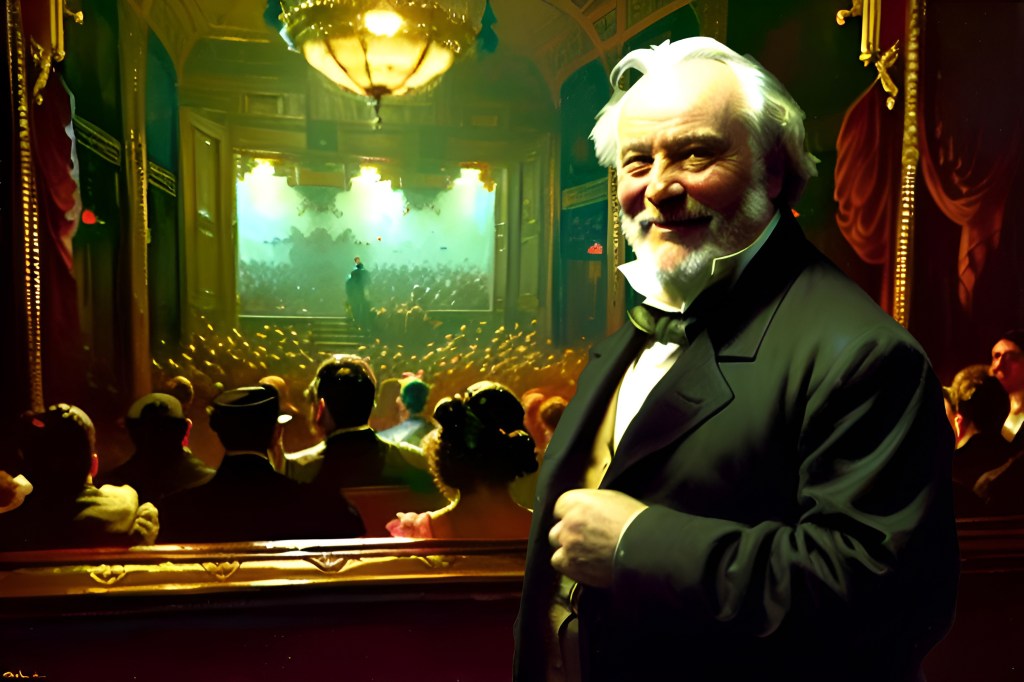
What was Hernani then?
Well, Cromwell was too big in scope to even be staged. It’s 400 pages long and at one point needs the British parliament to enter the stage. His next attempt got banned. Then he wrote Hernani, which censors possibly felt was too ridiculous to bother with.
Plot? Two noblemen and a mysterious bandit are in love with the same woman. A conspiracy is in play, and things get dark ending with a wedding and poison.
Rules broken? Well, the story unfolds over 6 months at various settings. That was naughty of him. You weren’t supposed to show death, violence, or intimate scenes. Hernani opens in the lady’s bedroom and closes with three suicides. Equally naughty. You were supposed to adhere strictly to your chosen genre: comedy or tragedy, but he incorporated farcical dialogue and had a king hiding in a wardrobe. Language should have been clean and high-minded, but he included lines like:
“Is this the stable where you keep the broomstick you ride at night?”
You weren’t supposed to let your lines of a sentence from one line of verse to another, but that happened too. Characters were supposed to be one-note caricatures generally who didn’t change, to represent some trait or concept, though he fleshed them out far more than was typical and allowed transformations (such as Don Carlos becoming a good emperor). And he used stage directions like a madman, which was also strange.
So this happened:
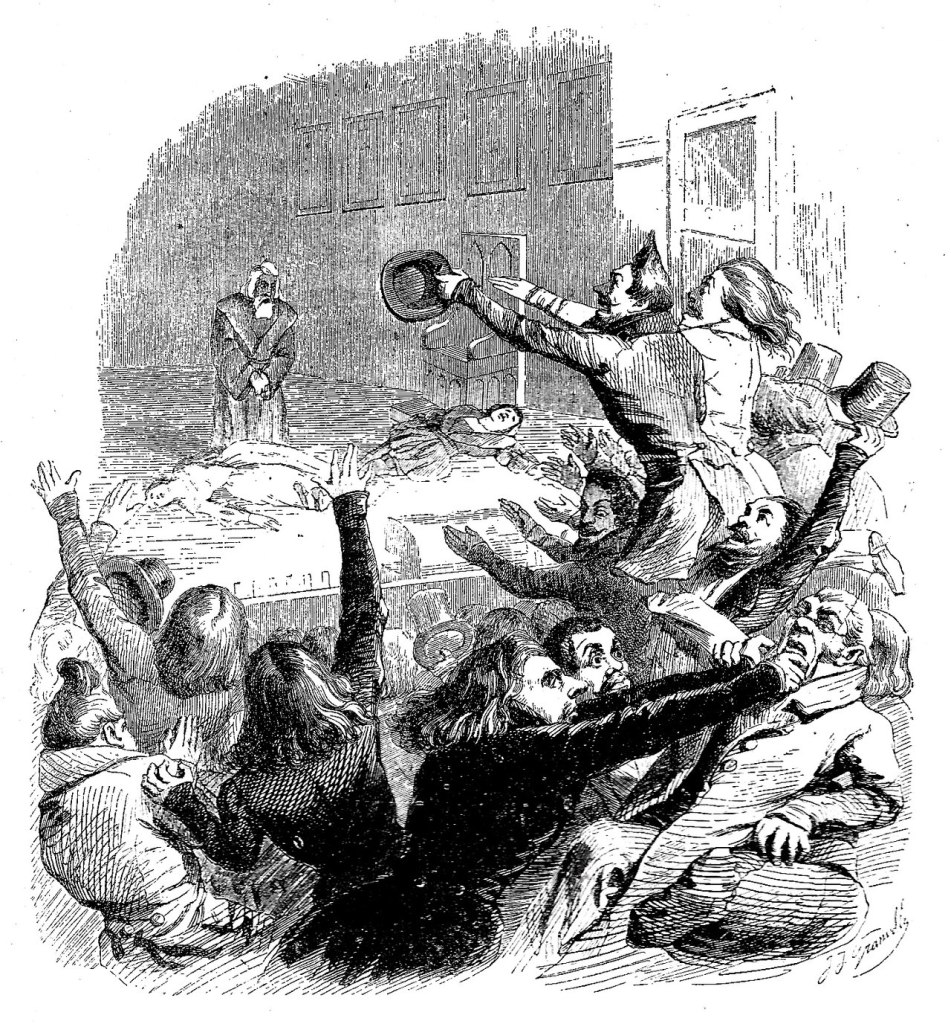
Why was there a riot though?
These Parisians had been through revolutions and guillotines, deaths and restorations of kings, and were reading on a daily basis about massive changes in nations such as Italy and Germany where entire systems of government were being born while others faded. France was still in turmoil politically and censorship was a powerful tool to shut down free thinkers and radicals. Breaking rules in art was linked to breaking other rules, perhaps those tied to abiding by norms set by those in charge.
Today in a politically split country we might feel threatened by those who question gender norms or who bend traditional family structures because we fear what a loss of those foundations might mean for the country’s future, what impact it might have on our children. You see how mad everybody gets about that every day on Twitter. Here in Paris, it was perhaps as scary for them.
In fact, many of those same rioters a few months later in July ousted King Charles X and replaced him with “Citizen King” Louis-Philippe.
Why is this a big deal?
My point today is that it was risky and insightful for Victor Hugo to see these literary conventions as the limiting factors they were and to dare to break them. And when he broke them, it wasn’t for shock value as so many charlatans today offer instead of talent. Victor didn’t break the rules because he was a renegade, he felt they limited his storytelling.
He kept his eye on the point behind what he was doing: telling an impactful story. Maybe Hernani’s plot is nonsense, but that wasn’t what he wanted anybody to take away from it anyway. Read the Cromwell preface. He wanted a new genre free of limits.
Impressive. Impressive to even notice the limits. How many conventions do we abide by and not even notice. Are our prison walls invisible?
What does this have to do with AI ?
AI writing tools like ChatGPT are not going away. They’re seeping into our marketing copy, our kids’ essays, blog and social media posts, even podcast scripts. As creators, there is one important fact behind any AI-based technology like these which can be an asset for us. They are trained on data sets and those data sets include conventions and limitations like those Victor Hugo raged against.
Ask ChatGPT to write you a story about King Arthur or a D&D scenario and it’s painfully generic. We as creators are in an arms race then, as those tools get better. We have to get better.
Let’s go fight our own Hernani then.
Till next time,

 Grailrunner Publishing