I found a pen & ink masterclass in an old antique mall!

Last week, I took a road trip down the Mississippi Blues Trail out of Memphis. It was incredible, and I might write that one up as well. Seriously, we ate at the Hollywood beside the piano where Mark Cohn was inspired to write “Walking In Memphis”, saw BB King’s famous Lucille guitar, and walked Dockery Farms where the Delta Blues were born. Amazing trip.

The only reason I mention it now though is we were headed back on a route through Little Rock and back to Kansas City when we stopped at an old antique mall. If you’ve hung around here at Grailrunner before, you well know how much we’re into old bookstores and the forgotten but mind-expanding wonders you can find on dusty old shelves. And man, have I got one for you today!

This guy here. Smash the image below for a short video showing what I mean.
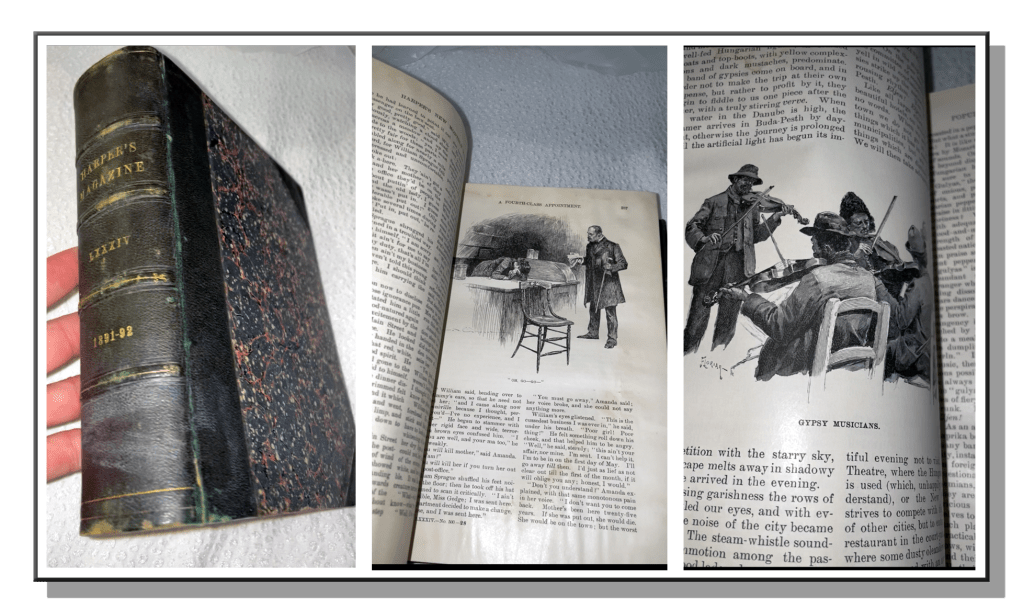
It’s a hardback compilation of Harper’s Magazines from 1891 through 1892. Harper’s is a monthly magazine covering culture, finance, literature and the arts that was launched in 1850 and is still continuously published today. I didn’t have any particular fondness or interest in that magazine so much as just seeing what people read about in the 1890’s. I’m also a little obsessed with the 1893 Chicago World’s Fair, also known as the Columbian Exposition, and I was hoping there would be a mention or two in here, and there was.

That’s why I first picked it up.

As I flipped through the pages, I was stunned by the quality and craftmanship of the pen & ink and engraved illustrations inside. I use the word carefully…stunned! Some of the artists were familiar to me, but for many of the pieces inside, I couldn’t even tell who the artist was. Credits weren’t always given, and signatures were too stylized to read.

I used ChatGPT to analyze some of the more interesting works to research the artist when it wasn’t obvious, and it was surprisingly useful for that. Often wrong, but with some caution and follow-up research, you can usually zero in on a likely name.

Thought I’d share some of these beauties with you today, and maybe introduce you to some wonder-workers of the past who could summon sparkling magic with a simple fountain pen. I’m offering 20 vintage illustrations here for admiration and craftmanship study.

Care to join me?
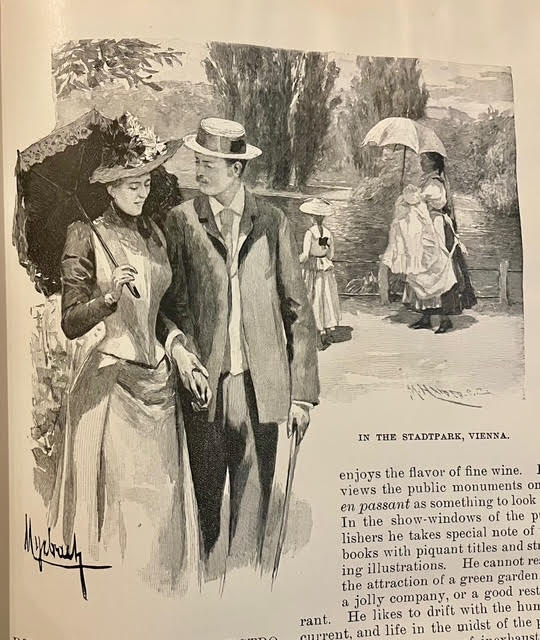
By Felician Myrbach

Myrbach was an Austrian-born artist and leading illustrator of the 19th century. Also acting as director of the Vienna Academy of the Fine Arts, he was known for detailed illustrations of military scenes and historical costumes. This image struck me with its sense of depth, balance of light and shadow, and elegant washes. Looks like it’s coming out of the page.
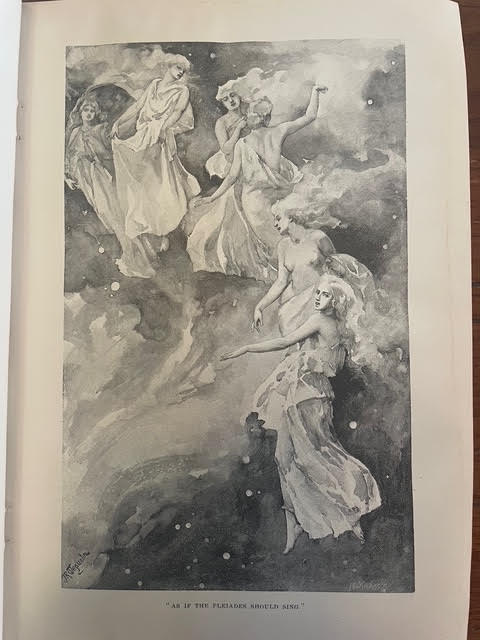
By John Reinhard Weguelin

I loved the subject here, and the haunting feel of it. The artist was J.R. Weguelin, who was primarily known for his dreamy watercolors and oil paintings, though he supplemented his income by slumming to draw masterpieces like this one for magazines.
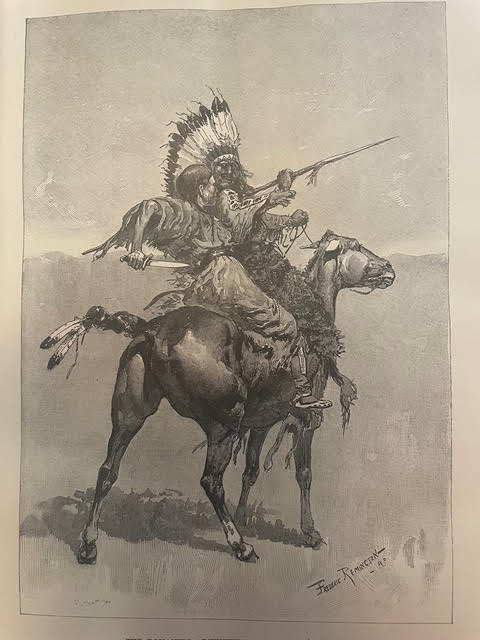
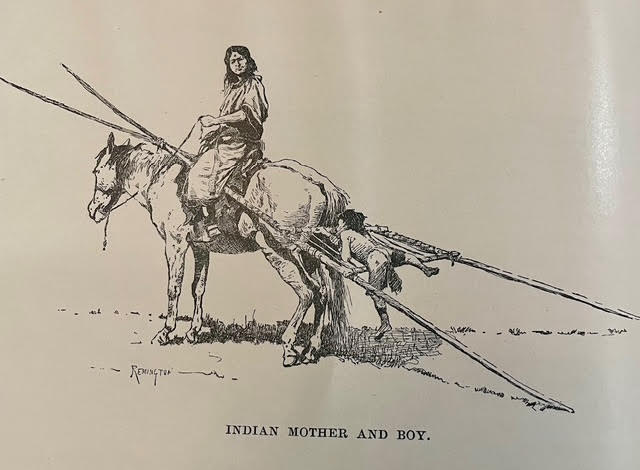
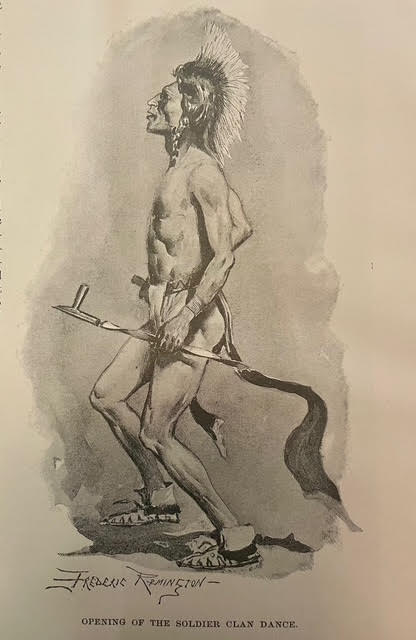
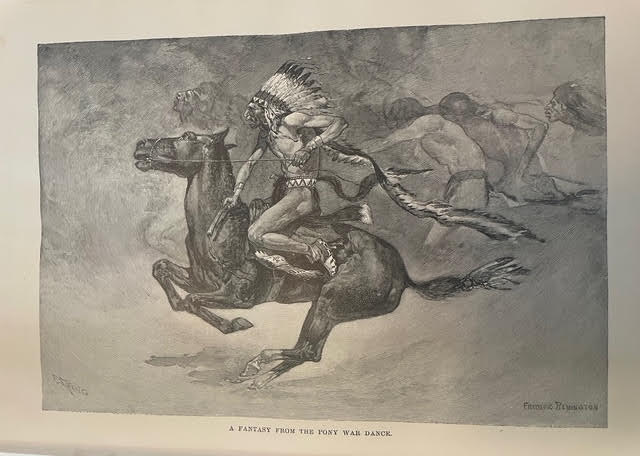
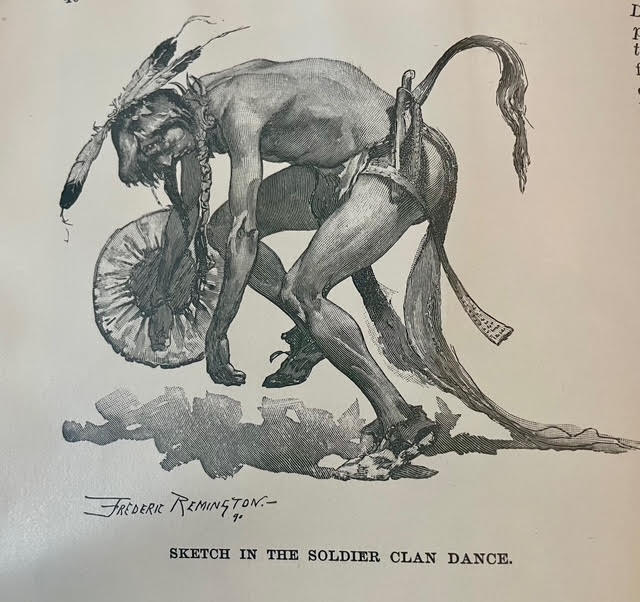
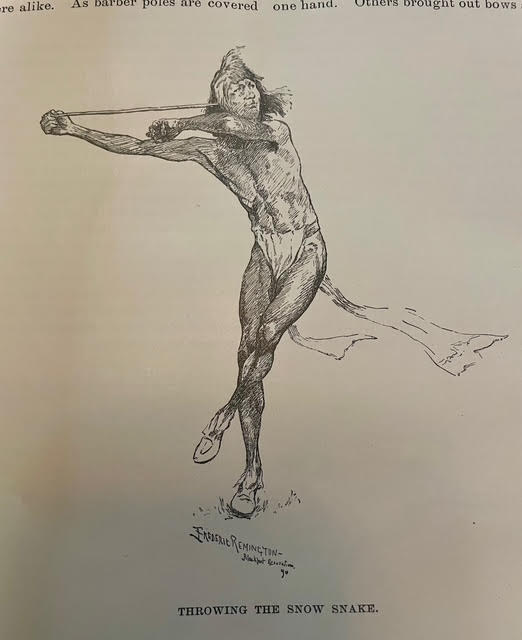
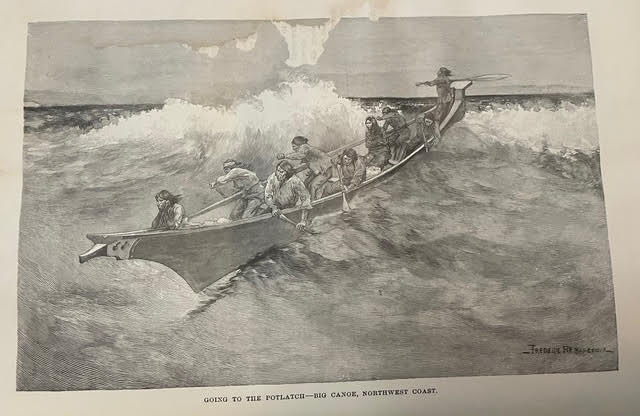
When I came across a simple article about Native Americans, I couldn’t believe I was seeing an original Frederic Remington illustration there just as a picture for a magazine. Then another. And another. These seven images are all by Remington, and they’re all beautiful. He was known for paintings and drawings mainly depicting the American west.
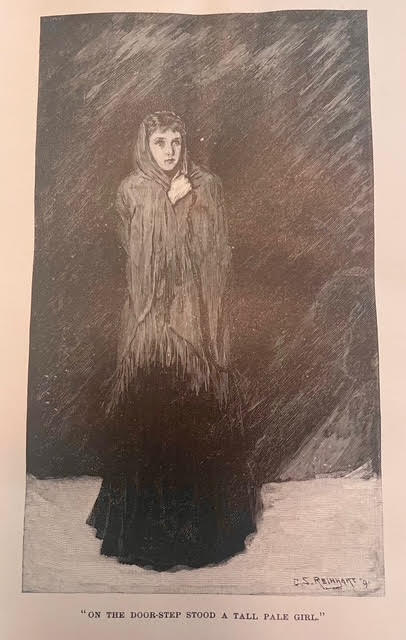
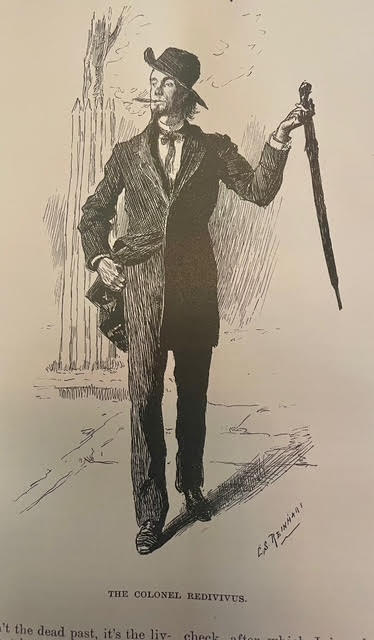
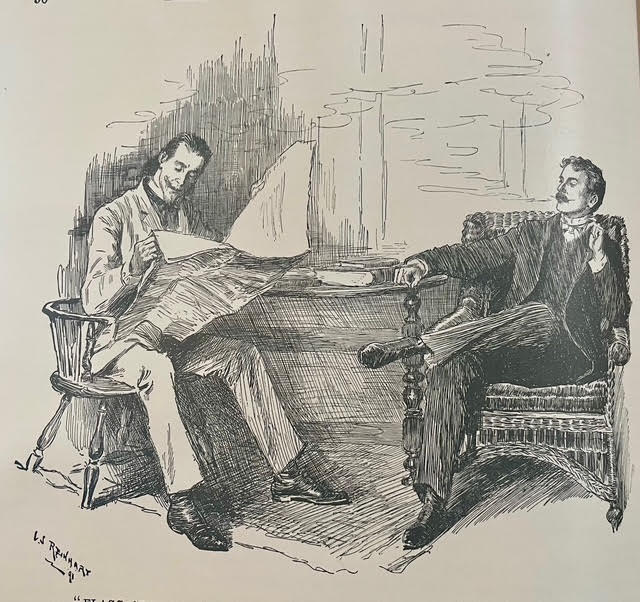
These three were all by Charles Stanley Reinhart, an American painter and illustrator who was also responsible for artwork on certain silver certificates commissioned by the U.S. Bureau of Engraving and Printing said by many to be the most beautiful monetary designs ever produced by the United States. That last image, of the two guys sitting and smoking is an absolute master class in pen & ink linework. I struggle in my own drawings to avoid outlines, to use contrasting light and dark for the silhouettes, and to choose the right directions for hatching that don’t distract from the shapes and mood. Reinhart entirely nailed it with that one.
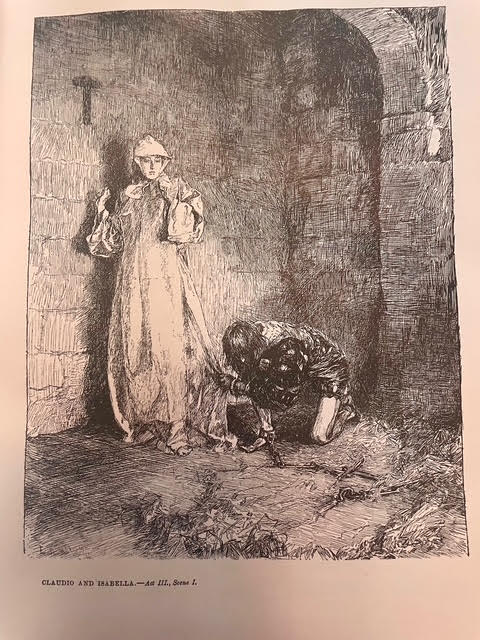
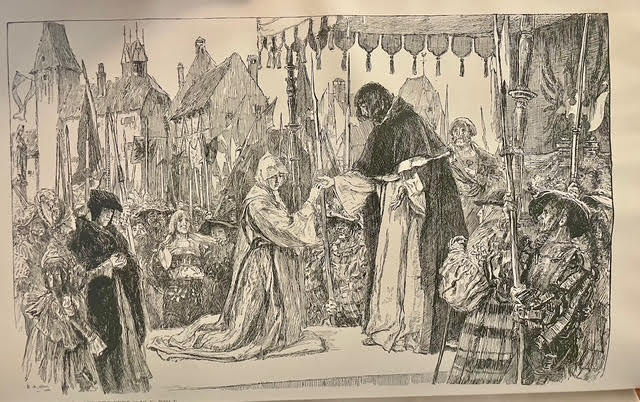
These two were by Edwin Austin Abbey, an American muralist, painter and illustrator known most for Victorian and Shakespearean subjects. Perhaps most dear to our hearts at Grailrunner, Abbey was the artist behind the famous “Quest and achievement of the Holy Grail” murals at the Boston Central Library.
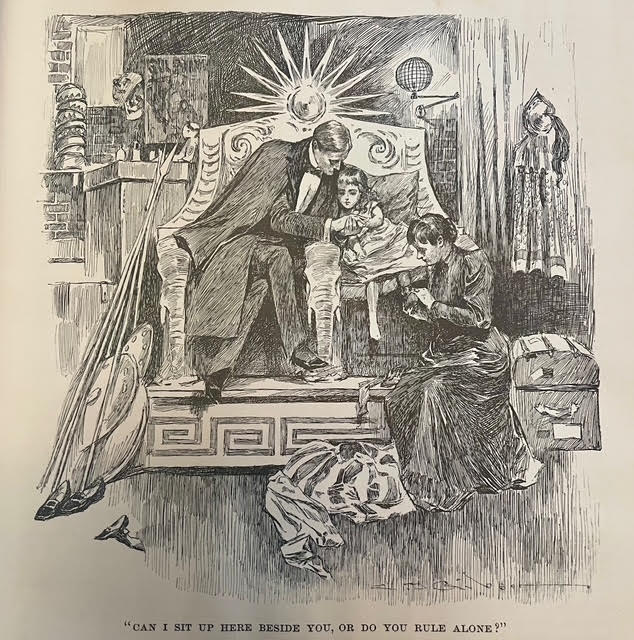
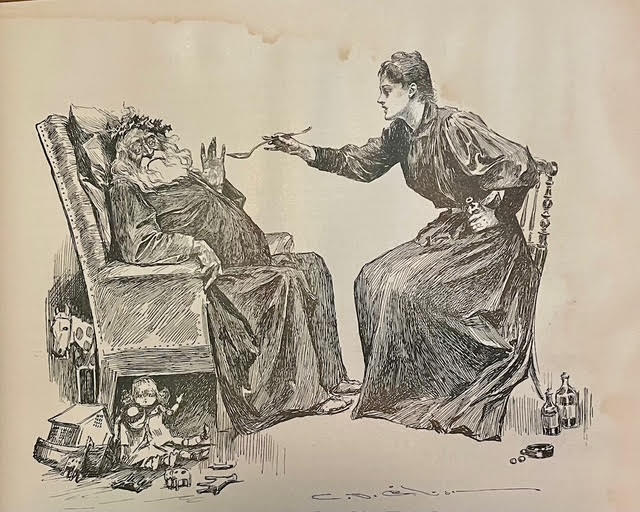
I really loved these two, as they independently stuck out for me on their own merits before I realized they were by the same artist and in fact, an artist whose work I thought I knew. Charles Dana Gibson was an American artist typically cited as being the creator of the “Gibson girl”, the iconic representation of the independent American woman at the turn of the 20th century. I think that puts the poor guy in a box that is unfair, as his composition, linework and hatching are among the finest of his age. He did a little more than ads with girls in them. Seriously, these two images are firecrackers!
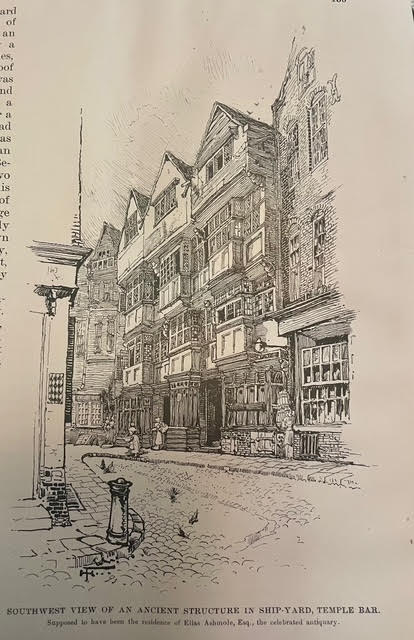
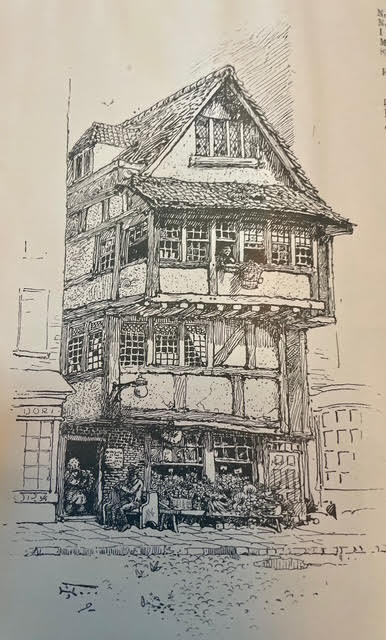
These two architectural pieces just made me stare in awe. I can’t draw buildings, no matter how careful I am. They always turn into heavily lined, overly simplified, often leaning, caricatures of buildings. Not my thing, unfortunately. But these two by John Tavenor-Perry (at least I think so) are masterworks. ChatGPT couldn’t do anything with that weird signature (looking like a stylized rune but supposedly initials). After some heavy back-and-forth, I think we landed on a likely artist though I’m open to correction.
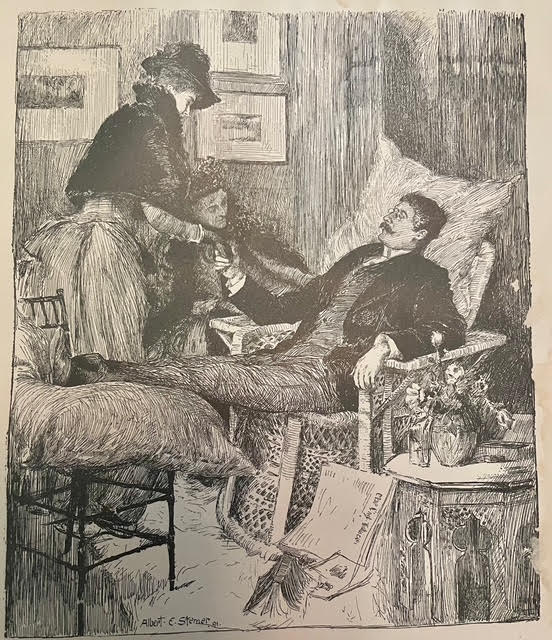
By Albert Sterner, this piece is a treasure-trove of hatching. I love it. Somehow, he’s managed to keep all these disparate elements in the composition cleanly segregated: the ladies and the cushion, his legs and vest, the flowers, the chair, shadows…all of it clearly silhouetted and easily read despite being a jumble of things. No way could I have figured out how to get all that detail into a drawing without feeling I needed to strip it way down so you could tell what it was.

And now finally, the mystery piece.

This one.
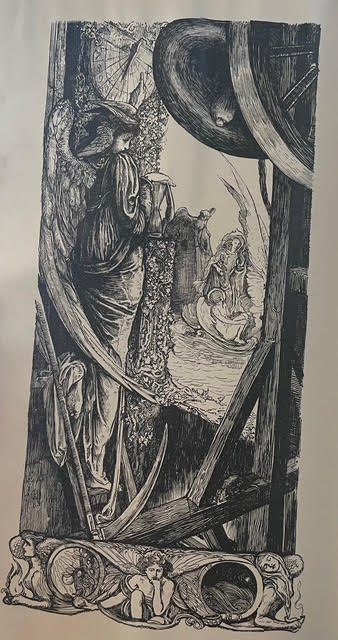
I was mesmerized. It accompanies a poem by James Russell Lowell titled “His Ship”, appearing in the December 1891 issue of Harper’s Magazine. No credit given anywhere, including the “Editor’s Drawer” where many other attributions for illustrations are provided.

The signature is maddeningly concealed in the drawing. I think. Hard to say if that’s a signature or not. Here’s what I mean:
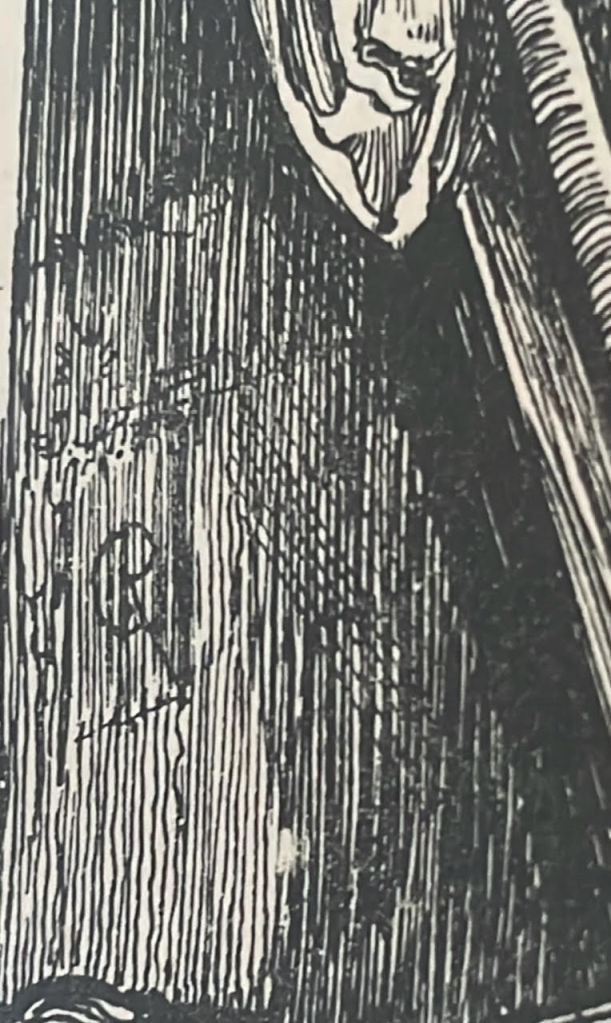
Anyway, I contacted Harper’s in case somebody’s maintaining an archive of some kind to help identify the genius who did this. It’s gorgeous. If I get any kind of response or make headway on the identification, I’ll come back and update you.

*

But that’s what I wanted to bring you today. Masters of their craft in the golden age of illustration, doing what they did and generating timeless works of art. For whatever reason, and not just as an aspiring artist myself, these drawings are unearthly and hypnotizing to me.

What do you think?

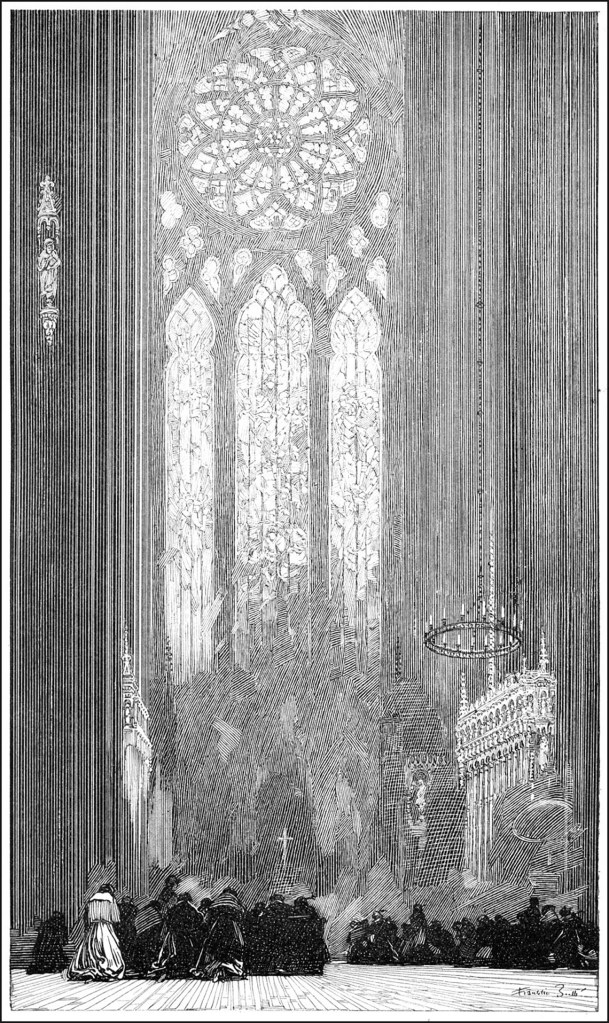
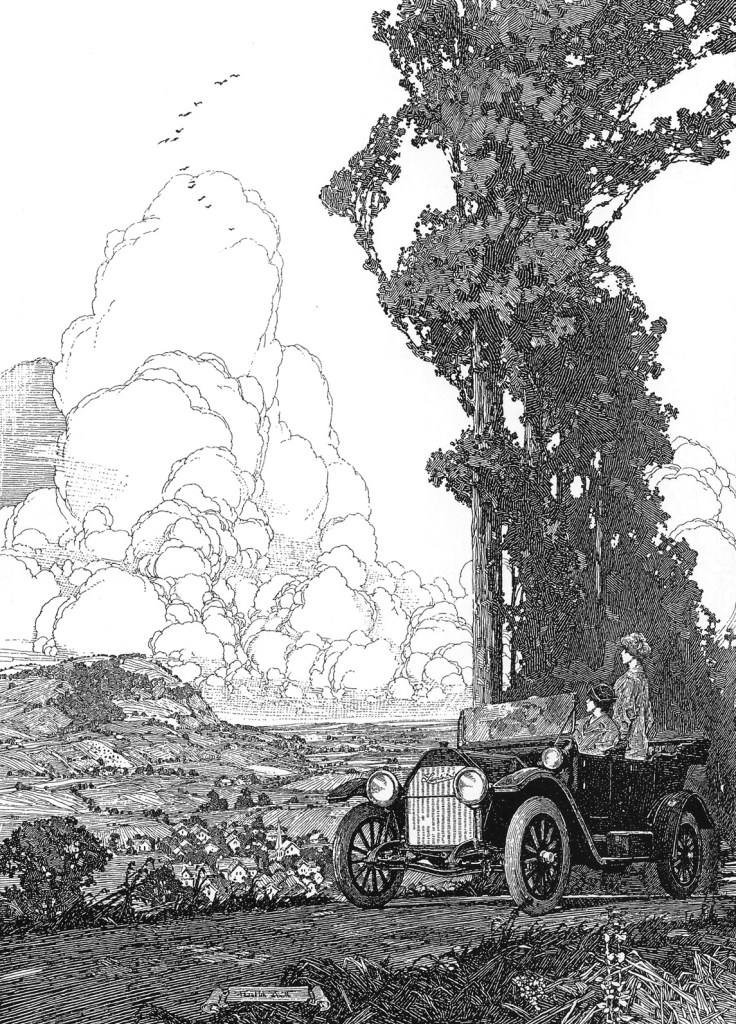
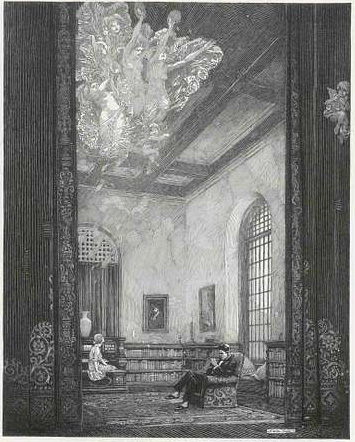
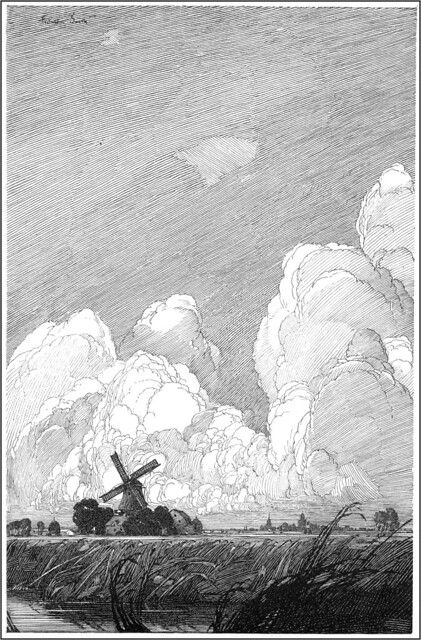
Franklin Booth: Engraver of Light

I have some marvelous freebies for you today, so stick with me.

I’ve been burrowing into a particular rabbit hole these recent weeks, studying and practicing traditional pen & ink drawing. It started with this:

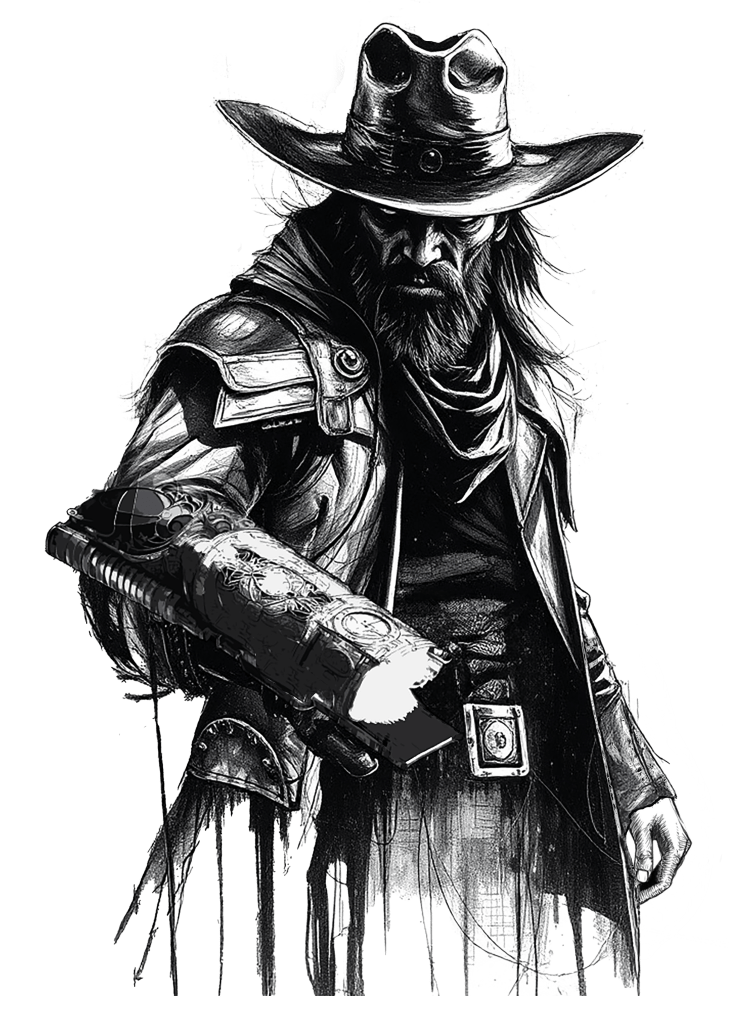
That’s interior art for SALT MYSTIC: BOOK OF LOTS. I did it, but I cheated. The base gunslinger was a couple of AI-generated pieces, drained of color and mashed together, cleaned up a bit, and mashed into an original 3D render of the plasma weapon on his forearm. I composited all that into the one image for a splash page as you first open the book.

But it got me thinking that this idea of grungey ink drawings as interior art looks really great and could be a nice distinguishing factor in future Grailrunner books. So I started practicing and studying the great ink masters (which you can read about here) to hone my craft and work directly Pigma Micron and Pentel Brush Pen on paper. No blending modes, no AI bases, no 3d paintovers or stock image composites. No digital tricks at all. Just pen and ink and paper and the satisfying swoosh sound that makes.

It’s a life changer, honestly. But anyway, it led me to Bernie Wrightson and Sergio Toppi and the guy I want to talk about today: Franklin Booth.

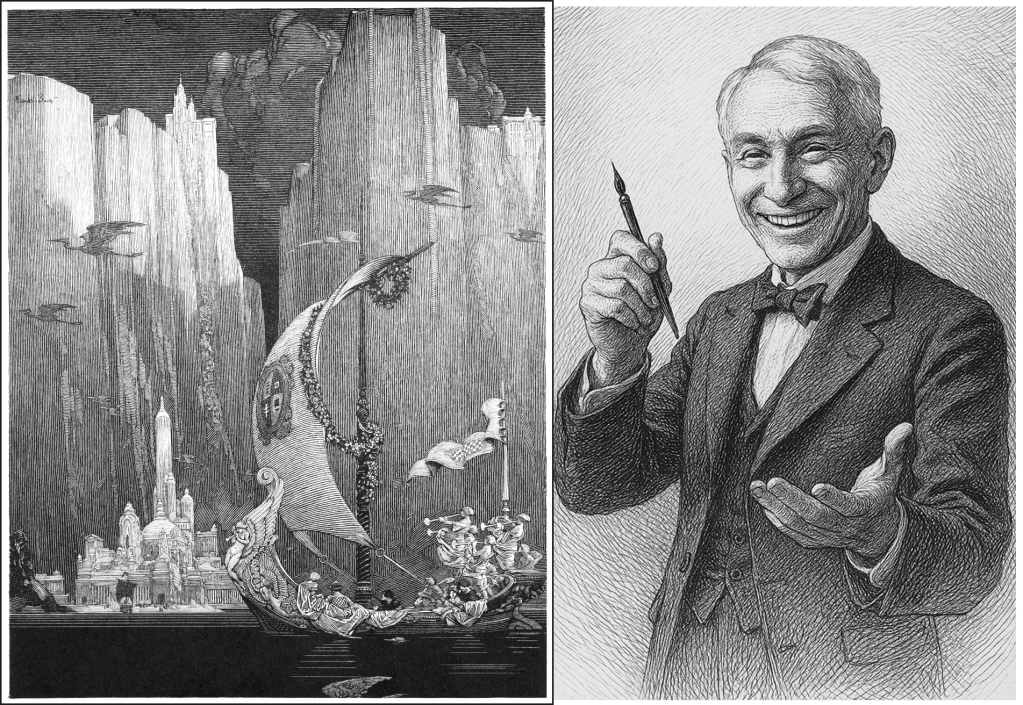
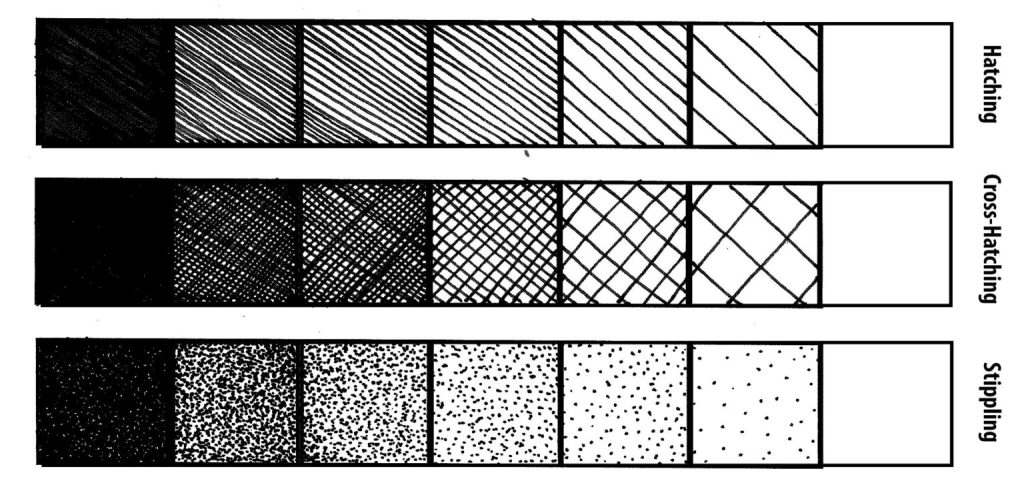
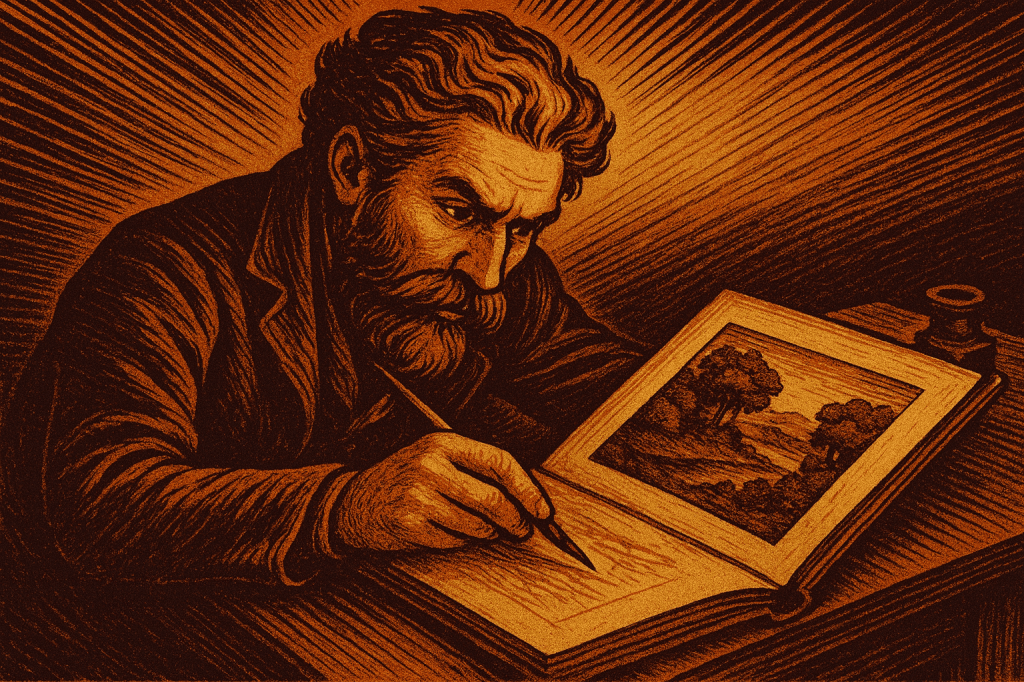
I’d ask you to keep in mind that the pen & ink artist has exactly one way to generate values and shadows, and that’s with black marks. Usually, lines. If they want shades of gray, they draw lines.

Like this:

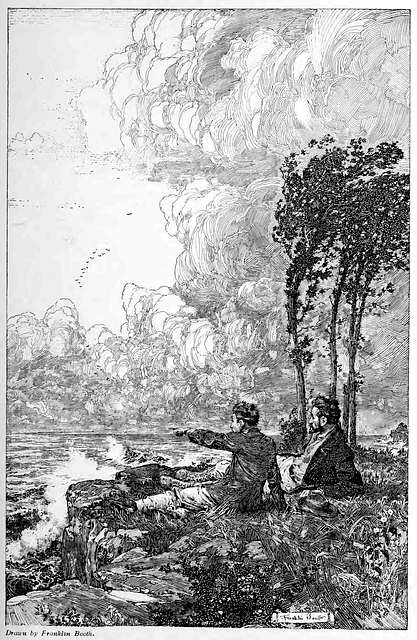
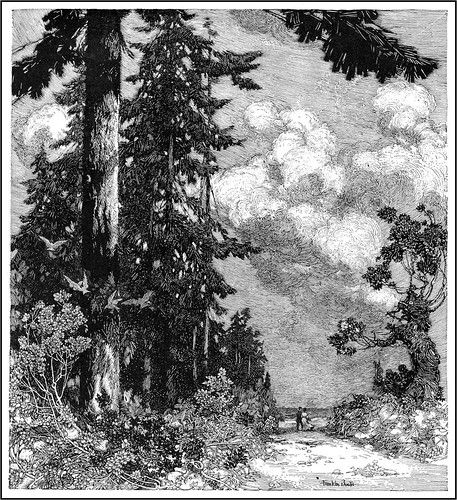
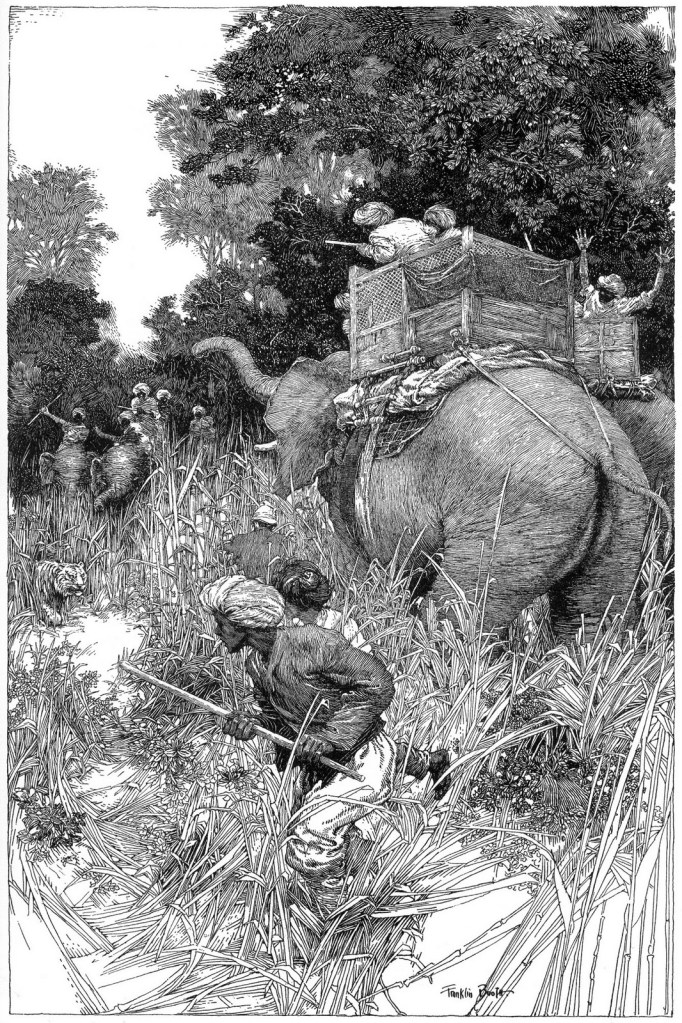
I mean, just take a look at some of those drawings by Booth! The patience and craftmanship is insane! Honestly, I wanted to learn more about the guy and found that it’s kind of difficult to do that. He didn’t make much of a splash with his personality or how he lived his life – just with his work. Here’s a great, though short, overview of him and his work on Youtube.

We’re also several posts in to a new ongoing series here on Grailrunner called CONVERSATIONS FROM THE ABYSS where we’re applying AI tools in some innovative ways as a sort of experimental lab. That got me thinking I’d like to read a decent, illustrated biography of Booth and get to know him a little better, mainly to understand his influences and how he learned to do what he did. So I had ChatGPT write me one and it was terrible. I asked for a 50k word detailed biography and got slop. Seriously, at one point I even asked it why the final product was so bad when it suggested we work section by section in much shorter passages with me approving things along the way.

Yes, I could just buy Silent Symphony from Flesk Publications, but that’s beside the point!

I tried iterating section by section, making my own suggestions as we went till it started to take a kind of shape that might be worth reading. Then I scavenged the internet and the Internet Archive specifically to grab public domain images that were either referenced in the sections or appropriate to the time period being described, all done by Booth himself. We’re not selling you anything here – the final product will be the last download button on this post. I included them as well throughout the text.

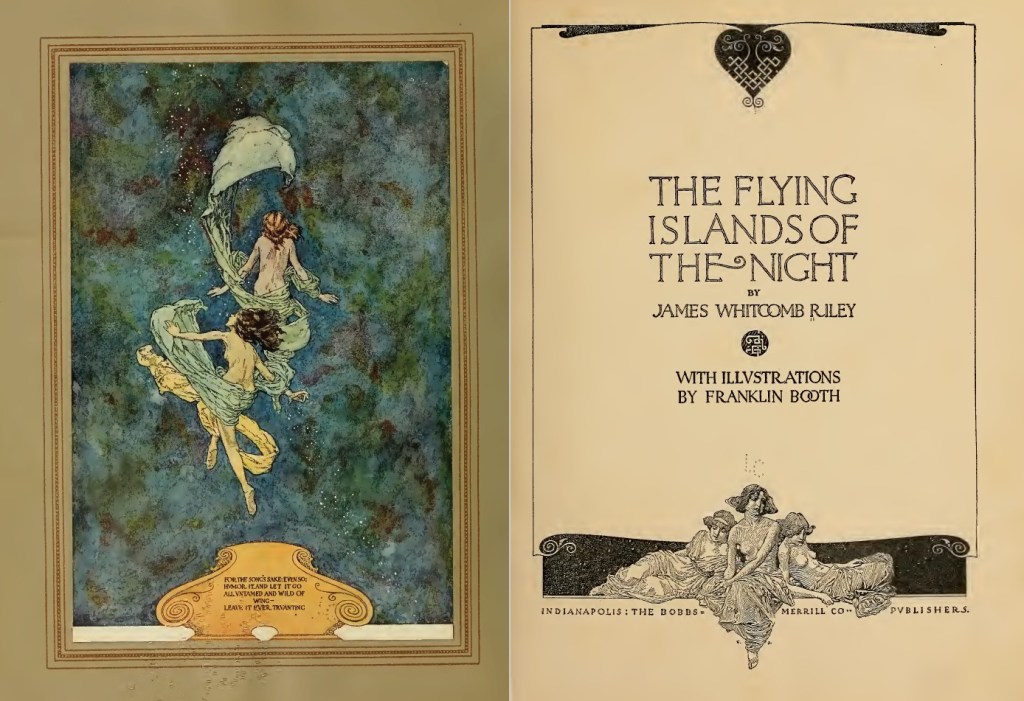
In all that, I learned about the fantasy play he illustrated titled Flying Islands of the Night by James Whitcomb Riley, which you can peruse below by smashing the splash page below. It’s vintage beauty at its finest.

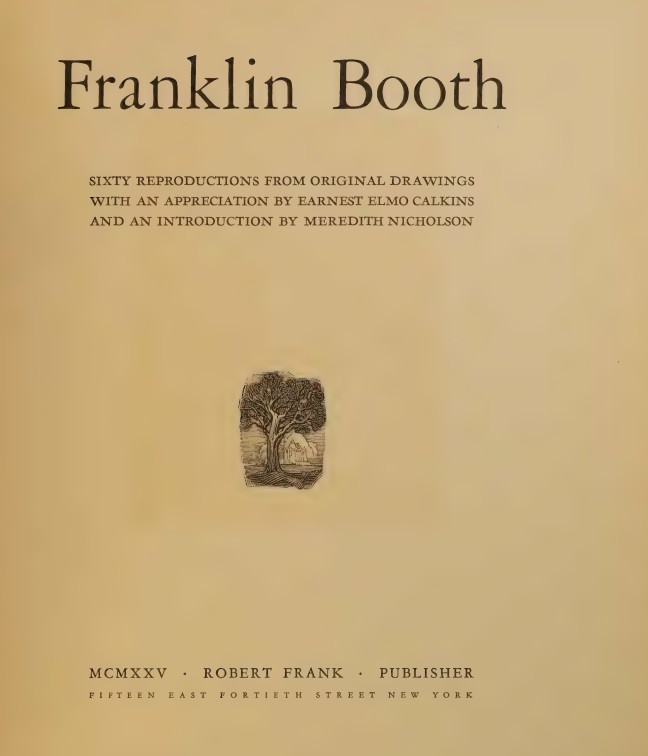
I found a scan of a 1925 book containing 60 reproductions of Booth’s drawings with sourcing and titles, details which are almost impossible to find on the internet (as everyone just posts the pictures out of context). That’s available by smashing the title page here:

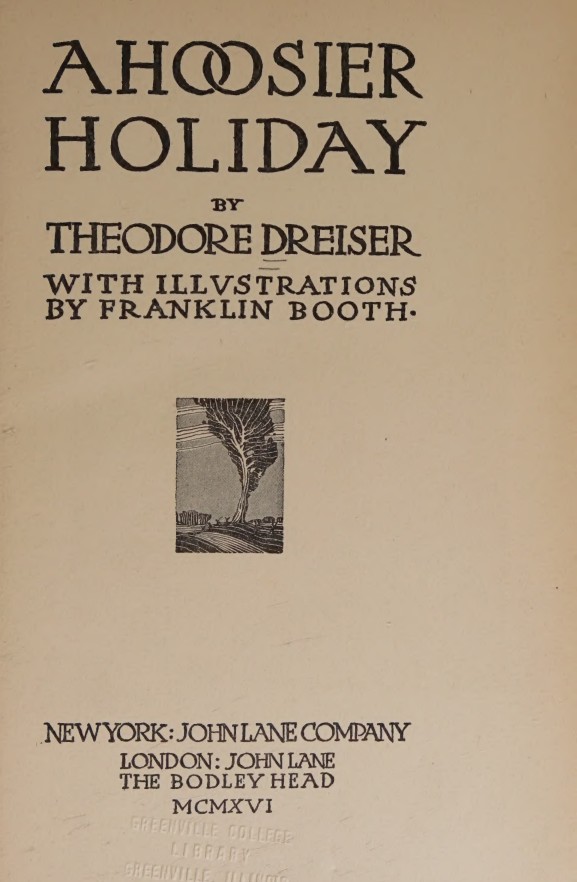
And here’s a real gemstone that I found which took on an entirely different function than its author intended: a 1916 travelogue written by Theodore Dreiser where he went on a road trip with Booth himself! It’s called A Hoosier Holiday, available by smashing the title page button below:

Where Dreiser thought he’d describe the trip and his musings along the way, I found an intimate and first-hand means of hearing Booth’s exact words, descriptions of his facial expressions and the fact that he ate all the popcorn he could get his hands on, things and sites he found interesting, and even charcoal sketches he made along the way. I found Dreiser to be an arrogant nuisance, but Booth seemed genuinely like a guy I’d road trip with. I liked him even more after reading it.

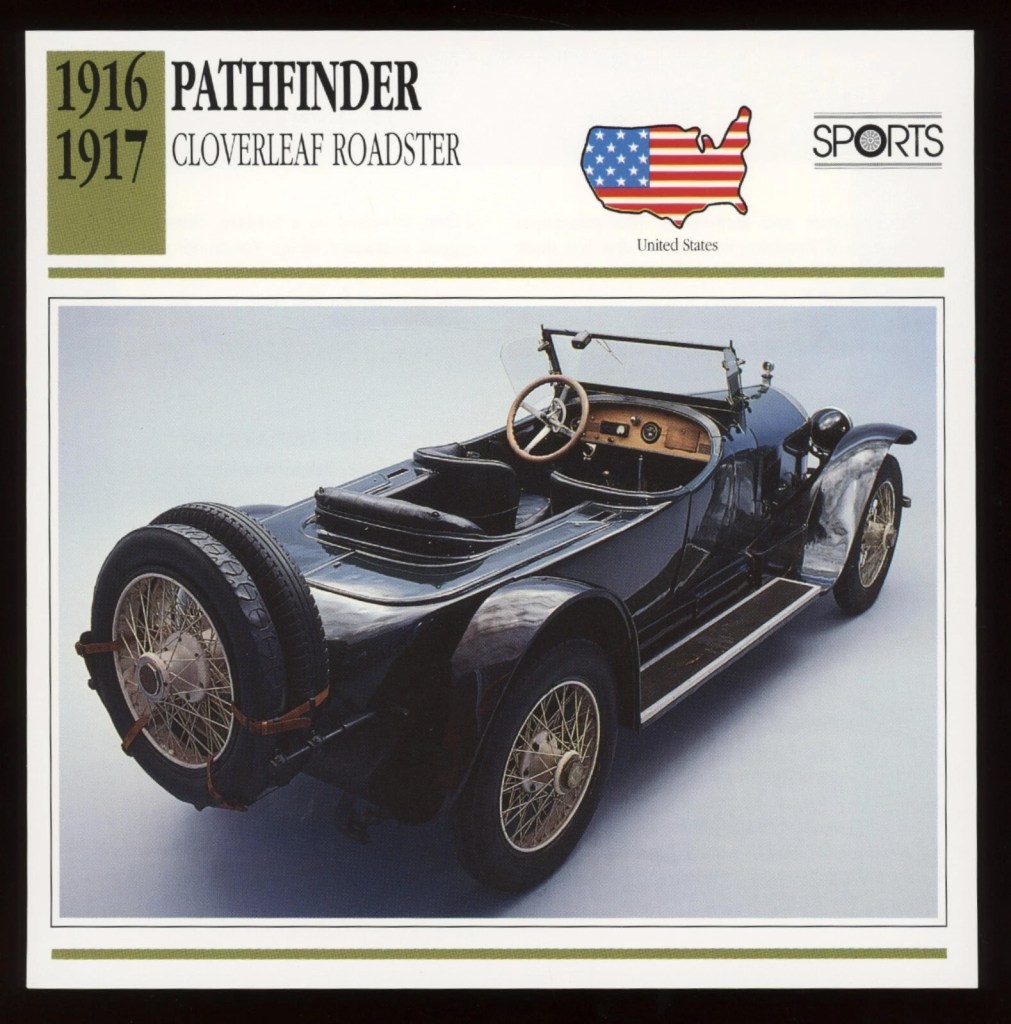
It was Booth’s 1916 Pathfinder, by the way, which he paid $3k for ($100k in today’s money), and they had a chauffeur as well. Booth was doing pretty well for himself, it seemed.

Quick and painful anecdote – ChatGPT was including factual errors. Some were easy to find, like a bold statement that Booth never married when that was demonstrably untrue. It provided several explicit quotes, which I asked it to source. Each time I called out something like that, it bailed and said it made those up. I think that’s my fault, as I’d named some historians I like as the basis for the voice and tone the software should take to write the text, and it took that to mean it should hallucinate.

Anyway, I wanted to find and include Booth’s very first published illustration. Turned out, the first amateur publication was in a newspaper, which I found in a publicly available scan and screenshotted to included in the book. That was a great find. But ChatGPT was telling me his first professional published work was in a trade magazine called The Inland Printer. I eyeballed 6 years worth of that stupid magazine and found zippo from Booth, eventually going back to call ChatGPT out on that as well. Sheepishly, it admitted that internet claims suggest he appeared in that magazine but since I’d looked and couldn’t find it, it supposed that was incorrect.

But the book I wanted to read was taking shape and becoming something worth spending time reading. The illustrations were helpful and interesting. I liked what I was getting, but it needed one final flourish.

I asked Booth to comment on his own biography.

By instructing ChatGPT to analyze everything we knew about Booth’s personality and values, I asked it at last to speak in his voice and comment on the book we’d produced about his life. That’s the final section of the book.

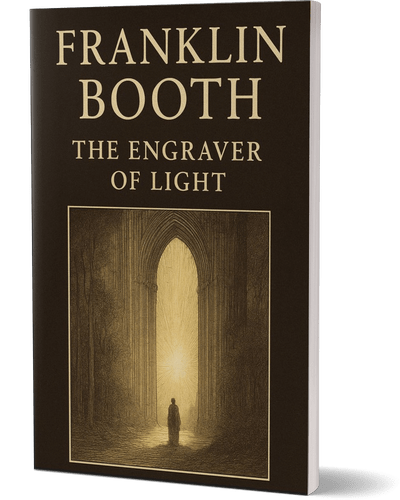
Here is the final product, titled FRANKLIN BOOTH: ENGRAVER OF LIGHT.

What a great journey that was! I really enjoyed the immersion and learning about this fascinating guy. Take a look and let me know what you think.

[UPDATE July 8, 2025]

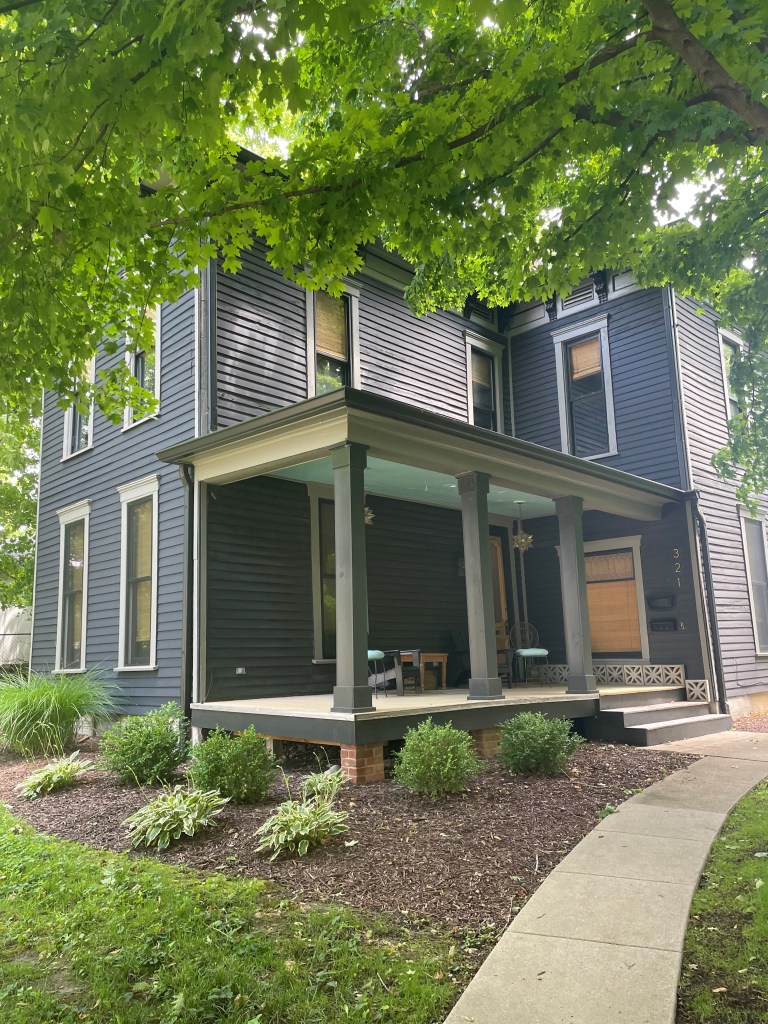
I found myself in Indianapolis for business and with a half-day free, so I drove to Carmel, Indiana to the boyhood home of Franklin Booth, which is listed as a historical site though also is still a private home (in surprisingly good shape). It’s super close to a beautiful downtown, in fact walking distance…a quiet and cozy neighborhood with no sign whatsoever that a famous artist lived and worked there. Not even a plaque.

And I understand the backyard shed was where he maintained the workshop which he visited every summer and completed so many of those famous works I’ve highlighted here.

This one:

Pretty cool. Anyway, till next time,