Here at Grailrunner, we chase imagination as craft. Anything we can bring you that lights the fire of your creativity is fair game, with a special bend towards speculative fiction and fantasy. If you’ve got a willingness to tinker, you should find something here you can use, remix, or otherwise refine for whatever literary, roleplaying, or artistic wonders you’re cooking!
Today’s freebie is a really interesting one for the tabletop crowd, especially anyone who gets that nostalgic, electric feeling when you crack open old-school adventure content and your brain instantly starts building rooms, traps, villains, and bad decisions.
What’s the idea?
We wanted to turn classic modules from old Dungeon Magazine issues into a listen-able conversation
So, we generated a podcast-style episode using Google’s NotebookLM “Audio Overview” feature: one of those “wait…this is actually useful” tools that can transform your source material into an audio discussion format.
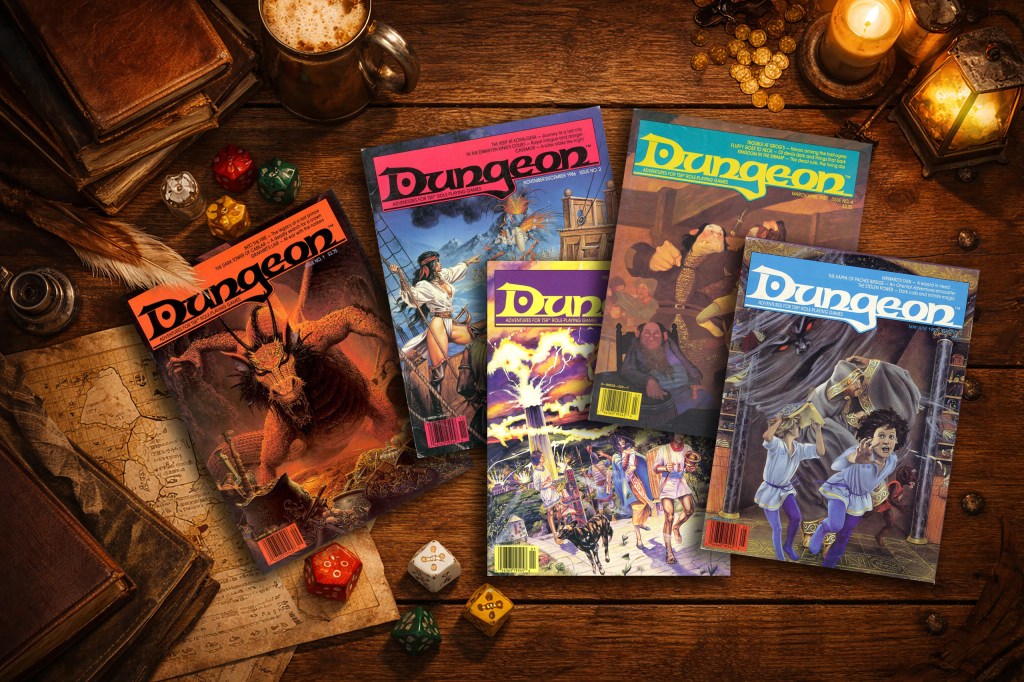
And the source material we fed it is a proper slice of RPG history (which you can download for free thanks to the folks at the Internet Archive – links below):
- Dungeon Magazine Issue #1 (cover-dated Sept/Oct 1986)
- Issue #2 (Nov/Dec 1986)
- Issue #3 (Jan/Feb 1987)
- Issue #4 (Mar/Apr 1987)
- Issue #5 (May/Jun 1987)
That’s the on-ramp period: Dungeon Magazine still finding its voice, still doing that early TSR-era thing where the tone can swing from earnest peril to delightfully oddball in the space of a page. It’s an incredible “creative compost pile” for modern GMs: hooks, maps, structures, pacing tricks, and that evergreen lesson that adventures are engines.
What is this (and what is it not)?
This is not a replacement for reading the magazines. It’s not “here are the adventures word-for-word.” Think of it as:
- a guided audio tour of themes, adventure structures, and GM sparks
- a way to re-encounter old material when you’re driving, cleaning, sketching, or prepping
- a fast way to ask: What’s in here that I can steal, remix, and make new?
We like AI tools as levers: ways to turn raw source inspiration into momentum, while still being upfront that AI was used.
Why Dungeon #1–#5?
Because they’re early enough to feel like a time capsule, but polished enough to still be usable at the table. The first five issues show the magazine’s core promise: a buffet of adventures with different moods and play styles. Exactly the kind of variety that keeps a campaign from turning into one long corridor.
Also, if you’re the kind of creator who likes grabbing one great detail: an encounter concept, a villain posture, a dungeon rhythm, and letting it domino into a whole scenario, these issues are loaded with that stuff.
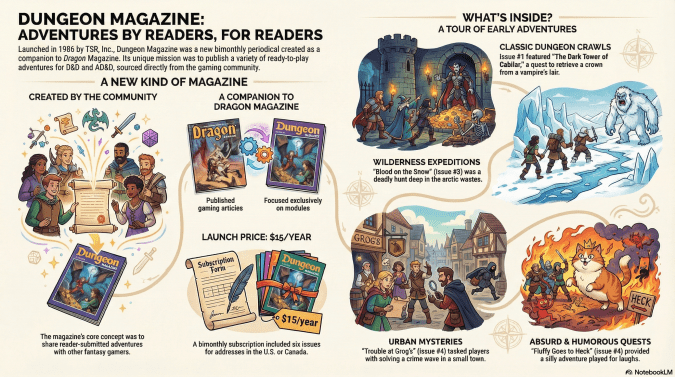
Why NotebookLM for this?
NotebookLM’s Audio Overview is basically a “make my sources talk back to me” button. Google describes it as turning documents and other materials into an “engaging discussion.” blog.google
And that’s the magic. The format doesn’t feel like a lecture. It feels like you’ve got two curious nerds in the room pulling interesting threads out of the stack. For RPG prep, that’s gold because prep is often just asking better questions about material you already have.
What’s the Grailrunner angle?
If you’ve read our recent posts, you know the theme: build year by year, make interesting things, share freebies, keep the creative engine running.
This podcast episode is exactly that energy and another little proof-of-concept that says:
What if “reading old RPG material” became listening to it think out loud and THAT sparked your next session?
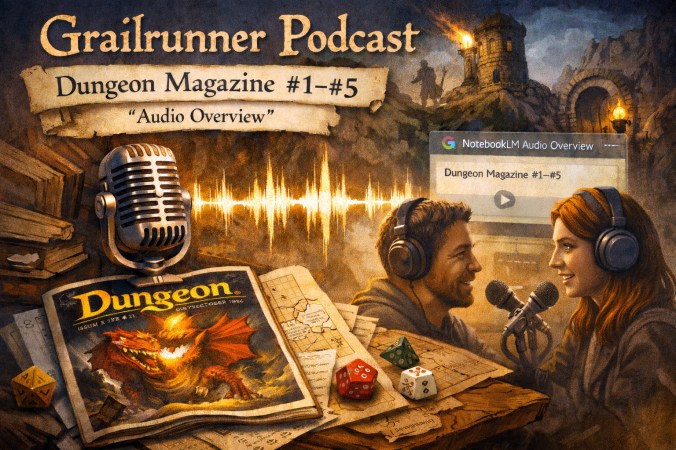
Smash the Podcast Announcement image below to give it a listen for free:
I’d love to know what hits you:
- Which issue had the best “I’m stealing that” moment?
- Did the audio format surface anything you’d normally skim past?
- What should we feed NotebookLM next: old Dragon editorials? a run of White Dwarf? classic sci-fi pulp?
We’ve got a lot cooking for 2026, and if the last year taught us anything, it’s that the best stuff often starts as a weird little experiment you almost didn’t try.
Till next time,

 Grailrunner Publishing