There was a writer of fantasy stories in the early 1900’s that helped lay the tracks for the books and films of imagination we enjoy today. Tolkien read him – supposedly gave a copy of the book we’re talking about today to Clyde Kilby in preparation for helping the Professor compile and develop The Silmarillion. H.P. Lovecraft wrote a poem about that same book. In fact the author, Lord Dunsany, inspired creators as far-ranging as Clark Ashton Smith, Guillermo del Toro, Neil Gaiman, Jorge Luis Borges, and Arthur Clarke.
He’s kind of a big deal.
But this particular book of 14 stories though, The Book of Wonder (available free here), was a real game-changer. Most, if not all, of the stories first appeared in a lifestyle magazine titled The Sketch from 1910 – 1911, then were compiled into the single volume for publication in 1912. Taken together, they read like a series of dream-visions, and feel comfortable and sleepy, like they’re being told in a warm voice by a crackling fireplace. It’s a collection of short fantasy tales about strange kings, cities, gods, and wanderers whose desires—for wealth, beauty, knowledge, or escape—lead them into eerie, dreamlike adventures. The tales often turn on irony or fate, showing how wonder and curiosity can just as easily bring enchantment as loss, transformation, or quiet doom
But there’s a real injustice that was done to this book, and Grailrunner is fixing it today with one of the coolest freebies we’ve ever given away. There will be a free download link at the end of this article, but first you have to know what injustice we mean and get as annoyed as we are about it!
Let’s talk about Sidney Sime for a second. He did this painting, which is how I first came across him.
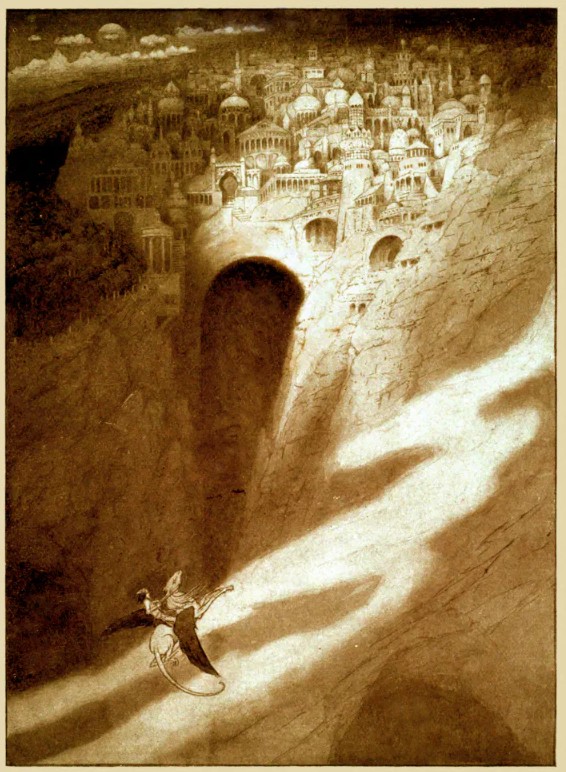
Isn’t that gorgeous?! Honestly, this is the kind of thing art is for! It’s called The City of Never, and it sends my mind wandering! I really love it.
Sime started his working life in a coal mine, almost dying in an accident, before working in various jobs ultimately winding up a sign painter. He managed to get some of his eerie, dreamlike art published in The Sketch Magazine as illustrations, and that’s where Dunsany first saw his work. When Dunsany contacted him to illlustrate his work, The Gods of Pegana, it began a long and incredible collaboration that lasted the rest of Sime’s life.
Then something with the feeling of destiny happened. We’ll let Dunsany tell you about that:
“I found Mr. Sime one day, in his strange house at Worplesdon, complaining that editors did not offer him very suitable subjects for illustration; so I said: ‘Why not do any pictures you like, and I will write stories explaining them, which may add a little to their mystery?’”
-Lord Dunsany
Wait a minute, what are you saying?
I’m saying that Dunsany hadn’t written The Book of Wonder or its component stories when he asked Sime to just paint something.
Anything! He just suggested that an artist with a wild imagination go wild and see where it led him. Then, Dunsany would make something of it.
That sounds cool. How did Sime decide what to paint, then?
He had a wonderful imagination. Still, Sime’s images often look as though they were found through the act of drawing and painting, not fully locked down in advance. You can see it in a few recurring traits:
Dream logic in the compositions: odd appendages, improbable towers, and strange silhouettes that feel less like academic illustration and more like an artist noticing possibilities inside the developing image and following them.
Forms that seem to emerge out of texture and shadow rather than being mechanically planned from the start.
Architecture and figures that feel invented midstream, as if one shape suggested the next.
Selective detail, where one area becomes highly specific while other parts stay loose and suggestive, which is often a sign of discovery rather than rigid predesign.
Examples?
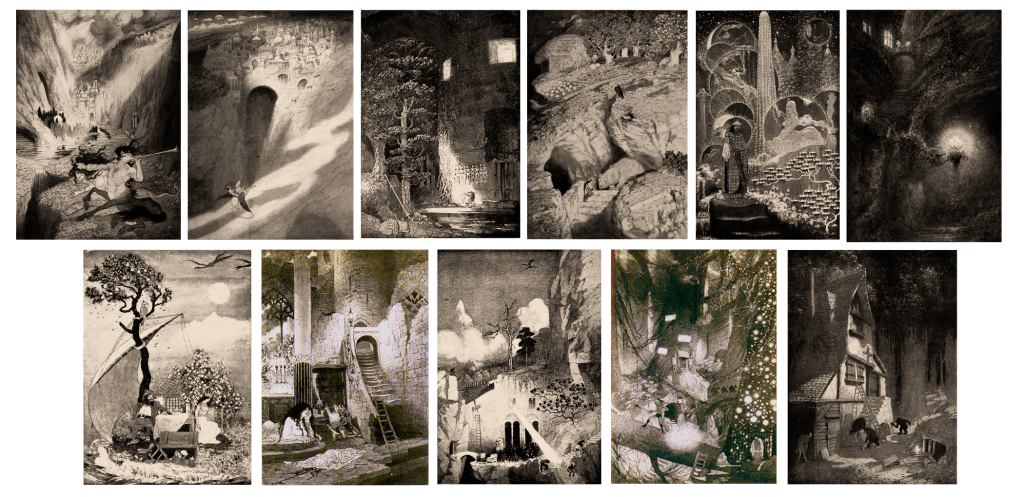
Yeah, I see the dreamy, moody thing you’re talking about. So what’s the travesty with this book?
In my mind, if Sime’s art came first and the stories were largely built from them, then this book is a composite work that should be inseparable. The art should be included in every reprint and copy. In fact, the images ought to come first before each story so the reader can follow the process for themself. You should be able to see the art cleanly, clearly, in good resolution, ideally in color, then proceed to the story to which it is attached.
But that’s just not the case.
I argue that in the far majority of cases where this incredibly influential and popular book is made available, it is without illustrations at all or is included with revised artwork. As if the Sime work was just some bumpkin’s outdated attempts at something a modern artist could exceed or modernize.
Worse, it’s a maddening trail of low-res scans and dead-ends to even find decent reproductions of Sime’s work at all! Even the dedicated Sime gallery in Surrey doesn’t contain the bulk of the images from The Book of Wonder. Dunsany’s castle supposedly houses the majority of Sime’s work that was meant for Dunsany’s writings, but you have to arrange a visit to see them!
That does seem annoying. And a shame. So what did you do about it?
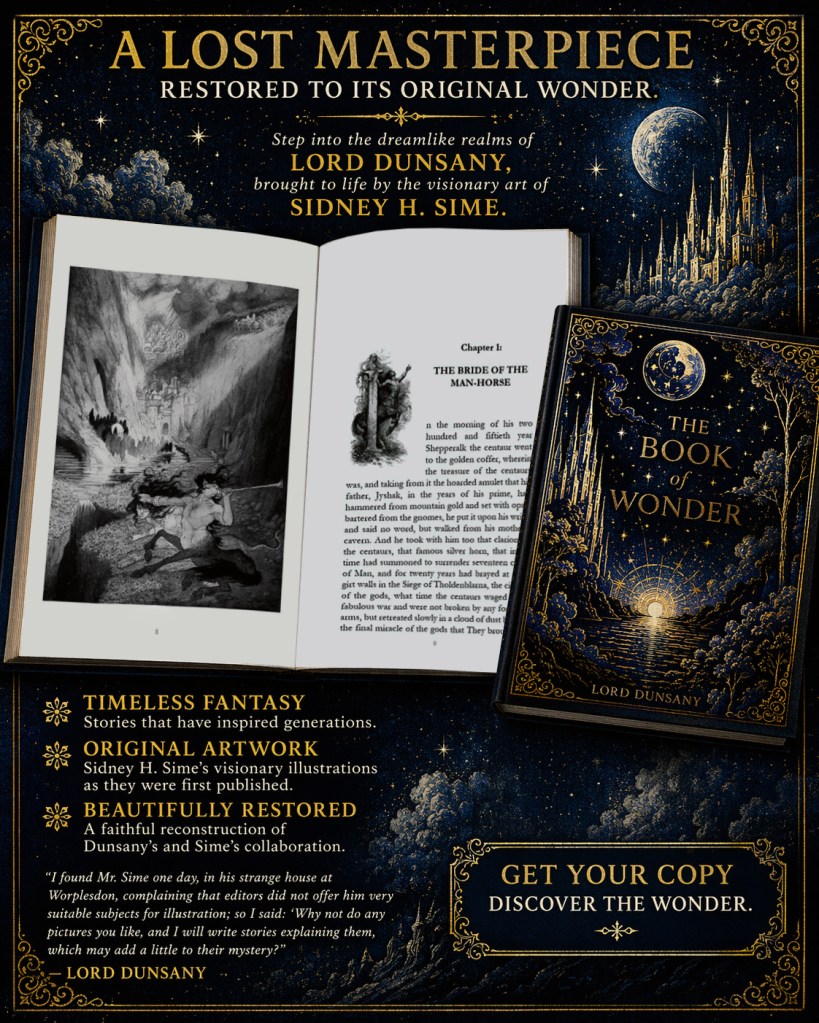
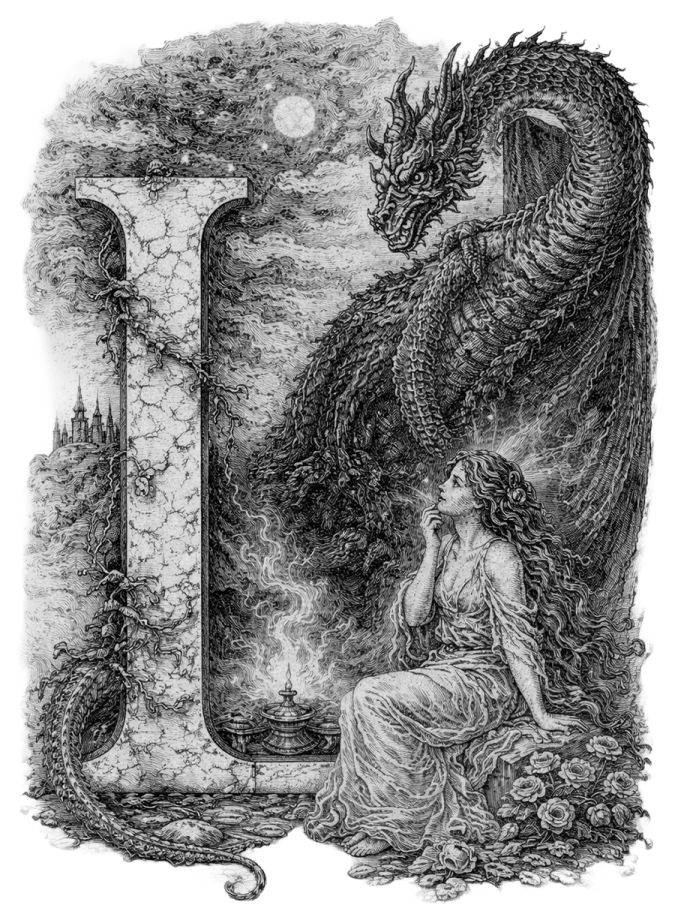
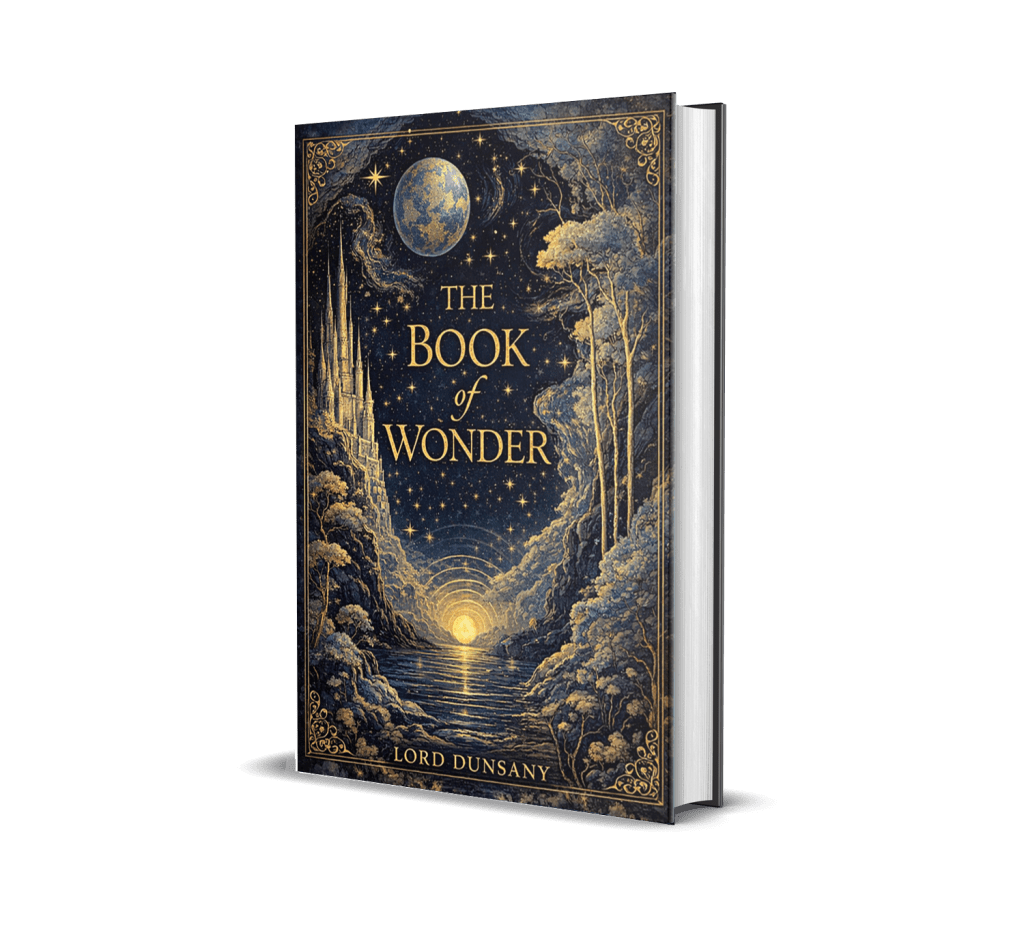
We produced a pdf version with a new front and back cover, collecting the best possible scans and most accurate text, and laid them all out in a beautiful spread with original “historiated intials” to begin each story.
Like this one:
Was it hard to find the art scans?
It was! Far harder than it should have been. We used the original 1912 version as the guiding light matching the images to the right stories. Everything needed cleanup in Photoshop. In one case, there was a lost artwork that didn’t actually appear in the 1912 version but DID appear in the Dec 1910 issue of The Sketch Magazine. Thanks to Douglas Anderson, original investigation result linked here for tracking down the lost image which likely inspired The Injudicious Prayers of Pombo the Idolater.
My main point with this labor of love is that Sime deserves co-credit for this incredibly influential work of fantasy. It’s a travesty that it was this hard to find half-way decent scans of his artwork that needed this kind of editing to even be presentable. If there was enough time in the day, we would contact Dunsany Castle and try and influence them for better scans and a new memorial edition, maybe including some correspondence between them to liven up the work. That would be amazing.
What do you hope to accomplish with this, then?
Just inspiration. Like everything else we do here at Grailrunner, we wanted to bring you the story of this fateful collaboration and give you the chance, as best we can, to gaze at the art for yourself, dream up something original for them if you like, before stepping into the wonderful mists of what Dunsany did with them.
Let’s have that download link!
*
That’s what I wanted to bring you today. I hope you enjoy the compilation and restored art. If you DO go inside The Book of Wonder to spend time with these two miracle-workers, it will be time well spent.

 Grailrunner Publishing