One Month Into Book Launch: How’s That Going?

It’s been a month since we published SALT MYSTIC: BOOK OF LOTS, a solo roleplaying game based on our multi-media Salt Mystic setting. There are some bright spots, some hopeful notes, and a world of pain. Overall, we’re still incredibly proud of the product and seeing and hearing people appreciate it in the wild is an experience like nothing else!

We thought it would be helpful for anybody thinking of putting your own book out to see what we tried: what worked, and what didn’t…and what still might. Care to come along?
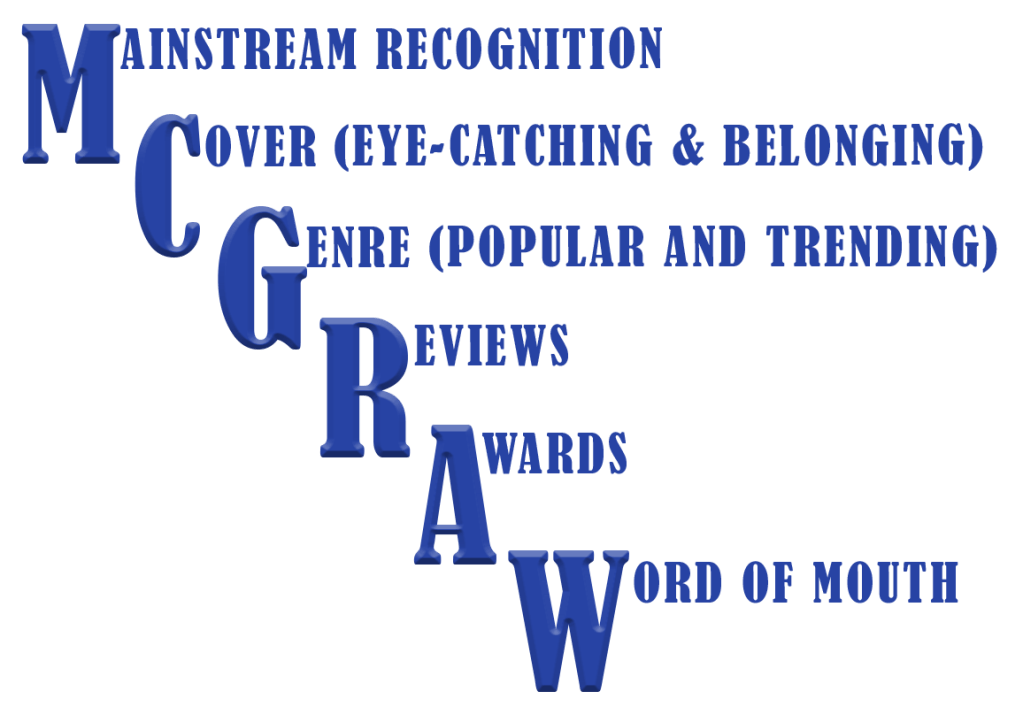
Way back in 2016, I wrote a short article defining some indie publishing principles based on lessons from the launch of my first book: TEARING DOWN THE STATUES. The principles were consolidated into the acronym “MCGRAW”, suggesting the key elements necessary for publishing success (Mainstream recognition, an eye-catching Cover that looks like it belongs with books like it, a popular Genre, as many Reviews on major listing sites as possible, Awards to add validation that the book merits attention, and Word of Mouth.) We kept these in mind this launch and tried to incorporate what we could, although the genre of tabletop roleplaying is so saturated and so dominated by Dungeons & Dragons that we were working uphill and digging holes from the beginning.

Still, hope springs eternal, and this is a product we believe in mightily, knowing from its ideation that nobody else was doing anything like it.

What was the pre-launch like?

February was a hot mess, finalizing the proofs and shaking trees to try and get attention from bloggers and gaming news sites. Short of providing free pizza delivered by cosplayers who do magic tricks, I’m not sure what else we could have done to get mentions from some of these guys – we reached out to 20 and got one “No, Thanks” and absolute crickets otherwise. That’s offering a free physical copy for review, by the way. Local gaming store wasn’t interested, and I didn’t have the heart to cold call others. My ego can only take so much bruising!

I pushed my Photoshop skills to the breaking point generating ad assets to use in social media and ad campaigns, stirring up some images that I think really popped! Here’s my favorite, though we had to switch it out to juice the click rate after things got rolling.
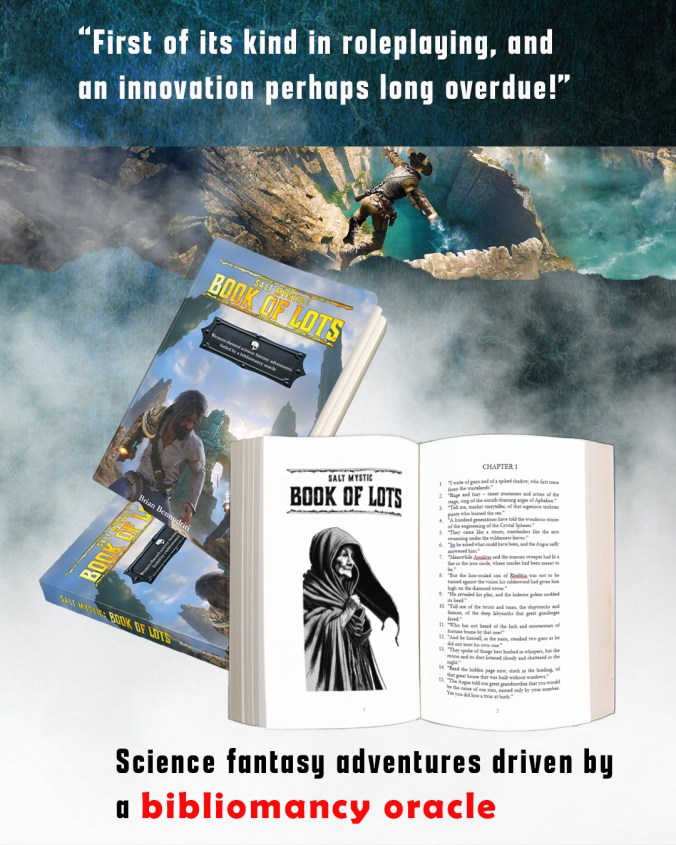
I’m a big fan of Absolute’s 3d cover generator and Envato’s PlaceIt – both to generate mock up’s of the cover in various places. We generated this one below for banners through RPG Geek and some other sites:

We came SOOOO close to hiring an artist we’ve been targeting for years now, and he might yet come on board for a promotional poster, so I won’t jinx anything by saying more. That would be amazing, so wish us luck! Anyway, he was swamped with other things, so the heavy lifting on graphics was still in-house.

How did you handle distribution setup?

The book is available at booksellers globally through Ingram Spark, and also on Amazon thru Kindle Direct Publishing, as well as the pdf on Drivethru RPG. We got the barcode direct from Bowker to retain full distribution rights – there are strings attached to the freebies. Honestly, setup was fairly painless for Kindle Direct, but I thought at one point Ingram was going to leave me with facial tics!

The cover file was a high res jpg I’d built in Adobe Illustrator, and it included some transparent png images (the title and the Grailrunner logo). The art was done with Daz Studio for the figures, some Blender and Photoshop filters for the forearm weapons, and some AI help for the background, everything composited and color graded in Photoshop then dropped into Illustrator for the text and placements. This is what that looks like, front and back:
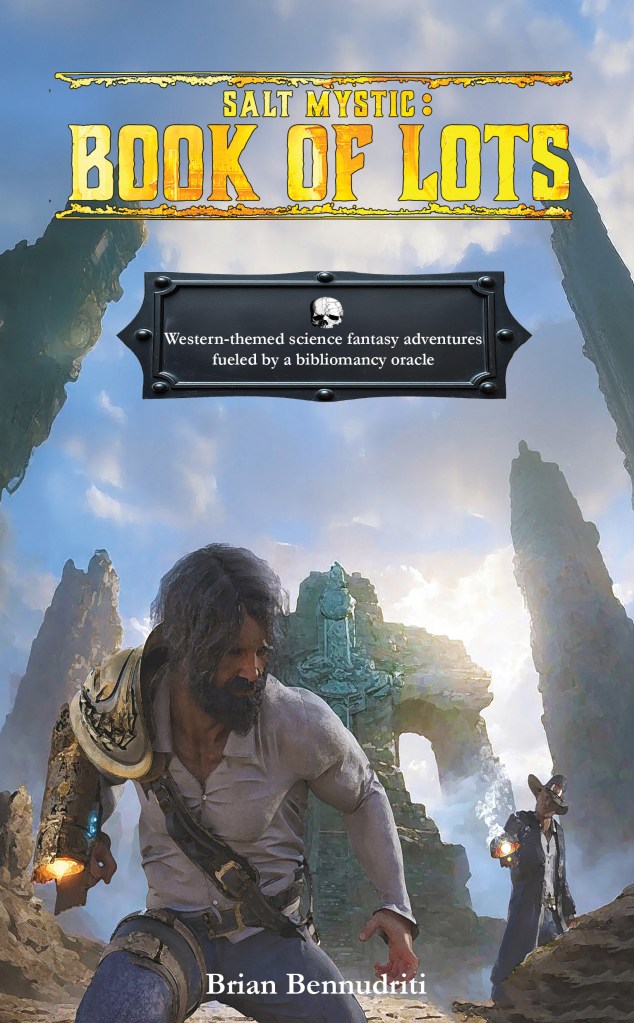
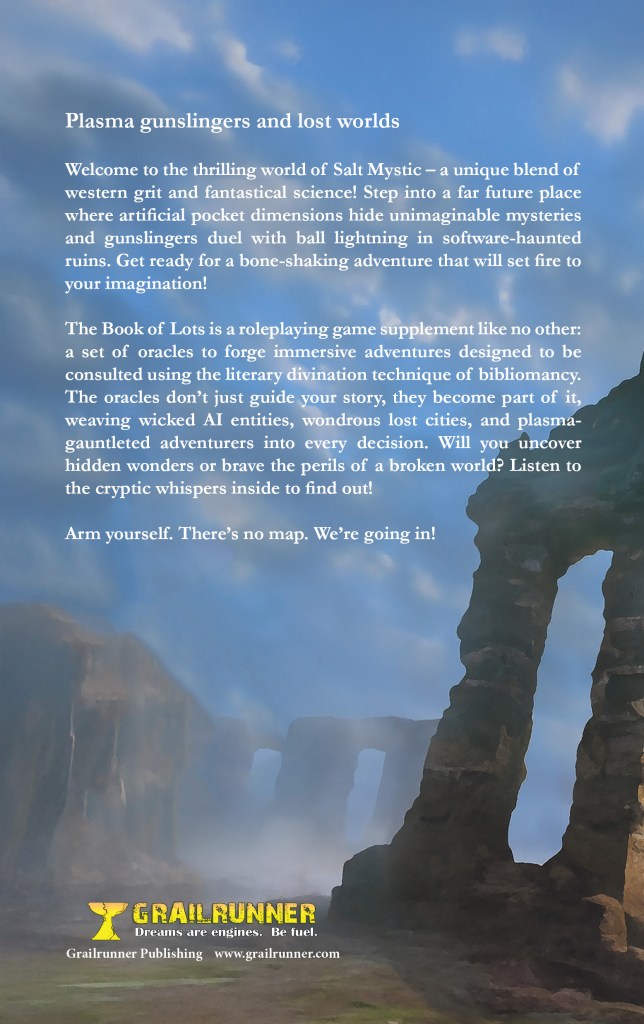
Weird white outlines were appearing in the digital proof around anything that was a png in the image. Maddening! Nobody at Ingram Customer Service was responding, and internet advice was kind of all over the place. I tried various export presets and never resolved it, at last approving the digital proof even with the outlines in hopes that it was in fact a screen artifact only (as some advice suggested). Thankfully, the issue didn’t show up in the physical version.

As for offering a physical version through Drivethru RPG, I basically gave up. They seem to be saying they use the same print house as Ingram, though a different division or something? I dunno. Anyway, much worse issues with anything that was a png, including the interior art! A true disaster! I’m sure they would say it’s my fault, but I bailed entirely and just offer the digital version through them. My blood pressure thanked me immediately!

How did you advertise?

We ran campaigns on Facebook, through Google, Amazon, and on RPG Geek. The book is also listed this month on Ingram’s home page and in the World Reader, iCurate Connection, and Indiewire newsletters, all via Ingram (~28,000 circulation for the newsletters). Through the Independent Book Publishers Association, the book will be represented at the American Library Association conference in Philadelphia this June. We’ll see how all that works out, but here are some initial experiences:

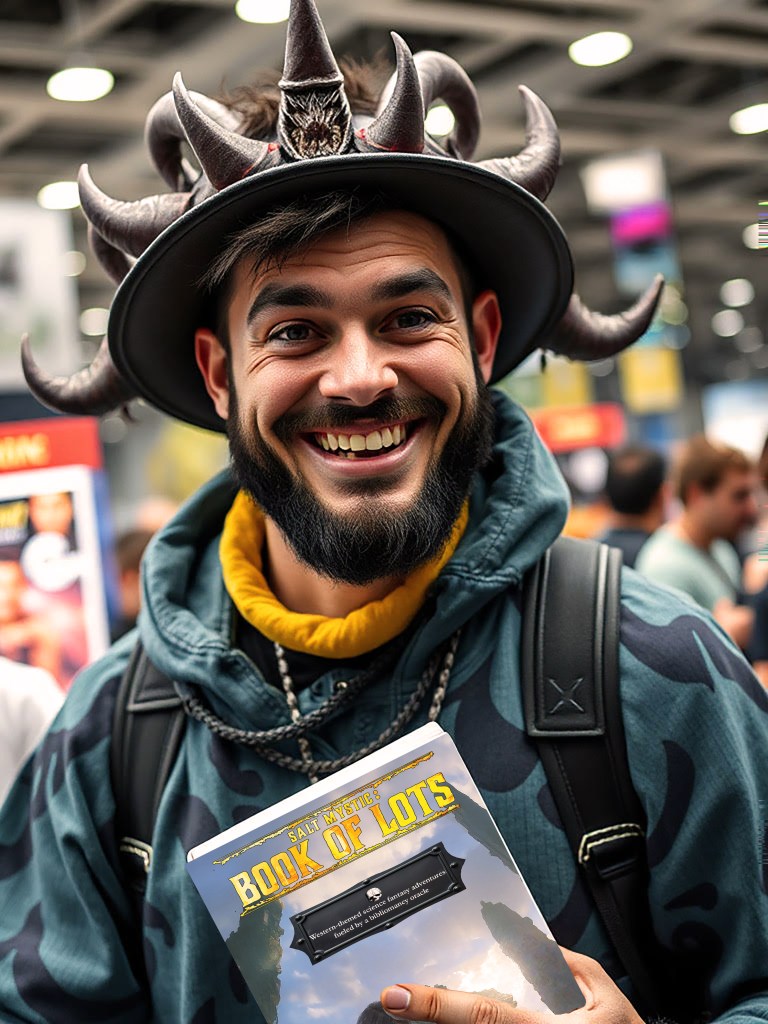
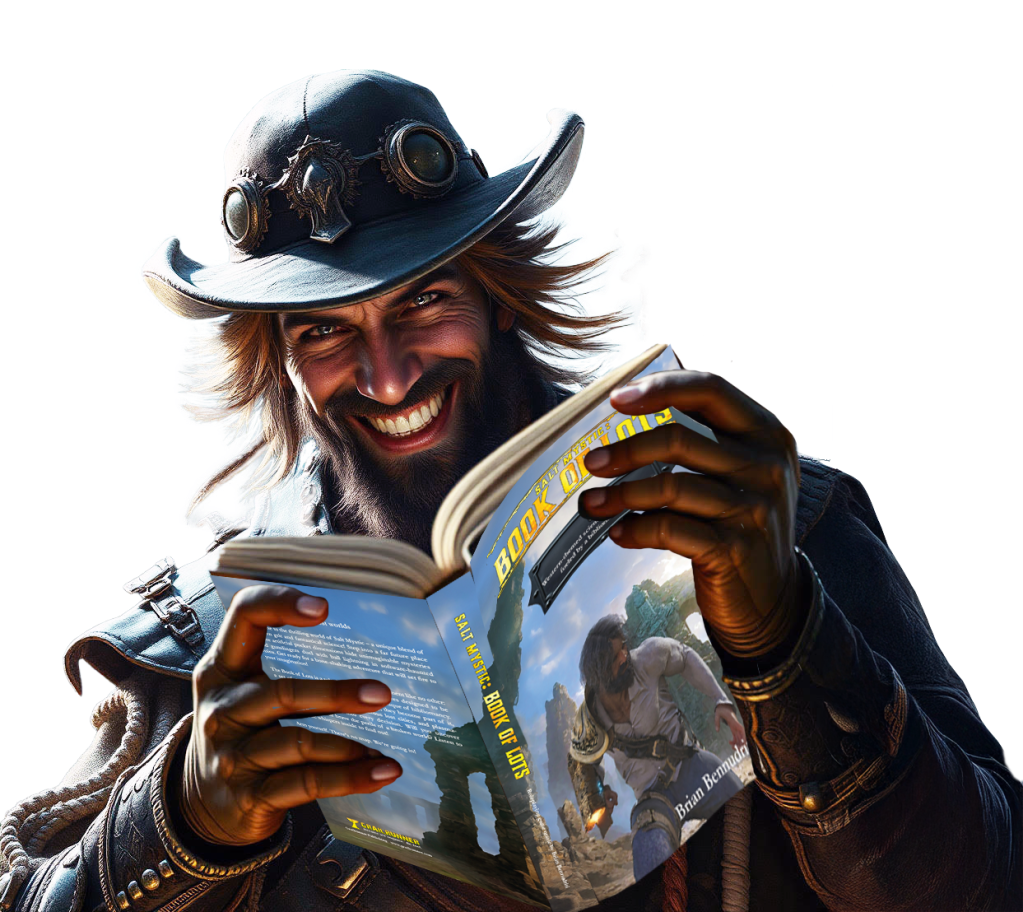
Meta (Facebook) started at 2.1% click rates with tens of thousands of impressions as well as loads of shares and likes and bookmarks. It all felt great until we saw that precious little of that was converting to sales. Internet research was suggesting a good click rate was 2% for search ads and 0.1% for display ads like banners, but for us it was just a lot of activity with poor conversions. By changing the graphics out to a grinning gunslinger and tweaking the copy a bit, we doubled the click rate to 4.2%. We’ll see if all those bookmarks and shares pay off down the line!
Google Ads was impressive, as their algorithm learns as you go, tweaking things to improve the reach. We wound up with a 5.1% click rate by the campaign’s end, which we view as solid. We even had one day peak at the end at 8.1%! All campaigns led to the same Amazon listing, so we can’t separate sales by campaign but I thought a lot of this experience overall.

RPG Geek was a little disappointing. Multiple banner and display ads dominated the site for a month. The thinking here was that this site entirely specializes in roleplaying games, so you couldn’t find a more on-the-nose target audience! Still, click rates flatlined at 0.1% for two weeks, till the same changes as above doubled that to a paltry 0.18% by campaign end.

Amazon: We only launched the Amazon ads in the last week or so – it’s a little early to report any results. I’d also never added any A+ content to a listing before, so that was new. Of course, I added that gunslinger since he seems to catch eyeballs, along with a very short description of the book.

So, was it a good launch?

Could have done more on pre-launch to get some mentions, honestly. We need to work on a solid email list and social media following though the new content required for that is a bit threatening when everyone has day jobs. Reviews remain super difficult to get, though some favorables have popped up that we didn’t arrange. Overall, sales are ramping up very slowly. Glacially, you might say.

What’s next?

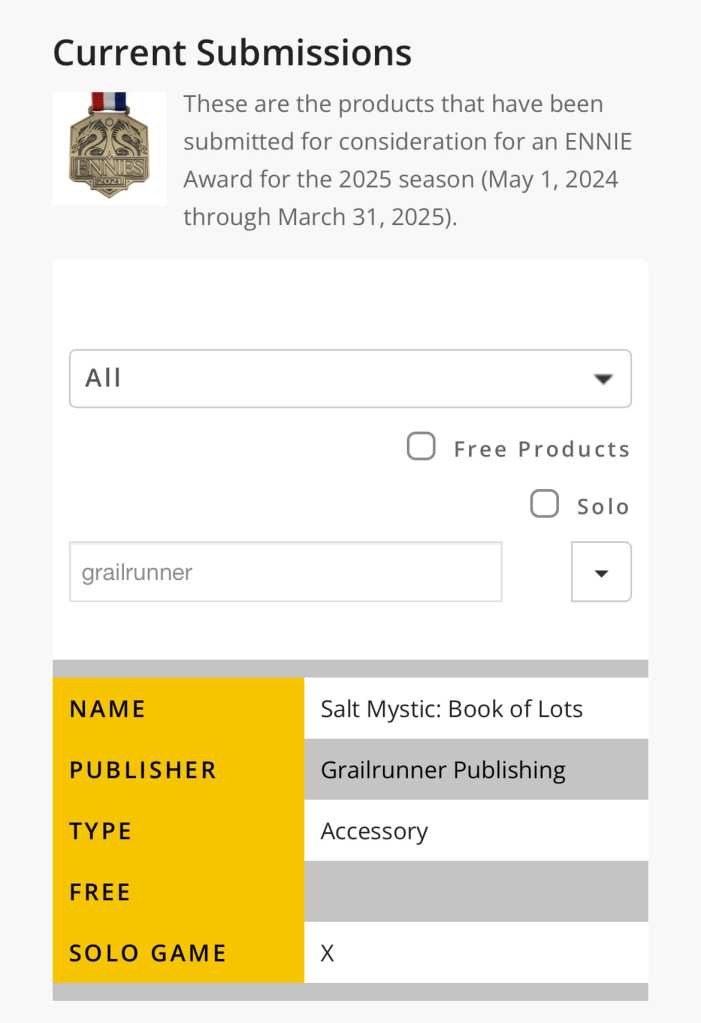
I submitted SALT MYSTIC: BOOK OF LOTS for consideration in the 2025 Ennie Awards, which is the Super Bowl of RPG’s! Any mentions at all would be high octane fuel for me. That’s a long shot, of course, just because of the ridiculous amount of talent in the field these days. Still, you never know…
*

I hope some of this was helpful or at least entertaining. Warts and all, this is how things have gone so far and the plan going forward. I’m sure the outside observer can find all manner of beasties and stinking swamps herein, but from the inside, it’s a wild, crazy bucking bronco we’re just happy to hold onto!

Till next time,
The Coffee And Book People Are Still Out There

book for posting.jpg

“You don’t have to burn books to destroy a culture. Just get people to stop reading them.” -Ray Bradbury

I travel a lot for work; and it’s easy to get the impression that nobody freaking reads anything anymore. It’s disheartening, man. I want to tell stories – there have to be people out there who want to unplug and hear them! This Thanksgiving, I got into a fairly cerebral chat with some family folks (I didn’t start it, honestly, was just munching chocolate pecan pie and it sort of happened!). It got me thinking, so I’ll hit you with the thought to see where you stand.

I don’t run into many people from day to day who get far beyond Youtube tutorials and whatever management book is in flavor rotation, so when this chat started, I thought it was going to go my way. Wife’s uncle leans over like he’s telling a secret and says,

“I understand you’ve published a book.”

Okay, cool. We can talk about that. And we did. He got a copy, says he’ll read it. I’m in. But somehow the whole conversation veered into the nonfiction he typically reads. Also cool, I read plenty myself. But I got the gist he never reads fiction at all. I’m back where I started. He’s not going to like the book, I know that already. But guys, I just can’t sit down and write a biography about Lyndon Baines Johnson. It’s never going to happen. We covered LBJ in more detail in that conversation than I’d have guessed you could. Apparently the man was complicated.

I enjoyed the conversation, actually. Yet it sent me off on this idea that if most folks do sit down to read, I’m not running into the type that want to get totally lost in an imagined world with gargantuan ideas, flash-bang battles and clashing intrigue. That’s my thing, man. I can’t get enough of getting lost in a great book where sometimes I have to look up and ponder something I read. That’s my baseline for when I’m writing – I want to engineer that. Every time.

Jump ahead a few days. Christmas shopping on-line. To be honest, I was actually looking for cool stuff to put on my own Christmas list so my wife doesn’t just get me more Doctor Who merchandise. Was reading reviews of the Kindle Paperwhite to see if I should go back to e-ink screen readers. Page after page of folks who are apparently of my tribe – talking about the lake, the beach, camping, trains, in bed at night, by fireplaces, in hotel lobbies. Awesome people who love a great book. I was feeling better.

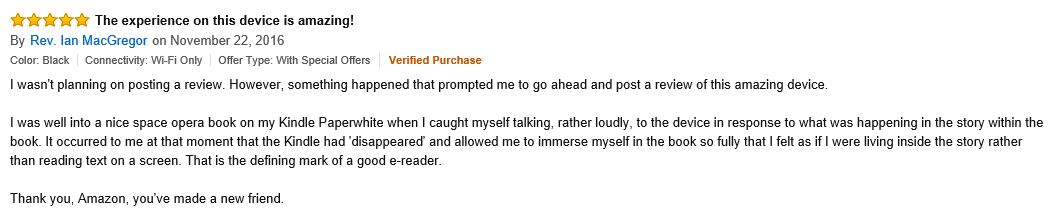
Then I found a guy who put a Cheshire Cat grin on my face. He’s your kind of guy too. Check this out.

capture

If you can’t read the image, here’s the text:

“I wasn’t planning on posting a review. However, something happened that prompted me to go ahead and post a review of this amazing device.

“I was well into a nice space opera book on my Kindle Paperwhite when I caught myself talking, rather loudly, to the device in response to what was happening in the story within the book. It occurred to me at that moment that the Kindle had disappeared and allowed me to immerse myself in the book so fully that I felt as if I were living inside the story rather than reading text on a screen.” -Rev. Ian MacGregor

Let’s dissect this guy for a second. He was ‘well into a nice space opera book’. Wow. Already my buddy. The man was actually talking to his Kindle. I can’t say I relate to that; but this guy is one of my favorite people on the planet now. He was talking loudly to his Kindle. And he got totally lost in the story. Whatever the crap this dude was reading, I’d like to know. The Reverend MacGregor is not only in my tribe, he’s the goll-darn shaman!

So what do you think about the future of fiction? Interesting, ground-breaking fiction that pushes cool intellectual or narrative boundaries, I mean…not gobbledygook thrillers that software will eventually write, optimized through the bestseller list algorithms. Try this quote on for size:

“The reading of all good books is like a conversation with the finest minds of past centuries” Rene Descartes

I hear you, Rene. But who are we going to have these conversations with?

Getting Over Free And Rewiring Your Imagination

expansortext

Back in the day, pre-internet and when the only way to hit it big was to get signed by a big publishing house, you hounded magazines to sell short stories as much as you could. You got in print. All the names you’d recognize from those days offered that advice; and I sadly admit to listening to my dot matrix printer bweh-bweh-bweh in the corner of my desk while I bent those little metal clips on the manila envelope time and time again patiently sending off stories so I could make a name for myself to finally see the way clear before me. The only cool story I have from those days is a terribly cruel rejection letter from the guy who ran Asimov’s magazine accusing me of stealing the story idea (naming some obscure piece I’d never heard of and saying the other guy did it better). Now that I think about it – there was a guy named Vampire Dan who ran something called The Story Emporium at one point, who said nice things about what I sent him and always said I was ‘close’. He was awesome; but that’s beside my point.

Where I’m going with this is – you sold everything. Nothing was free. Guys like Harlan Ellison were brutal about it, chasing every dime for reprints and mentions and ripoffs. Basic economic common sense says you don’t give your hard work away because it has value. Giving it away means it’s crap and you couldn’t sell it. Right? Hold onto that for a minute.

My brain builds up steam. What I mean by that is my job can be technical; and if I’m not careful, I’ll be exclusively reading science journals and history books, learning statistical programming, building robotic arms, or whatever my left brain decides to chase with precious little stretching of my imagination. It can make my writing a little dodgy and stiff, and the ideas a little plain-Jane and cardboard because I’m not exercising that part that mishears things on purpose, that plugs and unplugs things I see around me to rewire them into something else. Everybody says you’re supposed to write every day; and they’re of course right about that. It matters. Our brains are neuroplastic, meaning you can rewire them yourself just by what you think about. It would be incredibly helpful for a writer to be able to dredge up an inspiring idea to stretch on like taffy any time he needs it. Confidentially, it helps me tremendously at work too because I’m always being presented something people are stuck on. Different ways of thinking break out of that kind of rut.

When I recently started in earnest to build a platform for future book launches, I finally got the light bulb to spark on – that old school thinking about not giving things away for free doesn’t hold true in the internet age. Nothing gets attention on-line like FREE. It’s amazing. Book giveaways are critical because of how you get reviews; and no book sells without reviews. Twitter, Facebook and Goodreads or whatever media you want to talk about, they’re all swamped and crowded with authors pumping books. Nonsense. Sales are about trust; and somebody who’s looking for an author needs to trust them. It is an incredibly intimate relationship between author and reader…a joining of the minds that must be honored and treated as precious. What this all means is it’s not only okay to give your work away for free, it’s important to do so. Setting up a place on Facebook where you can share a piece of flash fiction or a story idea you never intend to build a book around – that gives you a fantastic place for people to get to know your style, to trust you, and also forces you to sit down once a day and do it!

Go see what I mean here and let me know which ones you like best. I’ve come to notice already that people seem to appreciate most the ones with images attached. Give it a shot yourself and see if it doesn’t stretch you to look for slick story ideas around you more often.

Load The Gun First: Indie Book Launching Like Grownups

nightingale

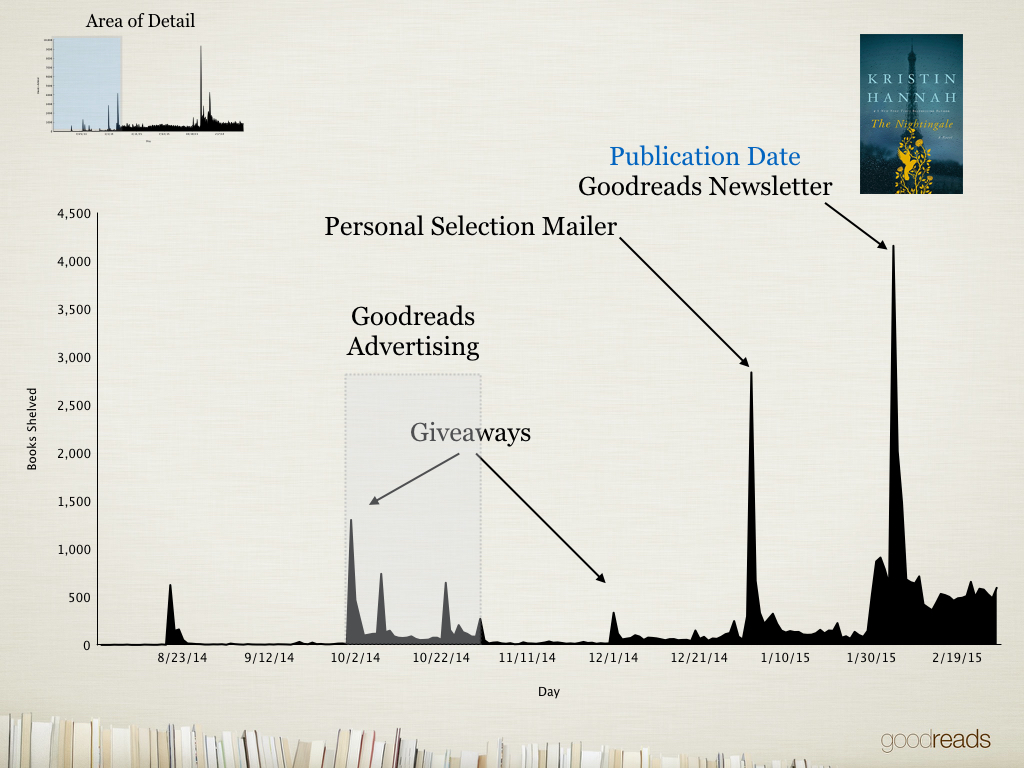
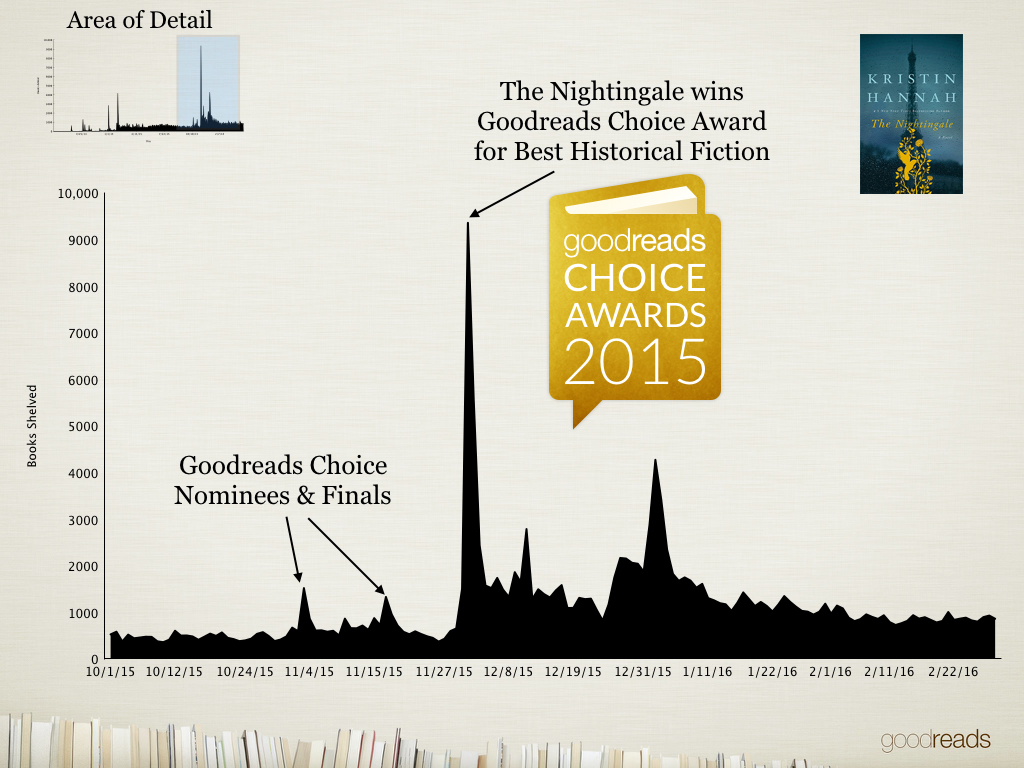
If there’s anything I regret most about all the screw-ups I made launching my first indie book, it’s that I didn’t do anything before the launch other than write the book. Is that weird to say? Anyway, I got an interesting case study sent to me recently by Goodreads that I thought did a nice job of outlining how the big press houses work the system for book launches now, that make a real joke of the approach I took (or the lack of an approach, which is a little more accurate).

I wrote recently about what I view as the key success factors for book marketing in the modern age, centering on:

  1. Mainstream name recognition
  2. The cover
  3. The genre
  4. Reviews
  5. Awards
  6. Word of mouth

Have a look at the case study using the link in my first paragraph to see these in action. The emphasis for St. Martins Press in this launch was predominantly up-front and prior to publication. Who knew that was when the real marketing work should have been done? I was busy just trying to get the plot points to tie off without seeming forced and trying to decide what a typical book length in word count should be.

They strategically ran paperback giveaways, larger that normal (about 200 in this case) with good follow-through for reviews and word of mouth. Then they tied this in with focused advertising. I have been more impressed with Facebook’s approach to targeting ads versus anyone else, certainly more impressive than Twitter. Zuckerburg really seems to have done a nice job painting us all into neat little demographic corners. When St. Martins got the buzz building, nurturing it like a desperate fire on a desert island and watching the ‘to-read’ listings on goodreads as a measure of that, they launched a personalized mailer to readers who’d expressed an interest in the author.This was all prior to publication date.

nightingale2

When word of mouth and buzz built to the point that nominations happened for listings and awards, St. Martins Press doubled down again with giveaways and ads to further fan the flames. Very strategic, this approach. Not surprisingly, it was a momentum thing no different from a football game or a successful startup company. Maybe everything that’s good in life is a momentum thing. Who knows?

Indie Book Marketing With A Vengeance

MCGRAW

It’s funny how so many people that hear you published a book scratch their chin, smile a bit and tell you they’ve been thinking about putting one together too. “I’ve got a great idea…there’s this_____”. Fill in the blank. For me, writing them is the fun part. Blasting words into the laptop down at the lake or acting out the dialogue somewhere quiet to make sure it sounds like something people would actually say…that’s all adrenalin for me. It’s the terrible part that happens after it’s done where so many hold our noses and dive in anyway. It’s the marketing. Selling it. Making people aware that a piece of you has been captured in the narrative; and it’s available on Amazon and Barnes & Noble, waiting to change the world. I dove into that swamp in the Fall of 2015 knowing absolutely nothing about what to do next. It isn’t my intention here to tell anybody how to do it right because I’m no example to follow. It’s very likely, however that I can spare somebody from making the same sorts of mistakes. I’m actually really good at making mistakes.

When I typed the last sentence on a rainy beach in Maine, I was pretty pumped, of course. Who wouldn’t be? It’s huge to actually finish something that’d been stewing for that long. Look at that guy grinning…he has no clue what he’s in for. Anyway, I would have told you – should you have asked what’s next if you’re going independent – that you make the book as widely available as possible through Ingram Spark and Createspace, in electronic and paperback, set yourself up on social media, do a few giveaways, and start advertising. No problem. It’s a waiting game till the sales figures just start rolling in. Unfortunately, that wasn’t my experience; and I’ve made some boneheaded moves you need to know about. I won’t get into the decision whether to go indie or to find an agent or whatever. Pros and cons to either, so read up on it and choose wisely.

  1. I published the book before getting any reviews on it from anyone, before submitting to any contests or major review houses, and before setting any presence of substance up on social media. Ouch and double ouch.
  2. With a new Adobe Creative Cloud membership, I learned Photoshop and made myself a slick cover that I loved and everyone in my family loved. Neither they nor I have the first clue about cover design or the marketing principles behind them. It looked terrible in a lineup with other books online and drew no attention whatsoever. Ouch again.
  3. I ran a paperback giveaway on Goodreads but only made 20 books available, listed the contest for way too short a time period, and made too little emphasis on securing the reviews afterwards with zero follow-up. Almost all those copies wound up for sale on Amazon.
  4. I spent entirely too much valuable time screwing around on Twitter and Facebook, and even spent money on a social media marketer. Zero payback. A money pit that echoes.
  5.  I spent advertising money on Goodreads and Amazon though I had only two reviews. Anybody clicking through to the sell page just left because it looked so barren. I do the same thing when I’m on Amazon, should have thought of that. Didn’t.

Okay, that’s stressing me out so I’m going to stop right there. Anyway, through trial and error, deep research and conversations, and through reading up on what savvy marketing guys like Derek Murphy  and Dave Chesson have to say about this, I’ve distilled some principles of indie success that I believe hold true. There are probably exceptions and folks who caught lightning by chance; but this is what I wish I could have handed to myself there on that Maine beach. Would have saved a lot of effort and made the whole thing more fun. Let’s call it the MCGRAW principles:

M for mainstream name recognition: If the public has heard of you, favorably or unfavorably, talent or no talent, irrespective of the quality of your work, you’re far more likely to sell books without even trying. It’s hard to leverage this one unless you’re willing to put the time and effort into guerilla marketing or through interviews to force it.

C is for the cover: Think about how you pick books yourself, even online. This is a big deal. Murphy outlines seven principles of effective covers here. The cover should look professional and should look like it belongs on the shelf next to similar books, like it’s in the club. Spend money on this. It’s worth it; and there are thousands of talented folks who will do it inexpensively. If nothing else, get a pre-made cover customized.

G is for the genre: You can see this spelled out for you on Amazon book count listings by genre or in places like Bookbub where they show how many people have signed up for science fiction freebies versus general literature or romance freebies. Lesbian vampires will make sales happen for you. Mythic and philosophical musings on historical eras probably won’t. Just know going in what your audience looks like and where they feed.

R is for reviews: You need at least ten of these. They’re extremely difficult to get, even from people who read and loved your work. Probably the majority of the reviews online were paid for somehow or achieved through connections. Disheartening, but true. Giveaways done properly are the right way to make this happen; but it takes timing, good publicizing, and personal follow-through. Don’t waste any time or effort getting people to your sell page if there are no reviews there.

A is for awards: Awards by themselves are a bit unlikely to sell your work unless it’s one of the biggies. Snake oil salesmen are out in force trying to rape indie publishers with awards right now, so beware. However, awards will apparently push people who are on the fence over to the side where they spend money.

W is for word of mouth: Advertising can fall here, sure; but any way you can get people talking about you or the work will make it rain for you. Influential book blogs can help here. Being on even a local tv appearance can help. Generating buzz through charitable or newsworthy events can help. There are no end of strategies you can read about online of how to force this.  

So there you go. At least, that’s my take on it. Painful lessons. Good experience. Listen to people who screw up a lot. They know things.