If you could use some Star Trek optimism right now…

I love reading introductions by people like Harlan Ellison and Stephen King almost as much as their books. There are cool insights into how they think in there, what pisses them off, and the sorts of trouble they maybe got up to when they were normal people. Not sure which intro of Ellison’s it was, but I recall that he got sideways with Gene Roddenberry once when the draft script of ‘City On The Edge Of Forever’ had crew members doing drugs or something…being regular folks, basically, with problems and shortfalls and whatnot.

Not my point, but stick with me here.

What I’m saying is Star Trek at its core was supposed to be a super optimistic picture of what could be. The troubles they have in those stories aren’t meant to be of their own doing. Roddenberry was saying we’d get past all that noise. Our troubles would be external to ourselves: things we run into out there in the great beyond. That’s why they didn’t want Ellison monkeying around with troubled people and vices. It’s a beautiful picture, actually, and one that inspires a host of people to do amazing, paradigm-shattering things out in the real world today.

Somewhere though, Star Trek lost its mojo. My opinion – don’t tweetblast me! I’m not seeing much these days in science fiction that inspires anybody to do anything but rage against things. To be honest, I think there’s a place for raging, but there’s as much of a place (if not more) for painting relatable portraits of what we could aspire to be. In our mad rush and culture war to help everyone see themselves as they are in their fiction, we’ve left behind the idea of giving people aspirations of who they might one day be.

I wrote a letter to Arthur Clarke once, when I was a little dude. I asked him what a tesseract was and told him I loved his stories. The reason I thought I’d ask him that is the guy inspired me. He just made me want to hop into the pages and marvel at the machines and dreams in his pages alongside his characters. We never mailed it, unfortunately. I don’t think my dad felt the need to pay postage to Sri Lanka.

Seriously, read Fountains Of Paradise for an elevator to space, or The Deep Range for guys in mini-submersibles herding whales, or Rendezvous With Rama to discover a marvelous and maddeningly well-designed alien artifact, or City And The Stars for people who can just opt out of thousands of years at a time. It goes on, man. It goes on. The guy makes me just shake my head and chuckle at his wild ability to make me want to be there…to see those things…to build those things!

So as I’ve sat over the last few years writing short pieces for a collection, there were so many times in an airport, on a train, in the car, or staring out a rain-fogged window that I intentionally summoned those same emotions to inject into the stories. I wanted to inspire myself with what might be. Sure, I built terrors too! I killed a lot of people and made a mess of the future. But I kept dreamers and wonder-workers and brave souls who genuinely aspired to forge better things…to overcome all that sought to swallow them and seduce them.

We went live just in the past couple of weeks. I’d be incredibly honored if you clicked over and took a look. It’s a collection of flash fiction and short stories, compiled such that the chapter endings include vignettes that collectively pose a riddle. The whole work is a puzzle to solve. Hopefully, it’s one that brings a smile to your face when it’s worked out (or if you cheat and read ahead!).

Take care, my friends. Dreams are engines.

Be fuel.

You Need To Hear From This Guy. Seriously.

DocBrock

Just how many people do you know who’ve studied pathology and martial arts? And taught themselves to write music and create video games? And have enough energy to power an Iron-Man suit? Let me introduce you to a guy I got to know during the quarantine. This is worth your time, seriously. You’ll learn something and will probably want to go play his game afterwards.

Anyway, if you’ve spent any time around here at Grailrunner, you know we intentionally dig for things that are interesting, off the beaten path, often with a futuristic slant. Go watch Youtube’s original docu-series ‘The Age Of AI‘ to see our tribe. Go read something by Barrington Bayley or Jorge Luis Borges or Arthur Clarke to see our warchiefs.
inspiration-creator-series-logo-circular

And give this short interview a read too. Here’s another one of us. His name is Brock Joseph Oliverio, though we’ll call him Doc Brock because that packs a punch. And ‘packing a punch’ is something he knows well. We sat down to ask about what led him to such an interesting life, where martial arts is going, and an exciting video game with a unique and futuristic twist you need to hear him describe.

We’re months into a global pandemic, so of course you have to tell us your background and how this COVID thing has impacted your day job.

Indeed. So I am a unique sort of practical scientist.  I was a Biology and Chemistry double major in college completing both in 4 years with a steep focus in molecular and cellular phenomena in the former and quantum mechanics in the latter.  I also have an M.D. with broad training in psychiatry, surgery, pharmacology, and epidemiology, but I ended up specializing in microscopic medicine known to the public as Diagnostic Pathology.

I didn’t go on to research, though.  I actually practiced medicine for a little over a decade where I acted as a cellular and molecular physician diagnosing people’s ailments, such as cancer and infection.  My performance led to leadership roles in hospital administration including becoming President of the Medical Staff, then Laboratory Medical Director, and finally Chief of all of Diagnostic & Rehabilitative Services where I oversee 105 employees aimed at providing diagnostic and therapeutic tests for patients.

So the impact of COVID-19 on my day job has been one of training and problem solving.  I am consistently tapped by employees and leaders across my organization for knowledge and solutions on how to deal with the SARS-CoV-2 virus due to my unique background.  I was even  one of the first laboratory leaders in my region to bring in the detection system for the virus.

So how did a guy studying pathology in West Virginia wind up pursuing martial arts?

It’s actually the other way around!  When I was 5 years old, my father came to me as I was punching and kicking bad guys (i.e. pillows) and said, “Would you like to try martial arts?”  For some odd reason, I said yes not quite knowing what I was getting myself into, but I just remember thinking that I had discovered something that I always knew about myself.  Now, I just knew what it was called.

My first class was a disaster!  I was so young and it was so intimidating being around a classroom full of not just much older kids but adults!  The school was just being formed and was in an old, dusty building in the wharf district of the small college town we lived in.  I had trouble staying on the practice floor because of my age-appropriate social anxiety, running back to my father in the observation area before the class was even finished.

When the next class came up, my father asked if I would like to try again.  I said yes and never looked back.  I’m 42 now and have been training ever since.  It’s a way of life for me, but it also answers the fundamental question of why I got into it in the first place: how do you deal with another being on a physical level.

The pursuit of that question led me to want to know everything about the human body.  With my aptitude and interest in science, medical school and then pathology were perfect, natural fits, and the discipline and focus I learned from martial arts gave me the ability to complete them.

What’s the future of martial arts? Where is it headed?

The future of martial arts is actually one of originality.  Human beings have gradually commercialized martial arts by breaking them up into styles for easy consumption.  These styles were more about what you don’t do than what you do do.

For example, I was classically trained in kung fu.  I was taught amazing strikes, but any type of ground work or grappling was not only avoided but sometimes shunned or even looked down upon in my circles.  As such, those fighting situations were ignored, and I had no way of dealing with someone who got past my strikes.

This, of course, was no big deal because I did not practice with anyone who did grappling.  I only practiced within my kung fu class, and everyone did exactly what I did.  I never had to deal with externalities not contained within my system of fighting.

Enter the Ultimate Fighting Championship.  On November 12, 1993 modern martial arts was put to the ultimate scientific test when each style would start to be put up against the other.  As we went from UFC 1 to 2 to 20 and beyond a pattern emerged: Brazilian jiu-jitsu was dominant.

Many thought this was the deciding experiment that finally proved which style was the best, but it turned out that it was just the martial arts community composed mainly of strikers having the same realization as I did regarding the gap in our training.

You’ll notice that as UFC went on, all of the strikers began training Brazilian jiu-jitsu and all of the Brazilian jiu-jitsu fighters began training striking!  As such, the martial arts styles that were once one and united have begun their slow trek back to originality.

I think the future of martial arts is a continuation of this phenomenon. From my perspective, I have found that the principles of fighting that apply when you are standing up apply when you are on the ground as well.  Also, the human body can only move in so many ways.  For example, an elbow only bends so far and a shoulder only raises so high.  As such, there are only so many fighting movements possible and these movements have been possible since we became bipedal.  Physics sure haven’t changed either!  So the future of martial arts is getting back to basics before things were separated and approaching the problem of dealing with another being on a physical level by bringing ALL of our assets to bear in the physical universe we occupy.

Without naming them specifically, who was one person that most impacted your life in a positive way and why?

Hands down that would be my father.  He is and always has been my number 1 fan.  Growing up he provided unlimited encouragement and guidance in my life’s pursuits and showed me the proper attitude to have in life by example.  I can say without a doubt that without him I would not be where I am today.

Sell us on Future Fighter. Why is it amazing?
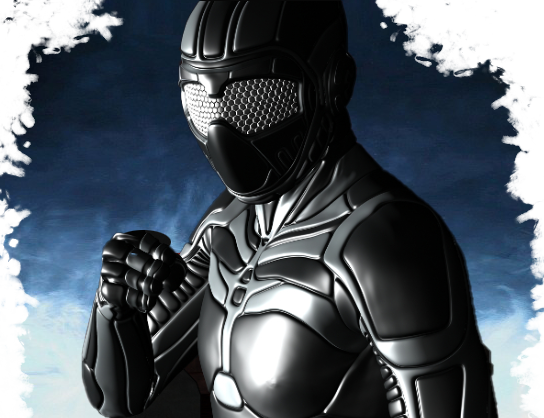
Knight

Because you can finally do everything you’ve wanted to do in a fighting game but couldn’t.  Future Fighter is a translation of my real-world martial arts and sparring experiences into the game world.  As such, you have more control over your character and more accurate representations of true fighting movements than you have had before.  Because the developer, martial artist, science expert and motion capture actor all share the same organic cephalic neural network, there is nothing lost in translation either.  When you play Future Fighter, you face the mind of a martial artist in a sci-fi universe.

What’s involved in making and marketing a video game as unique as this?

Discipline.  As you can imagine, I have a busy day job, so every nanosecond spent outside of that day job has to be effectively utilized and organized to make game development possible.  That same discipline has to be put into getting the word out about the game so other people can discover it and play it.  Overall, it means being systematic in my daily approach to both development and to updating all of my networks, customers and fans with the latest news and progress.

Skill, of course, is a big factor, too.  I unwittingly started my game development journey as a musician in high school when I taught myself to play the piano after being inspired by the “Ending (Boss)” theme from Star Fox.  Then, once I learned how to hook up my synthesizer to a computer in college, it was all over.  I started writing songs and making sound effects for a friend’s video game in medical school who then asked me to be on his game design team.  Another member of that team and I went on to form our first video game development company.

As a two-man crew, I had to start filling in the gaps for necessary skills that the company needed.  It started with web programming and then game programming.  My team member decided to become a full-time dad, but I decided I would continue my game development career with a solo project called Future Fighter.  I picked up visual effects, motion capture, 3D art, and animation to round out my skill set.

In fact, when you play Future Fighter or interact with me online, the only content that you interact with that is not a Doc Brock original are the 3D models.  Could I do those?  Yes.  Would I ever get as good as these amazing 3D modelers that you see in Hollywood.  No.  So I pay these good people to use their 3D models and then bring them to life in Future Fighter with motion capture and my own personal visual effects tweaks to match the vision in my head of that universe.

Pick one character from the game and introduce us.

That would have to be my digital doppelganger, Omega.

Omega is a curiosity in the Future Fighter verse.  He seemingly has technology and abilities that no one can really explain.  Personally unknown to the two main factions, the Priests and the Elites, Omega just does not fit into the current structure of humanity that our future heads to.  As such, he becomes a real problem for both sides exposing a deep, dark secret about the true nature of power and freedom in the universe.

His fighting style literally is my fighting style.  I have motion captured the moves that I use every week in my sparring sessions and given them to him.  Also, the Shadow AI that controls him in game approaches you the same way I approach my opponents every week in my sparring matches.  Tactically and technically, he is me.

It’s fun and exciting to hear your enthusiasm about the kind of stories we publish at Grailrunner. What attracts you to science fiction?

The possibilities!  We all know eventually we are going to get there: teleportation, flying cars, a world without cancer, etc.  The problem isn’t our lack of abilities.  It’s our fear-based brains.  Fear holds us back from trying new things because we’re afraid of the deleterious consequences.  As a result, progress is slow — machinatiously slow.  (There was not a good adjective to describe how slow I think the progress is, so I made one up.)

Science fiction gives us the ability to see the world that will be — without the limits of our fear or our finite lifetimes.  In doing so, it helps us find out who we are and who we want to be.  What could be better than that?

Where can we learn more about what you’re up to?

Docbrockgames.com is the place you want to be.  It has all of my updates and gives you options for your favorite delivery method: social media, blog, email list and even a forum!

Anything else you’d like to tell us about?

Yes.  I’d like to tell you what a treat it has been getting to know you and participating in this interview.  Reading the excellent sci-fi published by your website is inspiring and imaginative.  I look forward to sharing it across all of my networks so that others can enjoy it, too.
 

Scorpion Void

dna-1903875_1280

(Periodically, we include short fiction here relating to some of our intellectual properties from the developing books and games. Please enjoy this one!)

The Bioverse was the sum total output of trillions of biological nanobots and sensors inside the bodies of all humanity, projected graphically and acoustically around a one-seater deck that looked like a flight simulator but was so much more. This is a story of its golden age, of an intelligent and wildly mutating plague and the daredevil CounterBiotics pilots banded together against it in this manufactured universe of information.

Blind to whose bodies they sailed, mercilessly raiding clusters of increasingly deadly and sophisticated microbes, the CounterBiotics pilots were the final hope in a desperate time…

I was there that day, at Scorpion Void…the day we saw its face. I still see it in quiet, lonely evenings when I’m locking up, and something flitters just in the corner of my eyes. It’s outside the windows, even on the second floor where I keep my bedroom. It’s at the foot of my bed as I drag up the blanket. It’s behind my eyelids.

The Void.

I was there, and I can tell you what I saw. But you won’t get it unless you know what we expected, what was supposed to be there. You need to feel the thunder in your bones like we did, because we used to laugh back then. We were cocky and funny, with nicknames. We thought we were chasing cancers and novel viruses, unrelated super-bacteria immune to medicines. Until Scorpion Void, the plague had a thousand names, and it was an undirected force of nature subject to our phage torpedoes and morphosomes. It was a day when we lost our ignorance and our innocence.

There were three of us: two Americans and a Frenchmen, not that it matters when you’re inside. The mission was to investigate an anomaly in the data. The Bioverse was blank where it shouldn’t have been, entirely empty. You’re not able to know whose body any part of the data comes from, so the Void could have been in a dancer on a stage or inside someone choking on a hospital bed. Whoever they are, they made it. The crevice and ridge are still there; I’ve been back many times to be certain.

‘My torpedo is infected!’. That’s what I remember the Frenchmen said. It was impossible, of course. We uniquely designed the phages based on what we saw. Nothing remote like this could have adapted to us. Yet there it was, inserting its code directly into our arsenal’s genome.

When I looked into that canyon, that black precipice into nothing at all, I saw the plague. I saw it, lashing and snapping at me. Genes I’d seen all across the Bioverse were nested there in a tumor. It still bore the code from a thousand outbreaks, a sick library of pandemics. Impossible. All of it was impossible. And now, our own weapons were compromised. If we fired, we’d only make copies of our enemy.

I saw the plague’s face that day, friend. And it’s a raging, gambling beast looking to kill us all. There’s one thing about seeing a face though.

You know you can find it again.

(c) Grailrunner Publishing

A tale of the Bioverse.


Clueless In The Sunless Citadel

map and firebeetle

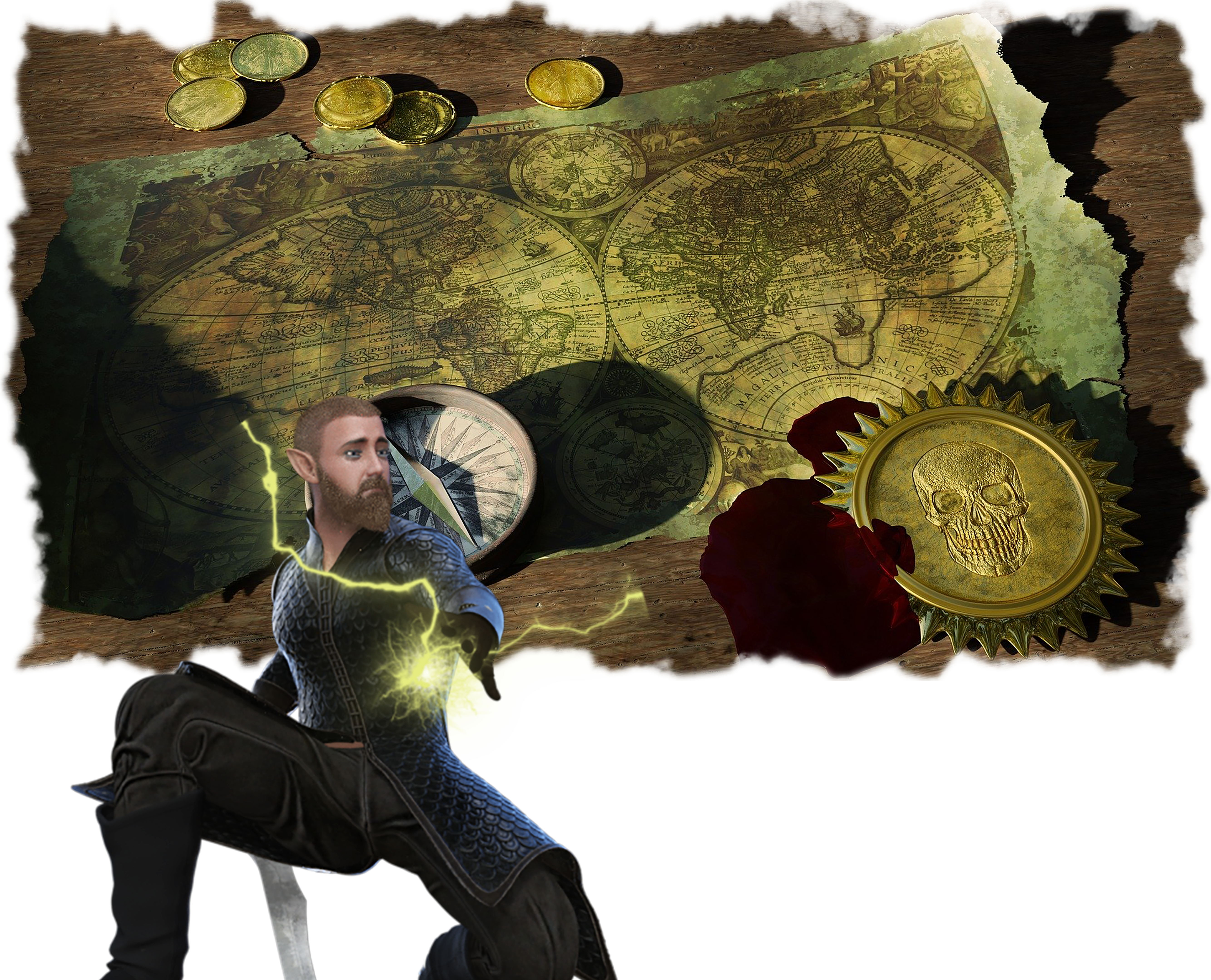
A couple of weeks ago, to pass the time in quarantine between the escalating parade of conference calls, I pulled my old Dungeons & Dragons starter set off the shelf and cracked open a book I got for Christmas (Tales Of The Yawning Portal) from Wizards Of The Coast. Obviously, most D&D packaged adventures are for groups of people and are designed to be led by a dungeon master. I hammered out a few guidelines for converting them to solo dealie-o’s and wrote about that here.

It was such a surprise how things turned out, and when the characters started to pop for me, I thought it would be fun to write and illustrate a short pdf of how the adventure turned out.  It was a far wilder ride than I’d anticipated, which is a rock solid testament to how powerful the D&D system really is and why it has such a special place in so many hearts.

The kind folks at NaturalCrit have graciously made available a tool able to publish documents that look almost exactly like the Wizards Of The Coast 5th edition D&D materials. It’s here, you should give it a try if you’re into that. It’s what I used to format the document.

There are over 20 custom illustrations inside, mostly done in Daz Studio, Photoshop, and a little Blender.

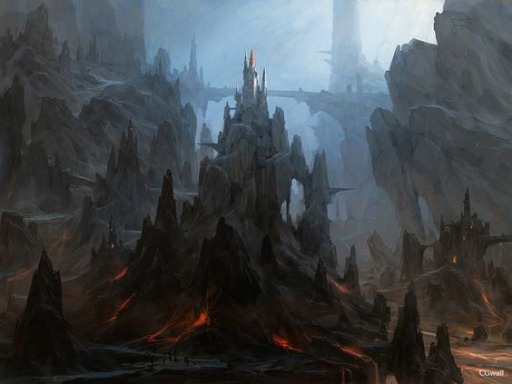
The adventure I chose was ‘The Sunless Citadel’, so the setting,  three of the characters, and the encounters are all drawn from that book. Not mine, and property of Wizards Of The Coast, completely.

The story though, that was pretty much all the roll of the dice. Sticking to the rules I’d outlined, I only read descriptions of rooms once I’d decided to enter. The dice decided whether something worked or not, and who lived or died. Seriously, things just went nuts with this.

For my very first game of Dungeons & Dragons way back in the day, my buddy was as clueless as I was about how to play and gave me my character’s name: Firebeetle. That’s the elf that led this delve into the Sunless Citadel.

surrender

I hope you like this adventure, as it was a pain and a joy to put together. I wish someone else was writing Firebeetle now, because he cracks me up, and I’d like to know where he goes next.

Maybe you can tell me.

Here’s the link to download Clueless In The Sunless Citadel.

Till next time!


Solo dungeon crawling in the quarantine: The Sunless Citadel

Sunless citadel image

Just getting this out of the way now, I don’t really know how to play Dungeons & Dragons correctly. I played a couple of times when I was a kid, and I’ve messed around with my own kids a couple of times. So there – no comments about how a 1st level whatever shouldn’t be able to cast doomahickey.

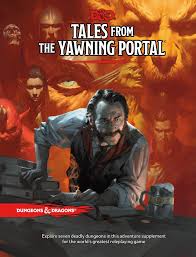
However, I saw this cover last summer as I was puttering around:

Portal

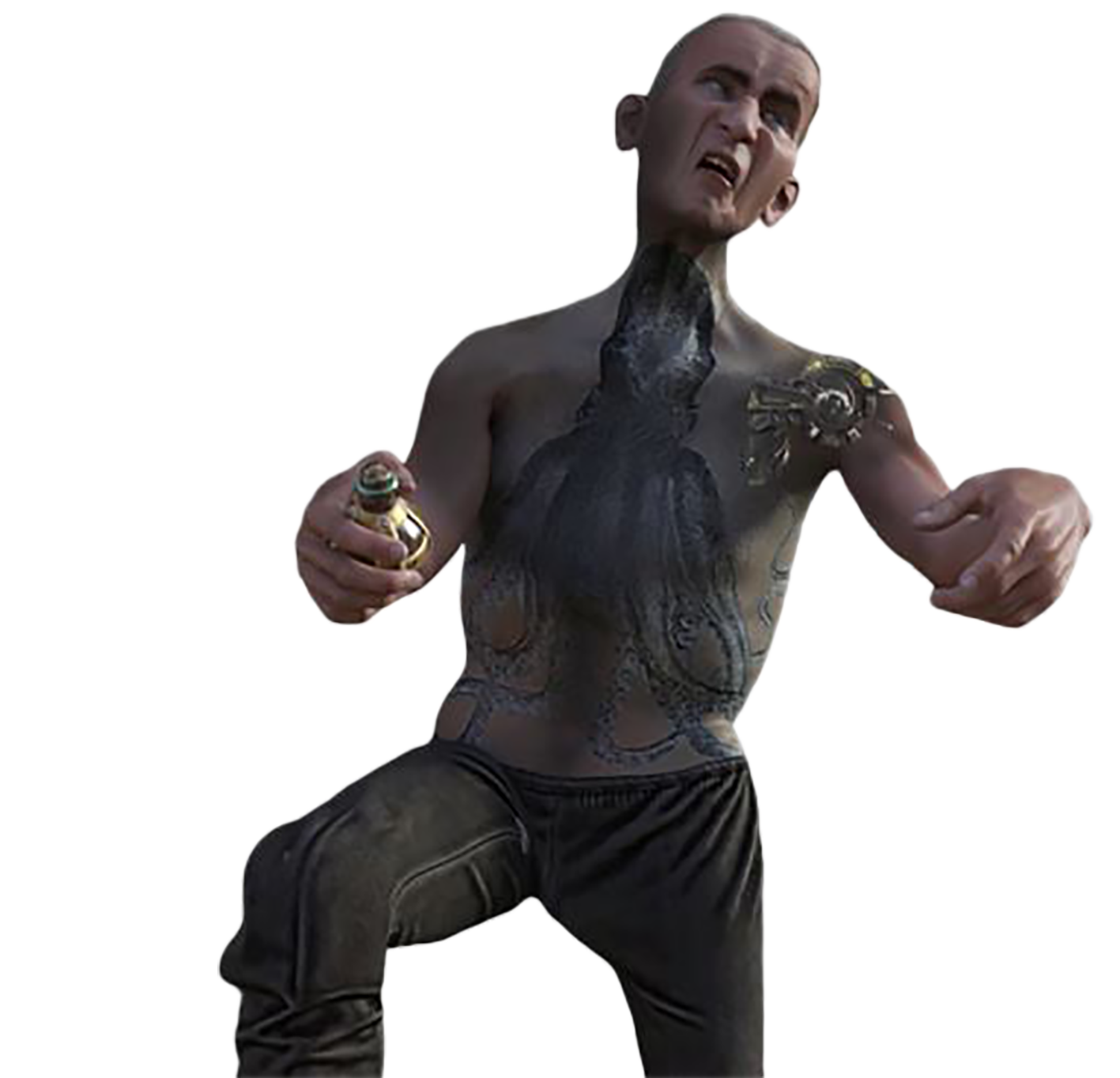
Guys! Come on. That’s just good art. Intrigued, but no use for the book, I passed it by. It inspired me to shoot for a little more grotesque imagery in the art I was putting together for the Salt Mystic game though. Like this guy:

Isolated storyteller

I listen to a lot of nerds on Youtube when I go running though, and came across a terrifying dungeon the game’s creator, Gary Gygax, concocted back in the day called ‘The Tomb Of Horrors‘. I guess Gary’s idea was to put veterans of his new game in their place and make it pretty much impossible to survive the adventure due to traps and false endings and tricks. Honestly, such a cool guy, that Gary! You should hit up Youtube on that sometime to hear stories of guys who were there at those early cons trying to survive Gary’s machinations.

When I came to realize that tomb had been reproduced in the same book that had caught my eye, I added it to the Christmas wish list and lucked out. My wife is pretty cool that way. And it sat looking cool on the shelf until now. Quarantine for COVID19 and, to be honest, no real connections out there that play the game anyway.

I was thinking recently, though, about how to take solo adventures between conference calls. It struck me that without a real clue on the rules and without a dungeon master telling the big story, that this would be hopeless and sad. I tried some random dungeon generators online and found them repetitive and lifeless.

So I cracked open the ‘Tales Of The Yawning Portal’ and read up on the basics of the game from an old starter set laying around. There is a starter adventure in there called ‘The Sunless Citadel”, designed for newbies to level up quickly.

I’ve just finished a wild ride that, if I’m honest, went places I hadn’t expected and took crazy turns…was kind of nerve wracking at times…and ended in an interesting place with popping tension for a follow-up. I might write it up and post it here as a pdf just to make my point that this really wound up looking like something I’d planned when I absolute had not.

(Update: I totally DID make this an illustrated ebook, available for download at the top of this article.)

I didn’t even cheat. Much.

Anyway, the point of this post is really to share some guidelines I came up with to re-engineer a packaged adventure from Wizards Of The Coast intended for group play facilitated by a dungeon master into a solo adventure that’s surprising and interesting.

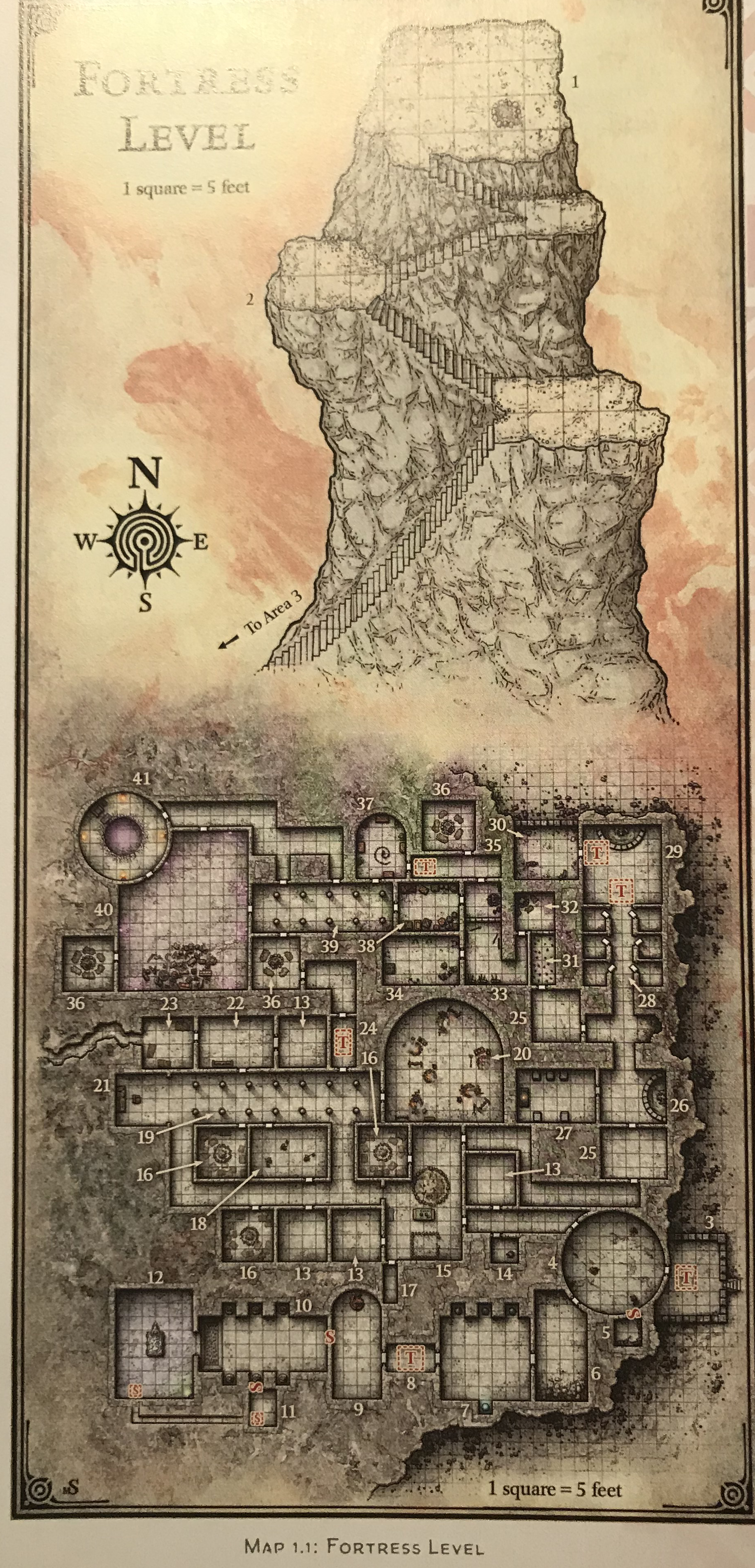
Sunless citadel map

Principles:

  1. Carefully build the character sheet with all the spells, inventory, and weapons you intend to use without cheating and adding things later when you need them
  2. Since you won’t have companions (at first), think through what challenges you’ll face and add items and skills to deal with them (I figured I’d need to pick locks, so brought along tools for that)
  3. Pick an adventure that has decent maps and plenty of rooms to explore, with a story that adds purpose to what you’re trying to do
  4. Don’t read ahead in the book, only the description for a room or corridor after you’ve decided you’re entering based on the map and the story
  5. Once you’ve entered, deal with whatever you came across without cheating (I accidentally reanimated some skeleton archers and almost got toasted)
  6. If the adventure doesn’t already require it, find a roll table for encounters (on-line or in the Dungeon Master’s Guide) and make the occasional surprise roll
  7. Follow whatever side adventures are offered (I wound up making a daring raid into the goblin side of the citadel to recover a little dragon they wanted back) and be willing to deviate from the original plan
  8. If a character offers to join you, let them. You’ll need help when things get rough.
  9. Try and get in your new companions’ heads and determine what they might actually do in these circumstances, then deal with that (one of my guys would more logically say she was joining me but turn her back on me as soon as she could).
  10. Journal out the entire story, including dialogue if you can. Things get muddy and dull unless you can reflect on where you’ve been, what you were thinking, and you lock things down tangibly.
  11. Don’t cheat. Don’t cheat. Don’t cheat. The rolls are the rolls. If the lock won’t open, the attack doesn’t hit, even if you’re killed. Don’t cheat.

So maybe give it a shot yourself, if you’ve never tried. In my case, the final scene was a cliffhanger: I suppose the mission was accomplished, but the little dragon is furious with me, the lead of the kobolds is chaining me up, and my other companion is missing. Plus, there are some pretty ticked-off goblins who are probably coming for all of us.

And also those weird noises coming from the lower levels…

Be safe, guys. Till next time.


Welcome to the Bioverse

Bioverse cockpit

We’re super close to wrapping up a flash fiction collection for publication; and it seemed timely to bring you into the loop a bit on some of the key ideas tying them together. One of the biggest ones had nothing whatsoever to do with COVID19 or any global pandemic because I started writing the dang thing two years ago.

It’s a little creepy now, though.

I was just was thinking along the lines of global outbreaks and mutating diseases…and what fantastic but maybe plausible mechanisms might science fiction offer to do something about them. In the collection, you’ll see much of the world’s population hit very hard with a rogue prion that triggers wild mutations. The resulting cascades of diseases appear with thousands of faces over a hundred years; and humanity forges an incredible approach to face them down.

It’s called the Bioverse. Let’s head inside to see what it’s all about. Here’s a short piece of flash fiction. It’s called THE CHASE. I hope you like it.

Banner file

You can tell yourself the Bioverse is just a visual representation, a rippling and illusory curtain of data. You can steady yourself against the deck’s cockpit and acknowledge that it’s not really sailing anywhere physical. Look around if you like – maybe you’ll catch glimpses of the walls or lighting or soundproofing panels.

More likely, you’ll black out or vomit into your lap. It’s a lot to take in.

The aggregate input of quintillions of nano-scale machines and sensors embedded in practically every human alive throughout the globe has been rendered in this artificial universe for specially trained CounterBiotics agents like you to sail its front lines. New viruses and exotic bacteria are evolving at rates never before seen, in seconds rather than days. Rogue proteins and phages stalk the world, triggering DNA mutations that launch into the wide world in a matter of hours. It’s a devastatingly dangerous time.

And it’s a very good thing you’re here to do something about it.

Those images are data. You’re rocketing through actual people out there, who might be at the grocery looking through apples or coughing their last breath in a hospital bed. You’ll never know who they are; that’s hidden from you. In fact, you’ll hop seamlessly from one person to another like crossing an undefended border. It’s the chase that matters. Only the chase.

Imagine a ski-slope shaped chart, a pareto. The highest bars on the left are the people with some nasty disease that we’ve set in our sights…something that steals away pregnant mothers and single dads and wide-eyed little kids who can’t understand what’s happening to them. Imagine these diseases, these plagues, as hungry prowling beasts drooling in the shadows. They’re scary, aren’t they?

But we’ve built this miracle place. And we’ve tasked you to chase these beasts from their highest concentrations down to the last gene somewhere that’s coded for it. And we’ve tasked you to be merciless and slay them all, right where they hide.

It’s the chase that matters, my friend. Only the chase.


(C) Brian Bennudriti

Grailrunner Publishing

Nonlinear adventures: the mind-twister for Coronavirus lock-down

ball-420359

I hope everyone is staying as safe and locked down as possible till the COVID19 issues are a distant memory. The hope is that in no time at all, we’ll be looking back proudly at how well we weathered this whole thing and how we pulled together as families and neighbors.

Meanwhile, it’s a great time for projects, right?

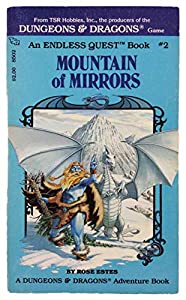
When I was a little nerd, I was a huge fan of the ‘Choose Your Own Adventure’-style books branded ‘Endless Quest’ that let you dive into Dungeons & Dragons worlds and set your own course. Battles and mysteries and spooky beasts…I was really into that. Here’s one I used to read:choose own adventure

Around Christmas, I poked around in a few Cthulhu solo adventures, which brought those old books back to mind. I still have a few on the shelf; but they don’t really have the same oomph from back in the day for me. So I wondered is it time to try and write one?

Well, no it’s not. Obviously. I have a short story collection to finish, a novel that’s 3/4th complete and in ramp-up mode, a wargame and merchandising to finalize and market, and a sequel to write. It’s obviously NOT time to start another project.

But still…

My house is chaos sometimes. My wife often asks from across the house, “What’cha doin’?” Two teenagers need a lot of attention. And they eat a lot. And two dogs need stroking and wrestling. So now as we’re cooped up together in the house, it’s kind of nice to slip down to the basement to the little cafe table beside the wargame stuff, leave the lights a little dim, and bust out some words on something completely different from what I’ve been thinking about for years now.

And that’s where this nonlinear thing comes in.

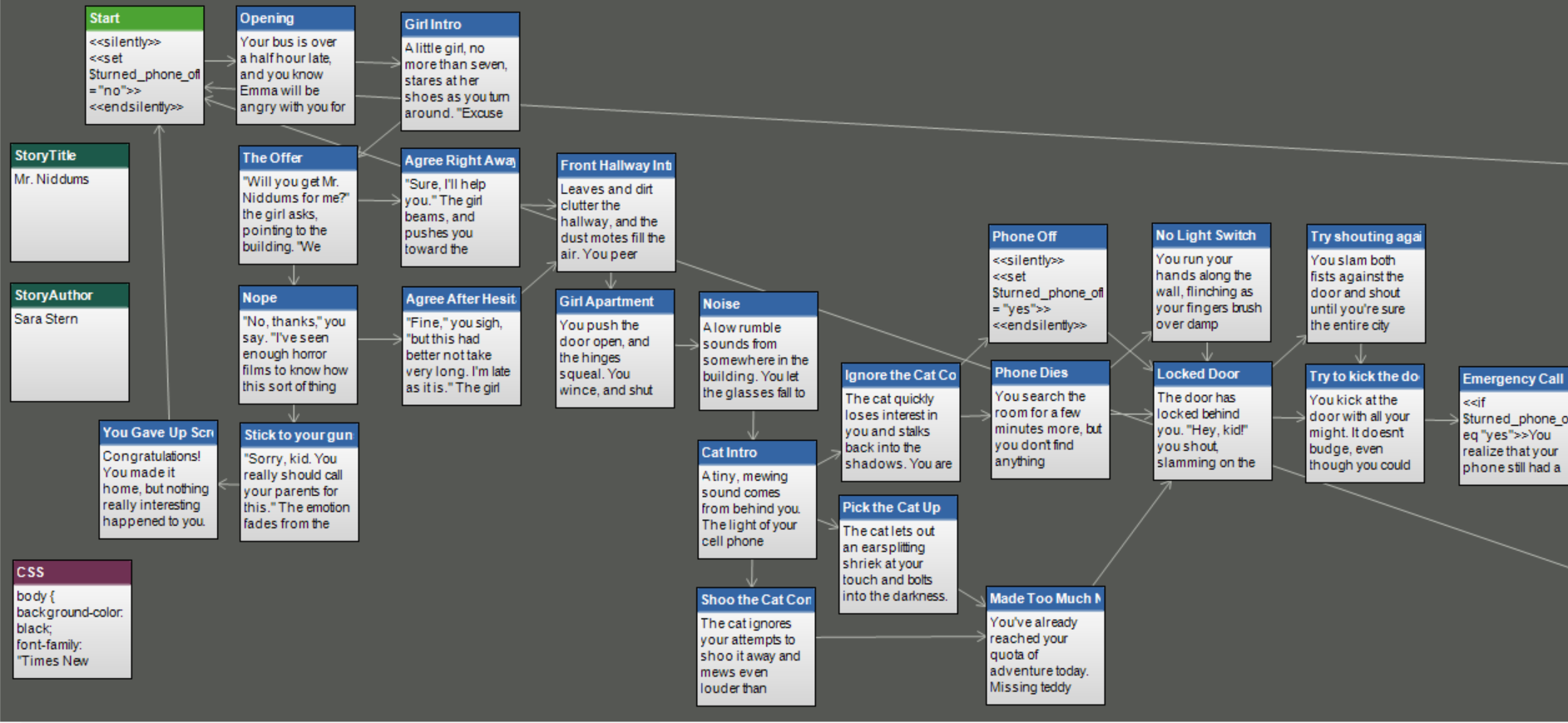
So Twine. Check these guys out here. This is software for writing branching narratives that leave decision-making up to the reader. You can install it as an app or build it from your browser. I’m seeing that it’s a lot easier to learn than I’d thought. Here’s an example I pulled from a kind soul named Sara Stern:

SaraSternTwine1

The post-it note thingies are individual web pages where your text lies, accessible via links the reader is clicking as they make their choices. All you do is put a “[[ ]]” around your choice options; and it creates the new pages for you. Seriously, super easy. Tutorials on this abound. Twine 2.0 is my preferred brew, the default Harlowe format. You can add images, even background images, and sound and video if you want. Though you probably shouldn’t do those last things.

The tricky thing here, as I’m learning, isn’t the technical piece of engineering an html file for posting which contains your adventure. No, not even a little bit.

The tricky thing is chasing a particular decision out and building your beautiful, intricate plot development out along the resulting bunny trail, then realizing that maybe they didn’t pick that option.

Ichiwawa!

Anyway, there will be a new Salt Mystic adventure out hopefully in a couple of weeks…the first non-linear story. Here’s the branding we’re going with:

Salt Mystic Interactive Adventure

It’s called AT THE MOUTH OF THE ROTTING GIANT. You’ll be crouching and scraping your way inside the corpse of a long-dead fallen giant to speak with an ancient piece of artificial intelligence. And you’ll be armed.

You’ll need to be.

See you soon, guys. Stay safe!

(c) Grailrunner Publishing


Just How Naughty Is It That I Didn’t Like ‘Rogue One’?

los-alamos-poster-tall-1536x864

Don’t get offended, man. I just didn’t like the new Star Wars movie. And I was the kid swinging plastic lightsabers at my pillow and floating in the YMCA pool like Luke Skywalker did in the bacta tank. I’m a huge Star Wars fan, in fact; and I don’t think I’m particularly grumpy. My brother suggested something though, that I thought would be interesting to chat with you about.

He said writers can’t enjoy movies.

Before I get to that, let me list for you just a few things about the movie that irritated me to the point of not liking it. Of course there are spoilers here, so do what you need to do.

  1. Forrest Whittaker can act better than that, I’ve seen it. Was horrible to hear the fake British accent and the weird grunting. Horrible.
  2. Felicity Jones offered us one facial expression the entire movie.
  3. Hollywood shorthand overuse:  main character fondly clinging to a memento given them by a lost loved one (Jyn’s crystal necklace). Come on, dude, we’ve even already seen this in a Star Wars movie!
  4. Hollywood cheap emotional trigger overuse:  not one but TWO freaking scenes where someone dies in somebody’s arms after saying something. Ugh. Disney should be above that sort of cheap trick. Also already seen in a Star Wars movie, by the way.
  5. Moustache-twirling villain (with a cape, no less!) stomping through his scenes who can’t see beyond just wanting to rule the world.
  6. I knew the Death Star plans got transmitted when I was six years old. The drama had to come from the characters and their sacrifices; but they were snoozers. I, as always, except Donnie Yen because he could just show up and be my favorite, so that’s not fair.
  7. The Hobbit Effect: they told this story in a couple of sentences in an opening scrawl decades ago, but had to drag out all sorts of obstacles and friction to make something of it. And it felt like it. My son yawned twice. My wife fell asleep.
  8. Shameless cameos: very cool to see Leia, obviously. Also cool to see Senator Organa and Mon Mothma. Those make sense in the story. But did we REALLY need to see the ‘You’d best watch yourself!’ guys from the cantina?
  9. Lazy ‘Braveheart’ speech: Jyn gave a half-hearted and snoozer of an inspirational speech, which even the guys on the mission with her were bored with.
  10. If they have computer files and the ability to store and transmit them, why in the world are they stored on hard drives in a tower where you have to access them with robotic arms? So the heroes could climb around and get shot at? Exactly.

I honestly hope I’m not coming off as too picky here. Maybe you disagree with some of this, but seriously – ALL of it? You’re killing me.

No, I don’t believe writers can’t enjoy movies. There are all sorts of movies I think are genius or just popcorn-munching fun rides. I can switch gears, man. I’ve binge watched about ten Hallmark Christmas romance flicks with my wife in just the last couple of weeks. See, I have depth?

It could be I have a very high standard for ‘Star Wars’ and expect more from them. I was trying to puzzle out, even before the movie was over, what it was that was bugging me so much and what I liked so much about the original movies…you know, whether I’m just getting old.

Harlan Ellison said there’s nothing worth writing about other than people. Chemistry and the dynamic between characters will hook us and keep us hooked with more impact than visual effects or nostalgia or plot twists or slick ideas. In ‘A New Hope’, Han Solo was funny and cocky and bold. Leia was tough and driven and beautiful. Luke was wide-eyed and innocent, but with ties to a deep mythic undercurrent on a hero’s journey. That trinity resonates even four decades later, which is one reason we’re still dealing with shameless riffs off that original story over and over. With ‘Rogue One’ – and maybe this is because of the cheap writer tricks they used to try and shorthand me into liking their characters – I just wanted them to die already so I could get to whatever the big scene was at the end I kept hearing about.

I’m curious what you think. If you loved ‘Rogue One’, please drop me some details on what it was you loved. I just don’t see it. I really, really, really want them to get better at telling ‘Star Wars’ stories.

Oh, and writers can definitely love movies. Maybe they just like to backseat drive too?

Deep Waters: A Case Study In Adding A Mythic Dimension


shicheng

When I read Stephen King’s Dark Tower series or Isaac Asimov’s Foundation, anytime I read Dune, I get the same vibe as I’m planning to chat with you about in this post…that there’s something ominous and huge going on – a belief system or set of myths or larger than life history affecting events. I dig that tremendously; and I look for it in things I enjoy reading. In fact, when I was growing up, you were either a Luke Skywalker guy or a Han Solo guy – meaning you wanted to be the space cowboy or the brooding, mythic hero. I was a Luke Skywalker guy. The literary take on this is it’s much more interesting in your fiction should you plan to include some sort of belief system if you don’t just recreate the Greek Gods or rip off the American Indians with a ‘Great Spirit’ thing-a-ma-bob.

So I’m going to go deep with this one. Stick with me. I finished an interesting study recently that went way farther that I’d expected. I was googling and flipping through the original materials madly, chasing a huge idea that kept getting bigger. It was like pulling up one of those weeds where the roots keep popping up out of the ground and you finally just cut it when you can’t tell how far it’s really going to go. For me, it started with a random book on my shelf from years ago that had an article about the I Ching in it.

Anyway, another article in that book that caught my attention was about the Kabbala’s  Sefirot. The idea of treating a deity like an engineered contraption, like a set of physics rules you just needed to respect to make jedi-mind-trick things happen tickled both the logic and artsy sides of my brain. So I went deep into the Kabbala – read several books and spent some time reading what its believers found attractive about it. No offense if that’s your thing; but I ultimately found it full of promise and marketing but a big fizzler when you try to pin it down to something useful. It did strike me as fascinating though, the nebulous descriptions of the highest realms of reality – a nameless and unapproachable perfect being so incredibly pregnant with the potential of creation it’s provoked by nothing more than a state of mind. The sefirot idea stuck with me, so I poked into where it came from.

Read the Sefer Yetzirah if you like; but it’s gibberish to me. That was where the sefirot were first described. I bought the Pritzker Edition of The Zohar though, because that’s the big daddy of Kabbala, the place where it really took off. Get far enough into The Zohar; and you’ll get the feeling that nobody’s saying what they really mean and you can stretch and pull to make anything mean what you want it to. Still though, the massive superstructure of the universe having a secret dimension to it, a direct line of sight to a divine machinery, kept things popping. So I went deeper to see what influenced Moses DeLeon (the 13th century Spanish author or the channeler, whichever you dig).

I’ll speed up to make my point, though this took a while to trace. What I found was a pattern of about every two or three hundred years, a very similar theoretical apparatus was showing up in some famous writings. The themes are these:

  • There’s an indescribable, unapproachable entity way up in some higher dimension ready to burst with creative potential
  • This entity is either intelligent or just a principle of the universe, depending on who you’re reading; but it can be influenced either way
  • Since this thing’s perfect, it can’t produce things that aren’t perfect, yet here we are with cancer and weeds and birth defects
  • So this thing has levels beneath it, where things get progressively farther from the top and so are less perfect till you get to us
  • That means there are perfect versions of things somewhere, like flawless templates from which all matter is descended

I had discovered what they call Neo-Platonism. If you already knew that, good for you. I didn’t. It made me think of Object Oriented Programming, because it’s exactly the same idea where you have ‘classes’ defined as templates, then make ‘instances’ of them to tweak for where you use them. Going successively back in time…

  • John Scottus Eriugena (800-877AD) said the entity at the top was God; and He was creating stuff so that He could understand Himself. He said the primary Forms I was talking about above were the patterns of all things located in God’s mind. Eriugena was probably influenced by…
  • Pseudo-Dionysius The Areopagite (late 5th, early 6th century AD) who shared the view of a procession of realms from God but said a rock or a worm was a window upon the entire universe if you only knew how to look at it. He was intrigued by finding his place within that procession and seeing himself inside it, focusing on the sacraments as a way to engage with the apparatus. This guy was probably influenced by…
  • Proclus (412-485AD)  who was head of the Athenian school and thought Plato was divinely inspired. This guy wasn’t Christian, so his view of the thing at the top was more of a nameless ‘One’ you could influence with magic rituals. He was influenced by…
  • Plotinus (205-270AD) who studied Plato religiously. This guy had an inherent distrust of material things because they were a poor image of something higher. He said the supreme dealie-o at the top was a transcendent ball of potentiality, without which nothing could exist. He also said because of its nature of perfection, it couldn’t have a will of its own and couldn’t engage in any activity without becoming imperfect. So he had a procession downwards as well, culminating in matter.
  • The Gnostics were around this same time period, thinking the same sort of thing about matter being wicked and only a pale reflection of the perfect templates up there somewhere.
    • You see how big this is getting, right? 
  • Plato (4th century BC) developed in The Phaedo and in The Republic what’s called his Theory Of Forms . He likened us to people who’ve spent their lives watching shadows on a cave wall, thinking the shadows were what’s real when in fact there’s something making the shadows. Plato extrapolated from this idea that the soul was also a Form, and therefore perfect and unchanging, so..you know…reincarnation. He may very well have been influenced by…
  • Parmenides (5th century BC) who revolted against the sciency philosophers by suggesting there was actually a difference between true, objective reality and the stuff we can see. I’m not sure he started all this though because of…
  • Heraclitus (535 – 475BC) which is where my story ends. I read Remembering Heraclitus by Richard Geldard. Here’s a deep well like you wouldn’t believe. Heraclitus may have written a book and just dropped it off in the famous temple at Ephesus, and soundly changed the world. He described ‘the logos’ as a fiery, invisible rational principle that embedded the universe (like the Force, surrounding us, binding the galaxy together). It’s the wisdom of all of creation. Entirely possible it’s this guy that kicked the whole thing off that led to the same theoretical apparatus inspiring people for millennia.

My point is that this nebulous, vague description of a cosmic apparatus appeals to the logical side of your brain because it sounds like machinery; and you want to figure out how to make it work. It appeals to the creative side of your brain because it leaves so much for you to interpret and add to it. In fact, ,that’s just the way the I Ching appeals as well, presenting itself as reflecting the universe in a little microcosm so you can leverage what it’s up to as it changes.

Since the I Ching has been around in some form for 3,000 years; and the ideas the Kabbala built its palace on for not much less than that, those systems have something to say about how to make your manufactured belief systems resonate with people. Appeal to both the right brain and the left. Show how it could make people’s lives better in some way.

I took a real stab at this myself in Tearing Down The Statues, focusing on the idea that history repeats itself at different scales.

Now you go try and let me know how it turns out for you!

“The cosmos was not made by immortal or mortal beings, but always was, is and will be an eternal fire, arising and subsiding in measure.” -Heraclitus

Smashing Paradigms Like Halloween Pumpkins!

Juan_Pablo_Roldan_03

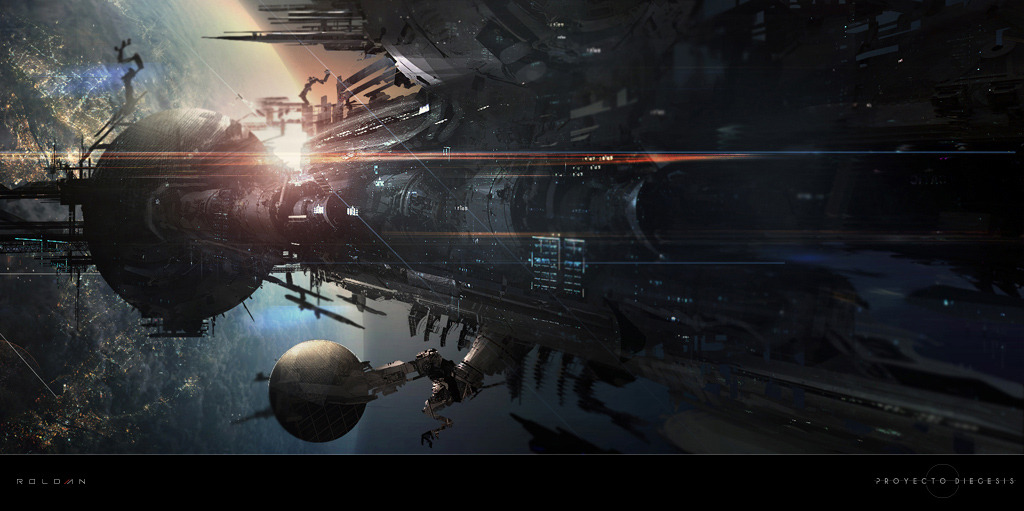
Art by Juan Pablo Rolda

Let’s talk about being stuck in paradigms and not even knowing it. The reason you should care – if you’re an aspiring writer or somebody interested in the craft of storytelling, then you probably want to break some kind of new ground. At least for me, I like to think I’m an original, coming up with cool stuff that inspires other people. When somebody tells me I wrote something that really made them think or that gave them the shivers…or best of all, that made them want to know more…that’s fireworks to me! So paradigms are cancer. Off with their head – if you know what I mean!

Here’s an example, for the science fiction nerds out there like myself. Maybe it was Star Trek that started this, not sure; but have you noticed when you’re watching basically any show or movie set on a spaceship that the doors swish open and closed automatically? That would require motion sensors and motors. The doors always look like heavy industrial steel. In fact, everything looks like industrial steel and huge! Just huge. But stop and think about it for just a second – space has precious little resources; and every bit of mass you take along with you takes up more energy to move the ship at all. Massive freaking spaceships made of heavy steel with silly, unnecessary things like automatic doors are a bit unlikely. “Hold on, genius”, you might say. “These aren’t science text books. Energy is free in my story. If I want doors to swish shut automatically, maybe I’m thinking about emergency containment!” Blah blah. Maybe – and you have to ask yourself this – maybe you’re just coasting on paradigms Gene Roddenberry set up decades ago.

Why are spaceships always gray metal? Is it because that’s most likely, or because Navy ships have been battleship gray; and that was the paradigm folks like George Lucas just carried on from the trailblazing pulp cover artists of the 1930s? When you’re at the airport, are the planes gray? You can disagree; but my guess is the economics of space travel either in our future or in whatever alternative universe you’re dreaming up, say commercial enterprises will be building ships for space travel. They won’t have to worry about obscuring visibility in ocean environments like the Navy does. I’m saying spaceships probably won’t be battleship gray with all sorts of squiggly machinery and useless lights blinking all over their hulls. Think about it. Isn’t it more likely they’ll be smaller, probably modular vessels with logos and smooth shielded hulls, light on mass and with relatively small hallways and workspaces, maybe capable of linking up into larger structures?

Gravity? Every show you’ll watch has their folks walking around and nothing floating. That means you’re assuming the ship spins or you should at least hand-wave something about ‘gravity generators’ or something. Why not just make it spin? How hard is that?

Don’t get me started on robots. The pulps set the stage for human-looking robotics; and we’re still living with that. We’ll probably get there, no doubt. But what’s the point of all that design if the job you’re giving it is to clean the floor or pilot the ship or load cargo or to repair things? Why make it look human with all the expense and complications and liabilities, to do mundane things like that? Form will follow function, right? That’s actually how the world really works when manufacturing plants have to actually spend money on R&D and machinery and raw materials and labor to make something real. Those slick little Roomba vacuum cleaners are a fantastic example of this. They look nothing like C3PO; but they can suck up dog hair like nobody’s business.

I’m going to end with my least favorite paradigm of all because your argument should build to a climax, shouldn’t it? I mean, this one really…really needs to go. If you’re guilty of it, please stop and question yourself. I purposely avoid the heck out of this one because it’s so tired and lazy and ridiculous by now. Yet it’s hard to stay away from it. I’ve veered very close and hated myself afterwards, like when you eat the whole bag of those little chocolate doughnuts. Stop. Stay away. Go back.

‘The chosen one’. Oh my God, how many times have you heard somebody say this? Look, I understand that to set up a mythology, some sort of over-arching roller coaster you want your characters to get swept up in, this is a handy little trick. Just make the main guy the chosen one; and all sorts of mysterious things can happen. Then you can show all the whiz-bang stuff they can do and didn’t know, so replicate the ‘coming of age’ motif which everybody loves so much. Me too. But isn’t it getting old? We’re pretty sophisticated in our appreciation of narrative structure and themes by now, so isn’t it time to put this one to bed? It almost never makes sense anyway, when you poke on who chose them and why.

Anyway, I should really practice what I’m preaching here. When you agree to move beyond some of these deeply entrenched themes or backdrop devices, it gets challenging. There’s maybe even an argument to be made that things like I’m talking about here are the common vocabulary now, so to change them up too much makes the reader confused or uncomfortable and distracts from what you’re really trying to say. Honestly, if we’ve thought about it that much, then we probably did our due diligence and should have the big, freaking steel doors swish open and closed if we feel like it.

All I’m saying is think about it first.