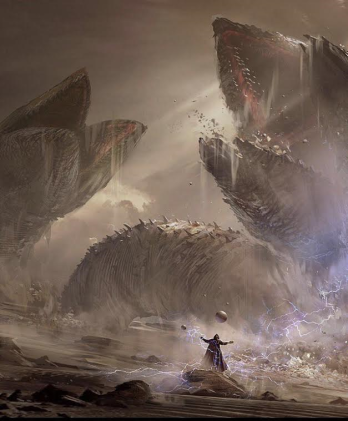
Kill The Dream Sequence. No, Seriously. Kill It.

dead of summer

If you haven’t watched Dead Of Summer yet, I don’t really care either way. It’s meh, mostly. Yet I was in a binge this weekend to get caught up and noticed something that was particularly relevant for me right now. I’m writing a horror novel – about 40k words in to a targeted 90k, and so I’m particularly concerned with how to get someone on the edge of their butt, chomping their tongue in anticipation and as nervous as I can make them. While this show is fun, it’s not scary in even the smallest sense, though I think it tries to be. Maybe we should have a look at why it fails to see how I can succeed. It’s what I thought, at least.

Go read reviews from the second Avengers movie. One thing you’ll find is a lot of people annoyed with the weird dream sequences. Should you peruse what the masses had to say overall about Batman Versus Superman, you’ll find similar irritation with dream sequences. Let’s not get into whether you dug those movies, okay? I get how divisive that is right now – it’s been Marvel Versus DC since the seventies, nothing to see here. The point I’m making is about the overuse of this narrative technique and how it practically forces an audience to disengage. In movies, it’s probably an excuse to just show some cool visuals. In execution though, it’s a signal to me I’m good to go get a refill on my Coke Icee. Know what I mean?

Anyway, back to Dead Of Summer. Here’s the marketing blurb:

“Set in 1989, school is out for the summer, and a sun-drenched season of firsts beckons the counselors at Camp Stillwater, a seemingly idyllic Midwestern summer camp, including first loves, first kisses—and first kills. Stillwater’s dark, ancient mythology awakens, and what was supposed to be a summer of fun soon turns into one of unforgettable scares and evil at every turn.”

If you read that, you agree they want to be scary, right? Their narrative structure follows the same style as Lost, involving individual character flashbacks to flesh out each main player. Honestly, that part works for me, though the flashbacks they showed had little to do with decisions characters were making in the storyline. It came off cheaper than it did in Lost for that reason. However – and this is my overall point here – about a gajillion times, we are shown visions of a dark, mysterious man from the 19th century who’s supposedly tied in with the mysterious goings-on at the camp. I mean over and over and over, we see this guy and some blood streaming off something, or eclipses or bugs or murders or whatever…and EVERY SINGLE TIME you know it’s going to be a vision with no consequences. You can’t possibly get scared because even though somebody gets pushed into a grave or dunked underwater or whatever – I can’t even remember because I checked out during so many of those – that they’re just going to wake up and be okay. It’s foreboding but not much more.

Let’s set aside movies like Inception, which broke ground with this concept and the Freddy Krueger films (the good ones, let’s not discuss the Dream Warriors, shall we?) which staked their premises on the dream sequence. The difference with stories like those is they established consequences – you could die in those dreams. How boring would The Matrix have been if you couldn’t die while inside?

I run into this problem of consequences a lot, actually. If you’re a science fiction guy, you might think a lot about the vast distances in space and how slow moving any real-life story would be…months to get anywhere and hours to talk to each other. You might go the road of setting up avatars or virtual reality-style storylines to account for that; but honestly, you’re still looking at ridiculous lag times for the signals. If you hand-wave all of that and just say ‘tachyons’ or ‘entanglement’ to get the science-snobs off your back, you’ll be looking at this problem of consequences just like I am. If your guy is actually laying in a booth in Utah or wherever directing the action, how are there any stakes for him?

Right. So there have to be consequences and some kind of danger that’s entirely relatable. If you watch Game Of Thrones or The Walking Dead enough, you start to think at any moment this freaking show is going to kill off one of your favorite characters. Mercilessly. Back in the nineties, Joe Quesada who was then Editor-In-Chief at Marvel Comics (pre-Disney) established a “dead is dead” rule for killing off characters to restore some kind of drama given the prevalence of resurrections. Fantastic concept, actually, though he drifted wide off the mark over his tenure.

That’s what I wanted to say, guys. Dream sequences and visions are tired and boring and are basically tickets for your audience to disconnect. Don’t do that. Avoid resurrections too, while you’re at it. Kill a major character early on just for giggles, to challenge yourself, and to set the bar for your reader that YOU AREN’T PLAYING AROUND…THIS IS SERIOUS!.

Have fun!
 

Less Whining. More Inspiring.

rendezvous-with-rama

I miss Arthur C. Clarke. When I was a kid, I wrote him a letter in pencil on notebook paper, asking him to explain to me what a ‘tesseract’ was, since I’d seen it in A Wrinkle In Time and was lost on what was going on. When my dad found out my desired pen pal lived in Sri Lanka, he told me he’d “look into it”, which of course meant exactly what you think it meant. So my letter went nowhere. Anyway, the reason I loved the guy so much is that his books inspired me. It got me thinking recently when I was trying to recreate that feeling with another book what it was he did right that Larry Niven did so wrong. Basically, what makes a book inspiring?

Rendezvous With Rama is an Arthur Clarke book, and an absolute classic. I won’t go into it because it isn’t the real point here; but the idea is a mysterious spacecraft comes flying in, gets boarded by some intrepid folks, and unfolds in the warmth of our sun internally as the most well-designed engineering marvel you could imagine. A sense of wonder infuses that book that feels like a crackling fire to me. I was thinking about it recently and looked into the sequels. An overwhelming tidal wave of reviews indicate I’d better avoid them  for various reasons. I found it interesting reading through the reviews that so many people appreciated the original for the same reasons I did. It made them either dream of joining those explorers on the spacecraft or of writing something as interesting as Sir Clarke had. Get that part – people like me are inspired by this book because of how it launches our imagination into ways we could engage with its ideas.

In my day job, I study and manipulate what engages people; and the overriding principle is always self-interest. We probably won’t stop to look over the charts on the wall the boss keeps posting unless there are pictures there of my friends up there or something showing me how close I might be to getting a bonus…that sort of thing. Self-interest. With our fiction, we want to relate to the characters in some way:

-For a horror novel or a thriller, you’re probably second-guessing every decision the characters make to decide what you’d do

-For a science fiction book like this one, you’re probably dreaming about how cool it would be to be doing those things

So I had a copy of Larry Niven’s Ringworld for some reason, and took it on a plane to try and recreate that sense of wonder and awe from Clarke’s book. Should have been a slam dunk: a massive ring-shaped partial dyson sphere constructed around an alien world gets explored in all its wonder. How can you screw that up? I’m sorry if you love this book, let’s keep in mind that fiction is subjective; but it’s just awful.

I groaned every time he used ‘tanj’ as fake profanity. There’s no way to tell which character is speaking without labels because everyone from furry warrior-aliens to 200yr old earthlings to multi-headed pacifist-aliens all speak exactly like Larry Niven does…like an old white physicist. They stand around philosophizing about the math behind how dense something must be or how the orbit would be affected…blah blah blah. Oh my God. I put it down multiple times, slugging to finish hoping something would redeem it. No idea how it ended because I just yielded. Whatever. It’s an award winner and always makes the big lists though. Somehow I’m missing it.

So here’s the point: if we’re writing something we really want to make inspiring….something for the ages that will stoke people’s imaginations or really change the way they look at the world (and what wordslinger doesn’t want that?!), then keep things simple and avoid whatever will distract from the feeling you’re trying to engender. In Niven’s case, he spent way too much time trying to make his cardboard lame characters interesting and introducing some ridiculous side-story about breeding luck, when the sales pitch for the book is an incredible sense of wonder and exploration of the Ringworld.

In whatever you’re writing now, or what you expect to write next, think about the feeling you want left behind when the reader is done…boil away everything that doesn’t produce that…and focus.

Imagery With Teeth: Learning To Write For Millenials From Treehugging Haiku Poets

1565561

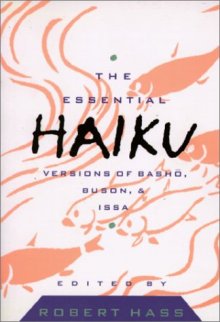
Call me a dork if you want; but haiku is like a cherry Starburst for me. When you’re in the mood and they’re just right, it’s like a shot of happiness straight to your cortex. My point here is going to be that this poetry form and its old masters have plenty to teach a 21st century wordslinger how to write fiction. Try this one, from Matsuo Basho (1644-1694):

A bee

staggers out

     of the peony.

No picture needed. The word choice is fascinating because the bug isn’t said to just be there; and its little hairs or whatever aren’t described. He says the little guy is staggering in the center of a flower after blasting down a bunch of nectar. If you’re at all like me – and this is one of his famous ones so I’m not alone here – then this image pops right into your head like zooming in with your iPhone. I basically stole this one for a Salt Mystic quote in chapter 5 of Tearing Down The Statues. Here’s another one I stole from (Sylhauna’s gift in chapter 9):

First snow

falling

     on the half-finished bridge

And another (chapter 9 again, referenced in the computronium ruins they sail past):

Summer grass –

All that’s left

     of warriors’ dreams

Give me a minute on this. Hear me out. We’re bombarded by pictures in all our entertainment now and have been for a while. Most of us think in pictures. We absorb information more quickly that way. Interesting images grab us as readers and stick around maybe even after the plot has faded. I read something from a cyberpunk guy (maybe William Gibson, not sure) way back in the nineties that I couldn’t begin to tell you the title or story or even the point of it all. I just remember a line where the narrator described some rain on a lake as ‘furring it over with needles’. The image popped for me and was really an interesting way to describe that. I saw it and liked the way he said that. If you’ll just stop playing around and go read either Viriconium or Light by M. John Harrison, you’ll see what I mean about crazy-cool ways of describing imagery that are uniquely wired to the way our brains work…basically interesting images that are pregnant with stories.

The classic example of an image pregnant with a story is the six word flash fiction (probably) wrongfully attributed to Hemingway:

For sale: baby shoes, never worn.

Ugh, man. That’s heartbreaking. Lean and straight for the jugular! Their baby died and never got to wear the freaking shoes. That’s awful. Usually haiku isn’t trying to rip your heart in pieces like that, but is often saying something more than what you’re looking at. How about this one by Kobayashi Issa (1763 – 1827):

     The old dog

leads the way

     visiting graves.

Dogs are always awesome. I can see a loyal little guy with his tongue hanging out and that fuzzy white fur on his snout, not even knowing this is a sad thing, being in the graveyard. Since he knows the way, he’s been there many times before. That leads my mind off into all sorts of imaginings about the dog’s master, and just which graves he’s going back again and again to visit. I may have to wipe my eyes here – hold on.

If we’re wired for images, if we absorb information more effectively and make it stick more effectively with images, and if a writer can successfully convey an important message through that mechanism – or at least resonate with an important theme, then the work has a shot at immortality in someone’s mind. That’s what this whole gig is all about, right?

Here’s what I get from all this:

  1. Stay lean, avoid a bunch of useless words that don’t add value
  2. Craft a striking image that’s memorable and describe it in a novel way
  3. Consider resonating the image with a theme from the story – make it mean more than the picture itself if you can

If you’re ever stuck for coming up with something, go steal from Basho and Issa. They won’t mind.

Getting Over Free And Rewiring Your Imagination

expansortext

Back in the day, pre-internet and when the only way to hit it big was to get signed by a big publishing house, you hounded magazines to sell short stories as much as you could. You got in print. All the names you’d recognize from those days offered that advice; and I sadly admit to listening to my dot matrix printer bweh-bweh-bweh in the corner of my desk while I bent those little metal clips on the manila envelope time and time again patiently sending off stories so I could make a name for myself to finally see the way clear before me. The only cool story I have from those days is a terribly cruel rejection letter from the guy who ran Asimov’s magazine accusing me of stealing the story idea (naming some obscure piece I’d never heard of and saying the other guy did it better). Now that I think about it – there was a guy named Vampire Dan who ran something called The Story Emporium at one point, who said nice things about what I sent him and always said I was ‘close’. He was awesome; but that’s beside my point.

Where I’m going with this is – you sold everything. Nothing was free. Guys like Harlan Ellison were brutal about it, chasing every dime for reprints and mentions and ripoffs. Basic economic common sense says you don’t give your hard work away because it has value. Giving it away means it’s crap and you couldn’t sell it. Right? Hold onto that for a minute.

My brain builds up steam. What I mean by that is my job can be technical; and if I’m not careful, I’ll be exclusively reading science journals and history books, learning statistical programming, building robotic arms, or whatever my left brain decides to chase with precious little stretching of my imagination. It can make my writing a little dodgy and stiff, and the ideas a little plain-Jane and cardboard because I’m not exercising that part that mishears things on purpose, that plugs and unplugs things I see around me to rewire them into something else. Everybody says you’re supposed to write every day; and they’re of course right about that. It matters. Our brains are neuroplastic, meaning you can rewire them yourself just by what you think about. It would be incredibly helpful for a writer to be able to dredge up an inspiring idea to stretch on like taffy any time he needs it. Confidentially, it helps me tremendously at work too because I’m always being presented something people are stuck on. Different ways of thinking break out of that kind of rut.

When I recently started in earnest to build a platform for future book launches, I finally got the light bulb to spark on – that old school thinking about not giving things away for free doesn’t hold true in the internet age. Nothing gets attention on-line like FREE. It’s amazing. Book giveaways are critical because of how you get reviews; and no book sells without reviews. Twitter, Facebook and Goodreads or whatever media you want to talk about, they’re all swamped and crowded with authors pumping books. Nonsense. Sales are about trust; and somebody who’s looking for an author needs to trust them. It is an incredibly intimate relationship between author and reader…a joining of the minds that must be honored and treated as precious. What this all means is it’s not only okay to give your work away for free, it’s important to do so. Setting up a place on Facebook where you can share a piece of flash fiction or a story idea you never intend to build a book around – that gives you a fantastic place for people to get to know your style, to trust you, and also forces you to sit down once a day and do it!

Go see what I mean here and let me know which ones you like best. I’ve come to notice already that people seem to appreciate most the ones with images attached. Give it a shot yourself and see if it doesn’t stretch you to look for slick story ideas around you more often.

The Making Of A Mind-Bender

TheFallOfChronopolis.jpg

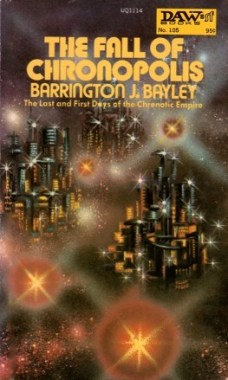
Standard warning – this is not a book review! I’m going to analyze how a science fiction author twists a story idea around like a diamond to craft a fascinating mind-bender of a book. Though I’ll likely spoil the crap out of it, we’ll hopefully pick up on best practices for anybody looking to squeeze novelty and freshness out of a concept they might have for a book or story.

“With a hollow booming sound the Third Time Fleet materialized on the windswept plain. Fifty ships of the line, the pride of the empire and every one built in the huge yards of Chronopolis, were suddenly arrayed on the dank savanna as if a small city had sprung abruptly into being in the wilderness”

Because I’ve read it a jillion times and because you should too, I picked for this exercise a 1974 time travel novel by a guy capable of turning your brain into salt water taffy but still leave a smile on your face. Seriously, why are you not reading Barrington Bayley? Go get Knights Of The Limits if you want a sampler pack. The book we’re going to look at is The Fall Of Chronopolis.

The core idea:

There’s an empire that stretches across time instead of space

Time travel has been done to death; and it’s usually stupid and full of holes. Look, you’re probably nowhere near the Doctor Who fan I am – I adore that show in all its forms; but mostly they contradict themselves at will and skim over uncomfortable goofs. Admit that, so we can move on. Here, Bayley has an interesting twist on the galactic empire idea that’s been around since the 1930s. Already a good start. People go back to those 1930s pulps even now. They did a lot of things right; and so did he with this one.

But how to make that work?

Bayley built a theory of how time is structured to try and solve how his core idea could function, how the citizens would travel across the empire and how they’d be ruled. It’s a natural progression once you have an idea, right? Just answer the obvious questions about your idea. He tells us time is like a frothy ocean with our reality and perception of it like stable skim on the surface. Yet under special circumstances, you can go deeper into the potential realities lying below, a horrid and ghostly place where souls can be dissolved into nothingness. Nice – loads of chance for drama and action there.Giant freaking time barriers were set up at the rearward past and forward future like walls around the empire. Specially protected ‘achronal archives’ exist inside buffers which are compared to duplicate archives outside the buffers enabling them to become aware of any disruptions to the timestream…like people or cities disappearing from history. There’s your empire.

Which raises more questions…

There are obvious problems that are going to come up with all of this…you can imagine the debate that went on in his head at this point. Like a courtroom, putting his idea on trial, my guess is he knew right away he needed a way to smooth contradictions, and a way for them to have a conflict of some kind. So his theory of the ocean of time needed to expand a bit. If you can imagine standing ripples on the water, no different from you and I holding a rope at the two ends with me popping up and down quickly so my end goes up when yours goes down…that point between us where the direction switches is called a node. Bayley imagined us existing at a node in time – stable points that move forward one second per second. There are just several of these; and the empire stretches across seven of them. Since they’re all that’s stable though, wrecks in the hinterlands between nodes dissolves all souls onboard into the terrible sea of potentiality. Come on! Once you stretch out an idea like that, of course it’s going to happen in the story! It’s writing itself at this point!

…and implications…

I can also imagine in Bayley’s spitballing session on this idea just trolling over everyday things to bounce his time empire idea across them and see what comes out. Relationships, for example. He imagines a young narcissistic prince who seduces his future self into a romance at node 1. He constructed a religion around how his empire would view the sea of potential, and the special reverence attached to the sacred moment when a Physics lab assistant first discovered the principle which would enable time travel.

Add the conflict and stir…

Once the initial idea is set up, it just needs tension. I imagine Bayley still working his central idea, twisting and turning it to see what war would look inside this framework. Giggling maliciously, I’m sure, he gave us an enemy empire existing in the future beyond a long period of unpopulated nuclear wasteland, begun by dissident time travelers from the empire itself. Cool beans. Conflict was automatic with this one, wasn’t it? Suddenly, the archivists start reporting entire sprawling cities have vanished from history, which no one remembers. The automatic rule of science fiction is to keep pushing the idea – how far can this go? Bayley describes the ultimate goal of a time war as disrupting the founding of your enemy – basically, get behind them and muck it up. It’s really fascinating to read all this…just incredibly innovative.

I’ll wrap it up to leave at least a little mystery to it all. The overall point this time around is the ideas will come from mishearing something around you, from hammering differences into something you see in a movie or book or something somebody tells you, whatever. The job then is to twist it around in the light for:

  1. Your first-pass explanation of how things will work with this idea
  2. Answers to the obvious questions resulting from step 1
  3. Teasing out implications of all that on everyday things
  4. Finding conflict that leverages the idea, not something boring that didn’t need it

That’s my take on it, anyway. You can go read Bayley now.


‘Sun Of Suns’ by Karl Schroeder

sun-of-suns

What do you REALLY ask of a book, anyway? Isn’t it true that if you can just get lost in some cool world, check out of this one for a while, maybe run into some chin-scratching ideas along the way, meet some fictional folks who you care about one way or the other – love or hate or whatever, then it’s all cool? Me too. Here’s one.

So I tried a different Schroeder book a while back (‘Lady Of Mazes’) and saw enough potential to try him again, though his style was bugging me. Seemed to ramble a bit. Don’t point at me, I’m the one typing here. This one was worlds better though. I’ll prove it – see what you think. It’s called, ‘Sun Of Suns’, by Karl Schroeder, first in his, ‘Virga’ series.

Virga is a massive fullerene balloon three thousand kilometers in diameter but filled with air. There are spherical lakes and massive chunks of floating rock – all aimless. The people living in Virga form and ignite their own little fusion suns for light and heat; but that leaves huge swathes of the atmosphere left in winter where there are no towns. There isn’t a single government or even a single planetoid where these folks live either – they’re on individual floating towns made from huge wood and rope wheels, spun for centripetal gravity. You can jump from one to the other if they’re close enough. You can fly from one to the other on hover bikes. It takes a few pages to get used to what he’s painting for you; but I haven’t come across such memorable imagery for a while. Would be amazing to see maybe in anime if not live action.

The story centers on a guy named, Hayden whose tiny town was slaughtered by a larger town six years ago when they tried to set off their own sun to gain independence. Hayden’s looking for revenge, targeting the Admiral who he’s almost certain (but not entirely certain) led the attack. He of course gets in the fireworks and intrigue of something larger with everyone he’s mad at, but also with a mysterious lady who is impossibly not even from Virga at all. The Admiral’s wife is beautiful but conniving and nasty; and Hayden tags along with her for a sizeable chunk of the narrative. She’s also the subject of the second book in the series, ‘Queen Of Candesce’.

When I was a kid in summertime, I’d ride my bike down our long driveway and around the yard imagining I was on a hover bike, stopping in at a floating maintenance shop and spying for somebody preparing for the revolution or whatever. This book had every bit of that, which smoked my mind a little because how the heck could something so weird in my head show up in print now? Schroeder did an ‘Inception’ on me. That was fun to see.

One scene in the book made my Physics mini-me flinch a bit; but he redeemed himself and nailed something down that is incredibly unique and worth the price of admission on its own. I don’t think it’s a spoiler; but you may think so. If you’re worried about that, skip the next paragraph and join me at the end. I’ll wait for you there.

The key characters pay a visit to a small town that has inserted itself into a massive spherical ball of water. They used a water-repellent cone the size of a freaking town and wedged it into the sphere, carving out a place where they constructed their buildings and hide away from all the intrigue and conflict within Virga. Flinch, read it, stick with where he’s going…incredible idea, maybe could work…wouldn’t want to live there…hope they don’t fire any guns at the walls.

My point is this then: great book! I read a lot of pulp science fiction from the 1930’s and 1940’s like ‘Brigands Of The Moon’ by Ray Cummings or ‘The Metal Monster’  or ‘The Ship Of Ishtar’ by Abraham Merritt. ‘Sun Of Suns’ has that feel of fun and danger and outlandish technology. Don’t look for deep philosophical musings or ominous quests or galactic battles here, you won’t find them. Read my first paragraph again up there…if those things make it happen for you, then give this book a shot. Let me know what you think.

Why You Should Be Reading R. A. Lafferty: The Madman Of Oklahoma

lafferty-past-master

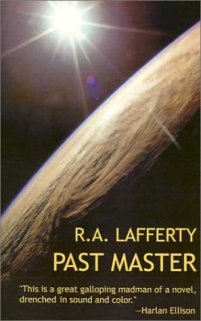
You’ve probably heard R.A. Lafferty quoted if you haven’t read him. I came across him first when Neil Gaiman said a particularly good line he’d used in his, ‘Sandman’ series was a Lafferty line. Maybe you recall it – the creepy witches called ‘The Kindly Ones’ said something like, ‘They can kill you; but we can kill you worse’. That’s actually a chapter title in Lafferty’s, ‘Fourth Mansions’. A rocking book, if you haven’t read it, about four secret societies vying to take control of the future of humanity. The reason you read it is not the plot, because you know…whatever…I can’t really say what’s going on; and I’ve read it twice. You read it because he drops these word-nuggets that sparkle. The title of the first chapter is, ‘I Think I Will Dismember The World With My Hands’. The ninth chapter is, ‘But I Eat Them Up, Federico, I Eat Them Up’. If you don’t love that kind of thing, then take a pass on the guy I guess; but you’re missing out. At least try, ‘Past Master’ because its plot is good too, there’s a great story, and there are more sparkling quotes for you.

Here are some quotes, see what you think:

  • ‘It looks like a good year for monsters’ – Fourth Mansions
  • ‘I’d like to be gentle to you with with a meat cleaver, Justin’ -The Emperor’s Shoestrings
  • ‘It is an awful and sickening thing to see a good man grow rich and respected.’ – The Underneath Man
  • ‘The first implement made by man was not a scraper or celt or stone knife, it was a crutch.’
  • ‘My magic can whip your magic; and my dog can whip your dog’ -All The Skies Are Full Of Fish
  • ‘Most of the trouble that comes to people in this world comes from reading the wrong books.’ -Try To Remember
  • ‘I have certain riddles to ask the woods and the mountain, and they do not speak when others are present’
  • ‘Which was first, you, or the belief in you?’ -Past Master

So back to what I view as his masterpiece, though everybody you talk to who digs this guy has a different view on that. For me, it’s, ‘Past Master’. A description from the interwebs:

‘Past Master is set in the year 2535 on the world of Astrobe, a utopian Earth colony that is hailed as Golden Astrobe, “mankind’s third chance”, after the decline of both the Old World and New World on Earth. Despite idealistic intentions, it is suffering moral and social decline that may be terminal for both Astrobe and the human race.

In an attempt to save their dying civilization, its leaders use time travel to fetch Sir Thomas More (chosen for his fine legal and moral sense) from shortly before his death in the year 1535 to be the president of Astrobe. More struggles with whether to approve of the Astrobian society, noting its possible connections to his own novel Utopia. His judgements soon lead him into conflict both with destructive cosmic forces on Astrobe and with its leaders who thought him a mere figurehead who could be manipulated.’

End quote. If you’ve ever read Harlan Ellison’s short story, ‘Repent, Harlequin Said The TickTock Man’, and loved it because the trickster guy in the story is thumbing his nose at the people who think they’re in charge, then this book may just work for you like it does me. Thomas More sticks it to the man, if you know what I mean. By the way, if you haven’t read Ellison’s story, what the crap, man!? Get that done, then come back. Sheesh, you’re lucky we found that out!

Lafferty, man. Go read this guy. He saved himself from alcohol through his writing; and he made the world a better place because of it. You owe him at least a look. Let me know what you think!

What Is The Deal With Filming Dune?

dune

I think of Frank Herbert’s, ‘Dune’ as the best science fiction novel ever written, and one of the finest pieces of fiction ever published. It’s that good; and so are the sequel, ‘Dune Messiah’ and to a lesser extent, the third book, ‘Children Of Dune’. Everything tapers off after that, so I’m not really talking about those now. I have many reasons for why I dig these so much:

  1. There’s a big, overarching religious context with the Bene Gesserit witches and the manufacturing of a messiah. I love the big, humming metaphysical overtones.
  2. Intrigue all over the place – everyone’s spying or betraying everyone else.
  3. Power plays and an uprising. Maybe it veers dangerously close to the white savior-style storyline where an outsider guy does native stuff better than natives; but there are great explanations for why. Loads better than the steaming turd that was, ‘Avatar’
  4. Freaking giant sandworms tearing up the desert and eating people.
  5. I’ll count the worms twice because they summon, hook and ride them!
  6. Spice-driven superpowers like telling the future, folding space, and whatnot
  7. Unlike almost anything this high-concept, I mean almost anything that tries to be this ambitious, there is nothing outright stupid and poorly thought-out. Even the idea of the giant worms living where there’s nothing big for them to eat was incredibly well structured with an ecology. Nothing stupid. All well-cooked. Guy was a genius.

With the glowing blue eyes on the Fremen, the worms, the battles, the technology, the intrigue, palaces, beautiful women, honor combat, exotic desert scenes, and massive space ships, the visuals and action are perfect for a grand, high budget, Hollywood treatment. So what keeps happening?

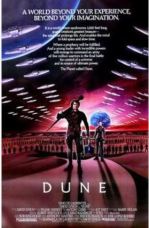
There was a piece of junk made with Sting and Kyle MacLachlan in 1984, which though many people still dig it, honestly doesn’t deserve their praise. Probably it’s nostalgia. I mean, I still like watching, ‘Jason Of Star Command’ and ‘Logan’s Run’; but that doesn’t mean they were good.

dune1

This was after Alejandro Jodorowsky’s disastrous attempt at making a 12-hr LSD hallucination with Salvador Dali based on, ‘Dune’. He even started treating his son like a messiah in the making because he was so into it. No, seriously, you need to watch the documentary on this or at least the trailer. Alejandro is a genius, yes; but he’s a genius to be consulted by people not high on peyote and who can stick to a budget, not a genius you should hand anything over to.

dune2

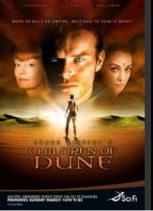
So now I’m rewatching the almost-mess the SciFi channel (not SyFy back then) put together back in 2000 as a mini-series. I love the book so much, this is entirely watchable for me. I can ignore the ridiculous Peter Pan costume they put Stilgar in and the silly sailboat sails they have hanging off people’s backs, even the little diapers they make Paul wear in his knife fight. I can ignore the ludicrous mwa-ha-ha maniac laugh the Baron makes when he’s floating around in his gay bondage outfit. But my point is this – why should I have to?

I know, I know. Disney tried making an old-time classic (John Carter of Mars) into a high budget non-Star Wars movie and it sank like a rock and was a Hollywood punchline and career-killer for years. That probably means we’re out of luck for a long time on this.

Yet…

If modern audiences just want a little humor, plenty of action and spectacle, and to have fun with an interesting story, as Marvel’s successes would indicate, here’s my proposal; and if you’re a purist who loves, ‘Dune’ like I do, then don’t freak out:

  1. Make Duncan Idaho and Gurney Halleck into humorous Indiana Jones-style tough guys
  2. Put an interesting twist on the Baron to make him more likeable, the way Loki was handled in the Avengers
  3. Ground everything by de-emphasizing off-planet and spaceship stuff, focusing on Paul and Jessica’s trying to win over the Fremen
  4. Cool battle scenes, yes; but not with CGI and keep them fun by retaining occasional humor, the way the dwarf and elf banter in, ‘Fellowship Of The Ring’, for example.

Somebody write this and send it off to Hollywood. I’d totally watch it.


Publishing Myths I Still Can’t Let Go

Yeah, I still have the dream of walking into a Barnes & Noble and seeing my name up on the shelf, with some of my sci-fi tribe standing around chatting it up. Awesome. Would be equally amazing to get an invite to Dragon-Con in Atlanta with a room full of cosplayers living out characters I dreamed up. My tribe again. Those guys are crazy. Anyway, that’s the sort of thing that prompts a guy like me to sit in his study or out on the lake and pound away on a keyboard, dreaming up outlandish tech-scapes and apocalyptic drama – or maybe more often chuckling at something I thought up for somebody in the story to say. The thing about reality though is it’s unforgiving and thrills at squashing the pictures you had in your head going into something like publishing. So here’s a few things I can’t turn loose, but probably need to:

3. Book reviews and big name author blurbs are reliable gauges of quality, and those guys are just out there waiting on you to publish so they can blanket bomb you with their verbiage. Book reviews and big name author blurbs are in fact, by majority, paid for or culled through big publishing house connections. They’re about as meaningful as the things people you didn’t like wrote in your high school yearbook. Trying to get real live people to log in to Amazon and enter a review is as fun and satisfying as passing a kidney stone. Yet you need them, so let the heavy work begin. Go to places like the following to send thoughtful, customized review requests of blogs in your genre. You should know though, if you’re one of those keyword and search engine geeks, the Amazon algorithms put a ton more weight on verified purchase reviews than they do other reviews.

http://www.allbooksreviewint.com/                                             http://melanierockett.com/directory-of-book-reviewers/ http://www.theindieview.com/indie-reviewers/

2. In order to get on the bookshelf at a big chain bookstore, you just have to have a great book and put the time in – pay your dues. It’s a process, open to everyone. Maybe that’s the case; but I’m not seeing it as worthwhile if you’re an indie publisher or self-publishing. Way too much effort and very low probably of success. Get yourself on Ingram if you like since so many of them order through that database. Get yourself a Kirkus or Midwest review, though you’ll pay through the nose for Kirkus (and may have to pay at Midwest). Look up the Barnes & Noble, Books A Million, and Hudson buyers online and submit if you like. The American Bookseller’s Association has an Indie Advance Access program where you can try and approach their small-store membership. Honestly, though, your time is better spent dropping this one for now, especially if it’s your first book or so, and churn up a decent on-line presence to drive people to your sales page on Amazon.

1. No reason I can’t just make the cover myself. I’m a smart guy. Give me a trial membership of Photoshop and get out of my way! Stop. Go back. Here be dragons. I spent days on this, learned the software, got my stock photography, even learned how to do lens flares J. J. Abrams would be proud of. I put that bad boy together and was overjoyed at how it looked. Family folks agreed at how amazing it was. A good time was had by all. Then I found out how hideous it looked as a thumbnail on ebook sites, how little impact it made when on the page with a bunch of other books, and just how many freaking rules of marketing and book cover best practices I broke with it. A savvy marketing guy named, Derek Murphy made a comment that stuck with me here – he said your book cover shouldn’t reflect a scene from the book because that’s worthless. It should just look like it belongs on the shelf next to books similar to it. That’s important.

So I’m done with this train of thought. Good luck to you if this is the road you’re headed down. Let me know if I can help!