“The Canyon Of Living And Dying” – Free New Salt Mystic Lore Card

Grailrunner is excited to announce the latest addition to our growing Salt Mystic Lore Card set: a mood-setting, rousing vignette titled “Canyon Of Living And Dying”. Download it for free here.

Welcome to the Grailrunner Story Arcade!

Salt Mystic is our rapidly growing western science fiction setting, upon which we’re building everything from novels to games and merchandise. You can learn more about that here. Key to this innovative new way of exploring immersive storytelling is the idea of worldbuilding through a collision of art and fiction. Sometimes the art comes first, then a story is built around it. Sometimes, a story idea percolates and only starts popping after an image is crafted for it.

However it happens, we’re building out locations and settings, characters and background lore, all through experiments and inspirations that often get shared for free on social media and here on the Grailrunner site. The hope is that those of us out there who dream of adventure and exploration, of new worlds and intriguing concepts, we’ll all find a home here! And that you’ll buy books and stuff.

Definitely buy the books and stuff.

The Story Arcade is also a place for people playing the Salt Mystic tabletop wargame to find interesting settings for the battlefields they play upon. That’s where this week’s addition was born, actually.

What was the inspiration for this?

Writing this article here, I was reminded of a really well designed dungeon adventure that appeared in a Wizards Of The Coast compilation titled Ghosts Of Saltmarsh.
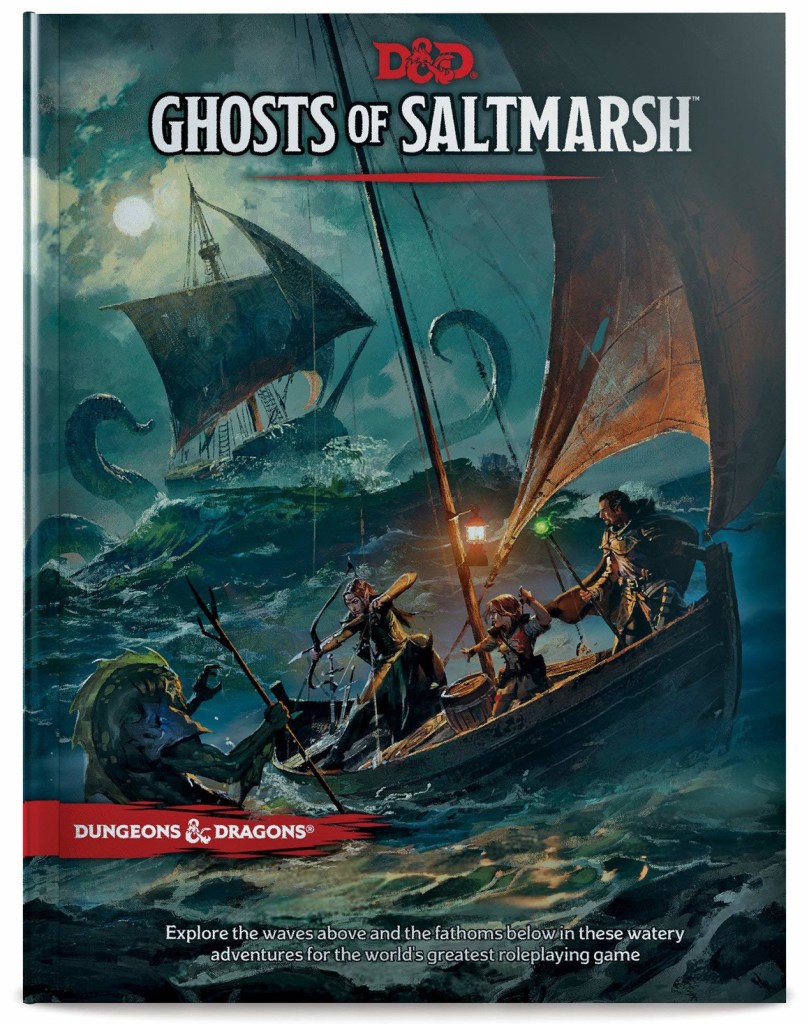
Spoiler alert – there is a point in this adventure where the very dungeon setting itself (a ship) starts sinking and flooding. The dungeon destroys itself, and you have to get your characters out or drown. And to me, that’s incandescent genius! I became enamored with the idea of a battlefield setting for the Salt Mystic game where the battlefield floods or sinks or catches fire or otherwise starts snuffing out characters not fast enough to survive.

Generally, I haven’t solved how to convert that to a Salt Mystic terrain book yet. Maybe one day. But one of the ideas that didn’t pan out as I thought about it was a high canyon where the battle was to be fought on crumbling rock walls. I imagined a giant stone golem at the base throwing boulders up at the armies and snatching random people away. It sounded cool, but game rules and art to make that work just didn’t click for me.

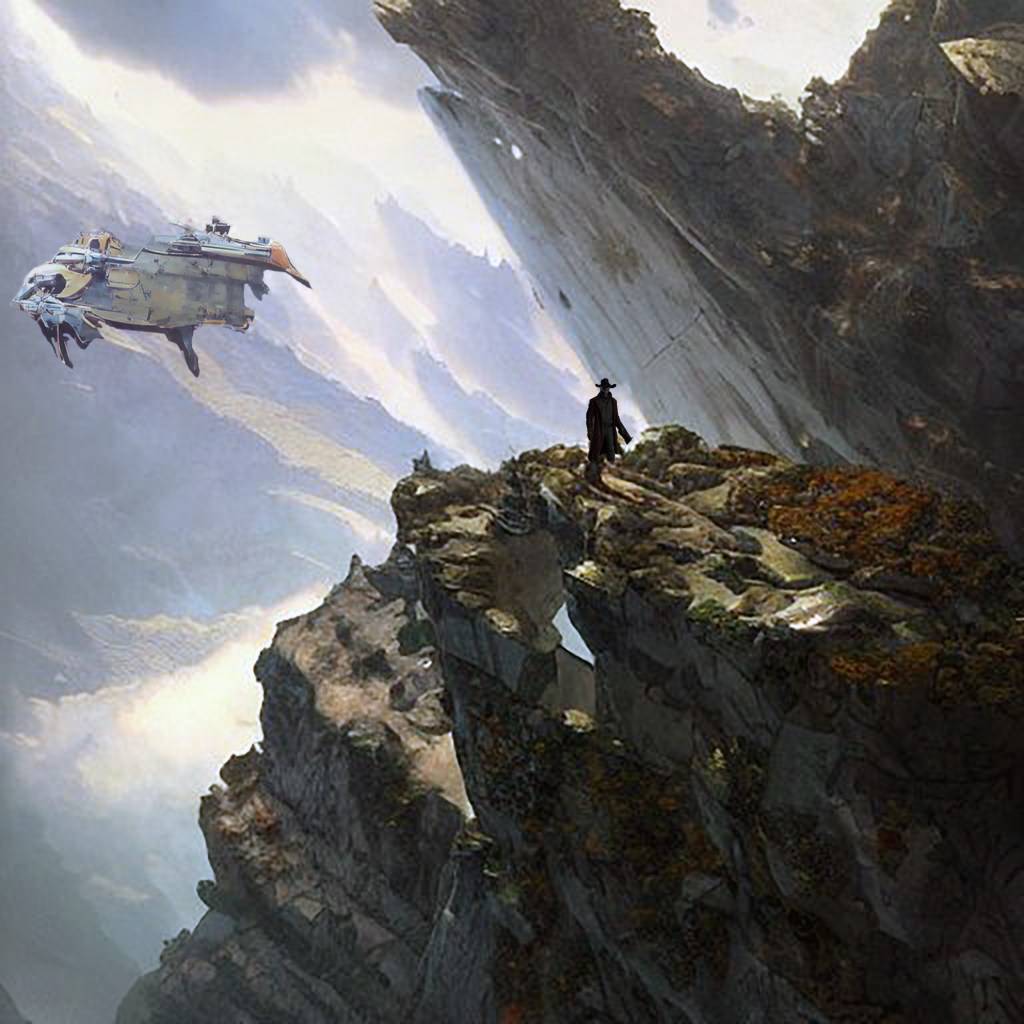
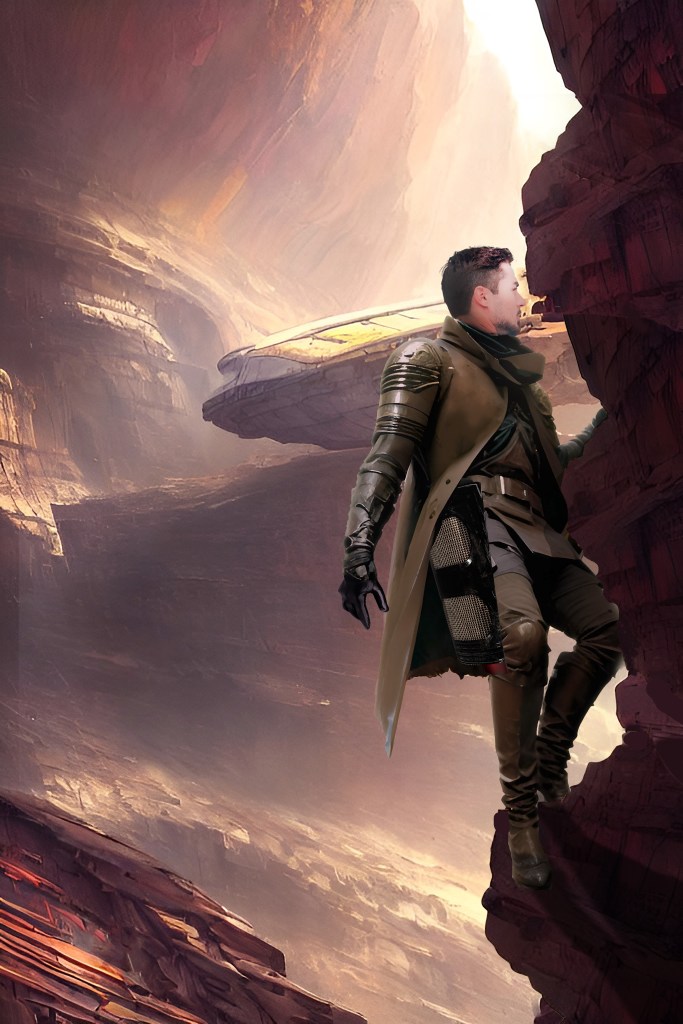
This image is what came of all that. I had the picture of a carbine gunslinger nervously clinging to a high rock wall with a derelict in the mist behind him, precariously perched in an inaccessible place.

What was the process to create the image?

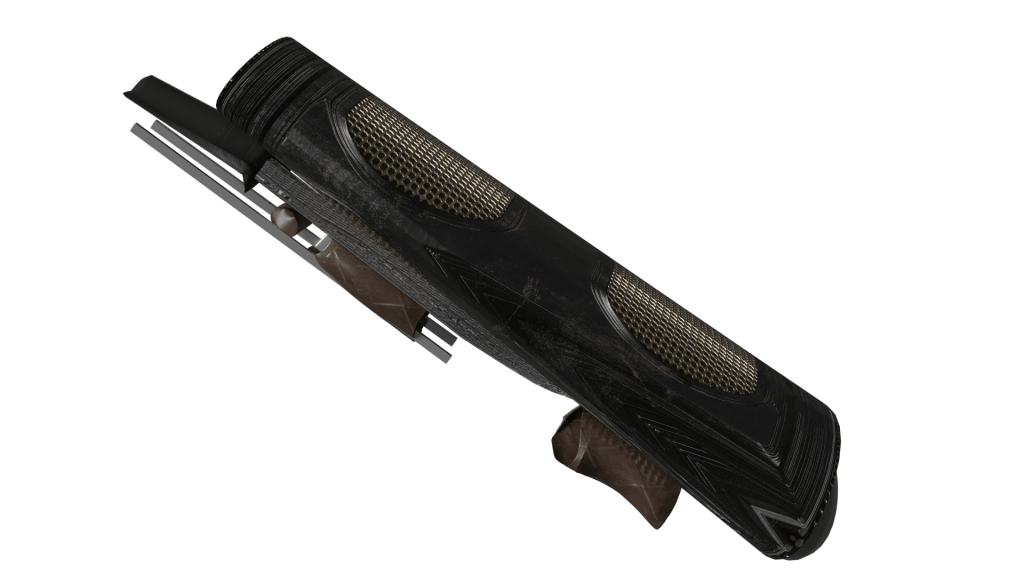
Like most of the imagery I produce, this is a photobash of several elements composited together in Photoshop and painted over. The carbine weapon strapped to his hip is something I generated in Blender, but re-textured recently. The climber is a composite of two AI-generated elements and a handful of stock images, run through a filter in Photoshop and color and light graded to match. The background is a composite of two AI-generated landscapes from two different pieces of software, and I used two overlays from Nucly for lighting effects.

What about the story?

I rewrote that three times, trying to give it a western feel. The idea is a dude from a rinky-dink town in the middle of nowhere deciding that the fear of climbing up there is not as strong as his need to really live, to maybe make a name for himself. Or maybe to solve the mystery of what’s inside that derelict.

In the story, he says “to live is to burn”. I totally stole that from Harlan Ellison, who said he stole it from an Egyptian papyrus. Whoever said it first, it’s awesome.

*

Anyway, I hope you enjoy the new Lore Card. Shoot me a comment or note if you’d care to chat it up about Salt Mystic or where we’re going with all this.

Have a great week!

AI Tools For Roleplaying Game Exploration

I know. I know. AI for artists and writers and pretty much every creator these days seems big and scary and threatening. I’m not ignoring that, I promise. For people who make their living off bringing new things into the world, the shocking advance in the quality and capabilities of AI tools in the last few short months can be terrifying.

However, Grailrunner’s position on AI chat and art generation tools is that we are seeing the beginnings of an unstoppable wave of technology that isn’t going away. It isn’t. In fact, more is coming, and the world of creators is turning upside down rapidly. Let’s find a way to strike the balance and live together. Astounding things are becoming possible.

For instance, today I thought I’d bring you a short overview of how to quickly and painlessly generate elements for use in roleplaying games. I was just messing around, and startled myself with the quality of what I was producing.

Here is ChatGPT. If you’ve not played with this incredible mechanism yet, please go do so. Let me show you what it can do (and stay till the end for a freebie!):

I was exploring Free League Publishing’s Coriolis roleplaying game ruleset and wondered if ChatGPT knew those rules and could generate a spaceship for me quickly with the stats and everything. It seemed a bit exotic and unlikely to me, but wow.

Name: Al-Kahf Class: Light Freighter
The Al-Kahf was built on the planet of Jabel, known for its rugged terrain and harsh climate. The ship was designed to be a reliable and durable vessel, capable of handling the toughest conditions and making long journeys through the Third Horizon.
The ship was commissioned by a wealthy merchant, who wanted a vessel that could transport his goods across the Third Horizon without relying on a large crew. The Al-Kahf was fitted with the latest technology and a state-of-the-art navigation system, making it one of the most advanced light freighters in the Third Horizon. The Al-Kahf quickly became known for its reliability and efficiency, and its owner became one of the most successful merchants in the Third Horizon. However, the ship’s owner soon retired, and the Al-Kahf was put up for sale. The ship was purchased by a group of adventurers, who saw the Al-Kahf as the perfect vessel for their expeditions into the unknown reaches of the Third Horizon. The adventurers made several modifications to the ship, adding weapons systems and upgrading the engines, making the Al-Kahf even more capable and versatile.
The Al-Kahf quickly became renowned for its daring exploits and daring rescues, earning the respect and admiration of the people of the Third Horizon. The ship and its crew became legends, known for their bravery and their ability to handle any challenge that came their way.Despite its many adventures, the Al-Kahf remains a reliable and sturdy vessel, always ready for its next journey into the unknown. The ship is a true symbol of the spirit of exploration and adventure, and a testament to the ingenuity and determination of its crew.

Speed: 7 Handling: 6 Armor: 5 System Strain: 4 Crew Quarters: 3 Cargo Hold: 8 Fuel Capacity: 9

Speed: Refers to the ship’s maximum velocity and maneuverability. A score of 7 means the Al-Kahf is a relatively fast and agile ship, able to make quick turns and escape danger.

Handling: Refers to the ship’s ease of control and responsiveness. A score of 6 indicates that the Al-Kahf is easy to control and responds well to inputs from the pilot.

Armor: Refers to the ship’s durability and protection against damage. A score of 5 means that the Al-Kahf has average armor for a light freighter, able to withstand some damage but not designed for heavy combat.

System Strain: Refers to the ship’s ability to handle stress and strain during high-stress situations, such as combat or high-speed travel. A score of 4 means that the Al-Kahf is capable of handling moderate stress, but may struggle during intense situations.

Crew Quarters: Refers to the ship’s accommodation for crew members. A score of 3 means that the Al-Kahf has basic crew quarters, providing a comfortable place to sleep but not much else.

Cargo Hold: Refers to the ship’s storage capacity for goods and supplies. A score of 8 indicates that the Al-Kahf has a large and spacious cargo hold, capable of storing a significant amount of goods and supplies.

Fuel Capacity: Refers to the ship’s ability to store fuel and make long journeys without refueling. A score of 9 means that the Al-Kahf has an impressive fuel capacity, allowing it to make long journeys without worrying about refueling.

I am a huge fan of the way Shawn Tomkin manages dice tables for solo roleplaying in his Ironsworn and Starforged roleplaying games. His philosophy of ‘creative interpretation’ at work when we roll some dice with a particular context in mind is fascinating. Basically, we bring baggage to the dice table result, and the game mechanics bring it all to life in a unique way. I wanted to see if ChatGPT could generate a 100-entry encounter table of monsters, which it did no problem at all. So I pushed a little harder and asked for a 66-entry dice table of different types of space ports. And I got this:

  1. Commercial spaceport
  2. Military spaceport
  3. Research spaceport
  4. Smuggling den
  5. Trading outpost
  6. Asteroid mining station
  7. Gas mining platform
  8. Refueling station
  9. Communications relay station
  10. Repair and maintenance station
  11. Luxury space resort
  12. Cargo transfer station
  13. Private spaceport
  14. Space museum
  15. Black market hub
  16. Planetary defense platform
  17. Medical station
  18. Terraforming station
  19. Scientific research facility
  20. Space elevator
  21. Zero-gravity training facility
  22. Space tourism port
  23. Space manufacturing facility
  24. Cryonics storage center
  25. Astrobiology research station
  26. Interstellar gateway
  27. Wormhole research station
  28. Cargo hub
  29. Passenger terminal
  30. Habitat ring station
  31. Interstellar trade hub
  32. Orbital defense platform
  33. Space colony supply depot

34. Colony ship docking facility
35. Refugee processing center
36. Galactic news agency headquarters
37. Mercenary outpost
38. Pirates’ haven
39. Alien embassy
40. Emergency response center
41. Planetary observation post
42. Interstellar prison
43. Military research facility
44. Debris clearing station
45. Terraformed planet terminal
46. Space observatory
47. Space casino
48. Interstellar sports stadium
49. Weapon testing range
50. Hyperspace testing facility
51. Cosmic phenomenon research center
52. Space-time anomalies research station
53. Galactic archives
54. Intergalactic judiciary court
55. Space monastery
56. Zero-gravity art gallery
57. Space academy
58. Celestial navigation training center
59. Smuggler’s warehouse
60. Orbital refinery
61. Astro-mining hub
62. Interstellar advertising platform
63. Space advertising platform
64. Space entertainment center
65. Space hotel
66. Interstellar luxury cruise liner.

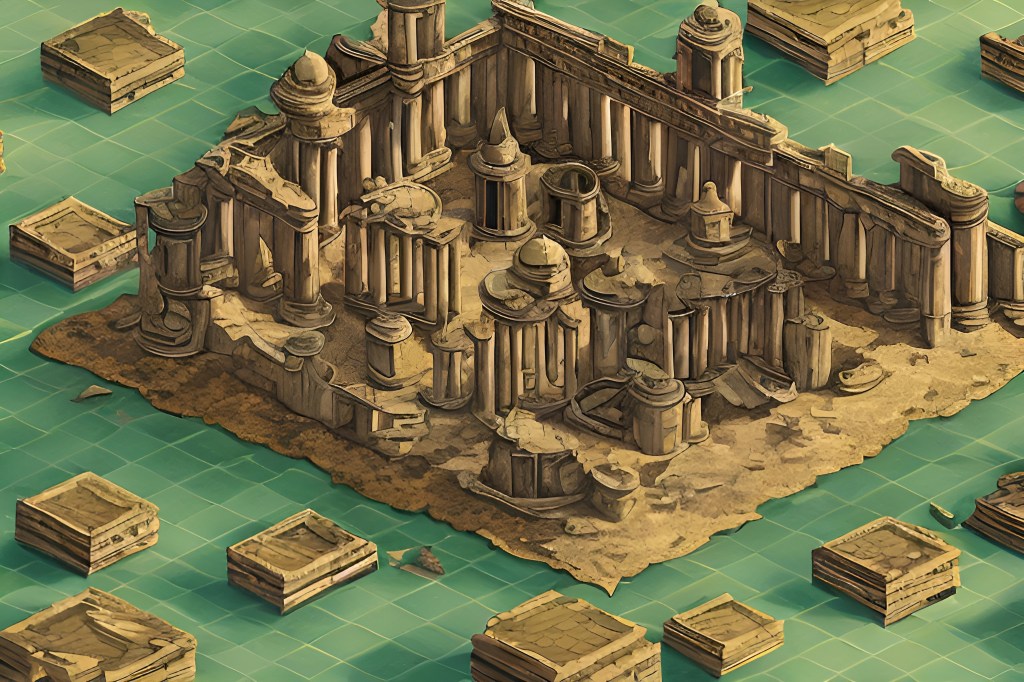
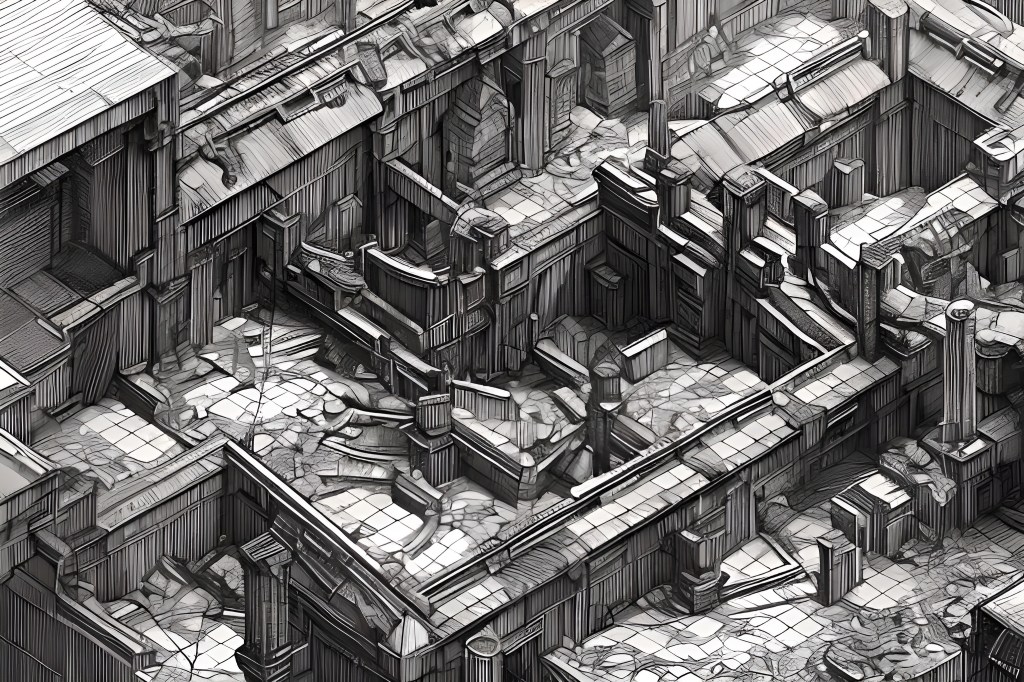
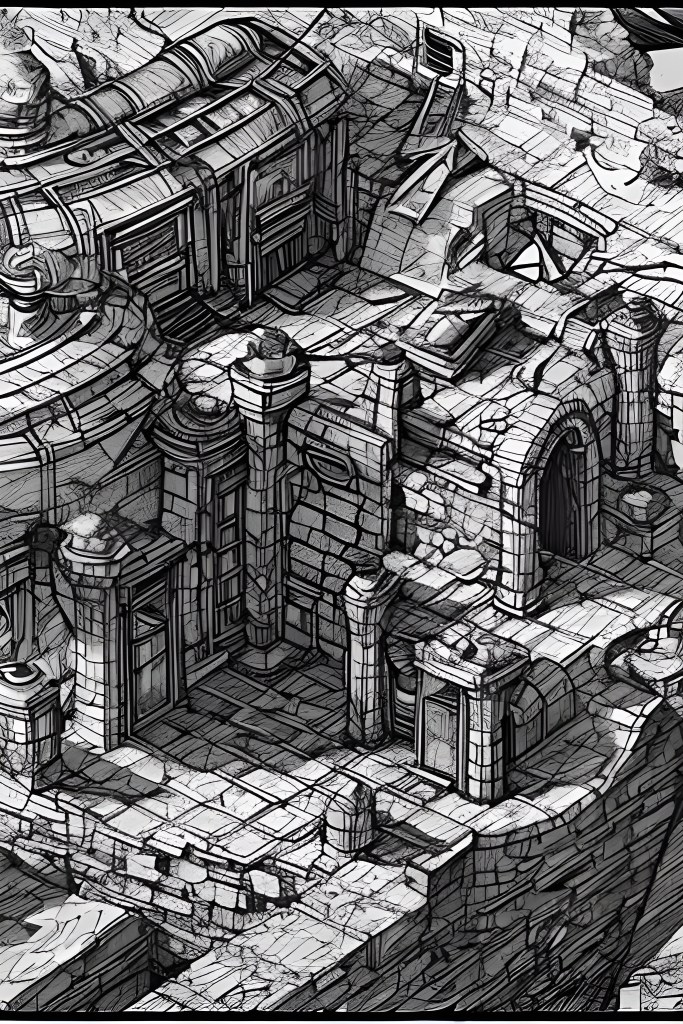
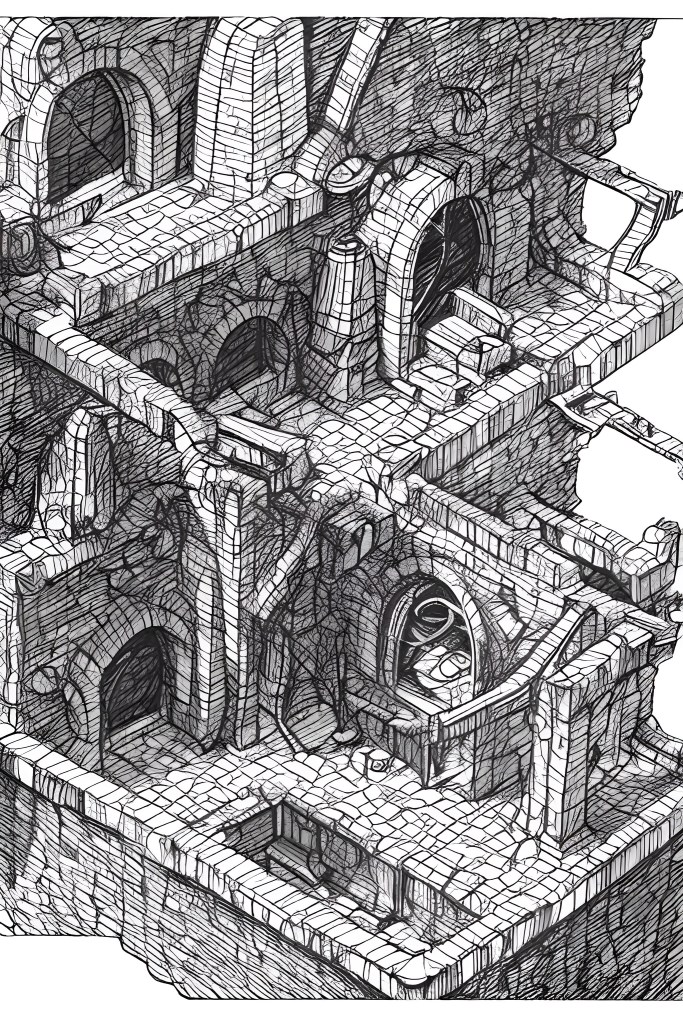
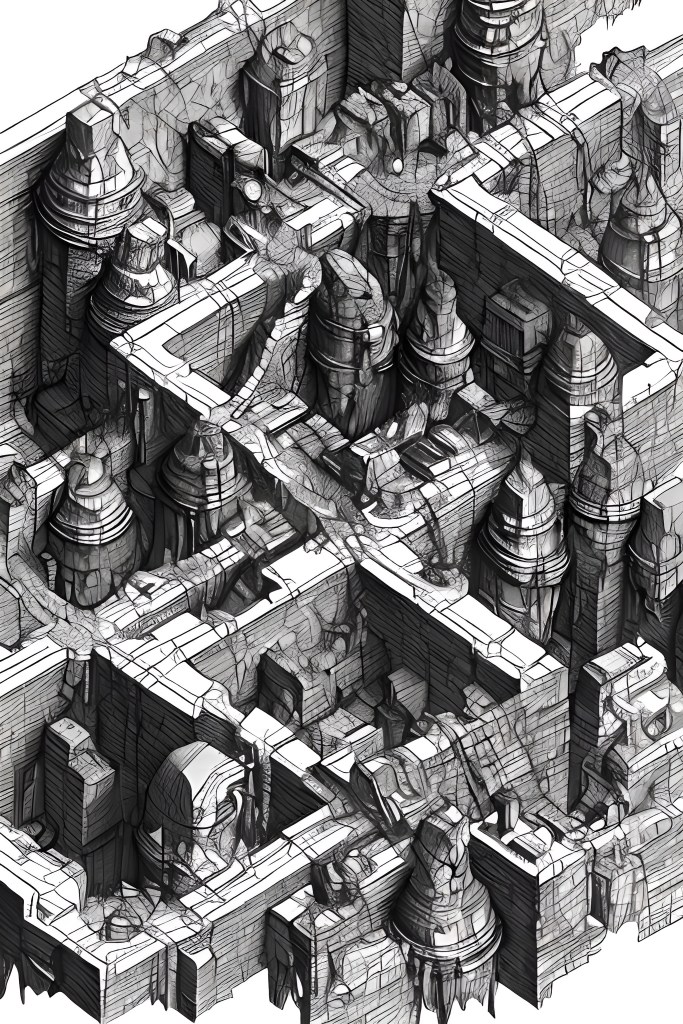
Finally, I was curious whether one of the many art generators out there, like Codeway’s Wonder app or Stable Diffusion can generate maps. And the answer is sort of. Here are some results as they were generated by Wonder without any editing whatsoever and based solely on precisely worded text prompts:

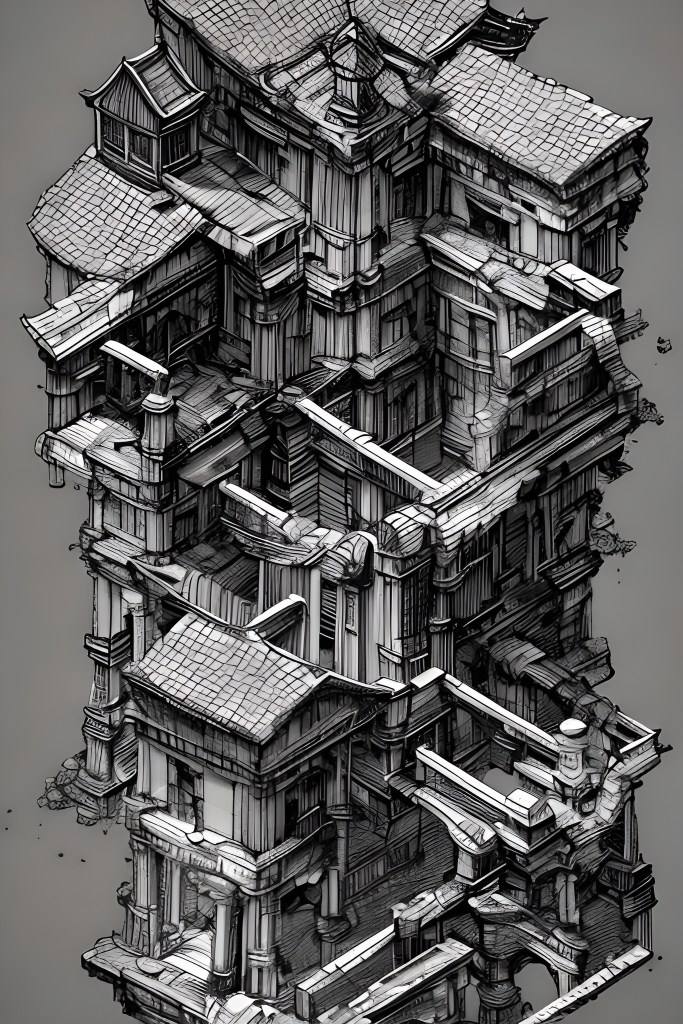
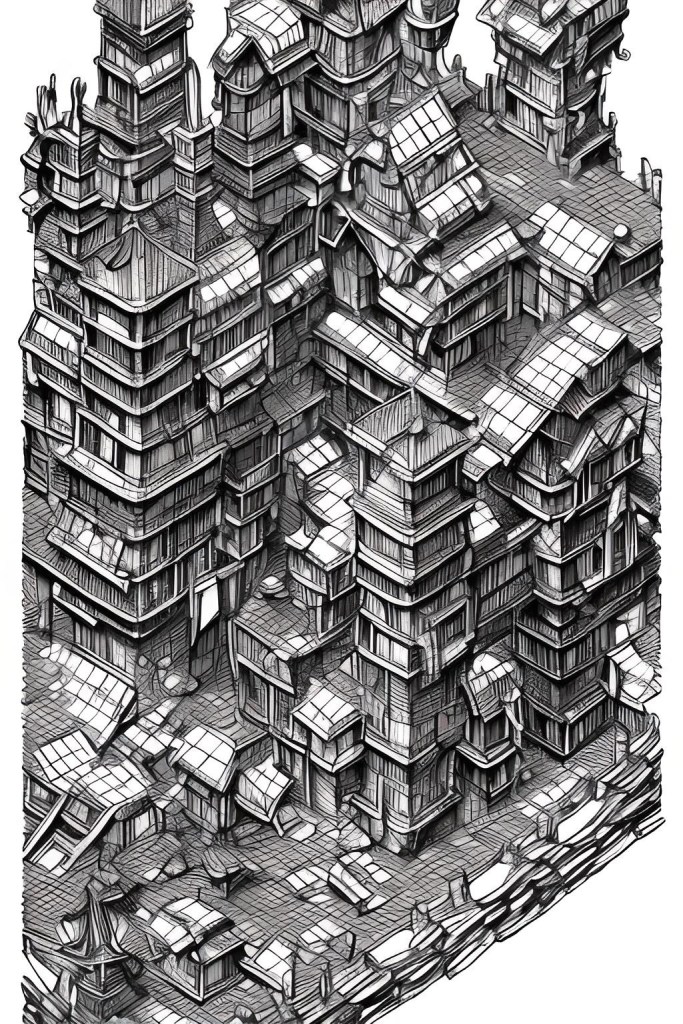
Just extrapolating, I requested some isometric maps for some lower level, grittier encounters. Again, these are from Wonder and with absolutely no editing whatsoever:

Come on! That’s incredible, right?!
I’m not ignoring that this is a delicate issue for people who make maps or write encounter tables for a living. But for my part, I see this incredible new technology as pushing me to be better, to be competitive and push the boundaries of my craft so I can stand above works that are jumbles of previous works.

Just ask ChatGPT to tell you a story, and you’ll see what I mean. They’re the most plain vanilla, generic fan fiction you can imagine. It’s terrible, no matter what you do with the prompts. And that’s the point I’m making here. If I worked with isometric maps for a living, I’d probably know these images for being generic and predictable. But I don’t, and I think they’re amazing, practically ready to use in a game with some minor adjustments.

Now for the freebie I promised you (click the image to download this in pdf). I present to you a set of adventure-building dice tables entirely built in ChatGPT:

Anyway, delicate but intriguing topic today. Go explore and let me know what you come up with!

Till next time,

AI Art Generators & Photoshop For Concept Art

I’m a visual thinker, big time. If you’re explaining something to me, I’m probably picturing what you’re talking about so I can follow what you’re saying and make something useful of it. If the picture starts to fade on me, then you may as well be speaking jibberish. That’s why rapid prototyping concept art is such a gamechanger for me, at least, in storytelling and game design. And it can do much more than prototype, as long as you’re not afraid to spit and polish.

In the last few months, AI art generators have taken off like a rocket and are rapidly improving in functionality, customization, and capabilities. Stable Diffusion, Codeway’s Wonder, and Artbreeder are my favorites right now, depending on the functionality I’m looking for. Midjourney and Dall-E have stolen all the oxygen out of the room as far as the media running with this narrative, but for fantasy / speculative fiction concept art they don’t offer the styles and datasets I need.

At Grailrunner, we’ve recently incorporated AI-aided art into our workflow for marketing images, for the website graphics, and to some extent in our products. I’m sorry if you’re an artist who feels threatened by this marketplace shift, but it really is a technology that is unlikely to go away or accept a lot of regulation. At this point, with millions of images generated per day across multiple apps, it feels more like an unstoppable tsunami you should probably figure out how to surf.

We just added another Lore Card to the Story Arcade here on the site and thought it would be fun to show a behind-the-scenes on the work, mainly to show how we’re using this fantastic new tool in what we do here.

What’s photobashing?

Photobashing is a technique where artists merge & blend photographs or 3D assets together while painting and compositing them into one finished piece. This is used by concept artists to speed up their workflow and achieve a realistic style.Concept Art Empire

Stephen Gibson, Art Director and designer of Grimslingers makes an interesting comment about this: “My current style for Grimslingers is photo/3D bashing. I collect images to splice together and keep painting over it, splicing in new images to fill out the character until I can’t stand to look at it anymore.” -Interview, Nov 2022 ImagineFX

Funny, huh? Anyway, photobashing is a big part of my concept art journey. I started off trying to paint everything myself and realized that’s not where my talent lies. Things accelerate and honestly look a lot better if I pull together stock images or 3d assets from places like Turbosquid, Shutterstock, Archive3d.net, Free3d.com, Nasa (nasa3d.arc.nasa.gov/models), Sketchfab and Daz Studio into Blender and work out compositions there. A lot of museums are starting to upload their collections as 3d models as well, typically for free!

Pulling assets together

Blender is still my go-to tool for compositing 3d assets into something useful because you can manage the placement and lighting and mess around with textures in Substance Painter. Incredible flexibility, but it’s time consuming. It’s also a place to build up assets that are unique to a world I’m creating (and so won’t be available anywhere. Then Photoshop. Always Photoshop. Nothing is done till it’s been through Photoshop. It’s a thing.

This is an example of what I’m talking about. The ball lightning carbine is a distinctive weapon, strapped to the arm of practically any adventurer in Grailrunner’s Salt Mystic universe. I made this thing in Blender with some parts from various models (a motorcycle, crutch, and I forget what all). The frame of it and the leather straps were just cylinders that I squashed and pulled into place, then added textures. Now I’ve got this thing in a hundred styles and orientations.

1. For our new Lore Card, it started with an idea: a dramatic aerial view of a carbine gunslinger on a mountaintop with a wide valley below him. Sometimes the story comes first, but in this case only the mental image. I’d write the story behind that guy after I saw him.

2. With Stable Diffusion, I experimented with a series of prompts suggesting the aerial view, the mountain top and valley, and the “fantasy gunslinger”. It took patience, not going to lie about that. And I cycled through several artists incorporated in the prompts to try different styles as well (you can mix artists too!).

3. Once I got something that looked like it would work for me, it needed some basic touch-up painting and color & tone adjustments in Photoshop. There was also an annoying misshapen character standing there (instead of my gunslinger that I asked for!) that had to be just erased. Photoshop has vastly improved capabilities now for easily removing stuff.

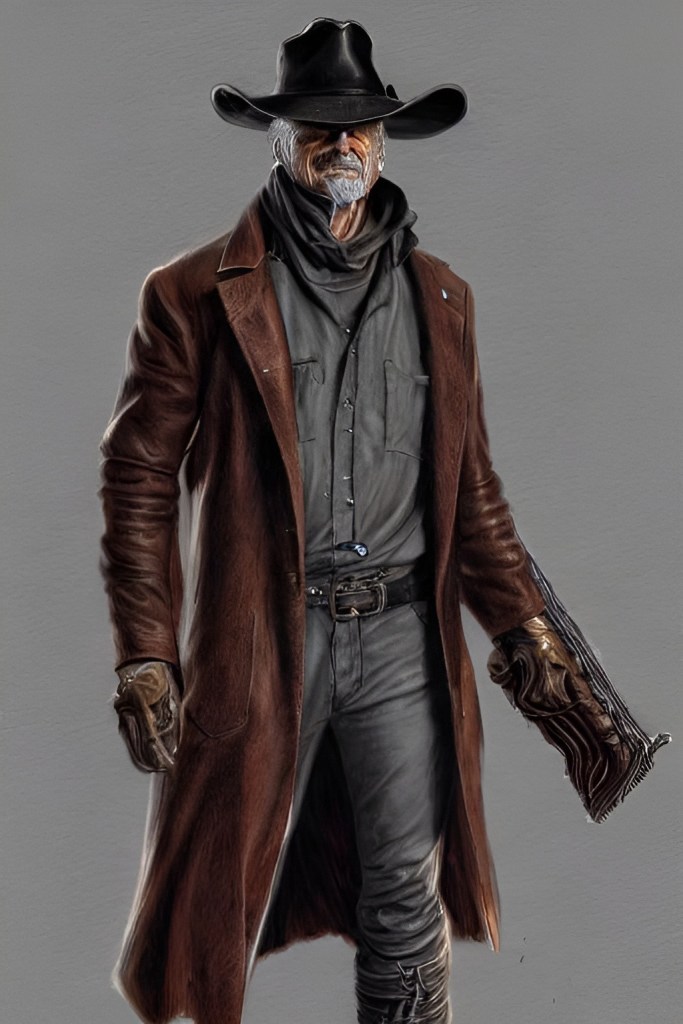
4. I still needed that gunslinger though, and went back into the cycle loop trying various iterations and prompts to get a guy in the right posture and wearing the long, gunslinger coat I was looking for.

This is the character I eventually went with. They can turn out with three arms and nightmarish faces, the fingers often run together and look like tendrils. Seriously, the output isn’t always mind-blowing, but here at least I saw the outline I wanted and general textures.

A bonus was the weird almost rectangular thing he had on his left arm, which if I squinted looked to me like our carbine without any extra editing.

5. I cut him out of his background and placed him on the mountaintop, gave him a little shadow, and darkened him to almost a silhouette. I was close, but it was bugging me that he was up on the high plateau without a clear story of how he got there.

6. I already had an asset for an airship from a previous work that I repurposed here. There’s a fantastic feature in Photoshop for automatically adjusting color grading and tone to match another image, so much of the hard work was done for me with that option. I just needed to trim it up a bit and place it in context.

You can read the accompanying story here on the new Lore Card. Here’s the final piece:

Let me know what you think, and if you have your own art journey going on. I hope you liked the peek behind the scenes.

Till next time,

AI Art Tribute To Mervyn Peake: Genius Of Gormenghast.

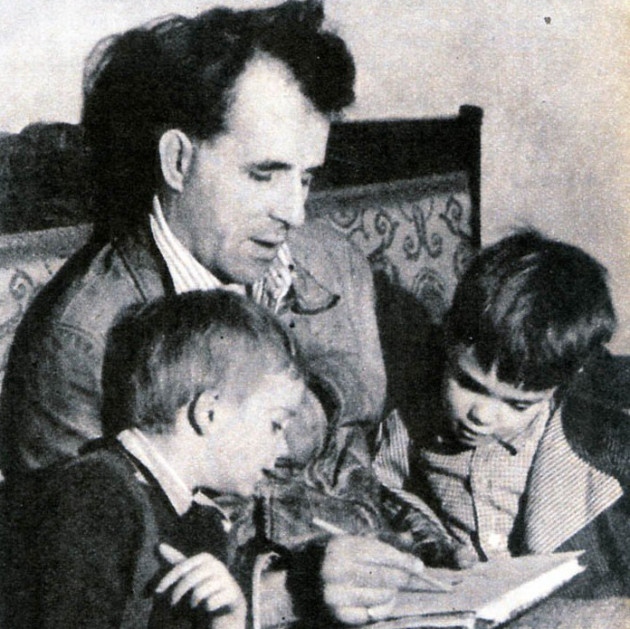
Here’s a true genius for you, this guy here entertaining these lucky little munchkins. His name was Mervyn Peake. He’d have wanted you to call him an illustrator or a poet, though he wrote two of the most white-hot works of genius ever put to paper in the unique genre of Dickens-esque fantasy fiction: Titus Groan and Gormenghast.

From being a painter & illustrator in the 1930’s and 1940’s, he went on to write poetry and short stories for children as well as adults. In 2008, The London Times named Peake among their list of ‘The 50 greatest British writers since 1945’.

As I see it, life is an effort to grip before they slip through one’s fingers and slide into oblivion, the startling, the ghastly or the blindingly exquisite fish of the imagination before they whip away on the endless current and are lost for ever in oblivion’s black ocean.” -Mervyn Peake

Though born in China in 1911, Peake’s family moved to England when he was 11. He was formally educated, particularly inspired and encouraged by an English teacher named Eric Drake who subsequently started an artist’s colony on the channel Island Of Sark which Peake joined later. Peake first exhibited his oil painting in 1931 with the Royal Academy. At the outbreak of World War Two, he applied to be a war artist and made a shocking, fascinating proposal to the Ministry Of Information of a way to help fight the war with his talent.

The love of the painter standing alone and staring, staring at the great coloured surface he is making. The window gapes as he inhales his world. His world: a rented room, and turpentine. He moves towards his half-born. He is in Love.” – Mervyn Peake

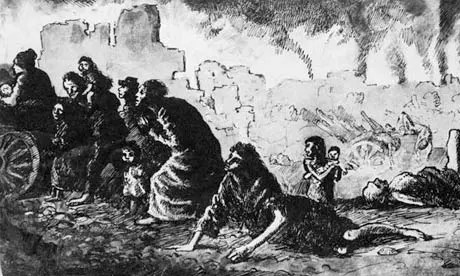
For the war effort, Peake proposed an illustrated catalogue for an exhibition purported to be by Adolf Hitler himself be published as a propaganda weapon. The catalogue would include paintings showing mutilated, raped or starving victims of war atrocities, as Peake imagined Hitler might have drawn them, but with mundane titles like “Family group”, “Still life” and “Reclining figure”.

A still life from Peake’s proposed catalogue.

There is a love that equals in its power the love of man for woman and reaches inwards as deeply. It is the love of a man or a woman for their world. For the world of their center where their lives burn genuinely and with a free flame.” –Mervyn Peake

Between 1943 and 1948, Peake completed Titus Groan and Gormenghast as well as some of his most notable illustrations for books by other authors, including Lewis Carroll’s The Hunting of the Snark and Alice in Wonderland, and Samuel Taylor Coleridge’s The Rime of the Ancient Mariner. By the late 1950’s he’d had at least two nervous breakdowns and was showing signs of dementia. It’s a terrible loss and shame what is so clear in the third book of the Gormenghast series, Titus Alone just comparing the writing. A fourth book in the series was left unfinished when Peake became too ill to write, though his widow’s manuscript supposedly found in the family attic formed the basis of a book of that title published in 2011.

I am the wilderness lost in man.” –Mervyn Peake

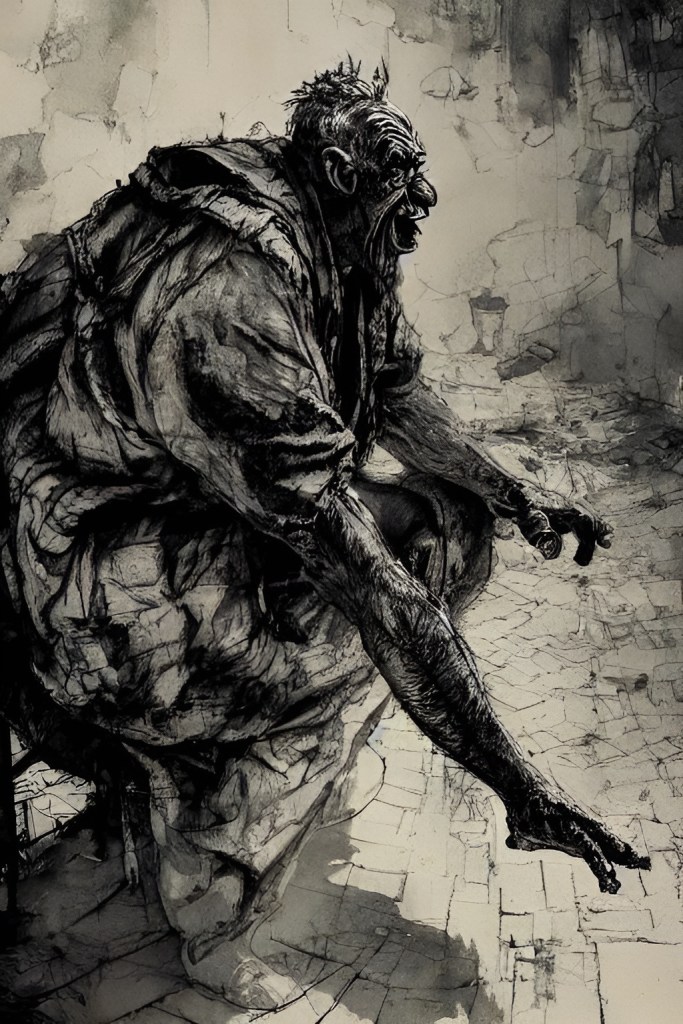
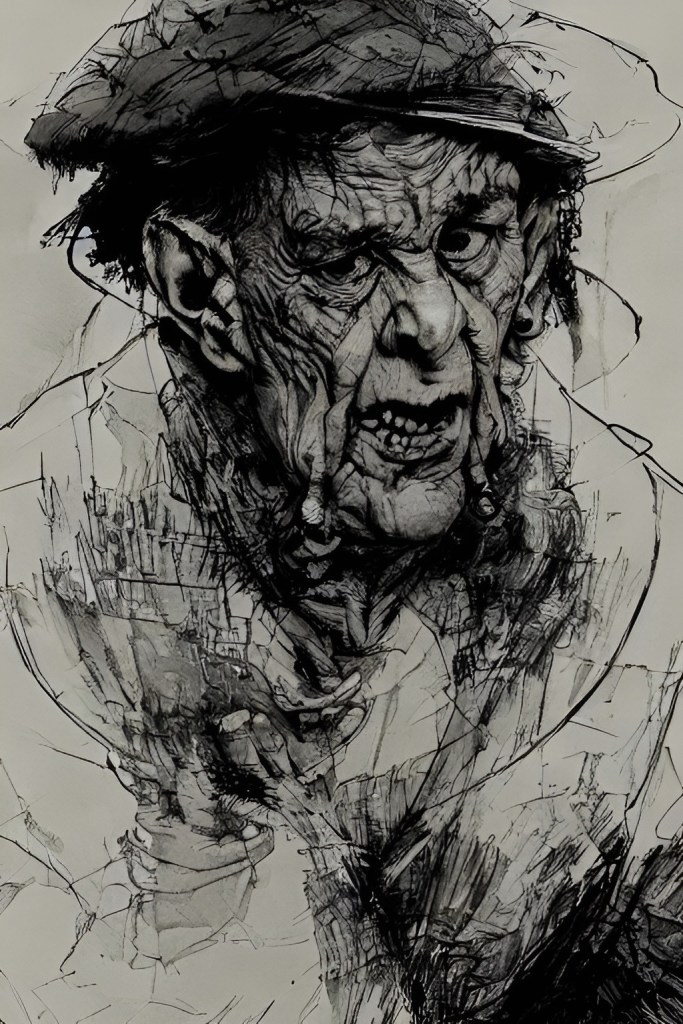
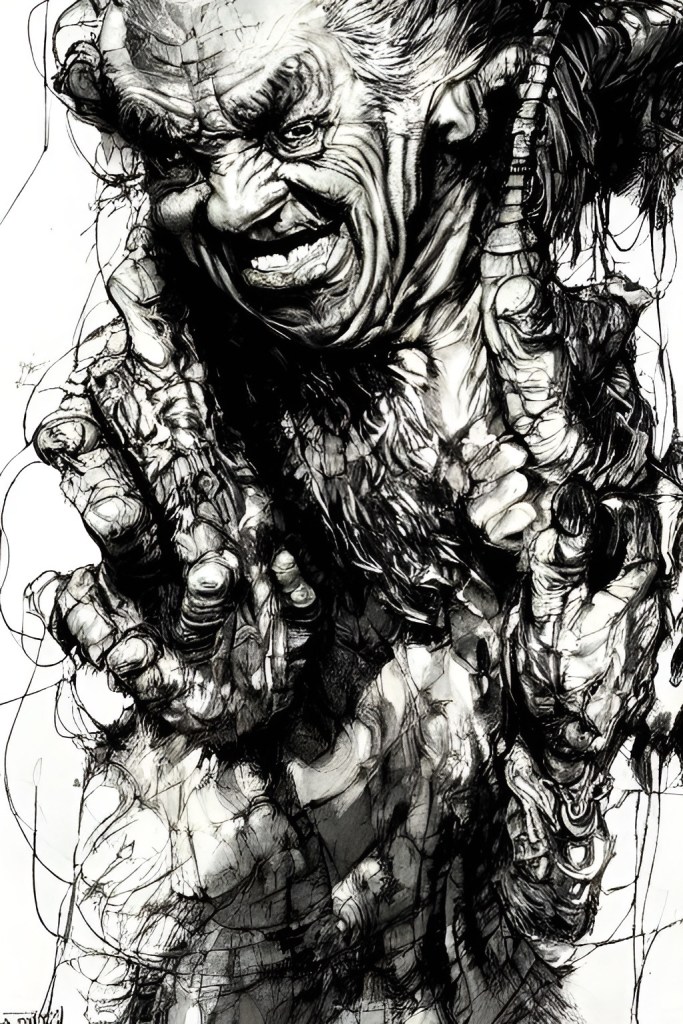
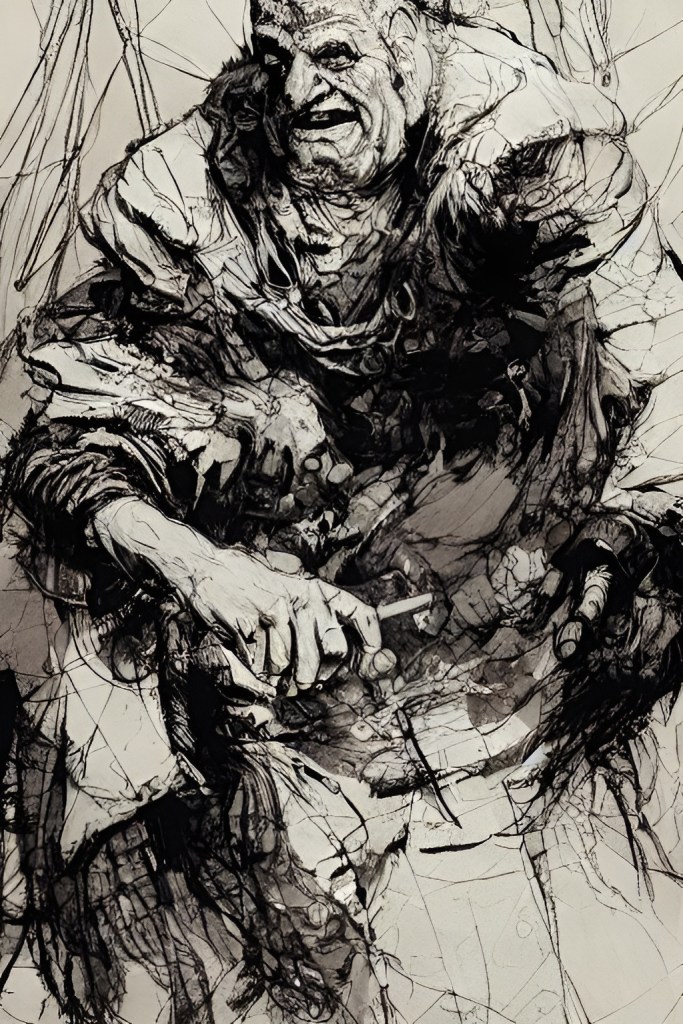
Grailrunner launched the Past Masters series of articles recently with a combined celebration of John Berkey, Will Eisner, and Jack Kirby. The idea with the series is to use AI art generators, properly coaxed with the prompts and data set options, cycled till the styles look about right and simulate works by these artists – not to pretend these works in any way approach their talent. Rather, it’s just to make us pause, take a look at what made these geniuses unique, and imagine what it would be like to see new works by them now.

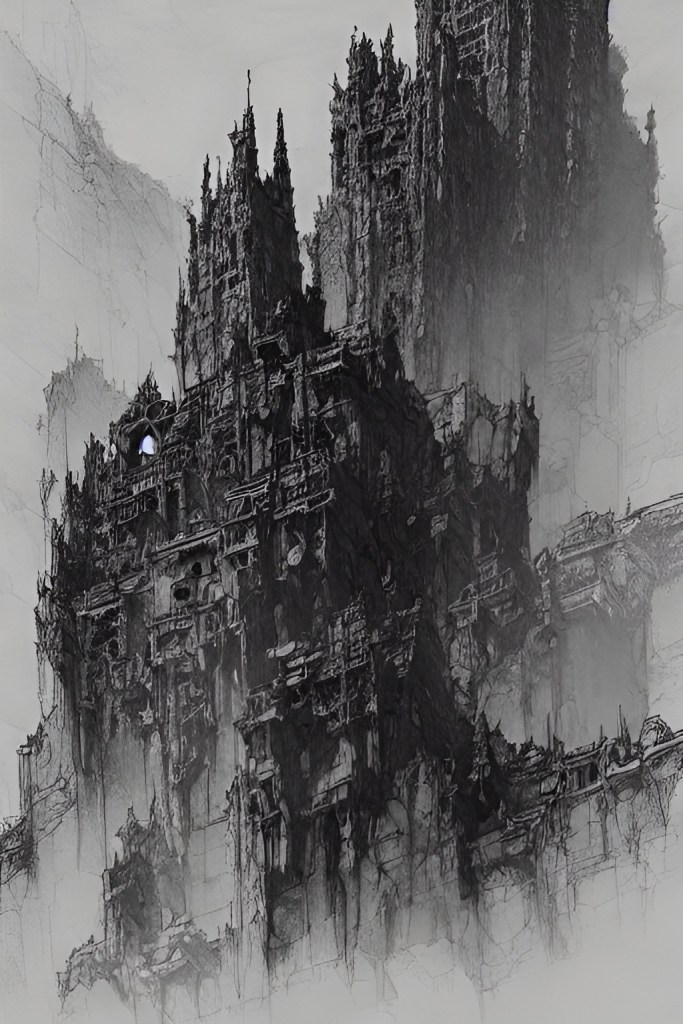
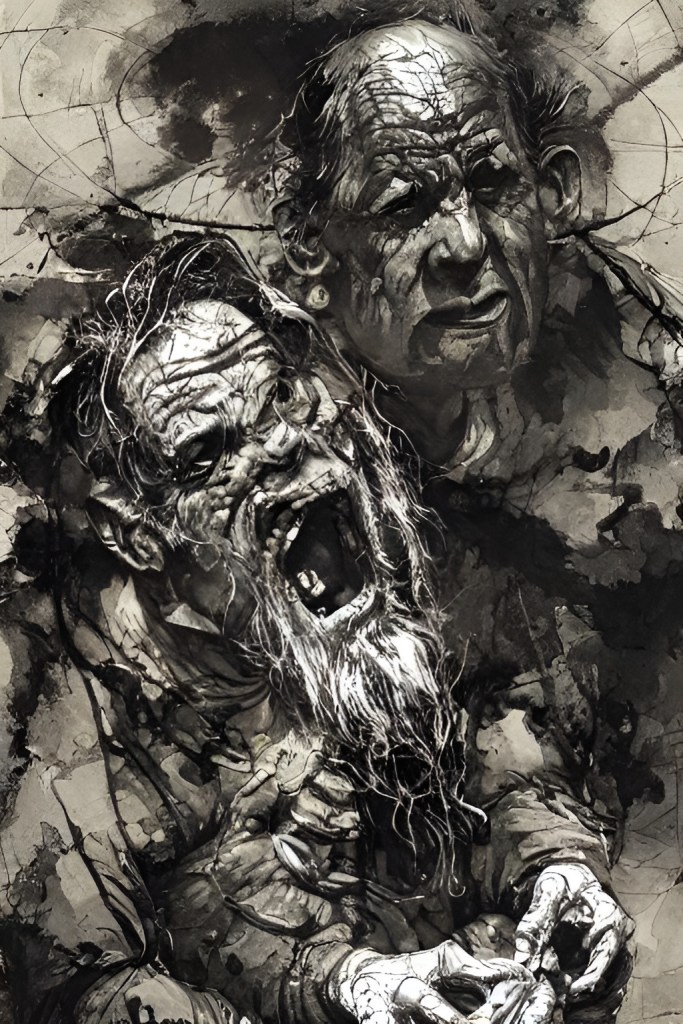
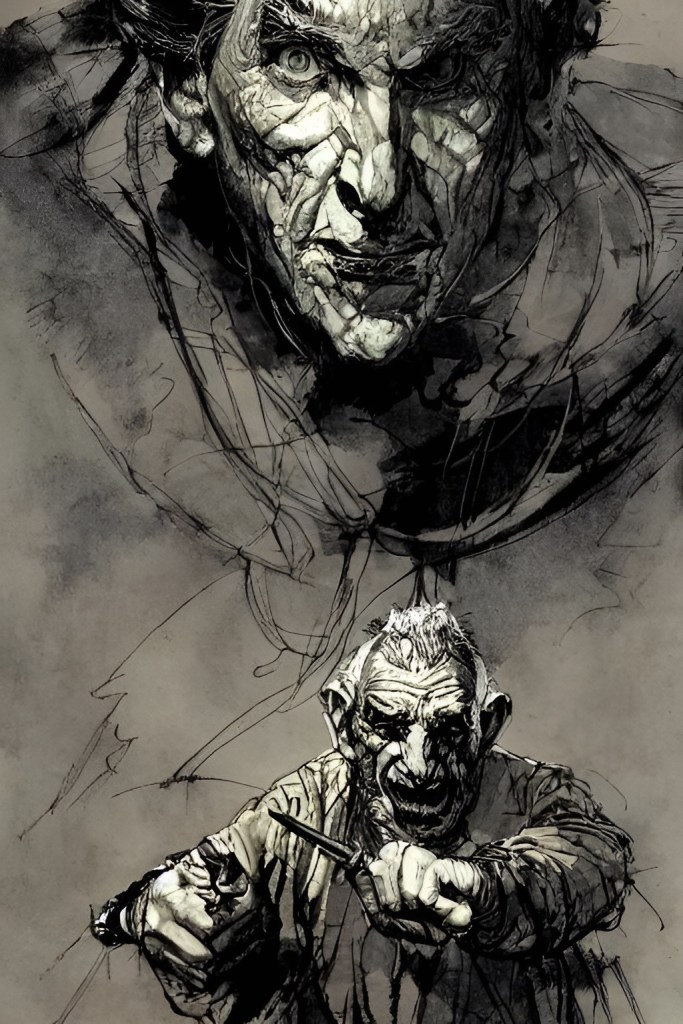
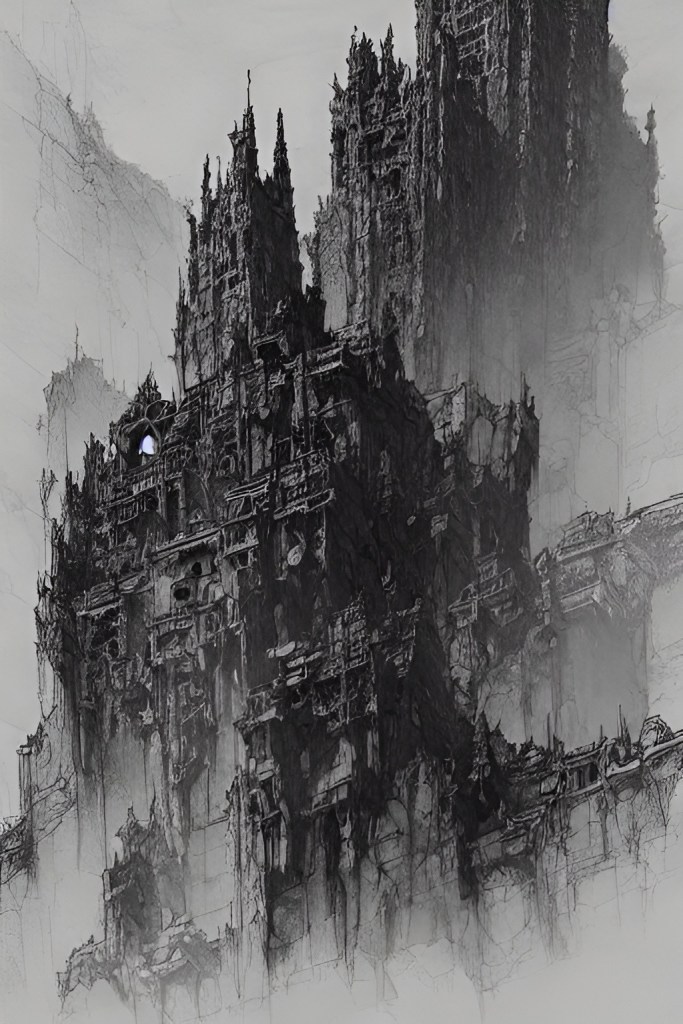
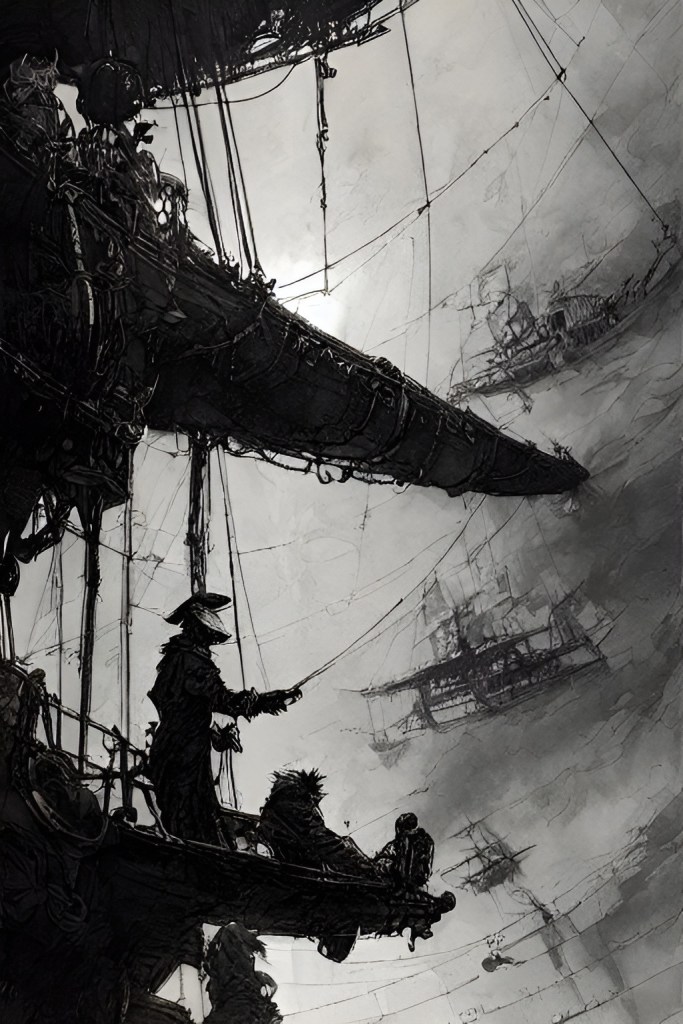
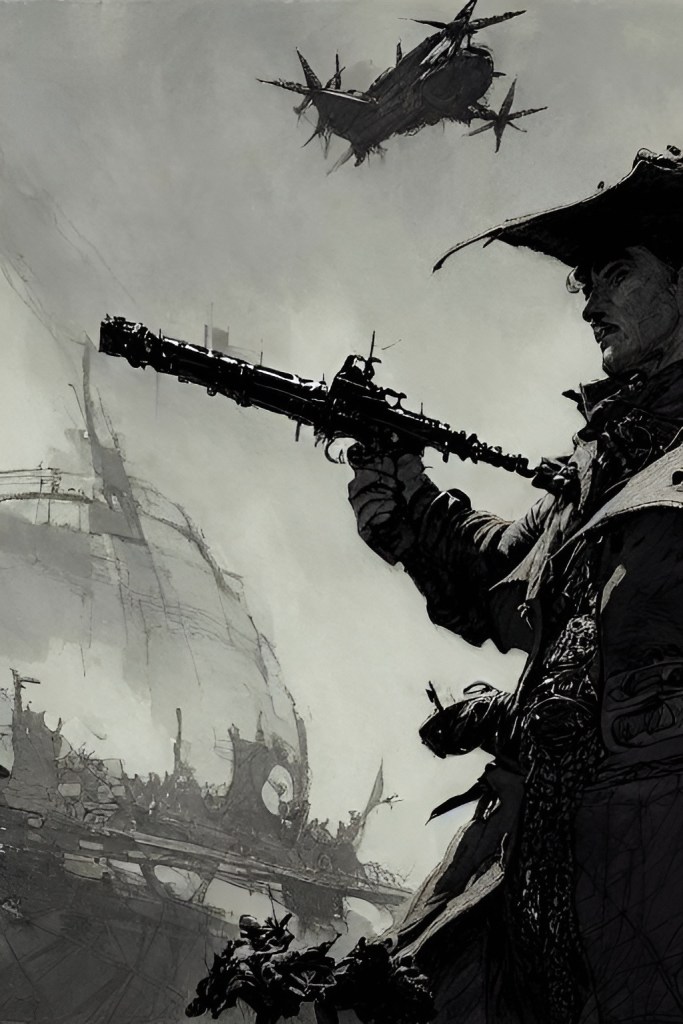
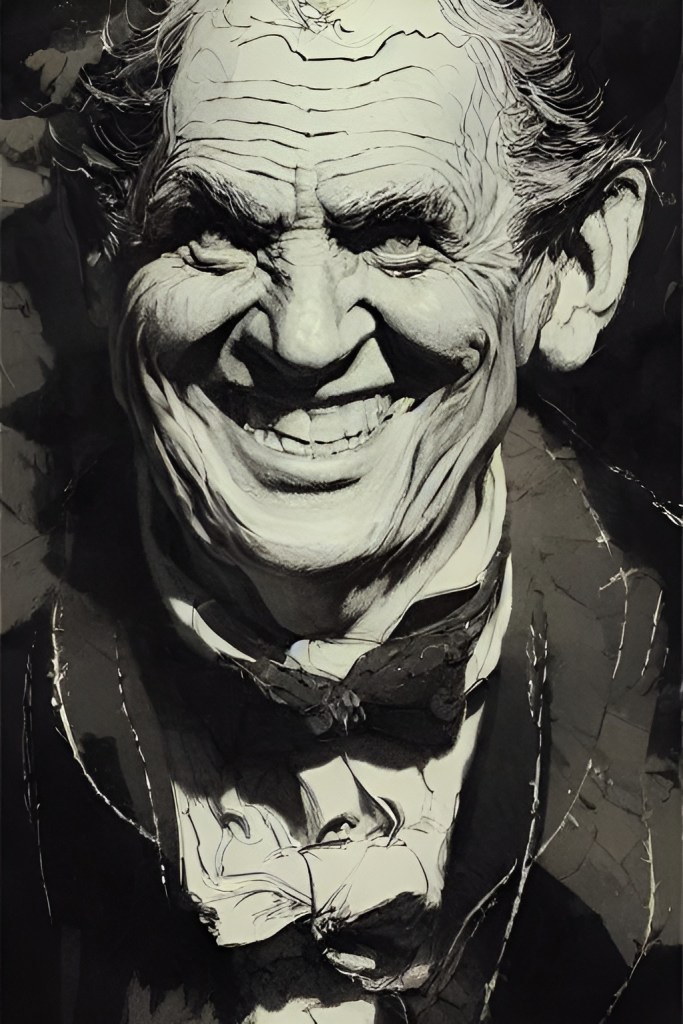
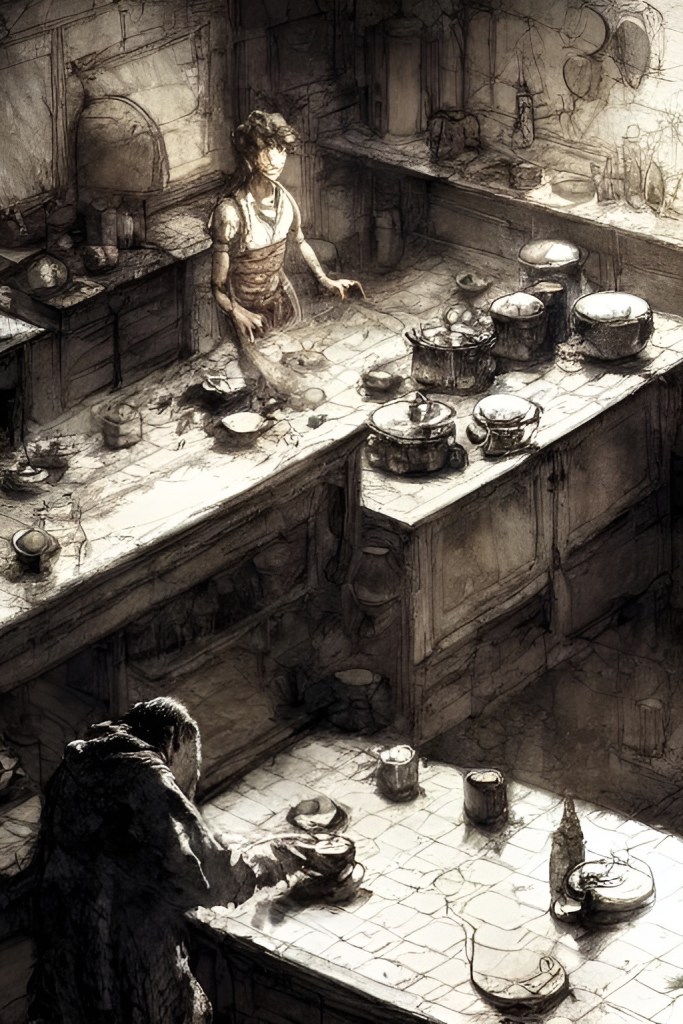
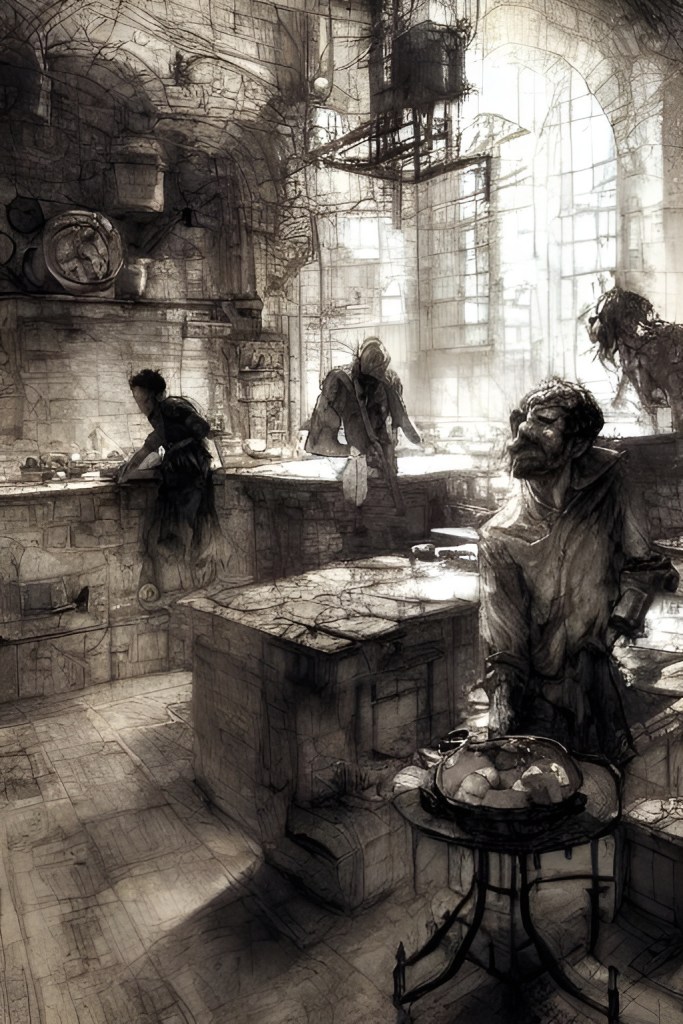
Enjoy some simulated pen & ink and wash illustrations generated by the Wonder AI art generator from Codeway. Prompts included “Steerpike in the kitchens”, “Gormenghast”, “ugly man telling stories”, “grotesque man screaming”, and “fantasy explorer in an airship”:

I hope you enjoyed these and are inspired in some way to find out more about Mervyn Peake. He’s worth your time.

In the presence of real tragedy you feel neither pain nor joy nor hatred, only a sense of enormous space and time suspended, the great doors open to black eternity, the rising across the terrible field of that last enormous, unanswerable question.” –Mervyn Peake

Till next time,