Firebeetle In The Stygian Library: Experiments In Solo RPG Storytelling

Adventures are a hunger, fundamental to who we are. But what makes them work?

Literally everything we try at Grailrunner is about pushing boundaries in imagination. Often, that takes the form of contorting tabletop game mechanics for experiments in immersive storytelling. Then we give that stuff away for free in case it’s entertaining, though we’ve learned bits and pieces along the way about what makes adventures work…and what is missing when they don’t.

Which is the point.

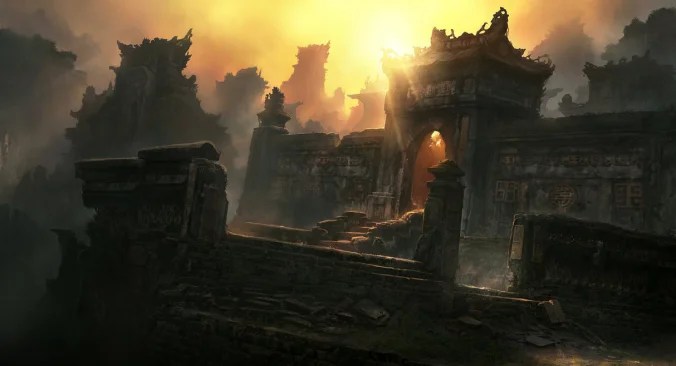
For example, we built wargame terrain and a narrative scenario to play out a story using the game mechanics of Privateer Press’s popular Warmachine. It was a thrilling ride we called…
The Black Ruins Massacre

Turned out amazing – go follow these links to see what I mean:

One of the more popular things we’ve ever done here on the site was to write up an illustrated recap of a solo Dungeons & Dragons adventure in Wizards Of The Coast’s Tales Of The Yawning Portal. I routinely use a ridiculous D&D character named Firebeetle to try out different roleplaying game rulesets, and in that case, I put him through a harrowing ordeal called Clueless In The Sunless Citadel. Click these guys here to see what that was all about, and download the free pdf. Only takes about a half hour or so to read, but it’s fun.
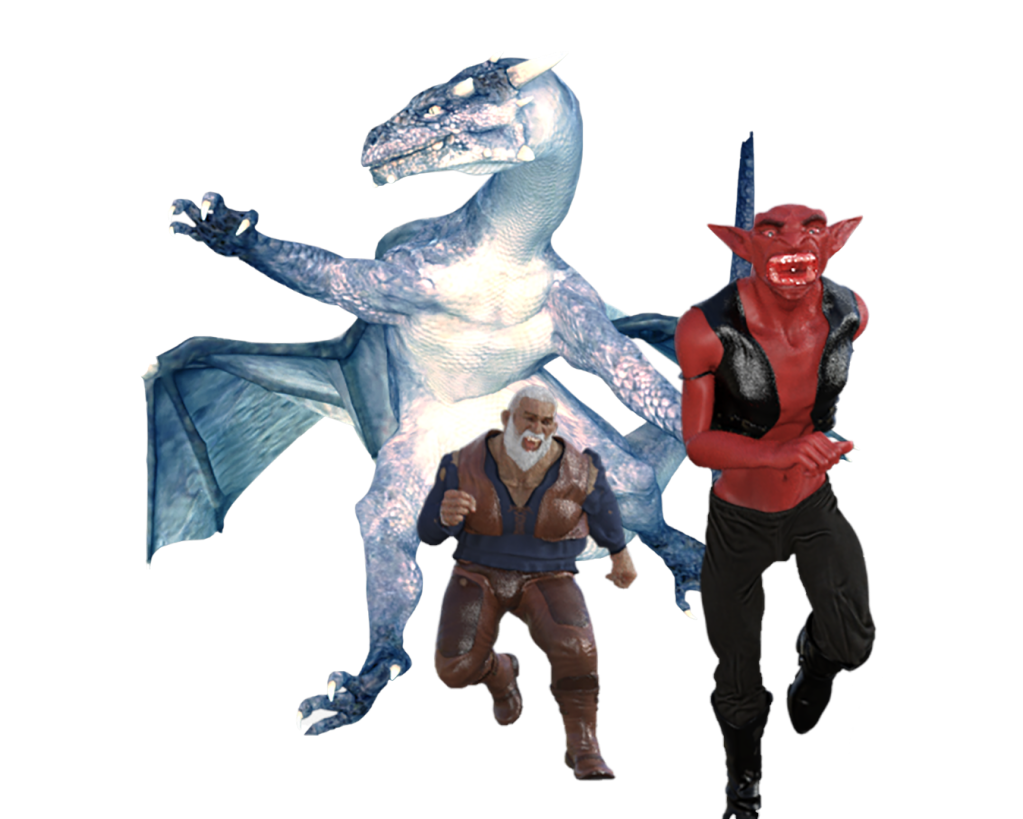
Clueless In The Sunless Citadel

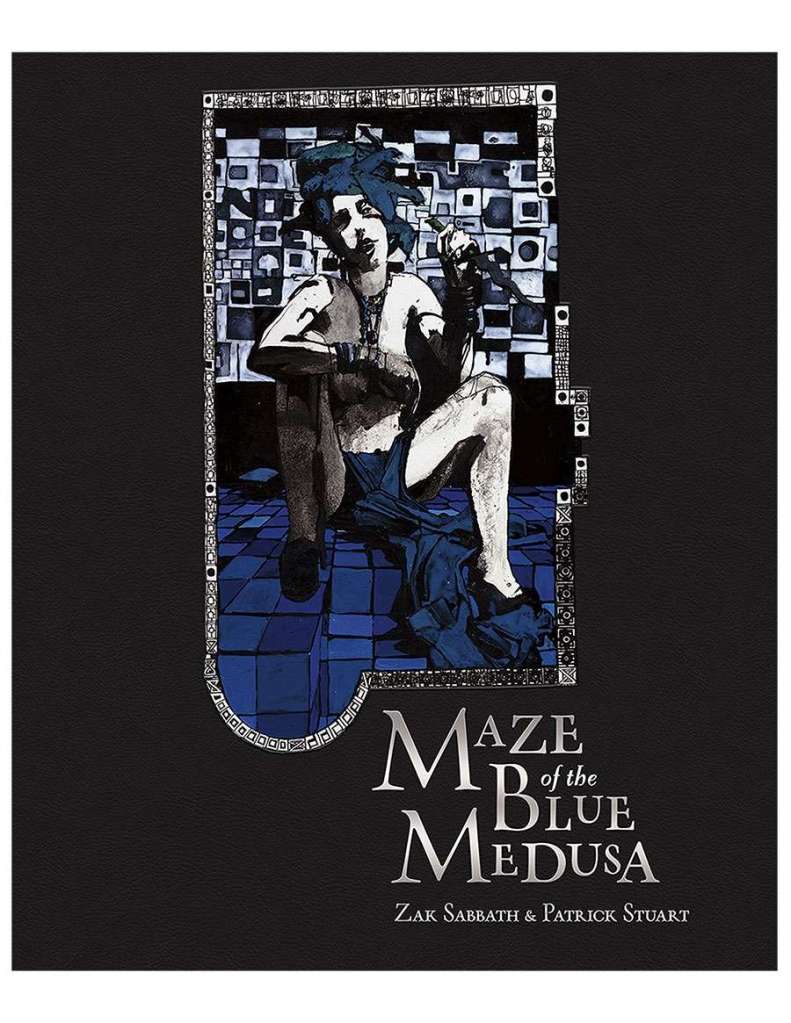
So anyway, I was in a big old used bookstore called McKay’s in Nashville, TN a few weeks ago. I strolled to the RPG section with no particular goal in mind and found an odd, strangely electrifying, though ultimately unsatisfying hardback called Maze Of The Blue Medusa. I knew as soon as I read the back, felt the weight and texture of it in my hands, as soon as I flipped through a few pages, that this was something special.

Maze Of The Blue Medusa

(I understand there is some controversy around one of the creators behind this book, so I’ll stick to the work itself in my comments.)

The book describes a system-neutral dungeon complete with a detailed map, illustrations, a bestiary and associated encounter dice tables, and intricately detailed descriptions of every one of its over 300 rooms. In every room, something weird is happening, something grotesque and surreal is creeping about, and crumbs of an over-arching story are dropped.

However, unlike so many mega-dungeon books with their Tolkein tropes and endless loot crates and traps, this whopper is written like an art project, with text that reads like it’s for shrewd adults capable of seeing irony and social commentary in its encounters.

I excitedly cracked it open when I got the chance to run young Firebeetle through his paces inside the Maze.
And I wasn’t into it.

It just didn’t click for me. The adventure escaped me, and it was just going through motions with no point. I couldn’t find a story hook that mattered. Each room seemed weird and vaguely interesting, but nothing popped or sparkled for me. The encounters were tedious and amounted to nothing. Here’s a Youtube video of some dudes in an actual play session of Maze Of The Blue Medusa – watch that for a few minutes and I suspect you’ll see what I mean.

Even with a great GM and some funny players, this wasn’t an adventure so much as a haughty stroll through the bohemian part of town where I don’t really fit in. I wanted the awe and danger of exploration inside the covers of a book and found only a meaningless series of weird things. Maybe that was my fault, but the mechanisms available just didn’t work the way I wanted.

That was on my mind when I heard of a little book by Emmy Allen called The Stygian Library, I thought maybe I had found redemption.

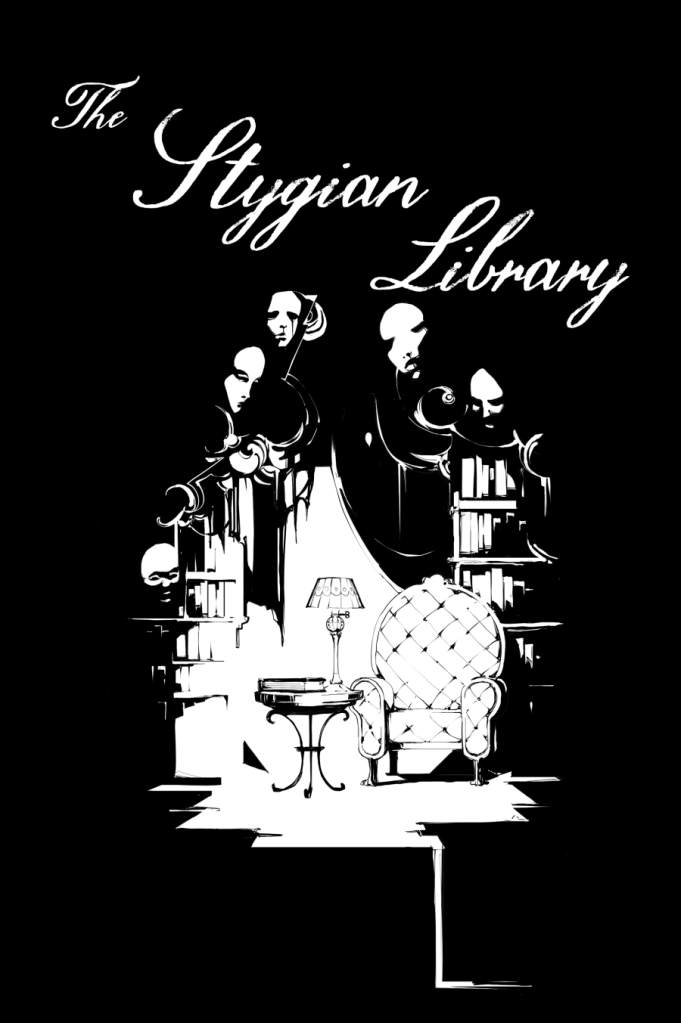
The Stygian Library

Pick up the older version of this booklet free here. It’s available in a remastered version here.

The Stygian Library bills itself as a dungeon for bibliophiles, promising a procedurally generated fantasy library you can explore in ever deeper levels. That sounded amazing, requiring you to map your way (though you can run blindly and get lost). Much like Blue Medusa, this wasn’t written with solo play in mind, but with enough dice tables and imagination, I figured I could rewire it.

Emmy delivers a wild bestiary including golems made of paper, animated books that follow you around, mysterious creeping librarians working on enigmatic calculations, even a half-man, half octopus that eats brains. Nice.

You roll for the levels you’re entering, details about them at first glance and also if you search around, as well as random events and, when prompted, encounters of a friendly or a violent flavor depending on your choices so far.
I took this idiot inside.
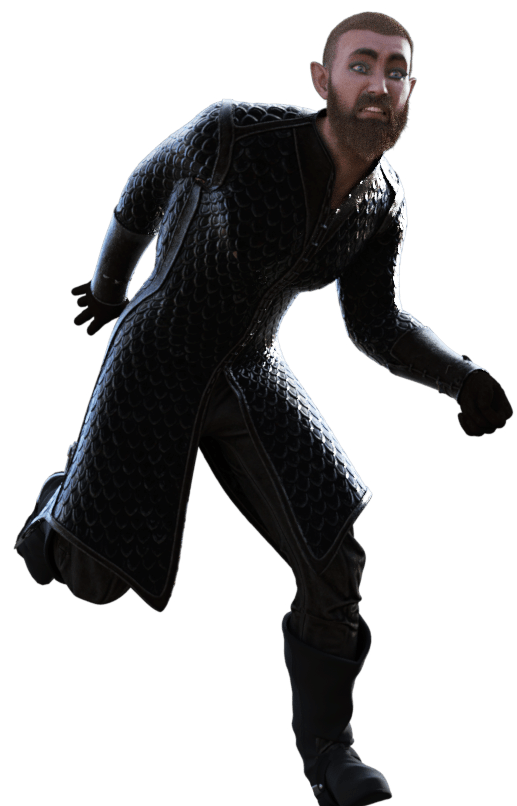
Firebeetle

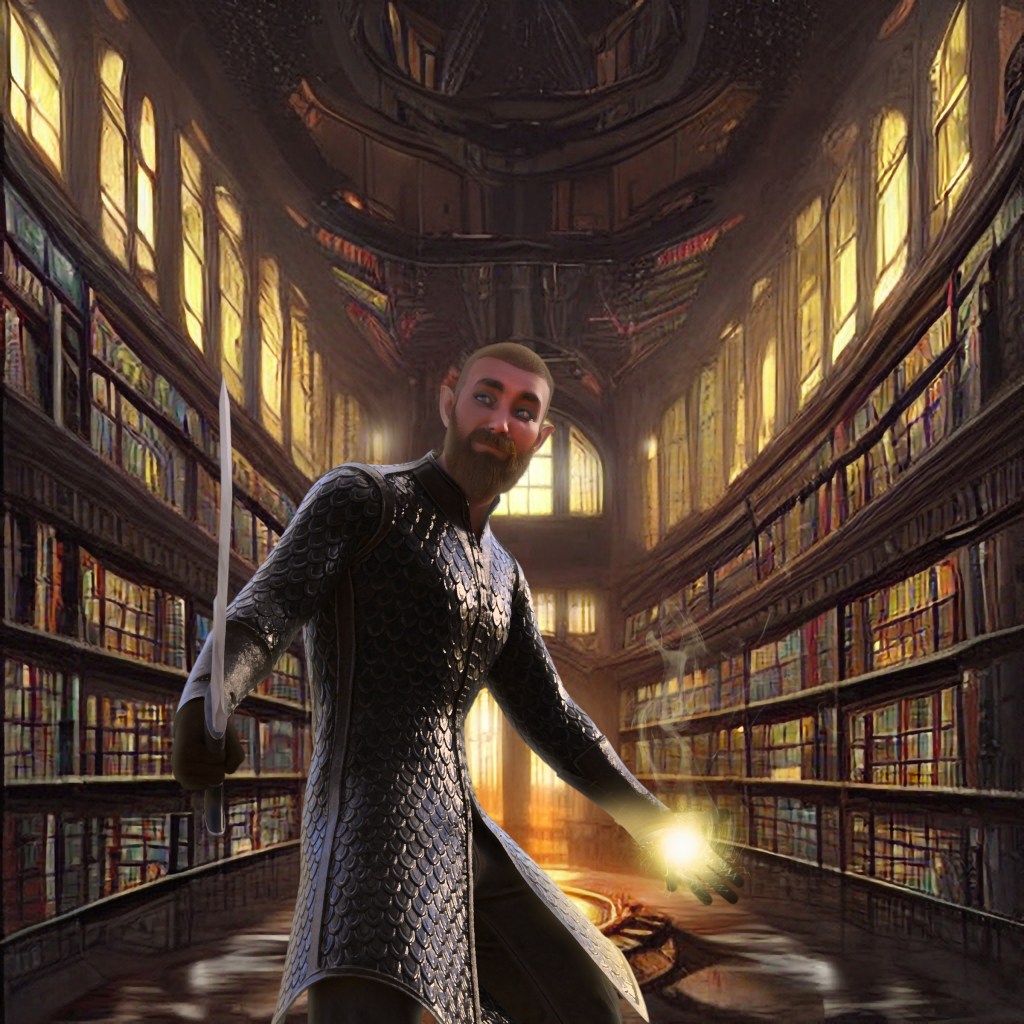
Firebeetle was a name I was given for my very first D&D character back in the day. I recreate him in any game system I’m testing out because he amuses me.

He’s an aimless adventurer, in it for the thrill, always ready to take up a quest or try a mysterious corridor, picking up random things along the way and relying on his luck to seem him through. He’s not really charming, but thinks he is. Loves the ladies. Gets into trouble practically at every destination.

Firebeetle has a tendency to stumble into dimensional portals (as I try new game systems), finding himself in underground dungeons in the Middle Ages (D&D), Viking-era Iceland in an impossible city made of clusters of hot air balloons (Ironsworn RPG system), or in the far future on a dying space station (Starforged RPG system).

He just kind of goes with it. And it all works out in the end.

Neither Blue Medusa, D&D, Ironsworn, nor Starforged were delivering on the premise I was searching for: the awe and danger of exploration inside the covers of a book. Maybe Emmy’s Stygian Library would be the trick. I love libraries.

I put this ridiculous booklet together during conference calls in the COVID-19 quarantine, and I treated it as the opening sequence before entering the Stygian Library. It was going to be called Five Days In Boghallow, a fighting romp with a funny undead sidekick. Literally the only reason I’m including a link here is to give you a feel for this character. He’s such an idiot.

Anyway, I’ll give you the airplane view of what went down inside the Stygian Library and make my point for the day:

On what happened inside the Library…(keep in mind, virtually all of this was determined by dice rolls and game mechanics)

Bereft, the undead knight and Firebeetle entered the Library from the pit into which they’d fallen. They were amused by a couple of animated books that followed them around like cats, though the creepy librarians kept appearing to whisk the books away into the shadows. Something they read inside the cover of one of the books gave them a quest to find some machinery in the deep levels of the endless Library. They encountered bees made of paper (swatted them away) and a golem (ignored it) and paid visits to a planetarium, a pile of treasure, the master catalog of contents, and a hall of taxidermy before managing to be entirely lost and stranded inside an ever-shifting labyrinthine library.

Ahh, I thought. Here’s where things pick up for young Firebeetle. He’s stuck now. Looking for some machines or something.

They kept pressing on, ever deeper, picking up all manner of treasures and vaguely defined books that seemed promising. ‘Let’s see Firebeetle’s careless attitude work his way out of this mess’, I said to myself.

Then inside a giant paper beehive, a bird-like bandersnatch started pecking at Firebeetle’s sword to steal it (because it was shiny). Stupid bird-thing. When they finally killed it, the fact that they were killers turned the Library into a deadlier place. This would pick things up then, as the Library beasties got nastier and the hapless adventurers grew more desperate to find a way out.

In an enormous statuary, Bereft and Firebeetle were accosted by a floating skull, attended by floating teeth that were enthralled with its every word. It grew increasingly insulting, commenting on their appearance and bumbling like they were museum curiosities, before it began to smash itself into Firebeetle muttering something like, “See, students, how a skull may stomp a bug without the need of feet!”.

They ultimately shattered the pompous skull, scattered its minions, and dealt handily with some phantoms the encountered as well. And they did, believe it or not, wind up in the chamber they sought with its outlandish calculation engines, where the hooded Librarians worked their mysterious mathematics.

And would you believe it…and I honestly didn’t make this up at all…the dice rolls delivered Firebeetle an intangibility potion. It’s the one thing that would get him back to an escape from the Library, with treasure and books in hand. I mean…I tried to put the guy in danger and make a madcap adventure of the whole thing, and his ridiculous luck somehow just pulled him out of it.

The Stygian Library was amusing, even interesting and novel, definitely worth your attention if any of this sounded like your cup of tea, but overall it failed to deliver the spice I was seeking: the awe and danger of exploration, except in the covers of a book.

So what am I saying then?

Here’s my point. And I learned this through all these experiments with different game systems through comparison with the one I’m testing now – Forbidden Lands by Free League Publishing. The difference has been night and day. And I believe I know why.

Solo RPG game play is absolutely possible. It’s enjoyable and surprising, stretching your imagination and your sense of fun. It may even rewire your personality as you rip and stretch aspects of yourself that don’t see enough light of day. It takes a few things though, which I’ve found in Forbidden Lands more so than with these other systems, including The Stygian Library:

In my day job when we deal with companies making big changes, we use something called The Airplane Model to define the major elements that make things happen, that drives people to do things. I’m applying this to manufacturing adventure. Hear me out:

Adventures work when:

  • (Vision) …there is a meaningful purpose to what the characters are doing – a destination and a clear, important goal that you find interesting. The Forbidden Lands ruleset offers a Legend Generator that covers this well. I believe I was missing this in many of my random exploration experiments.
  • (Sense Of Belonging) …the characters matter to you, fleshed out with formative events that made them who they are. I trusted the Formative Events dice tables in the Forbidden Lands to build a person for me, a hunter named Colter, and he’s starting to feel like someone I’ve known a very long time.
  • (Sense Of Contributing) …the decisions that your characters make have consequences. I felt in the Maze Of The Blue Medusa and to some extent in The Stygian Library that the random conflicts and odd bits of treasure were irrelevant. Curating good dice tables, like the Action and Theme oracles in Ironsworn and others is fantastic for surprises and a sense of wonder and discovery, but what you do has to mean something or there’s no weight to what’s happening
  • (Sense Of Progression) …there is a clear, definable sense that progress is being made against the purpose. Ironsworn, Starforged, and The Stygian Library all three provide an abstract Progress Tracker intended to keep score of how things are going in the story versus goals, but I found that unrelatable in solo play. Boring and meaningless, even. I’ve found I start to give up on the adventure entirely if there isn’t any meaningful progress or sense that things are moving along. In the case of Forbidden Lands, a deliciously detailed map is provided which is incredibly satisfying.
  • (Sense Of Urgency) …time is ticking, and there is a real possibility of dying or losing something precious. Particularly in D&D 5th Edition, I feel like it’s kind of hard to die. One thing I’m seeing in the Forbidden Lands ruleset is that the stats are unforgiving, and there are lots of things able to kill my character. It forces me to make Colter plan more, and think creatively about his decisions since he could die so readily.

And that’s what I wanted to say about all this. It’s been interesting, testing all these systems out and trying to use them to breathe life into a story I can experience.

The awe and danger of exploration, except in the covers of a book. Possible?

What do you think?

Till next time,

Announcing A Massive Freebie From Grailrunner!

Ahhh…free stuff. Who doesn’t love it?

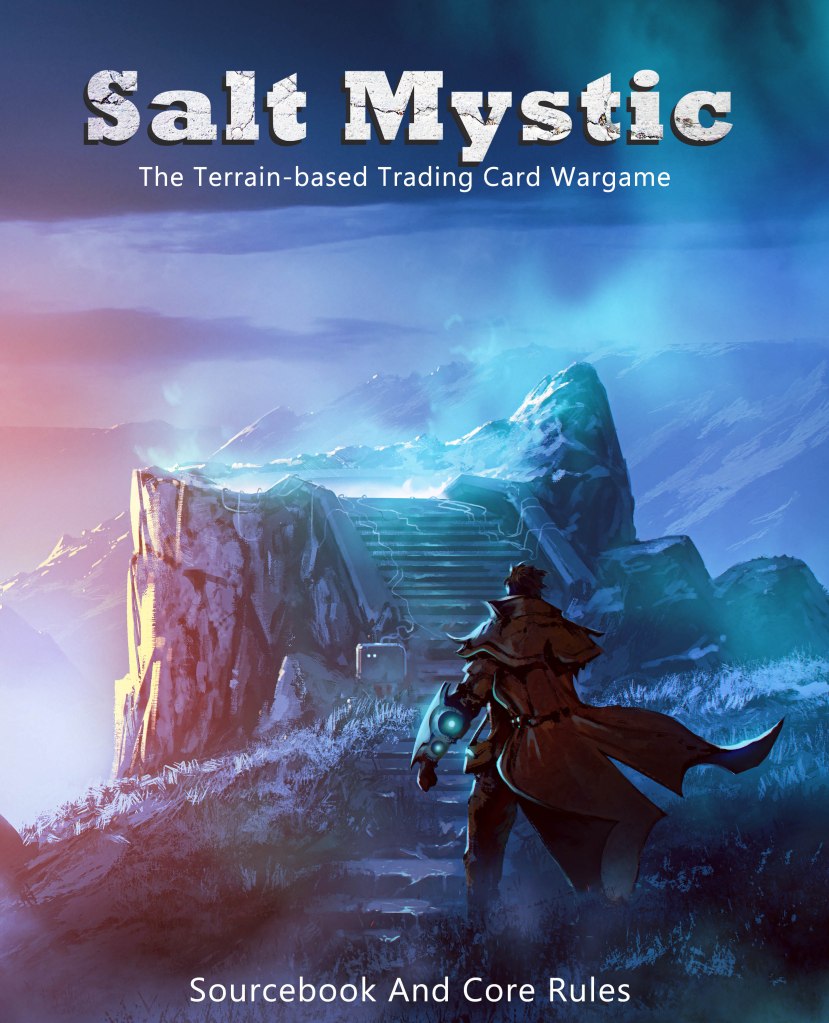
One thing we’ve heard loud and clear from you is that you feel it’s hard for someone to first get into the Salt Mystic universe without having the Sourcebook And Core Rules. You’ve got your battle deck, your own copy of the book, and you’re ready to smash some tornadoes together. Your head’s swimming with images of gunslingers dueling with ball lightning and abandoned sparkling oriel gateways leading to treasures and ruin.

Yet there’s a lot of gaming options out there (and so very little spare time!), you struggle to get someone to buy any of that for themselves, so there’s no one to play the game with.

We hear you. And we’re fixing it.

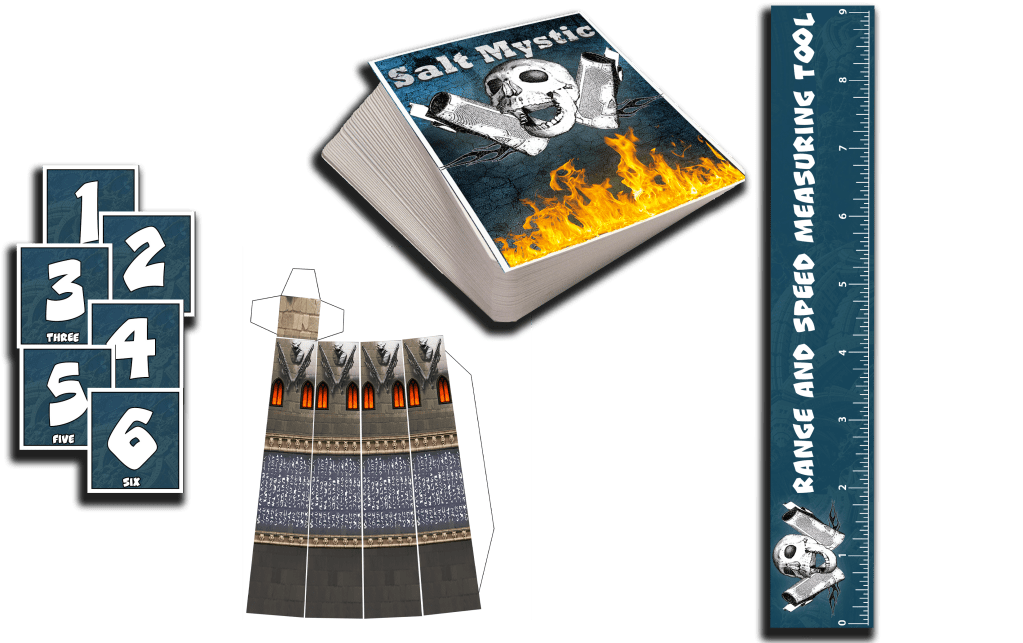
Starting today, the free ebook available right here on the Grailrunner site will include:

  1. Two full color Volume One starter decks, available in print & fold format
  2. Dice cards and a measuring ruler
  3. A fully realized narrative scenario complete with short fiction and table setup guidance
  4. An assortment of sample terrain elements, including one customized for the included scenario

The included adventure scenario is particularly dear to my heart, because we mostly stick to flash fiction at Grailrunner. We’ve always kind of thought people like their non-mainstream stories super short, high impact, lots of shock and cool ideas, with great eye-catching illustrations. Like we’ve attempted with the Lore Cards. The novels will be great when they come, but that moves incredibly slowly for me at least.

Yet you asked for more now. Thank you!

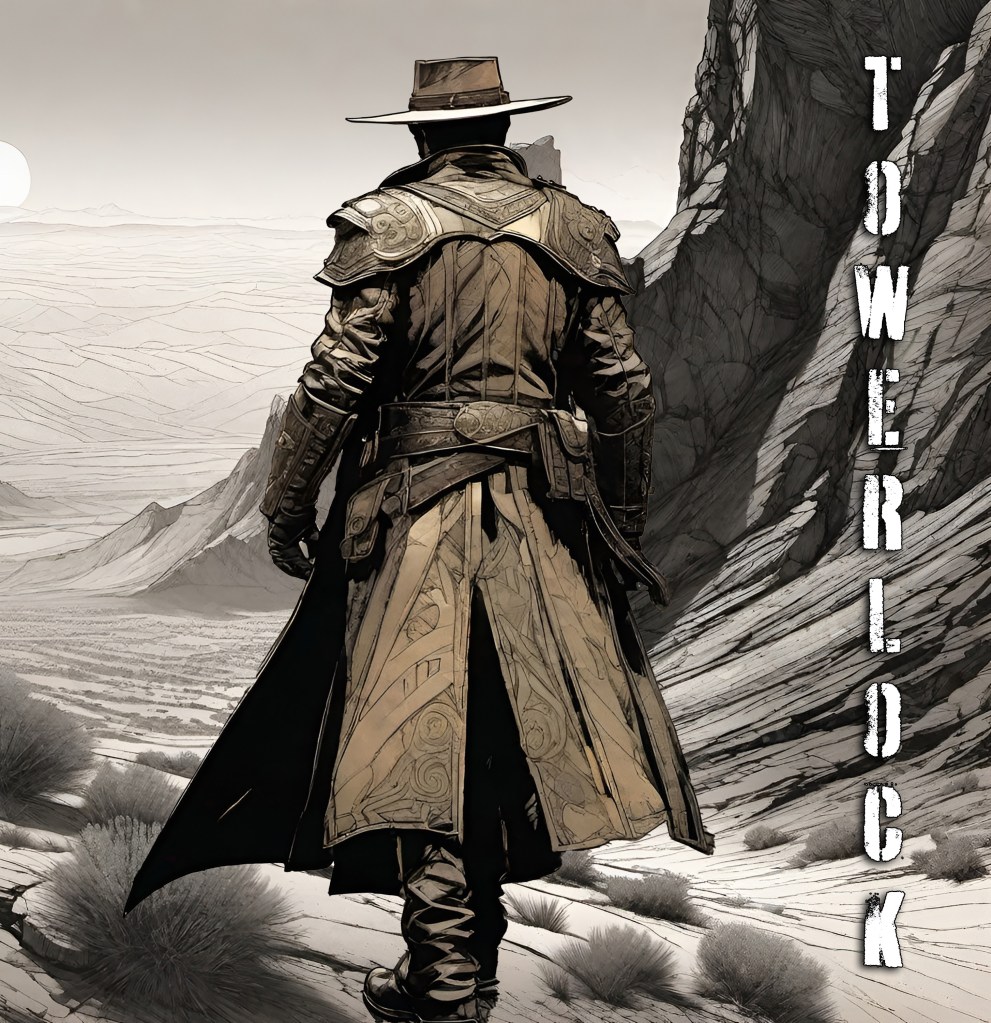
The bonus game scenario is titled “Towerlock”. We wanted to elaborate on a fan favorite character, the devilish all-seeing wildcat who calls herself “The Wake”, bringing her to life in a way that might surprise anyone that has gotten to know her so far. Or thinks they have.

The accompanying tale exists to help you visualize the unique battlefield conditions that will exist in the game scenario. The pressure cooker conversation between The Wake and this mysterious adventurer with whom she apparently has history is your chance to ask yourself just what you’d do to either attack or defend the summit of that mountain. You know your assets, your liabilities. Then…what would you do? Play and find out.

Towerlock: An abandoned oriel terminus has been discovered on the summit of a towering granite butte in the desert country in Jasphouse Province. A single oriel gateway leads to artificial pockets of space left over from The Infinite Republic, and could contain treasures and technologies beyond belief. Yet a terminus might contain as many as twenty such gates. No one nation can be allowed to control that sort of thing.

Karak and a vanguard watch from Alson in the Mountains got to the summit first and established an operation financed by an enigmatic partnership known only as Towerlock. He will need to plan his defenses carefully and consider all possible avenues for assaults and seiges.

Segmond and a vanguard watch from Tanith in the Salt Flats has arrived to take the summit back. He’ll need to analyze the defenses being set up, consider all intelligence he can gather, and prepare as devious or as bloody an assault as he can muster to have any chance at success.

Wonders beyond imagination could be ripe for the taking. But the fight will take place on a sheer vertical wall, and anyone who’s defeated falls like rain. Good luck. Draw well.

What’s your strategy?

Anyway, that’s what we wanted to let you know today. It’s a big deal to us, and will hopefully open the door to more folks dipping into this fascinating, experimental world that’s so unbelievably building itself.

Make sure you’re signed up for notifications for new articles here on the site; we plan to post a sample chapter from the upcoming novel, Mazewater: Master Of Airships.

Till next time,

Designing a tabletop wargame: update!

The wheels turn slowly, my friends. But they do turn. We’re making glacial headway on the tabletop game we’ve been talking about for a couple of years now – but in recent days, some exciting things have been happening!

If you’re a visitor, welcome! I’ve got a gift for you. Download the basic ruleset for an introduction and overview, to get some cool ideas on how this bad-boy will start cranking once it’s up and running to tell some gosh-a-mighty, romping, stomping tales of science fictiony goodness.

Proofs of the deluxe version of the Core Rules And Sourcebook have come in, and we weren’t happy with the color and print quality. The cover looked great, but some of the textured pages were a bit muddy. We’re also including two starter decks and some papercraft terrain you can pull out and play with immediately – those need to pop in clarity and brightness more than we were seeing with the proofs. So we’ve beefed up to a higher print quality standard and are waiting on the second round of proofs on that.

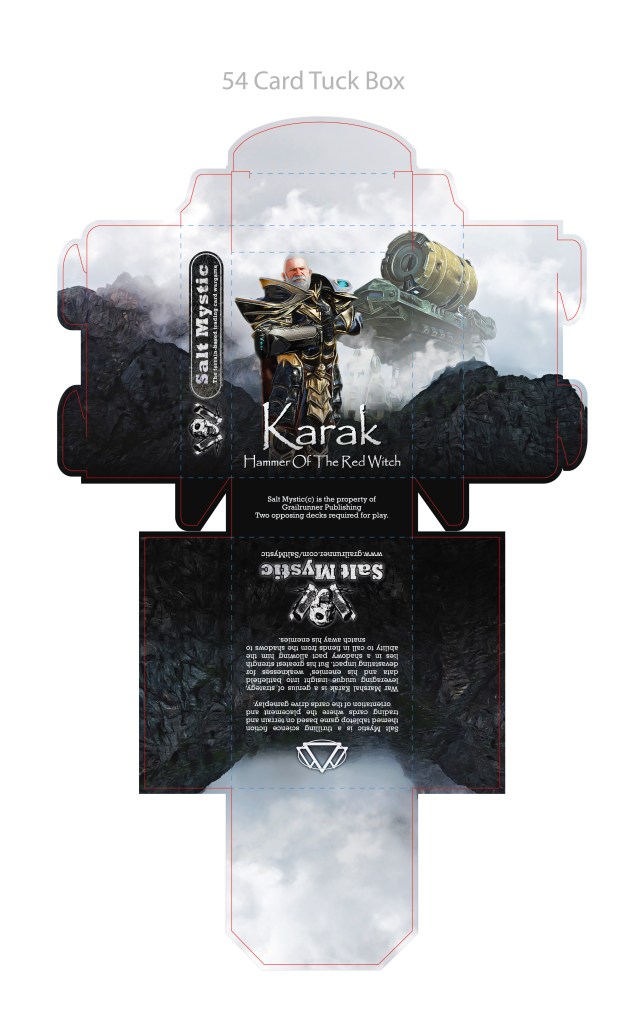
The game is played with tremendous flexibility, including different War Marshal decks you can begin with, and customize from there. Those guys needed their own tuck boxes. We approved the first design, and the proof arrives any day. This guy here:

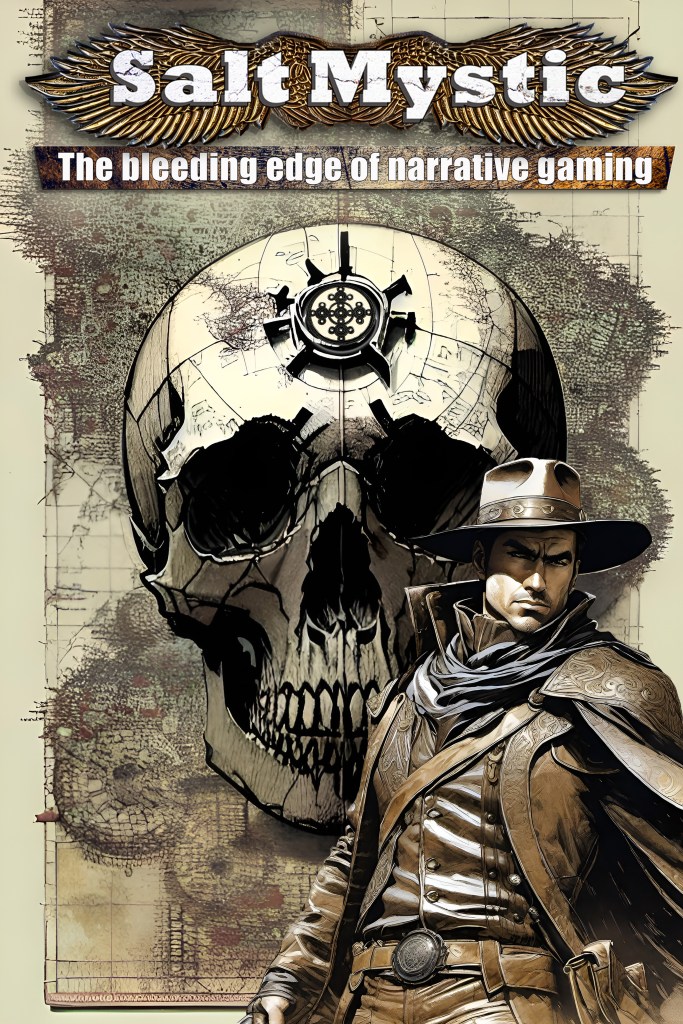
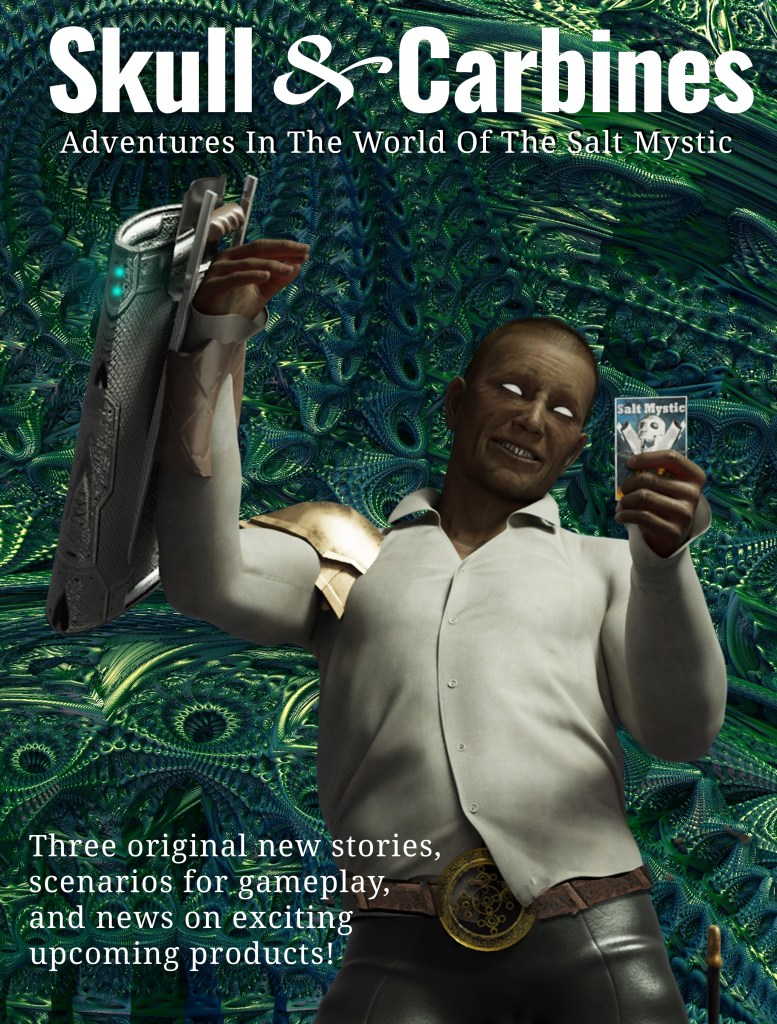
We also got a head start on the quarterly (hopefully quarterly!) digital magazine which will serve as sounding board and announcement central for upcoming products (like the terrain tile deck we started working on and can hopefully be ready before year-end). Here’s a draft for the potential cover of issue one – let us know what you think!

I started writing the feature story for the first ish, with a scheme of introducing some of the key characters and framing out a narrative scenario you could immediately set up and play after you read it…to see how you’d handle the situation. Could be in two-player mode or solo. We’ve gotten some great feedback on the playtesting for solo play, which we refer to as Wolfpack Mode. It seems even after quarantines have mostly lifted, people are super interested in solo play these days. That’s great, and hopefully we can make that as shifting and challenging as the regular one-on-one version.

Man, I wish this was a full time gig and we could just sit around writing stories and dreaming up worlds for a living! But bills to pay, and kids to raise, my friends. If you’d like to volunteer to help out, or submit any stories or art for consideration, feel free to reach out either here or emailing me directly (brian (at) grailrunner.com). We’d love to grow the family.

I hope you’re doing well, guys. Shoot me any questions or suggestions you have. Happy to connect. Till next time,

Dreams are engines. Be fuel.

Addictive Entertainment Products: What Can We Learn?

I know, man. Anybody trying to figure out what Grailrunner Publishing is all about must get dizzy skimming through these eclectic articles ranging from wargames to popular fiction and movie reviews, and begging for graphic design advice. But check out the nametag – we simply seek to inspire.

Dreams are engines. Be fuel.

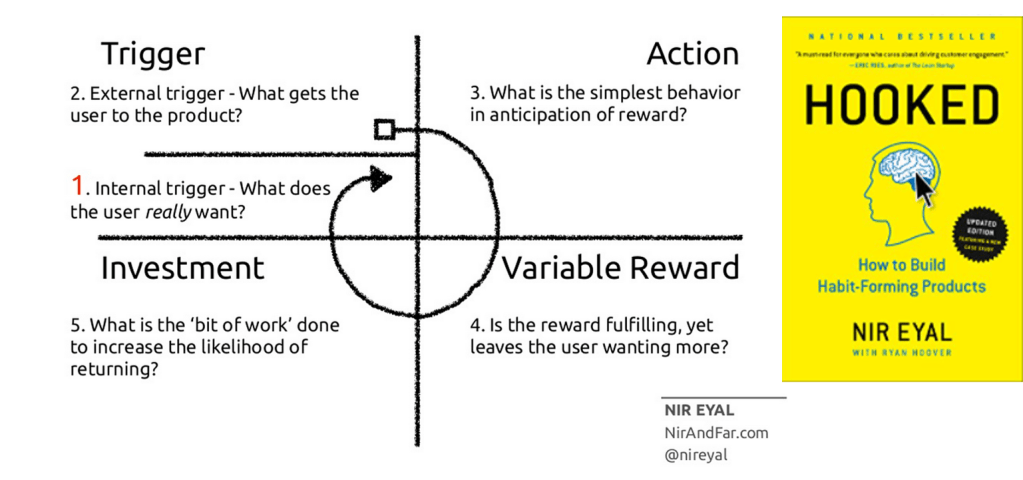
That’s the point of us…giving people building blocks and inspiration to escape everyday life and politics and digital propaganda and to just be happy and dream. So today it’s a psychological model analyzing how they make certain products addictive. Crazy, right? Our hope is you dig this book and its HOOKed model, see how it might help you design something you’re building or thinking about, and that you thrive in that. But use your new powers for good, not evil. Cool?

For us, we’re putting out science fiction books and a tabletop wargame line with a branded merchandise line. It will help to have something concrete to think about as we learn this model from Nir Eyal, as described in Hooked: How To Build Habit-Forming Products. What this model offers is a way of thinking about WHY we engage with products at all, what triggers us throughout our day or week to go back to those products, and why we keep going back…or frightfully, why we might NOT return to those products.

1 & 2: Internal & External Triggers

Check out the diagram at the top of this article. It’s a loop – hopefully you see that. Starts at 1, with an internal trigger. One clear example Eyal gives is a fitness app where the designers latched onto that awkward moment when you might step into a gym or workout room and not really know what to do…which machine to go to. If you’re uncomfortable enough, you might even connect that ‘dumb’ or ‘confused’ feeling with the act of going to the gym and just stop going. That’s an internal trigger – the feeling of wanting to know what to do.

A buddy of mine told me once the hardest part for him in quitting smoking wasn’t the nicotine or taste, it was the social aspect of going out to the smoke pad at the top of the hour and networking with people…hearing all the gossip from all levels of the company. For him, the internal trigger was the top of the hour and that itch to talk to some people.

When I think about the Salt Mystic wargame we’ve been designing for a few years now, the internal trigger we’re targeting is the desire to escape into a science fiction world…the itch to laugh and talk trash with friends over a tabletop without complicated rules and lore getting in the way. More simply – the desire to dream up a story.

The external trigger piece Eyal identifies, labeled as 2 in the diagram, is how the user actually gets to the product. With the fitness app, maybe it notes your GPS location as being in a gym and flags you with a suggestion. Maybe your GPS watch notes that you haven’t moved in a while and flags you to do so, or connects you with friends through a Garmin app who encourage you to go for a run because it’s been a while. The point to remember here is the product is trying to establish a link between that internal itch the potential user feels to do something, tied to a core drive or interest, and an access point to the product.

In our case, we have no intention of building a digital tool to intrude on your life. That actually drives me crazy when my iPhone puts up those irritating red notifications on various apps. It stresses me out, so all that noise is turned off and I’ll look at the phone when I feel like it. However we’ve been spending time thinking about how to connect a desire to escape from the daily grind and dip into fun sci-fi weirdness to our Salt Mystic offerings versus all your other options. We feel like unique and striking aesthetics, memorable and relatable characters, and certain easily understood anchor points in the main storyline will help. I’m specifically thinking about the difference in lore between what you might see with Magic: The Gathering and Warmachine (complicated, confusing, not terribly relatable) and the wild success of Game Workshop’s Warhammer 40k Black Library where every single book begins with the one-page synopsis explaining the world of 40k, the Emperor Of Mankind, and the key point all of this pivots around. It gives you an easy anchor to orient yourself in the world of the game.

In fact, this very point decided it for us that there HAD to be a sourcebook and not just a rulebook to illustrate the key building blocks of the Salt Mystic world. That stuff was designed to be memorable and different, immediately recognizable as a science fiction backdrop with a western feel. We also leveraged this idea of an external trigger to decide there HAD to be a digital version of Salt Mystic available in Steam’s Tabletop Simulator, to make the game as accessible as possible. External triggers in Steam, social media, or on sites like Drivethru RPG when you’re trolling for something to do with your friends would hopefully catch you with the aesthetics and cool technology, if not the description of the game mechanics.

3: Action

I’m talking high level now about just getting someone to play the game, though there are applications within the game mechanics where we’ve also considered this point Eyal makes in step 3 – taking the simplest possible action expecting a reward. As an explanation of what this is driving at, consider the fitness app example we talked about before. The simplest action the user might take is to just click on the recommended workout the app suggested, much like you might click on a recommended video in Youtube. Doesn’t take a lot of thought or consideration, and there isn’t much at stake here given that you either ignore the workout suggestion or skip to another video. Still, it’s a simple action the user can take in hopes of getting something in return.

What are they hoping to get in return?

It’s to scratch the itch from step 1 of this model: the internal trigger. But it can’t be annoying with tons of setup and fiddly bits and long complicated rulebooks, twenty different tie-in stories you need to know, and a bookshelf full of expensive codex books needed to really play properly. A simple action, man….trying to scratch the itch.

4: Variable Reward

I’m fascinated right now with a show called Gold Rush: Whitewater that does an amazing job illustrating Eyal’s overall point behind step 4 – the variable reward. Think of the creepy old lady at the casino tied up to a slot machine looking for that adrenalin rush of the blinky lights and tink-tink of the coins dropping. Think of an exciting poker game where sometimes you draw a great hand and run the table, and sometimes it’s just a losing hand. In the Gold Rush show, those poor guys have terrible days where they get absolutely nothing done but jerry-rig some redneck equipment they should have planned and purchased beforehand, and some days they draw gold out of the water like it’s M&M’s. It’s a dopamine rush, hoping to see what comes up.

Social media has entirely nailed this, haven’t they? You troll through a feed on your favorite app, and you might be bored for a few posts, but quickly scroll to something striking that the almighty algorithm has decided you’ll love. They’re lighting off your dopamine every time you see something interesting or sexy or funny or that scares you or that pisses you off. It’s a variable reward because you never know what you’re going to get.

In the game environment, we knew we needed to have the players draw their characters rather than set them up like traditional wargames for this very reason. Drawing a card each hand is exciting. It’s variable. Sometimes you draw well. Often you don’t. And it matters to some extent how well you play, but there’s also a luck component. In that event, you’d better think on your feet! We went nuts with this variable reward element in designing the solo version of the game and the solo dungeon crawler we included in the Sourcebook.

5: Investment

This step 5 in Eyal’s model is the buildup of something the user can own that gets them to be invested, to add some switching costs so they’ll feel kind of bad if they leave. In the fitness app example, maybe you’ve added your workout data or your run times and pulse information. If you stop using that app, it’s gone and you’re starting over. With a game like Gloomhaven, you’re working through a campaign so there’s loot and additional abilities you’re picking up along the way that make it crazy to stop. Gamification researcher and speaker, Yu Kai Chou identifies something called “The Ikea Effect” whereby you value something because you’ve spent time on it. Gabe Zichermann identifies “The Endowment Effect” whereby you value something simply because it’s been given to YOU and no one else.

Quick anecdote on that Zichermann example:

Took my wife and kids to a Medieval Times restaurant and show once (reluctantly) and noticed how genius it was at the jousting tournament for them to randomly group the crowd into two sides and assign us our knights – one guy was blue and one green, or something like that. They called our knight “our guy” constantly. Some random dude whose face I couldn’t even see was assigned to me. And within moments, we were cheering like crazy for him to win. Because he was ours. That’s the Endowment Effect.

Anyway, the idea Eyal is presenting in this final step is pretty key. If the user isn’t invested, they’ll move on to other channels whereby they can scratch their itches. And that’s the reason we study this kind of thing. And to be honest, we’re still stuck on this point with our work. This is an opening for us in Salt Mystic – we know that. Maybe campaign books make sense, where you take your characters through scripted adventures and level up along the way. Maybe a sideboard mechanic makes sense, where a mystery deck is laid out alongside the battlefield with which you can level up. Maybe you have secret packages inside the War Marshal decks you only open up after you achieve certain milestones.

I don’t know, man. There’s a lot of ways to take that one. What do you think?

Anyway, that’s the model and some thoughts on application. Hopefully you find it interesting enough to go pick up Eyal’s book and read it for yourself. Fascinating stuff. If not, then just go watch Gold Rush: Whitewater. That’s entertainment.

Take care, guys. Till next time.

Dreams are engines. Be fuel.

How would you design a wargame box?

Ugh. Bad news. The artist I was trying to snag for the packaging for the upcoming Salt Mystic tabletop game is swamped. If you’re not up to date on what I’m talking about – catch up here. Everybody’s got a day job, and his is art director at a game publisher. I only found out he was taking occasional freelance work in the last few weeks and tried to pounce, with no dice. I’m a little bummed about that because he’s amazing, and his style would be perfect for the tuck boxes the game’s card decks will come in.

We agreed another time maybe. If things work out well, we can possibly bring him in for some premium cards in volume two or something. Stay tuned, I guess?

But now I need packaging designs for two card deck boxes that sizzle and pop, that highlight what the game is about and communicate its unique lore or technology and how it differs from Star Wars or Warhammer 40k or whatever. Needs to be clear about being science fiction, but feel kind of like a cowboy image…striking and adventurous, but at a glance clear what sort of game we’re talking about.

No pressure at all.

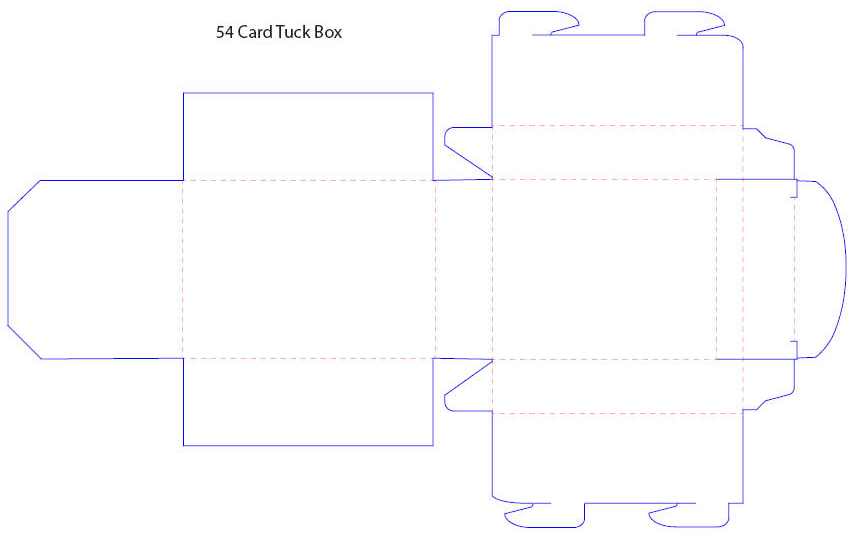
And the image needs to fit in this template:

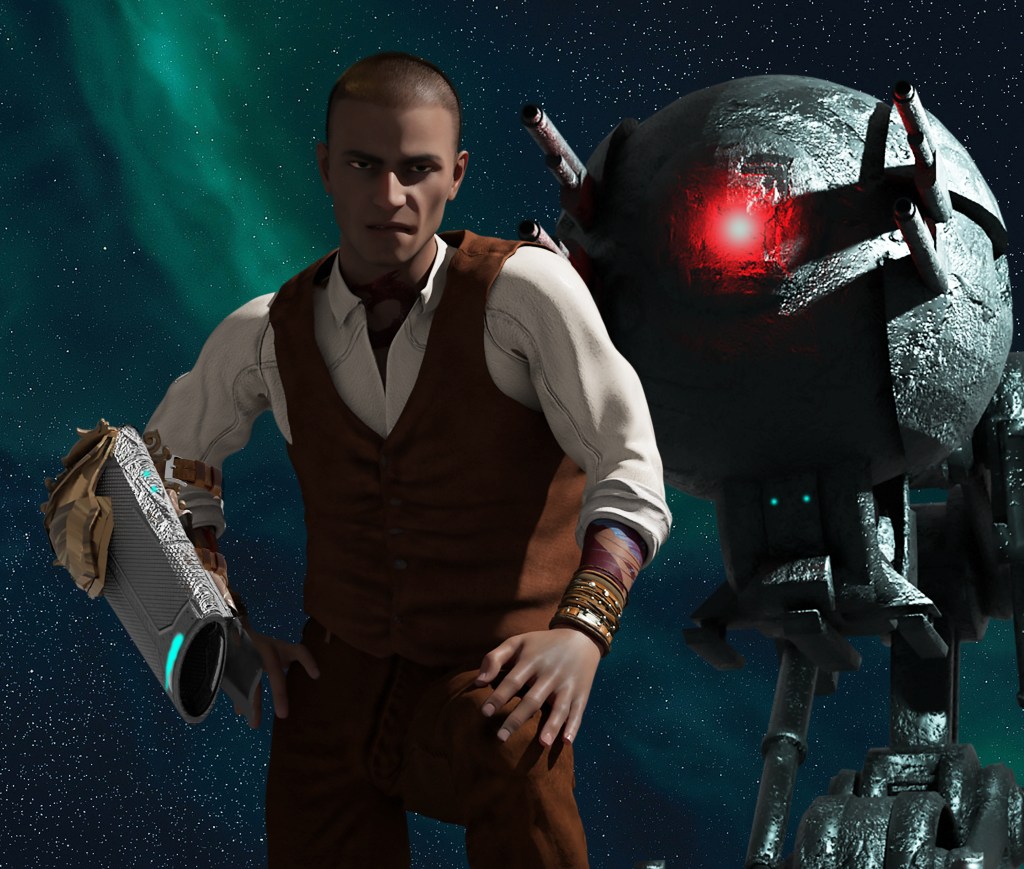
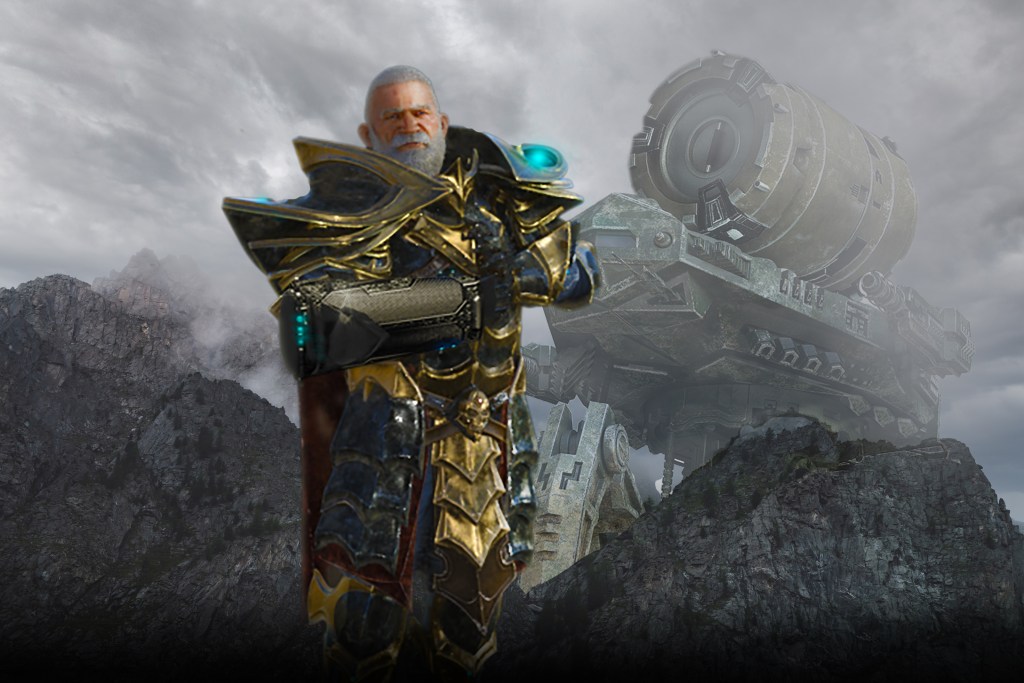
If you download the Basic Rules and take a peek at pages four and five, those two dudes are the point of these decks: War Marshals. Tough guys, to be sure…devious and fast with their ball lightning carbines….but also tactical and strategic geniuses at commanding their factions. The two tuck boxes need to highlight their respective War Marshal very prominently. Then I’ll need space on one side for introductory game wording, some exciting blurb about the lore, and a little copyright and legal stuff.

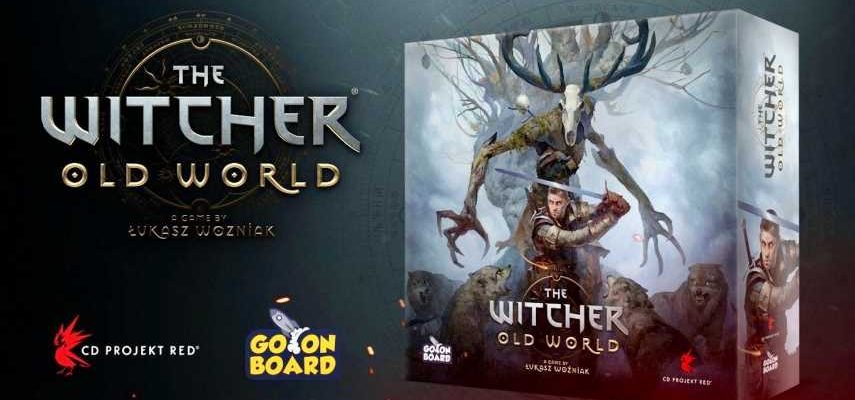
Saw this packaging for an upcoming game based on The Witcher that really impressed me:

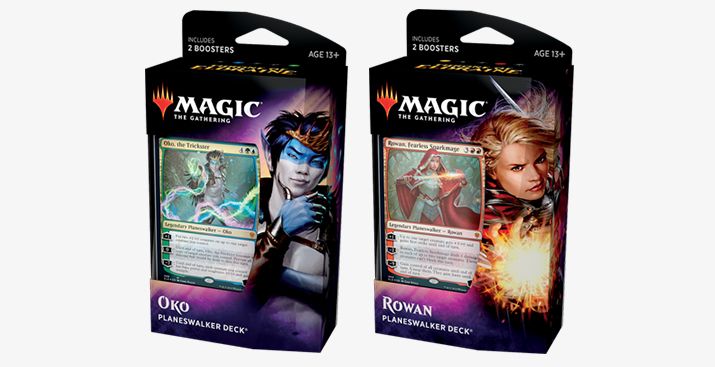
I suppose the thing that struck me most about it was I have had box designs for Magic: The Gathering decks in mind – with shades of blue and green and glowing eyes, hovering magical glyphs and whatnot. But none of that makes sense here, not from the aesthetics or elements of the Salt Mystic worldbuilding, not from the standpoint of looking different on the shelf, and also just to distance from other card games.

But these Witcher: Old World graphics pop big time for me. I like the coloring, the dramatic lighting and smoke, the sense of danger and action. It’s eye-catching and intriguing. So I took a stab at something like I thought my ideal artist might have come up with (the guy who’s too busy), and with this box in mind. That’s the image at the top of this article. Now I’m just kind of staring at it, letting it soak in to see whether I like it. I’d need to fade the edges and fade to black more at the bottom of the box, as well as include a dramatically dark field for the back of the box for the wording and logos.

So I would I rather be writing? Because that’s what started all this?

Yes, I would rather be writing. But none of this world will exist without the visuals and an exciting way to engage with the stories happening in it. Gotta do it, man. Gotta do it.

Looking for thoughts on packaging here – what do you think?

But until next time…

Dreams are engines. Be fuel.