Hacking Salt Mystic’s Tomb Trappers: Let’s Get Crazy!

If you’ve never played Salt Mystic before, take a quick diversion here and see what the fuss is all about. You can pick up the free basic rules there or take the deep dive with the Sourcebook And Core Rules. Simply said, it’s a terrain-based wargame played on a tabletop with cards, dice, and some basic elements representing terrain. It’s a little more “beer and pizza” than most wargames out there, and is quick to pick up and just start bashing each other for a Friday night’s delight.

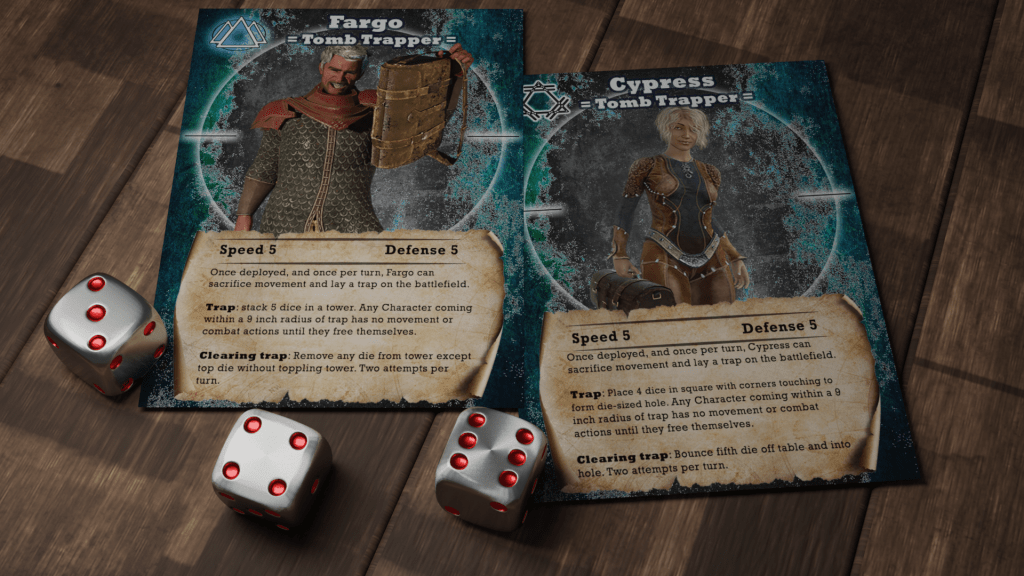
One type of card (and a core piece of the lore) is called the “Tomb Trapper”. Take a look at the respective entry from the Sourcebook below.

So in summary, this is a type of character you can have on your tabletop in the game who uses the goodies in that satchel to build amazing traps that lock down your opponent’s characters and give you an edge. That little dial apparatus in the sourcebook entry’s image is a key tool – set the proper code and programmable matter oozes out and builds the desired trap mechanics.

I wish I could pick one of those up somewhere, would love to see it work (and have a few people in mind for it)!

Anyway, one comment we’ve gotten from folks is they want more options in traps and flexibility in using Tomb Trappers on the tabletop. The cards come with default traps designed to be tough without being impossible and easy to set up & execute using only a small number of dice. This is simulating a situation where the trapped character card is locked down in place and struggling to free themselves. With some skill and/or luck, they just might do that!

Here’s Fargo, Tomb Trapper for the Mountains faction:
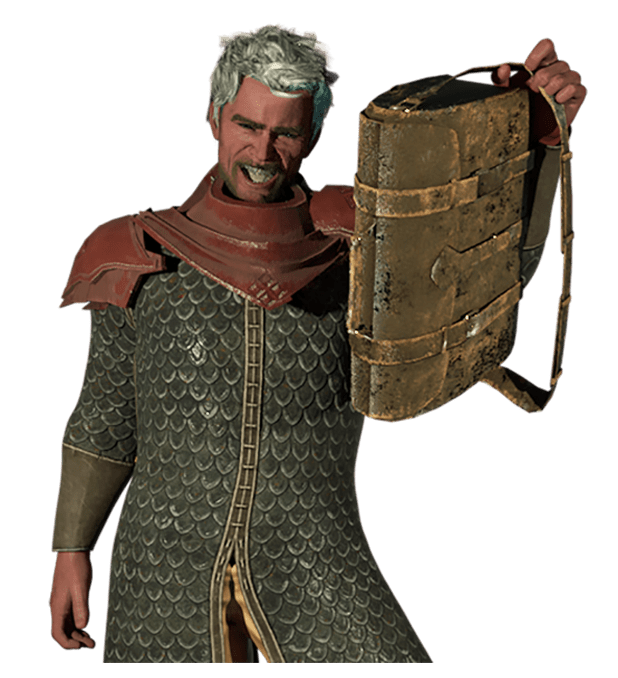
Once deployed, and once per turn, Fargo can sacrifice movement and lay a trap on the battlefield.

Trap: stack 5 dice in a tower. Any Character coming within a 9 inch radius of trap has no movement or combat actions until they free themselves.

Clearing trap: Remove any die from tower except top die without toppling tower. Two attempts per turn.

And here’s wily Cypress, from the Salt Flats:
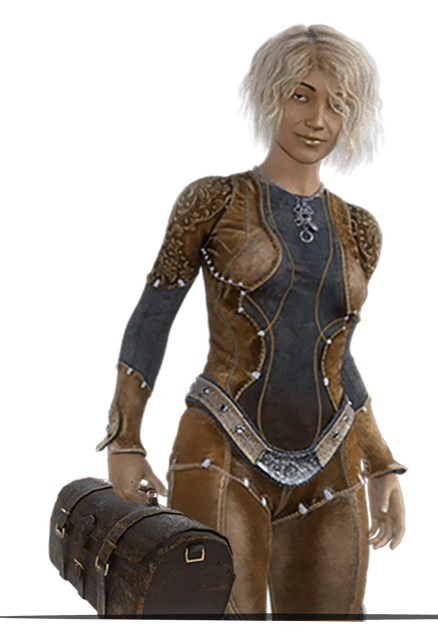
Once deployed, and once per turn, Cypress can sacrifice movement and lay a trap on the battlefield.


Trap: Place 4 dice in square with corners touching to form die-sized hole. Any Character coming within a 9 inch radius of trap has no movement or combat
actions until they free themselves.


Clearing trap: Bounce fifth die off table and into hole. Two attempts per turn.

But hey, let’s hack this! Let’s break out of the default traps and deployment mechanic to bring a new level of play to the table.

Pre-staged and hidden traps

The whole point of the Salt Mystic game is to tell an engaging story. There’s always a narrative framing the battle, and the challenges and dynamics of interaction between the terrain and the people IS the engine driving everything. So let’s make the terrain more interesting using the Tomb Trappers.

Imagine a grid on the tabletop running 1 – 12 horizontally and 1 – 12 vertically:
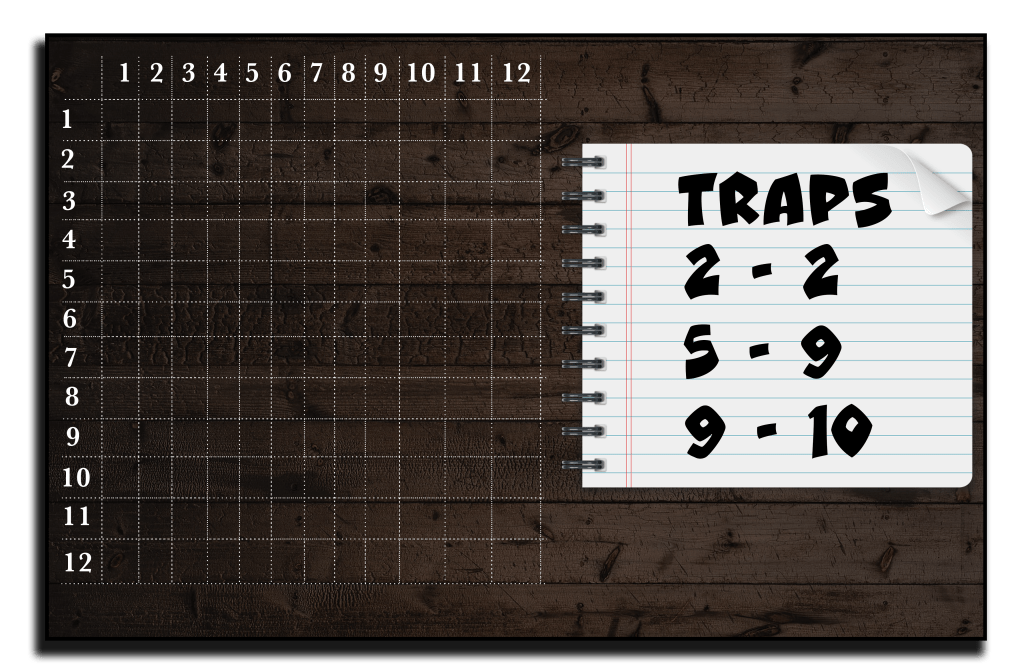
We’ll read rows, then columns when referencing these, and we’re picking 12 so that two 6-sided dice can reference them in a solo game. In this example, a player has chosen three locations for hidden traps during setup, prior to gameplay. The locations are written down and concealed so no one can change their minds later.

The key difference between this deployment mechanic and the default one obviously is that the opposing player can’t know where the traps are and thereby avoid them. Anybody moving is in jeopardy of getting trapped. Just call out the trap when you’ve lured your opponent into the right spot and grin deviously as they struggle to free themselves!

Considerations:

-Agree up front on how many traps are allowed, and whether sacrificing a card from the starting battle deck is necessary for each trap.

-The Wolfpack Mode for solo Salt Mystic game play requires a roll of two 6-sided dice each turn for the phantom player anyway. To simulate the phantom player having pre-staged traps, check for a trap each time that initial roll contains a “1”. Roll against the grid to determine the location and compare it to where your characters are located.

Example:

The phantom player’s Wolfpack turn roll was 1 and 5. That roll was required anyway, since that’s how the phantom player’s deployments and moves are determined in the Wolfpack rule set. Since there was a 1 on at least one of the dice however, additional rolls are needed to check for traps. First roll: 4 + 7 = 12, Second roll: 3 + 6 = 9. We reference rows, then columns, so there is a trap at row 12, column 9. Any friendly characters in that grid square are trapped. Trap locations change each turn (how devious!).

Alternate traps

You can really let your imagination run wild on this one! Basically, anything your wicked little mind can conjure here is fair game. Consider the spirit of the traps though:

  • Traps should be difficult, but not impossible
  • Easy to set up & execute using only a small number of dice or other readily available supplies
  • Should require a little luck, a little skill

Design a trap by answering three questions:

  1. What triggers your trap? Example: approach within 9 inches, etc
  2. How should the trap be set up on the tabletop?
  3. How does the opposing player clear the trap?

Feel free to enhance the narrative a bit by outlining a little more detail to the hideous nature of your invention: (programmable matter collapses into quicksand, massive pincers the size of a horse spring from the ground, the ground tilts into a spiked pit, and on it goes…)

Let’s try it. Here’s what happens should the opposing player enter the respective grid cell per hack number one above – and up springs a cloud of geometrically poisonous vapor contained in a thin film that pops if he moves.
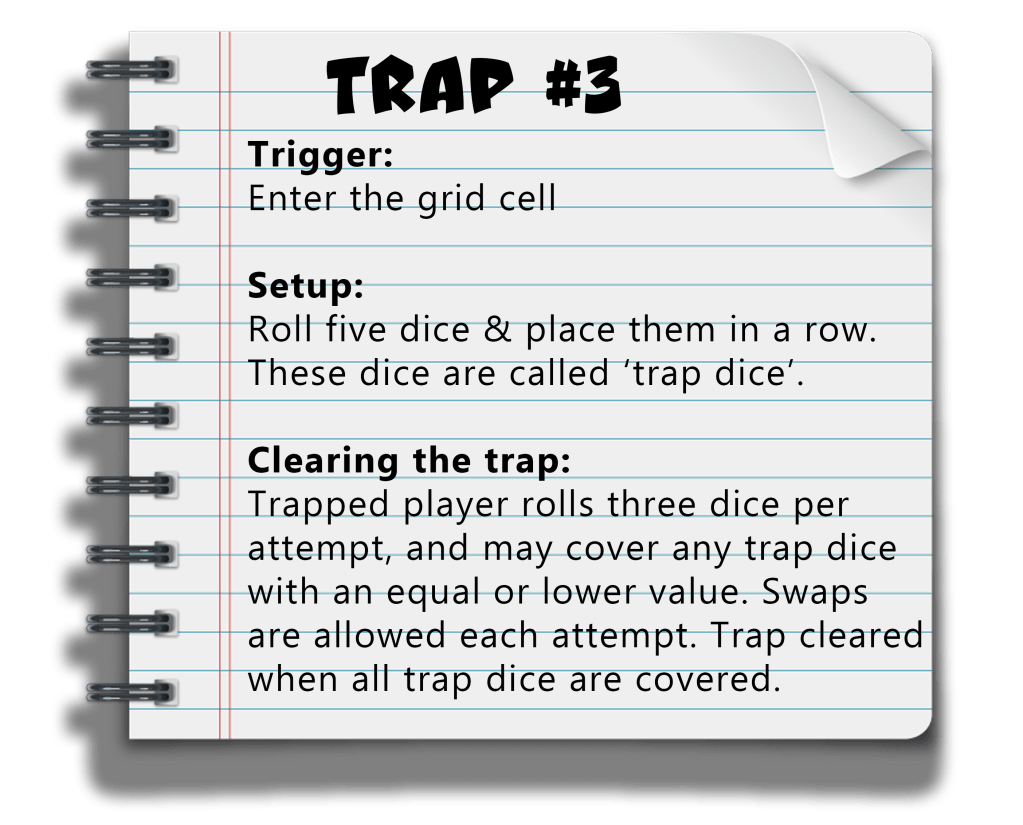
Considerations:

-Agree up front on the deployment mechanic as described either in the default card text or in hack number one above

-In the case where you’ve designed multiple custom traps, agree up front on how to select which trap has been sprung

So let us know what you think. Loads of potential here with the Tomb Trappers.

While I was writing this, we talked about maybe hacking the core rules a bit and staging an unbalanced scenario where one character (any card with an Expertise stat) goes up against an opponent at slightly reduced strength (10 less cards in the starting battle deck) – trying to escape a building entirely loaded with traps (at least 6). Objective would be to get to a specific spot on the table without dying. Seems like it would be a hoot if the opposing player is required to deploy all their Vehicles and Vehicle Attachments out in the open so the lone wolf can try and take them.

Here’s the art and flash fiction that inspired that:
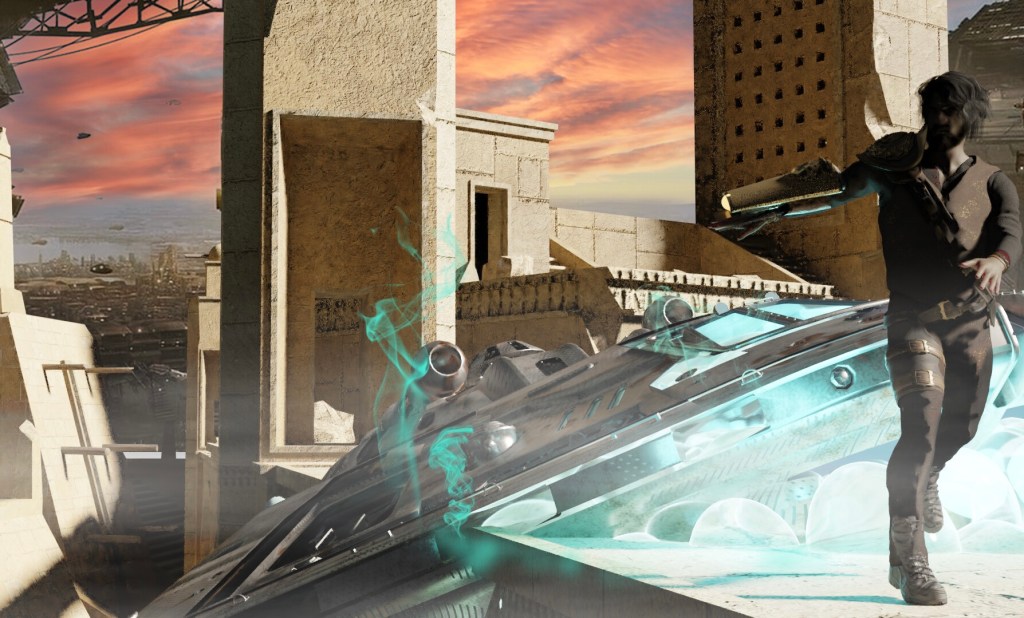
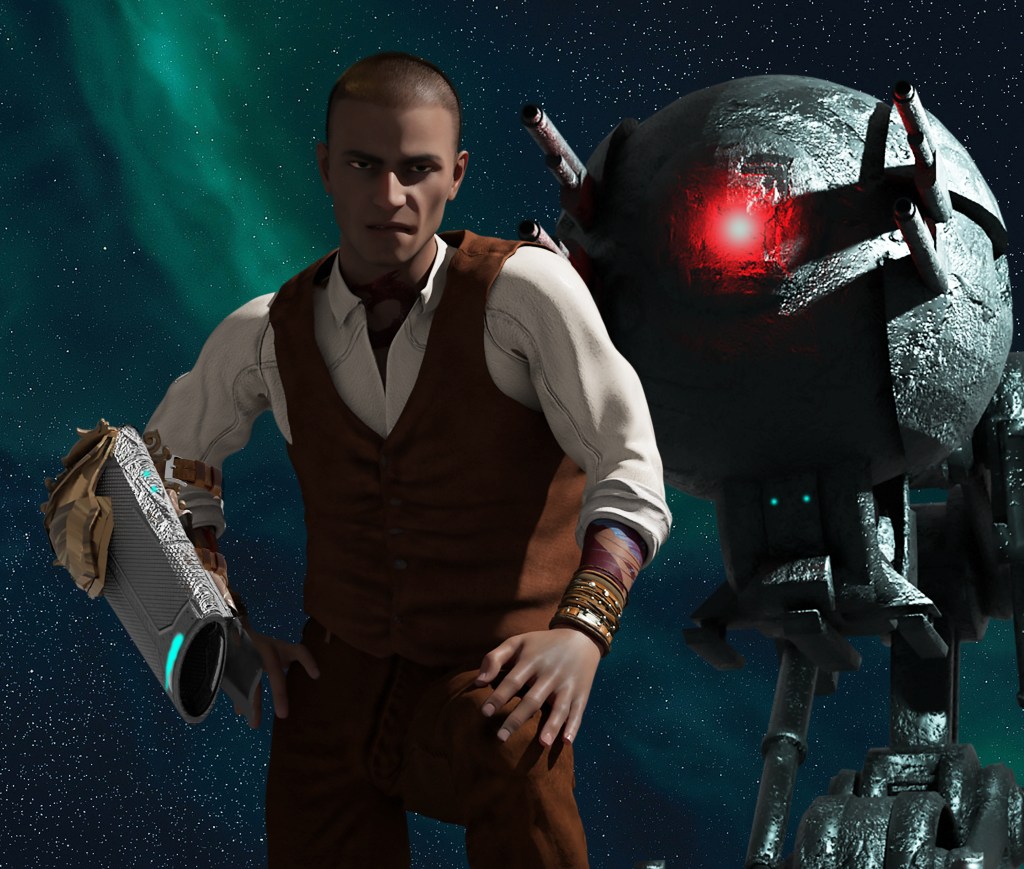
A carbine gunslinger on the run. A Dirt Wraith rises, ghost-like through the very walls. Its quantum foam bubbles sizzle as loud as a waterfall. They knew he was here all along. She lied. And that will cost her. They’ll have traps all in the building, every corridor. Watchmen are patrolling the streets below. If there’s a Dirt Wraith, then maybe they’ll have something deadly down there he can seize and turn against them. Time is short, and they are many. He’ll have to be fast and unpredictable.

What would you do?

Till next time, guys. We’re always looking for feedback and ideas. Shoot them our way. And Merry Christmas!

Addictive Entertainment Products: What Can We Learn?

I know, man. Anybody trying to figure out what Grailrunner Publishing is all about must get dizzy skimming through these eclectic articles ranging from wargames to popular fiction and movie reviews, and begging for graphic design advice. But check out the nametag – we simply seek to inspire.

Dreams are engines. Be fuel.

That’s the point of us…giving people building blocks and inspiration to escape everyday life and politics and digital propaganda and to just be happy and dream. So today it’s a psychological model analyzing how they make certain products addictive. Crazy, right? Our hope is you dig this book and its HOOKed model, see how it might help you design something you’re building or thinking about, and that you thrive in that. But use your new powers for good, not evil. Cool?

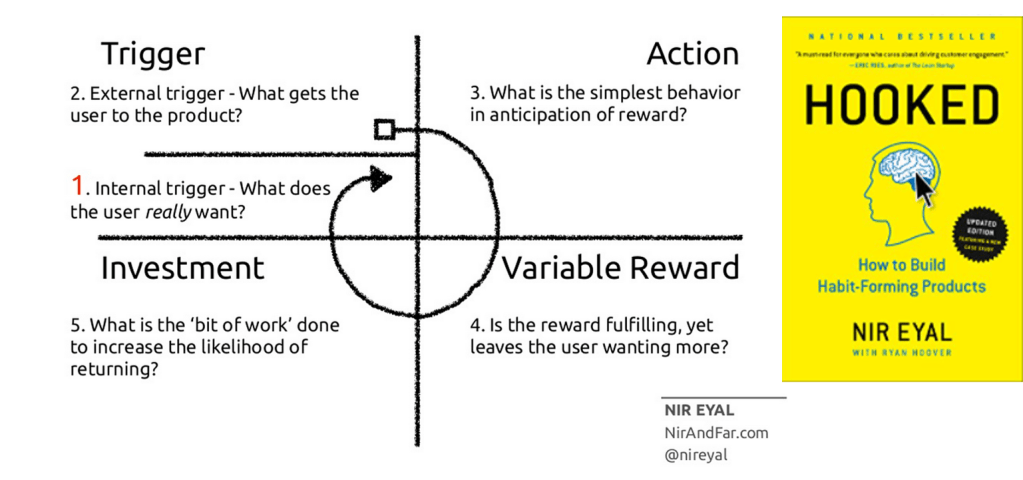
For us, we’re putting out science fiction books and a tabletop wargame line with a branded merchandise line. It will help to have something concrete to think about as we learn this model from Nir Eyal, as described in Hooked: How To Build Habit-Forming Products. What this model offers is a way of thinking about WHY we engage with products at all, what triggers us throughout our day or week to go back to those products, and why we keep going back…or frightfully, why we might NOT return to those products.

1 & 2: Internal & External Triggers

Check out the diagram at the top of this article. It’s a loop – hopefully you see that. Starts at 1, with an internal trigger. One clear example Eyal gives is a fitness app where the designers latched onto that awkward moment when you might step into a gym or workout room and not really know what to do…which machine to go to. If you’re uncomfortable enough, you might even connect that ‘dumb’ or ‘confused’ feeling with the act of going to the gym and just stop going. That’s an internal trigger – the feeling of wanting to know what to do.

A buddy of mine told me once the hardest part for him in quitting smoking wasn’t the nicotine or taste, it was the social aspect of going out to the smoke pad at the top of the hour and networking with people…hearing all the gossip from all levels of the company. For him, the internal trigger was the top of the hour and that itch to talk to some people.

When I think about the Salt Mystic wargame we’ve been designing for a few years now, the internal trigger we’re targeting is the desire to escape into a science fiction world…the itch to laugh and talk trash with friends over a tabletop without complicated rules and lore getting in the way. More simply – the desire to dream up a story.

The external trigger piece Eyal identifies, labeled as 2 in the diagram, is how the user actually gets to the product. With the fitness app, maybe it notes your GPS location as being in a gym and flags you with a suggestion. Maybe your GPS watch notes that you haven’t moved in a while and flags you to do so, or connects you with friends through a Garmin app who encourage you to go for a run because it’s been a while. The point to remember here is the product is trying to establish a link between that internal itch the potential user feels to do something, tied to a core drive or interest, and an access point to the product.

In our case, we have no intention of building a digital tool to intrude on your life. That actually drives me crazy when my iPhone puts up those irritating red notifications on various apps. It stresses me out, so all that noise is turned off and I’ll look at the phone when I feel like it. However we’ve been spending time thinking about how to connect a desire to escape from the daily grind and dip into fun sci-fi weirdness to our Salt Mystic offerings versus all your other options. We feel like unique and striking aesthetics, memorable and relatable characters, and certain easily understood anchor points in the main storyline will help. I’m specifically thinking about the difference in lore between what you might see with Magic: The Gathering and Warmachine (complicated, confusing, not terribly relatable) and the wild success of Game Workshop’s Warhammer 40k Black Library where every single book begins with the one-page synopsis explaining the world of 40k, the Emperor Of Mankind, and the key point all of this pivots around. It gives you an easy anchor to orient yourself in the world of the game.

In fact, this very point decided it for us that there HAD to be a sourcebook and not just a rulebook to illustrate the key building blocks of the Salt Mystic world. That stuff was designed to be memorable and different, immediately recognizable as a science fiction backdrop with a western feel. We also leveraged this idea of an external trigger to decide there HAD to be a digital version of Salt Mystic available in Steam’s Tabletop Simulator, to make the game as accessible as possible. External triggers in Steam, social media, or on sites like Drivethru RPG when you’re trolling for something to do with your friends would hopefully catch you with the aesthetics and cool technology, if not the description of the game mechanics.

3: Action

I’m talking high level now about just getting someone to play the game, though there are applications within the game mechanics where we’ve also considered this point Eyal makes in step 3 – taking the simplest possible action expecting a reward. As an explanation of what this is driving at, consider the fitness app example we talked about before. The simplest action the user might take is to just click on the recommended workout the app suggested, much like you might click on a recommended video in Youtube. Doesn’t take a lot of thought or consideration, and there isn’t much at stake here given that you either ignore the workout suggestion or skip to another video. Still, it’s a simple action the user can take in hopes of getting something in return.

What are they hoping to get in return?

It’s to scratch the itch from step 1 of this model: the internal trigger. But it can’t be annoying with tons of setup and fiddly bits and long complicated rulebooks, twenty different tie-in stories you need to know, and a bookshelf full of expensive codex books needed to really play properly. A simple action, man….trying to scratch the itch.

4: Variable Reward

I’m fascinated right now with a show called Gold Rush: Whitewater that does an amazing job illustrating Eyal’s overall point behind step 4 – the variable reward. Think of the creepy old lady at the casino tied up to a slot machine looking for that adrenalin rush of the blinky lights and tink-tink of the coins dropping. Think of an exciting poker game where sometimes you draw a great hand and run the table, and sometimes it’s just a losing hand. In the Gold Rush show, those poor guys have terrible days where they get absolutely nothing done but jerry-rig some redneck equipment they should have planned and purchased beforehand, and some days they draw gold out of the water like it’s M&M’s. It’s a dopamine rush, hoping to see what comes up.

Social media has entirely nailed this, haven’t they? You troll through a feed on your favorite app, and you might be bored for a few posts, but quickly scroll to something striking that the almighty algorithm has decided you’ll love. They’re lighting off your dopamine every time you see something interesting or sexy or funny or that scares you or that pisses you off. It’s a variable reward because you never know what you’re going to get.

In the game environment, we knew we needed to have the players draw their characters rather than set them up like traditional wargames for this very reason. Drawing a card each hand is exciting. It’s variable. Sometimes you draw well. Often you don’t. And it matters to some extent how well you play, but there’s also a luck component. In that event, you’d better think on your feet! We went nuts with this variable reward element in designing the solo version of the game and the solo dungeon crawler we included in the Sourcebook.

5: Investment

This step 5 in Eyal’s model is the buildup of something the user can own that gets them to be invested, to add some switching costs so they’ll feel kind of bad if they leave. In the fitness app example, maybe you’ve added your workout data or your run times and pulse information. If you stop using that app, it’s gone and you’re starting over. With a game like Gloomhaven, you’re working through a campaign so there’s loot and additional abilities you’re picking up along the way that make it crazy to stop. Gamification researcher and speaker, Yu Kai Chou identifies something called “The Ikea Effect” whereby you value something because you’ve spent time on it. Gabe Zichermann identifies “The Endowment Effect” whereby you value something simply because it’s been given to YOU and no one else.

Quick anecdote on that Zichermann example:

Took my wife and kids to a Medieval Times restaurant and show once (reluctantly) and noticed how genius it was at the jousting tournament for them to randomly group the crowd into two sides and assign us our knights – one guy was blue and one green, or something like that. They called our knight “our guy” constantly. Some random dude whose face I couldn’t even see was assigned to me. And within moments, we were cheering like crazy for him to win. Because he was ours. That’s the Endowment Effect.

Anyway, the idea Eyal is presenting in this final step is pretty key. If the user isn’t invested, they’ll move on to other channels whereby they can scratch their itches. And that’s the reason we study this kind of thing. And to be honest, we’re still stuck on this point with our work. This is an opening for us in Salt Mystic – we know that. Maybe campaign books make sense, where you take your characters through scripted adventures and level up along the way. Maybe a sideboard mechanic makes sense, where a mystery deck is laid out alongside the battlefield with which you can level up. Maybe you have secret packages inside the War Marshal decks you only open up after you achieve certain milestones.

I don’t know, man. There’s a lot of ways to take that one. What do you think?

Anyway, that’s the model and some thoughts on application. Hopefully you find it interesting enough to go pick up Eyal’s book and read it for yourself. Fascinating stuff. If not, then just go watch Gold Rush: Whitewater. That’s entertainment.

Take care, guys. Till next time.

Dreams are engines. Be fuel.