Building an indie game’s meta-story one gunslinger at a time

If this is your first time visiting Grailrunner, we make games, art, and fiction mostly set in our signature IP, a western-themed science fantasy roller coaster called Salt Mystic. In 2021, we published a tabletop skirmish game with the curious notion of telling stories with it.

Our original manifesto for the game included these three guiding principles:

  • Make the characters come alive. Combine gorgeous card artwork with gameplay mechanics that reflect who the characters are and why their stories matter.
  • Give the battles a bigger story. Create an overarching narrative that explains who’s fighting, why, and what the consequences might be whichever side wins.
  • Give everything a history. Every character, weapon, and vehicle has a backstory. Even the scratches on a cannon barrel came from somewhere.

We’re talking 8, maybe 10 years ago when I first really started thinking through how to do all that. And the first real in-game story came about in September of 2019. I wrote about that in an update on game development here. It was these guys:

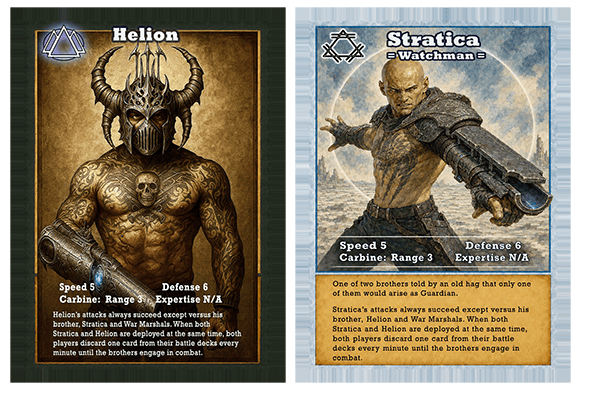
Who are those two?

In the Salt Mystic lore, there are stories able to travel and affect the world on their own, hopping from mind to mind and even possessing people. Some are able to raise a guardian for that generation, uniquely suited with the character and charisma to change the world. Helion and Stratica were brothers living in an old shack as boys shivering on a winter evening when a mysterious hag visited their door, offering that one of them would be this generation’s guardian.

Only one of them.

I remember chuckling at how ridiculous it was to have a game mechanic where if the players put these two cards onto the table at the same time it plays havoc with the rules and starts a timer that just trashes the entire game if you don’t force these two to confront each other. I still love that, having a meta-story hovering over the game and over the background narrative.

There have been others but it struck me recently as I was refreshing the artwork for the game that there’s another meta-story building on its own that made me want to write this post.

Really? What’s that?

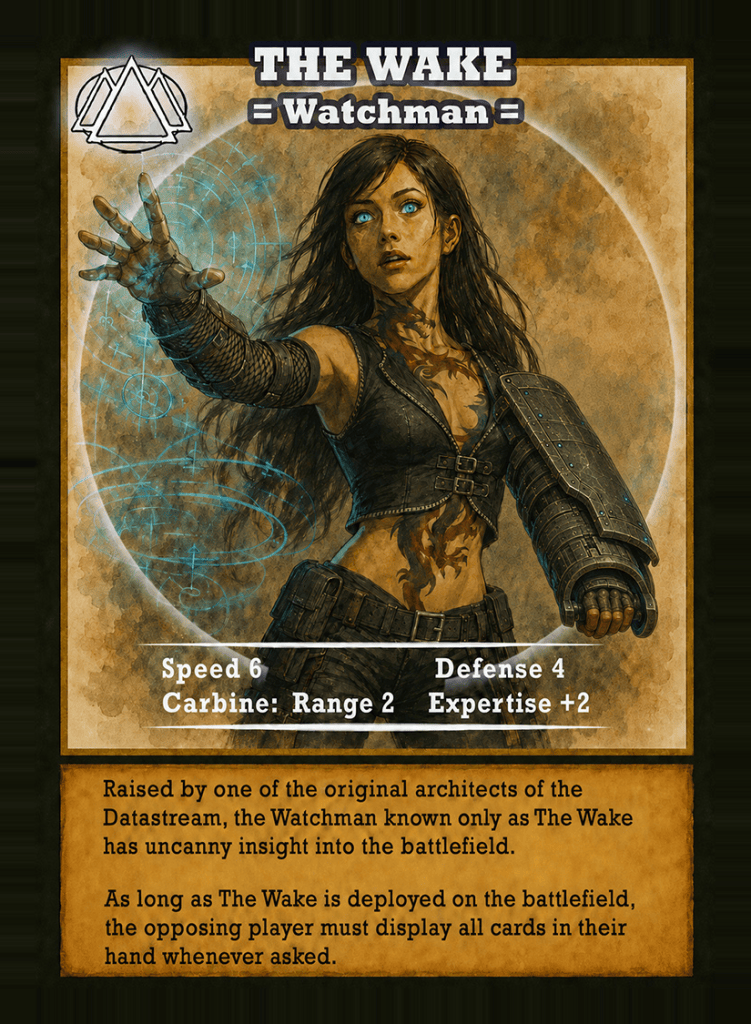
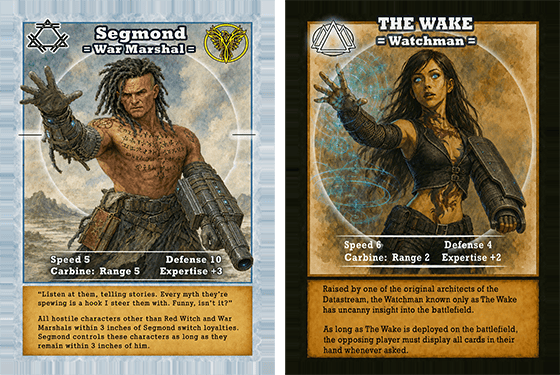
This card here represents one of my favorite characters in the Salt Mystic setting. I have a long history with her and have struggled mightily to refine the artwork over the years to match the picture in my head.

She calls herself The Wake.

With virtually every cityscape and terrain saturated with sensors and computing power, there is a ubiquitous internet called the Datastream where someone who knows how to use it can see and hear almost anything anywhere. She mastered it like no one else and brings incredible battlefield knowledge. Her game mechanic forces the opposing player to reveal cards at crucial moments.

What’s funny is how she came to be in my mind though. There was this girl on a plane in Oakland.

Are you being creepy?

No, but hear me out. This goes back to maybe 2016 or so. I was sitting on a plane waiting for everyone else to board. I noticed this lady standing at her seat as folks jostled by, 3 or 4 seats ahead of me. She was wearing a thin cotton blouse and a loose cotton pants, with part of a red dragon tattoo visible on the back of her neck. I saw the bottom of the tattoo on her lower back and the shade of it even through her blouse. Jet black hair and this audacious, stunning tattoo.

If Grailrunner teaches you nothing else, please remember what Thomas Edison said, “To invent, all you need is an imagination and a pile of junk.” I filed her away and came back to her years later when I needed an interesting look for a new character. That tattoo extending across a pretty woman’s entire torso struck me as a great idea.

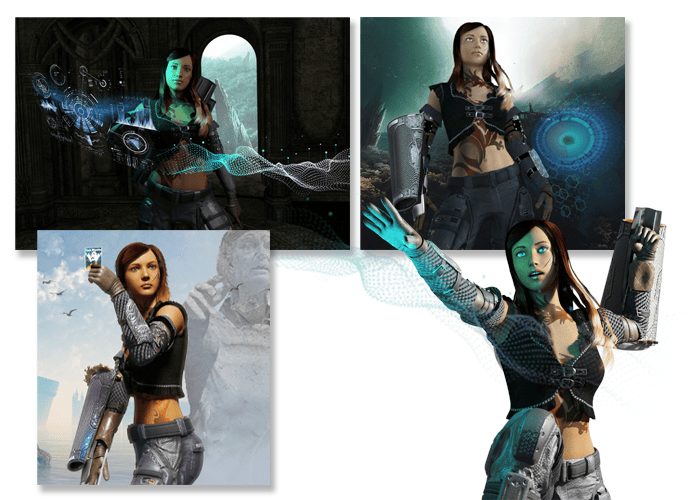
Here’s ten years of trying to make her look like I thought she should:

I told you a couple of weeks ago about my unfortunate addiction to Blender‘s 3d software at the time of all this. These original versions started in Daz Studio, with some hair and kitbashed clothing I’d picked up. I built the weapon in Blender out of a squashed cylinder with some textures and more kitbashing. Then I added some random backgrounds and mixed things up in Photoshop.

I definitely found gold when I learned you could stack png images onto the skin textures directly in Daz Studio and give your characters tattoos. I mean, that was just gold! If you ever wonder why so many Salt Mystic folks have elaborate tattoos, it’s because I learned how to do that in Daz and got carried away.

Blame it on the dragon lady in Oakland too, I guess.

Why are you telling us about her now?

Well, you may know we’re refreshing all the game art, the rulebook and tuck box for the Salt Mystic wargame. The proofs arrive Friday so we’ll hopefully go live next week if everything looks okay. If it doesn’t, we’ll delay to get everything right. I was writing a new lore card that sets the scene for a possible game scenario to go out in tandem with the relaunch.

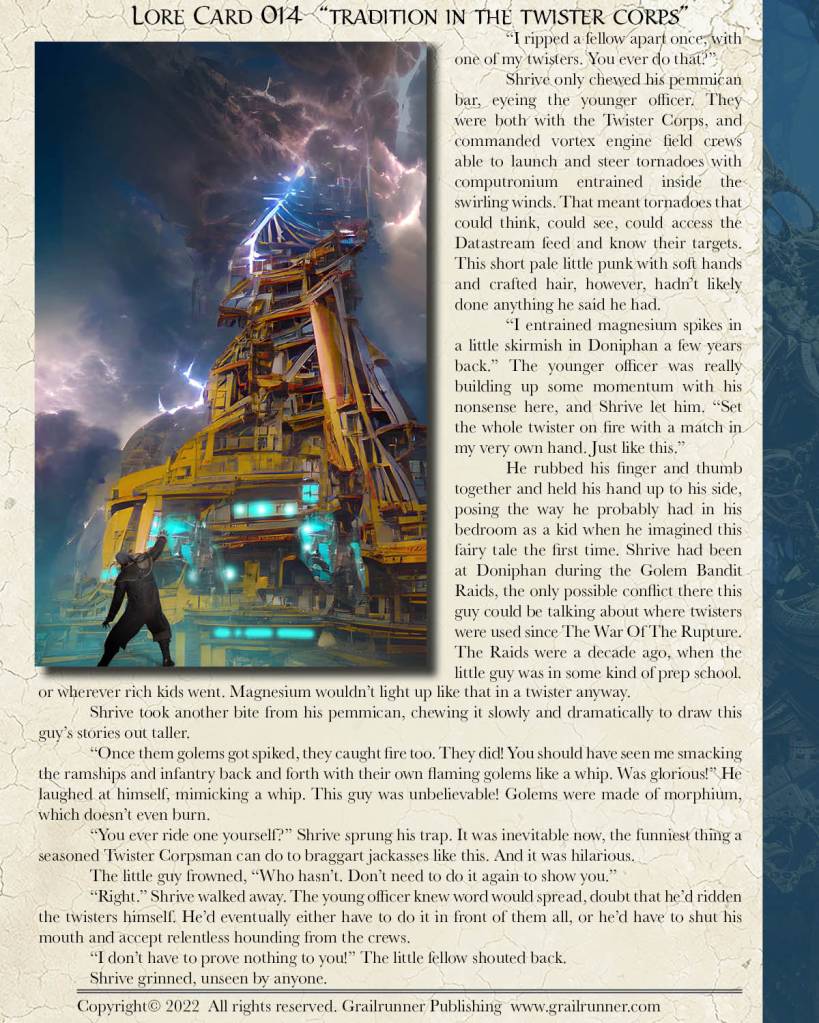
Here at Grailrunner, we host a feature called the Story Arcade, where you can find illustrated flash fiction that helps us build out the Salt Mystic setting and its lore. They’re called “lore cards”. You don’t have to read these to know what’s going on but it’s another way to step inside. They’re usually a single page, something you can read in a minute or so.

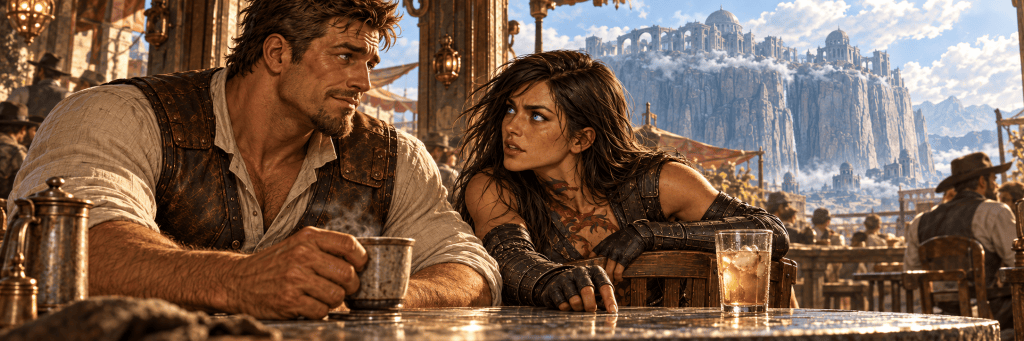
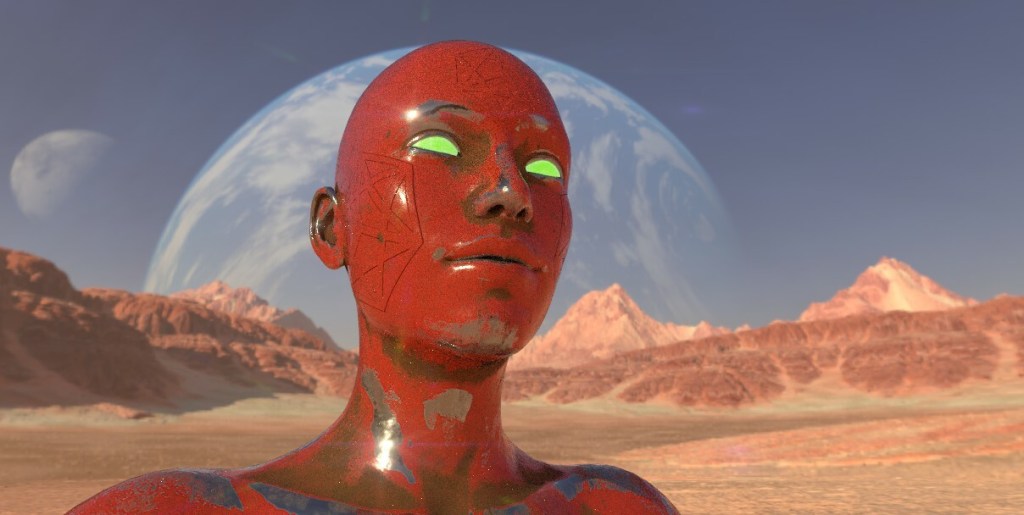
In her case, I wanted to do something different and offer something more than flash fiction with multiple illustrations included. The header image for this post is one of the illustrations and – I must say – she’s looking better these days.

Here’s the card.

You may also know I’m 60,000 words in to a new novel set in the Salt Mystic universe to be titled “Mazewater”. I know it’s been forever since I started on that but I’m working on it – believe me! It struck me as I was imagining this fellow, Auroch beside her in the story (and in that header image) that it’s the same guy as one of the characters in my novel.

Same guy, running from her. In love, but not really. Kind of afraid of her, if he’s being honest.

You’re crazy. How does that impact a game you’ve already designed?

Well, it doesn’t. But it probably affects what happens to him in the novel. Now, as I’m refining the endgame plot, I need to think about how she’ll react if he dies or if he doesn’t…if he goes back to her, or if he keeps running.

And I think I know what will be more interesting…

*

Anyway, that’s what I wanted to bring to you today – just a little background on the random quirks and twists of the imagination that wind up making it into print and onto the tabletop. At least in my case.

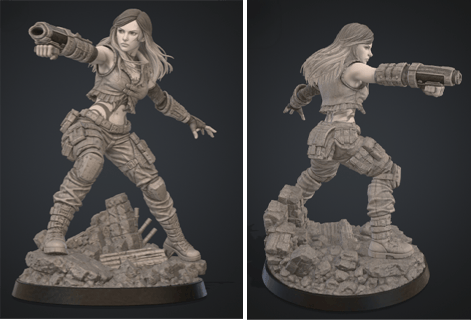
Keep an eye us for the commemorative stl file if you feel like having The Wake on your desk. we’re close to done with this, though that hair is giving us fits in making it look cool but work on a 3d printer.

Till next time,

Bad art direction & an unfortunate addiction to Blender

Here’s how it all happened: many years ago, my wife asked what I wanted for my birthday. I said for her and the kids to play D&D with me (which I hadn’t played since the 80’s) because I thought that would be funny and nostalgic. Then when I stepped inside the local gaming store, I saw some guys in the back playing a game involving miniature steampunk robots on a sweeping grassland with hills. I remember asking the guy at the counter as I slide my D&D starter set over to him, “What’s that back there?”

Guy said “Warmachine. Kind of like chess except with magic and battles.”

You caught the wargame fever, then?

Yeah, I obsess over new, interesting things like that. Honestly, I hadn’t heard of wargaming before that apart from dudes moving little Napoleons and cannons around. Anyway, it turned into building terrain and collecting cool mini’s from various games, eventually swelling into a personal challenge to build a cinematic experience on the tabletop. Even built a custom gaming table to do that.

Why do I tell you all that? Because I culminate things. I build to something. Can’t help it. The logical conclusion of those combined obsessions led me to the notion of building my own tabletop game around the Salt Mystic setting of a novel I’d published a few years before. And that led me to Blender.

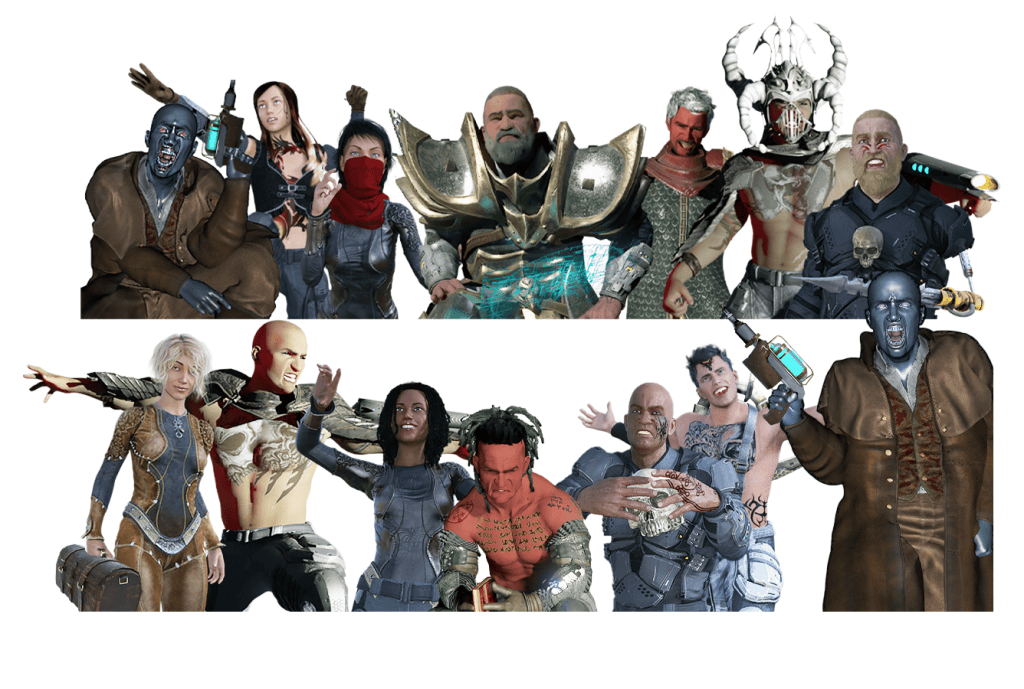
Who are these people?

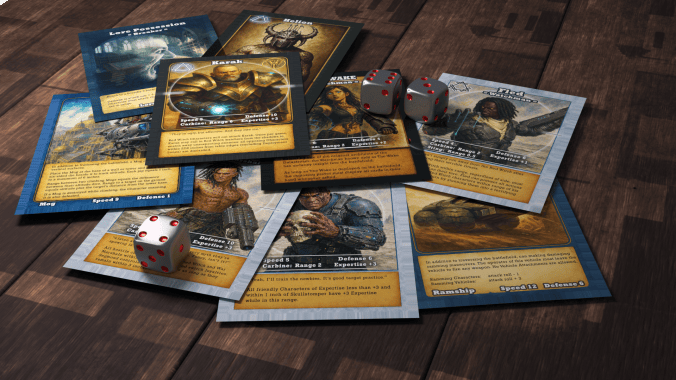
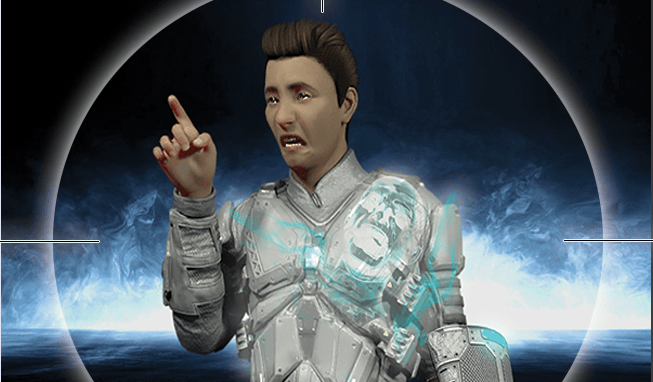
Ouch. I was so proud of the art I was doing then. It hurts now to look at it, but it was cutting edge for me. Those are original character art pieces which made the cards for the first edition of Salt Mystic back in 2021.

Blender is a free 3d graphics software and I went crazy with it. I was convinced that building a character in Daz Studio, dragging it into Blender and setting up a scene for the render was as good as it could get. I collected cool poses when they were free or cheap and dabbled in building weird weapons by kitbashing any meshes that looked right. I used Substance Painter to add shiny textures and dust, slick-looking scratches on metal. I unfortunately also discovered Blender’s fog glare, which hypnotized me in how unearthly glows could be added to virtually everything.

Sometimes, my efforts turned around pretty well. I got some great compliments on this one.

But too often it turned out like this. And I went with it anyway.

You didn’t put that guy on card art, did you?

I did. Yeah. You’ve got to understand, I was busting out the art myself, the draft ruleset, chasing down anybody who would help playtest, wearing out scissors to cut mock cards out of printer paper, and learning graphic design all at the same time. And making things shiny and scratchy and glowing with those new 3d skills was addictive, seriously. Waiting on the magic after hitting the RENDER button felt like a slot machine. I think I hit rock bottom when I discovered particle systems and started trying to grow character’s hair since the Daz hair models I had were silly-looking.

Guys, I was growing hair on people because I could!

Didn’t people tell you the art sells the game?

Oh, I heard about my art choices almost immediately after publication! One guy broke my heart when he said something like “I would have tried your game out but you really shouldn’t have gone with 3d art.” I was so exhausted by the time I went live with Salt Mystic as a tabletop wargame that I couldn’t imagine changing anything. Not for years.

And what’s changed?

Last year, I had the idea that AI might be able to build a game as if it were designed by Hannibal of Carthage, Admiral Horatio Nelson, Tolkien himself, and the Monkey King from Chinese folklore. Read about that here.

In building the assets for that prototype game, I learned how to design an art style in AI and use it to filter & transform your own artwork into something more unified & appealing. In that case, a gorgeous & simple watercolor style. The cards for that game turned out so well it got me thinking…

So what did you do?

I systematically ran my original card art through the new art style using AI, tweaking some of the compositions when they weren’t redeemable. I’ve also been using AI to critique my own new art, and one key theme in everything I make is I need to show better restraint. I fill too much space and don’t include rest areas. Anyway, I took that advice to heart in the new card art too. And since I was doing that, I tweaked the card text in a few places as well, to reflect some things I’ve picked up along the way.

Check that out – those old Daz poses are still there! I built the forearm-mounted plasma weapons originally as squashed cylinders in Blender with some sewer drain textures over them and some Photoshopped glow on the sides. Over the years, I’ve improved the design a lot, but it’s nice to see this evolved form now on the new cards.

Why did you do this? Are you de-listing the old version?

Oh yeah. I finished refreshing the cards a few weeks ago and rebuilt the rulebook from the ground up. With restraint and less over-explaining. Less noise. More focused on what the player needs to know and less lore for the sake of it. Then, since I needed a clean and professional place to store the rulebook, I refreshed the Salt Mystic landing page as well.

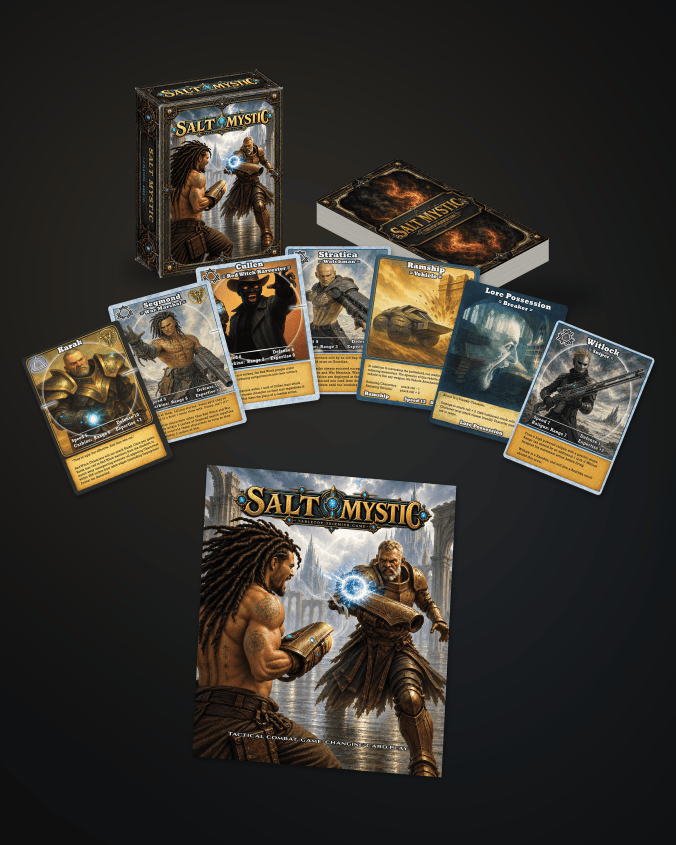
The tuck box design is so much cleaner and smarter now. I took almost everything off it and consolidated down to a single starter set with two factions inside ready to go. I left some cards out of the mix, which sucks, but the idea of making this easily playable with a single, simple purchase and a QR code for the rules is such a better idea than the individual war marshal decks I had before.

Is that available now?

It’s done and uploaded to DrivethruRPG but I’m waiting on the proof copy. Give me a couple of weeks to make sure everything is top notch. This will be amazing and the peak of an experience going back maybe 8 years by now. I’m very excited to hold this new version in my hand and let people see it anew.

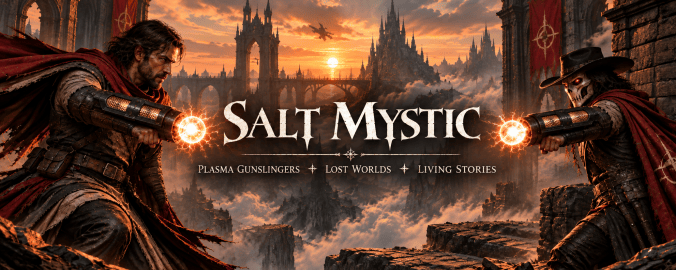
What’s with the new logo?

The graphic design people tell me that our previous logos are crappy to reproduce on packaging, so we’re switching that up as well. Wait till you see the new Grailrunner logo below. Pretty cool and maybe, we’re adults now.

*

And that’s what I wanted to bring you today. I hope the backstory is as interesting to read as it was to live. Till next time,
Solo Tabletop Wargaming: Fear The Wolfpack Rules!

Tabletop wargames are a social function. I get you. Beer, dice, pizza, and screaming in some cases. In others, lots of dudes in black t-shirts staring ponderously at a bunch of terrain and models with a measuring tape in hand and money at stake. And that’s cool.

Yet in the last couple of years as COVID-19 was a mess and we were all stuck in quarantines, solo gaming became much more of a thing for many of us. It so happened that we here at Grailrunner Publishing were already hip-deep in designing and playtesting a terrain-based trading card wargame ourselves when all that was going down. And it begged the question, for me at least:

Is a solo tabletop wargame possible?

I was personally entirely underwater with work from my day job and compiling art and copy for the rulebook in evenings when this question came up with the Sourcebook entirely written and the rules close to final form.

So I cheated, because I didn’t think so. And I built a simple ruleset for a solo dungeon crawler I called:

The idea, as always with what we do here at Grailrunner, was to inspire adventures and imaginative journeys through immersive storytelling. I was thrilled as it came together: a short solo delving game you played with the same cards and dice as the core game that aspired to make a puzzle of each turn but still tell an engaging story:

Deep underneath a massive stone temple lies the culmination of the Salt Mystic’s philosophy known for two millennia as “The Augur”. A shared hallucination maintained by an elite group of Recorders capable of recalling entire lifetimes of people throughout history, the Augur for centuries served as oracle and guide for the Infinite Republic up until the War Of The Rupture. It’s still down there in its circle. And it has powerful secrets. Perhaps no one knows how many subterranean levels there are to the temple, with grand corridors and massive oak doors – behind each of them an oriel, an artificial pocket of space leading to practically anything you can imagine. Entire civilizations are tucked away inside those rooms, all of it neatly housed inside the Temple. Raiders constantly invade these halls, plundering the secrets of the temple for lore to raise themselves a twisted Guardian. It is a miracle itself how the Augur has manipulated the nations into providing generation after generation of Protectors: those charged to patrol these halls against these would-be pirates. -From the Salt Mystic Sourcebook And Core Rules

But anyway, I was cheating. I could imagine the playtesters on Tabletop Simulator, the guys that help out with our art and composition and rules design brainstorming just frowning at me, cocking their respective heads to one side and saying,

“Not what we asked for though.”

So last year I went back to my thinking place and scoured the internet for easy, streamlined AI rules & algorithms from games on the market – some fairly obscure but showing up in Reddit discussions as great for solo play. I messed around for hours and hours on the table, tearing any ideas to shreds that were complicated or that slowed down gameplay and pleaded for feedback and playtesting. Not everyone is kind, but feedback abounds.

And what came of all that was a terrifying set of clear, intuitive rules that anyone wanting to play a tabletop wargame solo can use to torture and challenge themselves. We called it Wolfpack Mode.

The core idea came from a German submarine warfare tactic devised by Hermann Bauer and perfected by Karl Donitz, used to great effect in World War Two. On my tabletop, tailored for a fast game of Salt Mystic, it blossomed into an escalating nightmare of a challenge that just keeps turning up the heat till you crush your phantom opponent or curl into a fetal position crying on the floor begging it to stop.

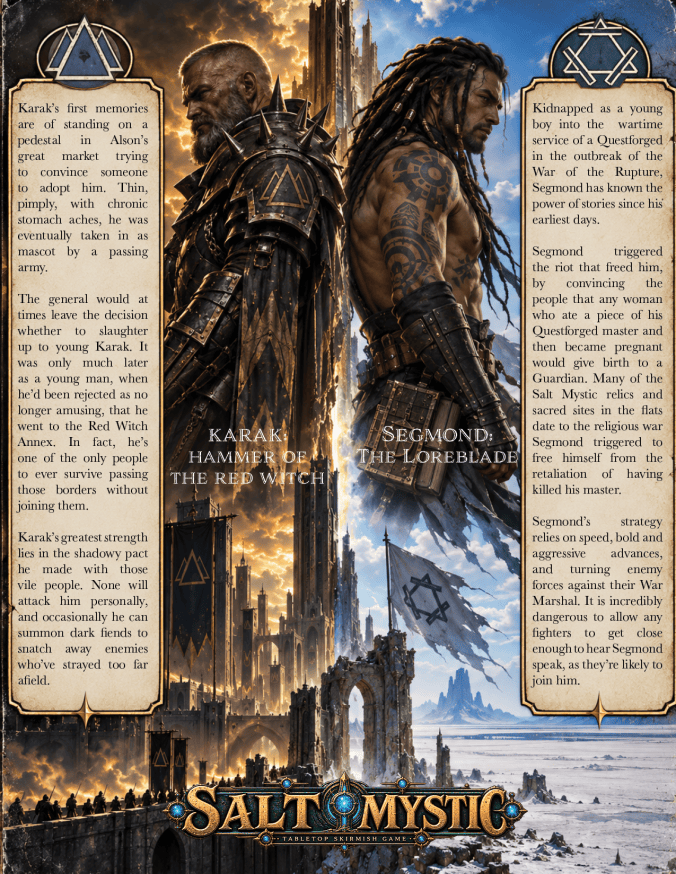
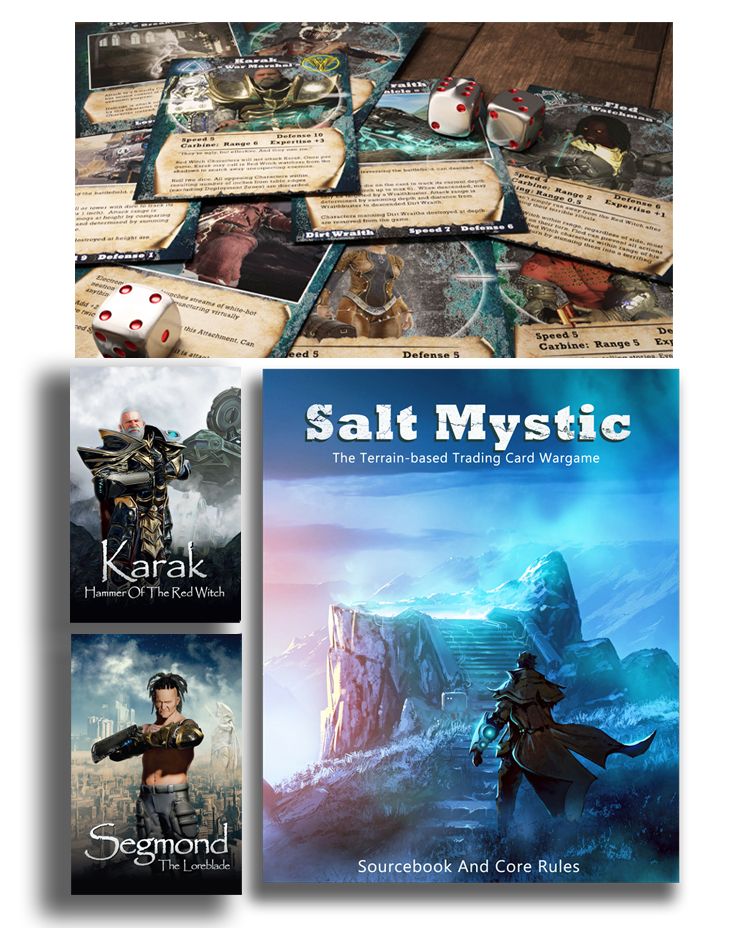
The Sourcebook And Core Rules is a one-stop shop with everything needed to play a basic game. Two complete battle decks (Karak: Hammer Of The Red Witch and Segmond: The Loreblade) are also available, sold individually but collectively referred to as Volume One.

But I thought as a gift I’d share the pages that describe the Wolfpack Mode, in case you’d like to give Salt Mystic a try or reskin the rules for whatever your wargame of choice is.

Let me know what you think. Feedback has been great, if not outright conspiracy theories that I’m trying to drive players insane with fears that wargame cards and stalking them.

Anyway, till next time.

Guys, Exciting Announcement….The Salt Mystic Lore Cards Are Here!!

This is huge for us, so I hope you’re feeling it after reading this. Give me just a couple of minutes here, and then let us know what you think.

What’s this announcement about?

Our signature IP here at Grailrunner Publishing is a science fiction universe called Salt Mystic, comprised of books, games, and branded merchandise. The spin we’re offering here is to innovate, to do something new not tied to or ripping off the big franchises like Star Wars or Warhammer 40K. In fact, that’s kind of the whole point of Grailrunner (check out who we are), blazing new trails…

Well what’s Salt Mystic about?

Imagine roving gunslingers adventuring in artificial pockets of space, remnants of a world-spanning civilization now shattered and warring with fantastic weaponry and vehicles, and legends of a fable cunningly engineered to possess the right person at the right time…

Anyway, go here and read more about that.

So what’s the announcement?

The first novel came out in 2015, the wargame in 2021. Along that journey, we’ve been looking for an engaging way to share the blend of art and storytelling we envision with Salt Mystic. It’s the 21st century, with busy people and tons of things competing for attention. We need escapism, free of politics and agendas, free of controversy and messages, and something that’s just inspiring.

Social media has done a lot for us, and we started sharing short fiction a few years ago, tied to original art pieces that illustrate parts of the Salt Mystic lore or characters. It’s been incredible, how an art piece that started with fiddling around in Photoshop blossoms into a realized piece of fiction, or how the flash of a story idea manifests into an original work of art. And it’s amazing, the way people respond to really short fiction and images like they have! It seems there’s an appetite for something different that’s easy to engage with and doesn’t require familiarity with decades of backstory.

I sometimes check in with Stephen Gibson, creator of Grimslingers and art director for Arcane Games, and he said once that if he didn’t do art, his imagined world wouldn’t exist. That comment has stuck with me, and in a lot of ways informs what’s happening here.

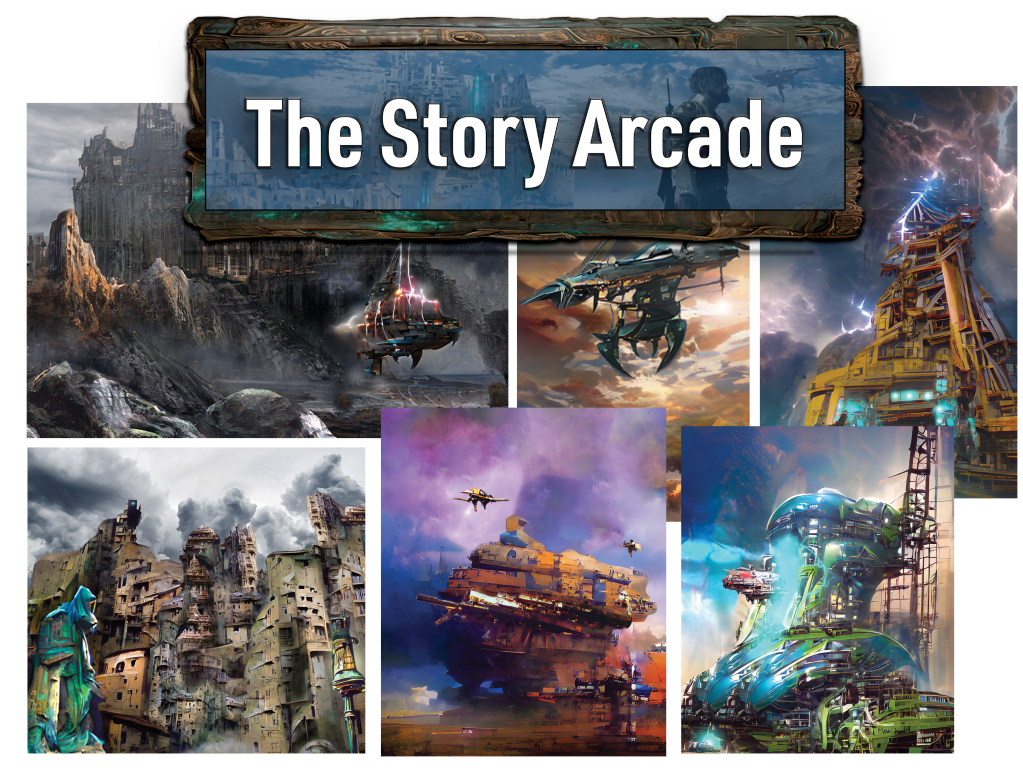
So we’ve created a place to go, free of charge and available to anyone who clicks to do so, for touring the unique fusion of art and short fiction that makes up the Salt Mystic universe. It’s called The Story Arcade, and it’s where you’ll find the ever-developing gallery of Salt Mystic Lore Cards. Click the image to take a look.

What is a Lore Card?

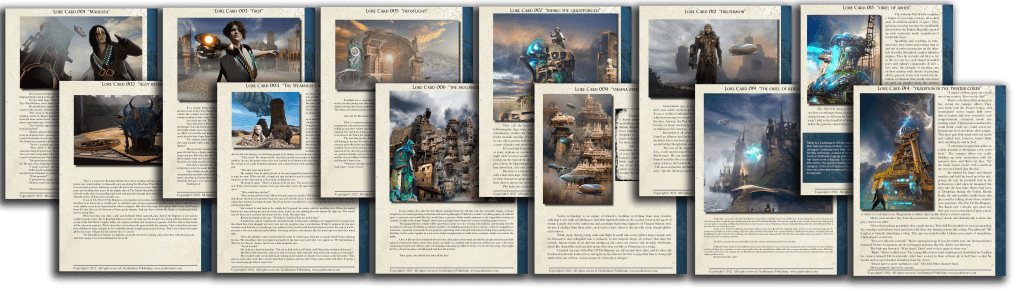
It’s just a pdf one-pager, containing an original work of art and a related short piece of fiction set in the Salt Mystic universe. The idea is you can read this and appreciate the point of it and the imagery in less than five minutes.

A Salt Mystic Lore Card contains the sequence number and title of the story/image at the top, an original art piece (usually at the top or top-left of the card), and a short fiction piece illustrating the image never extending beyond the one page.

No familiarity is needed in the backstory, nor is it necessary to read more than the one Lore Card to understand what’s happening. They’re all stand-alone, by design.

Why are you giving these away for free?

For now, it’s more interesting to provide a way to help grow this original setting and its bleeding-edge technology & concepts for a wider audience than push more products on you. Go buy the Sourcebook or a shirt or a book if you’d care to support us.

I’m an artist or a writer myself, can I submit for consideration on a Lore Card?

Sounds awesome, thanks for asking. Submission guidelines are here.

You know, it does sound exciting. What do I do now?

We’re asking you to support original content like this. I’m personally frustrated with the state of the major franchises like Star Wars and Doctor Who, Star Trek and Warhammer 40K, how they’re safe and stale…recycling ideas and echoing Twitter talking points. Let’s break new ground, right?! Let’s do something different.

Take a walk through the Story Arcade, and let us know your favorites or what got you thinking. If you want to submit something, do it. If you just want to chat about one, that’s cool too.

This is a bit of a milestone for Grailrunner, at least, an acknowledgement and maybe validation of what we’re trying to do when storytelling in modern times is such a lonely, frustrating effort sometimes.

Anyway, thanks for taking a few moments with us today. We hope you enjoy The Story Arcade.

Till next time,
Dreams are engines. Be fuel.

Hacking Salt Mystic’s Tomb Trappers: Let’s Get Crazy!

If you’ve never played Salt Mystic before, take a quick diversion here and see what the fuss is all about. You can pick up the free basic rules there or take the deep dive with the Sourcebook And Core Rules. Simply said, it’s a terrain-based wargame played on a tabletop with cards, dice, and some basic elements representing terrain. It’s a little more “beer and pizza” than most wargames out there, and is quick to pick up and just start bashing each other for a Friday night’s delight.

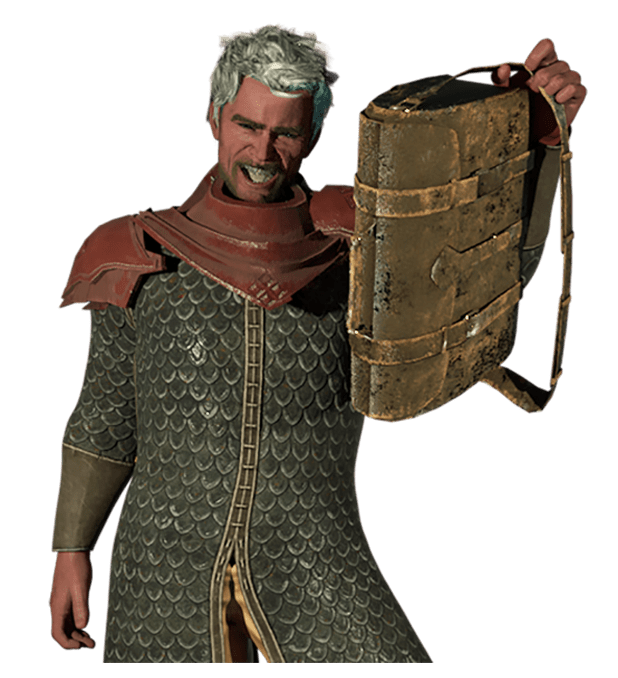
One type of card (and a core piece of the lore) is called the “Tomb Trapper”. Take a look at the respective entry from the Sourcebook below.

So in summary, this is a type of character you can have on your tabletop in the game who uses the goodies in that satchel to build amazing traps that lock down your opponent’s characters and give you an edge. That little dial apparatus in the sourcebook entry’s image is a key tool – set the proper code and programmable matter oozes out and builds the desired trap mechanics.

I wish I could pick one of those up somewhere, would love to see it work (and have a few people in mind for it)!

Anyway, one comment we’ve gotten from folks is they want more options in traps and flexibility in using Tomb Trappers on the tabletop. The cards come with default traps designed to be tough without being impossible and easy to set up & execute using only a small number of dice. This is simulating a situation where the trapped character card is locked down in place and struggling to free themselves. With some skill and/or luck, they just might do that!

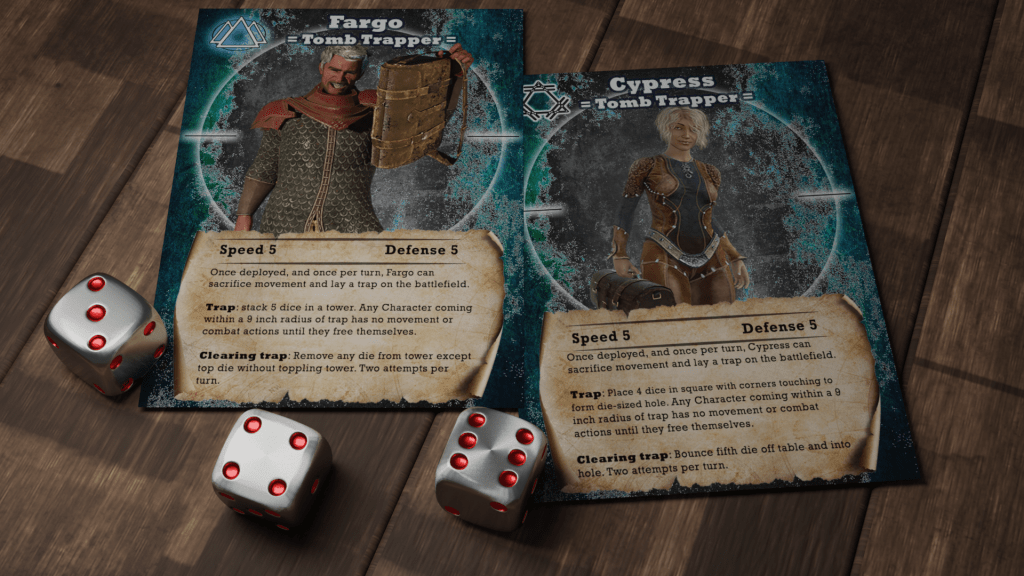
Here’s Fargo, Tomb Trapper for the Mountains faction:

Once deployed, and once per turn, Fargo can sacrifice movement and lay a trap on the battlefield.

Trap: stack 5 dice in a tower. Any Character coming within a 9 inch radius of trap has no movement or combat actions until they free themselves.

Clearing trap: Remove any die from tower except top die without toppling tower. Two attempts per turn.

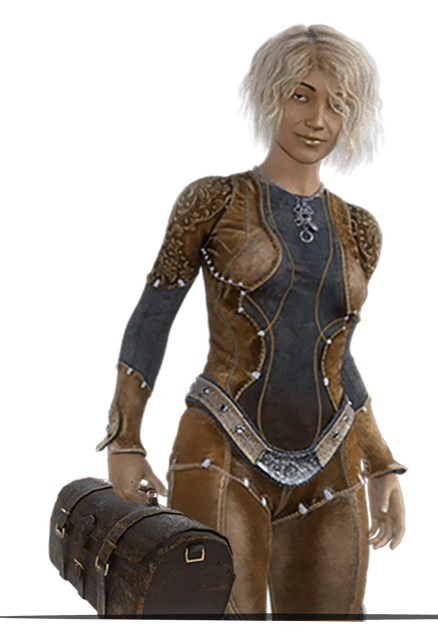
And here’s wily Cypress, from the Salt Flats:

Once deployed, and once per turn, Cypress can sacrifice movement and lay a trap on the battlefield.


Trap: Place 4 dice in square with corners touching to form die-sized hole. Any Character coming within a 9 inch radius of trap has no movement or combat
actions until they free themselves.


Clearing trap: Bounce fifth die off table and into hole. Two attempts per turn.

But hey, let’s hack this! Let’s break out of the default traps and deployment mechanic to bring a new level of play to the table.

Pre-staged and hidden traps

The whole point of the Salt Mystic game is to tell an engaging story. There’s always a narrative framing the battle, and the challenges and dynamics of interaction between the terrain and the people IS the engine driving everything. So let’s make the terrain more interesting using the Tomb Trappers.

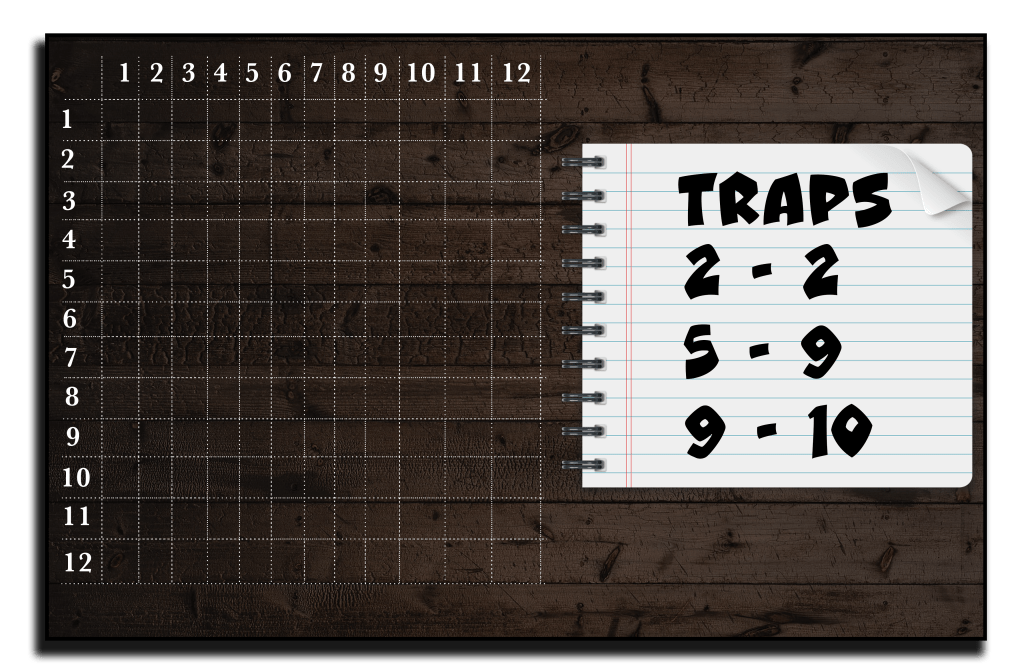
Imagine a grid on the tabletop running 1 – 12 horizontally and 1 – 12 vertically:

We’ll read rows, then columns when referencing these, and we’re picking 12 so that two 6-sided dice can reference them in a solo game. In this example, a player has chosen three locations for hidden traps during setup, prior to gameplay. The locations are written down and concealed so no one can change their minds later.

The key difference between this deployment mechanic and the default one obviously is that the opposing player can’t know where the traps are and thereby avoid them. Anybody moving is in jeopardy of getting trapped. Just call out the trap when you’ve lured your opponent into the right spot and grin deviously as they struggle to free themselves!

Considerations:

-Agree up front on how many traps are allowed, and whether sacrificing a card from the starting battle deck is necessary for each trap.

-The Wolfpack Mode for solo Salt Mystic game play requires a roll of two 6-sided dice each turn for the phantom player anyway. To simulate the phantom player having pre-staged traps, check for a trap each time that initial roll contains a “1”. Roll against the grid to determine the location and compare it to where your characters are located.

Example:

The phantom player’s Wolfpack turn roll was 1 and 5. That roll was required anyway, since that’s how the phantom player’s deployments and moves are determined in the Wolfpack rule set. Since there was a 1 on at least one of the dice however, additional rolls are needed to check for traps. First roll: 4 + 7 = 12, Second roll: 3 + 6 = 9. We reference rows, then columns, so there is a trap at row 12, column 9. Any friendly characters in that grid square are trapped. Trap locations change each turn (how devious!).

Alternate traps

You can really let your imagination run wild on this one! Basically, anything your wicked little mind can conjure here is fair game. Consider the spirit of the traps though:

  • Traps should be difficult, but not impossible
  • Easy to set up & execute using only a small number of dice or other readily available supplies
  • Should require a little luck, a little skill

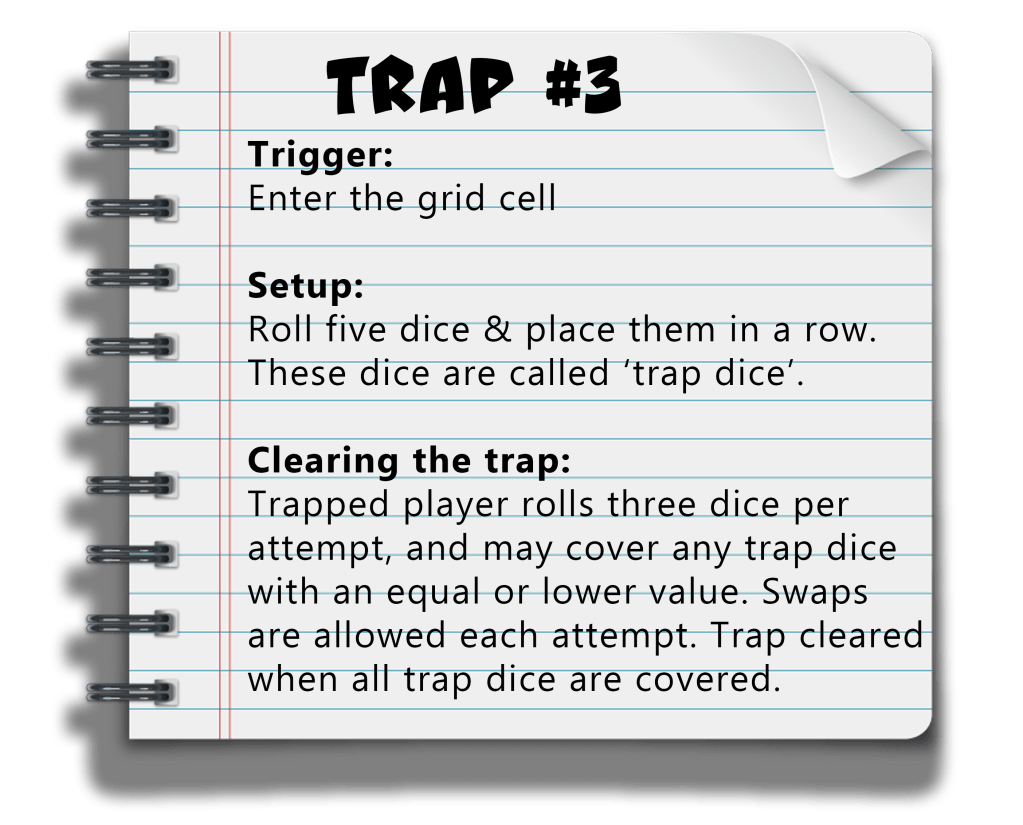
Design a trap by answering three questions:

  1. What triggers your trap? Example: approach within 9 inches, etc
  2. How should the trap be set up on the tabletop?
  3. How does the opposing player clear the trap?

Feel free to enhance the narrative a bit by outlining a little more detail to the hideous nature of your invention: (programmable matter collapses into quicksand, massive pincers the size of a horse spring from the ground, the ground tilts into a spiked pit, and on it goes…)

Let’s try it. Here’s what happens should the opposing player enter the respective grid cell per hack number one above – and up springs a cloud of geometrically poisonous vapor contained in a thin film that pops if he moves.

Considerations:

-Agree up front on the deployment mechanic as described either in the default card text or in hack number one above

-In the case where you’ve designed multiple custom traps, agree up front on how to select which trap has been sprung

So let us know what you think. Loads of potential here with the Tomb Trappers.

While I was writing this, we talked about maybe hacking the core rules a bit and staging an unbalanced scenario where one character (any card with an Expertise stat) goes up against an opponent at slightly reduced strength (10 less cards in the starting battle deck) – trying to escape a building entirely loaded with traps (at least 6). Objective would be to get to a specific spot on the table without dying. Seems like it would be a hoot if the opposing player is required to deploy all their Vehicles and Vehicle Attachments out in the open so the lone wolf can try and take them.

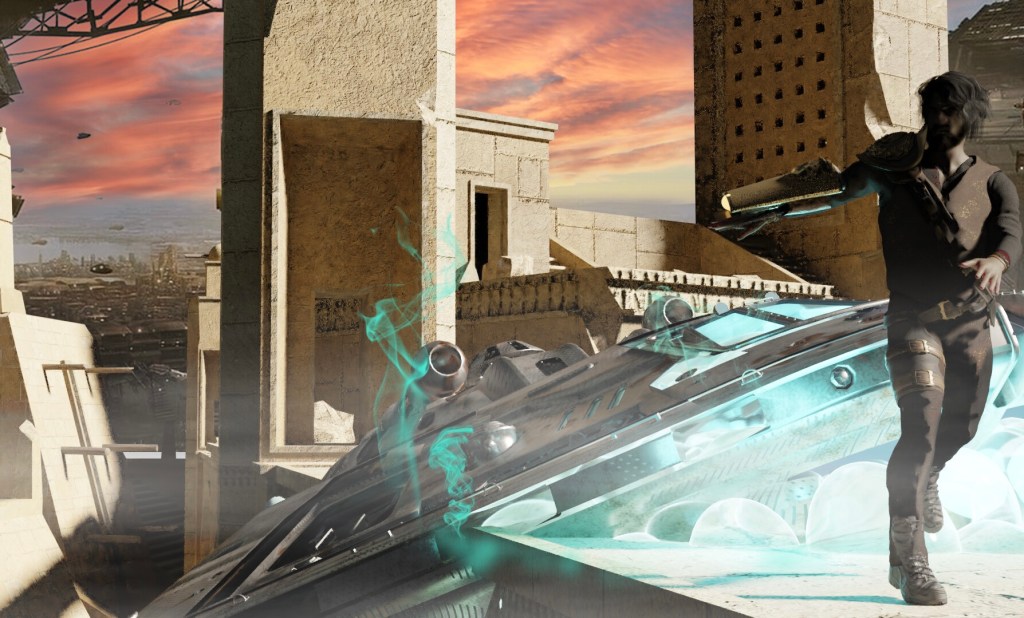
Here’s the art and flash fiction that inspired that:

A carbine gunslinger on the run. A Dirt Wraith rises, ghost-like through the very walls. Its quantum foam bubbles sizzle as loud as a waterfall. They knew he was here all along. She lied. And that will cost her. They’ll have traps all in the building, every corridor. Watchmen are patrolling the streets below. If there’s a Dirt Wraith, then maybe they’ll have something deadly down there he can seize and turn against them. Time is short, and they are many. He’ll have to be fast and unpredictable.

What would you do?

Till next time, guys. We’re always looking for feedback and ideas. Shoot them our way. And Merry Christmas!
How would you design a wargame box?

Ugh. Bad news. The artist I was trying to snag for the packaging for the upcoming Salt Mystic tabletop game is swamped. If you’re not up to date on what I’m talking about – catch up here. Everybody’s got a day job, and his is art director at a game publisher. I only found out he was taking occasional freelance work in the last few weeks and tried to pounce, with no dice. I’m a little bummed about that because he’s amazing, and his style would be perfect for the tuck boxes the game’s card decks will come in.

We agreed another time maybe. If things work out well, we can possibly bring him in for some premium cards in volume two or something. Stay tuned, I guess?

But now I need packaging designs for two card deck boxes that sizzle and pop, that highlight what the game is about and communicate its unique lore or technology and how it differs from Star Wars or Warhammer 40k or whatever. Needs to be clear about being science fiction, but feel kind of like a cowboy image…striking and adventurous, but at a glance clear what sort of game we’re talking about.

No pressure at all.

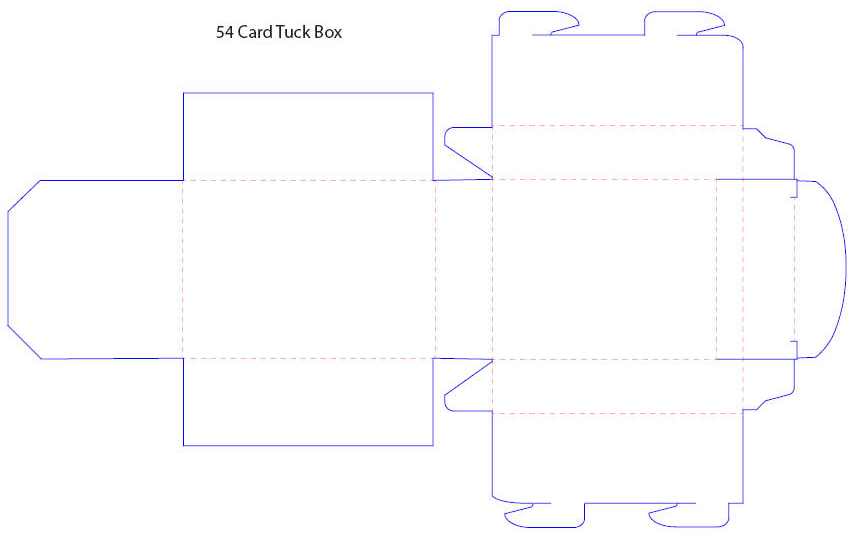
And the image needs to fit in this template:

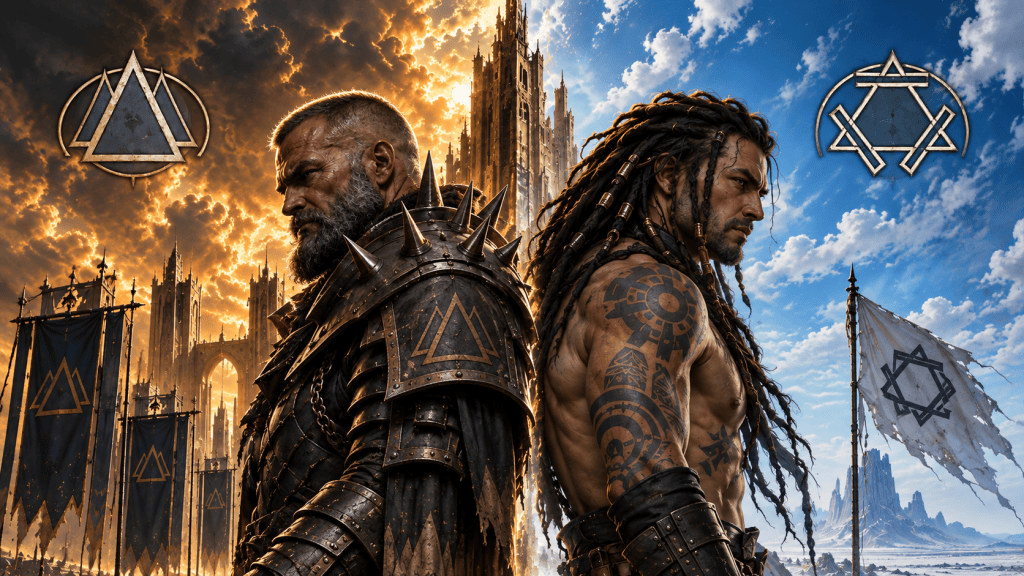
If you download the Basic Rules and take a peek at pages four and five, those two dudes are the point of these decks: War Marshals. Tough guys, to be sure…devious and fast with their ball lightning carbines….but also tactical and strategic geniuses at commanding their factions. The two tuck boxes need to highlight their respective War Marshal very prominently. Then I’ll need space on one side for introductory game wording, some exciting blurb about the lore, and a little copyright and legal stuff.

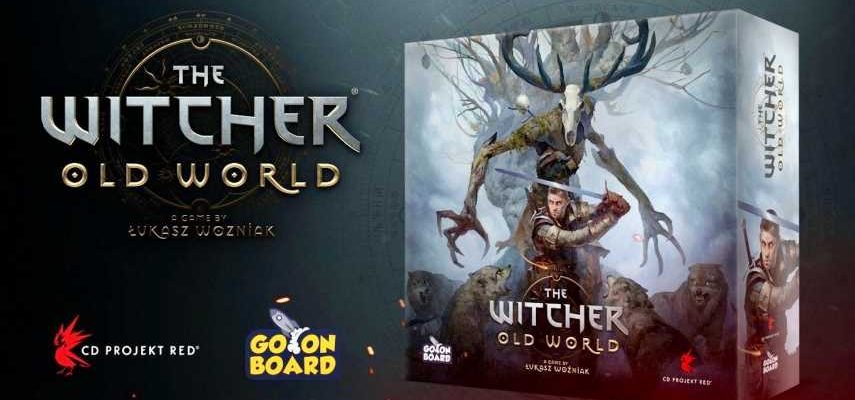
Saw this packaging for an upcoming game based on The Witcher that really impressed me:

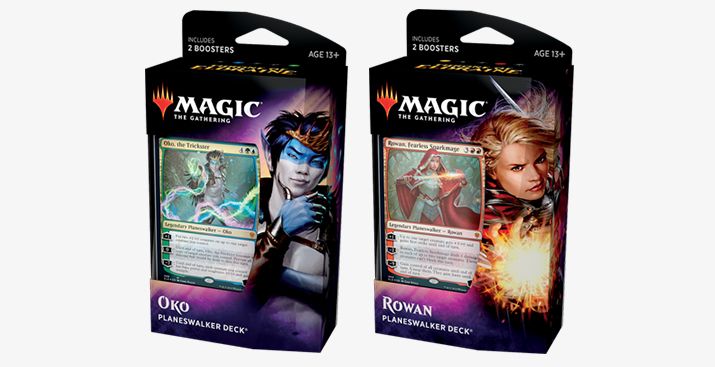
I suppose the thing that struck me most about it was I have had box designs for Magic: The Gathering decks in mind – with shades of blue and green and glowing eyes, hovering magical glyphs and whatnot. But none of that makes sense here, not from the aesthetics or elements of the Salt Mystic worldbuilding, not from the standpoint of looking different on the shelf, and also just to distance from other card games.

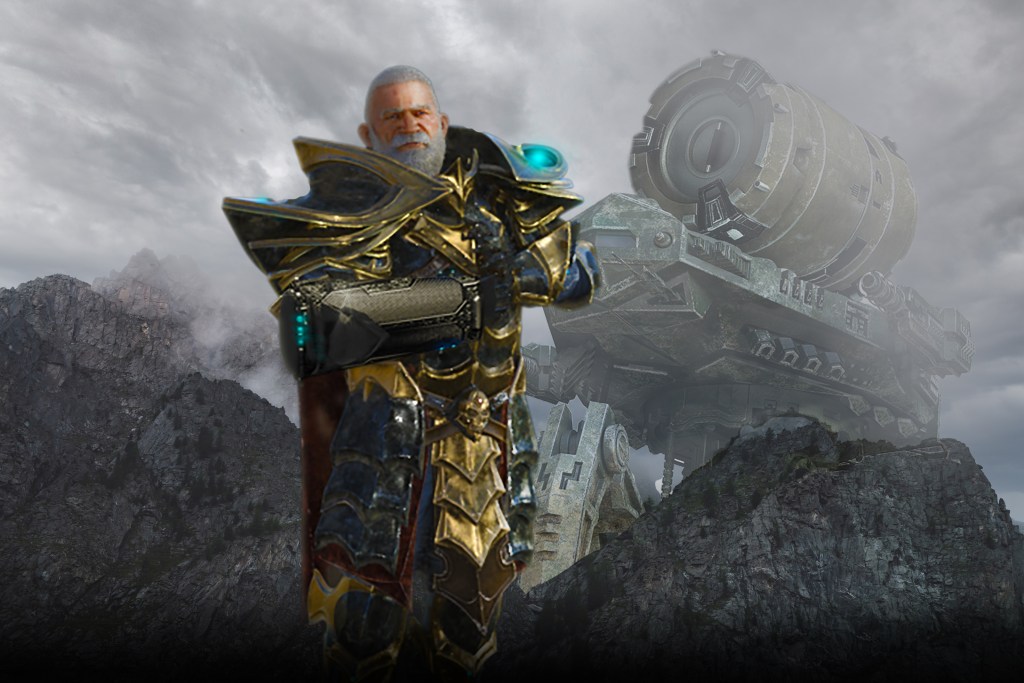
But these Witcher: Old World graphics pop big time for me. I like the coloring, the dramatic lighting and smoke, the sense of danger and action. It’s eye-catching and intriguing. So I took a stab at something like I thought my ideal artist might have come up with (the guy who’s too busy), and with this box in mind. That’s the image at the top of this article. Now I’m just kind of staring at it, letting it soak in to see whether I like it. I’d need to fade the edges and fade to black more at the bottom of the box, as well as include a dramatically dark field for the back of the box for the wording and logos.

So I would I rather be writing? Because that’s what started all this?

Yes, I would rather be writing. But none of this world will exist without the visuals and an exciting way to engage with the stories happening in it. Gotta do it, man. Gotta do it.

Looking for thoughts on packaging here – what do you think?

But until next time…

Dreams are engines. Be fuel.