New Salt Mystic Lore Card Available For Free Now!

It’s always exciting when we can bring you another lore card: those new bits of the expanding Salt Mystic setting delivered in a unique fusion of flash fiction and original artwork! And they’re free!

You can download any or all of the Lore Cards at the Story Arcade by smashing the button below:

One thing we’re hammering home with the Salt Mystic line, and which will always remain core to it, is this:

In the Salt Mystic universe, cowboy-clad adventurers with ball lightning carbines slung to their arms bravely delve terrifying and thrilling pocket dimensions. The backstory of the Infinite Republic and its collapse, and the unlimited range of possibilities lying in wait out there behind sparkling dimensional gates is the (intentional) engine behind the adventures we’re trying to create.

Read all about the setting here.

So this lore card, called “Newb”, began with the image. I was touring an art museum in Kansas City. And I came across Claude-Joseph Vernet’s “Coastal Harbor with a Pyramid: Evening”, an oil on canvas from 1751.

Here, let me zoom in to the part that struck me:

I just kind of stopped and stared at that part. I mean, what was a pyramid with Roman columns doing on a seashore? And a functional one, at that? It sent my mind reeling, and of course ultimately (as always with me), made me think of sparkling and sizzling gates to artificial pocket dimensions where boundless adventures awaited.

Doesn’t that happen to you?

The artwork for this lore card was based on this, then. I wanted ruins beside a seashore with dudes working their gear along the lines of an exploration party, and I imagined the oriel gate as a shimmering window to another world up on the ruins.

The piece that heads this article is the end result: a paintbash of numerous elements, some of which were drawn from an AI art generator using prompts relating to what I had in mind. Once I composited all the pieces and bits together in Photoshop and color graded everything to match, I tried another trick.

Take a look at this work by Milan concept artist, Edvige Faini:

I am not great with color palettes. In Photoshop, you can match an image to another image’s color palette fairly readily. What I had produced so far in my process was too brown, too plain. It didn’t stand out like I’d hoped, and my adjustments to color and vibrance and hue weren’t giving me the result I wanted.

So I used Edvige’s piece here for the color scheme, matching my art to her color palette. I don’t know what you think, but to me, it’s wonderful. I’m a little overly attached to turquoise, so I’m biased. But still, I like the final product quite a bit.

This was the first lore card where I added the text over the image magazine-style. I’ve been reading a lot of graphic design books so wanted to experiment a bit.

Download the new lore card here.

Till next time, guys:

I Read A Book Because Of Its Cover, So Let Me Tell You How That Went

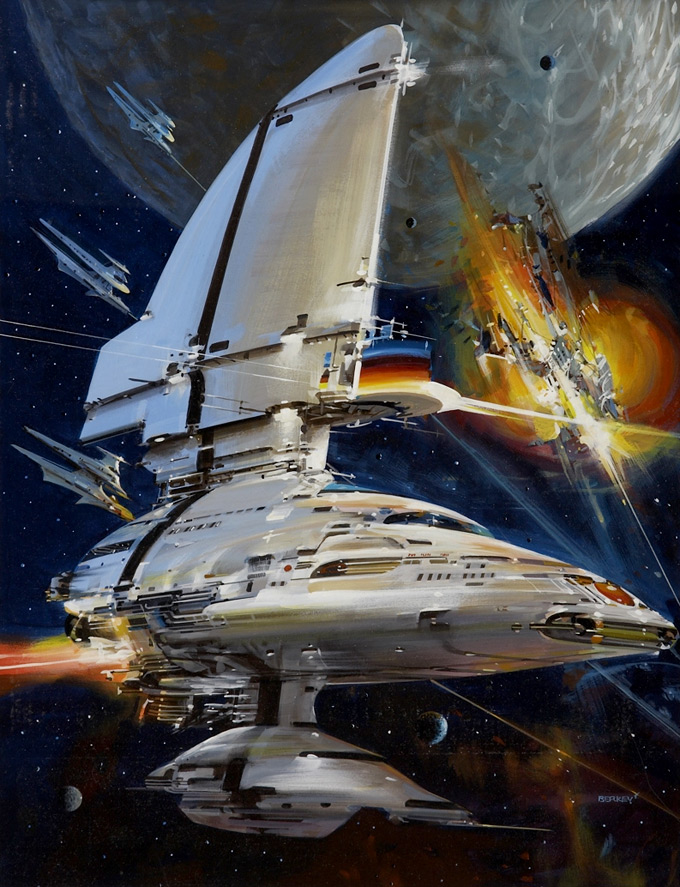
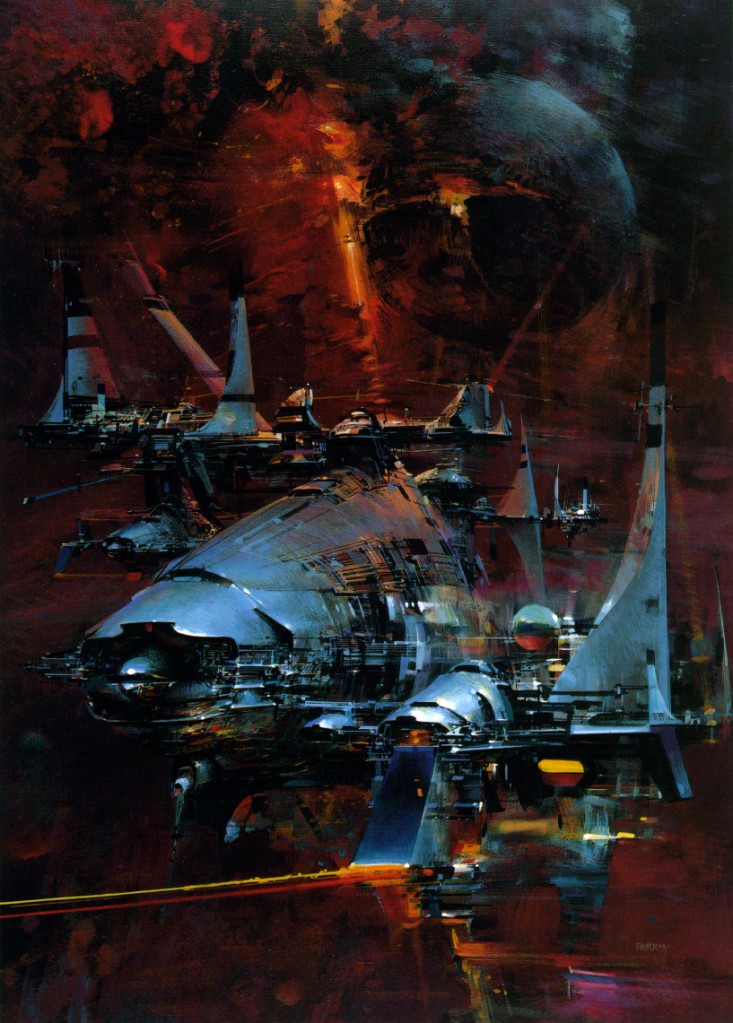
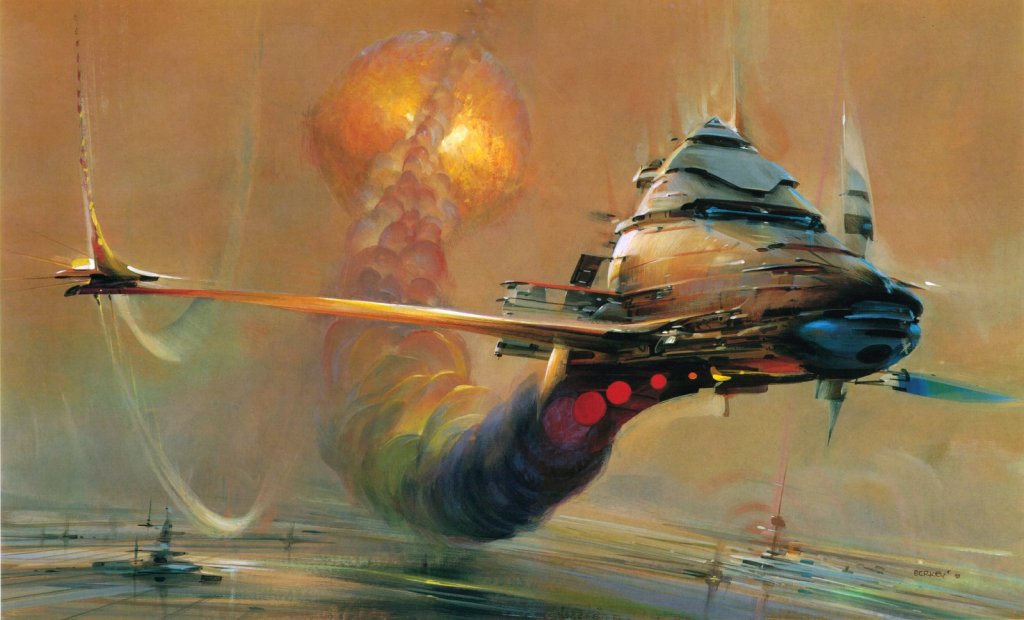
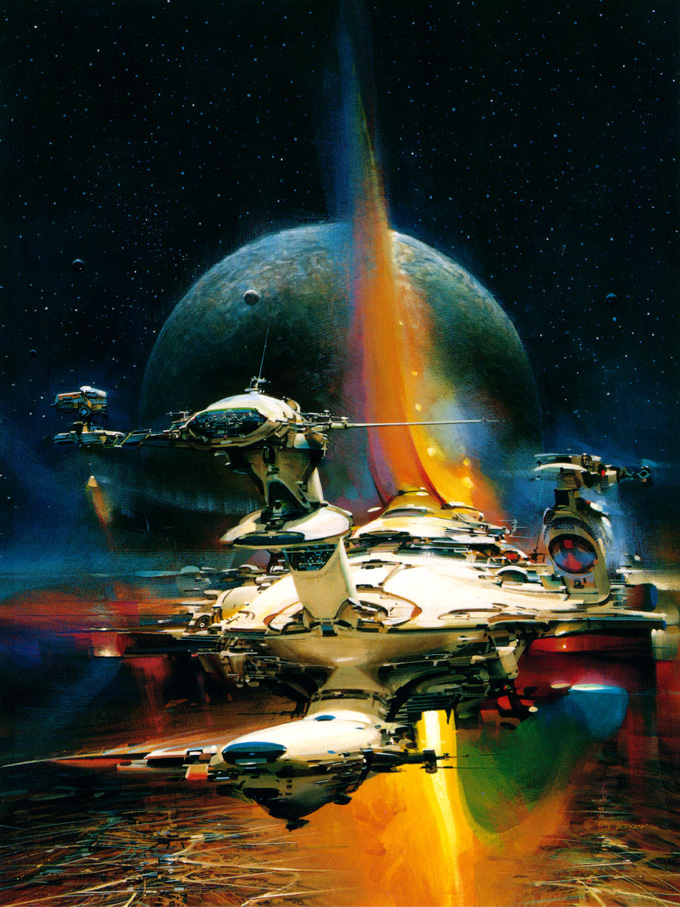
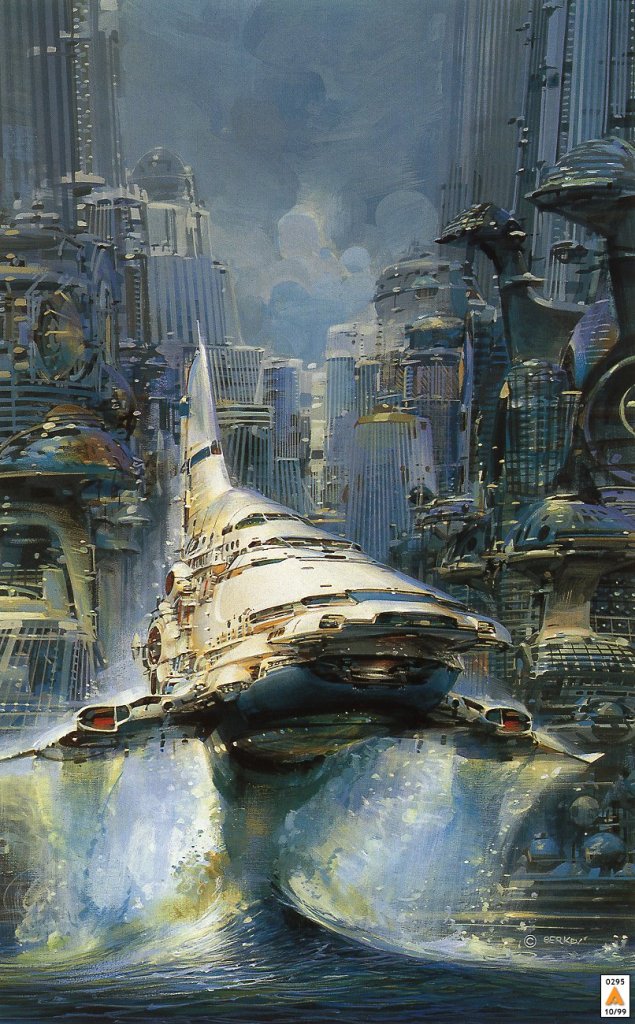
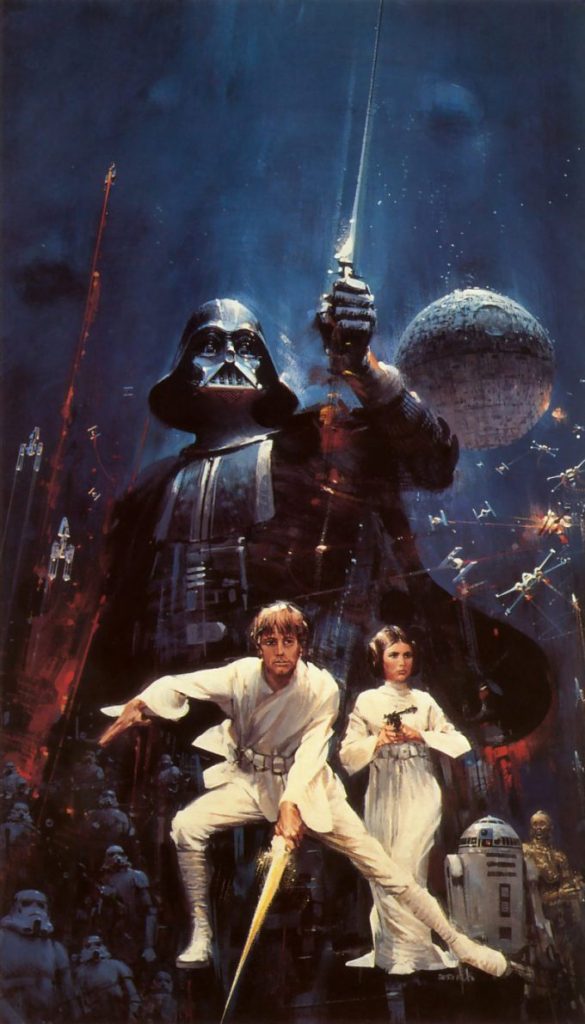
John Berkey was an earth-shattering genius painter of science fiction images. I love everything I’ve ever seen from him. And it isn’t stretching the truth to say that if you view space ships as sleek, aerodynamic vehicles with white plating, that can be traced in many ways right back to him.

Seriously.

He did these, for example:

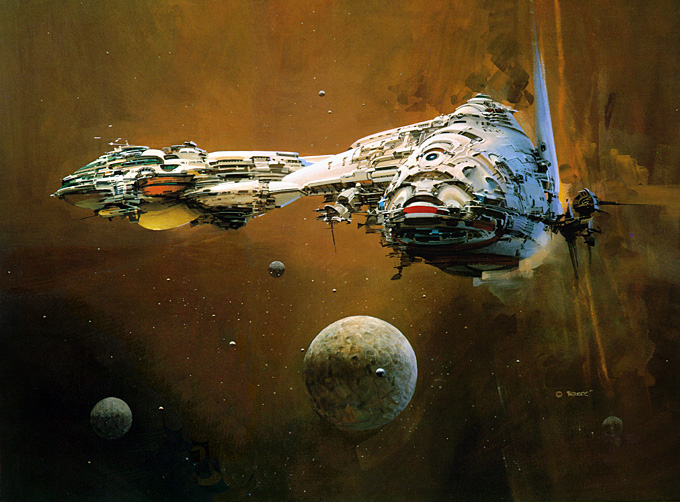
My first introduction to him way back in the day was this masterwork below, which inspired the mile-high vortex cruiser hydrofoils in the Salt Mystic universe. Just look at this beast:

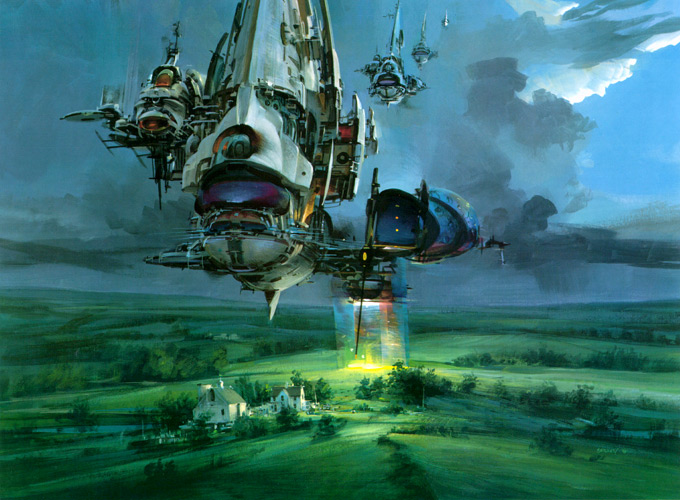
And, of course, he did this one too, which some of you may remember:

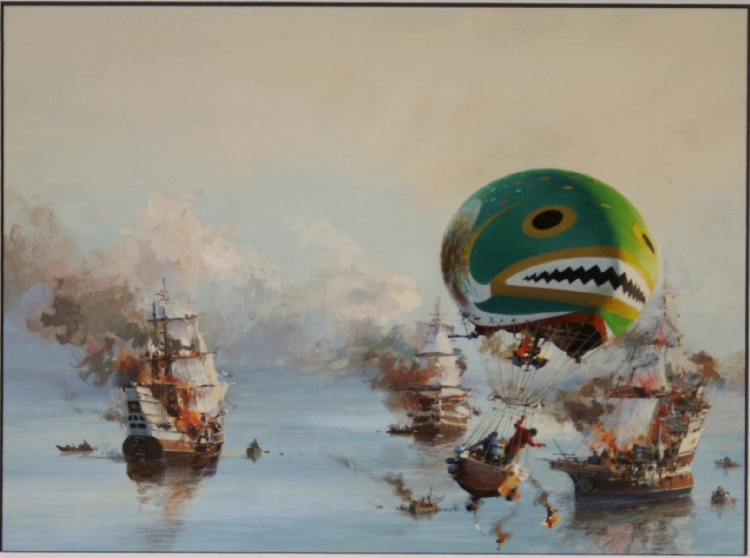
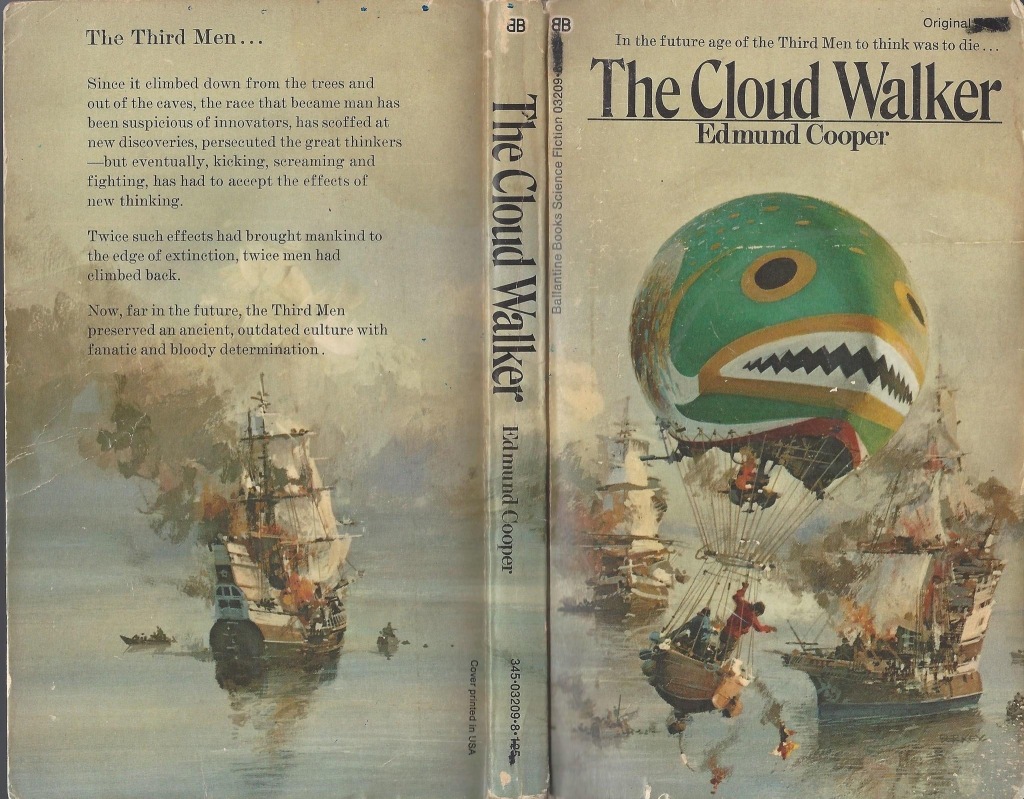
So why am I on again about John Berkey? Well, more than once I’ve seen this haunting, fascinating book cover drift across my social media feed or appear on a used bookstore shelf:

I’d never heard of Edmund Cooper, and it didn’t have space ships or a hook in the back cover text that sealed the deal, so I passed it by multiple times. I’m not that much into humanity turning away from machines because of some uprising or difficulties, like Dune’s Butlerian Jihad or Walter Miller’s A Canticle For Leibowitz. I didn’t really care who the “third men” were, or to read what I imagined would be monotonous pages with religious torch-bearing zealots yammering on in mobs to some plucky machine-builder about how evil computers could be or whatever.

Apologies if that’s your thing, I’m just a bit worn out on those tropes and don’t find them interesting. So I moved on.

But that image though.

What in the world was the deal with that crazy face emblazoned on the balloon?! I love a naval battle too. Maybe, I thought, after considering Berkey’s fascinating cover art so many times, I should read this book just to settle some questions about what he was painting.

And I’ll cut to the bottom line for you: The Cloud Walker is an easy read, with some mild, pleasant twists on the story you expect to play out here based on the cover description:

The setting is mostly the small town of Arundel in what had once been the county of West Sussex in England after two world wars have decimated the population and turned society against technology in all its forms. The protagonist, Kieron, dreams of building a flying machine, even though he knows what the Luddite priests can do to him if he’s caught. There’s an interesting love triangle, with some mild surprises in how that turns out, and a massive shift in the plot at one point – relating to a pirate invasion, and which ultimately leads to the battle portrayed in Berkey’s marvelous image.

I imagine if you’re a regular reader, you can knock this one out in a couple of days. It was a great experience for me, primarily for one key reason which honestly inspired me to write this article in the first place:

Cooper’s writing style.

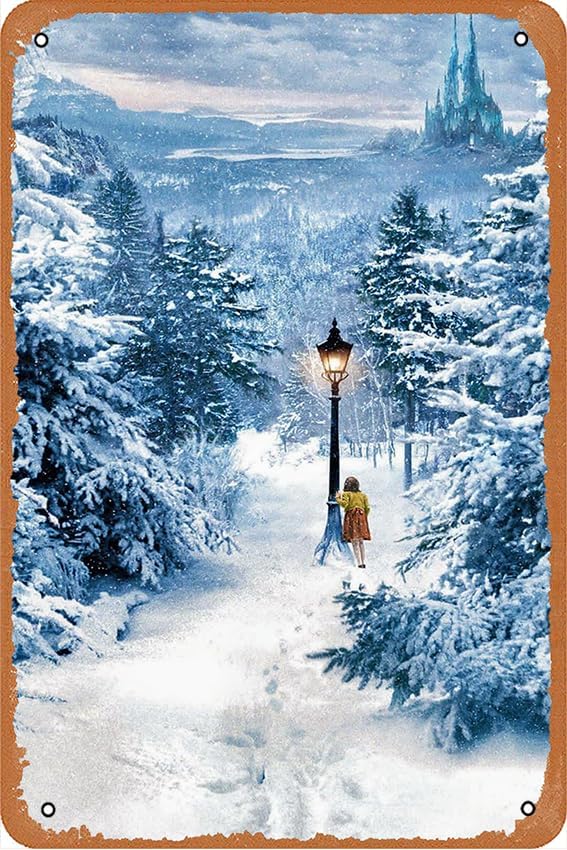
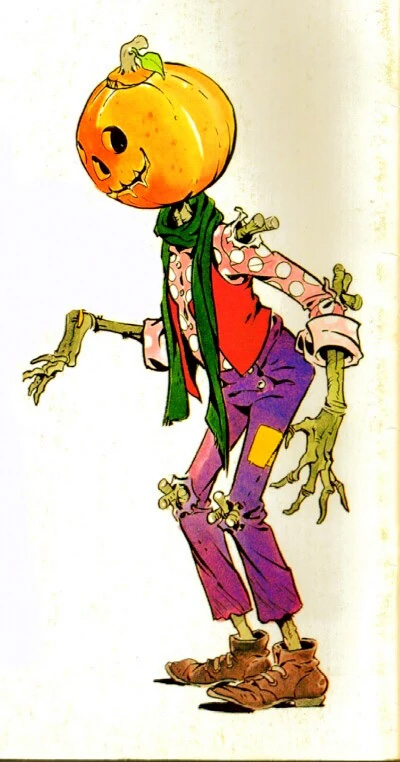
There is a style of storytelling often used in fables and myths that is charming, easily relatable, and that focuses on things common to us all like family, fear of the unknown, betrayal, and friendship. Read any of the Narnia books by C. S. Lewis or the Oz books by L. Frank Baum and enjoy a master class in what I’m talking about here. It’s in the word choice, the easy manner of painting images with words, and the awe and wonder of fantastic beasts and places like you’re sitting by a fire listening to it. Lewis and Baum knew what they were doing.

Cooper isn’t in their league; it just struck me that I was several chapters in before I knew it and sinking wonderfully deeper into his rural landscape, getting to know Kieron and his family, the two ladies, and just why he wanted to take to the air in the first place.

I won’t spoil anything here, but I feel Cooper stuck the landing on the ending (pun intended, you’re welcome).

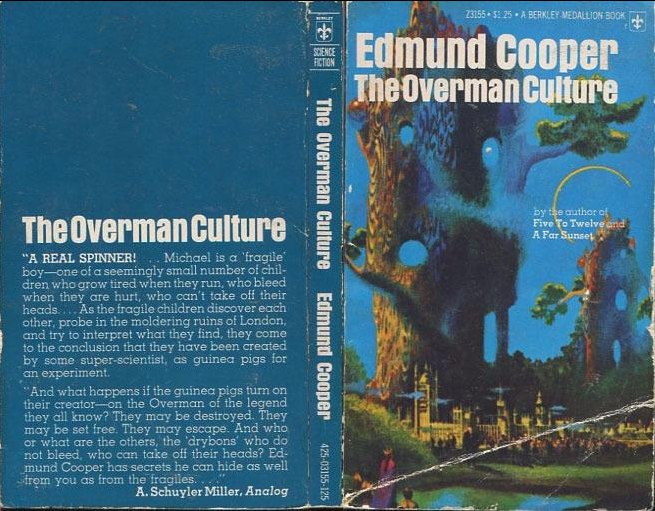
Anyway, I liked it so much I tried another one by Cooper, called The Overman Culture.

Honestly, I hated it. It was the same narrative style, just a meandering and plain mystery box story with some juvenile personal interactions and nowhere near enough happening to keep your interest. I doubt I’ll try Cooper again, though The Cloud Walker will remain with me.

Pick it up sometime if you get the chance. It feels like a comforting fable, and maybe we need more stories like that.

Till next time,

Riffing Ideas Like Stan Lee: The Marvel Method With AI

Assuming there is an afterlife, and that I get to hug three people of my choosing for just how wonderful they were and how much they impacted me, I’m thinking (today at least, the list changes):

  1. Robin Williams
  2. Pausanius (explained here)
  3. Stan Lee

Honorable mention to Nicholas of Myra since he was Santa Claus.

Let’s talk about Stan Lee for a minute, and the miraculous collaborative technique he popularized, in many ways pioneered in comics writing called “The Marvel Method”.

Listen to him explain it here.

The stories Stan used to tell of the old days of Marvel are truly fascinating and inspiring. His mom got him the job with a cousin (it was Timely Comics then). Pretty much all the adults quit or didn’t care and were never around the office, leaving him as a teenager who knew nothing about the business pretending everything was fine.

All manner of folks apparently went on business as usual with the in’s and out’s of the office, never really knowing the kid that was always in was the one basically running everything. As he matured in the business, and couldn’t keep up with the many writing responsibilities, he relied on what came to be called “The Marvel Method”, meaning he would provide an outline or maybe just an idea to the artists, and they would go nuts from there, expanding the basic plot thread into intricate panels of story without words.

Stan would take what they sent, whatever they sent, and add the dialogue and narration, riffing off what they had provided since he only knew the basics of the story. With geniuses like Steve Ditko and Jack Kirby to work with, he made magic.

Here’s what you might have seen, for example, sent in by John Buscema:

We’ve stated our position on generative AI tools here at Grailrunner before. Bottom line, although many occupations are threatened by this rapidly evolving technology, it isn’t going away. In fact, it’s a new industrial revolution. We believe tools like Stable Diffusion and ChatGPT have a place in the world, but see them more like stock image websites or reference or idea books.

Like George Lucas did back in the day with Ralph McQuarrie’s mind-expanding images, the art and the ideas can dance together and make beautiful new worlds.

What’s that got to do with Stan Lee?

There’s a new experimental generative AI program called AI Comic Factory hosted on huggingface here. Looks like this:

You select the style and layout, then enter a prompt. When you hit the Generate button, it lays out a set of comic panels based on your choices and entry that are impressive.

While I have no intention of packaging these up for our Salt Mystic line, it really is fun to describe some of the elements of our IP and see what looks like a Humanoids comic illustrated by Phil Gemenez pop up in a few seconds with interesting graphic elements that inspire more ideas to pursue.

Look at these to see what I mean. My prompts were variations of cowboys entering dimensional portals, stone golems (glowing or otherwise), beautiful fantasy cities and majestic airships, that sort of thing. All very much in line with Salt Mystic adventuring.

I’m drooling at this. It’s incredible how inspiring this can be! When I’m looking for descriptions for a character now, or costumes (which I hate describing), or an interesting perspective for a city, I can go back to these and dream.

Recently, I started playing with Actions in Photoshop to turn images to pen & ink drawings with the click of a button. I have a very nice gallery of ball lightning carbines now to drop in to whatever I’m working on. For the header image, I grabbed one of those, color matched and graded it after compositing it in. I cut it off to fit the panel so it would look like it belonged.

Then I grabbed a cartoon dialogue bubble from a Google search and used Comic Sans font in Photoshop to add the gunslinger’s words. Not sure what he’s pissed about, or who in that city is going to pay for it, but it sends my mind reeling.

Anyway, that’s what I wanted to suggest to you today. If you’re going to try it out, don’t forget to be respectful of the artists who worked on the images that trained tools like these, but don’t be afraid to collaboratively build something new with them either.

Let us know what you think.

Till next time,