Let The Trolls Speak: Principles Of 21st Century Storytelling

Every previous generation in human history, it’s been more difficult to move around and certainly more difficult to be exposed to the different stories people tell around the world than it is right now. In fact, you can go back less than a century and see a world where people largely stay where they were born. A guy’s library and his best storytellers were the primary means of being exposed to new stories. There’s been a sea change caused by the internet, electronics, and our own leisure time & mobility. So here you are…knowing stuff. Good for you. Now what does that mean?

I went into my thinking corner about that very question; and I baked up something for you that I believe you’ll like. It’s free – go read it. I also kept it short. Printed, it’d be less than 30 pages. Shouldn’t take you long at all. I stirred in some stories you’ve heard of, and one or two maybe you haven’t.

Would be great to hear from you on what you think. Let me know!

‘Google Translate’ For Dream-Speak: Beginning With Pictures

1302f02a89040c7990e2ddbb0090f598.jpg

I’ll tell you something interesting about how your subconscious works; and I’ll do it without referencing Jung. Maybe. Anyway, there was this girl in my elementary school that I thought was kind of cool and who’d call me every once and a while. She was pretty and one of the popular kids, so I was into that but not because I had any great fascination for her. She often forgot how good a friend I was when we were back in school on Monday anyway, strangely; but we’ll just let that lie there. It’s important to my point here that you get this – I wasn’t in love or like or even considering it until a particular turning point. A dream.

Nothing nasty here. I just had a dream about her one night where we were hanging out on a farm looking at the stars or something when she tried to kiss me. That was all, seriously. I can still describe to you now, however, the incredible attraction she had in that dream…like a mask with the power of all of human myth behind it just hanging over the dreamwork cardboard cutout of this girl. She was everything about girls in that dream, all girls who are fascinating and maddening. From that point on, I had a thing for her I couldn’t understand at all. Weird, yeah? Hold on to that. I’ll come back to it.

A nightmare I had when I was probably thirteen is as clear to me now in my forties as it was the night I dreamed it. The plot is thin; and you probably won’t get what’s spooky about it. I was outside my house bouncing a basketball alone; and it echoed. I remember it echoed. I knew in the dream no one else was home. Yet when I felt someone watching me, I turned around to look up in the second story living room window. The curtains were split open; and a pale old man was grinning widely back at me. The end. I chilled up just now typing that because of the malevolent feeling I had about that guy up there. It wasn’t what happened or that I recognized him or even knew his intentions. It was the mythic power of everything that’s dark and frightening and wicked pasted into a mask hung over the cardboard cutout of a stranger in my living room window. It was the feeling then that is still with me now.

I understand that my subconscious has these basic universal ideas about the feminine mystique and about bad things and a host of other patterns that are incredibly fundamental to how we perceive and filter information. The feeling of adventure and new horizons, for example. What it means to me to be a man. You can imagine others. One thing that happens to me and which I know happens to many other authors is we either have these patterns laid over an image we encounter by happenstance, or we dwell on an image we find striking on its own and overlay the pattern ourselves to make something of it.

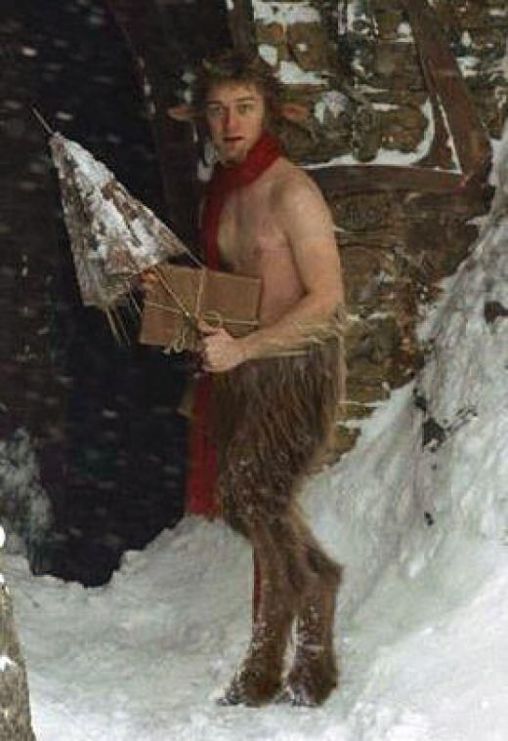
In It All Began With A Picture, C. S. Lewis explained that he carried around a picture in his head of a faun carrying parcels in the snow with no idea what it meant for years…till he finally sat down to ask questions about it. I imagine it carried the sense of adventure with it, which is why it stuck around. George Lucas explains in Star Wars: The Annotated Screenplay that he really just wanted to remake Flash Gordon because he was looking to recapture the sense of exploration and adventure from the serials he watched as a kid. Stephen King explains in one of his introductions to Wizard And Glass that he walked out of The Good, The Bad, And The Ugly pondering the unearthly western imagery he’d seen and knowing he needed to recapture the way it made him feel watching it – a journey that gave us the amazing Dark Tower series. What I’m offering you is that images we find interesting are all around us or inside our heads. What we can do as writers is poke and prod on them a little to see why they’re lingering with us…which mythic pattern overlays best on them and makes them most real. They fit like a lock and key when you figure that out.

In my case, I was in a rock gorge in Oman with some friends particularly missing John Wayne movies on a long Navy deployment and making my way through the first three Dune books. The picture of a guy in a torn and dirty uniform slamming open saloon doors and drawing all eyes on him came to my mind all on its own. Everyone in the bar was afraid of him though he was unarmed. I knew him to be a leftover of some war, and that somehow he had people with him. He felt tired to me, and dangerous…desperate. That came with the picture. I held on to that for a long time, till I ultimately sat down to write Tearing Down The Statues and put him in a different setting to answer all my questions about him, and just what those people were frightened of.

See? No Jung. Now go think of an image that’s stuck around in your own head and start asking which pattern did it bring with it to unlock whatever story it’s trying to tell.

Imagery With Teeth: Learning To Write For Millenials From Treehugging Haiku Poets

1565561

Call me a dork if you want; but haiku is like a cherry Starburst for me. When you’re in the mood and they’re just right, it’s like a shot of happiness straight to your cortex. My point here is going to be that this poetry form and its old masters have plenty to teach a 21st century wordslinger how to write fiction. Try this one, from Matsuo Basho (1644-1694):

A bee

staggers out

     of the peony.

No picture needed. The word choice is fascinating because the bug isn’t said to just be there; and its little hairs or whatever aren’t described. He says the little guy is staggering in the center of a flower after blasting down a bunch of nectar. If you’re at all like me – and this is one of his famous ones so I’m not alone here – then this image pops right into your head like zooming in with your iPhone. I basically stole this one for a Salt Mystic quote in chapter 5 of Tearing Down The Statues. Here’s another one I stole from (Sylhauna’s gift in chapter 9):

First snow

falling

     on the half-finished bridge

And another (chapter 9 again, referenced in the computronium ruins they sail past):

Summer grass –

All that’s left

     of warriors’ dreams

Give me a minute on this. Hear me out. We’re bombarded by pictures in all our entertainment now and have been for a while. Most of us think in pictures. We absorb information more quickly that way. Interesting images grab us as readers and stick around maybe even after the plot has faded. I read something from a cyberpunk guy (maybe William Gibson, not sure) way back in the nineties that I couldn’t begin to tell you the title or story or even the point of it all. I just remember a line where the narrator described some rain on a lake as ‘furring it over with needles’. The image popped for me and was really an interesting way to describe that. I saw it and liked the way he said that. If you’ll just stop playing around and go read either Viriconium or Light by M. John Harrison, you’ll see what I mean about crazy-cool ways of describing imagery that are uniquely wired to the way our brains work…basically interesting images that are pregnant with stories.

The classic example of an image pregnant with a story is the six word flash fiction (probably) wrongfully attributed to Hemingway:

For sale: baby shoes, never worn.

Ugh, man. That’s heartbreaking. Lean and straight for the jugular! Their baby died and never got to wear the freaking shoes. That’s awful. Usually haiku isn’t trying to rip your heart in pieces like that, but is often saying something more than what you’re looking at. How about this one by Kobayashi Issa (1763 – 1827):

     The old dog

leads the way

     visiting graves.

Dogs are always awesome. I can see a loyal little guy with his tongue hanging out and that fuzzy white fur on his snout, not even knowing this is a sad thing, being in the graveyard. Since he knows the way, he’s been there many times before. That leads my mind off into all sorts of imaginings about the dog’s master, and just which graves he’s going back again and again to visit. I may have to wipe my eyes here – hold on.

If we’re wired for images, if we absorb information more effectively and make it stick more effectively with images, and if a writer can successfully convey an important message through that mechanism – or at least resonate with an important theme, then the work has a shot at immortality in someone’s mind. That’s what this whole gig is all about, right?

Here’s what I get from all this:

  1. Stay lean, avoid a bunch of useless words that don’t add value
  2. Craft a striking image that’s memorable and describe it in a novel way
  3. Consider resonating the image with a theme from the story – make it mean more than the picture itself if you can

If you’re ever stuck for coming up with something, go steal from Basho and Issa. They won’t mind.

Getting Over Free And Rewiring Your Imagination

expansortext

Back in the day, pre-internet and when the only way to hit it big was to get signed by a big publishing house, you hounded magazines to sell short stories as much as you could. You got in print. All the names you’d recognize from those days offered that advice; and I sadly admit to listening to my dot matrix printer bweh-bweh-bweh in the corner of my desk while I bent those little metal clips on the manila envelope time and time again patiently sending off stories so I could make a name for myself to finally see the way clear before me. The only cool story I have from those days is a terribly cruel rejection letter from the guy who ran Asimov’s magazine accusing me of stealing the story idea (naming some obscure piece I’d never heard of and saying the other guy did it better). Now that I think about it – there was a guy named Vampire Dan who ran something called The Story Emporium at one point, who said nice things about what I sent him and always said I was ‘close’. He was awesome; but that’s beside my point.

Where I’m going with this is – you sold everything. Nothing was free. Guys like Harlan Ellison were brutal about it, chasing every dime for reprints and mentions and ripoffs. Basic economic common sense says you don’t give your hard work away because it has value. Giving it away means it’s crap and you couldn’t sell it. Right? Hold onto that for a minute.

My brain builds up steam. What I mean by that is my job can be technical; and if I’m not careful, I’ll be exclusively reading science journals and history books, learning statistical programming, building robotic arms, or whatever my left brain decides to chase with precious little stretching of my imagination. It can make my writing a little dodgy and stiff, and the ideas a little plain-Jane and cardboard because I’m not exercising that part that mishears things on purpose, that plugs and unplugs things I see around me to rewire them into something else. Everybody says you’re supposed to write every day; and they’re of course right about that. It matters. Our brains are neuroplastic, meaning you can rewire them yourself just by what you think about. It would be incredibly helpful for a writer to be able to dredge up an inspiring idea to stretch on like taffy any time he needs it. Confidentially, it helps me tremendously at work too because I’m always being presented something people are stuck on. Different ways of thinking break out of that kind of rut.

When I recently started in earnest to build a platform for future book launches, I finally got the light bulb to spark on – that old school thinking about not giving things away for free doesn’t hold true in the internet age. Nothing gets attention on-line like FREE. It’s amazing. Book giveaways are critical because of how you get reviews; and no book sells without reviews. Twitter, Facebook and Goodreads or whatever media you want to talk about, they’re all swamped and crowded with authors pumping books. Nonsense. Sales are about trust; and somebody who’s looking for an author needs to trust them. It is an incredibly intimate relationship between author and reader…a joining of the minds that must be honored and treated as precious. What this all means is it’s not only okay to give your work away for free, it’s important to do so. Setting up a place on Facebook where you can share a piece of flash fiction or a story idea you never intend to build a book around – that gives you a fantastic place for people to get to know your style, to trust you, and also forces you to sit down once a day and do it!

Go see what I mean here and let me know which ones you like best. I’ve come to notice already that people seem to appreciate most the ones with images attached. Give it a shot yourself and see if it doesn’t stretch you to look for slick story ideas around you more often.

The Making Of A Mind-Bender

TheFallOfChronopolis.jpg

Standard warning – this is not a book review! I’m going to analyze how a science fiction author twists a story idea around like a diamond to craft a fascinating mind-bender of a book. Though I’ll likely spoil the crap out of it, we’ll hopefully pick up on best practices for anybody looking to squeeze novelty and freshness out of a concept they might have for a book or story.

“With a hollow booming sound the Third Time Fleet materialized on the windswept plain. Fifty ships of the line, the pride of the empire and every one built in the huge yards of Chronopolis, were suddenly arrayed on the dank savanna as if a small city had sprung abruptly into being in the wilderness”

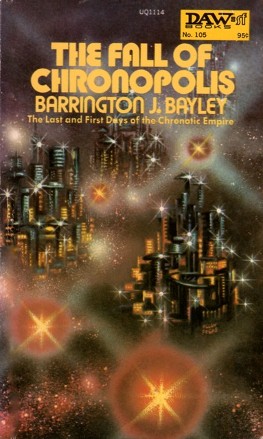
Because I’ve read it a jillion times and because you should too, I picked for this exercise a 1974 time travel novel by a guy capable of turning your brain into salt water taffy but still leave a smile on your face. Seriously, why are you not reading Barrington Bayley? Go get Knights Of The Limits if you want a sampler pack. The book we’re going to look at is The Fall Of Chronopolis.

The core idea:

There’s an empire that stretches across time instead of space

Time travel has been done to death; and it’s usually stupid and full of holes. Look, you’re probably nowhere near the Doctor Who fan I am – I adore that show in all its forms; but mostly they contradict themselves at will and skim over uncomfortable goofs. Admit that, so we can move on. Here, Bayley has an interesting twist on the galactic empire idea that’s been around since the 1930s. Already a good start. People go back to those 1930s pulps even now. They did a lot of things right; and so did he with this one.

But how to make that work?

Bayley built a theory of how time is structured to try and solve how his core idea could function, how the citizens would travel across the empire and how they’d be ruled. It’s a natural progression once you have an idea, right? Just answer the obvious questions about your idea. He tells us time is like a frothy ocean with our reality and perception of it like stable skim on the surface. Yet under special circumstances, you can go deeper into the potential realities lying below, a horrid and ghostly place where souls can be dissolved into nothingness. Nice – loads of chance for drama and action there.Giant freaking time barriers were set up at the rearward past and forward future like walls around the empire. Specially protected ‘achronal archives’ exist inside buffers which are compared to duplicate archives outside the buffers enabling them to become aware of any disruptions to the timestream…like people or cities disappearing from history. There’s your empire.

Which raises more questions…

There are obvious problems that are going to come up with all of this…you can imagine the debate that went on in his head at this point. Like a courtroom, putting his idea on trial, my guess is he knew right away he needed a way to smooth contradictions, and a way for them to have a conflict of some kind. So his theory of the ocean of time needed to expand a bit. If you can imagine standing ripples on the water, no different from you and I holding a rope at the two ends with me popping up and down quickly so my end goes up when yours goes down…that point between us where the direction switches is called a node. Bayley imagined us existing at a node in time – stable points that move forward one second per second. There are just several of these; and the empire stretches across seven of them. Since they’re all that’s stable though, wrecks in the hinterlands between nodes dissolves all souls onboard into the terrible sea of potentiality. Come on! Once you stretch out an idea like that, of course it’s going to happen in the story! It’s writing itself at this point!

…and implications…

I can also imagine in Bayley’s spitballing session on this idea just trolling over everyday things to bounce his time empire idea across them and see what comes out. Relationships, for example. He imagines a young narcissistic prince who seduces his future self into a romance at node 1. He constructed a religion around how his empire would view the sea of potential, and the special reverence attached to the sacred moment when a Physics lab assistant first discovered the principle which would enable time travel.

Add the conflict and stir…

Once the initial idea is set up, it just needs tension. I imagine Bayley still working his central idea, twisting and turning it to see what war would look inside this framework. Giggling maliciously, I’m sure, he gave us an enemy empire existing in the future beyond a long period of unpopulated nuclear wasteland, begun by dissident time travelers from the empire itself. Cool beans. Conflict was automatic with this one, wasn’t it? Suddenly, the archivists start reporting entire sprawling cities have vanished from history, which no one remembers. The automatic rule of science fiction is to keep pushing the idea – how far can this go? Bayley describes the ultimate goal of a time war as disrupting the founding of your enemy – basically, get behind them and muck it up. It’s really fascinating to read all this…just incredibly innovative.

I’ll wrap it up to leave at least a little mystery to it all. The overall point this time around is the ideas will come from mishearing something around you, from hammering differences into something you see in a movie or book or something somebody tells you, whatever. The job then is to twist it around in the light for:

  1. Your first-pass explanation of how things will work with this idea
  2. Answers to the obvious questions resulting from step 1
  3. Teasing out implications of all that on everyday things
  4. Finding conflict that leverages the idea, not something boring that didn’t need it

That’s my take on it, anyway. You can go read Bayley now.


Let’s Pick Apart Great Writing To See Why It Works

revival

“The most terrifying conclusion Stephen King has ever written” Not my words. The inside jacket says that; and it’s a huge claim.

This is no book review. If you’re planning to read Stephen King’s Revival and spoilers bother you, skip this one. My purpose isn’t to tease you with it or give you enough zap to want to read it. I’m going to dissect this little guy like a Roswell alien to see…when it does work really well…why it works. I could have picked perfect works for this exercise, like Dickens’ Christmas Carol, Shakespeare’s Henry IV Part 1, Frank Herbert’s Dune, or even King’s 11/22/63. One reason is I read this recently. The other is it isn’t perfect; and in particular breaks down like a clunker at one point. Just like almost everything King puts out, when he’s bad, he stinks. When he’s good, he’s freaking brilliant and outshines almost everybody else putting words together. Let’s see why that is, so we can distill some basic principles that would be of value to someone crafting their own stories. Cool?

The story follows Jamie Morton, a boy growing up in 1960s Maine who first encounters a Methodist minister, Charles Jacobs when Jamie is six and the reverend’s young family moves in. Jacobs apparently heals Jamie’s brother using snake-oil sounding hoo-doo he describes as relating to “secret electricity”, a practice that forms the backbone of the whole book. The reverend’s family is killed in a terrible accident, sending him into a bitter tailspin; and over the decades, fate swings these two together again and again in  occasional intersections. Jamie falls in almost-love, then out; and he gets first hooked on heroin, then cured of it by Jacobs. There’s rock and roll and carnivals and fantastic characters along the way. Things finally culminate with Jacobs bringing Jamie in for his grand experiment: bringing someone back from the dead to finally know where his family has gone…to at last know what happens after you die.

1- The opening is chatty and conversational, though immediately alludes to Jacobs being somehow entangled in horrors.

2- Within a few pages, we’re given a host of mundane details we can relate to like comic books, a kid’s imagination, crappy family gifts, toy army men

Straight away, he’s trying to hook you…to make you interested within a page or two before most of us would put it down.  He invented neither foreshadowing nor characterization; but he excels at getting you inside his people’s heads with slice-of-life details. That’s my point. Read it and see how he uses specifics like the name of a TV show his mom is watching to lend flavor and engagement to what he’s telling you…little details we can relate to. A majority of the reviews for this book gush about how much they enjoyed the first part of this book when he’s doing this. In fact, he almost always does this. I had to put down Under The Dome because he was vomiting details and overdoing this trick.

3- Much like the accident it describes, chapter three hits hard and fast with horrifying descriptions of a brutal car accident

Following a brief opening with more relaxed details like: “Three miles away, a farmer named George Barton – a lifelong bachelor known in town as Lonesome George  – pulled out of his driveway with a potato digger attached to the back of his Ford F-100 pickup.” It goes on to describe him as “a good neighbor, a member of the school board, and a deacon of our church”. Then a paragraph later, there’s a scorpion sting that stuck with me for a couple of months after I finished this book. Seriously, it’s brutal how the accident is described. It was fast and brutal. It drew me in, horrified me, scared the crap out of me because of how likely it could happen with nothing supernatural. Incredibly well written. This was brilliant. If you’re trying to scare a reader, striking quickly like this with graphic brutality on characters we’ve been made to care about and relate to is a genius move. It drove everything else that happened. Just genius.

4- The narrative winds and builds, resonating with the title quite well, leading the reader on to believe these ‘secret electricity’ experiments we keep hearing about are going to bring the family back, just in more of a “Monkey’s Paw” style probably. I was thinking it the whole book.

Except when he at last gets to the end, that’s not really what he does. A really brilliant use of the title and narration to make you think you’ve got one ending coming when you don’t.

5- Jacobs brings back a corpse to ask about the afterlife, to know where his family is. Clunk! We’re shown the monster.

To previous generations, it was expected of a horror writer to show the monster. Read Lovecraft – he was very much into that. Abraham Merritt was an incredibly successful sci-fi writer back in the 1920s and 1930s; and he spent pages in lush detail on his visuals. Understanding preferences in fiction are subjective, I can still confidently tell you the prevailing aesthetic in the 21st century is we’re much more frightened when it’s in our heads and the imagination runs wild. Troll Netflix horror flicks and have a look at how many have grainy, security footage-style or lost footage-style preambles for three fourths of the movie before you finally get to the money shot, which is even then only a glimpse of some lady crawling backwards on the ceiling or whatever. King broke the rule with this one; and he has a habit sometimes of cracking the horrifying dread he’s conjured in us like he did this time by describing the afterlife as a place of torment like something from Dante’s Inferno, with massive basalt columns and wide-eyed people led in chains by ant-things to punishment.

On one hand, I’m impressed that a horror genius like Stephen King has picked the most frightening thing about being a human, not knowing what happens after you die, and built a book around it. That’s the mind of a guy who knows what he’s doing. Point in his column. On the other…’ant things’? When he got to this point, the atmosphere and pacing were incredible, driving the quick page turns and breathless wait for what happens next…excellent wordcraft. It’s just for me, when he showed his answer, I disengaged. It isn’t just me, many of the reviews make similar comments without the details of why they felt that way.

Anyway, that last principle is what made me think writing this article made sense. A quote from Great Gatsby came to mind, which is saying practically the same thing:

“No amount of fire or freshness can challenge what a man will store up in his ghostly heart”


Load The Gun First: Indie Book Launching Like Grownups

nightingale

If there’s anything I regret most about all the screw-ups I made launching my first indie book, it’s that I didn’t do anything before the launch other than write the book. Is that weird to say? Anyway, I got an interesting case study sent to me recently by Goodreads that I thought did a nice job of outlining how the big press houses work the system for book launches now, that make a real joke of the approach I took (or the lack of an approach, which is a little more accurate).

I wrote recently about what I view as the key success factors for book marketing in the modern age, centering on:

  1. Mainstream name recognition
  2. The cover
  3. The genre
  4. Reviews
  5. Awards
  6. Word of mouth

Have a look at the case study using the link in my first paragraph to see these in action. The emphasis for St. Martins Press in this launch was predominantly up-front and prior to publication. Who knew that was when the real marketing work should have been done? I was busy just trying to get the plot points to tie off without seeming forced and trying to decide what a typical book length in word count should be.

They strategically ran paperback giveaways, larger that normal (about 200 in this case) with good follow-through for reviews and word of mouth. Then they tied this in with focused advertising. I have been more impressed with Facebook’s approach to targeting ads versus anyone else, certainly more impressive than Twitter. Zuckerburg really seems to have done a nice job painting us all into neat little demographic corners. When St. Martins got the buzz building, nurturing it like a desperate fire on a desert island and watching the ‘to-read’ listings on goodreads as a measure of that, they launched a personalized mailer to readers who’d expressed an interest in the author.This was all prior to publication date.

nightingale2

When word of mouth and buzz built to the point that nominations happened for listings and awards, St. Martins Press doubled down again with giveaways and ads to further fan the flames. Very strategic, this approach. Not surprisingly, it was a momentum thing no different from a football game or a successful startup company. Maybe everything that’s good in life is a momentum thing. Who knows?

Indie Book Marketing With A Vengeance

MCGRAW

It’s funny how so many people that hear you published a book scratch their chin, smile a bit and tell you they’ve been thinking about putting one together too. “I’ve got a great idea…there’s this_____”. Fill in the blank. For me, writing them is the fun part. Blasting words into the laptop down at the lake or acting out the dialogue somewhere quiet to make sure it sounds like something people would actually say…that’s all adrenalin for me. It’s the terrible part that happens after it’s done where so many hold our noses and dive in anyway. It’s the marketing. Selling it. Making people aware that a piece of you has been captured in the narrative; and it’s available on Amazon and Barnes & Noble, waiting to change the world. I dove into that swamp in the Fall of 2015 knowing absolutely nothing about what to do next. It isn’t my intention here to tell anybody how to do it right because I’m no example to follow. It’s very likely, however that I can spare somebody from making the same sorts of mistakes. I’m actually really good at making mistakes.

When I typed the last sentence on a rainy beach in Maine, I was pretty pumped, of course. Who wouldn’t be? It’s huge to actually finish something that’d been stewing for that long. Look at that guy grinning…he has no clue what he’s in for. Anyway, I would have told you – should you have asked what’s next if you’re going independent – that you make the book as widely available as possible through Ingram Spark and Createspace, in electronic and paperback, set yourself up on social media, do a few giveaways, and start advertising. No problem. It’s a waiting game till the sales figures just start rolling in. Unfortunately, that wasn’t my experience; and I’ve made some boneheaded moves you need to know about. I won’t get into the decision whether to go indie or to find an agent or whatever. Pros and cons to either, so read up on it and choose wisely.

  1. I published the book before getting any reviews on it from anyone, before submitting to any contests or major review houses, and before setting any presence of substance up on social media. Ouch and double ouch.
  2. With a new Adobe Creative Cloud membership, I learned Photoshop and made myself a slick cover that I loved and everyone in my family loved. Neither they nor I have the first clue about cover design or the marketing principles behind them. It looked terrible in a lineup with other books online and drew no attention whatsoever. Ouch again.
  3. I ran a paperback giveaway on Goodreads but only made 20 books available, listed the contest for way too short a time period, and made too little emphasis on securing the reviews afterwards with zero follow-up. Almost all those copies wound up for sale on Amazon.
  4. I spent entirely too much valuable time screwing around on Twitter and Facebook, and even spent money on a social media marketer. Zero payback. A money pit that echoes.
  5.  I spent advertising money on Goodreads and Amazon though I had only two reviews. Anybody clicking through to the sell page just left because it looked so barren. I do the same thing when I’m on Amazon, should have thought of that. Didn’t.

Okay, that’s stressing me out so I’m going to stop right there. Anyway, through trial and error, deep research and conversations, and through reading up on what savvy marketing guys like Derek Murphy  and Dave Chesson have to say about this, I’ve distilled some principles of indie success that I believe hold true. There are probably exceptions and folks who caught lightning by chance; but this is what I wish I could have handed to myself there on that Maine beach. Would have saved a lot of effort and made the whole thing more fun. Let’s call it the MCGRAW principles:

M for mainstream name recognition: If the public has heard of you, favorably or unfavorably, talent or no talent, irrespective of the quality of your work, you’re far more likely to sell books without even trying. It’s hard to leverage this one unless you’re willing to put the time and effort into guerilla marketing or through interviews to force it.

C is for the cover: Think about how you pick books yourself, even online. This is a big deal. Murphy outlines seven principles of effective covers here. The cover should look professional and should look like it belongs on the shelf next to similar books, like it’s in the club. Spend money on this. It’s worth it; and there are thousands of talented folks who will do it inexpensively. If nothing else, get a pre-made cover customized.

G is for the genre: You can see this spelled out for you on Amazon book count listings by genre or in places like Bookbub where they show how many people have signed up for science fiction freebies versus general literature or romance freebies. Lesbian vampires will make sales happen for you. Mythic and philosophical musings on historical eras probably won’t. Just know going in what your audience looks like and where they feed.

R is for reviews: You need at least ten of these. They’re extremely difficult to get, even from people who read and loved your work. Probably the majority of the reviews online were paid for somehow or achieved through connections. Disheartening, but true. Giveaways done properly are the right way to make this happen; but it takes timing, good publicizing, and personal follow-through. Don’t waste any time or effort getting people to your sell page if there are no reviews there.

A is for awards: Awards by themselves are a bit unlikely to sell your work unless it’s one of the biggies. Snake oil salesmen are out in force trying to rape indie publishers with awards right now, so beware. However, awards will apparently push people who are on the fence over to the side where they spend money.

W is for word of mouth: Advertising can fall here, sure; but any way you can get people talking about you or the work will make it rain for you. Influential book blogs can help here. Being on even a local tv appearance can help. Generating buzz through charitable or newsworthy events can help. There are no end of strategies you can read about online of how to force this.  

So there you go. At least, that’s my take on it. Painful lessons. Good experience. Listen to people who screw up a lot. They know things.


Using A Wordcloud To Examine How You Write

Here’s a wordcloud on the full text of a book I wrote. I’ll tell you what it tells me in a minute. For now, just scan over that blob yourself and see if anything stands out for you. wordcloud

Anyway, a wordcloud (incase you’ve not run into one of these yet) counts how often words repeat in something and builds a picture like this – bigger words here repeat more often. The whole picture gives you a comparison of word choices.  You set a cutoff frequency count, so it isn’t every word in the document. Make sense?

In my day job, one thing I do is study and optimize how people communicate with each other. This sort of blob here calls me out on a few things I do that maybe I should be careful about, and maybe I should keep doing. Either way, there are insights into the word choices and emphases I made in the book. That’s a big deal if you’re a writer, to help you get better. Know what I mean yet? Let’s dig in, I’ll get to the meat of it.

Staring at me like the eye of Sauron (nerd reference!) is the word, ‘like’. I also know from my day job that the majority of us think and learn visually and that we absorb information quicker and more effectively when we can relate to it naturally. Parents get that point well without being told – tell a kid not to cross the street and they’ll bound away as fast as they can. Tell them a scary story about a kid named, Lulu who used to live down the street and looked just like them but crossed without waiting on the ‘walk’ sign and can’t get up from her chair anymore…no more problems with crossing the street. Is that wrong? Maybe. Effective? Try it yourself. When I’m building a scene as a writer, I probably use too much simile and metaphor, too much comparison, to burn my pictures into your head. It’s why that word is showing up as the biggest repeater. If I’m going to stick by my philosophy of emphasizing comparisons, I need to balance the word choice on that, not overuse it, and be careful not to mix one metaphor in the same paragraph with another. Good advice, right?

I notice in yellow the words, ‘just’ and ‘eyes’. Since I’m emphasizing the visuals, I do tend to describe facial expressions quite a bit. I want it to feel like a movie as you’re reading it. We process and can relate to human faces probably more than any other image. It’s why the words, ‘looked’ and ‘face’ are showing up in red as well. Because these are among my heavy hitters, I need to be careful not to overuse them. Honestly, I was shocked to see, ‘just’ there. I need to go digging on that one to see if it’s okay what I’m doing. My point here in this post isn’t that everything showing up as a high frequency word is a bad thing, just that it’s something to be aware of. Tells you where to go looking to see if it’s all right. Get me?

The two main characters are named, Misling and Ring. They’re showing up as heavy repeats as well, which makes sense. I would have thought Misling would have outpaced Ring, so that was a surprise to me. The storyline of the book is heavily influenced by events from a previous generation, so that’s possibly why you see, ‘old’ and ‘man’. When I saw the word, ‘back’ here, it made me curious. Apparently, in my zeal to make you see what I was writing, I spent some effort in describing ‘glances back’ and whatnot. Better watch that.

So that’s all I was going to suggest to you for this post, if you’re a guy that slings words for fun or cash. I would honestly never go back and edit something I’ve written because of something like this. It’s more like a personal growth thing for me to have yet another perspective on how I’m constructing things…to be aware of what I do so I can control it better.

I put this wordcloud together in R with the ‘tm’ and ‘wordcloud’ packages; but I believe you can do things like it easily with sites like, ‘wordle’. I’ve not used them myself. Give it a shot and see what your own cloud tells you. May surprise you!


‘Sun Of Suns’ by Karl Schroeder

sun-of-suns

What do you REALLY ask of a book, anyway? Isn’t it true that if you can just get lost in some cool world, check out of this one for a while, maybe run into some chin-scratching ideas along the way, meet some fictional folks who you care about one way or the other – love or hate or whatever, then it’s all cool? Me too. Here’s one.

So I tried a different Schroeder book a while back (‘Lady Of Mazes’) and saw enough potential to try him again, though his style was bugging me. Seemed to ramble a bit. Don’t point at me, I’m the one typing here. This one was worlds better though. I’ll prove it – see what you think. It’s called, ‘Sun Of Suns’, by Karl Schroeder, first in his, ‘Virga’ series.

Virga is a massive fullerene balloon three thousand kilometers in diameter but filled with air. There are spherical lakes and massive chunks of floating rock – all aimless. The people living in Virga form and ignite their own little fusion suns for light and heat; but that leaves huge swathes of the atmosphere left in winter where there are no towns. There isn’t a single government or even a single planetoid where these folks live either – they’re on individual floating towns made from huge wood and rope wheels, spun for centripetal gravity. You can jump from one to the other if they’re close enough. You can fly from one to the other on hover bikes. It takes a few pages to get used to what he’s painting for you; but I haven’t come across such memorable imagery for a while. Would be amazing to see maybe in anime if not live action.

The story centers on a guy named, Hayden whose tiny town was slaughtered by a larger town six years ago when they tried to set off their own sun to gain independence. Hayden’s looking for revenge, targeting the Admiral who he’s almost certain (but not entirely certain) led the attack. He of course gets in the fireworks and intrigue of something larger with everyone he’s mad at, but also with a mysterious lady who is impossibly not even from Virga at all. The Admiral’s wife is beautiful but conniving and nasty; and Hayden tags along with her for a sizeable chunk of the narrative. She’s also the subject of the second book in the series, ‘Queen Of Candesce’.

When I was a kid in summertime, I’d ride my bike down our long driveway and around the yard imagining I was on a hover bike, stopping in at a floating maintenance shop and spying for somebody preparing for the revolution or whatever. This book had every bit of that, which smoked my mind a little because how the heck could something so weird in my head show up in print now? Schroeder did an ‘Inception’ on me. That was fun to see.

One scene in the book made my Physics mini-me flinch a bit; but he redeemed himself and nailed something down that is incredibly unique and worth the price of admission on its own. I don’t think it’s a spoiler; but you may think so. If you’re worried about that, skip the next paragraph and join me at the end. I’ll wait for you there.

The key characters pay a visit to a small town that has inserted itself into a massive spherical ball of water. They used a water-repellent cone the size of a freaking town and wedged it into the sphere, carving out a place where they constructed their buildings and hide away from all the intrigue and conflict within Virga. Flinch, read it, stick with where he’s going…incredible idea, maybe could work…wouldn’t want to live there…hope they don’t fire any guns at the walls.

My point is this then: great book! I read a lot of pulp science fiction from the 1930’s and 1940’s like ‘Brigands Of The Moon’ by Ray Cummings or ‘The Metal Monster’  or ‘The Ship Of Ishtar’ by Abraham Merritt. ‘Sun Of Suns’ has that feel of fun and danger and outlandish technology. Don’t look for deep philosophical musings or ominous quests or galactic battles here, you won’t find them. Read my first paragraph again up there…if those things make it happen for you, then give this book a shot. Let me know what you think.