Maps In Books And Other Things We Need

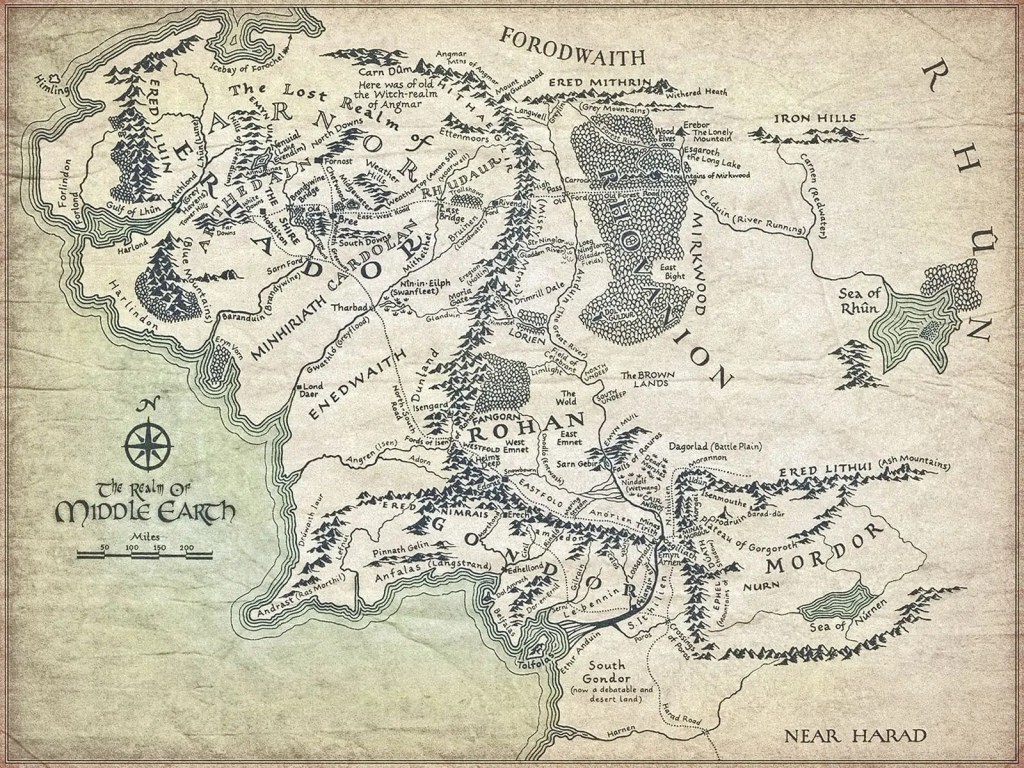
Tolkien’s Middle Earth

Boy, was I wrong!

I need your opinion on something, so bear with me. I saw a post the other day that really got me thinking about supplemental materials in immersive storytelling, and now I’m happily hip-deep in Lord Of The Rings lore and can’t get enough. So I’ll want to ask you for your take, but let’s take a look at the post from The Bookish Elf:
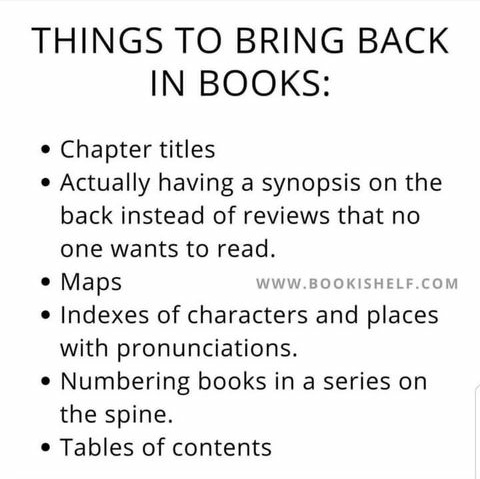
I’ve spent a lot of time looking into what makes stories work, what great writers and myth-tellers did with their structure, their connections, how they introduce them, and immersive techniques. And I’m not sure how I missed this, or how I got the opinion that character lists at the front of a novel are for kids or Shakespeare but not for today’s ‘serious writers’. But I did.

I always had this nagging sense that as much as I hated books with too many characters that introduced them poorly, or with poor distinctiveness between them, that I still shouldn’t include character lists up front because no one does that. I’ve quoted George Lucas before with his intentional introductions of the cast in Episode 4: A New Hope because I think it’s genius:

I could not get out of my mind that poetically speaking I really wanted to have this clean line of the robots taking you to Luke, Luke taking you to Ben, Ben taking you to Han, Han taking you to Princess Leia. I wanted each character to take you to the next person.”Star Wars: The Annotated Screenplays

Outlandishly successful pulp author, Lester Dent relied on what he called ‘tags’ for character distinctiveness:

It means the character is equipped with something that the reader can readily recognize each time the actor appears on the scene. A simple example of an external tag for purposes of illustration might be the one-legged old rascal in Treasure Island. The wooden leg is the thing that is remembered…” -Lester Dent in 1940 essay, Wave Those Tags

Dent described tags as peculiarities of appearance, manner, voice, clothing, hobby, and so on. I thought about this when I read (or re-read) Dickens’ Pickwick Papers, where the gentlemen all have their own distinctive quirks. I saw it in the Dostoevsky’s Brothers Karamazkov as each brother was brought onto the stage. My point here is this sort of wordcraft of character introductions and distinctiveness was where my head’s been at forever on this point of supplemental materials.

Then I started reading Games Workshop’s Black Library and experienced The Horus Heresy (or at least seven books in the series, it’s a lot to get through!). I used those character lists constantly, flipping back and forth to see who someone was. I’m not saying their characters aren’t distinctive or introduced properly at all, just that life’s busy and there is a lot competing for my attention. If people read books straight through without interruptions, maybe I’d feel differently about the difficulty of keeping fictional paper-people separate in my head.

But I found those character lists up front to be tremendously helpful, like a guilty pleasure that I appreciated but maybe shouldn’t.

Then I stumbled across a few Lord Of The Rings nerds on Youtube who were spelling out all the connections and backstories in Tolkien’s towering intellectual achievement. Honestly, I’d always viewed those adventures the same way I might a random Dungeons & Dragons adventure – just beasties those hapless folks come across without patterns or histories and a winding, questy adventure tale. I’m into Tolkien’s, The Silmarillion now, and can now say definitively that nothing is random, that everything is connected flawlessly, and everything…absolutely everything…has a backstory.

And a map.

I wrote Tearing Down The Statues and the Salt Mystic Sourcebook and Core Rules without a defining map. I mean, I knew generally where these places were located, and major landmarks and visuals as I told the tales. But the definitive layout, the connections, who and what exactly were located adjacently and through what sort of lands….nada. Hadn’t seen the point of defining it that clearly. I liked the openness of it.

But the deeper I went into Tolkien and his miraculous achievements, laying the template for all worldbuilding to follow, it struck me how important all those connections are. When I sat down to stitch together all the histories and geographical references in the published tales and the game cards, in the character backstories on the art, it opened entirely new tales based on the geographies. Seriously, it feels like a Renaissance with huge new possibilities, just because I’ve defined the map itself. Amazing. That’s as a writer, I can imagine the utility for the reader even more so.

And that’s the question for you for today – what say you on the inclusion of maps, character lists, maybe even pronunciation guides for character or place names in books you’re reading?

I’m generally curious, and it would help set my direction. Just reply here or on the Facebook Page. You can email me directly if you like, as some of you do (brian at grailrunner.com).

Let me know what you think. Till next time…
So Gene Wolfe Got Me Thinking About Connecting With Stories…

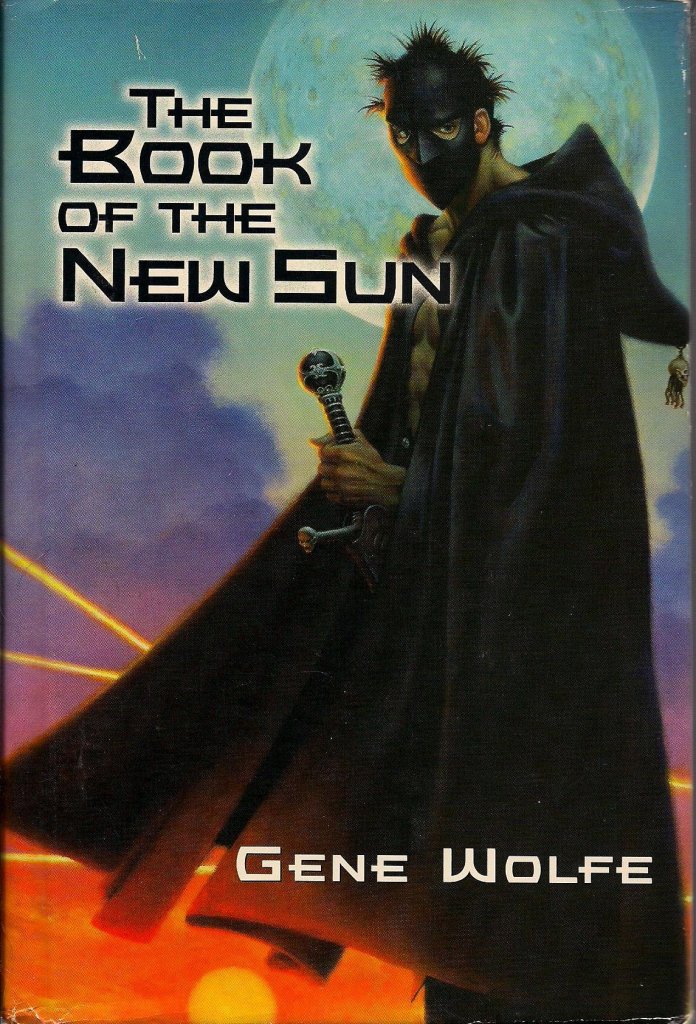
If you’re a science fiction & fantasy person, you’ve maybe heard of Gene Wolfe’s Book Of The New Sun. It’s a four-part series, tracking the story of a dude from a guild of torturers in a future world, but one degraded into a fantasy-style medieval setting. Armor and swords and whatnot. The reason I bring it up is kind of interesting.

Give me a second here. There’s a larger point about why we stop reading books after a page or two, and why we keep going.

Anyway, people in the know brag about this series like it’s Tolkien or the Bible or Dickens. They go on and on, writers whom I respect very much and who should know dregs from riches. If they say it’s worth the read, even though it’s dense and uses esoteric words that look made-up but are actually in the dictionary (when you bother to look and don’t just skim past hoping they’ll make sense in context), you figure you should give it a shot. Well I did. Four times.

Four separate times, I tried to start reading the first book, Shadow Of The Torturer. “It’s mind-blowing”, they said. “A masterpiece”. I had not found it to be so. In fact, I tried some other Gene Wolfe books (in the library so I wasn’t blowing money on things I expected to hate) trying to see the big deal. I couldn’t do those either. So I figured this dude just isn’t the beans for my java and moved on.

Let me put just a little flesh on the bone before we move on here: The opening scene seemed to me to have some typical fantasy-trope band of misfits at a gate of some kind, whispering about how to get inside. Or something. The word choices were exotic, the descriptions dense, and I hate plain-vanilla bands of misfits doing fantasy thieving stuff. It’s. Been. Done. I honestly never got anywhere with that first book because it seemed like tired content, done in an unnecessarily obtuse style.

I listen to a lot of disparate things when I go running at the lake. Seriously, it’s all over the place. Here’s a good one, if you’re into Harlan Ellison, a collection of all his Sci Fi Buzz appearances called ‘Harlan Ellison’s Watching‘. It’s great to hear him rant or get excited about something, then have the ability to fast forward with a Google search to see what became of it.

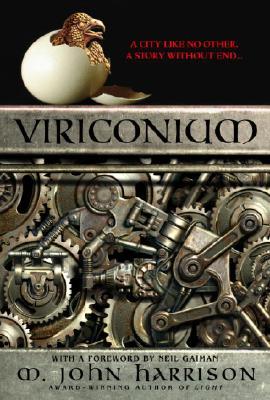
But I came across these two intelligent, informed gentlemen, discussing at length one of my favorites…a set of pieces collectively called Viriconium by M. John Harrison.

Here, just click this one to listen to these two, it’s hypnotizing: Books Of Some Substance with guest Brett Campbell of doom metal band, Pallbearer.

I’d never heard of ‘Books Of Some Substance’, nor have I listened to anything from a doom metal band from Arkansas (and likely never will), but Viriconium‘s one of the great ones. That’s a life changer, at least for me. It gets in my head. I can’t read it without it changing how I think, how I choose my words. Harrison’s a genius at mood-setting, at impressionistic fiction, at sending your mind off to flights of fancy. Maybe not of telling a story – he’s not great at that. But otherwise, a true work of art there. These two gents had a fascinating chat about Viriconium, so I heard them out on that count. And towards the end, when these two had completely won me over with a rich, insightful conversation that encourages you to think maybe they’re not all Snapchat-addicted neanderthals out there, the doom metal guy mentioned Book Of The New Sun.

Well crap. He said if you really like Viriconium, you’ll like that one too. He said it’s set in the far future where the old technology is literally a toe-scratch below the dust and shards of decaying cities. He said it was amazing.

So I took a fifth go at Gene Wolfe’s supposed masterpiece. I kept an open mind, telling myself this isn’t a piece of Dungeons & Dragons fan fiction or a bajillionth clone of Tolkien, that the exotic words can be skipped or considered in context without constant jaunts to the dictionary, that this very intelligent, insightful doom metal person who held a series I cherish in such high regard was telling me to give it a chance because it holds some of the magic that Harrison’s work does. He earned my trust, so I dug in with as open a mind as possible.

And honestly, it’s pretty good. They weren’t D&D-style thieves at all, but apprentice torturers. That scene was short and not at all what I thought it had been. They were young trainees basically, and this was going to have elements of coming-of-age tales. It’s super easy for me to connect with coming-of-age tales, especially when they hint up front at the great heights to which this person will reach (as this book does). I like to examine their choices, to question whether I’d make them as well, to see where external factors advanced their cause and when they seized their own fortunes alone. I saw this after a few chapters, beyond where I’d stopped those previous times.

The word choices remain exotic and annoying, but they add flavor and atmosphere, which was his point I imagine. I understand there will be an element of the unreliable narrator as I proceed, so I’m on the lookout for nonsense he pitches at me. We’ll see how that goes.

My point today is just to hand you a few links you might find interesting, and to suggest that our preconceived notions of what a book is about can throw us off the rails, that our impatience and lack of attention span can cheat us of some great tales, and that when you find reviewers or podcasters or other folks whose opinions you trust, maybe listen to them with an open mind.

If you’re into Gene Wolfe’s works, shoot me a note and let me know what you think. I’m anxious that this series will fail me at some point, but so far so good.

Till next time, guys.

Dreams are engines. Be fuel.

The Well Of Ideas: My 2nd Century Crazy Uncle

delphi206

“You are truly home only when you find your tribe.” Srividya Srinivasan

What if I told you there’s a book I go back and read in random places, not even straight through, that doesn’t have a plot, written by a guy who lived 1,800 years ago that wasn’t that great a writer? But I go back over and over because he’s just interesting to me…he liked the same sorts of things I like. He saw things I can’t because they’re long gone. When somebody at a market said there was a cool statue up on the mountain hidden in a grove that you had to climb to see, this guy was up for it. He collected stories. He thrilled at history and listened for hours to old people chatting up about gods and sea monsters and miracles. His name was Pausanius. He has some things to teach wordslingers; but I’ll get to that in a bit.

Let’s back up. When I was in the Navy, me and a couple of other guys had a day in Spain to do whatever we wanted. One of us had spent a semester there and thought he knew some cool places to see, so early morning in a train station we were squatting over a map pointing at things and waiting on him – his name was Keith – to make his pitch on how we should spend this one day we had. One day, get that. Then we’re back to sea for months. Kind of a big deal to get this right.

He said Antequera was the place. Had to go there. Was awesome. When we asked what was awesome, he got vague and lost our confidence. Sounded like he was drawing a big blank and had drunk his way through that semester. But we hopped on the train anyway, with big dreams of seeing something we could tell stories about later. As the train passed a gorgeous valley and some amazing hiking trails and cityscapes I, at least, was really feeling down about the call we’d made. What in Antequera could compete with this?

So the train dumped us off at a desolate wooden platform with a dusty road leading up an empty hill like an old western movie, with a sign saying the next train back would be back at the end of the day. So we’re pissed at Keith, but trudged up the dirt road anyway. And it was one of the best days of my life. Jaw-gaping cathedrals, unearthly Catholic processions, Moorish ruins, some beautiful stone university, probably the best ice cream I’ve ever eaten, and the most amazing view of a harbor from a hillside I’ve ever seen. Pausanius did stuff like that; but he wrote what he saw in excruciating detail to capture fully the ruins and statues and art of his day. He was just always interested.

An example: “A road goes from here to a Sanctuary Of Asklepios. In the colonnade they keep an enormous sea-monster’s skull, with a statue of the Dream-god behind it and Generous Sleep lulling a lion.”

Another: “On the brow over the theater is a cave in the rocks under the acropolis, it has a tripod on it and inside Apollo and Artemis are slaughtering the children of Niobe. I myself have seen Niobe when I was climbing the mountains to Sipylos. Niobe from close up is a rock and a stream, but if you go further off you seem to see a woman downcast and in tears.”

At Cerynea describing a sanctuary of the Euminedes, the furies so terrible to look at that murderers or impious people were said to go mad from terror if even allowed to see the images, Pausanius said he had a look; and the images were made of wood and weren’t that big or scary to him. I think that’s funny.

At Phigalia, he described a sanctuary of Euronyme that wasn’t easily accessible and in a thick grove of cypress trees. Once per year the villagers would open the sanctuary for sacrifices to Artemis. The image was wooden, bound with golden chains, and showed a ‘woman to the hips but below that of a fish’. Some dude carved a mermaid; and these people worshiped it as the goddess of the hunt.

Pausanius is just full of cool sights and stories about all the great stuff he’d seen; and he was always on a journey somewhere. A freaking free spirit, man! I stole at least three locations or ideas from him for my first book, but just recast them in a science fiction setting. The guy’s writings are my muse sometimes; and I really enjoy letting him riff on whatever crazy Greek myth or absurd intrigue tale he feels like spinning. Like a crazy uncle.

What he’s telling aspiring writers is to chase down vague hints of wonders when they show up. Go see something if it sounds inspirational. Let the sights breathe and soak into you. For me, the real lesson of all this – the reason I honestly wanted to sit down and write this out for you – is you should find your own crazy uncle. Is there a book you go back to over and over, to wash over you and that brings the ideas running like a stampede?

I could say the same thing of M. John Harrison’s Viriconium series or Italo Calvino’s Invisible Cities. No idea what those are about, though I’ve spent hours wandering around inside them. They make me happy; and they put pictures in my head. What on earth more could you ask from crazy uncles? Go find one.


Chance Favors The Prepared Mind: Where Do Writers Get Their Ideas?

inspiringwallpapers_net-fantasy-warrior-girl-with-blades-1366x768

Louis Pasteur said that ‘Chance favors the prepared mind’; and that’s a fantastic quote. His point, I’m assuming, is that your mind is your instrument or your weapon, whichever metaphor does it for you. Whatever you’re up to in life, bathe yourself in stuff that will help you get better at it. Let cool, helpful things soak in. Then you’ll be luckier because you’ll notice opportunities you might not have otherwise.

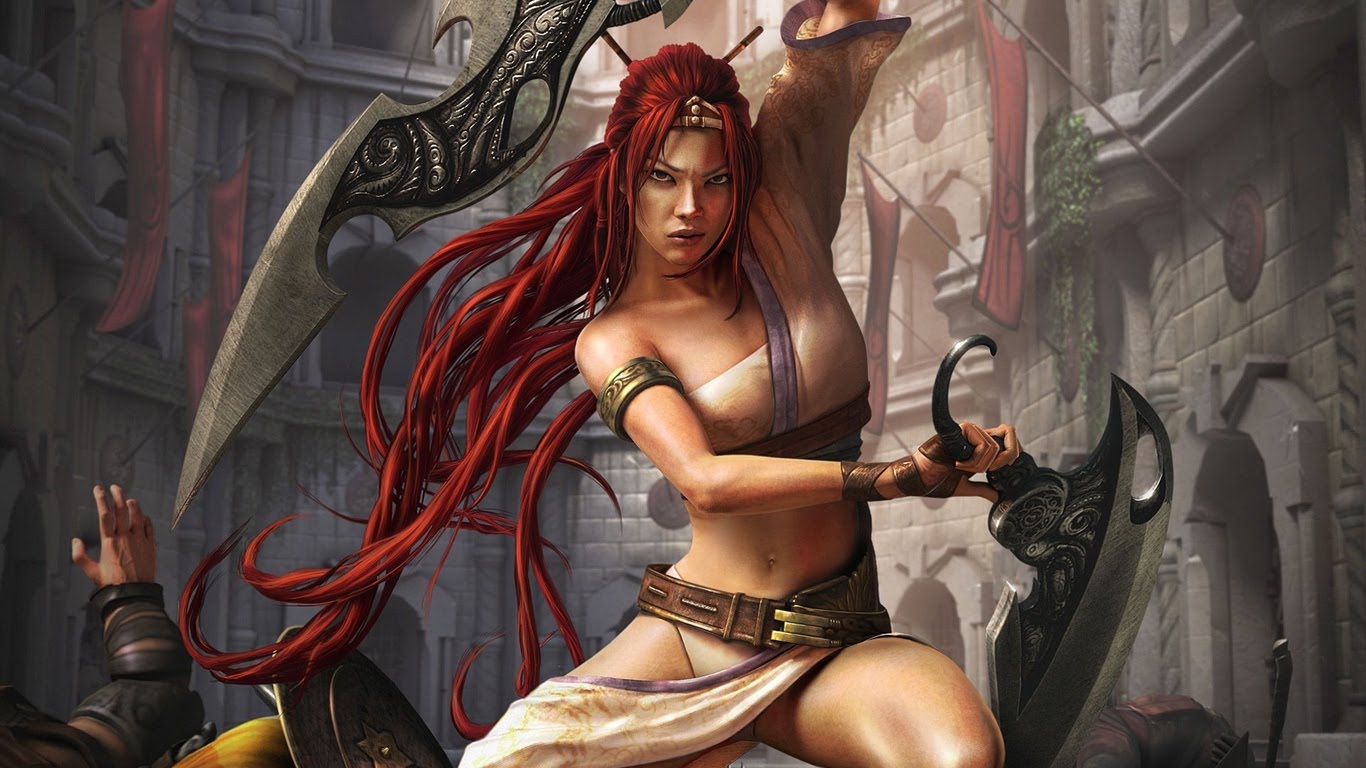
So what does the hot warrior goddess picture I’ve attached here have to do with that? I’ll get to her in a little while. Go with me here.

Recently, I was thinking about where writers get their ideas. People ask that literally all the time. I bought a book years ago called, ‘It Came From Schenectady’ by a science fiction writer plagued by the question so often he started giving that answer when people asked him. Schenectady. That’s maybe a little funny. If you’ve read even a few articles on this blog, in fact, or the philosophy, it hopefully shines through that breaking ground in speculative fiction is kind of a big deal to me. I want to do whatever I can for myself and for other aspiring writers to BRING NEW THINGS INTO THE WORLD.

So I was turning that over in my head while coincidentally making my way through a book on the ancient city of Ugarit. This was a cosmopolitan city full of diverse folks and multiple languages, flourishing in 1500-1200 BC even though it was sandwiched between two superpowers of the day: Egypt and the Hittite Empire. My aim was to learn about the city and what life was like there; but the notion of finding story ideas was buzzing louder, so I was finding them on almost every page.

The theme in my head was very helpful to the writer in me; and it was this: just look for the strain on people. When there is some kind of tension set up, pulling on a person, there is a story to tell. I saw it in the tension between the two superpowers tugging on Ugarit. I saw it in the 1930’s race of archaeologists and linguists trying to be first to decipher the newly found script. I saw it in the very architecture of the city itself.

For example, the main city itself had two massive temples, one to Dagon (head honcho) and one to Baal (fertility guy, had sex with a cow while hiding from the god of death), with a library in between. The palace was on the other side of town and was bigger than the temples. There was a very rich guy named Rapanou whose house had thirty four rooms and his own library. I went dark for a few paragraphs as my mind wandered to the image of a teenage priest in training, leaned against one of the big temple statues and staring up at Rapanou’s house jealously, maybe wondering about one of the daughters who lived there. Maybe one of the statues would start speaking to him one full-moon night…

A few pages later, I came across this bit:

“Priests also had a military function, as is clear from references to them in administrative texts describing auxiliary military personnel; they are also listed in an army payroll text. Their role was that of support personnel, providing advice of a religious or oracular nature to military commanders. They were, in other words, an intelligence corps, purporting to provide divine counsel with respect to strategy and military operations.” -‘Ugarit And The Old Testament’ by Peter C. Craigie

That got me going on my little guy, because I saw him caught up in a rebellion against the Hittites, when all he wanted was to be left to his stone tablets and dreaming. I could see war-ragged army generals desperately shouting for divine insight into a hairy battle when the little priest was coming to doubt his own beliefs. Maybe because of something the statues had said. Maybe because of something Rapanou’s wild daughter had said.

You see how this just kind of gets going, right? Spitballing. Weaving together stuff from everywhere like a jazz riff on whatever I’m reading or whatever I’m doing. That’s how it works for me. The book had just described the little port towns on the sea as having no more than maybe a hundred people in them. I know what little rinky dink towns are like; and so, probably, do you. Then I read this:

“It’s possible that naval conscripts were drawn from the coastal towns where men would already have seagoing experience in merchant and fishing vessels”

I saw a new guy, then, who’ll probably meet up with the other guy. This dude loved his quiet little foggy port-village, though he maybe dreamed of adventures…then he got pulled into this same conflict the priest was in. Now I had a couple of folks stirring into the soup, and the possibility  of massive naval battles, which I love, and talking statues that had offered a mystery of some kind. I’m also reading Patricia McKillip’s “Riddle Master” trilogy, so probably the statues had offered a riddle.

But it was still kind of plain, needed to go crazy. Needed something with pep. Riddles have been done. So I totally lost whatever I was reading and just put it down to ponder…what is REALLY going on with this mysterious riddle?

Ahhh…I had watched a couple of Harry Potter movies over Christmas, so Voldemort’s horcrux dealie-o was in my head too. The riddle was not given to the priest to help him at all, it was given him to become alive…to be spread among the minds of men enough to form a vessel for something to enter into. Something, obviously, terrible.

The warrior goddess up there was to represent Anat, the terrible war goddess of the Ugaritic Mythology who used to storm the throne room of the all-father so angry he would hide from her, and who would tear off so many soldiers’ heads and gut them with such glee she should laugh as she waded through all the blood. You should read some of Baal’s cycle of stories where she appears. She’s fantastic. Maybe it’s her that started all this riddle business, just because she’d be fun to write.

Like a late Christmas present, I realized then that history handed me a nice finish for all this. Around 1200 BC, Ugarit got blasted from history by a mystery invasion of people from the sea. We know almost nothing about all that. Fantastic. It writes itself.

Look, I’m never going to write this story. If you’d like to, have at it. Be my guest. It’s fun to dip into it, though, and make my overall point for today.

If you’re stuck looking for ideas…or if you’re interested in where (at least some) writers get their ideas, remember I said this: look for the strain on people, the forces tugging a person in more than one direction. Bathe yourself in fiction or non-fiction, or travel, or talk to people, or whatever information you can get lost in, and dig up things that shine. Then string them together and turn up the gas.

What I’m hoping…what I aspire to do…is not to forget that last part. Be original. Turn it up to crazy and do something new.

Louis Pasteur changed everything about disease and healing when he did what he did. His quote is a sound one. Let’s live it.


The Coffee And Book People Are Still Out There

book for posting.jpg

“You don’t have to burn books to destroy a culture. Just get people to stop reading them.” -Ray Bradbury

I travel a lot for work; and it’s easy to get the impression that nobody freaking reads anything anymore. It’s disheartening, man. I want to tell stories – there have to be people out there who want to unplug and hear them! This Thanksgiving, I got into a fairly cerebral chat with some family folks (I didn’t start it, honestly, was just munching chocolate pecan pie and it sort of happened!). It got me thinking, so I’ll hit you with the thought to see where you stand.

I don’t run into many people from day to day who get far beyond Youtube tutorials and whatever management book is in flavor rotation, so when this chat started, I thought it was going to go my way. Wife’s uncle leans over like he’s telling a secret and says,

“I understand you’ve published a book.”

Okay, cool. We can talk about that. And we did. He got a copy, says he’ll read it. I’m in. But somehow the whole conversation veered into the nonfiction he typically reads. Also cool, I read plenty myself. But I got the gist he never reads fiction at all. I’m back where I started. He’s not going to like the book, I know that already. But guys, I just can’t sit down and write a biography about Lyndon Baines Johnson. It’s never going to happen. We covered LBJ in more detail in that conversation than I’d have guessed you could. Apparently the man was complicated.

I enjoyed the conversation, actually. Yet it sent me off on this idea that if most folks do sit down to read, I’m not running into the type that want to get totally lost in an imagined world with gargantuan ideas, flash-bang battles and clashing intrigue. That’s my thing, man. I can’t get enough of getting lost in a great book where sometimes I have to look up and ponder something I read. That’s my baseline for when I’m writing – I want to engineer that. Every time.

Jump ahead a few days. Christmas shopping on-line. To be honest, I was actually looking for cool stuff to put on my own Christmas list so my wife doesn’t just get me more Doctor Who merchandise. Was reading reviews of the Kindle Paperwhite to see if I should go back to e-ink screen readers. Page after page of folks who are apparently of my tribe – talking about the lake, the beach, camping, trains, in bed at night, by fireplaces, in hotel lobbies. Awesome people who love a great book. I was feeling better.

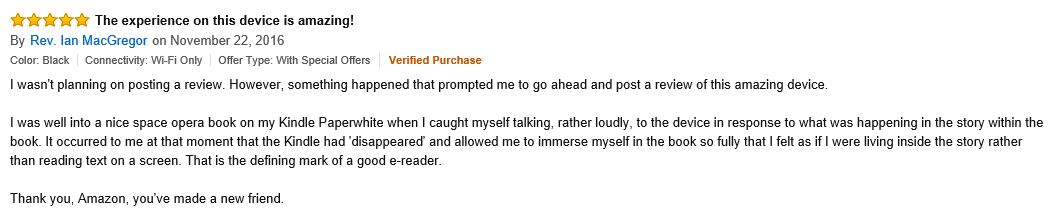
Then I found a guy who put a Cheshire Cat grin on my face. He’s your kind of guy too. Check this out.

capture

If you can’t read the image, here’s the text:

“I wasn’t planning on posting a review. However, something happened that prompted me to go ahead and post a review of this amazing device.

“I was well into a nice space opera book on my Kindle Paperwhite when I caught myself talking, rather loudly, to the device in response to what was happening in the story within the book. It occurred to me at that moment that the Kindle had disappeared and allowed me to immerse myself in the book so fully that I felt as if I were living inside the story rather than reading text on a screen.” -Rev. Ian MacGregor

Let’s dissect this guy for a second. He was ‘well into a nice space opera book’. Wow. Already my buddy. The man was actually talking to his Kindle. I can’t say I relate to that; but this guy is one of my favorite people on the planet now. He was talking loudly to his Kindle. And he got totally lost in the story. Whatever the crap this dude was reading, I’d like to know. The Reverend MacGregor is not only in my tribe, he’s the goll-darn shaman!

So what do you think about the future of fiction? Interesting, ground-breaking fiction that pushes cool intellectual or narrative boundaries, I mean…not gobbledygook thrillers that software will eventually write, optimized through the bestseller list algorithms. Try this quote on for size:

“The reading of all good books is like a conversation with the finest minds of past centuries” Rene Descartes

I hear you, Rene. But who are we going to have these conversations with?

Using A Wordcloud To Examine How You Write

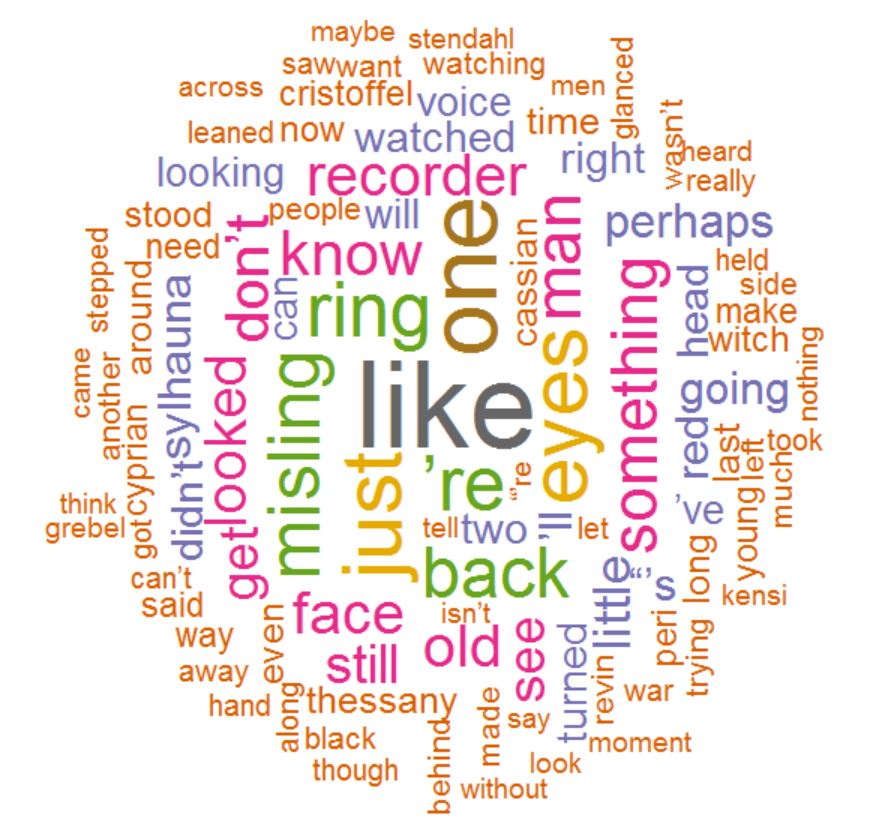
Here’s a wordcloud on the full text of a book I wrote. I’ll tell you what it tells me in a minute. For now, just scan over that blob yourself and see if anything stands out for you. wordcloud

Anyway, a wordcloud (incase you’ve not run into one of these yet) counts how often words repeat in something and builds a picture like this – bigger words here repeat more often. The whole picture gives you a comparison of word choices.  You set a cutoff frequency count, so it isn’t every word in the document. Make sense?

In my day job, one thing I do is study and optimize how people communicate with each other. This sort of blob here calls me out on a few things I do that maybe I should be careful about, and maybe I should keep doing. Either way, there are insights into the word choices and emphases I made in the book. That’s a big deal if you’re a writer, to help you get better. Know what I mean yet? Let’s dig in, I’ll get to the meat of it.

Staring at me like the eye of Sauron (nerd reference!) is the word, ‘like’. I also know from my day job that the majority of us think and learn visually and that we absorb information quicker and more effectively when we can relate to it naturally. Parents get that point well without being told – tell a kid not to cross the street and they’ll bound away as fast as they can. Tell them a scary story about a kid named, Lulu who used to live down the street and looked just like them but crossed without waiting on the ‘walk’ sign and can’t get up from her chair anymore…no more problems with crossing the street. Is that wrong? Maybe. Effective? Try it yourself. When I’m building a scene as a writer, I probably use too much simile and metaphor, too much comparison, to burn my pictures into your head. It’s why that word is showing up as the biggest repeater. If I’m going to stick by my philosophy of emphasizing comparisons, I need to balance the word choice on that, not overuse it, and be careful not to mix one metaphor in the same paragraph with another. Good advice, right?

I notice in yellow the words, ‘just’ and ‘eyes’. Since I’m emphasizing the visuals, I do tend to describe facial expressions quite a bit. I want it to feel like a movie as you’re reading it. We process and can relate to human faces probably more than any other image. It’s why the words, ‘looked’ and ‘face’ are showing up in red as well. Because these are among my heavy hitters, I need to be careful not to overuse them. Honestly, I was shocked to see, ‘just’ there. I need to go digging on that one to see if it’s okay what I’m doing. My point here in this post isn’t that everything showing up as a high frequency word is a bad thing, just that it’s something to be aware of. Tells you where to go looking to see if it’s all right. Get me?

The two main characters are named, Misling and Ring. They’re showing up as heavy repeats as well, which makes sense. I would have thought Misling would have outpaced Ring, so that was a surprise to me. The storyline of the book is heavily influenced by events from a previous generation, so that’s possibly why you see, ‘old’ and ‘man’. When I saw the word, ‘back’ here, it made me curious. Apparently, in my zeal to make you see what I was writing, I spent some effort in describing ‘glances back’ and whatnot. Better watch that.

So that’s all I was going to suggest to you for this post, if you’re a guy that slings words for fun or cash. I would honestly never go back and edit something I’ve written because of something like this. It’s more like a personal growth thing for me to have yet another perspective on how I’m constructing things…to be aware of what I do so I can control it better.

I put this wordcloud together in R with the ‘tm’ and ‘wordcloud’ packages; but I believe you can do things like it easily with sites like, ‘wordle’. I’ve not used them myself. Give it a shot and see what your own cloud tells you. May surprise you!