Haiku Moments: Rewiring How You See The World

When I was a teenager in Tennessee, I had this spot on a mountain bluff I would go to that overlooked the valley. It was a really beautiful place, at least to me. I’d string up a hammock and read or just hang out. One day after a short summer rain, I noticed some ants struggling to push a raindrop out of their little hill’s opening. For whatever reason, the drop wasn’t collapsing and stayed round and clear. And it’s crazy to think after this many decades gone by, I can still see that weird little moment that lasted less than a minute: a tiny little group of 7 or 8 ants pushing against a raindrop.

Stick with me a moment here. I have a suggestion for how to refresh your mind and open a new world of thoughts for you.

I recall another time in some random airport, I saw a young man, short and nervous, clutching his little sea satchel and looking at his dad. The dad was a rough-looking fellow, tattoos on his neck and arms, wrinkled and tanned skin. He had his hand on his son’s arm, giving him some kind of advice. I stole that moment and put it in the background of a novel I was writing it was so striking to me.

Just this week at the beach in Destin, Florida I saw a tiny little boy who I imagine had only just learned to walk, wearing his little white sun-hat and long-sleeved shirt with his tiny legs still bowed out leading the way for his grinning dad following. I’m so used to seeing parents pick little ones up and direct them, but this little guy turned to his dad, stuck an arm and finger awkwardly out forward, and pointed the way he was headed just before he determinedly took off. It was hilarious.

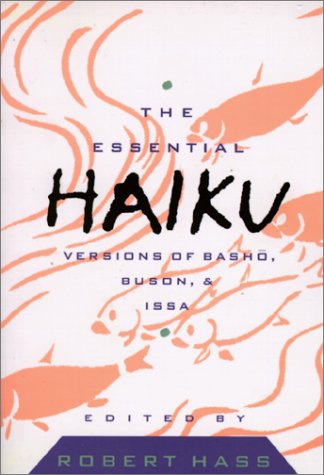
Here’s where I’m headed with this. Go get this book. It’s called Haiku Enlightenment, by Gabriel Rosenstock.

If you sometimes get a little weary of the same old streets, the same old buildings, and if politics or social media circuses are making the world seem just a mean place to you, then there’s a thing I try with myself that might help you too. In my day job as a consultant, I study and manipulate how people view themselves and their work. I’ve studied cult tactics and brainwashing. I’ve studied propaganda and manipulative tactics in media. I’ve worked professionally in change management and the creative process for over 25 years. In many ways, I’ve monetized studying how people think and applying what I’ve learned. What’s the big secret in all that?

Our brains are neuroplastic, meaning we can rewire how we think in a surprisingly short period of time with some effort and the right inputs.

Rosenstock’s book is beautiful, and a nice tool for you to use should it intrigue you – this thought of rewiring how you see the world. I imagine all Gabriel is trying to do with this book is make you see how beautiful haiku moments are and how to write some for yourself. I had no interest in writing poetry, but instead took this as a chance to adjust what information I was paying attention to in my surroundings (and more importantly, what I was NOT).

I’ve written about haiku here on Grailrunner before. Issa is my favorite now – dude went through some stuff and was still funny and poignant and timeless. Rosenstock’s book highlighted several poets that were new to me, which is great. I suggest if any of this resonates with you that you give a think to the sorts of things that are adding stress or negativity to your life and purposefully shoo them away as they pop up and make a very intentional effort to become a hunter of haiku moments – whether you intend to write them down in a poem being irrelevant.

What’s a haiku moment?

It’s a single, striking moment, often seen in nature or among people, where you realize something larger. It’s sometimes beautiful but doesn’t have to be. The point is it’s a tiny little story in an image, a whole vista of insight and wisdom in a single flash.

I promise you – these are everywhere in your life. Pick up Rosenstock’s book or something like it and absorb a little more about what makes for a haiku moment, then start hunting for them. Write them down, even if in prose. Keep a notebook of them so they’re pinned like butterflies for you to admire later.

If you see any cool ones, grab them and send them my way. I’m always interested in bursts of universal insight. You can sell that.

Till next time,

Interesting Shapes: Altered Perceptions Through The Arts

“Interesting shapes” What in the world does that mean? (I’ll come back to that)

Our passion at Grailrunner is the imaginative process, any and every thing that can unlock new ways of creating mind-melting concepts and experiences with a bent towards speculative and fantasy fiction and images. We experiment with immersive storytelling in wargames, in roleplaying games, through a fusion of art and flash fiction, in novels, and in art prints.

On a personal level, as the guy generating practically all of that, I have to spend a ridiculous amount of time developing new skills. Recently, I’ve broken out the old sketchbook and Faber Castell pencils, bought a Pigma brush pen, and started going deep on Youtube with some modern day masters of the arts to get to a point where I’m not just painting in Photoshop over photobashed composites or renders from Daz Studio or Blender.

What’s the dream?

Because I love the awe and surprise of exploration, of not knowing what lies beyond a turn in the road, I’m hoping to get to a point where I can crack open a sketchbook and not just draw what I see, but generate something in simulated three-dimensional glory dredged from my imagination without knowing what I was going to draw when I sat down. Ideas from there would feed the hopper of more purposeful art images and concepts in the fiction and games. (I did this as a child and filled countless sketchbooks, but it was all 2-dimensional super heroes, heavy outlines, terrible shading, and nothing I’d be excited to show anybody).

Is that dream possible?

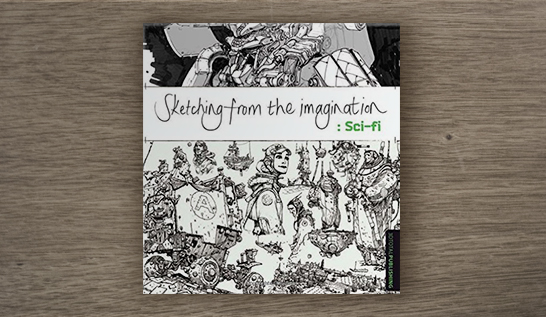
This little gem is called Sketching from the Imagination: Sci-Fi, by 3dTotal Publishing, and though it’s a few years old by this point, it will melt your face off if you’re at all into what I’m talking about here. There is some incredible talent in here. They’re doing it.

Also, these guys at ImagineFX (which is free on Kindle Unlimited now, if that works for you). One thing I especially appreciate about this magazine is the artists explain their desk setups, their materials and software, and their thought processes as they create.

What does all this have to do with “altered perceptions”?

It started with Leonardo Da Vinci’s notebooks, actually. I bought a compilation of them in a used book store in Florida and perusing them, noticing he spent a lot of time talking about the importance of an artist developing their “mental library”. I forget what he called it, but the idea was to look at the world differently and actually notice things like how light falls on an object, how light reflects off the table, where exactly shadows fall. File all that away so you can draw on it in different contexts when you need it.

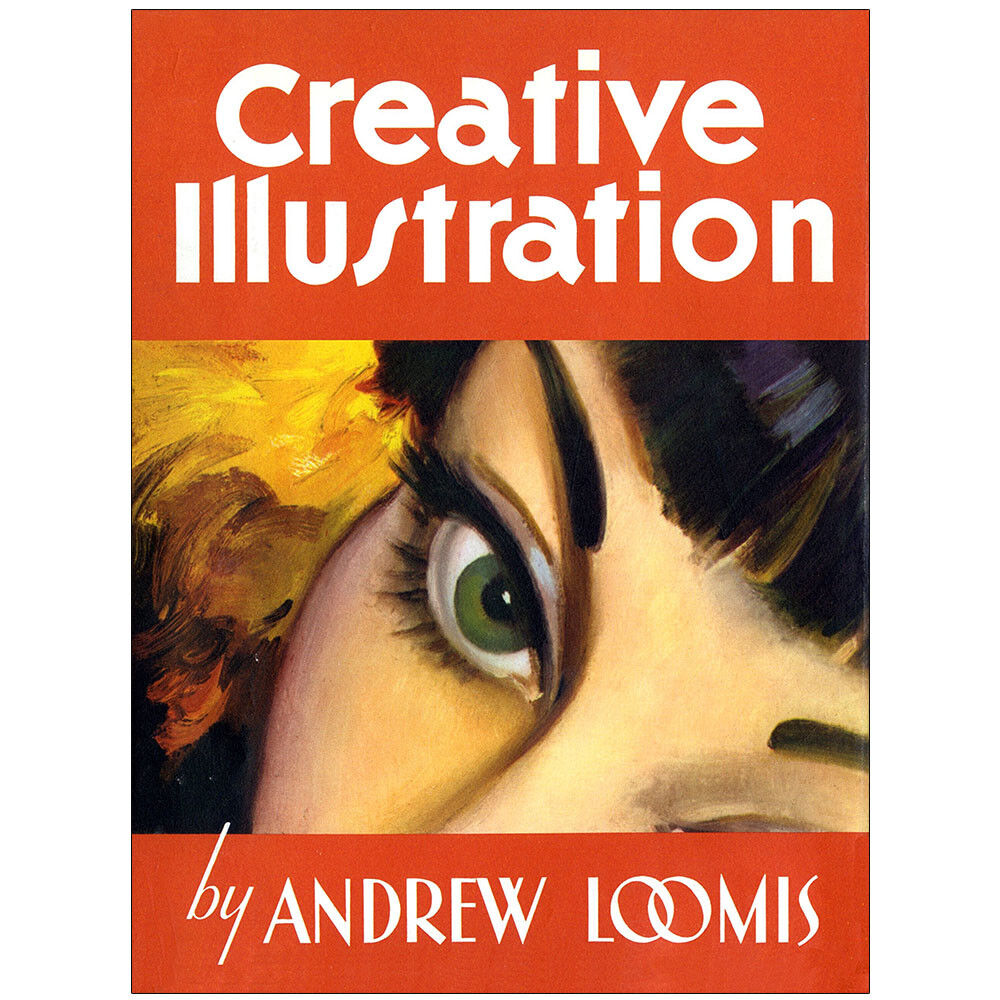
And there in one of the most influential art instruction books ever written, Creative Illustration by Andrew Loomis, he made the same sort of point. One of the first exercises he suggests is to simplify multiple scenes at random and find the “flow” in them. He saw things in terms of basic curves, ovals, and swirls and something like a person just standing there, to Loomis, was a flowing curved line. It made it easier for him to represent it simply and beautifully on the page. Yet, it’s an entirely different way to see the world, which is my point today.

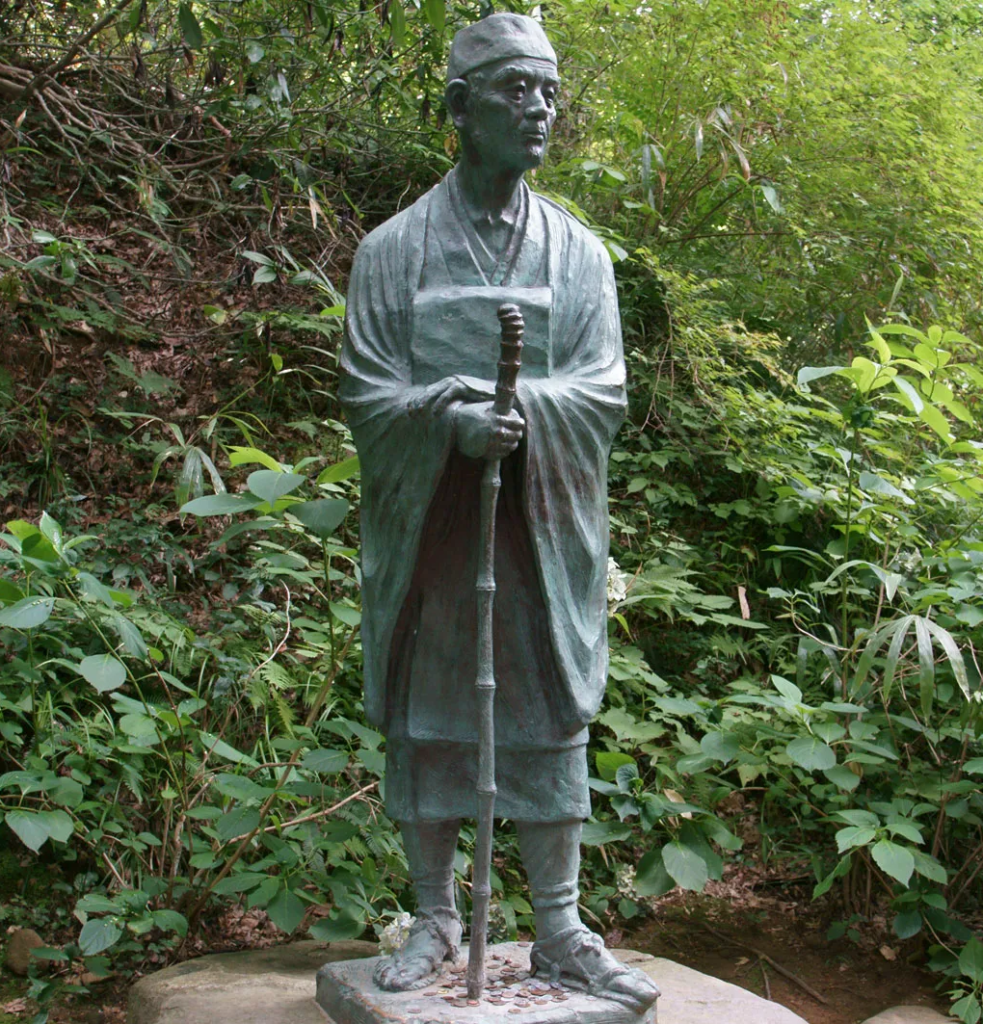
I’ve written here before about the visual power and intellectual punch of haiku. My hero in that world is an astounding 17th century genius named Matsuo Basho. This guy:

I’m reading (again) his poetry, this time in some translations by Andrew Fitzsimons, finding all kinds of new and striking illuminations there. One particular comment by Andrew caught my eye: he referred to Basho as one of the greatest “noticers” of literature.

“Noticers”

That struck me. Basho noticed things. Here:

The old pond

A frog leaps in

The sound of water

That’s his most famous one. For me, it’s not something I would pay a lot of attention to on my own, but just having him point this out – a little frog plopping in to a murky little pond, making that pleasant BLOP noise on a quiet morning – that’s just a relaxing and pretty thing now that I think about it. Basho points things like that out. He notices them and files them away for future contexts, including how it made him feel to see or experience it.

This past weekend, I was in the Smokey Mountains in Tennessee with my wife and stared longer than I should have at a little mossy tree root that had made its way out into the brook, just thinking about this sort of thing. Today, I noticed the way the sunrise light filtered through a bright orange autumn leaf, making it almost glow. Crazy.

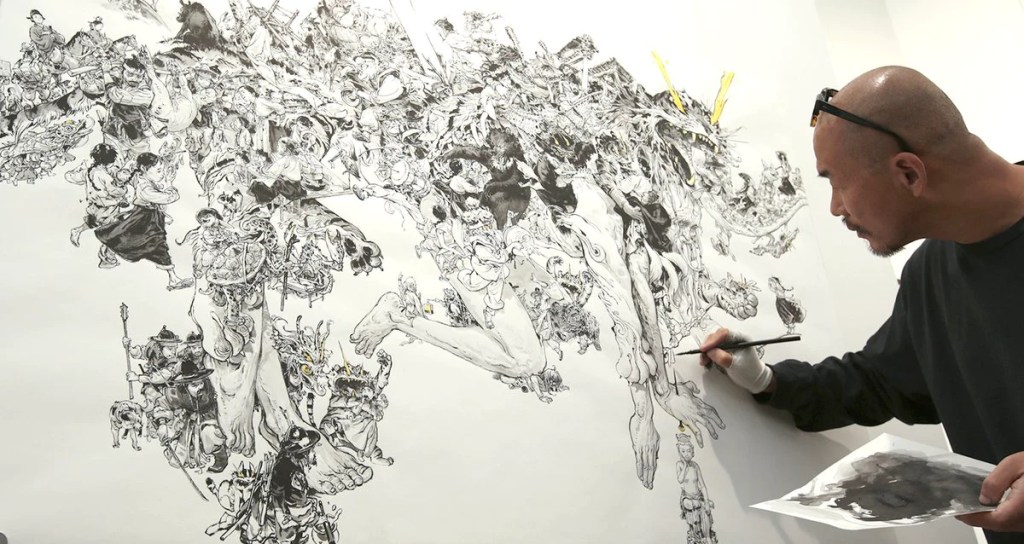
And then I found this guy, Kim Jung Gi. Please google him and watch and listen to a freakishly talented and wonderful human being! There are countless Youtube videos. Enjoy yourself watching him go nuts with a brush pen. Sadly, he passed away last year (and the world has lost something truly amazing).

He talked at length about how he looked at the world, things he noticed and filed away about how they look, how shapes curve, what geometries caught his eye, and the textures. Again, not things I’d pay attention to otherwise without someone pointing at it. We make mental shortcuts all day long – in fact, it’s how our minds work – and artists just focus their attention on things you and I might not because they know they’ll need those things later.

In my day job as a consultant focused on management behaviors and people interactions, that sort of thing plays into our daily lives practically every waking moment. One thing I do to explain that is ask an audience the color of the walls behind them or the pattern of the carpet. Nobody knows, and that’s my point. We’re shortcutting and letting information pass by us that doesn’t matter. We have to.

But what that means is there is untapped capacity to see things differently, to alter our perceptions.

And that leads us to Peter Han. This fellow, you need to meet.

Here’s his Instagram. Here’s his website. Here’s a demonstration of him just riffing on the paper. That’s him, grinning at you in the header image for this article, surrounded by some of his work.

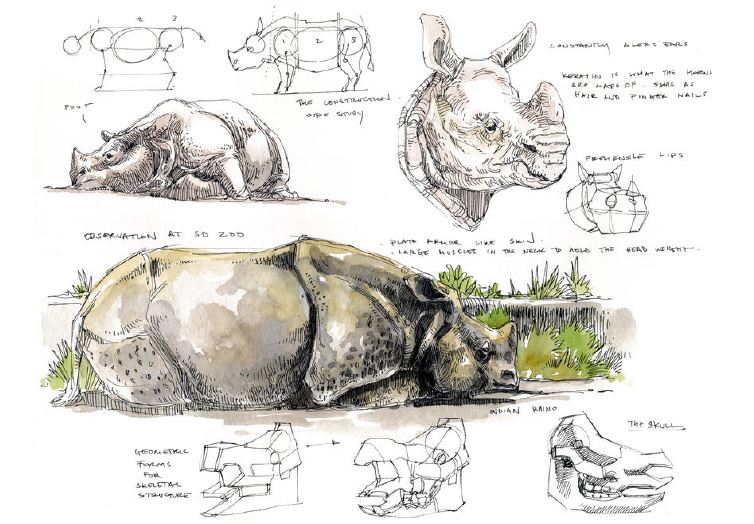
He sees the world like this:

Peter has an inspiring story. He’s been drawing since he was 5, and had an extremely influential teacher when he was studying art (Norm Schureman). Norm apparently impacted him so much that, even with Norm gone now (shot in a senseless and tragic act), Peter has based his life’s work on some of the approaches he learned back then. He’s built a little empire of teaching people like you and me to model any scene at all in terms of basic shapes to get the structure and proportions and silhouettes correct. After that, it’s just shading and texturing, if not also color.

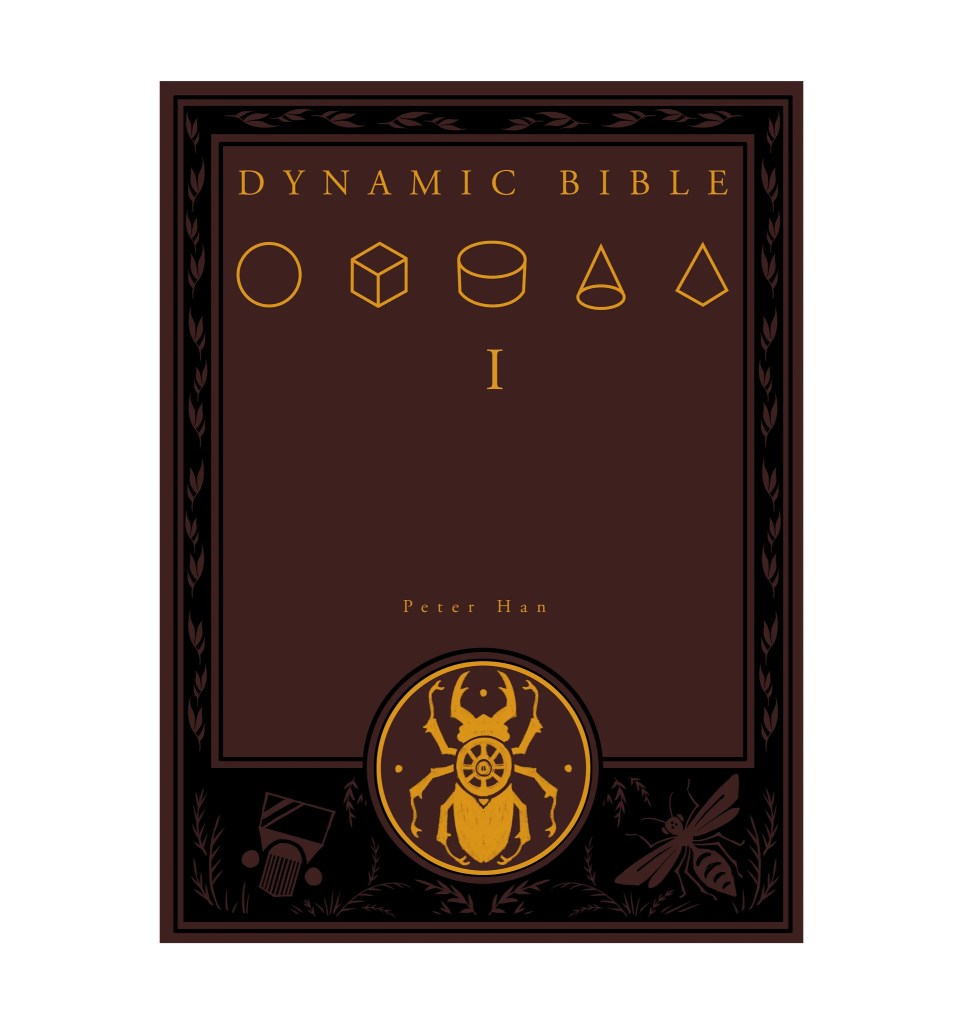
Here’s a sample of a wildly interesting book he’s written and illustrated he calls The Dynamic Bible. But you should really buy yourself the full copy available here.

What are we supposed to take away from all this?

Watch and listen enough to people like those guys highlighted in ImagineFX and Kim Jung Gi and Peter Han, and you’ll hear them talk about “interesting shapes” they encounter in their daily lives. They don’t just see a cricket, they see some fascinating geometry in its belly or legs that has something they appreciate about it. They don’t just see a sunbeam trickling through a dusty window onto a stairway landing, they see its fabric-like ripples and where it fades to one side but gets brighter on the other.

They may not just hear the frog jumping, but experience it more deeply and with more meaning than others.

My point is that’s the sort of untapped perception capacity we can all unleash, with a little focus and determination to do so.

A whole new way to experience the world! That’s what I’m getting at here. Something different and exciting to adventure with.

Cool, huh?

Till next time,

Imagery With Teeth: Learning To Write For Millenials From Treehugging Haiku Poets

1565561

Call me a dork if you want; but haiku is like a cherry Starburst for me. When you’re in the mood and they’re just right, it’s like a shot of happiness straight to your cortex. My point here is going to be that this poetry form and its old masters have plenty to teach a 21st century wordslinger how to write fiction. Try this one, from Matsuo Basho (1644-1694):

A bee

staggers out

     of the peony.

No picture needed. The word choice is fascinating because the bug isn’t said to just be there; and its little hairs or whatever aren’t described. He says the little guy is staggering in the center of a flower after blasting down a bunch of nectar. If you’re at all like me – and this is one of his famous ones so I’m not alone here – then this image pops right into your head like zooming in with your iPhone. I basically stole this one for a Salt Mystic quote in chapter 5 of Tearing Down The Statues. Here’s another one I stole from (Sylhauna’s gift in chapter 9):

First snow

falling

     on the half-finished bridge

And another (chapter 9 again, referenced in the computronium ruins they sail past):

Summer grass –

All that’s left

     of warriors’ dreams

Give me a minute on this. Hear me out. We’re bombarded by pictures in all our entertainment now and have been for a while. Most of us think in pictures. We absorb information more quickly that way. Interesting images grab us as readers and stick around maybe even after the plot has faded. I read something from a cyberpunk guy (maybe William Gibson, not sure) way back in the nineties that I couldn’t begin to tell you the title or story or even the point of it all. I just remember a line where the narrator described some rain on a lake as ‘furring it over with needles’. The image popped for me and was really an interesting way to describe that. I saw it and liked the way he said that. If you’ll just stop playing around and go read either Viriconium or Light by M. John Harrison, you’ll see what I mean about crazy-cool ways of describing imagery that are uniquely wired to the way our brains work…basically interesting images that are pregnant with stories.

The classic example of an image pregnant with a story is the six word flash fiction (probably) wrongfully attributed to Hemingway:

For sale: baby shoes, never worn.

Ugh, man. That’s heartbreaking. Lean and straight for the jugular! Their baby died and never got to wear the freaking shoes. That’s awful. Usually haiku isn’t trying to rip your heart in pieces like that, but is often saying something more than what you’re looking at. How about this one by Kobayashi Issa (1763 – 1827):

     The old dog

leads the way

     visiting graves.

Dogs are always awesome. I can see a loyal little guy with his tongue hanging out and that fuzzy white fur on his snout, not even knowing this is a sad thing, being in the graveyard. Since he knows the way, he’s been there many times before. That leads my mind off into all sorts of imaginings about the dog’s master, and just which graves he’s going back again and again to visit. I may have to wipe my eyes here – hold on.

If we’re wired for images, if we absorb information more effectively and make it stick more effectively with images, and if a writer can successfully convey an important message through that mechanism – or at least resonate with an important theme, then the work has a shot at immortality in someone’s mind. That’s what this whole gig is all about, right?

Here’s what I get from all this:

  1. Stay lean, avoid a bunch of useless words that don’t add value
  2. Craft a striking image that’s memorable and describe it in a novel way
  3. Consider resonating the image with a theme from the story – make it mean more than the picture itself if you can

If you’re ever stuck for coming up with something, go steal from Basho and Issa. They won’t mind.