
“Interesting shapes” What in the world does that mean? (I’ll come back to that)
Our passion at Grailrunner is the imaginative process, any and every thing that can unlock new ways of creating mind-melting concepts and experiences with a bent towards speculative and fantasy fiction and images. We experiment with immersive storytelling in wargames, in roleplaying games, through a fusion of art and flash fiction, in novels, and in art prints.
On a personal level, as the guy generating practically all of that, I have to spend a ridiculous amount of time developing new skills. Recently, I’ve broken out the old sketchbook and Faber Castell pencils, bought a Pigma brush pen, and started going deep on Youtube with some modern day masters of the arts to get to a point where I’m not just painting in Photoshop over photobashed composites or renders from Daz Studio or Blender.
What’s the dream?
Because I love the awe and surprise of exploration, of not knowing what lies beyond a turn in the road, I’m hoping to get to a point where I can crack open a sketchbook and not just draw what I see, but generate something in simulated three-dimensional glory dredged from my imagination without knowing what I was going to draw when I sat down. Ideas from there would feed the hopper of more purposeful art images and concepts in the fiction and games. (I did this as a child and filled countless sketchbooks, but it was all 2-dimensional super heroes, heavy outlines, terrible shading, and nothing I’d be excited to show anybody).
Is that dream possible?
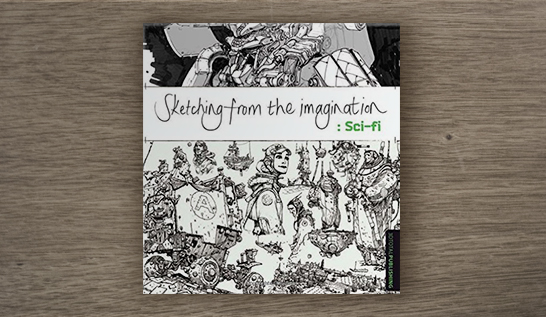
This little gem is called Sketching from the Imagination: Sci-Fi, by 3dTotal Publishing, and though it’s a few years old by this point, it will melt your face off if you’re at all into what I’m talking about here. There is some incredible talent in here. They’re doing it.
Also, these guys at ImagineFX (which is free on Kindle Unlimited now, if that works for you). One thing I especially appreciate about this magazine is the artists explain their desk setups, their materials and software, and their thought processes as they create.

What does all this have to do with “altered perceptions”?
It started with Leonardo Da Vinci’s notebooks, actually. I bought a compilation of them in a used book store in Florida and perusing them, noticing he spent a lot of time talking about the importance of an artist developing their “mental library”. I forget what he called it, but the idea was to look at the world differently and actually notice things like how light falls on an object, how light reflects off the table, where exactly shadows fall. File all that away so you can draw on it in different contexts when you need it.
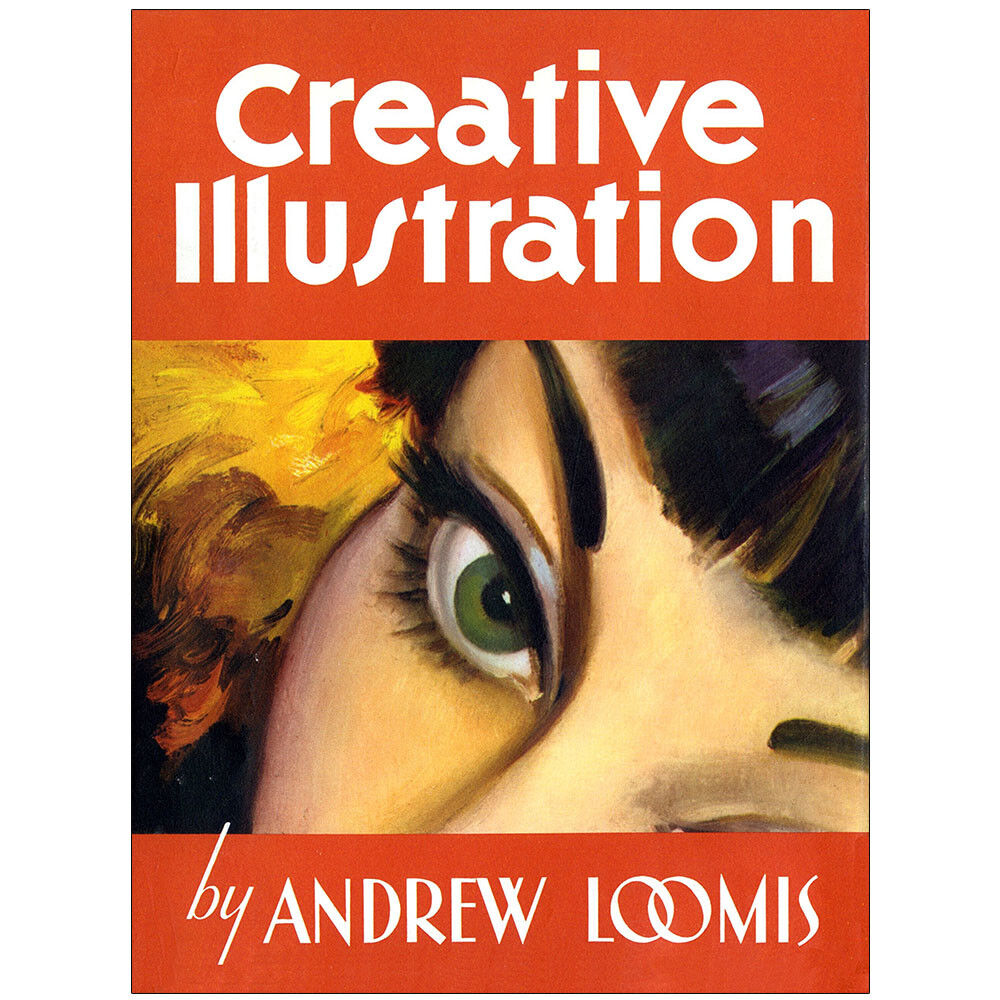
And there in one of the most influential art instruction books ever written, Creative Illustration by Andrew Loomis, he made the same sort of point. One of the first exercises he suggests is to simplify multiple scenes at random and find the “flow” in them. He saw things in terms of basic curves, ovals, and swirls and something like a person just standing there, to Loomis, was a flowing curved line. It made it easier for him to represent it simply and beautifully on the page. Yet, it’s an entirely different way to see the world, which is my point today.
I’ve written here before about the visual power and intellectual punch of haiku. My hero in that world is an astounding 17th century genius named Matsuo Basho. This guy:
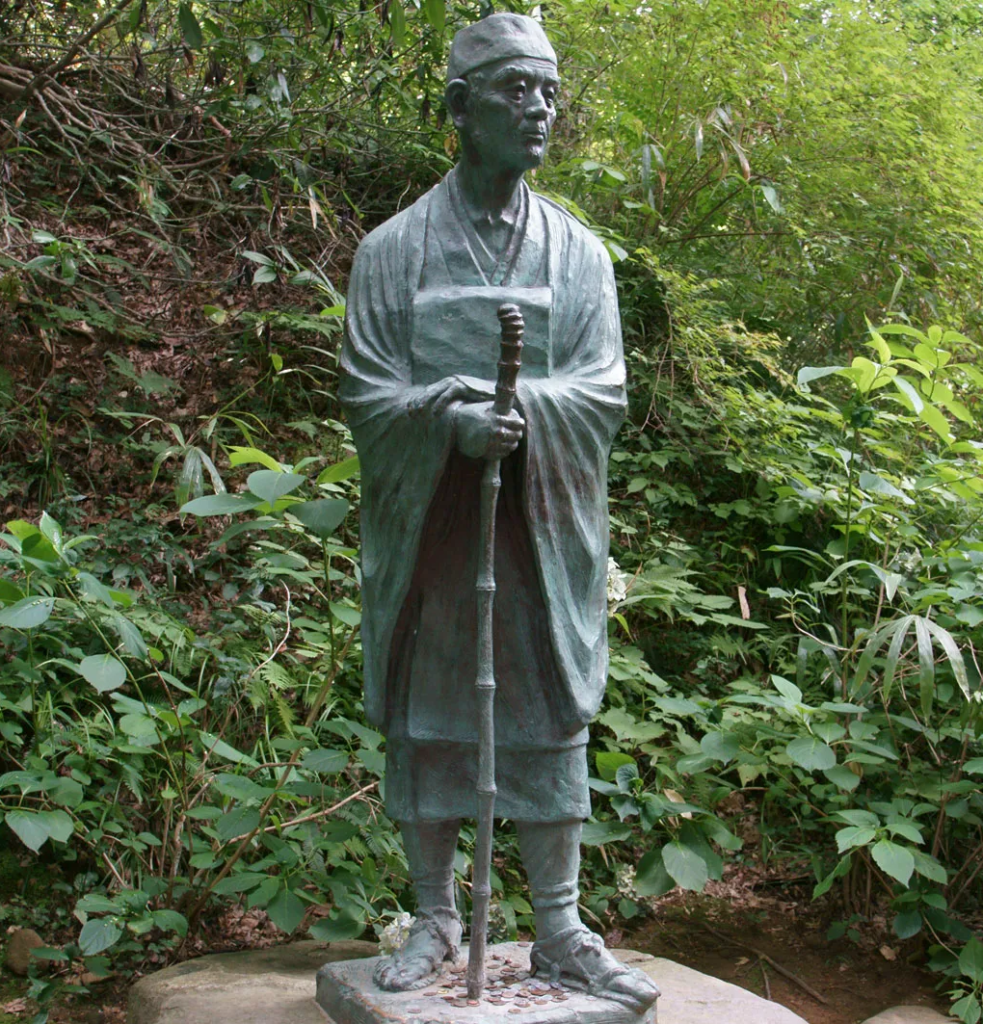
I’m reading (again) his poetry, this time in some translations by Andrew Fitzsimons, finding all kinds of new and striking illuminations there. One particular comment by Andrew caught my eye: he referred to Basho as one of the greatest “noticers” of literature.
“Noticers”
That struck me. Basho noticed things. Here:
The old pond
A frog leaps in
The sound of water
That’s his most famous one. For me, it’s not something I would pay a lot of attention to on my own, but just having him point this out – a little frog plopping in to a murky little pond, making that pleasant BLOP noise on a quiet morning – that’s just a relaxing and pretty thing now that I think about it. Basho points things like that out. He notices them and files them away for future contexts, including how it made him feel to see or experience it.
This past weekend, I was in the Smokey Mountains in Tennessee with my wife and stared longer than I should have at a little mossy tree root that had made its way out into the brook, just thinking about this sort of thing. Today, I noticed the way the sunrise light filtered through a bright orange autumn leaf, making it almost glow. Crazy.
And then I found this guy, Kim Jung Gi. Please google him and watch and listen to a freakishly talented and wonderful human being! There are countless Youtube videos. Enjoy yourself watching him go nuts with a brush pen. Sadly, he passed away last year (and the world has lost something truly amazing).
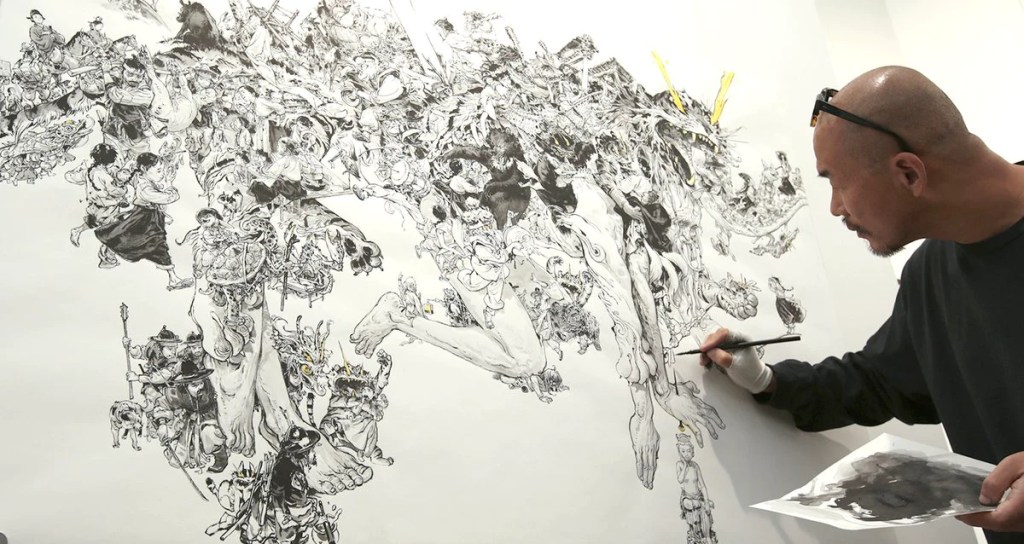
He talked at length about how he looked at the world, things he noticed and filed away about how they look, how shapes curve, what geometries caught his eye, and the textures. Again, not things I’d pay attention to otherwise without someone pointing at it. We make mental shortcuts all day long – in fact, it’s how our minds work – and artists just focus their attention on things you and I might not because they know they’ll need those things later.
In my day job as a consultant focused on management behaviors and people interactions, that sort of thing plays into our daily lives practically every waking moment. One thing I do to explain that is ask an audience the color of the walls behind them or the pattern of the carpet. Nobody knows, and that’s my point. We’re shortcutting and letting information pass by us that doesn’t matter. We have to.
But what that means is there is untapped capacity to see things differently, to alter our perceptions.
And that leads us to Peter Han. This fellow, you need to meet.
Here’s his Instagram. Here’s his website. Here’s a demonstration of him just riffing on the paper. That’s him, grinning at you in the header image for this article, surrounded by some of his work.
He sees the world like this:
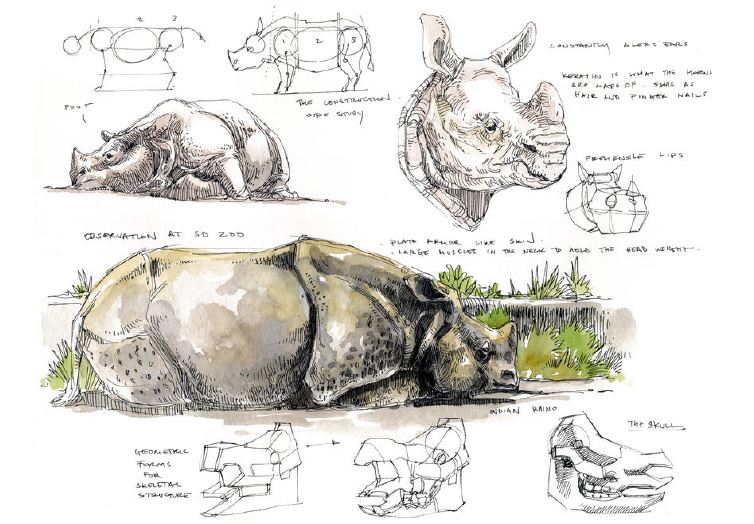
Peter has an inspiring story. He’s been drawing since he was 5, and had an extremely influential teacher when he was studying art (Norm Schureman). Norm apparently impacted him so much that, even with Norm gone now (shot in a senseless and tragic act), Peter has based his life’s work on some of the approaches he learned back then. He’s built a little empire of teaching people like you and me to model any scene at all in terms of basic shapes to get the structure and proportions and silhouettes correct. After that, it’s just shading and texturing, if not also color.
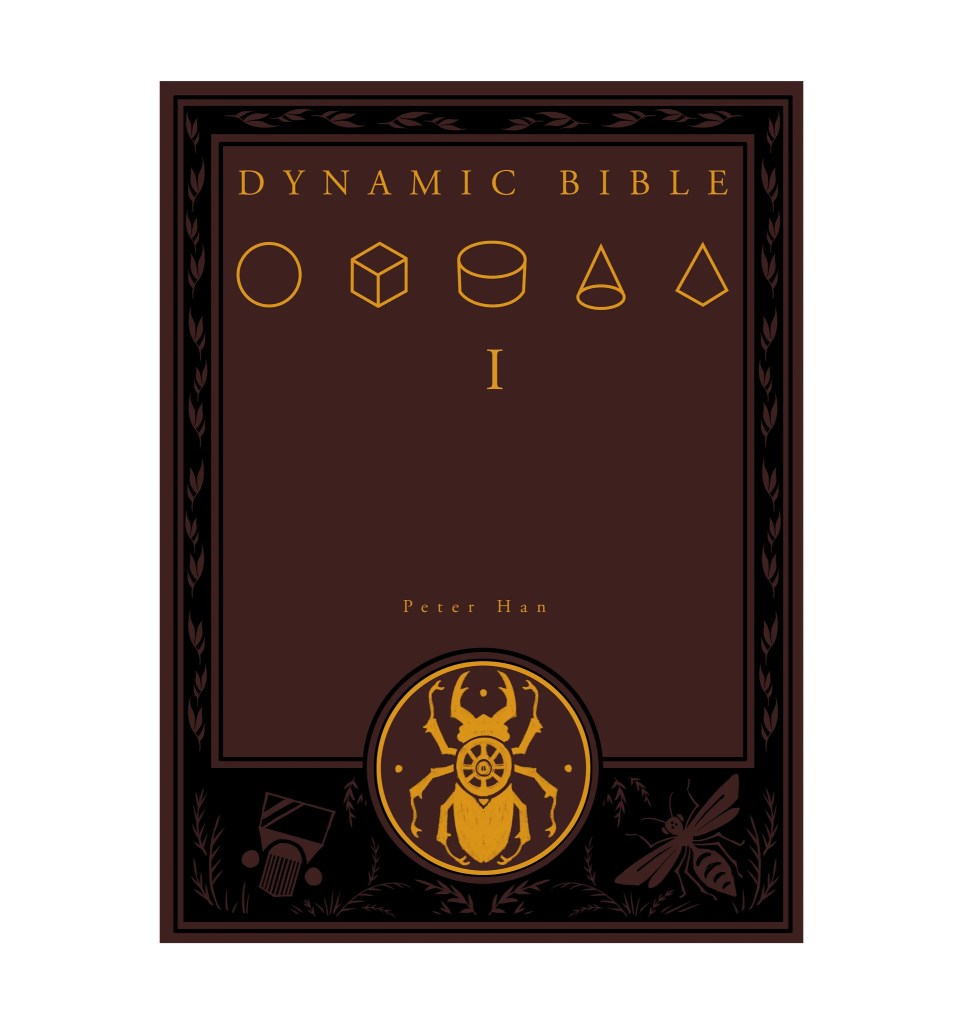
Here’s a sample of a wildly interesting book he’s written and illustrated he calls The Dynamic Bible. But you should really buy yourself the full copy available here.
What are we supposed to take away from all this?
Watch and listen enough to people like those guys highlighted in ImagineFX and Kim Jung Gi and Peter Han, and you’ll hear them talk about “interesting shapes” they encounter in their daily lives. They don’t just see a cricket, they see some fascinating geometry in its belly or legs that has something they appreciate about it. They don’t just see a sunbeam trickling through a dusty window onto a stairway landing, they see its fabric-like ripples and where it fades to one side but gets brighter on the other.
They may not just hear the frog jumping, but experience it more deeply and with more meaning than others.
My point is that’s the sort of untapped perception capacity we can all unleash, with a little focus and determination to do so.
A whole new way to experience the world! That’s what I’m getting at here. Something different and exciting to adventure with.
Cool, huh?
Till next time,

 Grailrunner Publishing