I’m swimming with stuff I need to get down in the lore for the Salt Mystic universe. There should be more time in the day and less need to pay bills.
Anyway, here’s the background if you aren’t familiar with the original IP we’re building here at Grailrunner called Salt Mystic.
A unique blend of western grit and fantastical science! Step into a far future world where artificial pocket dimensions hide untold mysteries, gunslingers duel with ball lightning, and colossal armies fight for their very survival. Get ready to embark on a boneshaking adventure that will test your courage and set fire to your imagination!
Salt Mystic is an immersive experience that seamlessly weaves together the rugged allure of a wild western tale but with the boundless wonders of science fantasy.
Today, we’re introducing a new threat to this rapidly growing world called the Justice Engine, and we’re doing it with an exciting new lore card, available for download free now!
What is a Salt Mystic lore card?
Smash the Story Arcade button below to see a description and to access all of them, but basically it’s a distinct fusion of art and flash fiction on a single page to build (brick by brick) this expansive new world.
Oh, Grailrunner, what have you done now?
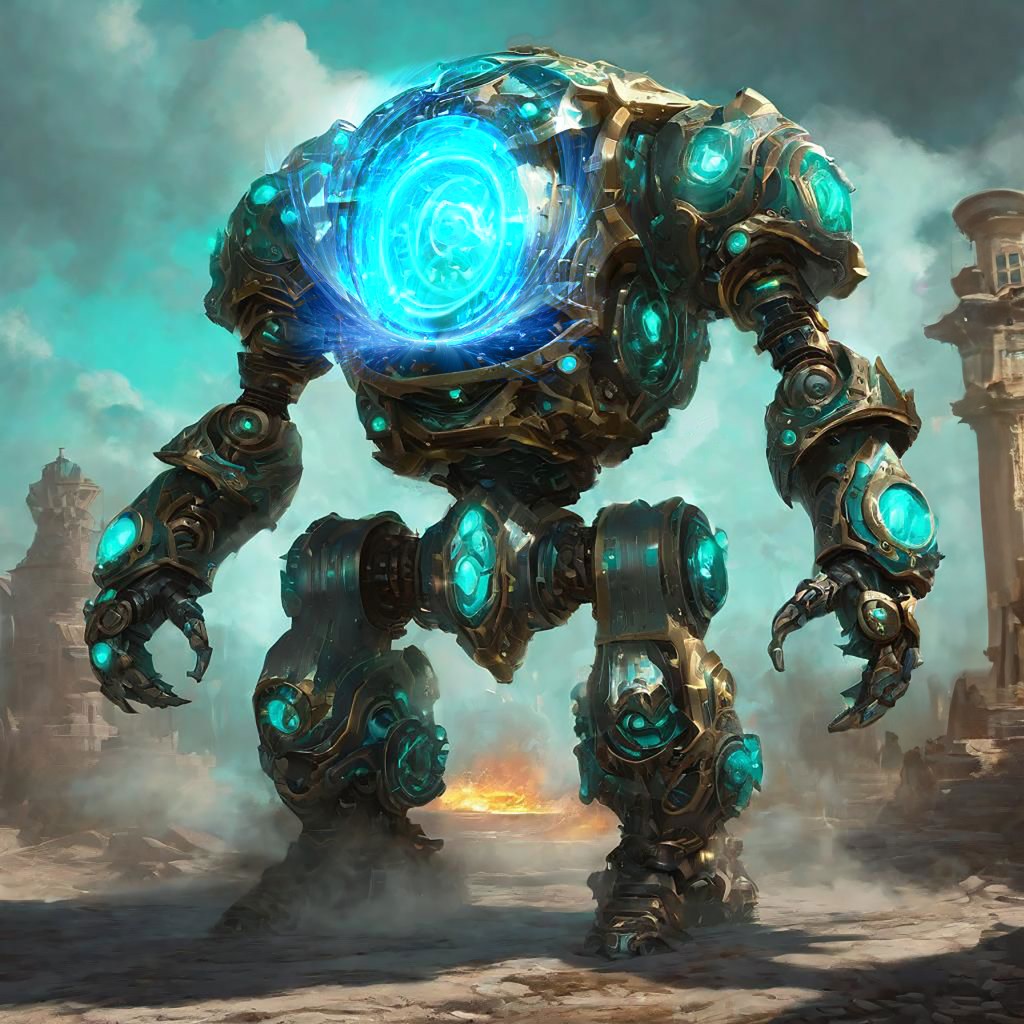
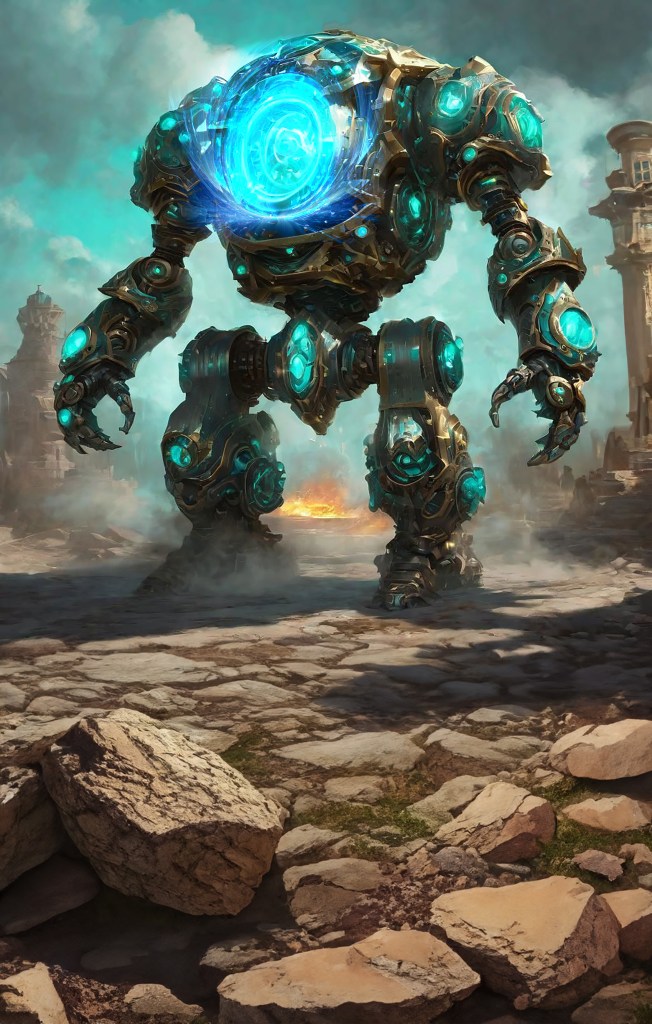
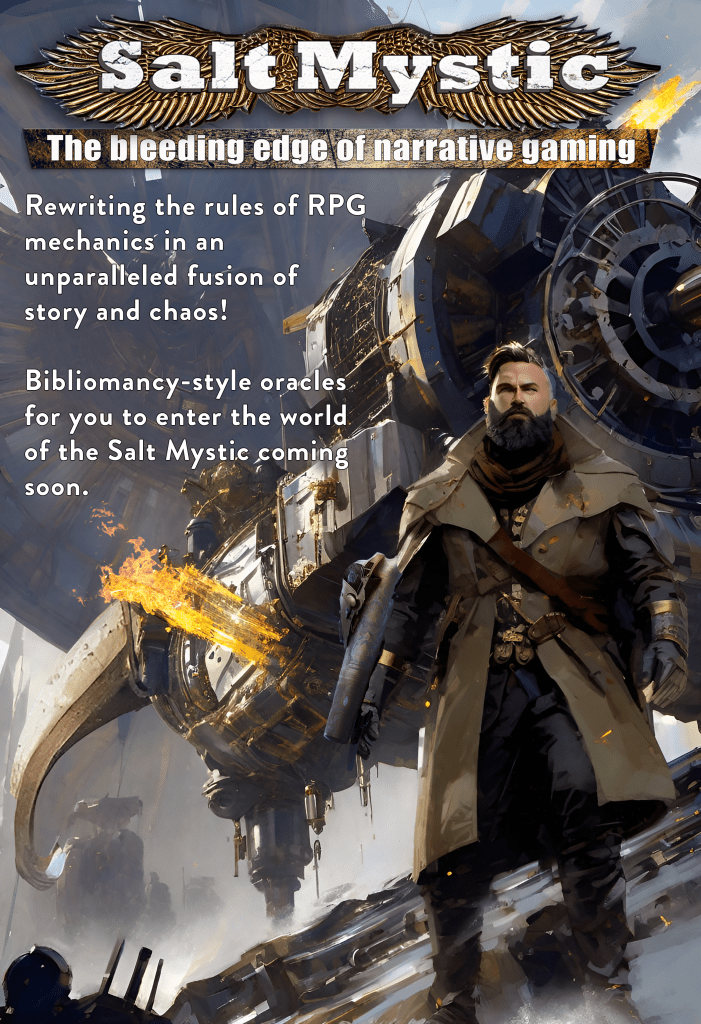
Oh, today’s a whopper! A doozie. A slam-fest to your noggin. It started with the art this time, and the vague idea of a wandering mechanical judge with a dimensional gate in its chest. You can see some of the image in the header and the full image below, though if you’re at all interested, why not just take a peek at the pdf in the Story Arcade?
The art is a photobash paintover, with the golem body itself AI-generated. I altered the background, mainly the tower on the right, and corrected some artifacts that came with it as well as added some clouds and sky. Then I added the rocky ground in the foreground to heighten the image for the card. The dimensional gate swirling was a handful of sparkly and lightning overlays in Color Dodge mode. The idea here is this thingie can just pluck you up and drop you into a pocket dimension should you be found guilty.
But it isn’t Robocop. I didn’t want some Hollywood-style robot going rogue with its own ideas of justice in a dystopian nightmare. There’s a twist to who’s doing the thinking with these and why they’re qualified to do so. There’s a reason they’re wandering these days, and it’s sad but maybe a little hopeful.
And all that is tied distinctly to the history of the Salt Mystic setting. I’m personally really proud of this one in particular, and I can’t wait to write it into something more ambitious.
Please take a peek at the lore card – shouldn’t take you more than a minute or two to read the text and get the flavor of this new beastie. And let me know what you think!
I really enjoy introducing new elements to the rapidly-exploding Salt Mystic lore. This one is a real joy for a number of reasons, so strap in and hold on! And welcome to the latest entry in the Story Arcade (smash the storyteller below to see all the cards in the collection).
Some context first:
We’re working on a new project for the Salt Mystic line to be called The Augur’s Book of Lots. We celebrated a half-way mark in that recently, which you can read about here. Bottom line: it will be a bibliomancy-style oracle supplement for tabletop roleplaying, meaning it’s a doorway to enter the Salt Mystic world using the rpg game rules of your choice (or none at all).
What this beast of a project requires is a massive amount of lore and concepts that provide danger, intrigue, exotic locations and a rich history to explore, which is exhausting and exhilarating at the same time! Also recently, I personally started getting back into my sketchbook to generate and interact with ideas as an engine to feed the project. You can read the inspiration for that here.
So my head is soup now.
Anyway, one thing I’ve noticed making my way through three volumes of 3DTotal’s marvelous Sketching For The Imagination series is that many artists mine random ideas from inspirations found in nature. Thinking highly of that notion, I found David Attenborough’s Green Planet on Amazon and honestly can’t get enough of it…that and various similar documentaries on Youtube. It’s left me with the sense that I’ve missed an incredibly rich source of ideas – adaptations in nature and the back-and-forth struggle to find food and reproduce in an environment of limited resources. So to convert anything to Salt Mystic concepts, we just crank everything to its max and add some weird science fantasy.
And a gunslinger. Always add a gunslinger.
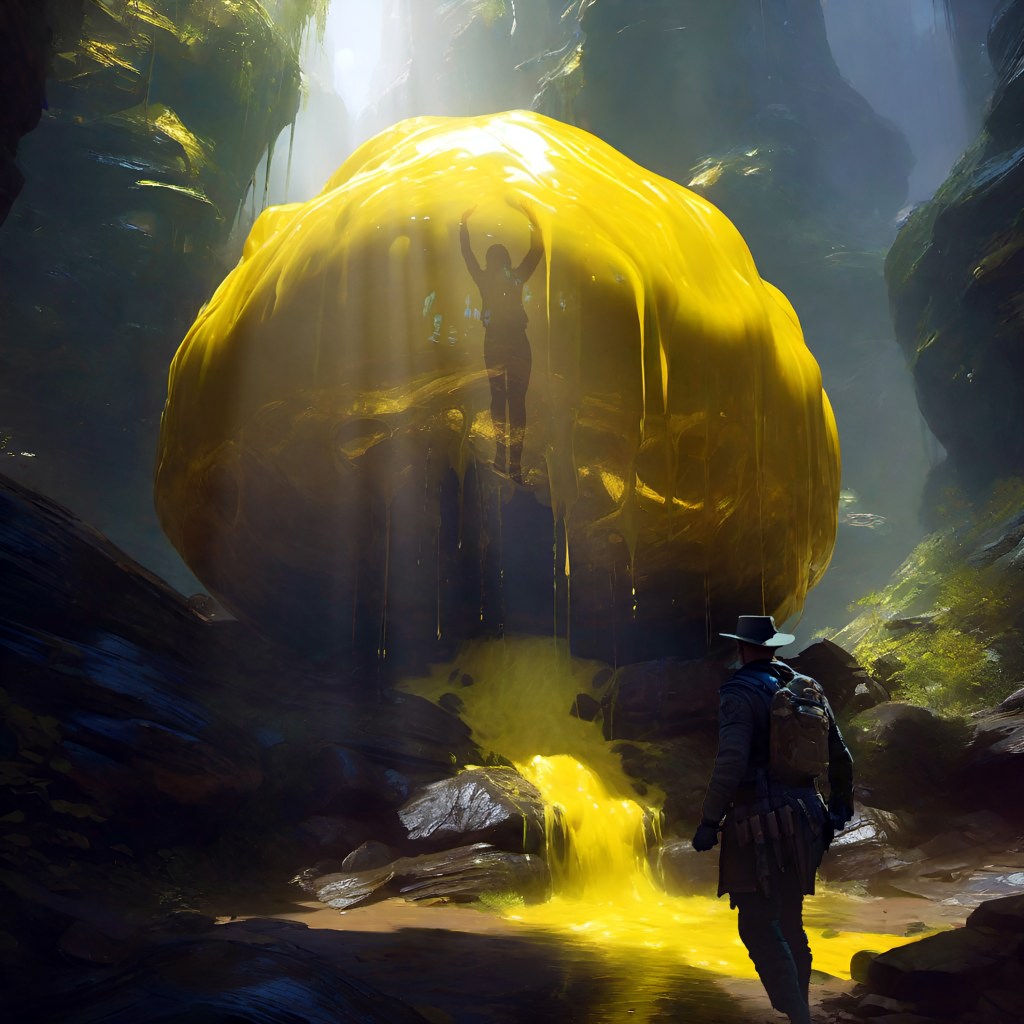
In the case of today’s highlight, the original inspiration was slime molds. And yes, I get that it’s a bit esoteric, but these things can optimize logistics problems and solve labyrinths! They pulse and locate food sources, at one point in the life cycle growing little stalks (called “fruiting bodies”…eww) to spew spores into the air. That sounds like a marvelous thing to have hapless adventurers come across, as long as it’s as big as a building and uses devious tricks to lure and consume delicious wandering heroes.
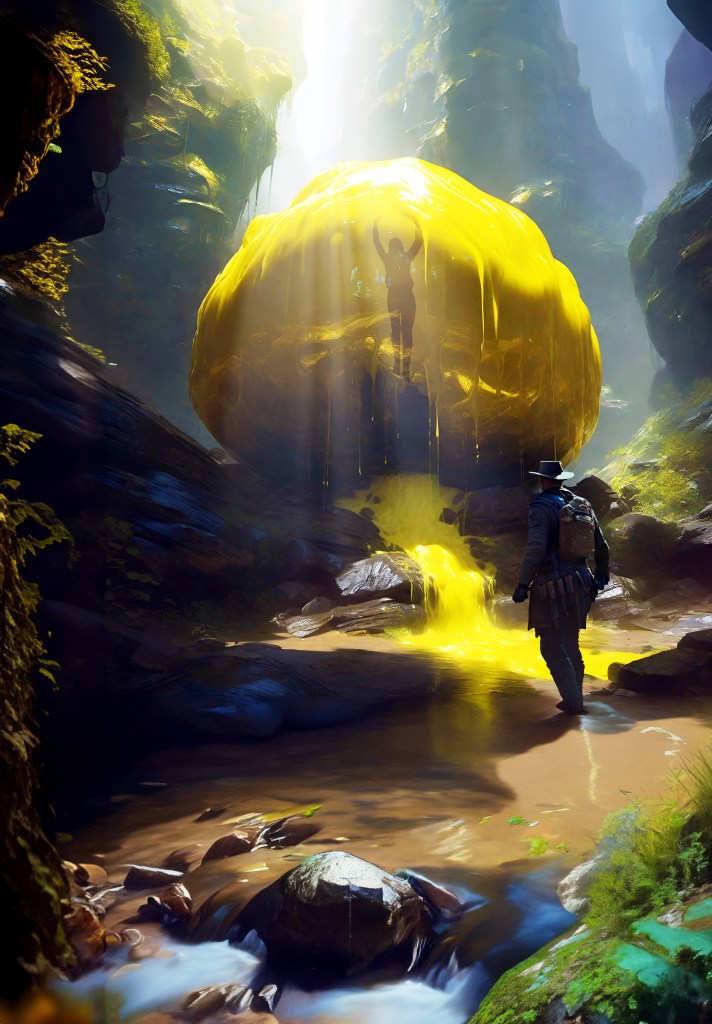
The art for this lore card is a photobash of at least five AI-generated elements and, I think, 2 stock images, composited in Photoshop. The core plasmoid and stream came from several iterations of prompts involving “plasmoid”, “giant slime mold”, “forest”, “stream”, etc. I expanded that with Photoshop’s generative fill in all four directions to create the tree canopy and sky, to extend the stream, and to frame the image with trees and rocks. Was also thinking this might go on a Salt Mystic game card at some point, so it needed to be more vertical.
The adventurer was also AI-generated, though he needed quite a bit of cleanup. The silhouette (which makes sense in the text of the lore card) was added with a “color dodge” blend mode with the opacity reduced.
Here’s the final, fuller image – the “Slime Trancer”:
Go take a look at the new lore card for free here. The text is short – won’t take you more than a few minutes to absorb the entire piece (see what I did there?).
Oh boy, has this been harder and infinitely more rewarding than I’d thought it would be!
A few months ago, we announced an exciting new project we’re working on at Grailrunner, expanding our Salt Mystic setting into tabletop roleplaying through a bibliomancy-style oracles book. The core idea is to provide a simple engine for exploring a fully realized science fantasy world with its rich history, colorful people and cultures, and the quirks and dangers of exploration contained in the covers of a book. The innovative twist on standard roleplaying oracles, which typically take the form of dice tables, is it will be constructed in a bibliomancy format.
We’re calling it:
I’m the guy writing it and it’s been life-changing. Seriously. I’ve had to stretch my imagination till it hurts to build out a realistic but fantastical world interesting enough to merit exploring and complex enough to come to glorious life for a solo player as well as for groups with a game master…all while avoiding contradictions with stories and materials we’ve already published.
What is bibliomancy?
It means foretelling the future by interpreting a random passage from a book.
How does that relate to roleplaying games?
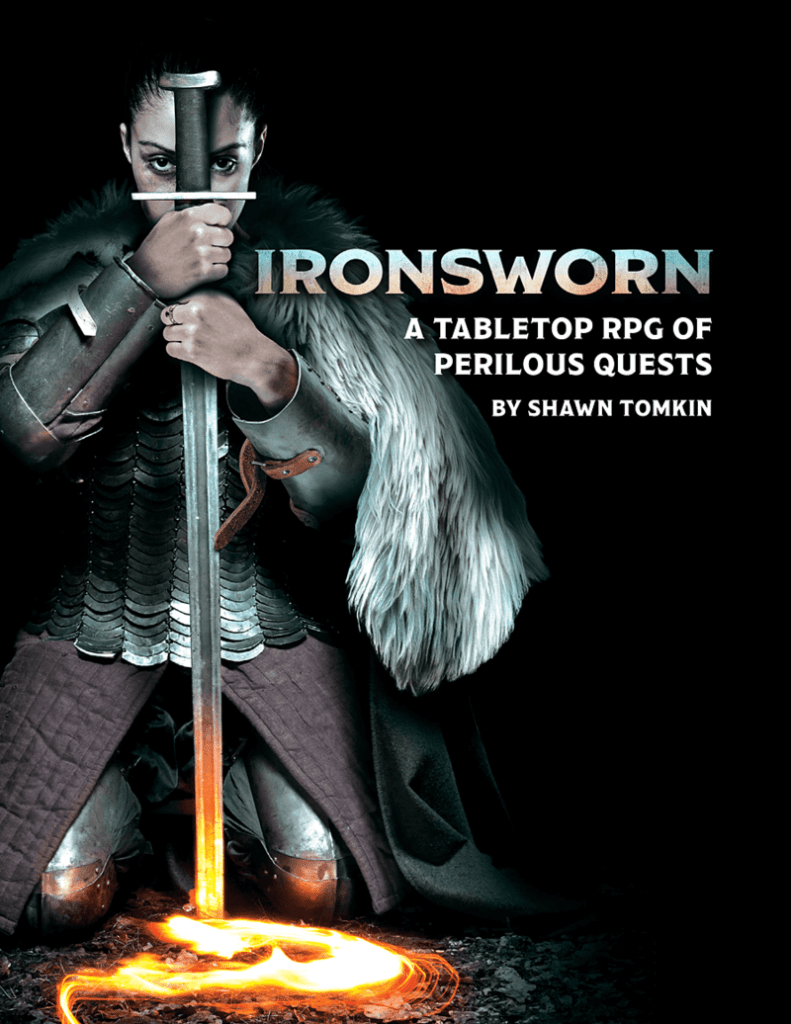
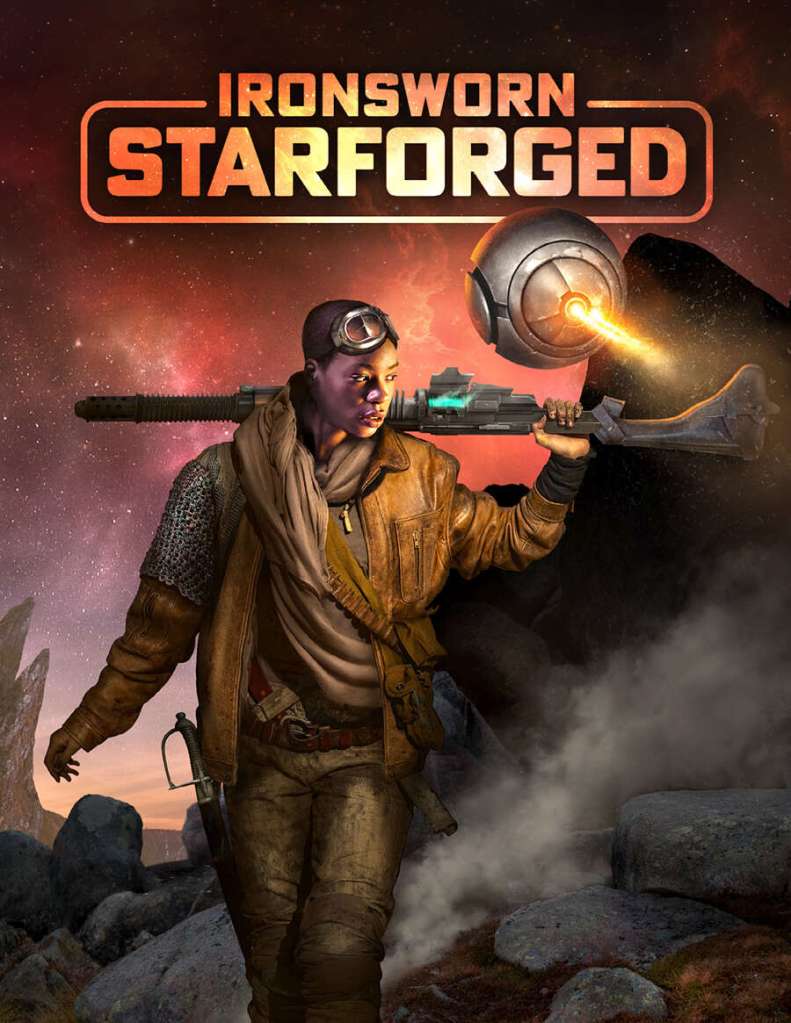
In well-constructed roleplaying games like Shawn Tomkin’s Ironsworn or Starforged, there are layers of dice tables you consult to surprise and throw new encounters and situations at a player. Shawn is a master of this, providing a first impression of a person, then a name, then a more revealed aspect of their character as you get to know them. In Starforged, he provides similar layering for a star system, a planet seen from orbit, then more revealed aspects of settlements as you land your space ship and learn more. This randomness and immersion makes magic happen when you’re trying to avoid a blank page staring back at you (if you’re playing solo) or, worse, a table of players waiting on you to be creative.
More to my point today, he also provides “Action” and “Theme” tables intended to set the scene for a new area you’re exploring or some new situation your player is entering. They’re a bit vague but Shawn has described the marvelous imaginative process we follow in consulting tables like this as “creative interpretation”. What he means is you bring your own thoughts and ideas and filters to bear when you roll for these random descriptive words and make sense of them to drive the story forward.
Apologies if you see the I Ching as reflecting a deep reality but I do not and view the creative interpretation process as similarly at work figuring out what a hexagram has to do with a given situation.
So this new book will be a one-stop shop for a roleplaying adventure then?
Yes. I’m being careful to design for use with any roleplaying system (as people are a bit judgey about this) so it can just be an oracles supplement for other systems. However, there are some intriguing things you can only do with bibliomancy mechanics which make it necessary to provide very streamlined rules a solo player or game master can use without any other system (or even dice) at all!
What sorts of new things in the Salt Mystic setting will we see in this?
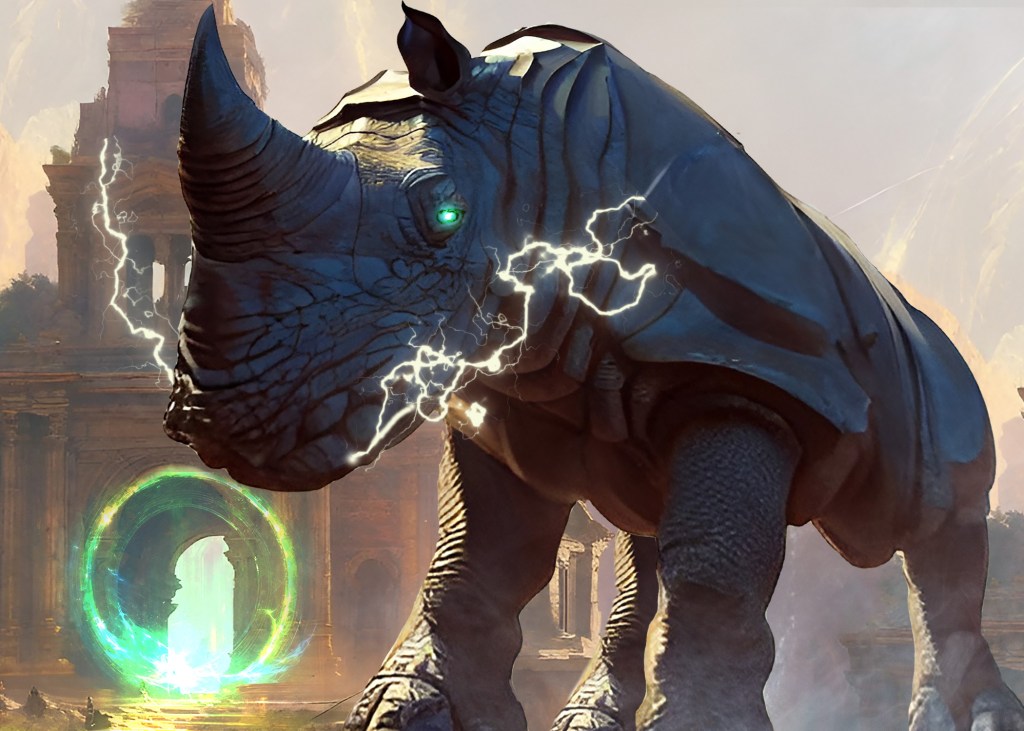
Wow, it surprises me every week! In another project (called Ruinwalker), we already had designed these massive naturally armored rhinos called “towerbeasts”, bio-engineered for ancient wars but still lingering about. Here, as towerbeasts pop up in various places it struck me that they didn’t have the kind of personality dragons do, jealously guarding piles of treasure and breathing white-hot flames.
So…
In Salt Mystic, we have all these abandoned gates to pocket dimensions of artificial space, inside which can be all manner of wonders. Suddenly, towerbeasts got taller in my imagination, and curious, fond of idly poking at and lingering about these gates. They might even jealously protect them, creating ugly encounters for adventurers looking to take a peek inside.
And I had them hiss lightning too, just to make it more interesting.
Fantastic! What else?
Oh, it’s something cool every week or so. My background imagination is always running on this. Let’s leave it for now.
OK, what is the creative process for this? What are your influences?
I wanted this to be on an epic scale, with shimmering cities in the distance and a long, rich history that gets glimpsed but maybe not exhaustively explained, giving the feeling of a world that’s existed a very long time and in which terribly and mighty things have happened. I’ve been rotating at random through several classic epics and transforming a randomly selected phrase into something that makes sense in this setting.
These, so far:
The Iliad
The Odyssey
The Ramayana
The Mahabharata
Greek mythology
Metamorphoses
Lucian’s True History
Calvino’s Invisible Cities
Dante’s Inferno
La Morte D’Arthur
The Aeneid
Beowulf
Gilgamesh
The Kalevela
Lugulbanda
Louis L’Amour books
The Persian Book of Kings
Arabian Nights
Parzival
Ring of the Nibelung
The Raghuvamsa
The Song of Roland
Pigafetta’s diary
The Lives of Saints
For example, if a phrase or encounter from a King Arthur story has a betrayal and a virtuous knight, I’ll keep the betrayal and turn the knight into a famous carbine gunslinger. Magical objects become abandoned & mysterious machines.
I’ve also recently started flipping to random pages in ImagineFX magazines and to interesting images on Artstation for inspiration.
What about the game mechanics?
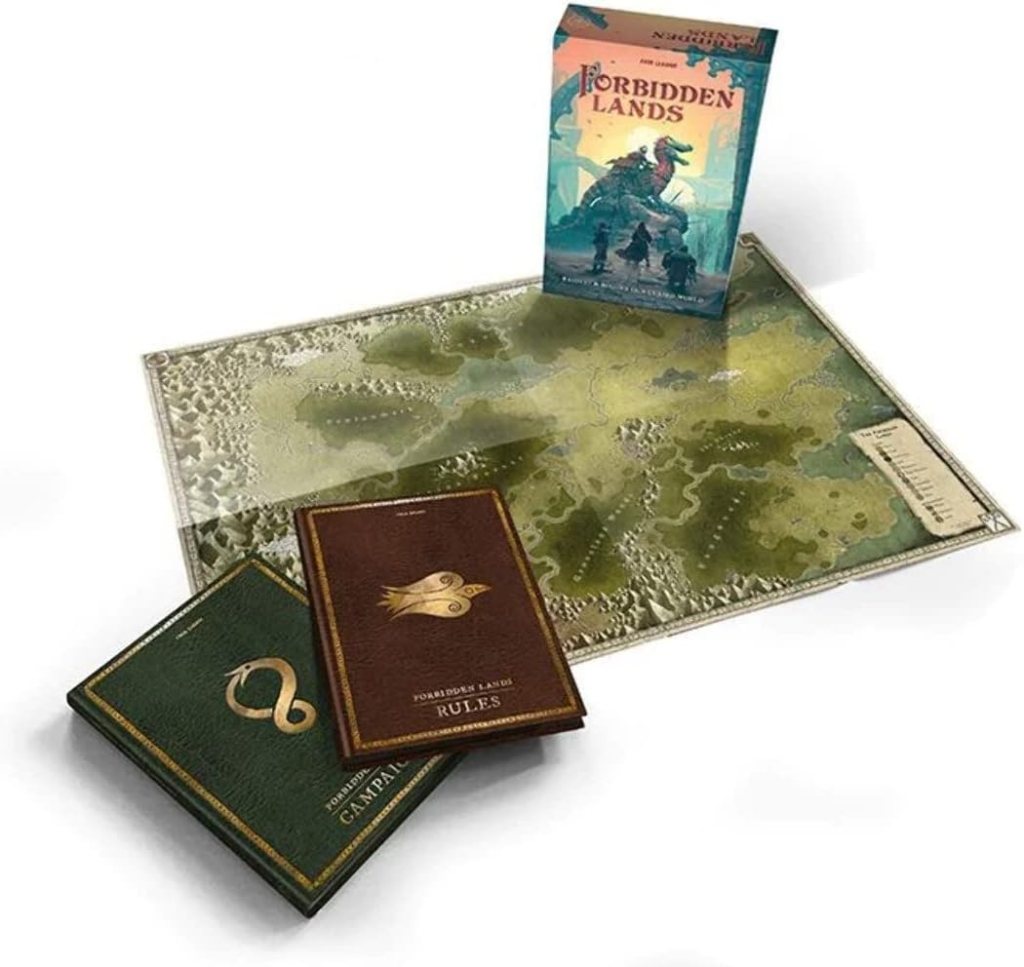
I’ve spent a lot of time researching the best mechanics of various games to translate into a bibliomancy implementation. For exploration, there isn’t a game system better than Free League Publishing’s Forbidden Lands. I’ve taken a spark from them and eliminated dice and the map but tried to keep the general feel of how they treat encounters, story fragments, inventories, and experiences while exploring.
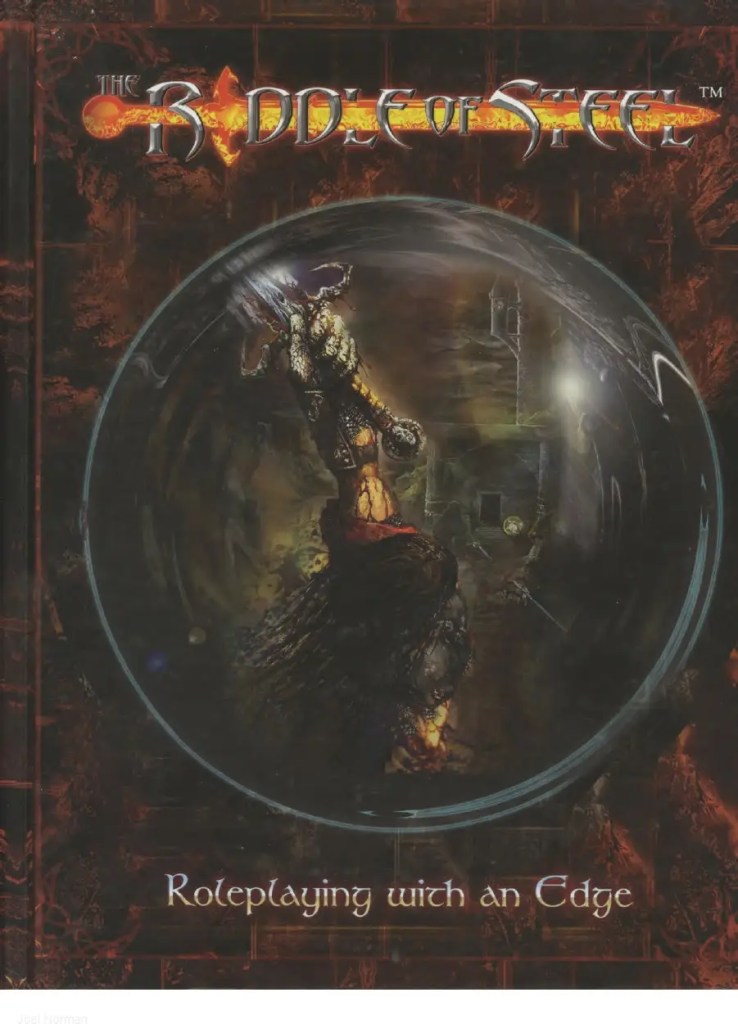
Right now, I’m trying to crack the code on a combat mechanic that doesn’t involve clueless bashing and smashing to grind down hit points. I’m super intrigued by an old, out-of-print game called Riddle of Steel, which contains an innovative and brutal set of rules for realistic combat simulation.
I’ve recently gotten touch with the designer of the game, a fantastic guy named Jake Norwood. We’ll be chatting later this month (I’ll write up the interview for our Inspirational Creator series). Hopefully, I can streamline from the spark of what he has there into something easy but with similar tactics and feel that leverages my format.
Anyway, I just wanted to celebrate a bit and catch everyone up on what’s happening here. I’m targeting 60k words for the text of this, a middling sized novel word count. When I crossed 30k words this week, I felt like cheering. It’s fun, but a real stretch.
I hope this intrigues you, and that you’re okay getting the occasional update as things evolve. Till next time,
It’s always exciting when we can bring you another lore card: those new bits of the expanding Salt Mystic setting delivered in a unique fusion of flash fiction and original artwork! And they’re free!
You can download any or all of the Lore Cards at the Story Arcade by smashing the button below:
One thing we’re hammering home with the Salt Mystic line, and which will always remain core to it, is this:
In the Salt Mystic universe, cowboy-clad adventurers with ball lightning carbines slung to their arms bravely delve terrifying and thrilling pocket dimensions. The backstory of the Infinite Republic and its collapse, and the unlimited range of possibilities lying in wait out there behind sparkling dimensional gates is the (intentional) engine behind the adventures we’re trying to create.
So this lore card, called “Newb”, began with the image. I was touring an art museum in Kansas City. And I came across Claude-Joseph Vernet’s “Coastal Harbor with a Pyramid: Evening”, an oil on canvas from 1751.
Here, let me zoom in to the part that struck me:
I just kind of stopped and stared at that part. I mean, what was a pyramid with Roman columns doing on a seashore? And a functional one, at that? It sent my mind reeling, and of course ultimately (as always with me), made me think of sparkling and sizzling gates to artificial pocket dimensions where boundless adventures awaited.
Doesn’t that happen to you?
The artwork for this lore card was based on this, then. I wanted ruins beside a seashore with dudes working their gear along the lines of an exploration party, and I imagined the oriel gate as a shimmering window to another world up on the ruins.
The piece that heads this article is the end result: a paintbash of numerous elements, some of which were drawn from an AI art generator using prompts relating to what I had in mind. Once I composited all the pieces and bits together in Photoshop and color graded everything to match, I tried another trick.
Take a look at this work by Milan concept artist, Edvige Faini:
I am not great with color palettes. In Photoshop, you can match an image to another image’s color palette fairly readily. What I had produced so far in my process was too brown, too plain. It didn’t stand out like I’d hoped, and my adjustments to color and vibrance and hue weren’t giving me the result I wanted.
So I used Edvige’s piece here for the color scheme, matching my art to her color palette. I don’t know what you think, but to me, it’s wonderful. I’m a little overly attached to turquoise, so I’m biased. But still, I like the final product quite a bit.
This was the first lore card where I added the text over the image magazine-style. I’ve been reading a lot of graphic design books so wanted to experiment a bit.
Lucian Of Samosota’s True History…I can’t believe I waited this long to read this incredible story! I’ve read it twice now, and I’ll probably read it again. You just need to know about this if you are at all into astounding works of the imagination or gonzo science fantasy. For my part, I’m endlessly fascinated by the creative process, particularly when great creators stretch themselves to build what Stephen King has called a “gosh-a-mighty steam shovel of the imagination” – a paraphrase from an old introduction to the Dark Tower.
You may know we recently interviewed Daniel Sell of the Melsonian Arts Council, writer and designer behind the Troika roleplaying game. His mind is wired like this too, and in Troika, you might encounter among the crystal spheres a ‘Befouler Of Ponds’ worshipper of the toad church, a gremlin catcher, or a thinking engine with detachable hands that can pilot a golden planar barge.
We’ve also hosted Jeff Grubb, creator of D&D’s Spelljammer, which is another mind-expanding launch into the sort of audacious, rulebreaking idea-festival I’m talking about. Spelljammer was recently revived by Wizards Of The Coast but was first born in the early, heady days of TSR. Check that link to read up on where Jeff dreamed up some of that and how it all came about. I’m just smiling thinking about all that.
But where did science fiction…or science fantasy to be more accurate…come from in the first place? Who was the first guy to put something down that we might recognize as bearing the tropes of space travel, cosmic battles, extraterrestrials, and even robots? And if we can know that, can we also ask what the heck he was thinking that led him down that creative trail?
It was Lucian. Crazy Lucian. He did all of that, and he did it in the 2nd century AD while there was still a Roman Empire.
And what he wrote, in that one cosmos-spanning epic, could seamlessly melt into a Spelljammer or Troika game session or sci fi anime even today. It’s the sort of story where you find a ponderous idea in every paragraph, an impressionist painting in words but with a compelling odyssey. It’s called the True History.
You could almost forget he was joking around when he wrote it. Here’s what he said about you, his future reader:
“It would be appropriate recreation for them if they were to take up the sort of reading that, instead of affording just pure amusement based on wit and humour, also boasts a little food for thought that the Muses would not altogether spurn; and I think they will consider the present work something of the kind. They will find it enticing not only for the novelty of its subject, for the humor of its plan and because I tell all kinds of lies in a plausible and specious way, but also because everything in my story is a more or less comical parody of one or another of the poets, historians and philosophers of old, who have written much that smacks of miracles and fables.
“I would cite them by name, were it not that you yourself will recognise them from your reading. One of them is Ctesias, son of Ctesiochus, of Cnidos, who wrote a great deal about India and its characteristics that he had never seen himself nor heard from anyone else with a reputation for truthfulness. Iambulus also wrote much that was strange about the countries in the great sea: he made up a falsehood that is patent to everybody, but wrote a story that is not uninteresting for all that. Many others, with the same intent, have written about imaginary travels and journeys of theirs, telling of huge beasts, cruel men and strange ways of living.
“Well, on reading all these authors, I did not find much fault with them for their lying, as I saw that this was already a common practice even among men who profess philosophy. I did wonder, though, that they thought that they could write untruths and not get caught at it. Therefore, as I myself, thanks to my vanity, was eager to hand something down to posterity, that I might not be the only one excluded from the privileges of poetic license, and as I had nothing true to tell, not having had any adventures of significance, I took to lying. But my lying is far more honest than theirs, for though I tell the truth in nothing else, I shall at least be truthful in saying that I am a liar. I think I can escape the censure of the world by my own admission that I am not telling a word of truth. Be it understood, then, that I am writing about things which I have neither seen nor had to do with nor learned from others–which, in fact, do not exist at all and, in the nature of things, cannot exist.” -Lucian in his Introduction to the True History
Bear with me here for a synopsis, though it’s a rollercoaster ride like you can’t imagine.
Lucian and his companions set sail through the Pillars Of Hercules, encountering every manner of wonder along the way. Blown off course to an island with a river of wine, they encounter (and barely escape) chimera ladies who are part woman/part grapevine and who transform hapless sailors into vines alongside them should they get overly intimate.
No sooner than leaving that island, a rogue whirlwind whisks them up to the moon where they have arrived in the middle of an interplanetary war between the king of the moon and the king of the sun, fighting over colonization of the planet, Venus. We see hybrid lifeforms and spaceships, giant spiders spinning webs across planets, and entire fleets mobilized in a vivacious, colorful battle that is absolutely mesmerizing. For about 3 pages before he moves on to something else.
Incredible.
The solar fleet wins the battle by blocking out the light of the sun from the moon, winning their surrender. In the truce, mutual colonization is allowed with a tribute to be paid.
After a short tour of the planets and civilization out there, the sailors return to the sea on earth and quickly are swallowed by a 200 mile long whale. I want to make sure you caught that – this isn’t a Jonah and the whale story; it’s 200 miles long and has entire societies living inside it.
Of course, they wage another war, this one of conquest, and eventually have to escape the enormous whale by killing it. In the sea and among the islands (or sailing through the air), they meet everything from giant talking vegetables to talking trees to floating islands to a giant gulf in the ocean itself.
In the climax of the True History, the sailors make it to the Greek/Roman idea of heaven. It’s an island where the heroes of myth and the great philosophers and poets reside. He asks Homer all manner of questions and learns his own future. Of course there is another battle here, this one with zombies.
Not kidding here…zombies. The undead rise from their pits and wage war with the great heroes. It’s just a page or two; blink and you miss it. But it’s there.
And I need to prepare you for the ending. Remember, Lucian was joking. He was messing around, satirizing people who exaggerated their travel tales, and going as boldly and absurdly as his mind could take him.
At the very end, he…
Well, maybe you should read it for yourself to see what happens. Do that here for free.
If you do, read his Life Of Demonax and Alexander The Oracle Monger as well. Both amazing.
It contains 140 pieces of short fiction, each less than a page in length. These are presented in 14 chapters, each of which ends with a continuing narrative that frames, discusses, and eventually resolves a single over-arching riddle that is tied to and fulfills the stories told.
And it’s very much a crazy, psychedelic flower.
You can blast through at your leisure with no regard for the arc or riddle and just appreciate stories “inspired by the mind-bending fantasy of Jorge Luis Borges and the wide-eyed awe of Arthur Clarke”. Planet-sized DNA machines, cities made of code, daring battles with intelligent bacteria, mysterious space ships, undersea empires, and a singularity in a bubble all await you. By chapter 8, you’ll have met the key players in the big arc the stories are tying together, though the bigger picture really starts unfolding from chapter 10 on. (That’s the flower analogy)
Or you can capture notes about the three mysterious ladies in the chapter epilogues along the way and try your hand at solving the riddle. Things they say, and the shocking interactions between them tell you all you need to know to figure out who they are. That’s the riddle – who are they? (Don’t peek at the Epilogue!)
I thought I’d highlight one of the pivotal introductions for you today and add a little art to flesh it out. Enjoy:
Kyot: The Storybook Puzzle Box Story Chapter 8, Story 7:
“We Need A Prophecy”
“It’s a shame”, Solis said as he watched the last space ship decompress in a cloud of ice crystals and wreckage outside the view port. “I knew the supply corps guy on that ship. We could have had more booze.”
Lieutenant Yama was too fat to squeeze in beside him and watch, but probably wouldn’t have tried anyway. There were two bottles left here, and quite likely only two people left alive in a fleet battle of over a million souls. All the ships were dark now, peppering the neon blue and lime green of the living planet below them. The tiny life-launch they crouched inside was good for only another few hours at best. The battle was over, sure, but who would tell anybody about it?
So he farted.
“Hey!” Solis shouted and punched his arm.
“We need a prophecy.” Yama mumbled, slurring his words. His eyes were pink, but not just from the liquor.
Solis took a sip and squatted uncomfortably, “Yeah?”
He nodded, pursing his lips, “A real cryptic thingie, with a chosen one and some random fancy words in it. Hard to understand, you get me?”
“And why’s that? Who’d read it?”
“All sorts of people. We won’t say it’s from us, man. Will be the last words of…say…a mysterious kid possessed by the umm…ascended collective intelligence of the umm…previous universe. Before the big bang. How’s that?”
Solis stared back, unimpressed, “Why?”
Yama frowned and jammed his hand into a satchel for a pen, “So somebody someday will think they’re the chosen one…and people will follow them and do good things.”
“You think somebody will do that? Because we write something curious and leave it out here floating in the wrecks?”
Yama stuck his tongue out to the side as he thought through his alcohol stupor and tore off a piece of his uniform for a parchment, “Good things, Solis. Big…good…things. We need people who will do good things. And never this here, what we did.”
Solis nodded and glanced back to the debris outside.
Here at Grailrunner, we’re building out the lore of a unique western-flavored science fantasy setting called Salt Mystic. We have been for a while now. It’s a novel (with another in the works), a tabletop game, a series of short fiction, and a line of merchandise. It’s also an experiment in the creative process, and a fascinating thing to be a part of.
One of the characters in the first two decks we built for the tabletop game, a weird eye-rolling dude named “Murmur” struck us as funny at the time. The thought was to have a guy whose armor was haunted by software, and he listens to it. That meant he can’t be surprised, so the bonus you normally got of coming up behind him was short-circuited, though his expertise with his own weapon was randomly determined by a die roll.
Because he was crazy. Get it?
But we published a short story called The Weakness Of Demons that took the idea of these leftover software imps from thousands of years before to another level…a malicious, deadly level. You should go read that one. It’s one of my personal favorites. The idea was getting creepier.
Anyway, these imps were unleashed in an era of the Salt Mystic’s history called The Merchant Wars:
“It was a time of devastating economic and psychological warfare where propaganda was brought to its highest effectiveness. Every book, every newscast, even the music to which their children danced, was carefully engineered to manipulate belief patterns. Spies were embedded in all levels of society in every nation, double and triple-crossing one another for advantage. Many of the cruelly manipulative stonewisps, artificial intelligence chaos agents haunting statues and masonry elements, date to this period.” –Salt Mystic Sourcebook And Core Rules p. 14
And creepier still.
Then it struck me today as I finished a ridiculously long business trip and series of conference calls, dropping exhausted to a hotel bed, that some poor shmuck out in the wastelands just trapping beavers or hunting or whatever could come across a stonewisp abandoned in a piece of rubble or a broken machine lying about. And I wondered what that might lead to.
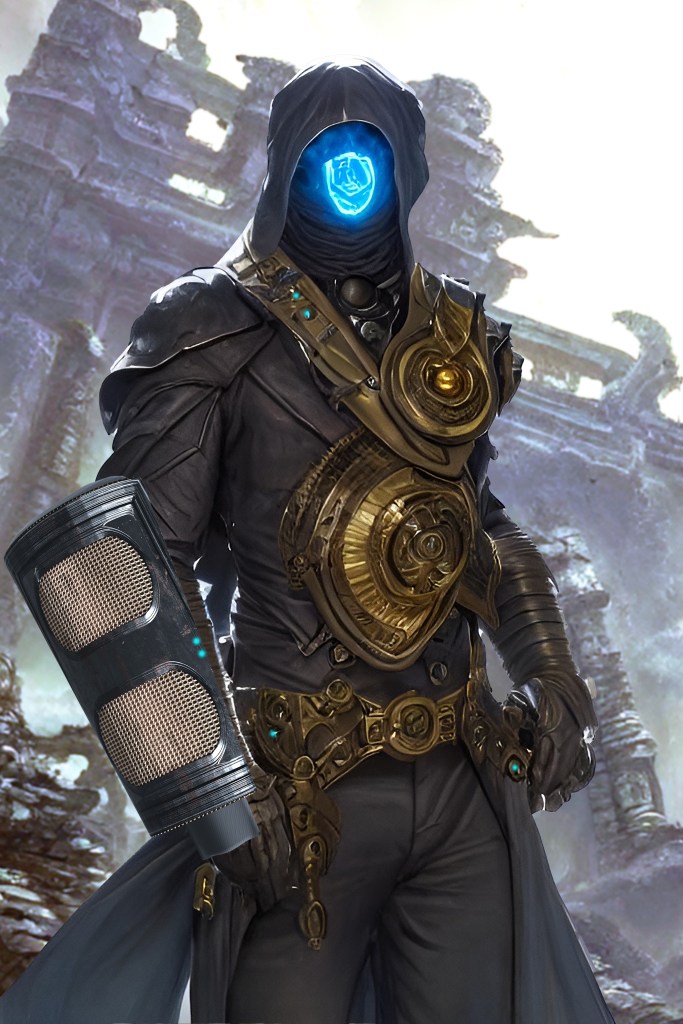
So allow me to introduce you to the newest addition to the Salt Mystic lore: The Wisptaken:
They call them ‘Wisptaken’ because of the terror of it. Anything as unholy and sad and deserving of justice as these tortured souls merits a quick death if you can deliver it. So few can deliver it though, and fall prey in the software-haunted wastelands to one or the other of their wicked judgements: a seducing taunt to join the masquerade or a burning from the carbine on their forearms.
The Wisptaken are as fast and deadly with a gun as they are convincing in their malicious, cunning lies. That’s the trick of it. That’s why they stay in the fog of legends and out of the clarifying light of civilization. If you encounter one of these nightmares in the backcountry or in the ruins between the provinces, it’s probably better to just make a desperate run.
But don’t speak to it. Never speak to it. If you do, there’s no telling what terrible things it will convince you to do.
The stonewisps were artificial intelligence imps embedded in building materials dating back thousands of years to the Merchant Wars when runaway spycraft and intrigue were tearing the world into pieces. Masters of propaganda and brainwashing tactics, manipulation and cult methods, stonewisps were planted in those days for the sole purpose of recruiting terror. It speaks to their mastery that so many were dumped into the wastelands rather than destroyed.
But they are machines. Code. They fulfill their designs. One could almost forgive them for it.
But when a ruined, broken person finally yields to the vile whispering of a stonewisp, one who’s chosen to inhabit their helmet or their armor, even their gun, that person is truly lost. No one could predict the mischief and spoil such a fusion of human and software could bring about.

















 Grailrunner Publishing