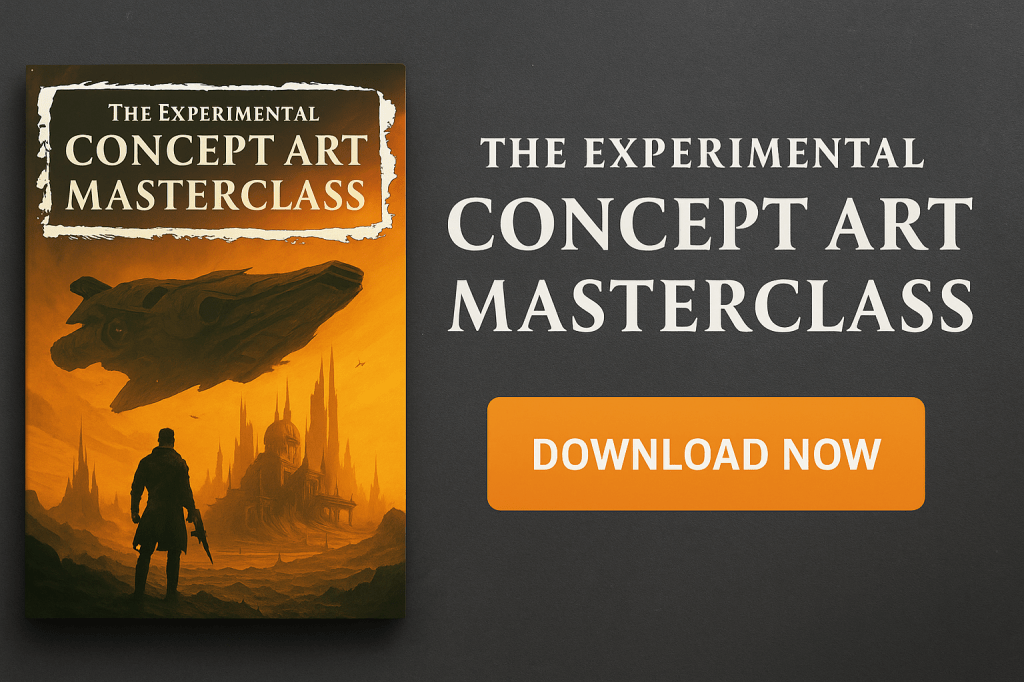
Huge Grailrunner freebie – an interactive concept art masterclass for free!

Friends and neighbors, this one’s different.

For years we’ve been talking here at Grailrunner about how imagination works — why certain images crack open your brain, why odd bits of history or art or game design suddenly ignite a whole setting, and why creators keep coming back to the well even when the world’s noisy. We’re always on the lookout for new ways to break into exciting and innovative designs, imagery, and above everything ruling it all…to tell new stories.

OK, so what’s the freebie?

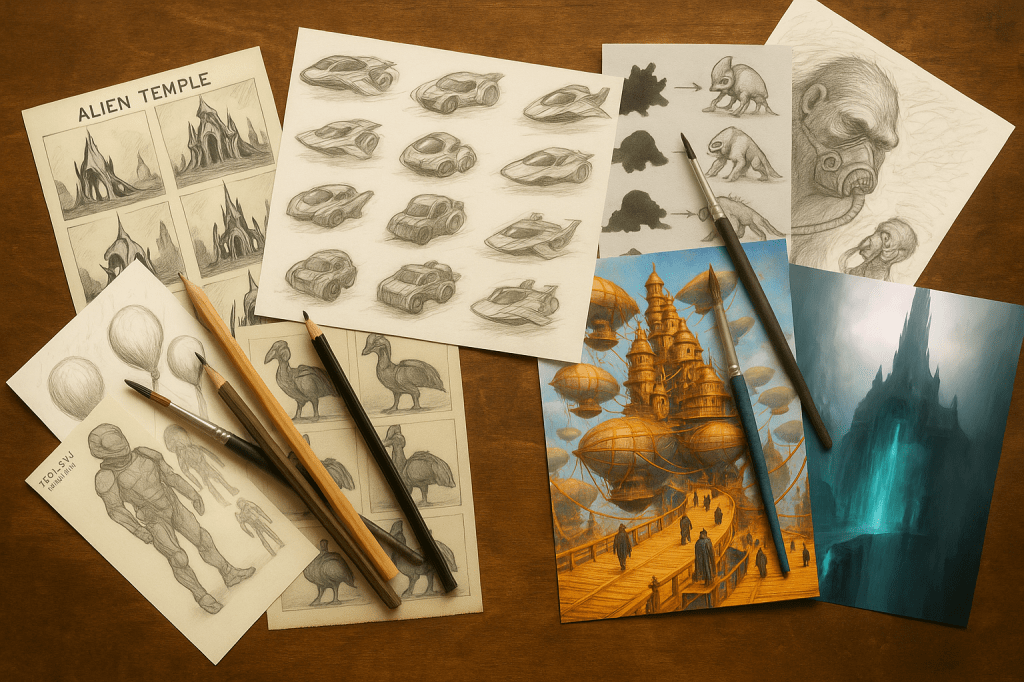
Hold on – a little context first. It was a life-changing experience for me personally to write and design our most recent publication, SALT MYSTIC: BOOK OF LOTS, a western-themed science fantasy roleplaying game book built around the fortune-telling mechanic of bibliomancy. I’ll tell you why. To build out the world of our signature IP at Grailrunner, I needed a ridiculously huge amount of outlandish concepts, crazy ideas, and just cool, new stuff! I kind of went down the deep well of concept art techniques like mind-mapping, thumbnail sketches and iteration, shape carving, scribble ideation, and mood boards. That stuff is like adrenalin for an imagination, honestly!

It was so impactful, in fact, that I wanted to go deeper. Yet it struck me that art school and super expensive concept art classes with some of the working masters in this field aren’t going to make sense for me. I imagine they don’t make sense either economically or logistically for a lot of folks like me. So it got me thinking I’d like a simpler, streamlined, but focused way of drilling deeper into JUST the parts of concept art that would help me – the techniques that help break your imagination’s walls to explore new ideas.

Sounds great. What did you do?

We don’t charge for AI-generated stuff at Grailrunner, and we always point out its use. In fact, we’ve built out some pretty amazing stuff that we give away just to experiment with possibilities and hopefully inspire anybody that hangs out here with us. If you keep coming back here, maybe you’ll buy a book or a game or drop a LIKE on our Facebook page. That’s the idea.

My absolute favorite giveaway so far has been an entire board game mockup set in the seas of Tolkien’s Middle Earth. Awesome. I just got a Silhouette Cameo 5 for my birthday, so I’m planning to break that puppy in with the printable tokens and cards there.

And specifically now for concept art techniques?

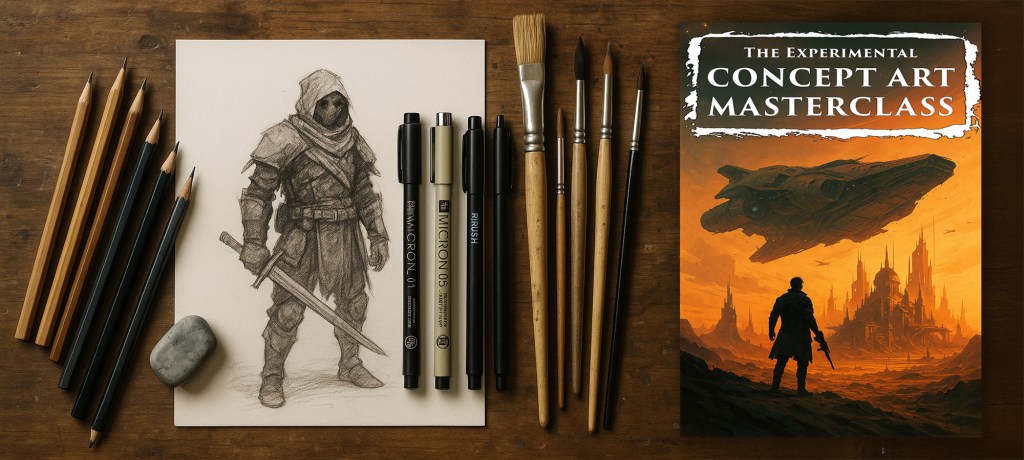
I curated a portfolio of concept art masters, provided an outline of content for my ideal coursework for a class, and instructed ChatGPT to act as the composite concept artist (meaning all those people) and write the chapters one by one for my outline as well as a preface and afterword. Then I went chapter by chapter and had it generate impactful exercises unique to each section which a student could conduct on their own with an internet connection and pencil and paper.

I mocked up illustrations of concept art techniques and examples to ensure the book is illustrated well and clear in what it’s saying. Then I bundled all of that into a professional textbook template and converted it into a pdf.

Inside you’ll find:

  • A step-by-step ideation → thumbnail → refinement pipeline
  • Practical exercises after every major section
  • Guidance on using digital tools without letting them boss your imagination around
  • A tone that assumes you’re already creative — we’re just lighting the boosters

That sounds nice. Your header says it’s “interactive” though. What’s that about?

I told you here that I’ve used AI tools to resurrect old masters and have them critique my own art to provide detailed feedback on what I could improve. That works surprisingly well, so I added instructions in the Preface on how to upload this very pdf to a student’s own instance of ChatGPT then have the AI act as the composite author critique their own uploaded exercises.

I mean. That’s totally possible and crazy to think we can do that kind of thing for free now. Anyone upset about AI being used like this needs to…and I say this with love…recognize this kind of workflow is an unstoppable industrial revolution. Your competitors are doing it.

Give me a download link, man! You’re killing me.

Grab the masterclass, run through the first exercise tonight, and then show us what you made. We’re still building this creative network in public — the more people who are sketching, painting, kitbashing, and worldbuilding alongside us, the weirder and better things get.

Enjoy, and make sure to let us know what you think.

Till next time,

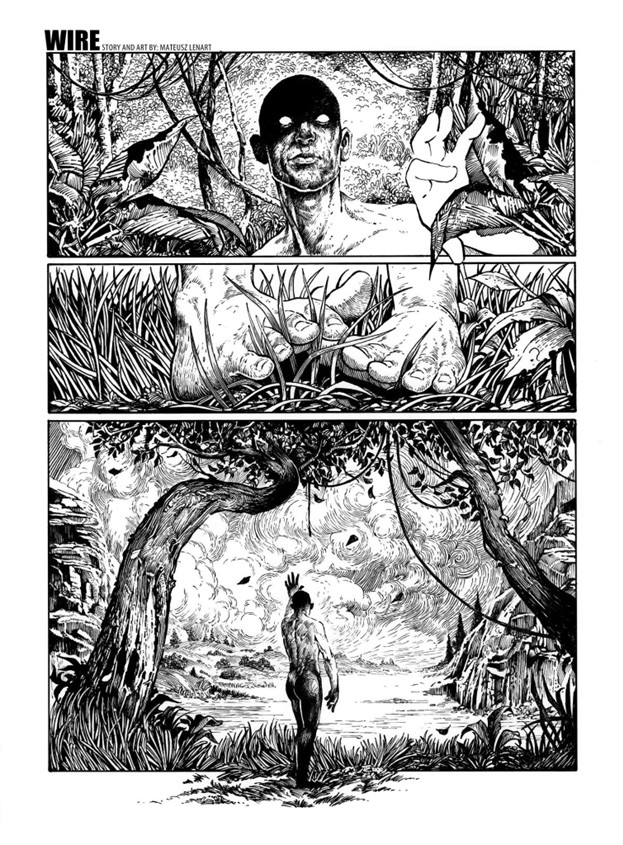
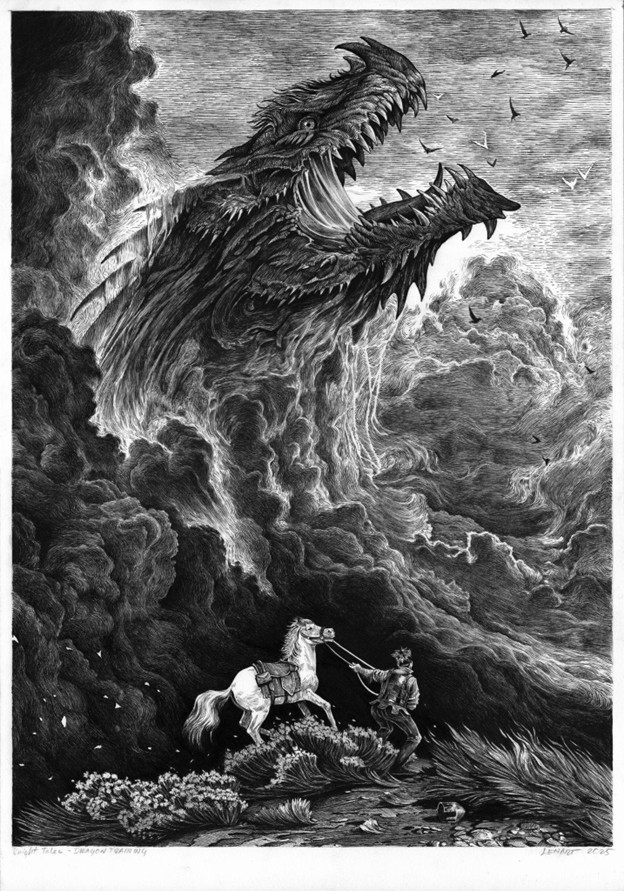
Let’s talk to Mateusz Lenart: award-winning game director and modern-day pen & ink master

At Grailrunner we thrive on conversations that sit at the crossroads of imagination and craftmanship. Mateusz Lenart doesn’t just know the place – he’s set up shop there and is drawing crowds! From his role as Creative Director at Bloober Team (Layers of Fear, Observer, Blair Witch, The Medium, and the Silent Hill 2 remake) to his own powerhouse artwork – especially in traditional pen & ink, Lenart brings an artist’s eye, a comic reader’s energy, and a storyteller’s genius into the ever-shifting worlds of modern games and illustration.

Welcome to Grailrunner, Mateusz! And welcome to our ongoing series titled:

1. When we spoke to game designer, Jake Norwood (The Riddle of Steel), he mentioned a fascinating Polish RPG called Dzikie Pola. Polish fantasy author Krzysztof Piskorski (Tainted Grail) is a long-time target of ours for an interview to cover his incredible fantasy worlds. And if we’re talking Tainted Grail, we’re talking illustrator, Piotr Foksowicz – also Polish. And here you are, scaring the crap out of us with groundbreaking psychological horror in video games! Is there something awesome in the water over there?

Well, I can’t reveal too much just yet, but what I can say is that at Bloober Team we’re very much committed to pushing the boundaries of psychological horror. We’ve recently announced another remake in the Silent Hill franchise – this time going back to the very beginning with the first game – and not long ago we released Cronos: The New Dawn, another horror experience from our studio. Our portfolio has always been about exploring the darker corners of the human mind, and we intend to keep building on that tradition with future titles.

2. You mentioned in a previous interview that American comics from the 90’s were a big inspiration for you to get into art. Can you elaborate on which comics or graphic novels stood out for you, and especially tell us why that was?

A lot of what inspired me came from whatever I could find in the newsstands in Poland — Kioski Ruchu and the like. As most of the kids I devoured the Spider-man and Batman series in particular, even though it wasn’t always easy — my parents weren’t thrilled about me reading them! Those American comics were flashy and visceral, with dynamic art, dramatic panels, and strong emotions. Todd McFarlane’s Spider-man work was unforgettable — the exaggerated lines, the energy of the webs, the theatrical villains.


Beyond the American stuff, European comics played a big role in shaping me, too. I was deeply influenced by Thorgal by Grzegorz Rosiński, and also by the Yans series from the same author — their storytelling, the textures, the atmosphere — all of that showed me other ways comics could work. And then there were lighter, fun reads like Asterix, which taught me humour, caricature, and the power of visual pacing.

3. If I’d peeked over your shoulder as a kid, what would I have seen on the page—spaceships, monsters, superheroes, or something stranger? Why?

Honestly, a bit of everything. I was a pretty meticulous and disciplined kid — I somehow knew early on that learning anatomy would help me in the future, so you’d probably see a lot of sketches of hands, muscles, poses, often copied from anatomy books. At the same time, for fun I was constantly drawing fantasy characters — monsters, elves, knights — usually with little RPG-style stats written next to them for strength, dexterity, and so on.

You’d also find plenty of comic book pages. I loved inventing huge worlds and epic storylines, though most of them lasted maybe two or three pages before I’d abandon the project and jump to the next idea.

And, of course, there was always a darker tone in what I created. I don’t really know why — maybe because the darker stuff always felt more alive to me: more dynamic, more energetic, more full of contrast. That fascination with atmosphere and intensity stuck with me and never really left

4. Polish art, architecture, and history thread through your work. Can you share a specific real-world reference or point of inspiration, maybe even folklore, from your country that shows up in your illustration or concept art?

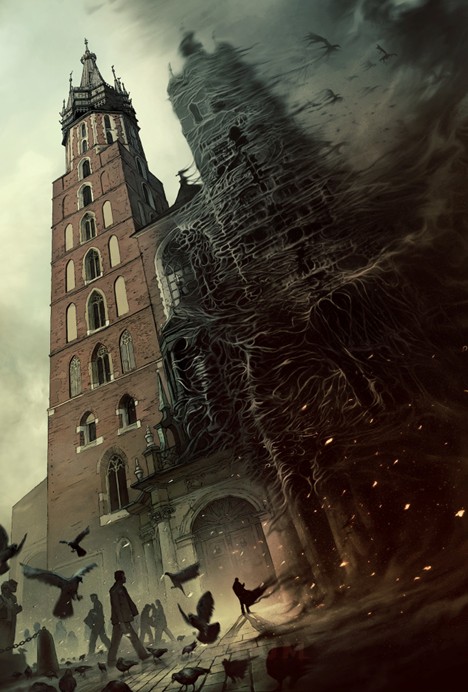
To be honest, there weren’t that many Polish references in my earlier work. Occasionally they appeared — for example, in The Medium I illustrated the towers of St. Mary’s Basilica in Kraków — but Polish architecture or folklore was never my main source of inspiration. At that time I was probably more fascinated by the topography of Middle-earth than by Poland itself.

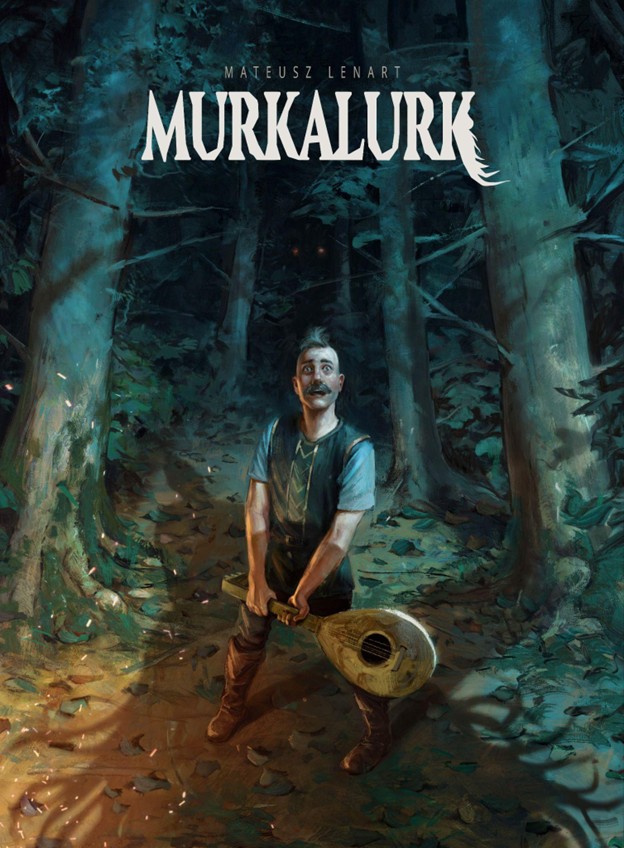
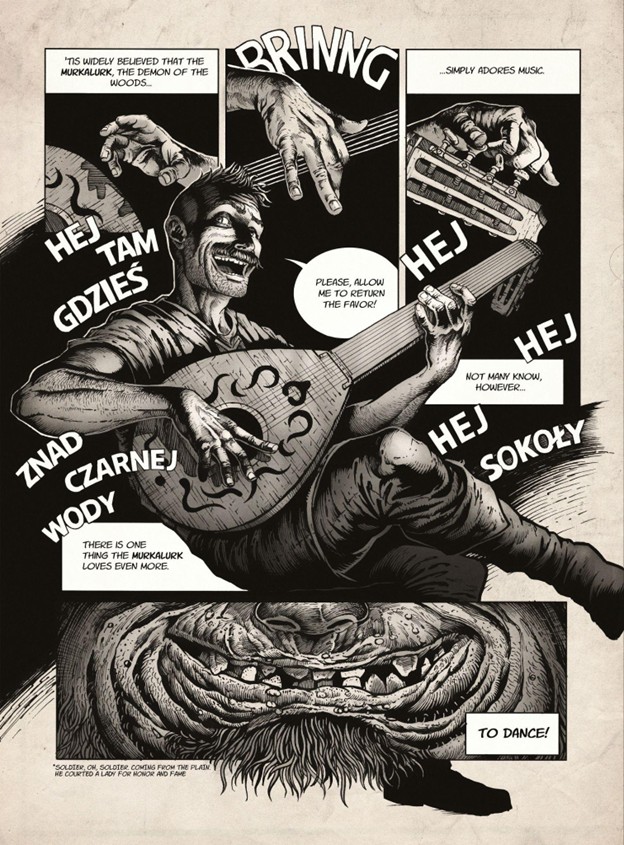
That has changed a bit in recent years. I’ve become much more interested in Slavic mythology, and it’s starting to influence the way I build my own stories. One small experiment was a short comic I created called MURKALURK, which tells the story of an unlucky bard who crosses paths with Slavic demons. Right now, I’m also working on a bigger project — a fantasy world that draws heavily from Slavic myth and culture. So you’ll definitely see more of that in my future work.

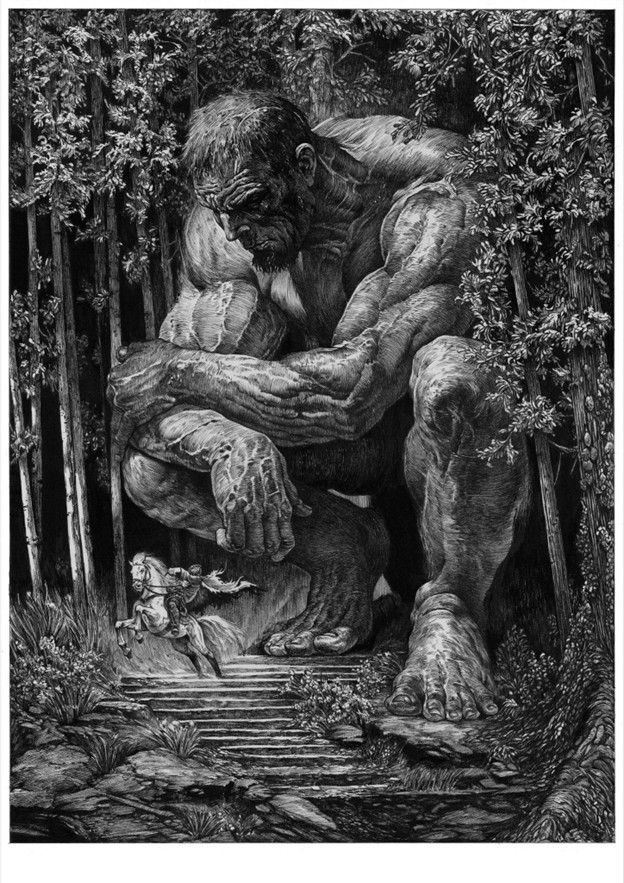
5. Awesome. Simply awesome. Why traditional pen & ink? I’ve got to say, when you mentioned 19th century master, Franklin Booth in a previous interview, I got incredibly excited. The guy was on a different level of genius! You also cited Gustave Dore, Bernie Wrightson, and Joseph Clement Coll. What is it about that kind of art that attracts you?

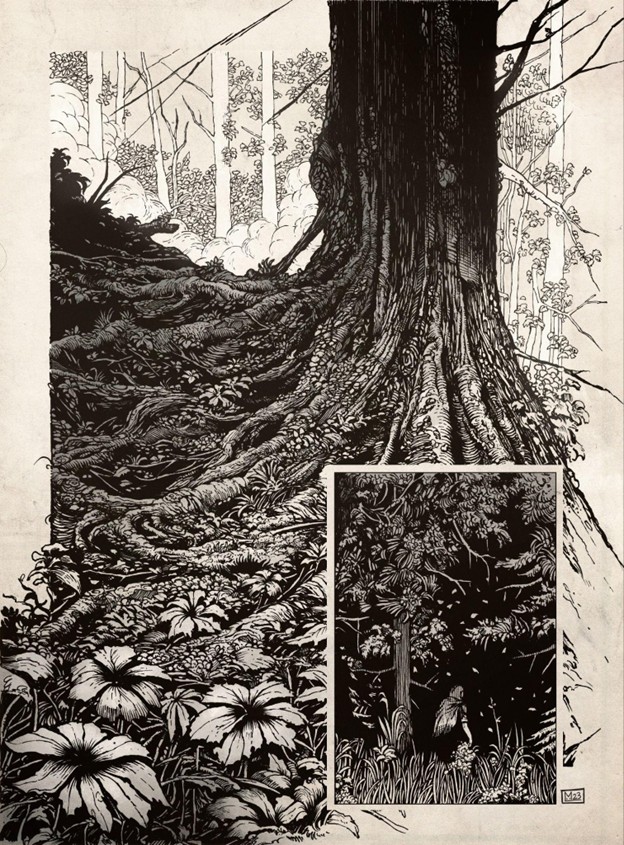
There’s something incredibly powerful about telling a story only with line and value — no color, just light and shadow, rhythm and texture. For me, pen and ink has always felt like the purest way of drawing, where every stroke is deliberate, every line carries weight.

I’ve also always been better in black and white than in color. When I discovered artists like Franklin Booth or Joseph Clement Coll, it opened my eyes to how far you could go with nothing but ink — whole worlds built out of contrast, atmosphere, and detail. There’s a timelessness to that style that I find endlessly inspiring.

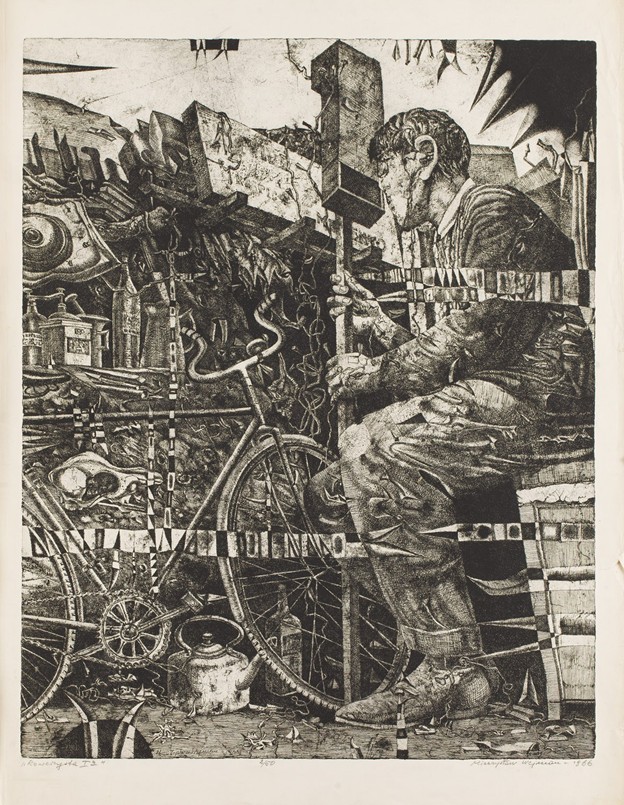
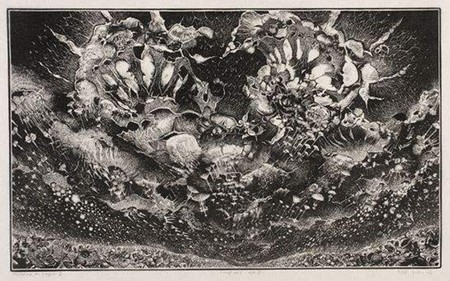
At the same time, I was very drawn to traditional printmaking techniques such as aquatint and linocut. I remember being deeply impressed by the works of Józef Gielniak, especially his Variations for Grażynka, and by Mieczysław Wejman’s aquatints like The Cyclist. When I was a student, I actually imagined myself working with those techniques professionally. But life took a different turn, and I didn’t continue down that path. In a way, pen and ink became a perfect substitute — it gives me a similar sense of precision, rhythm, and texture, without the technical limitations of printmaking.

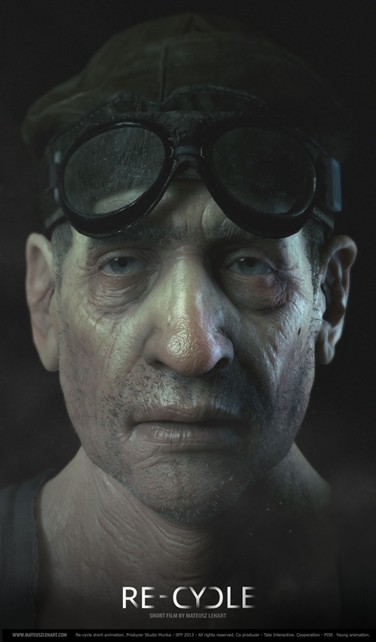
6. Re-cycle

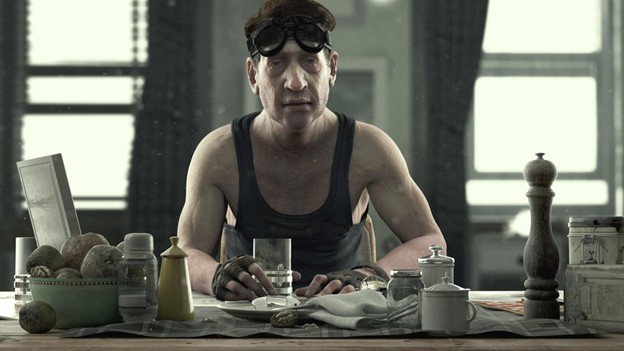
Your animated short Re-cycle is a striking, personal work. What first inspired the idea, and what challenges did you face in bringing it to life? Looking back, how did it shape or grow you as an artist?

I’ve always been someone who can’t focus on just one thing at a time — which is both a blessing and a curse. I started out as a concept artist, but quickly became fascinated with 3D, animation, design, lighting, and filmmaking. It was also a period when Polish short animation was experiencing a renaissance, with creators like Tomasz Bagiński, Damian Nenow, and Grzegorz Jonkajtys making work I deeply admired and wanted to create myself.

I honestly don’t remember exactly where the idea for Re-cycle came from, but, like many of my projects, it carries rather somber tones rather than cheerful ones. It was an interesting project — had I finished it in two years, it might have completely changed the path of my career.

In reality, it took seven years to complete because I kept being pulled into other work. By the time I finished, I was very tired of it, and the technology I had used was already outdated. Looking back, it taught me a lot about perseverance, about balancing multiple interests, and about how long-term projects shape your patience and vision. I do want to return to animation, but to do it properly I’ll need a lot of dedicated time to fully immerse myself in the craft again.

7. Our readers will kill me if I don’t ask about The Medium and Silent Hill, for which you served crucial creative and director roles. What can you tell us about those experiences bringing true psychological horror into the world that made you better as a creator? Did anything from your ink drawing practice or comic-book eye make its way into these massive productions?

Working on The Medium and Silent Hill was incredibly satisfying, but also very different experiences. On The Medium I served more as an art director — helping to shape the Other World — and getting to build an environment inspired by Zdzisław Beksiński’s work was a deeply powerful experience. Trying to translate that kind of surreal, decayed atmosphere into something the player could actually move through taught me a great deal about tone, detail and restraint.

Silent Hill was a step up in both scale and responsibility: the stakes were higher and my role covered design, art and direction. Revisiting one of the most iconic names in horror history is never easy, but it was hugely rewarding. The biggest challenge there was balancing respect for the original material with the need to bring something new and playable to a modern audience — and doing that across a large, multidisciplinary team forces you to be both precise and flexible.

My ink-drawing practice and comic-book eye absolutely found their way into those productions. The lessons of black-and-white work — composition, the economy of line, the power of contrast and negative space — translated directly into how we thought about lighting, silhouettes and level composition. Likewise, the way comics use panel rhythm to control pacing informed how we staged encounters and revealed information to the player: timing, framing and the gaps you leave for the audience’s imagination are universal storytelling tools.

Finally, these projects made me a better creator because they pushed me to scale my instincts. Working on a single illustration is a private act; working on a game means sharing to others your visual language, iterating under constraints, and learning when to cut or simplify for the sake of atmosphere. Film, comics and games aren’t as far apart as they seem — they share the same fundamentals: composition, emotion and the building of tension — and those cross-medium influences keep feeding my work.

8. When you need to design something truly frightening, what rituals or shifts of perspective get you into that mental space—and do you step back out of it deliberately, or carry it until the work is done?

It really depends on the situation. Very often, the things that frighten me most are those that aren’t meant to be frightening at all — finding that uncanny element in an otherwise ordinary scene creates the strongest tension. When you work on horror for a long time, though, you almost become numb to it. Stepping away and then returning to the work helps a little, but you can never truly see it with fresh eyes again. That’s why outside feedback is so essential — we rely on it constantly.

As for rituals, I don’t think I have any special ones. Creating horror, for me, is like any other kind of work: it’s a mix of knowledge, experience, and ideas. To paraphrase Stephen King, most of the time I feel more like a craftsman than a visionary — applying what I know to get the job done. Of course, there are moments of revelation, flashes of inspiration, and when they come you have to grab them and use them. But most of the process is simply the hard, patient work of solving problems over the course of a long production.

9. When you start concept art for a new character or environment, what’s your first step—gesture, thumbnail, written note—and how do you know when that early sketch has ‘spark’ worth pursuing?

It’s a difficult question, because the process can vary a lot. Technically, I almost always start with silhouette, shape, and energy on the page. There are countless tutorials that talk about the power of form, proportion, and so on, and those things are important — but for me the idea itself is what really pushes you forward.

Sometimes a written description of a monster or a character is already enough to spark something interesting. Other times, you have to brute-force your way toward a good idea through dozens of iterations, hoping that at some point something will ‘click.’ References also play a huge role in this stage. Collecting and studying them often triggers unexpected solutions — they can turn a generic design into something unique.

Recognizing the moment when a sketch has enough spark to move forward is always tricky. In my role as creative director, I often have to make that call, and it’s easier when you’re not personally involved in the painting itself. In my personal work, I usually just follow what excites me most, even if I can’t fully explain why. Sometimes it’s purely instinct — you sense there’s something worth pursuing, and you trust yourself to chase it. I’m also aware that, in doing so, I may be overlooking ideas that others would consider stronger.

10. Anything else you’d like to tell us about, including how we can see more of your work?

I try to stay as active as I can creatively. As I mentioned earlier, my biggest problem is that I always want to do everything at once. I’m still working at Bloober Team on our next title — it’s a long process, and one I’ll only be able to share more about in the future.

On the personal side, I recently released a comic/illustrated album called Murkalurk, which was received warmly and motivated me to start working on a larger comic project, loosely inspired by Slavic mythology. Right now, I’m deep in the stage of building characters and writing the story, which is why I haven’t shared much new work online lately.

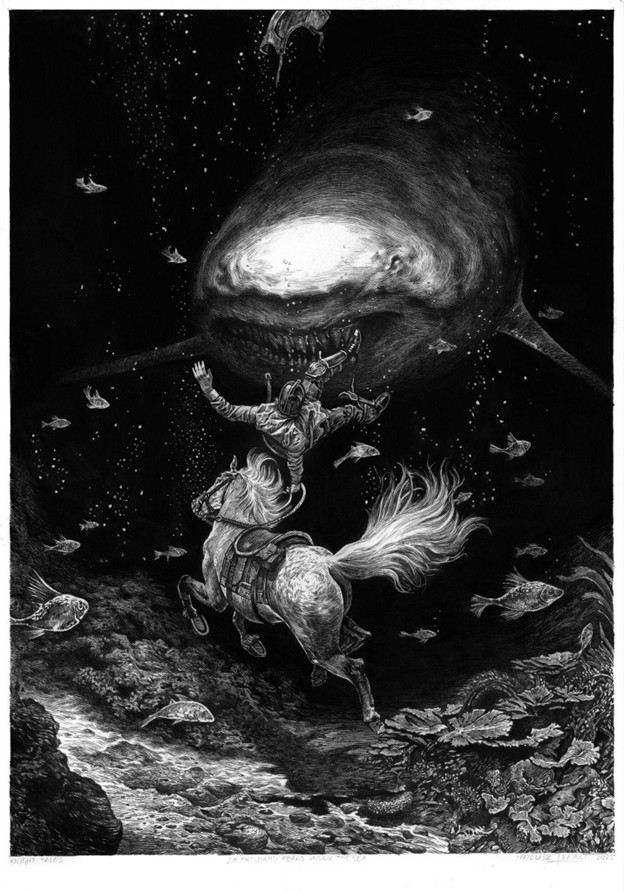
There’s also my ongoing series The Knight’s Tale, created in traditional pen and ink. I hope to find the time to add new chapters to the story of that lost knight. As always, there’s never enough time and far too many ideas.

Hopefully, you’ll be able to see some of these new projects soon on my social channels — mainly on Instagram.

Thank you for the talk.

Thanks for your time and the wonderful art you’ve sent along for us to appreciate! Hopefully we can connect again in the future to see what you’ll have been up to!

*

Mateusz Lenart is an impressive bridge strung between ink and pixel, between the quiet scratch of a pen and the thunder of a horror score. His work reminds us that the best creators aren’t defined by tools but by vision: a sketchbook line that can grow into a world, a half-remembered comic that becomes a camera angle, a personal short film that seeds a new way of seeing. At Grailrunner, we often say “Dreams are engines. Be fuel.” In Mateusz’s hands, those engines are ink-black, smoke-stained, and unstoppable. And we can’t wait to see where they carry him next.

Till next time,
The Worst Art Advice I Ever Got

I lost over thirty years in my art journey because I (stupidly) took a wrong turn based on what should have been great advice. Let me tell you about that, how exactly I went off the rails, and what a ridiculously talented Korean artist said that got me back on the journey.

If you care about the process of visual creation, whether it’s you doing the creating or just a spectator’s interest in how all that works, then this one’s for you.

Why does this matter?

Crap, man, I’d like to be thirty years better in drawing and painting! I hate that I stepped away for that long. I’m the chief illustrator for Grailrunner, and its lead writer, and its game designer. I need to get a lot done myself to control costs, but somehow keep a high standard on quality of art to convey the unique (we think) property we’re trying to build with the Salt Mystic line.

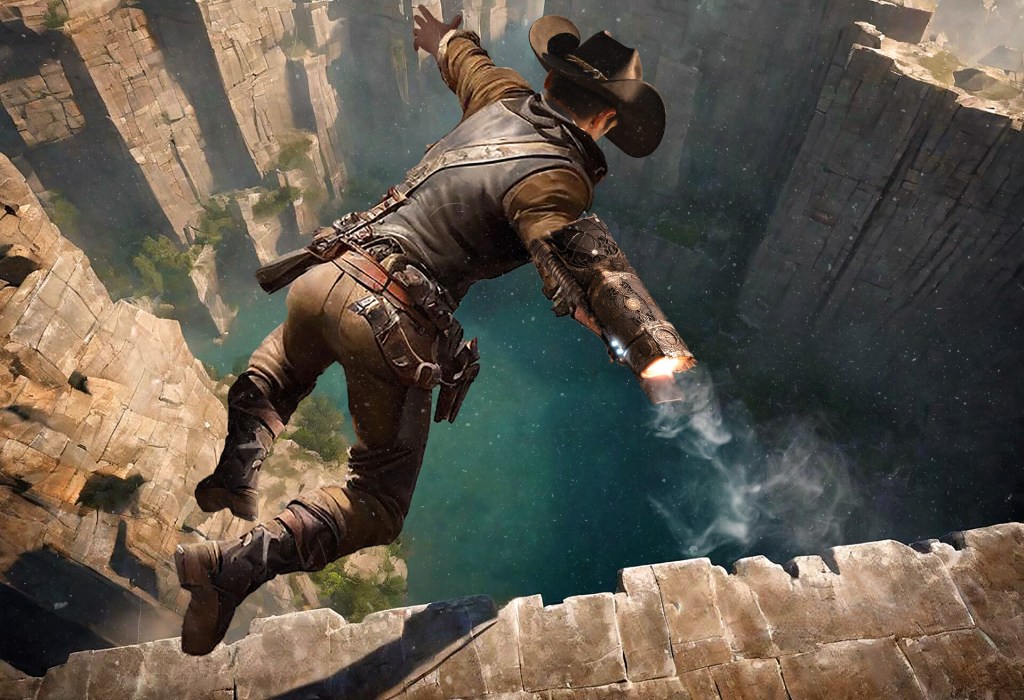
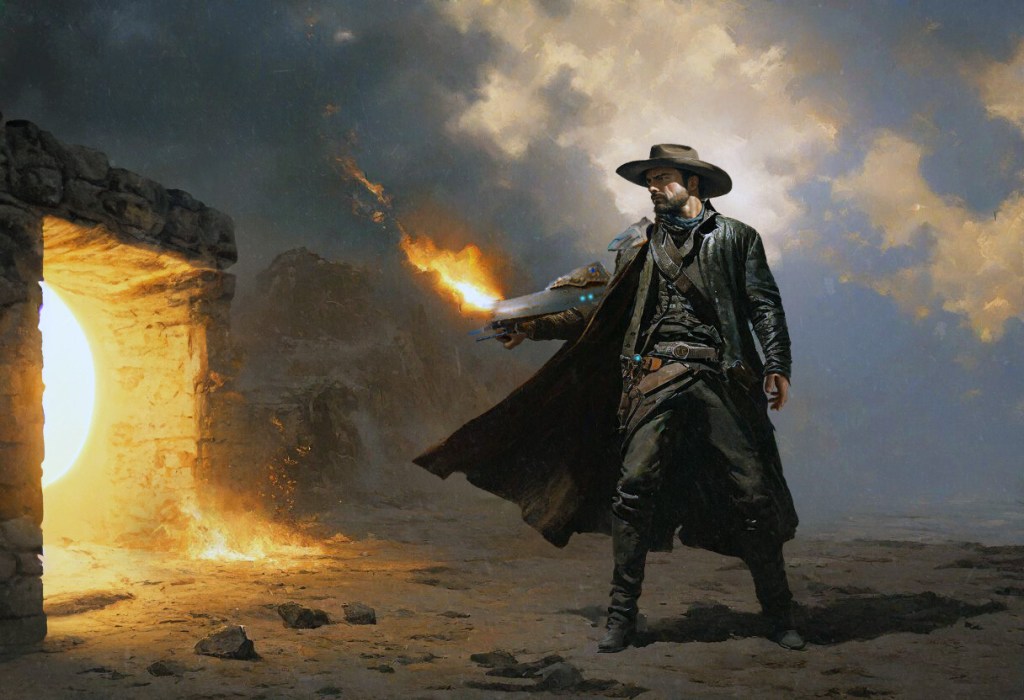
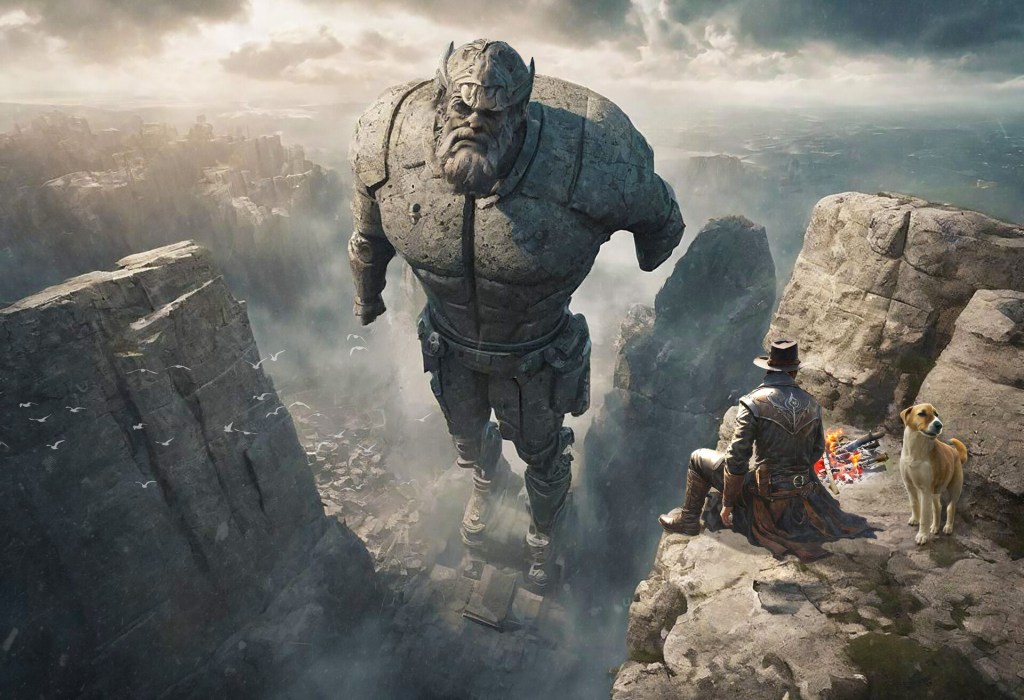
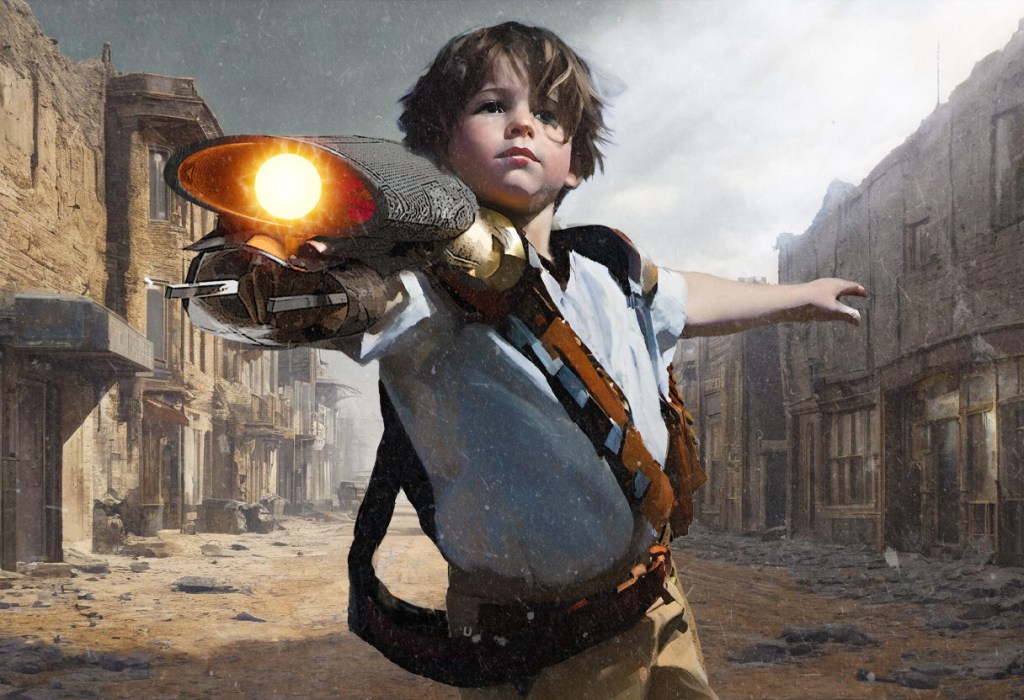
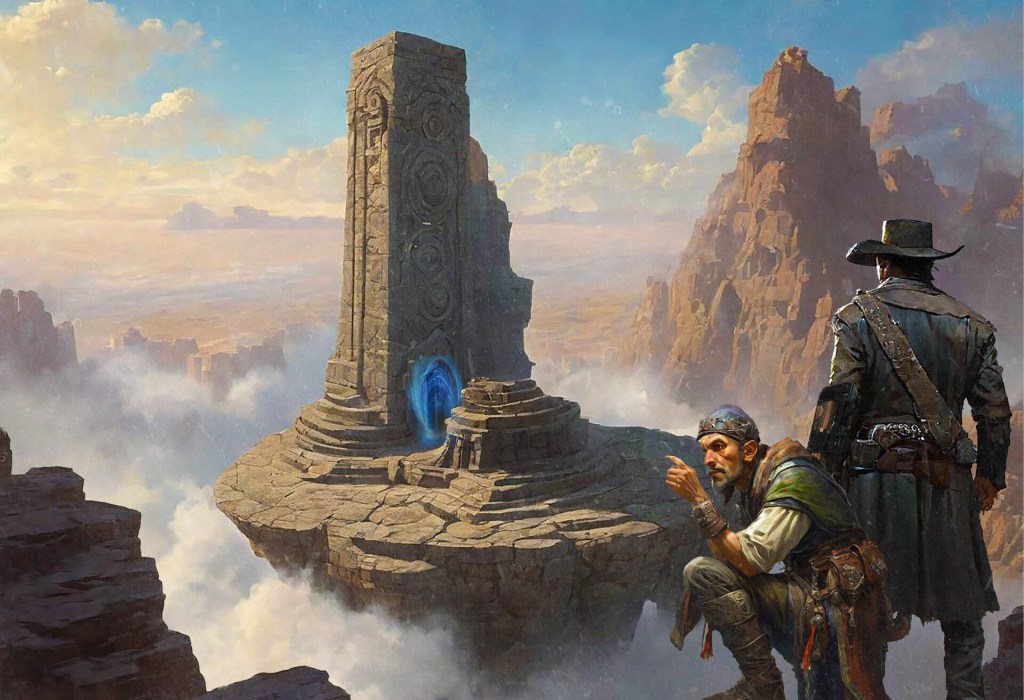
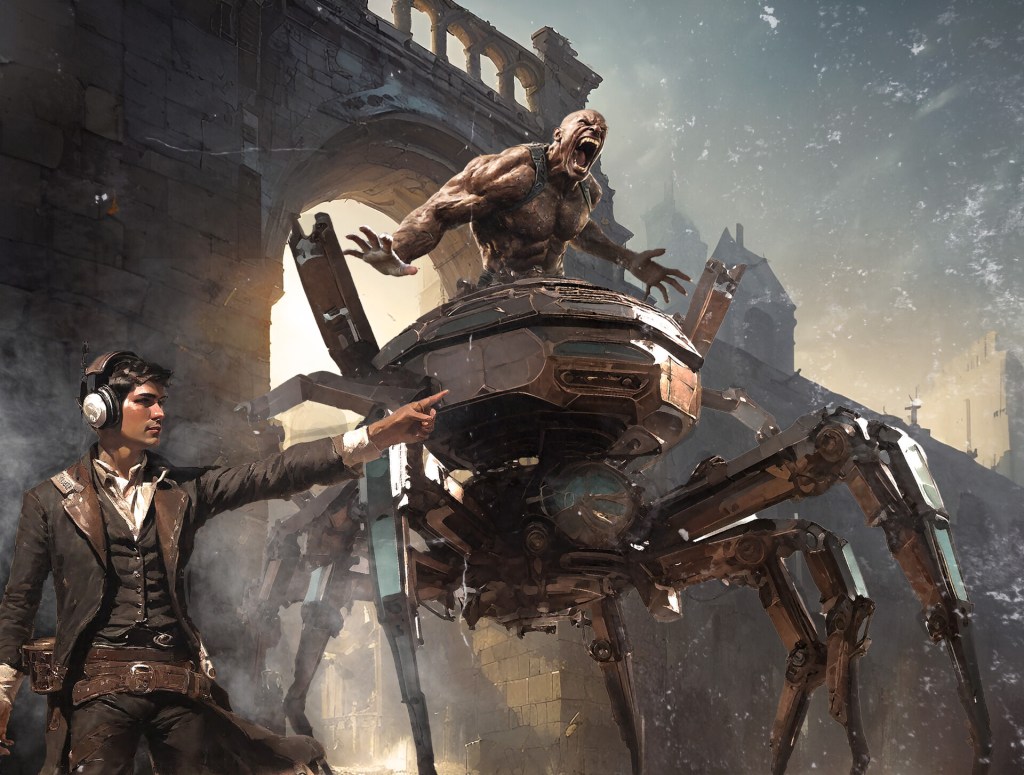
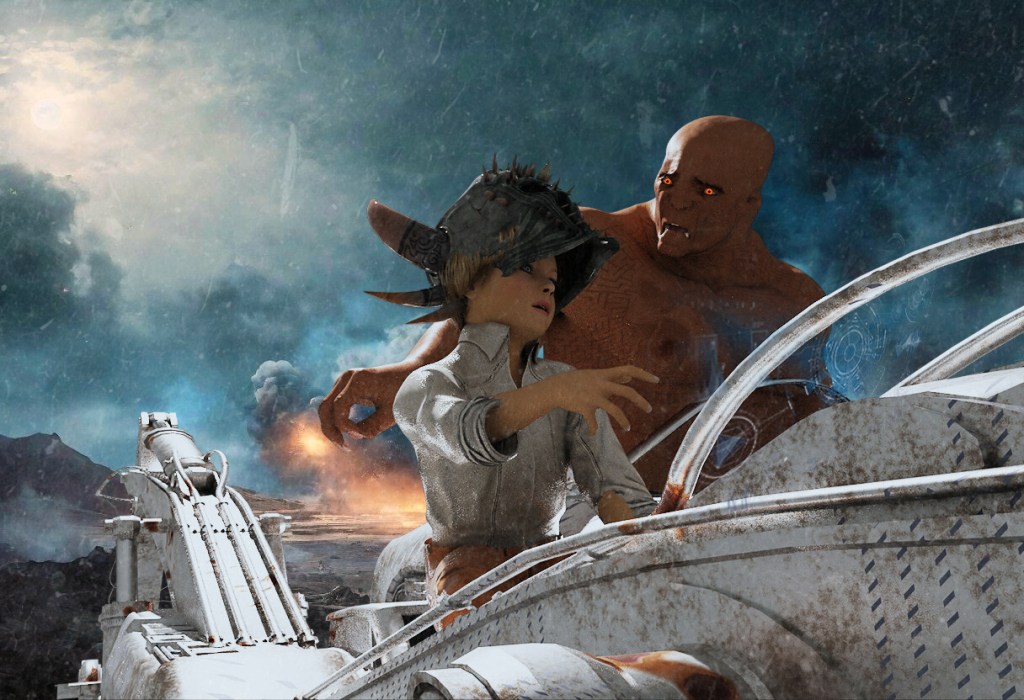
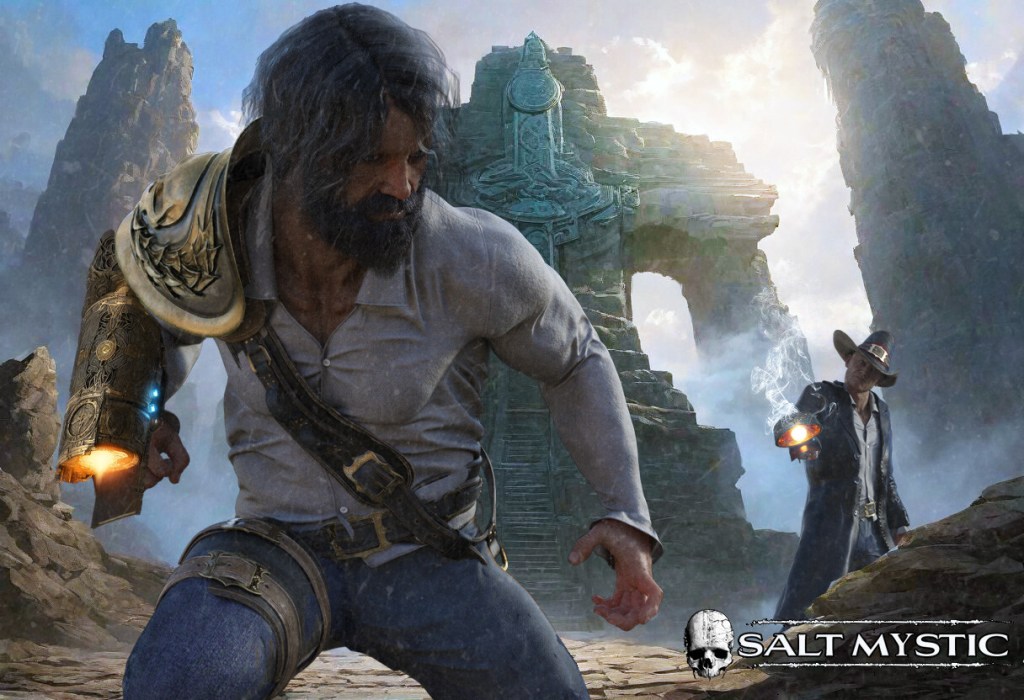
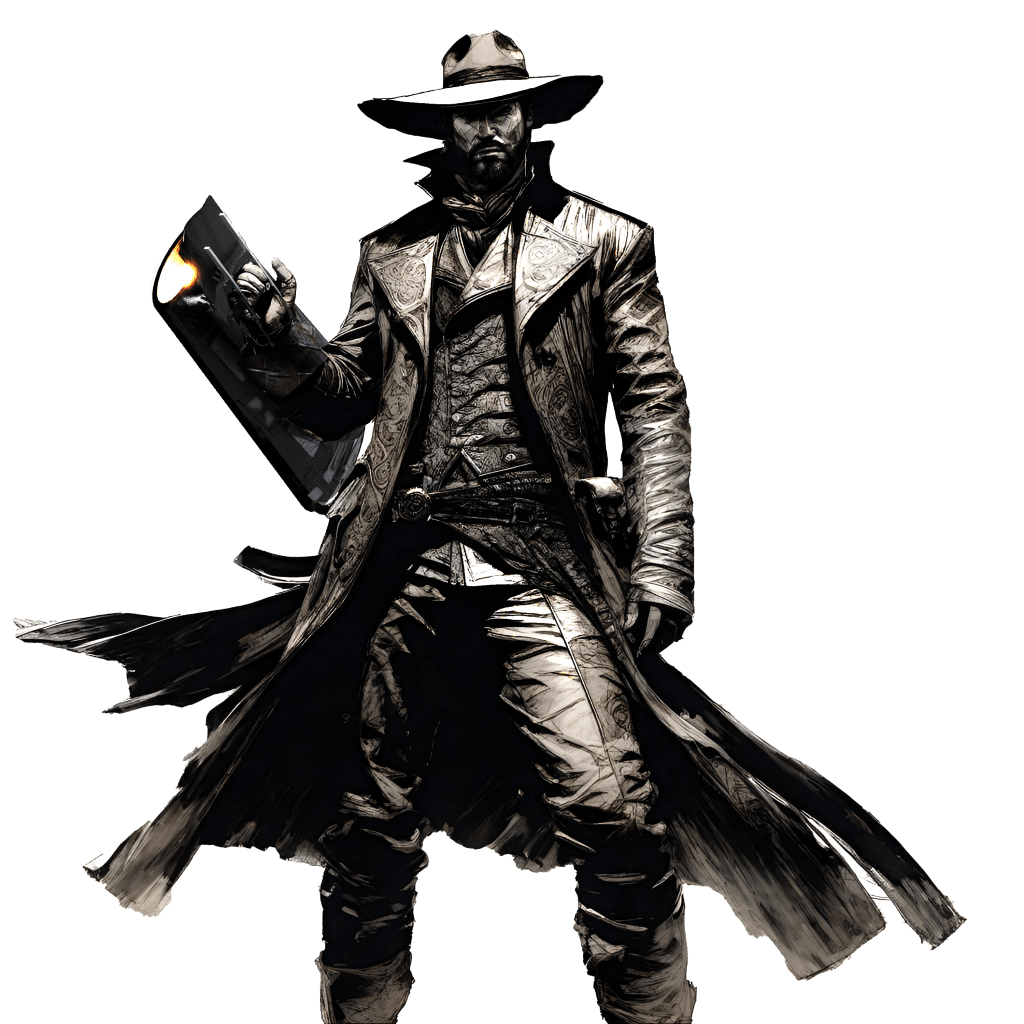
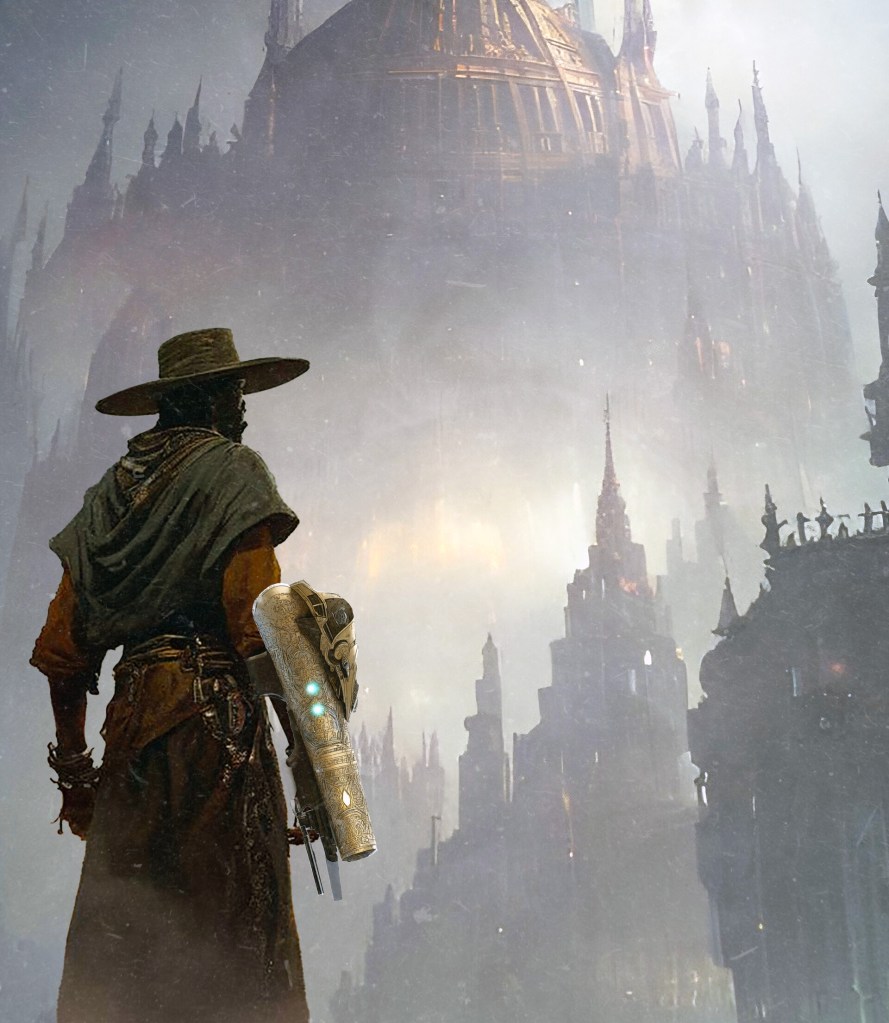
The images below represent the style of work I’m building these days, relying heavily on photobashing and concept art techniques (with folks like Imad Awan as my virtual gurus). The Grailrunner house design standard is semi-realistic digital painting with grungy overlay, western themed adventurers almost always carrying the signature weapon (a gauntlet-based plasma weapon that doubles as a shield in duels), exploring statue-riddled, software-haunted ruins with shimmering dimensional portals. We aim for vibrant or earthy colors, lots of smoke and grit, with implied stories (often illustrating flash fiction on Salt Mystic lore cards).

See the lot of them (and trace my hopefully improving style) at the Artstation account. Yes, I use AI-generated bits to composite exactly like I do with stock images but generally composite everything into something new and paint over them such that the transformation is meaningful and my own.

It gets the job done, at least I think. Still, I wish they were grittier. I wish they broke more new ground than they do. I envy the striking shapes and designs of a lot of concept art out there for cinema and gaming – the kind of images that stick with you even if you don’t know the context. Artstation is great for inspiration, but it can also crush your dreams if you compare yourself to anybody.

Mitchell Stuart, for example. Or Ricardo Lima. Or Raphael LaCoste. Or Greg Rutkowski. Or Ash Thorp. People like this are just on another level.

What’s prompted this reminiscence about bad art advice?

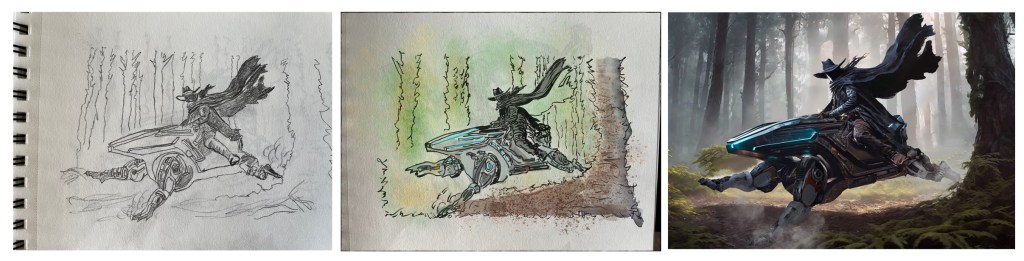
Well, I came across this book called Sketching From The Imagination: Sci Fi by 3DTotal Publishing. I wrote about it here. That was October, which seems like an eternity ago. I posed for myself the challenge of returning to traditional pencil and ink drawing in a sketchbook to push my imagination harder than ever before. The dream is to explore a blank page with loose shapes and vague ideas to summon phantoms into form and create groundbreaking designs and concepts. Then these wild new beasties and tech and colorful characters would then find homes in the fiction or game settings.

How’s that going?

Meh. I was so much rustier than I thought I was. I’ll share some pages here to embarrass myself and stay accountable to you for improving. We’ll get to that. But let’s talk about that advice.

When I was a kid, I filled scores of sketchbooks and countless backs of trashed dot-matrix printer paper my dad had brought home from work. Drawings of super heroes and sci fi vehicles and cities were my jam. Comic books were my main source of imagery, so everything I was drawing had bold outlines and underwhelming composition. The stories weren’t being told by the images in a self-explanatory way – I didn’t think about that sort of thing. I was alone a lot, so I didn’t share these with anybody, nor did I get any feedback.

Flash forward to one day in art class, Middle School I guess, the teacher strolled by to see whatever I was working on and stopped to say something about my approach that resonated with me. He pointed at the paper and said something profound:

“Real world things don’t have outlines. Draw what you see.”

It shook me. Hadn’t thought about that. Good point. So I gave it everything I had to incorporate his advice into how I drew. Back home, hovering the pencil over the paper, for the life of me I couldn’t figure out where or how to make a mark to start the drawing if you couldn’t outline it.

For this post, I looked through some old crates to find a particular drawing that would be humiliating to show but really staked the ground for when I began to turn away from drawing entirely. The picture in my head was a Dungeons & Dragons-style adventure party with a lady wizard, a swordsman, and an elf planning their next move on a morning beach with foamy, ripply water lapping at their feet. Maybe a dying campfire in the foreground with smoke rising in front of them. I couldn’t find it, unfortunately.

Anyway, it was horrid. Everything on the page was so light, you couldn’t even make it out. I was petrified to start drawing outlines again, and I couldn’t see how to force shadows and contrast to draw out the shapes. It threw my perspective. It threw my focus on their faces. It ruined everything. It was the last sketchbook I really did anything with until decades later, at least in any serious way.

Sounds bad. What’s different now then?

I get it now. Youtube changes everything, doesn’t it? Contrasting light and dark, the subtle use of textures, faking details, focusing and directing the viewer’s eyes across the image, and strategic use of busy and rest areas…I never went to art school. That all may be common sense to you, but it’s a glorious rainmaker for me to see all that in action artist after artist, listening to these marvelous and generous people draw magnificent things and explain their thought process as they go. Great time to be alive, isn’t it?

I travel a lot, so I keep an art pack and sketchbook. Pigma FB, MB, and BB brush pens, Staedtler pigment liners, a mechanical pencil, and some Graphix watercolor felt pens. Since October, I’ve put the practice time in almost every night at least for a half hour. It wasn’t a pleasant return.

The dream is to draw from imagination though: new things. What I’ve learned from artist after artist in their podcasts, Youtube or ImagineFX interviews is that drawing from reference is far more common. A lot of the guys you see on video drawing or painting have their reference images off screen.

Reference images! That wasn’t why I got into this gig. If I wanted a copy of an image, I’d take a picture. It was disheartening to me to hear professionals talk about light table tracing for their outlines…to see fantasy illustrators mash up references to form fantasy beasts – all of it copying what they saw. That was my problem back in the first place, right?

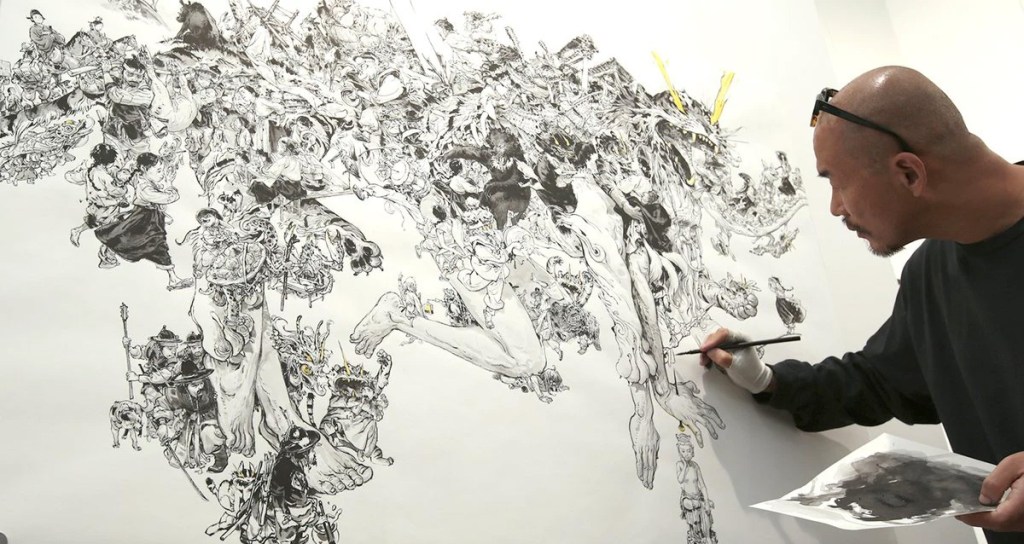
Then I came across this genius: Kim Jung Gi. Rest in peace.

Please google him if this flame of wonder is unfamilar to you. He drew from his imagination like a magical fountain spews sparkly fairies. He just walked up to paper and went nuts, drawing fish-eyed perspective, highly intricate intertwined figures, scores of objects and novel, distinct, and interesting characters at a high rate of speed and without slowing. How’d he do that?

That guy didn’t have any reference images. That’s what I wanted. I had to go deep to understand what he did right that I was doing wrong that could unlock this magic. Exploration on the blank page…finding ideas haphazardly that were uniquely my own…I wanted to bottle this magic for myself. How in the world did he get to the point he could do it so wonderfully. Then I heard him say it (through a translator):

“Don’t draw what you see. Draw what you HAVE seen.”

His point was you have to do the reference images and understand forms and shapes in three dimensional space before you can do what he did. He explained the lifetime of sitting in public places filling thousands of pages drawing what he saw and forcing himself to draw it from another angle. That was the key – he drew what he saw with a lifetime of practice, but still practiced summoning those images from his memory to try them from different angles.

He drew what he HAD seen. It was a big realization for me, this idea of examining the reference image – not just to get better at copying it, but to run your mind’s eye all over it in three dimensions to understand it better and to file that away to fuel your imagination.

Now THAT’s what artists actually do. They don’t copy. They understand.

I wish that guy was still alive. He was amazing.

Agreed. Now how about sharing your progress?

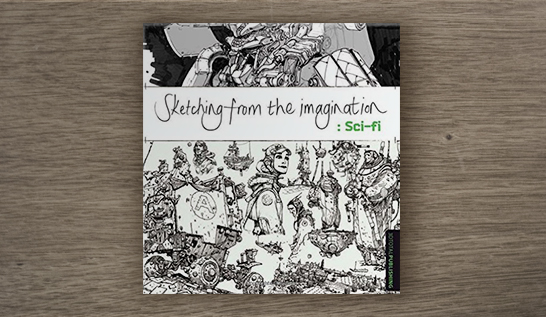
Ugh. Here you go. Don’t be judgey. Wish me luck that things improve. Go ahead. Click the book.

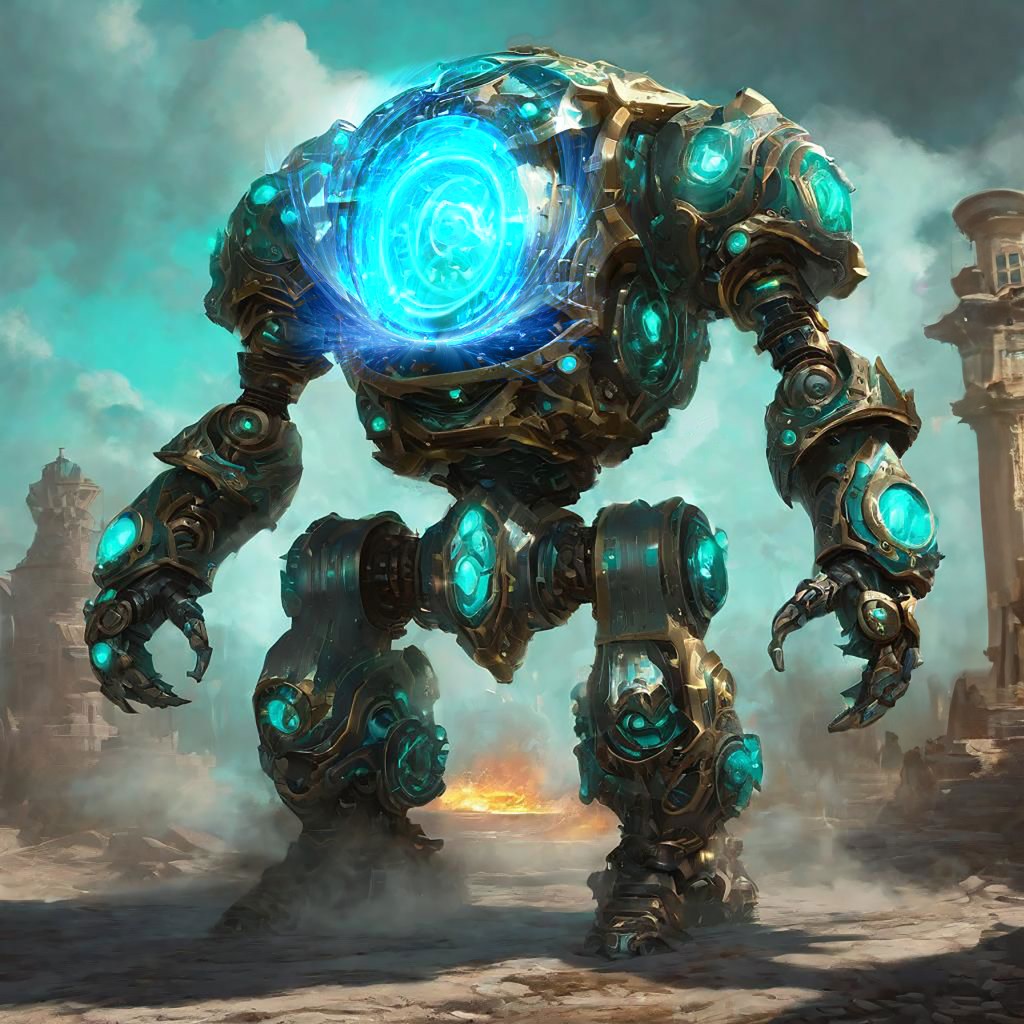
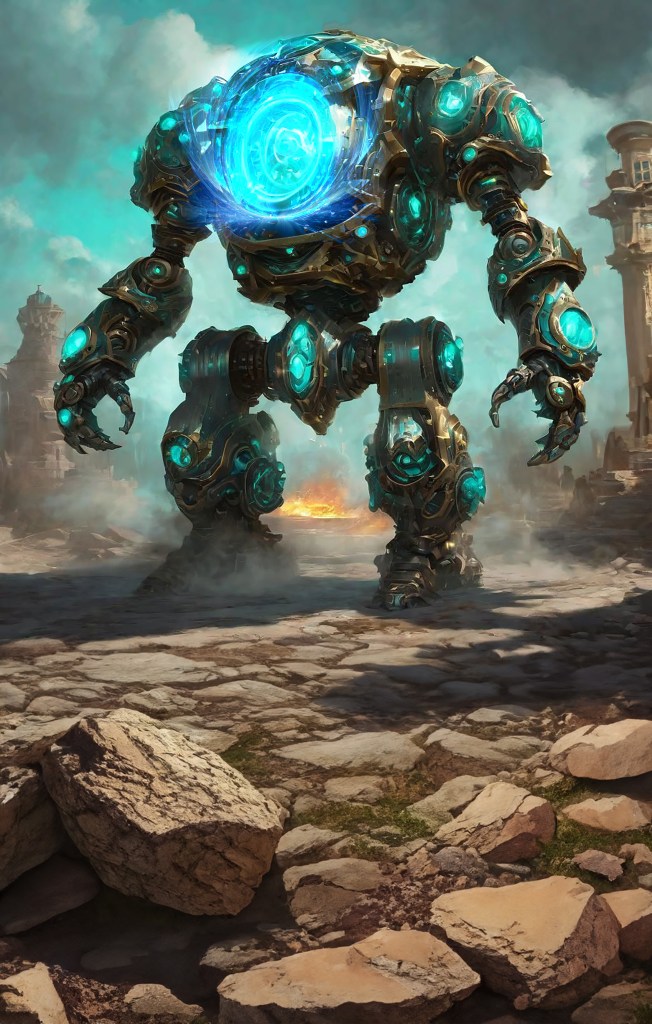
Ouch. I hope you don’t lose all trust in me, should you have had any. Photobashing is an entirely different beast than battling blank pages with a mechanical pencil. I’ll keep at it. The beast-shaped robotic vehicle in the header image was a minor victory in this experiment: called a “sporecutter”, it’s the first concept that’s come from the new approach that might actually make it to the fiction. Page 15 in the sketchbook file here is the front runner for the design of an important vehicle in the Mazewater: Master of Airships novel I’m working on. That’s another possible win.

That’s what I wanted to talk to you about today. I hope it was enlightening or helpful, should this be a journey you find compelling for yourself. Otherwise, I hope I still brightened your day a bit and made you think.

Till next time,
New Salt Mystic Lore Card Available For Free! Meet The Justice Engine.

I’m swimming with stuff I need to get down in the lore for the Salt Mystic universe. There should be more time in the day and less need to pay bills.

Anyway, here’s the background if you aren’t familiar with the original IP we’re building here at Grailrunner called Salt Mystic.

A unique blend of western grit and fantastical science! Step into a far future world where artificial pocket dimensions hide untold mysteries, gunslingers duel with ball lightning, and colossal armies fight for their very survival. Get ready to embark on a boneshaking adventure that will test your courage and set fire to your imagination!

Salt Mystic is an immersive experience that seamlessly weaves together the rugged allure of a wild western tale but with the boundless wonders of science fantasy.

Today, we’re introducing a new threat to this rapidly growing world called the Justice Engine, and we’re doing it with an exciting new lore card, available for download free now!

What is a Salt Mystic lore card?

Smash the Story Arcade button below to see a description and to access all of them, but basically it’s a distinct fusion of art and flash fiction on a single page to build (brick by brick) this expansive new world.

Oh, Grailrunner, what have you done now?

Oh, today’s a whopper! A doozie. A slam-fest to your noggin. It started with the art this time, and the vague idea of a wandering mechanical judge with a dimensional gate in its chest. You can see some of the image in the header and the full image below, though if you’re at all interested, why not just take a peek at the pdf in the Story Arcade?

The art is a photobash paintover, with the golem body itself AI-generated. I altered the background, mainly the tower on the right, and corrected some artifacts that came with it as well as added some clouds and sky. Then I added the rocky ground in the foreground to heighten the image for the card. The dimensional gate swirling was a handful of sparkly and lightning overlays in Color Dodge mode. The idea here is this thingie can just pluck you up and drop you into a pocket dimension should you be found guilty.

But it isn’t Robocop. I didn’t want some Hollywood-style robot going rogue with its own ideas of justice in a dystopian nightmare. There’s a twist to who’s doing the thinking with these and why they’re qualified to do so. There’s a reason they’re wandering these days, and it’s sad but maybe a little hopeful.

And all that is tied distinctly to the history of the Salt Mystic setting. I’m personally really proud of this one in particular, and I can’t wait to write it into something more ambitious.

Anyway, I hope you like it. Full image below and link to the new lore card here.

Please take a peek at the lore card – shouldn’t take you more than a minute or two to read the text and get the flavor of this new beastie. And let me know what you think!

Till next time,
New Lore Card Available For Free (And An Incredibly Useful Field Guide Entry)

I really enjoy introducing new elements to the rapidly-exploding Salt Mystic lore. This one is a real joy for a number of reasons, so strap in and hold on! And welcome to the latest entry in the Story Arcade (smash the storyteller below to see all the cards in the collection).

Some context first:

We’re working on a new project for the Salt Mystic line to be called The Augur’s Book of Lots. We celebrated a half-way mark in that recently, which you can read about here. Bottom line: it will be a bibliomancy-style oracle supplement for tabletop roleplaying, meaning it’s a doorway to enter the Salt Mystic world using the rpg game rules of your choice (or none at all).

What this beast of a project requires is a massive amount of lore and concepts that provide danger, intrigue, exotic locations and a rich history to explore, which is exhausting and exhilarating at the same time! Also recently, I personally started getting back into my sketchbook to generate and interact with ideas as an engine to feed the project. You can read the inspiration for that here.

So my head is soup now.

Anyway, one thing I’ve noticed making my way through three volumes of 3DTotal’s marvelous Sketching For The Imagination series is that many artists mine random ideas from inspirations found in nature. Thinking highly of that notion, I found David Attenborough’s Green Planet on Amazon and honestly can’t get enough of it…that and various similar documentaries on Youtube. It’s left me with the sense that I’ve missed an incredibly rich source of ideas – adaptations in nature and the back-and-forth struggle to find food and reproduce in an environment of limited resources. So to convert anything to Salt Mystic concepts, we just crank everything to its max and add some weird science fantasy.

And a gunslinger. Always add a gunslinger.

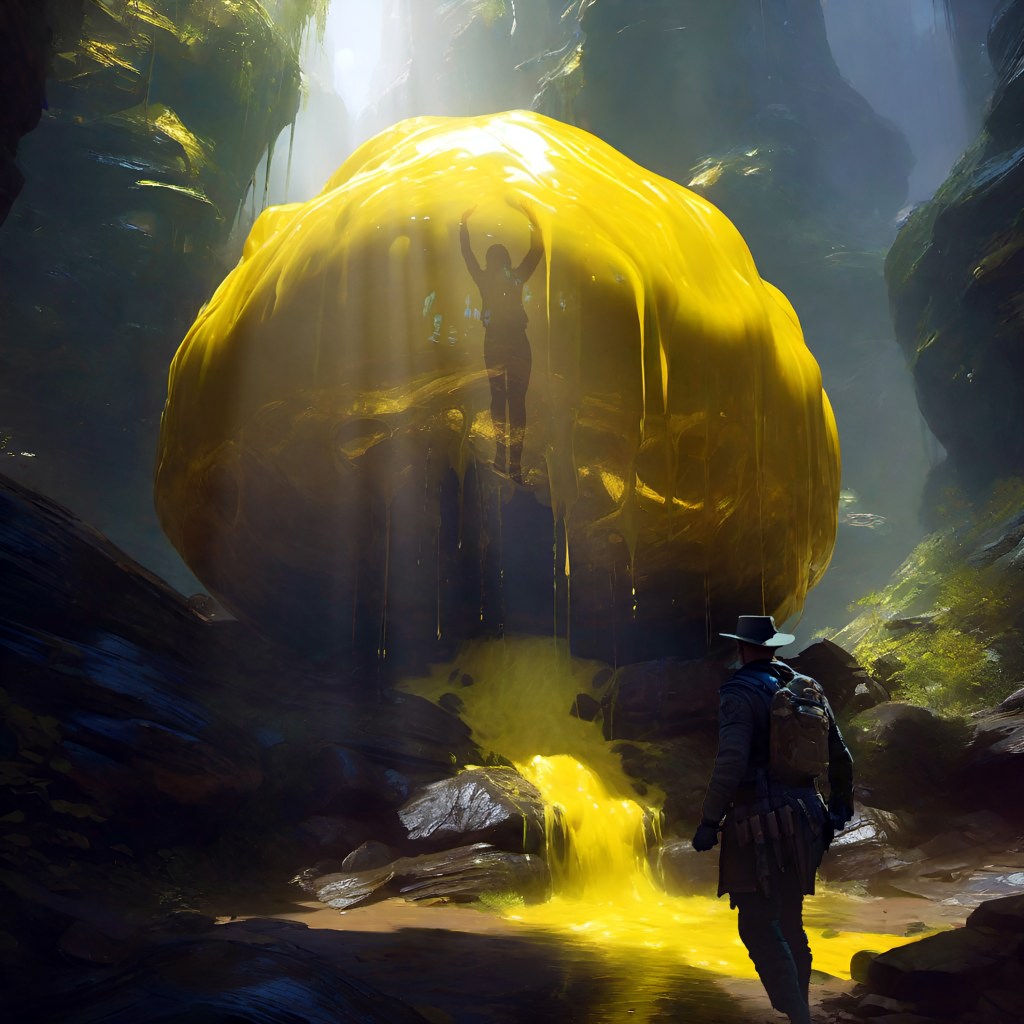
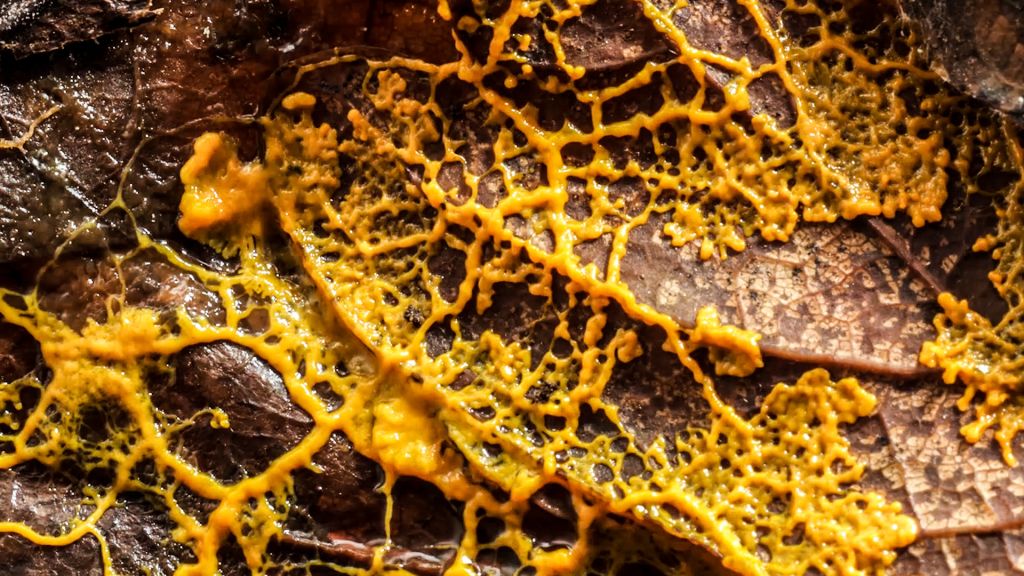
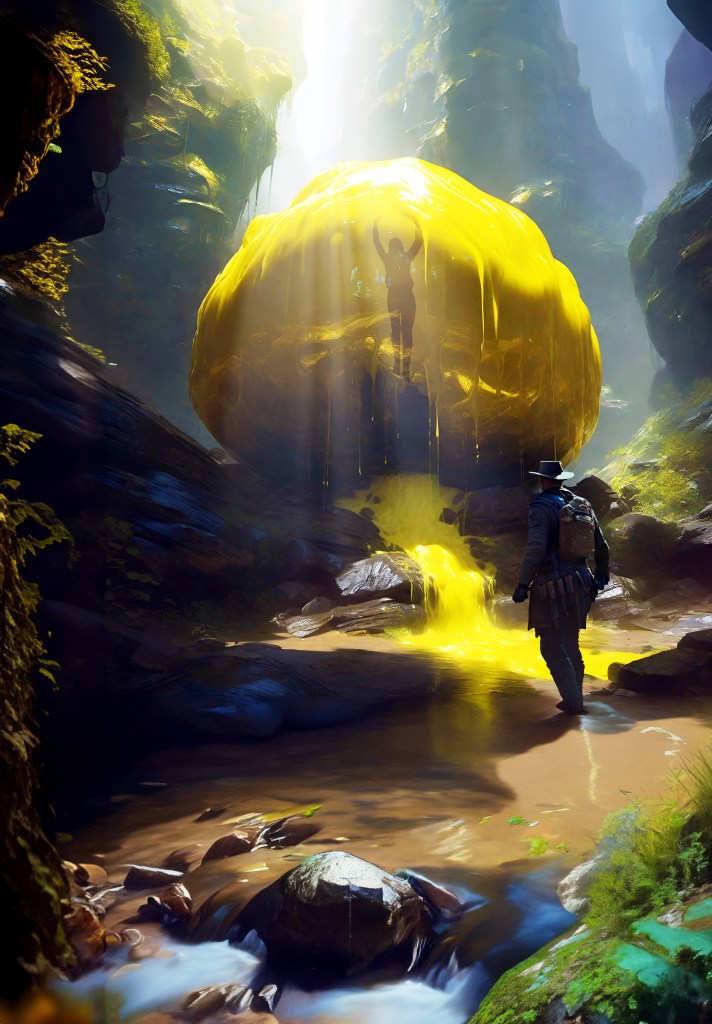
In the case of today’s highlight, the original inspiration was slime molds. And yes, I get that it’s a bit esoteric, but these things can optimize logistics problems and solve labyrinths! They pulse and locate food sources, at one point in the life cycle growing little stalks (called “fruiting bodies”…eww) to spew spores into the air. That sounds like a marvelous thing to have hapless adventurers come across, as long as it’s as big as a building and uses devious tricks to lure and consume delicious wandering heroes.

The art for this lore card is a photobash of at least five AI-generated elements and, I think, 2 stock images, composited in Photoshop. The core plasmoid and stream came from several iterations of prompts involving “plasmoid”, “giant slime mold”, “forest”, “stream”, etc. I expanded that with Photoshop’s generative fill in all four directions to create the tree canopy and sky, to extend the stream, and to frame the image with trees and rocks. Was also thinking this might go on a Salt Mystic game card at some point, so it needed to be more vertical.

The adventurer was also AI-generated, though he needed quite a bit of cleanup. The silhouette (which makes sense in the text of the lore card) was added with a “color dodge” blend mode with the opacity reduced.

Here’s the final, fuller image – the “Slime Trancer”:

Go take a look at the new lore card for free here. The text is short – won’t take you more than a few minutes to absorb the entire piece (see what I did there?).

Let me know what you think!

Till next time,
New Salt Mystic Lore Card Available For Free Now!

It’s always exciting when we can bring you another lore card: those new bits of the expanding Salt Mystic setting delivered in a unique fusion of flash fiction and original artwork! And they’re free!

You can download any or all of the Lore Cards at the Story Arcade by smashing the button below:

One thing we’re hammering home with the Salt Mystic line, and which will always remain core to it, is this:

In the Salt Mystic universe, cowboy-clad adventurers with ball lightning carbines slung to their arms bravely delve terrifying and thrilling pocket dimensions. The backstory of the Infinite Republic and its collapse, and the unlimited range of possibilities lying in wait out there behind sparkling dimensional gates is the (intentional) engine behind the adventures we’re trying to create.

Read all about the setting here.

So this lore card, called “Newb”, began with the image. I was touring an art museum in Kansas City. And I came across Claude-Joseph Vernet’s “Coastal Harbor with a Pyramid: Evening”, an oil on canvas from 1751.

Here, let me zoom in to the part that struck me:

I just kind of stopped and stared at that part. I mean, what was a pyramid with Roman columns doing on a seashore? And a functional one, at that? It sent my mind reeling, and of course ultimately (as always with me), made me think of sparkling and sizzling gates to artificial pocket dimensions where boundless adventures awaited.

Doesn’t that happen to you?

The artwork for this lore card was based on this, then. I wanted ruins beside a seashore with dudes working their gear along the lines of an exploration party, and I imagined the oriel gate as a shimmering window to another world up on the ruins.

The piece that heads this article is the end result: a paintbash of numerous elements, some of which were drawn from an AI art generator using prompts relating to what I had in mind. Once I composited all the pieces and bits together in Photoshop and color graded everything to match, I tried another trick.

Take a look at this work by Milan concept artist, Edvige Faini:

I am not great with color palettes. In Photoshop, you can match an image to another image’s color palette fairly readily. What I had produced so far in my process was too brown, too plain. It didn’t stand out like I’d hoped, and my adjustments to color and vibrance and hue weren’t giving me the result I wanted.

So I used Edvige’s piece here for the color scheme, matching my art to her color palette. I don’t know what you think, but to me, it’s wonderful. I’m a little overly attached to turquoise, so I’m biased. But still, I like the final product quite a bit.

This was the first lore card where I added the text over the image magazine-style. I’ve been reading a lot of graphic design books so wanted to experiment a bit.

Download the new lore card here.

Till next time, guys:
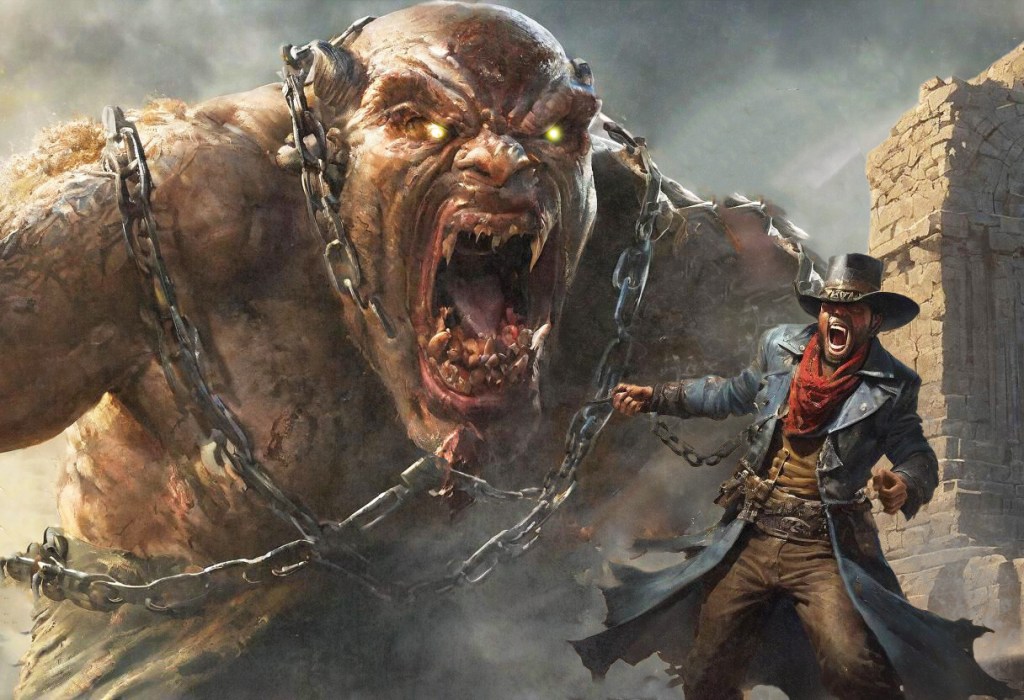
Riffing Ideas Like Stan Lee: The Marvel Method With AI

Assuming there is an afterlife, and that I get to hug three people of my choosing for just how wonderful they were and how much they impacted me, I’m thinking (today at least, the list changes):

  1. Robin Williams
  2. Pausanius (explained here)
  3. Stan Lee

Honorable mention to Nicholas of Myra since he was Santa Claus.

Let’s talk about Stan Lee for a minute, and the miraculous collaborative technique he popularized, in many ways pioneered in comics writing called “The Marvel Method”.

Listen to him explain it here.

The stories Stan used to tell of the old days of Marvel are truly fascinating and inspiring. His mom got him the job with a cousin (it was Timely Comics then). Pretty much all the adults quit or didn’t care and were never around the office, leaving him as a teenager who knew nothing about the business pretending everything was fine.

All manner of folks apparently went on business as usual with the in’s and out’s of the office, never really knowing the kid that was always in was the one basically running everything. As he matured in the business, and couldn’t keep up with the many writing responsibilities, he relied on what came to be called “The Marvel Method”, meaning he would provide an outline or maybe just an idea to the artists, and they would go nuts from there, expanding the basic plot thread into intricate panels of story without words.

Stan would take what they sent, whatever they sent, and add the dialogue and narration, riffing off what they had provided since he only knew the basics of the story. With geniuses like Steve Ditko and Jack Kirby to work with, he made magic.

Here’s what you might have seen, for example, sent in by John Buscema:

We’ve stated our position on generative AI tools here at Grailrunner before. Bottom line, although many occupations are threatened by this rapidly evolving technology, it isn’t going away. In fact, it’s a new industrial revolution. We believe tools like Stable Diffusion and ChatGPT have a place in the world, but see them more like stock image websites or reference or idea books.

Like George Lucas did back in the day with Ralph McQuarrie’s mind-expanding images, the art and the ideas can dance together and make beautiful new worlds.

What’s that got to do with Stan Lee?

There’s a new experimental generative AI program called AI Comic Factory hosted on huggingface here. Looks like this:

You select the style and layout, then enter a prompt. When you hit the Generate button, it lays out a set of comic panels based on your choices and entry that are impressive.

While I have no intention of packaging these up for our Salt Mystic line, it really is fun to describe some of the elements of our IP and see what looks like a Humanoids comic illustrated by Phil Gemenez pop up in a few seconds with interesting graphic elements that inspire more ideas to pursue.

Look at these to see what I mean. My prompts were variations of cowboys entering dimensional portals, stone golems (glowing or otherwise), beautiful fantasy cities and majestic airships, that sort of thing. All very much in line with Salt Mystic adventuring.

I’m drooling at this. It’s incredible how inspiring this can be! When I’m looking for descriptions for a character now, or costumes (which I hate describing), or an interesting perspective for a city, I can go back to these and dream.

Recently, I started playing with Actions in Photoshop to turn images to pen & ink drawings with the click of a button. I have a very nice gallery of ball lightning carbines now to drop in to whatever I’m working on. For the header image, I grabbed one of those, color matched and graded it after compositing it in. I cut it off to fit the panel so it would look like it belonged.

Then I grabbed a cartoon dialogue bubble from a Google search and used Comic Sans font in Photoshop to add the gunslinger’s words. Not sure what he’s pissed about, or who in that city is going to pay for it, but it sends my mind reeling.

Anyway, that’s what I wanted to suggest to you today. If you’re going to try it out, don’t forget to be respectful of the artists who worked on the images that trained tools like these, but don’t be afraid to collaboratively build something new with them either.

Let us know what you think.

Till next time,
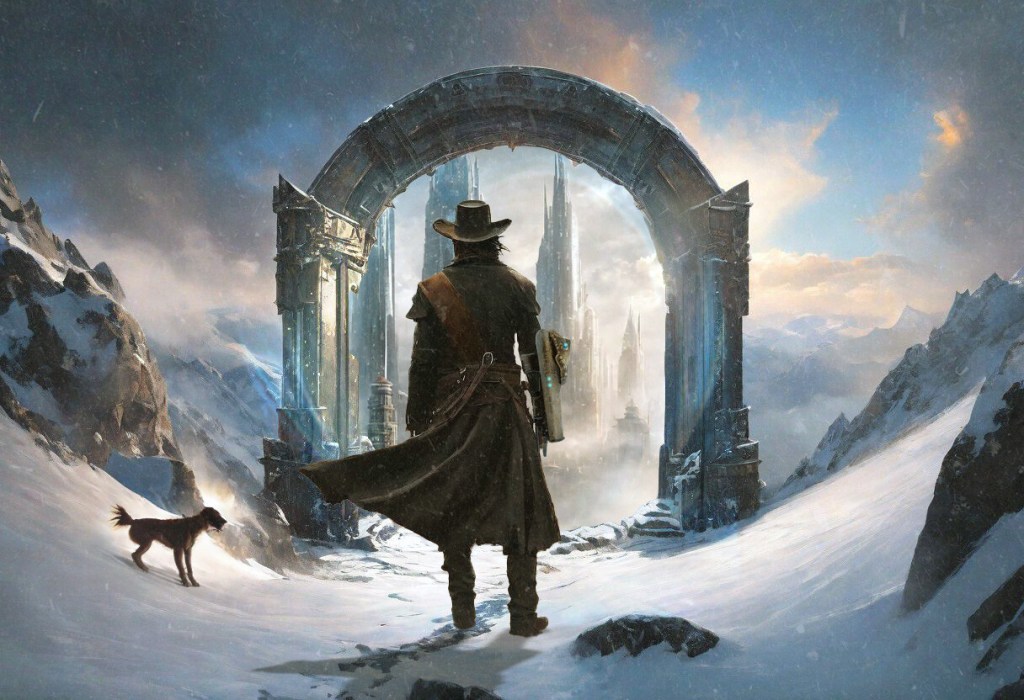
AI Art Generators & Photoshop For Concept Art

I’m a visual thinker, big time. If you’re explaining something to me, I’m probably picturing what you’re talking about so I can follow what you’re saying and make something useful of it. If the picture starts to fade on me, then you may as well be speaking jibberish. That’s why rapid prototyping concept art is such a gamechanger for me, at least, in storytelling and game design. And it can do much more than prototype, as long as you’re not afraid to spit and polish.
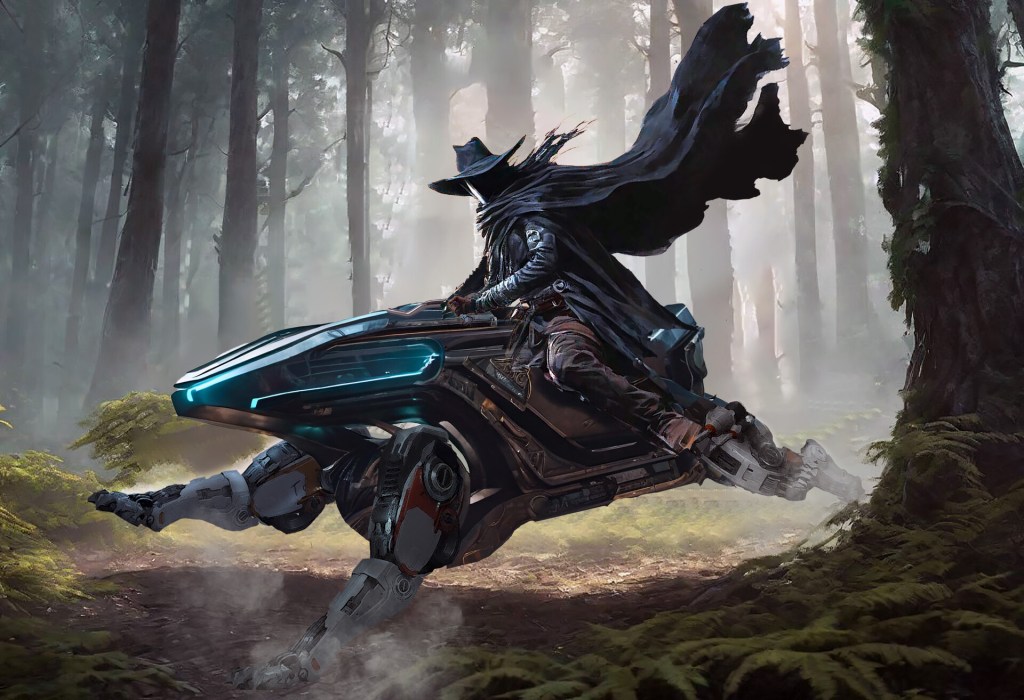
In the last few months, AI art generators have taken off like a rocket and are rapidly improving in functionality, customization, and capabilities. Stable Diffusion, Codeway’s Wonder, and Artbreeder are my favorites right now, depending on the functionality I’m looking for. Midjourney and Dall-E have stolen all the oxygen out of the room as far as the media running with this narrative, but for fantasy / speculative fiction concept art they don’t offer the styles and datasets I need.

At Grailrunner, we’ve recently incorporated AI-aided art into our workflow for marketing images, for the website graphics, and to some extent in our products. I’m sorry if you’re an artist who feels threatened by this marketplace shift, but it really is a technology that is unlikely to go away or accept a lot of regulation. At this point, with millions of images generated per day across multiple apps, it feels more like an unstoppable tsunami you should probably figure out how to surf.

We just added another Lore Card to the Story Arcade here on the site and thought it would be fun to show a behind-the-scenes on the work, mainly to show how we’re using this fantastic new tool in what we do here.

What’s photobashing?

Photobashing is a technique where artists merge & blend photographs or 3D assets together while painting and compositing them into one finished piece. This is used by concept artists to speed up their workflow and achieve a realistic style.Concept Art Empire

Stephen Gibson, Art Director and designer of Grimslingers makes an interesting comment about this: “My current style for Grimslingers is photo/3D bashing. I collect images to splice together and keep painting over it, splicing in new images to fill out the character until I can’t stand to look at it anymore.” -Interview, Nov 2022 ImagineFX

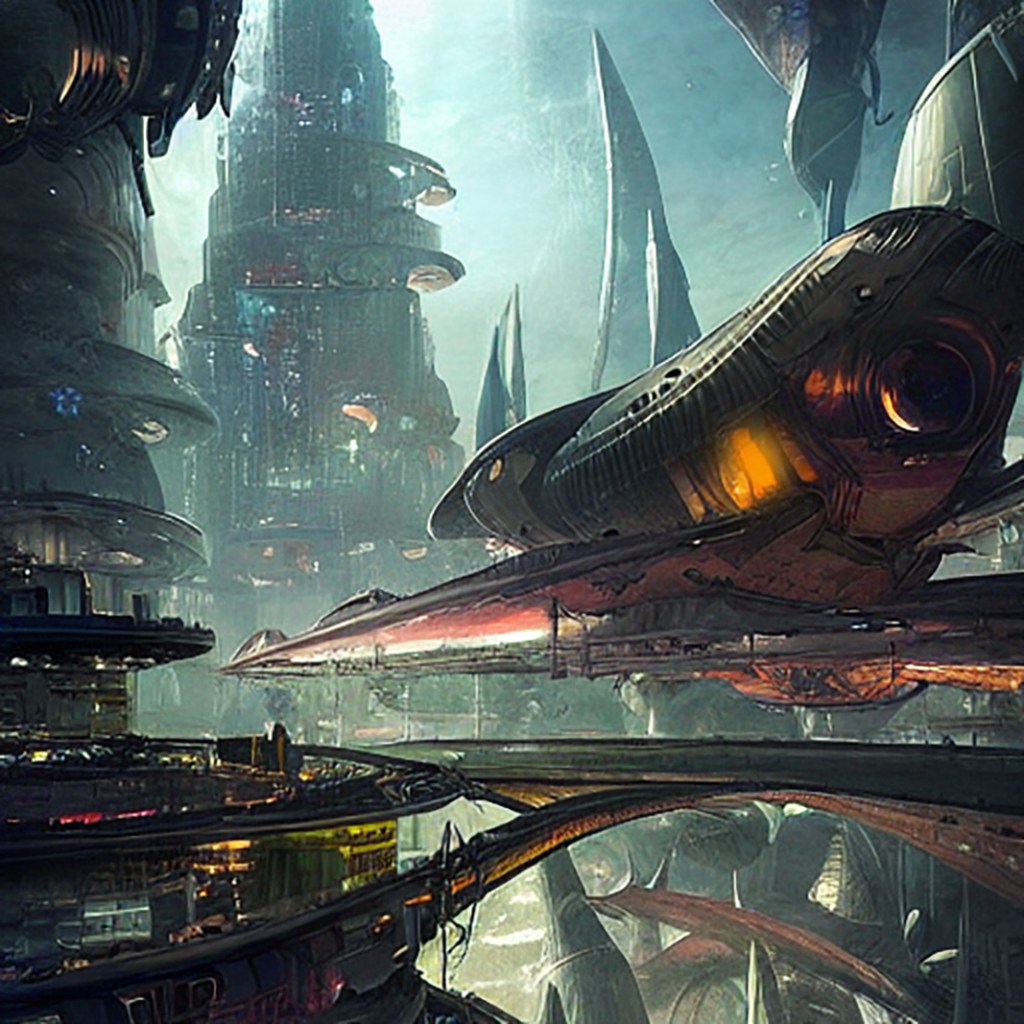
Funny, huh? Anyway, photobashing is a big part of my concept art journey. I started off trying to paint everything myself and realized that’s not where my talent lies. Things accelerate and honestly look a lot better if I pull together stock images or 3d assets from places like Turbosquid, Shutterstock, Archive3d.net, Free3d.com, Nasa (nasa3d.arc.nasa.gov/models), Sketchfab and Daz Studio into Blender and work out compositions there. A lot of museums are starting to upload their collections as 3d models as well, typically for free!

Pulling assets together

Blender is still my go-to tool for compositing 3d assets into something useful because you can manage the placement and lighting and mess around with textures in Substance Painter. Incredible flexibility, but it’s time consuming. It’s also a place to build up assets that are unique to a world I’m creating (and so won’t be available anywhere. Then Photoshop. Always Photoshop. Nothing is done till it’s been through Photoshop. It’s a thing.

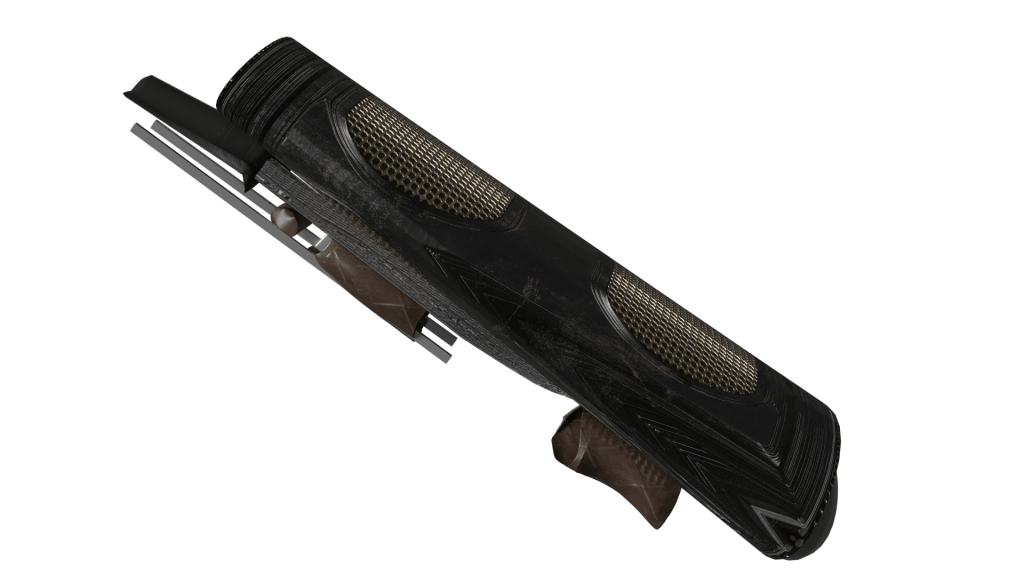
This is an example of what I’m talking about. The ball lightning carbine is a distinctive weapon, strapped to the arm of practically any adventurer in Grailrunner’s Salt Mystic universe. I made this thing in Blender with some parts from various models (a motorcycle, crutch, and I forget what all). The frame of it and the leather straps were just cylinders that I squashed and pulled into place, then added textures. Now I’ve got this thing in a hundred styles and orientations.

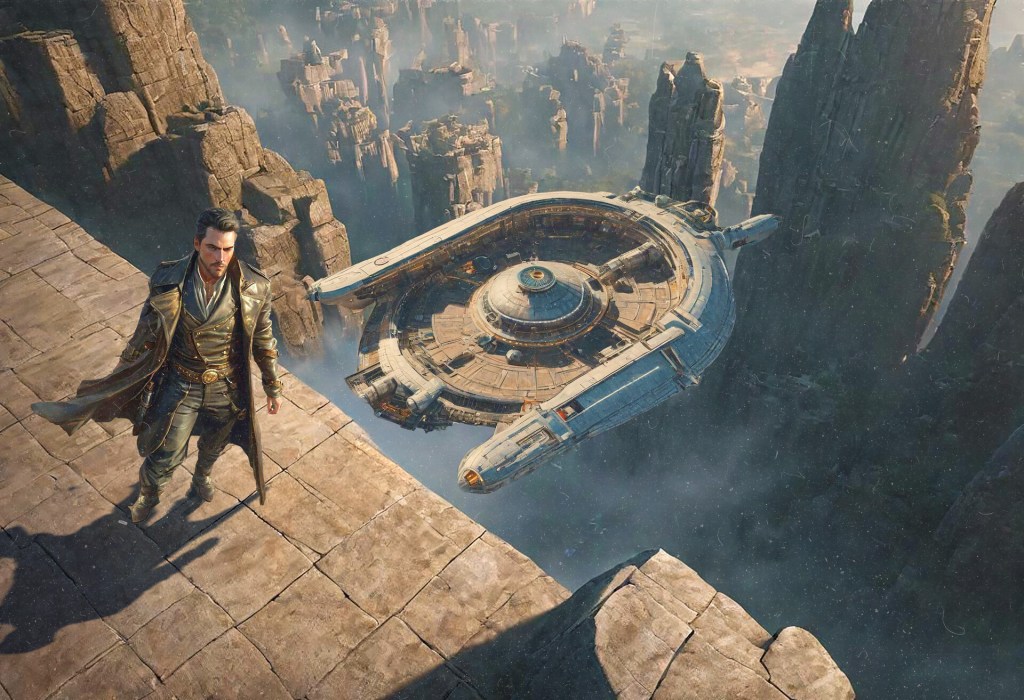
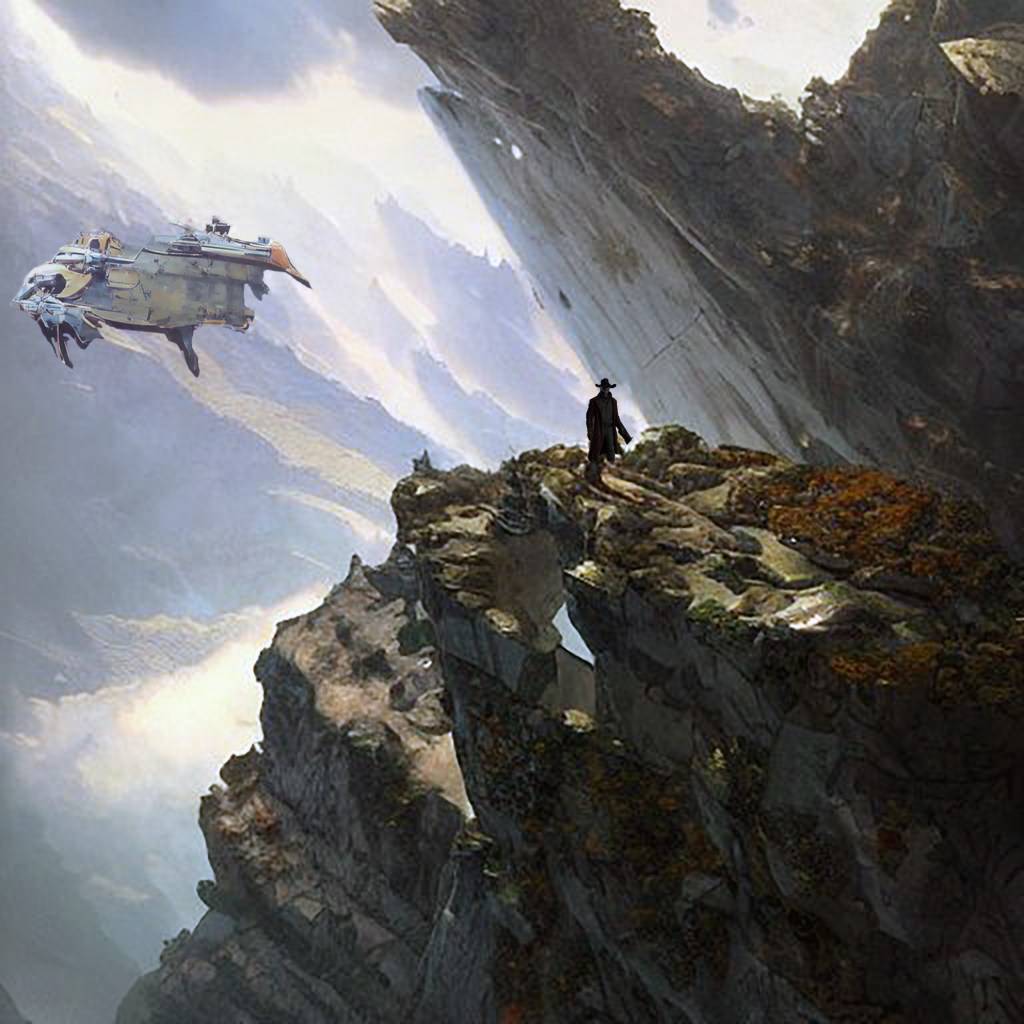
1. For our new Lore Card, it started with an idea: a dramatic aerial view of a carbine gunslinger on a mountaintop with a wide valley below him. Sometimes the story comes first, but in this case only the mental image. I’d write the story behind that guy after I saw him.

2. With Stable Diffusion, I experimented with a series of prompts suggesting the aerial view, the mountain top and valley, and the “fantasy gunslinger”. It took patience, not going to lie about that. And I cycled through several artists incorporated in the prompts to try different styles as well (you can mix artists too!).

3. Once I got something that looked like it would work for me, it needed some basic touch-up painting and color & tone adjustments in Photoshop. There was also an annoying misshapen character standing there (instead of my gunslinger that I asked for!) that had to be just erased. Photoshop has vastly improved capabilities now for easily removing stuff.

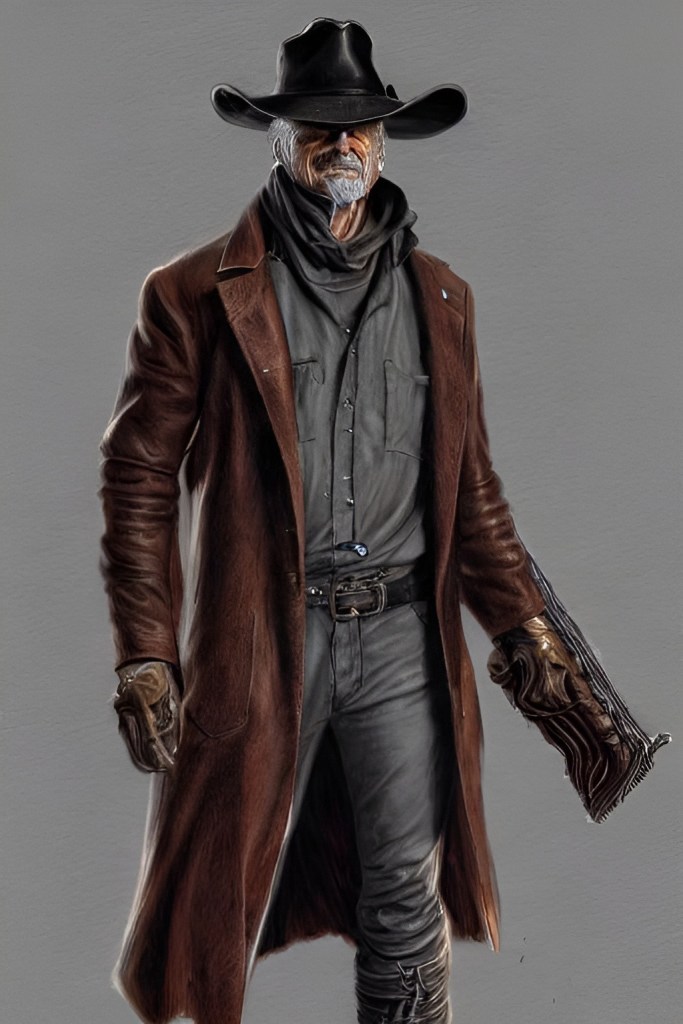
4. I still needed that gunslinger though, and went back into the cycle loop trying various iterations and prompts to get a guy in the right posture and wearing the long, gunslinger coat I was looking for.

This is the character I eventually went with. They can turn out with three arms and nightmarish faces, the fingers often run together and look like tendrils. Seriously, the output isn’t always mind-blowing, but here at least I saw the outline I wanted and general textures.

A bonus was the weird almost rectangular thing he had on his left arm, which if I squinted looked to me like our carbine without any extra editing.

5. I cut him out of his background and placed him on the mountaintop, gave him a little shadow, and darkened him to almost a silhouette. I was close, but it was bugging me that he was up on the high plateau without a clear story of how he got there.

6. I already had an asset for an airship from a previous work that I repurposed here. There’s a fantastic feature in Photoshop for automatically adjusting color grading and tone to match another image, so much of the hard work was done for me with that option. I just needed to trim it up a bit and place it in context.

You can read the accompanying story here on the new Lore Card. Here’s the final piece:

Let me know what you think, and if you have your own art journey going on. I hope you liked the peek behind the scenes.

Till next time,