Here at Grailrunner, we chase imagination as craft. Anything we can bring you that lights the fire of your creativity is fair game, with a special bend towards speculative fiction and fantasy. If you’ve got a willingness to tinker, you should find something here you can use, remix, or otherwise refine for whatever literary, roleplaying, or artistic wonders you’re cooking!
Today’s freebie is a really interesting one for the tabletop crowd, especially anyone who gets that nostalgic, electric feeling when you crack open old-school adventure content and your brain instantly starts building rooms, traps, villains, and bad decisions.
What’s the idea?
We wanted to turn classic modules from old Dungeon Magazine issues into a listen-able conversation
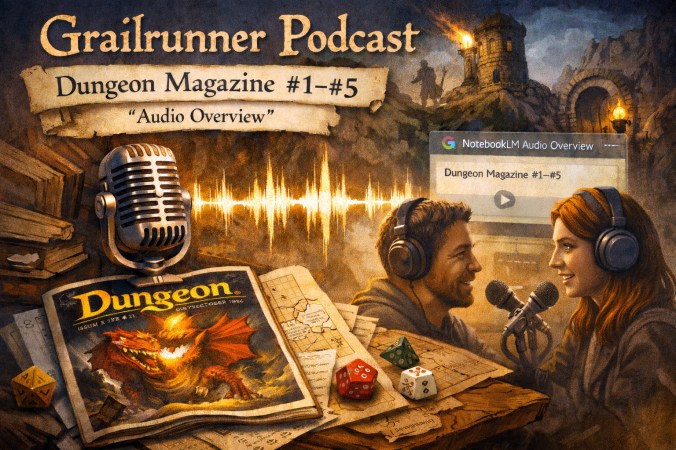
So, we generated a podcast-style episode using Google’s NotebookLM “Audio Overview” feature: one of those “wait…this is actually useful” tools that can transform your source material into an audio discussion format.
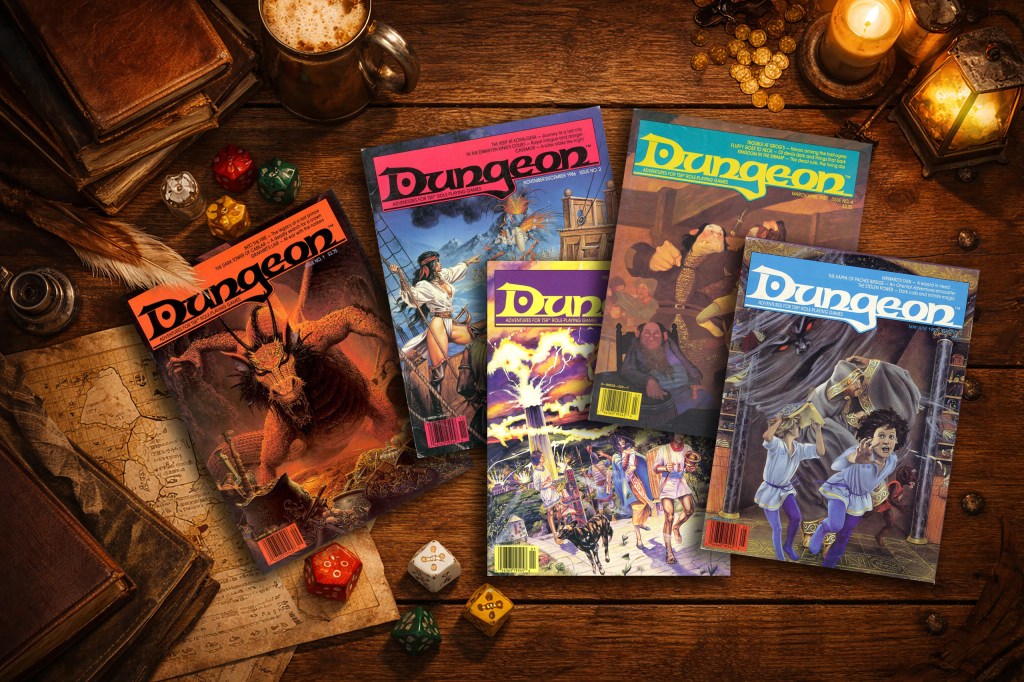
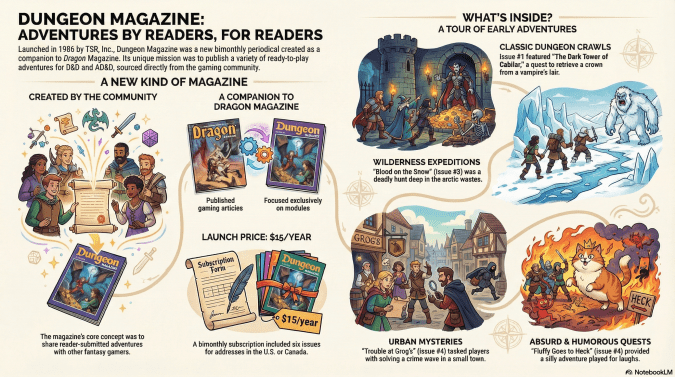
And the source material we fed it is a proper slice of RPG history (which you can download for free thanks to the folks at the Internet Archive – links below):
That’s the on-ramp period: Dungeon Magazine still finding its voice, still doing that early TSR-era thing where the tone can swing from earnest peril to delightfully oddball in the space of a page. It’s an incredible “creative compost pile” for modern GMs: hooks, maps, structures, pacing tricks, and that evergreen lesson that adventures are engines.
What is this (and what is it not)?
This is not a replacement for reading the magazines. It’s not “here are the adventures word-for-word.” Think of it as:
a guided audio tour of themes, adventure structures, and GM sparks
a way to re-encounter old material when you’re driving, cleaning, sketching, or prepping
a fast way to ask: What’s in here that I can steal, remix, and make new?
We like AI tools as levers: ways to turn raw source inspiration into momentum, while still being upfront that AI was used.
Why Dungeon #1–#5?
Because they’re early enough to feel like a time capsule, but polished enough to still be usable at the table. The first five issues show the magazine’s core promise: a buffet of adventures with different moods and play styles. Exactly the kind of variety that keeps a campaign from turning into one long corridor.
Also, if you’re the kind of creator who likes grabbing one great detail: an encounter concept, a villain posture, a dungeon rhythm, and letting it domino into a whole scenario, these issues are loaded with that stuff.
Why NotebookLM for this?
NotebookLM’s Audio Overview is basically a “make my sources talk back to me” button. Google describes it as turning documents and other materials into an “engaging discussion.” blog.google
And that’s the magic. The format doesn’t feel like a lecture. It feels like you’ve got two curious nerds in the room pulling interesting threads out of the stack. For RPG prep, that’s gold because prep is often just asking better questions about material you already have.
What’s the Grailrunner angle?
If you’ve read our recent posts, you know the theme: build year by year, make interesting things, share freebies, keep the creative engine running.
This podcast episode is exactly that energy and another little proof-of-concept that says:
What if “reading old RPG material” became listening to it think out loud and THAT sparked your next session?
Smash the Podcast Announcement image below to give it a listen for free:
I’d love to know what hits you:
Which issue had the best “I’m stealing that” moment?
Did the audio format surface anything you’d normally skim past?
What should we feed NotebookLM next: old Dragon editorials? a run of White Dwarf? classic sci-fi pulp?
We’ve got a lot cooking for 2026, and if the last year taught us anything, it’s that the best stuff often starts as a weird little experiment you almost didn’t try.
For years we’ve been talking here at Grailrunner about how imagination works — why certain images crack open your brain, why odd bits of history or art or game design suddenly ignite a whole setting, and why creators keep coming back to the well even when the world’s noisy. We’re always on the lookout for new ways to break into exciting and innovative designs, imagery, and above everything ruling it all…to tell new stories.
OK, so what’s the freebie?
Hold on – a little context first. It was a life-changing experience for me personally to write and design our most recent publication, SALT MYSTIC: BOOK OF LOTS, a western-themed science fantasy roleplaying game book built around the fortune-telling mechanic of bibliomancy. I’ll tell you why. To build out the world of our signature IP at Grailrunner, I needed a ridiculously huge amount of outlandish concepts, crazy ideas, and just cool, new stuff! I kind of went down the deep well of concept art techniques like mind-mapping, thumbnail sketches and iteration, shape carving, scribble ideation, and mood boards. That stuff is like adrenalin for an imagination, honestly!
It was so impactful, in fact, that I wanted to go deeper. Yet it struck me that art school and super expensive concept art classes with some of the working masters in this field aren’t going to make sense for me. I imagine they don’t make sense either economically or logistically for a lot of folks like me. So it got me thinking I’d like a simpler, streamlined, but focused way of drilling deeper into JUST the parts of concept art that would help me – the techniques that help break your imagination’s walls to explore new ideas.
Sounds great. What did you do?
We don’t charge for AI-generated stuff at Grailrunner, and we always point out its use. In fact, we’ve built out some pretty amazing stuff that we give away just to experiment with possibilities and hopefully inspire anybody that hangs out here with us. If you keep coming back here, maybe you’ll buy a book or a game or drop a LIKE on our Facebook page. That’s the idea.
My absolute favorite giveaway so far has been an entire board game mockup set in the seas of Tolkien’s Middle Earth. Awesome. I just got a Silhouette Cameo 5 for my birthday, so I’m planning to break that puppy in with the printable tokens and cards there.
And specifically now for concept art techniques?
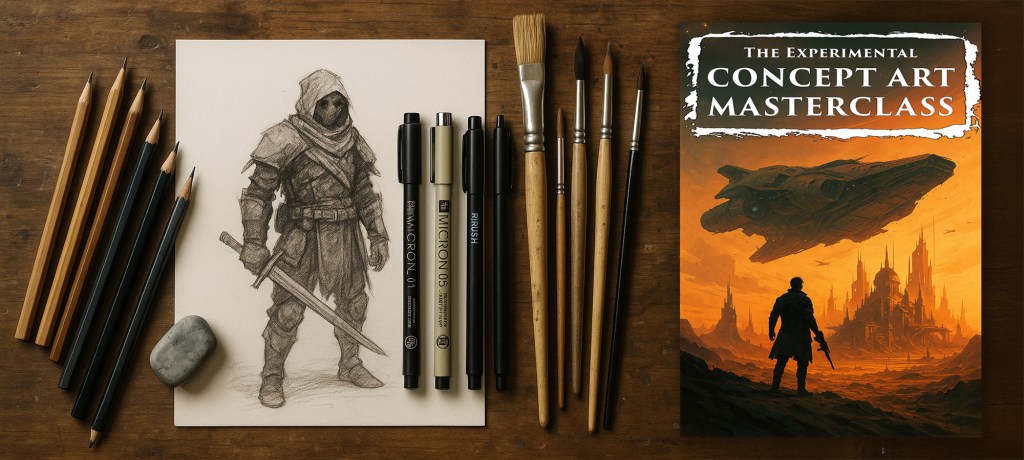
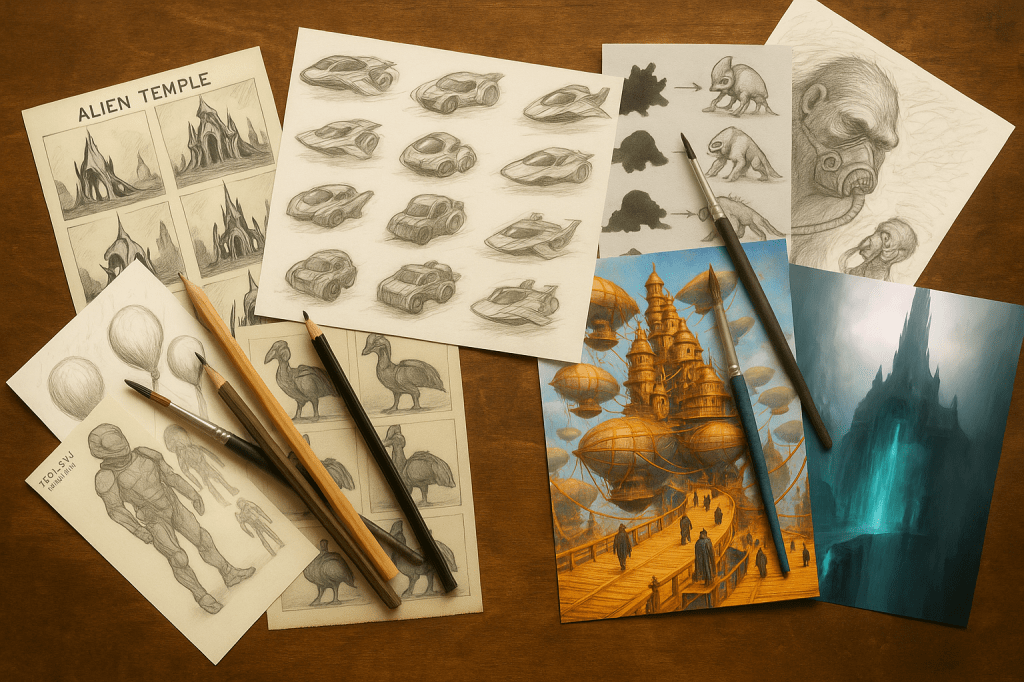
I curated a portfolio of concept art masters, provided an outline of content for my ideal coursework for a class, and instructed ChatGPT to act as the composite concept artist (meaning all those people) and write the chapters one by one for my outline as well as a preface and afterword. Then I went chapter by chapter and had it generate impactful exercises unique to each section which a student could conduct on their own with an internet connection and pencil and paper.
I mocked up illustrations of concept art techniques and examples to ensure the book is illustrated well and clear in what it’s saying. Then I bundled all of that into a professional textbook template and converted it into a pdf.
Inside you’ll find:
A step-by-step ideation → thumbnail → refinement pipeline
Practical exercises after every major section
Guidance on using digital tools without letting them boss your imagination around
A tone that assumes you’re already creative — we’re just lighting the boosters
That sounds nice. Your header says it’s “interactive” though. What’s that about?
I told you here that I’ve used AI tools to resurrect old masters and have them critique my own art to provide detailed feedback on what I could improve. That works surprisingly well, so I added instructions in the Preface on how to upload this very pdf to a student’s own instance of ChatGPT then have the AI act as the composite author critique their own uploaded exercises.
I mean. That’s totally possible and crazy to think we can do that kind of thing for free now. Anyone upset about AI being used like this needs to…and I say this with love…recognize this kind of workflow is an unstoppable industrial revolution. Your competitors are doing it.
Give me a download link, man! You’re killing me.
Grab the masterclass, run through the first exercise tonight, and then show us what you made. We’re still building this creative network in public — the more people who are sketching, painting, kitbashing, and worldbuilding alongside us, the weirder and better things get.
Enjoy, and make sure to let us know what you think.
Last week, I took a road trip down the Mississippi Blues Trail out of Memphis. It was incredible, and I might write that one up as well. Seriously, we ate at the Hollywood beside the piano where Mark Cohn was inspired to write “Walking In Memphis”, saw BB King’s famous Lucille guitar, and walked Dockery Farms where the Delta Blues were born. Amazing trip.
The only reason I mention it now though is we were headed back on a route through Little Rock and back to Kansas City when we stopped at an old antique mall. If you’ve hung around here at Grailrunner before, you well know how much we’re into old bookstores and the forgotten but mind-expanding wonders you can find on dusty old shelves. And man, have I got one for you today!
This guy here. Smash the image below for a short video showing what I mean.
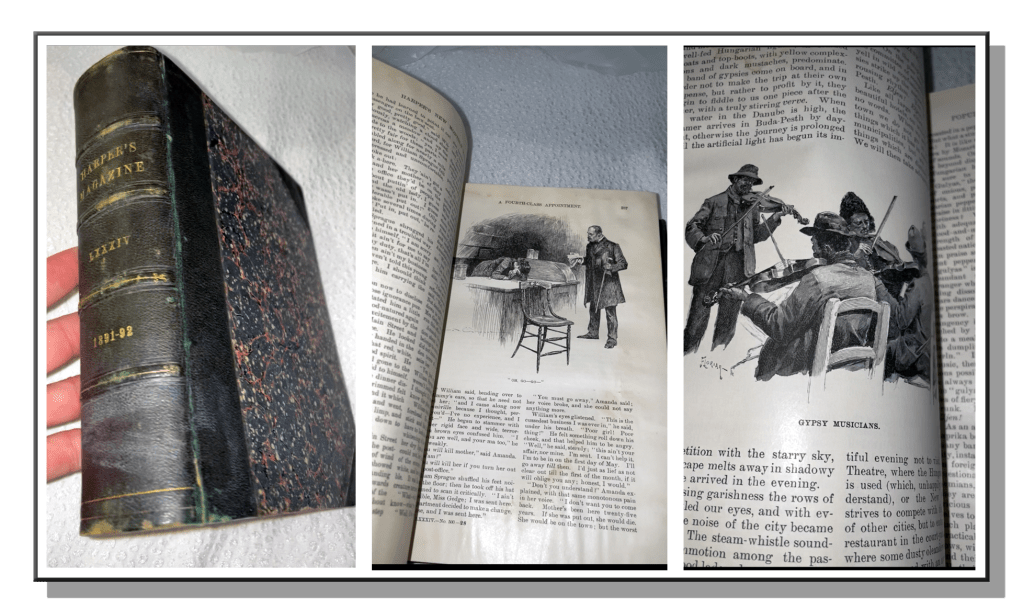
It’s a hardback compilation of Harper’s Magazines from 1891 through 1892. Harper’s is a monthly magazine covering culture, finance, literature and the arts that was launched in 1850 and is still continuously published today. I didn’t have any particular fondness or interest in that magazine so much as just seeing what people read about in the 1890’s. I’m also a little obsessed with the 1893 Chicago World’s Fair, also known as the Columbian Exposition, and I was hoping there would be a mention or two in here, and there was.
That’s why I first picked it up.
As I flipped through the pages, I was stunned by the quality and craftmanship of the pen & ink and engraved illustrations inside. I use the word carefully…stunned! Some of the artists were familiar to me, but for many of the pieces inside, I couldn’t even tell who the artist was. Credits weren’t always given, and signatures were too stylized to read.
I used ChatGPT to analyze some of the more interesting works to research the artist when it wasn’t obvious, and it was surprisingly useful for that. Often wrong, but with some caution and follow-up research, you can usually zero in on a likely name.
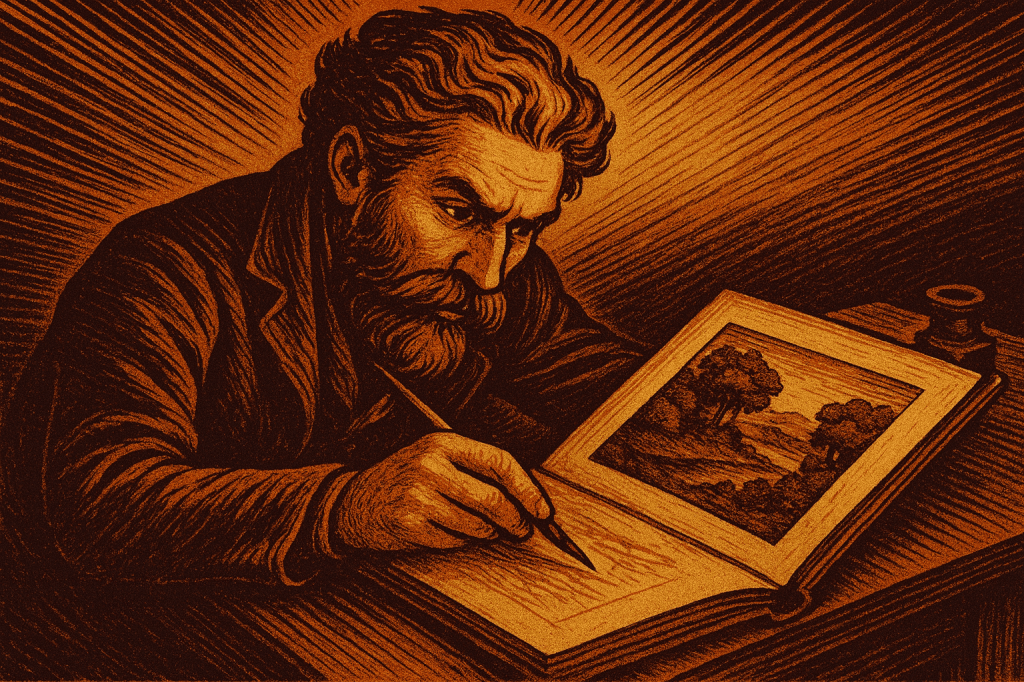
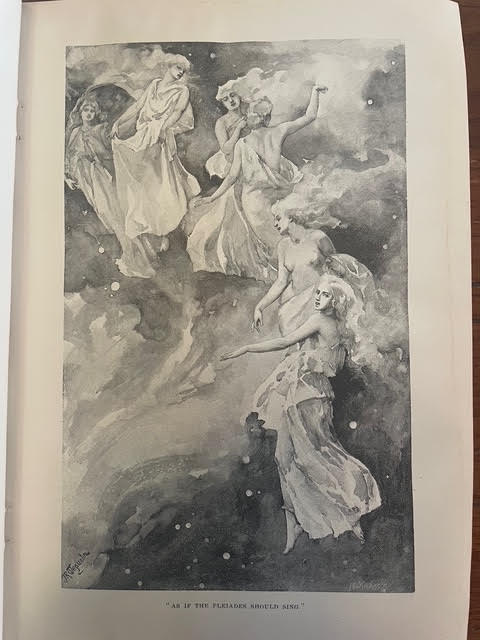
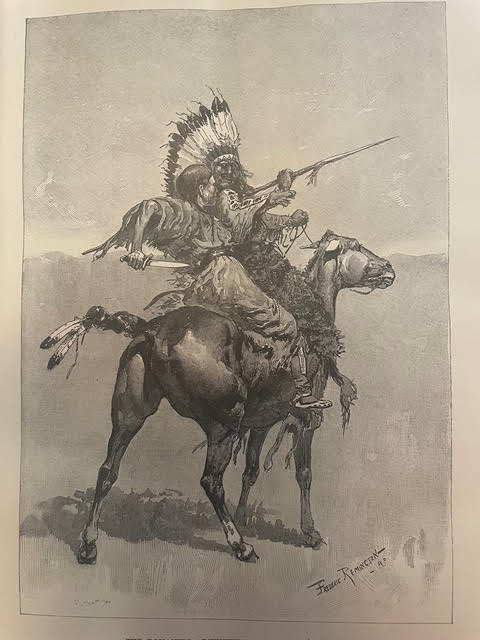
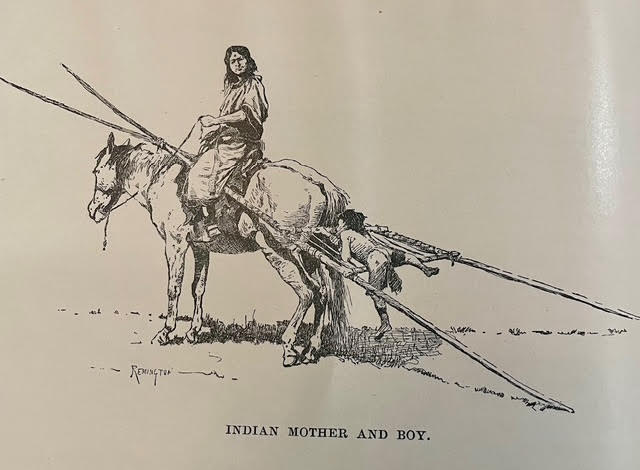
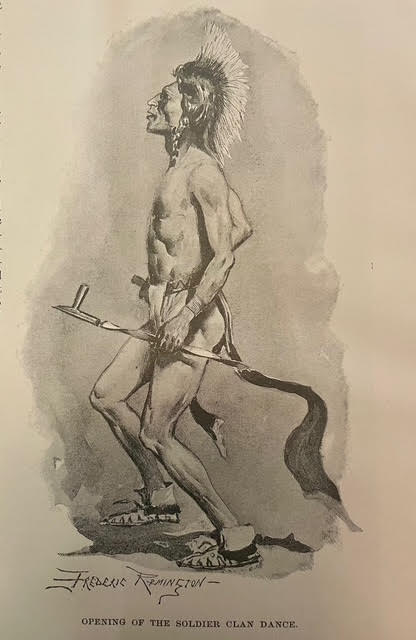
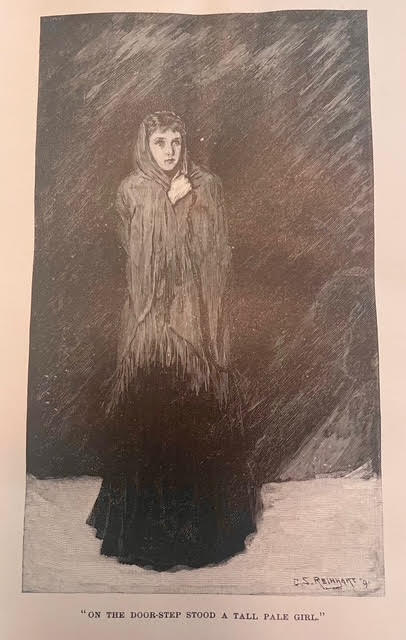
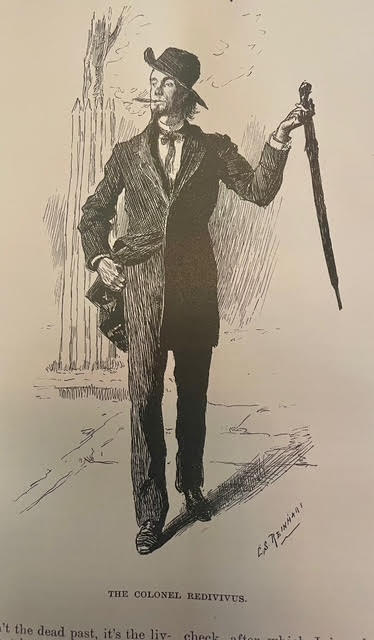
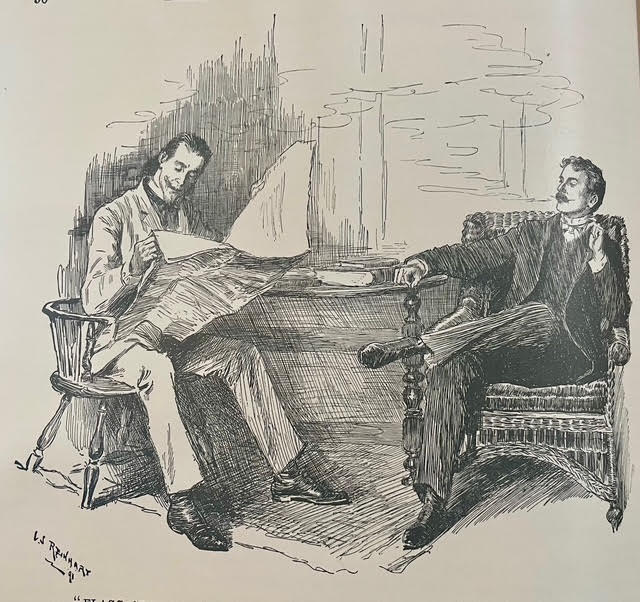
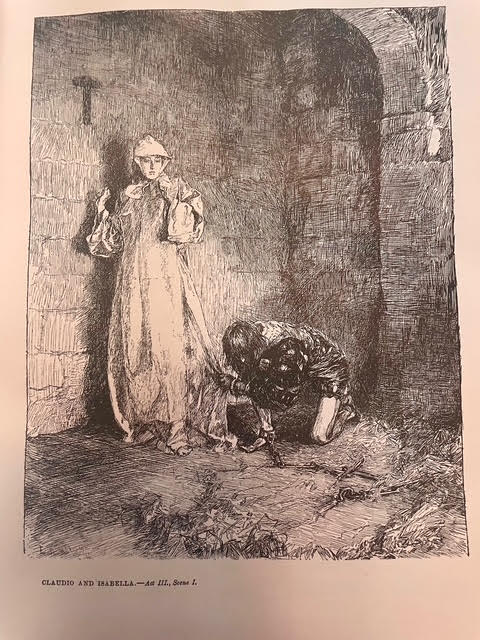
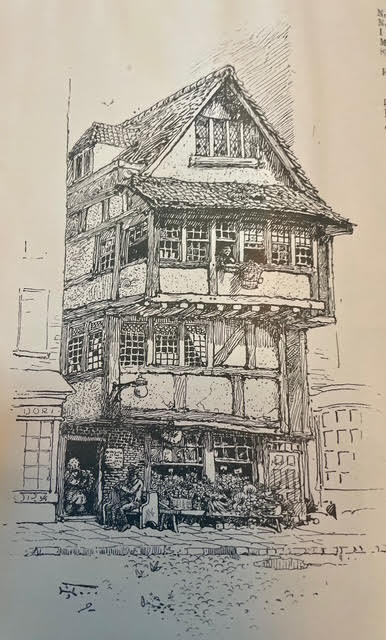
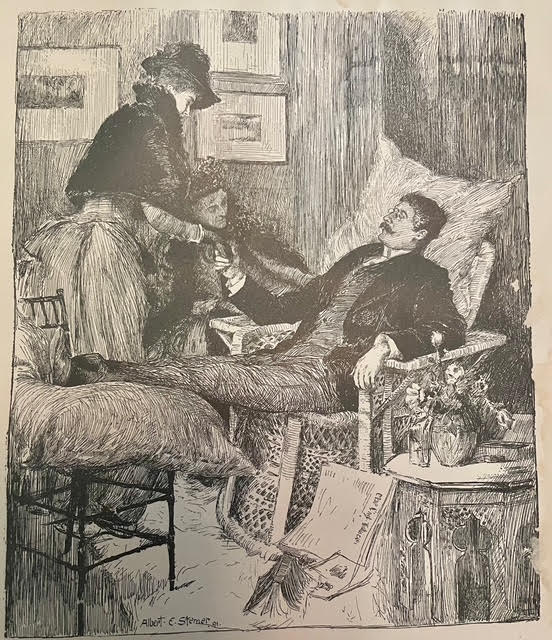
Thought I’d share some of these beauties with you today, and maybe introduce you to some wonder-workers of the past who could summon sparkling magic with a simple fountain pen. I’m offering 20 vintage illustrations here for admiration and craftmanship study.
Care to join me?
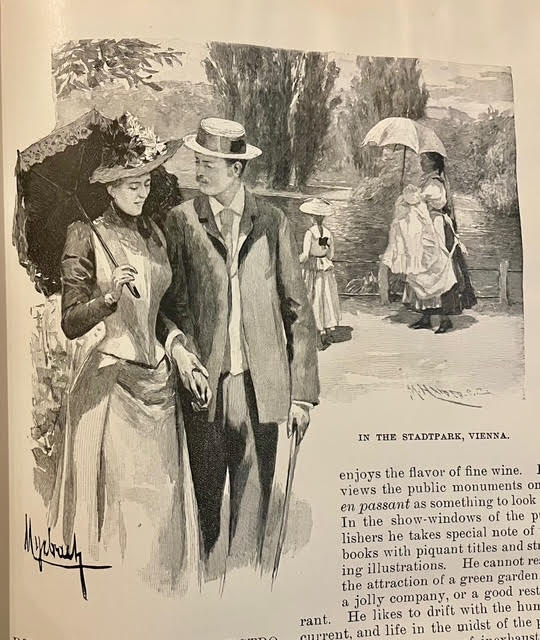
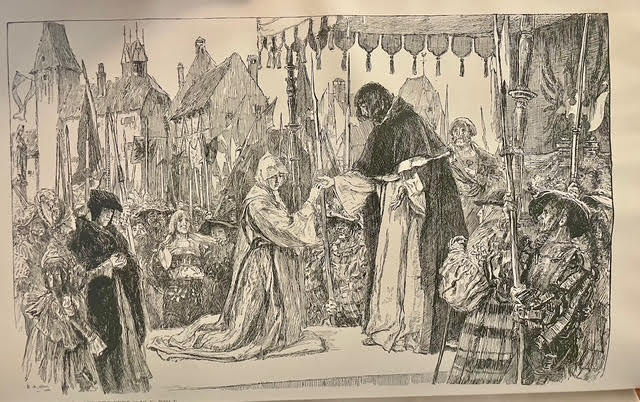
By Felician Myrbach
Myrbach was an Austrian-born artist and leading illustrator of the 19th century. Also acting as director of the Vienna Academy of the Fine Arts, he was known for detailed illustrations of military scenes and historical costumes. This image struck me with its sense of depth, balance of light and shadow, and elegant washes. Looks like it’s coming out of the page.
By John Reinhard Weguelin
I loved the subject here, and the haunting feel of it. The artist was J.R. Weguelin, who was primarily known for his dreamy watercolors and oil paintings, though he supplemented his income by slumming to draw masterpieces like this one for magazines.
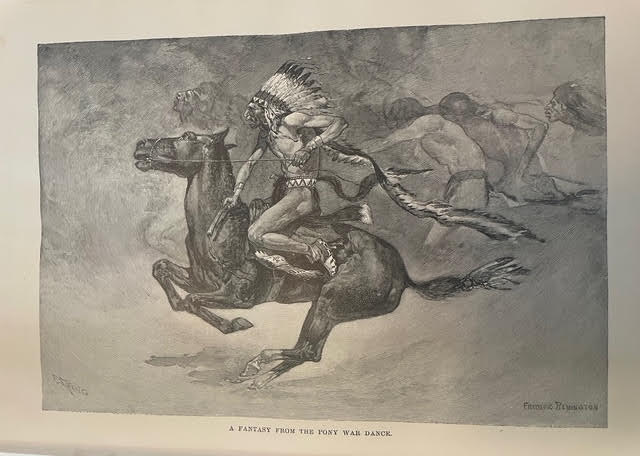
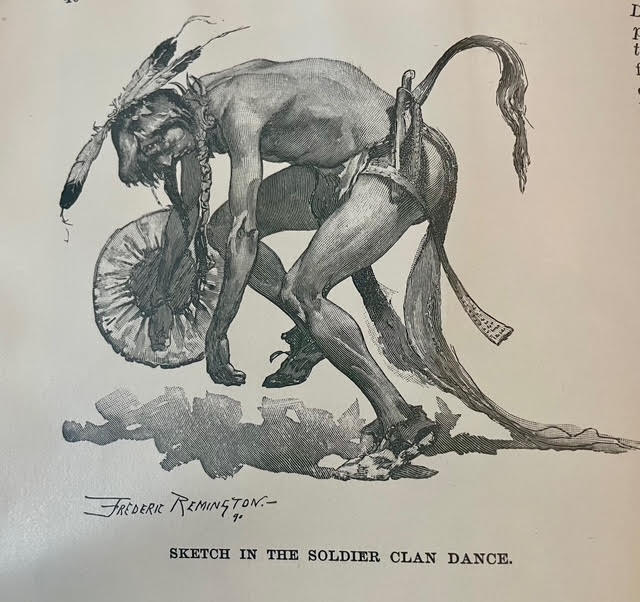
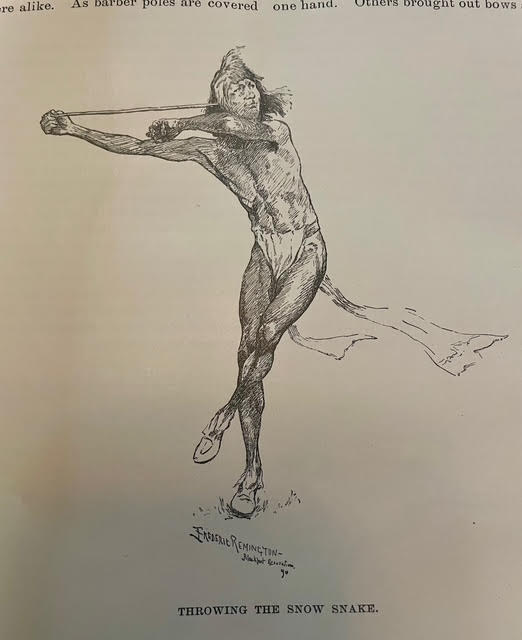
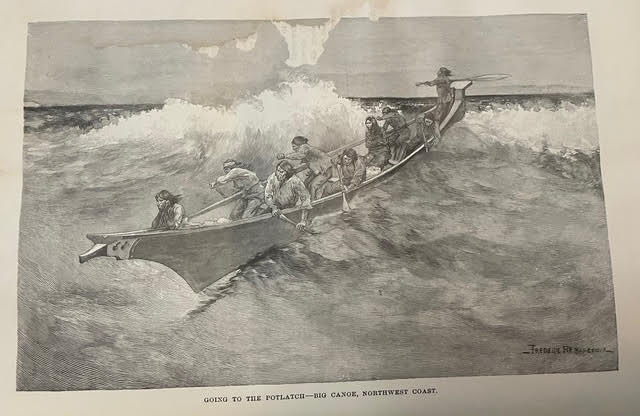
When I came across a simple article about Native Americans, I couldn’t believe I was seeing an original Frederic Remington illustration there just as a picture for a magazine. Then another. And another. These seven images are all by Remington, and they’re all beautiful. He was known for paintings and drawings mainly depicting the American west.
These three were all by Charles Stanley Reinhart, an American painter and illustrator who was also responsible for artwork on certain silver certificates commissioned by the U.S. Bureau of Engraving and Printing said by many to be the most beautiful monetary designs ever produced by the United States. That last image, of the two guys sitting and smoking is an absolute master class in pen & ink linework. I struggle in my own drawings to avoid outlines, to use contrasting light and dark for the silhouettes, and to choose the right directions for hatching that don’t distract from the shapes and mood. Reinhart entirely nailed it with that one.
These two were by Edwin Austin Abbey, an American muralist, painter and illustrator known most for Victorian and Shakespearean subjects. Perhaps most dear to our hearts at Grailrunner, Abbey was the artist behind the famous “Quest and achievement of the Holy Grail” murals at the Boston Central Library.
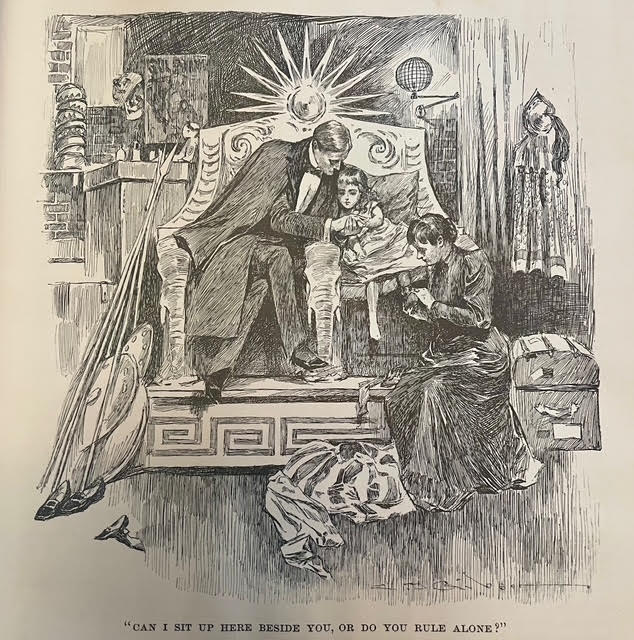
I really loved these two, as they independently stuck out for me on their own merits before I realized they were by the same artist and in fact, an artist whose work I thought I knew. Charles Dana Gibson was an American artist typically cited as being the creator of the “Gibson girl”, the iconic representation of the independent American woman at the turn of the 20th century. I think that puts the poor guy in a box that is unfair, as his composition, linework and hatching are among the finest of his age. He did a little more than ads with girls in them. Seriously, these two images are firecrackers!
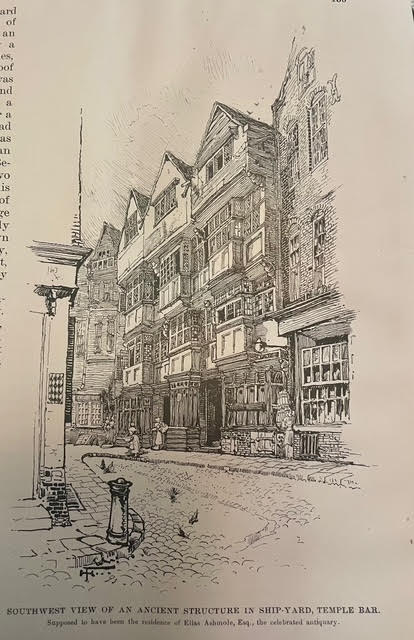
These two architectural pieces just made me stare in awe. I can’t draw buildings, no matter how careful I am. They always turn into heavily lined, overly simplified, often leaning, caricatures of buildings. Not my thing, unfortunately. But these two by John Tavenor-Perry (at least I think so) are masterworks. ChatGPT couldn’t do anything with that weird signature (looking like a stylized rune but supposedly initials). After some heavy back-and-forth, I think we landed on a likely artist though I’m open to correction.
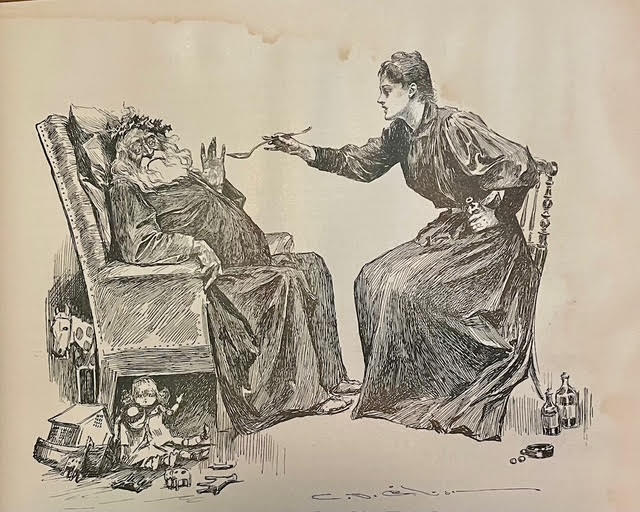
By Albert Sterner, this piece is a treasure-trove of hatching. I love it. Somehow, he’s managed to keep all these disparate elements in the composition cleanly segregated: the ladies and the cushion, his legs and vest, the flowers, the chair, shadows…all of it clearly silhouetted and easily read despite being a jumble of things. No way could I have figured out how to get all that detail into a drawing without feeling I needed to strip it way down so you could tell what it was.
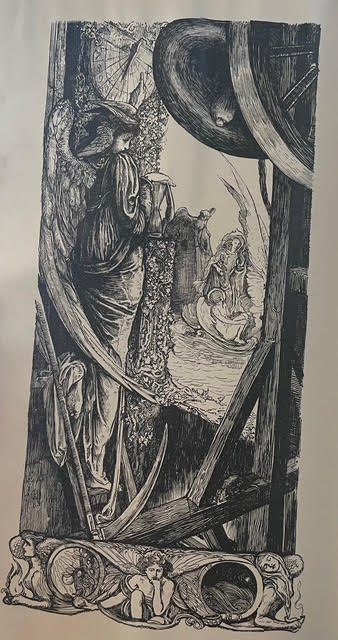
And now finally, the mystery piece.
This one.
I was mesmerized. It accompanies a poem by James Russell Lowell titled “His Ship”, appearing in the December 1891 issue of Harper’s Magazine. No credit given anywhere, including the “Editor’s Drawer” where many other attributions for illustrations are provided.
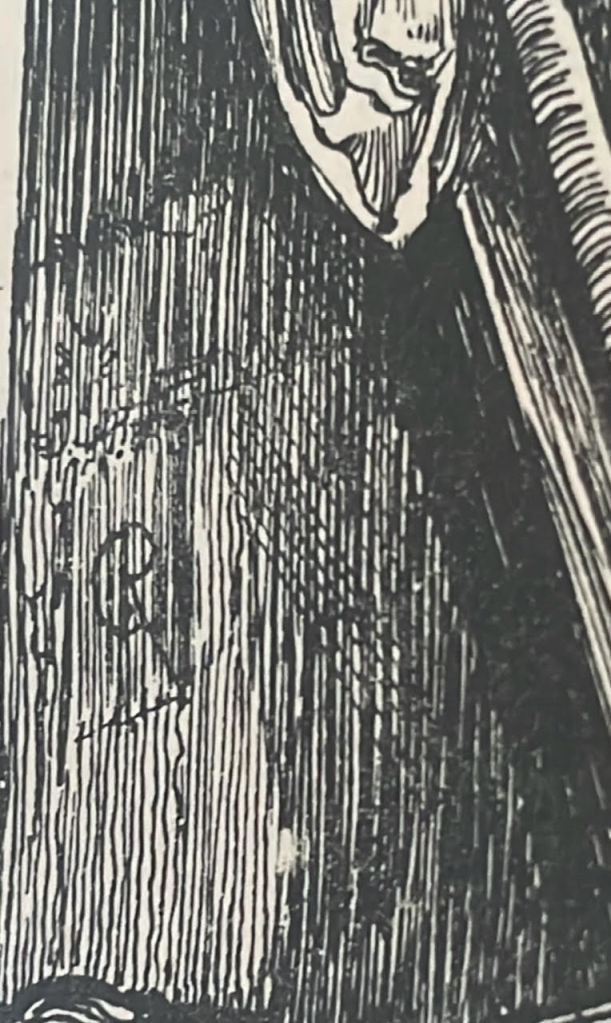
The signature is maddeningly concealed in the drawing. I think. Hard to say if that’s a signature or not. Here’s what I mean:
Anyway, I contacted Harper’s in case somebody’s maintaining an archive of some kind to help identify the genius who did this. It’s gorgeous. If I get any kind of response or make headway on the identification, I’ll come back and update you.
*
But that’s what I wanted to bring you today. Masters of their craft in the golden age of illustration, doing what they did and generating timeless works of art. For whatever reason, and not just as an aspiring artist myself, these drawings are unearthly and hypnotizing to me.
A year ago, I wrote here about the worst art advice I’d ever gotten, and I posted pages from my sketchbook at the time to stay accountable in some way for improving. It turned out kind of popular, maybe out of the general public’s desire to see car wrecks in motion. Those pages were fairly early in getting back to traditional art versus digital and were mostly pencil work with some light-table ink drawings. And by light-table, I mean tracing things and so…cheating.
I updated you guys in November with some more pages and then again a couple of months ago (bottom of the same post). Those include watercolors, some digital stuff in Procreate, and also ink drawings. Somewhere in all of that, traditional pen & ink drawing kind of caught fire with me.
It’s kind of all I can think about these past couple of weeks. Those delicious hatching lines and stipples, deep, gorgeous washes of black, and intricate patterns of black and white condensing beautifully into a striking, eye catching work of art! It’s all very satisfying, if I’m honest. And the feel of a Pentel pocket brush pen swishing on toothed paper feels a little like watching somebody make a chocolate cake, almost mesmerizing.
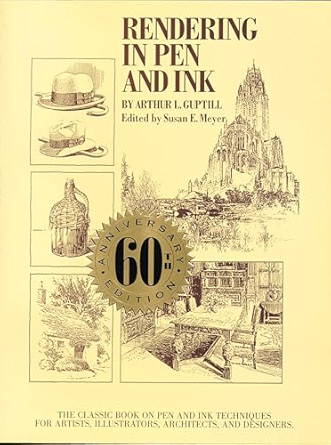
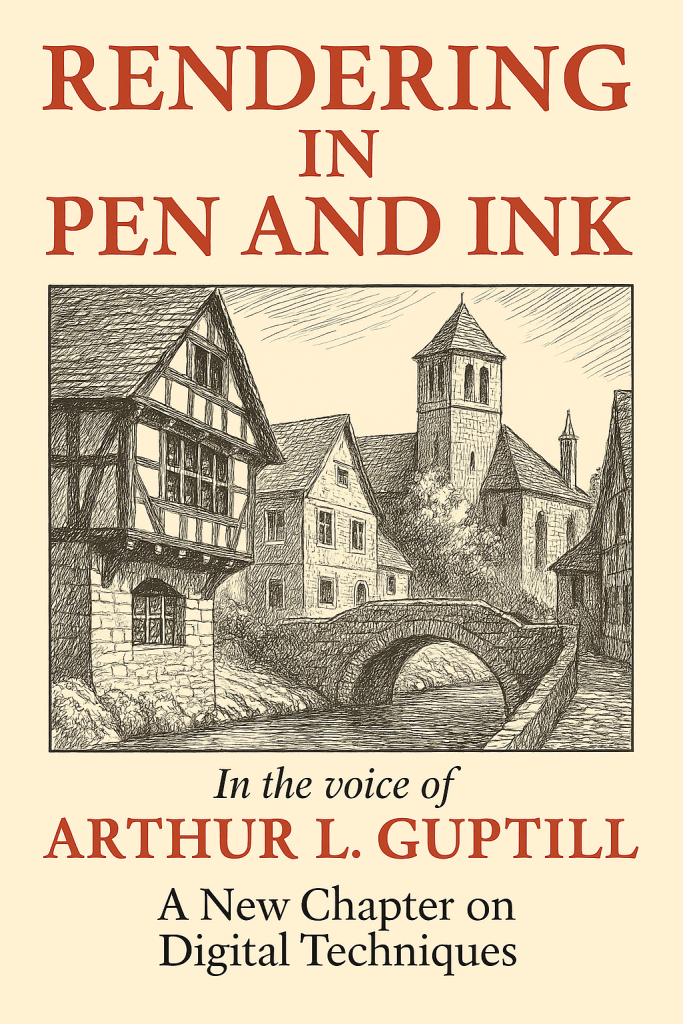
I found this amazing resource free on the Internet Archive (smash the cover image to take a look for yourself):
Written by Arthur Guptill, this is a classic instructional book on pen and ink drawing, widely regarded as one of the most comprehensive and authoritative resources on the subject. His writing style was patient, articulate, and he was clearly a master of clean, simple line work and exhibited craftsmanship in how he approached both drawing itself but also how he framed his instruction materials. The guy was a natural teacher.
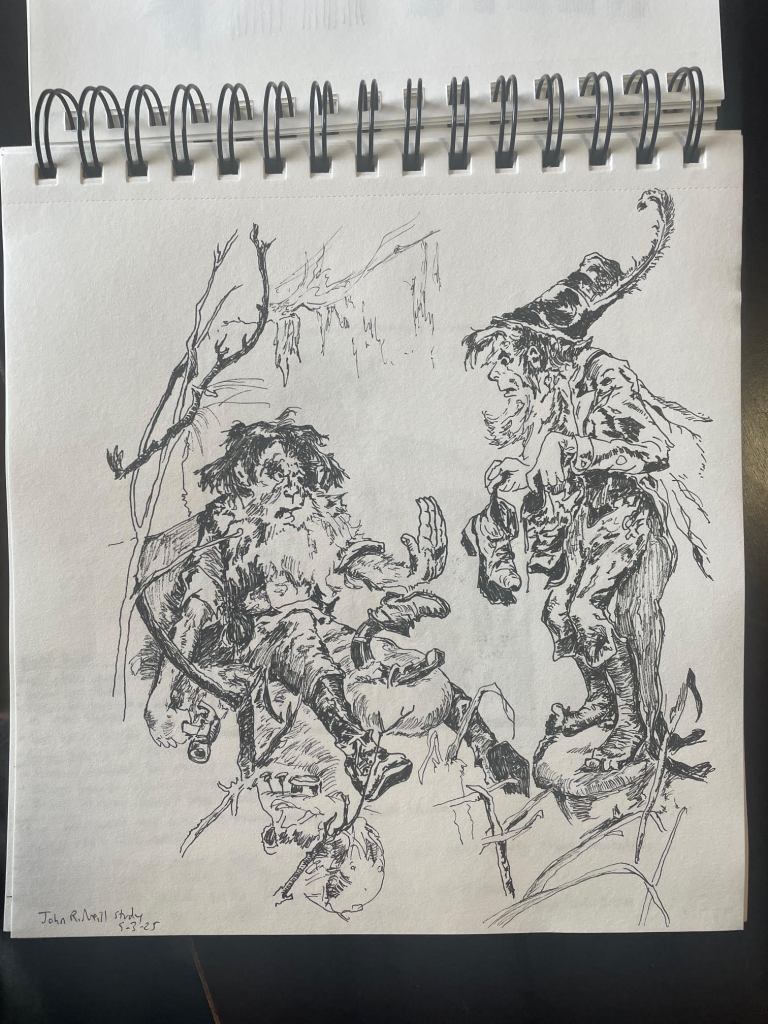
I was approaching my learning by a combination of master studies and daily practice, at first using a Copic alcohol marker for shading and eventually moving to just the brush pen and Pigma liners to focus on learning hatching and cross-hatching.
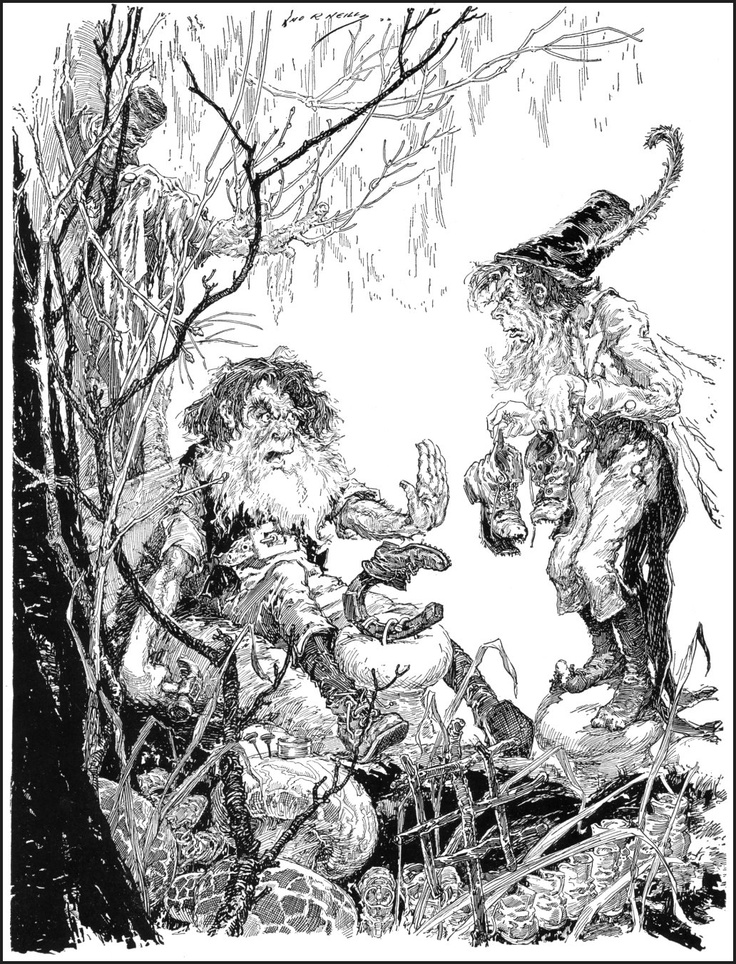
Here’s an example, a dazzling piece called “The Cobbler”, by John R. Neill:
I learned quite about overlapping structures for depth, clean linework, effective use of contrast, and detailed volumes just by copying this thing.
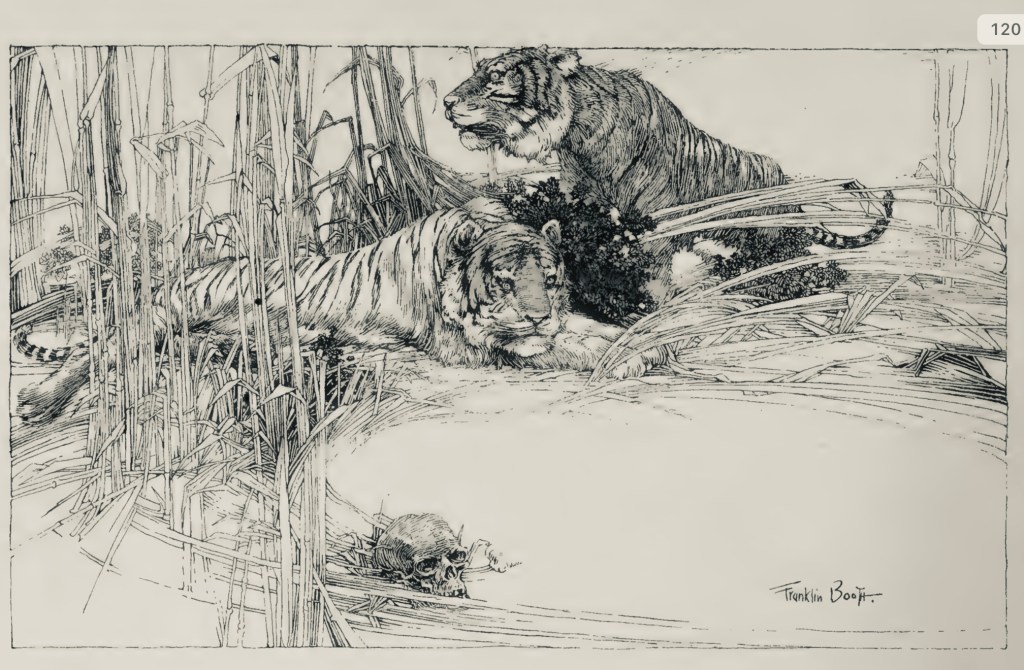
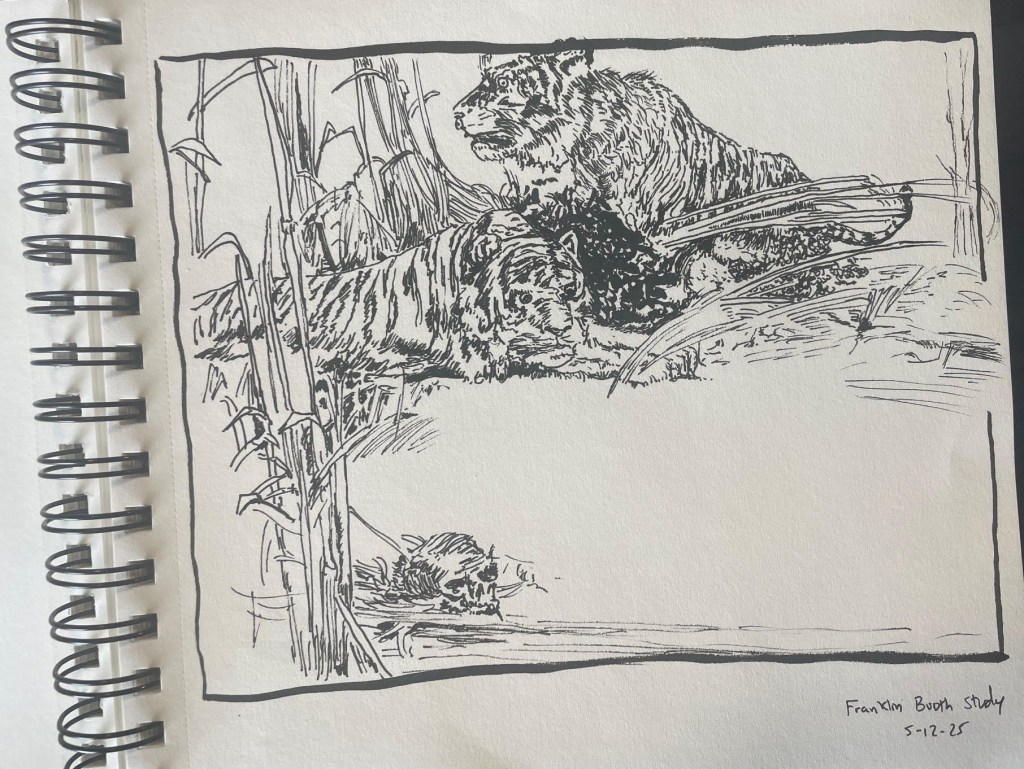
Here’s another study, by Franklin Booth – a real beauty he titled “Hunting The Tigers”:
Loads of things to absorb by this one regarding overlapping structures, use of negative space, balance of value, simulating water in black and white, and fur textures with ink. Honestly, I’m not happy at all with my copy, but I was being ambitious.
Anyway, we’re four articles in to a new series titled “Conversations from the abyss” where we use advanced AI tools like ChatGPT and also Suno music generation to bring back creators from the past for interesting debates, dialogues, or other entertaining diversions. Nothing for sale – all available free here on the site. It struck me this past week that it would be amazing if I could receive art critiques directly from Arthur Guptill as I’m practicing various bits and bobs I’m learning from the master studies and other practice drawings.
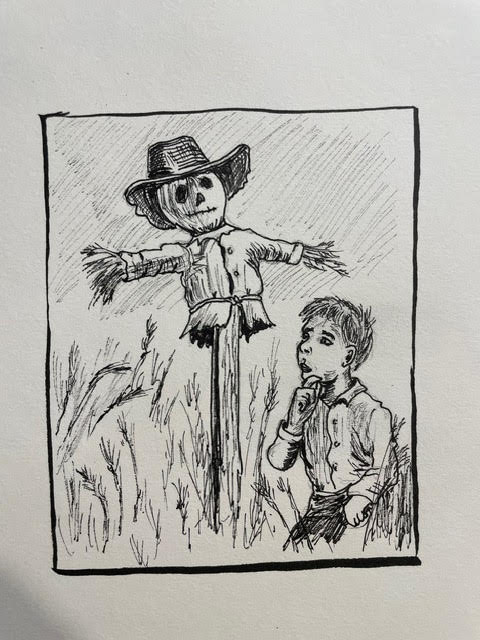
I’ve got a soft spot for Frank Baum’s OZ books and thought an image of a young Baum coming across a scarecrow in a field and pondering it with his wild imagination might be an interesting image for ink practice. I gave it a shot, then uploaded it to ChatGPT and tested this prompt: “Acting as Arthur Guptil, critique this image and provide guidance on how to improve it.”
Here’s what happened, and it honestly blew my mind:
“You have achieved a fine effort in line drawing, and there is evident care in your composition and subject choice. The nostalgic theme—a young boy in thoughtful contemplation before a scarecrow—is charming and well-suited to ink. Now, let us refine your rendering through a few key observations and recommendations:
1. Line Quality and Variation
Your line work shows promise, but greater variety in line weight will enhance dimensionality and focus. At present, the lines are largely uniform, which causes elements to flatten together.
Suggestion: Use thicker lines for foreground elements (such as the boy’s arm or the hat’s brim) and finer, lighter lines for background elements like grass or sky hatching.
Vary the stroke pressure as a tool of emphasis and mood. For instance, a light cross-hatching for distant tones vs. a bolder hatching for areas of core shadow (beneath the scarecrow’s hat or the boy’s jaw).
2. Compositional Framing
The rectangular frame is sound, but the internal balance feels slightly off-kilter. The scarecrow dominates the space while the boy feels pinched in the lower right.
Suggestion: Consider either enlarging the figure of the boy or repositioning him slightly more centrally. Alternatively, allow the scarecrow’s arm to lead the eye toward the boy in a more deliberate diagonal.
3. Rendering Form and Volume
The scarecrow reads clearly as a simple form, but the boy’s anatomy, particularly the arm and face, could benefit from more structural understanding.
Suggestion: Study the planes of the face and arm. The boy’s head could use slightly more cross-contour shading to indicate roundness. The hand, though expressive, lacks clear articulation—gesture drawing practice would help here.
4. Textures and Detail
Your use of short, broken strokes to indicate vegetation is appropriate, but the grass and shirt material begin to blend. The shirt on both the boy and scarecrow could use more definitive folds to suggest fabric tension and weight.
Suggestion: Use parallel or directional hatching that follows the form of the fabric. Avoid over-randomized strokes, and let texture be a deliberate compositional voice.
5. Background and Spatial Depth
The background is composed primarily of evenly spaced hatching. While this is functional, it does little to suggest depth or atmosphere.
Suggestion: Introduce a subtle gradient to the background by controlling your stroke density—more hatching at the top or corners to create a vignette or atmospheric recession.
Final Encouragement: The spirit of your work is admirable and speaks to a narrative sensibility. With improved control of line, deeper understanding of structure, and refined use of contrast, this drawing could serve as an excellent illustrative plate.Keep your pen in motion and your eyes ever studying!”
*
I mean. A dead guy just gave me really precise feedback on my drawing, recognizably in his voice and noticing very specific things in the drawing! I got compliments that were specific and not vague exhortations. I got clear, explicit guidance on what exactly I could improve. Not generalities. It was, and I mean this, very helpful.
Now, you might be thinking – “Dude, you’re a chicken letting the wolf teach you how to protect the hen house. AI is going to replace artists entirely; why use it for art instruction if you’re encouraging people to use it at all, they’ll just generate the images directly. Why even learn to draw?”
All of that is, of course, nonsense though, isn’t it?
If we get fat and lazy and stop creating, then the images that AI tools use will become instead of crisp white and deep blacks, just an increasingly bland mush of grays…monotonous and uninspired. AI outputs will become AI training datasets, leading to a downward death spiral of junk art. I don’t want to add to that. I want to make new things, man. New things! I see critiques from long-dead art instructors as yet another powerful tool for me to do just that.
I asked for a new chapter to Guptill’s book for digital inking, by the way, which is available free below (and entirely and recognizably in Guptill’s voice):
And yeah, okay, it’s time for an accountability upload of the latest sketchbook entries here (be kind!):
That’s what I wanted to share with you today. Pages 19, 20, and 21 especially benefited from pseudo-Guptill’s instruction, and I gave it all I had to incorporate to the developing pieces what it was telling me.
All this has me wondering – just who else can I get to critique some of this and help me learn quicker? Maybe Leonardo Da Vinci is up next!
Back in May, I posted some musings on this site about what I called bad art advice that I’d gotten when I was in Middle School.
“The real world doesn’t have outlines – draw what you see.”
Weird, I know, but I struggled so much with that I gave up drawing altogether. I get that it should be straightforward advice that every burgeoning artist SHOULD in fact receive and, indeed, follow. I get that it’s true and obvious and OUGHT to have been helpful. Just wasn’t how I reacted, unfortunately.
I’ve come to realize that is just a first step.
I recounted how back in October 2023, I’d come across a lifechanging book series called Sketching From The Imagination and an art magazine called ImagineFX that had me rejuvenated to start it all over again, on fire with cool pictures in my head and a spirit to truly give it a go this time. I shared my sketchbook at the time (shudder!) a little over a half-year in, to be accountable to folks here for improving.
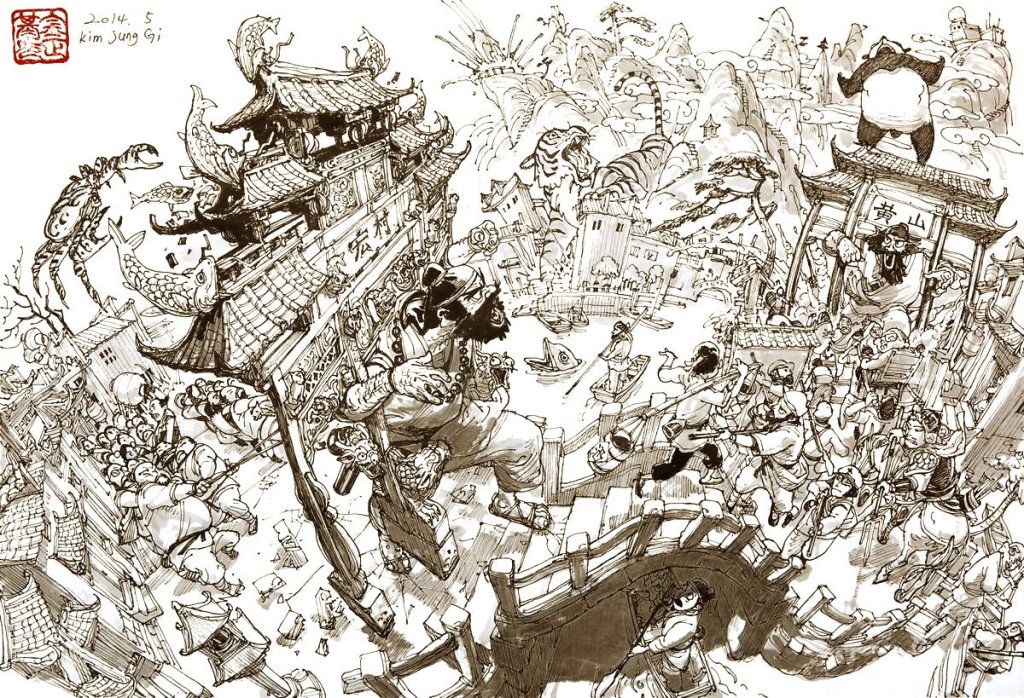
Another phase of things had opened up with an enlightening quote from the genius artist, Kim Jung Gi that said:
“Don’t draw what you see. Draw what you HAVE seen.”
I liked his emphasis on practicing reproducing reference images, only from different angles and perspectives so you can learn their forms in three dimensional space. Over time, your visual library carries enough shape and texture language to work directly without reference. Very nice. You see, I have a complicated relationship with the use of reference images in creating art. The dream has always been to sit down with a piece of paper or a blank screen and summon fantasy and science fiction imagery from nothing – not to robotically reproduce an image in front of me. Over and over, every artist I was seeing on Youtube or reading in interviews, they were all using reference images. I had this inner voice saying “if I wanted to reproduce an image, I’d take a picture of it”. Kim Jung Gi’s advice offered a different relationship with reference imagery.
So it’s been over a year now. Keeping up the practice frequency to at least a half-hour each night if at all possible. Even when I’m bone tired after work and would rather stare at history documentaries or old spy movies (or train movies -those are awesome).
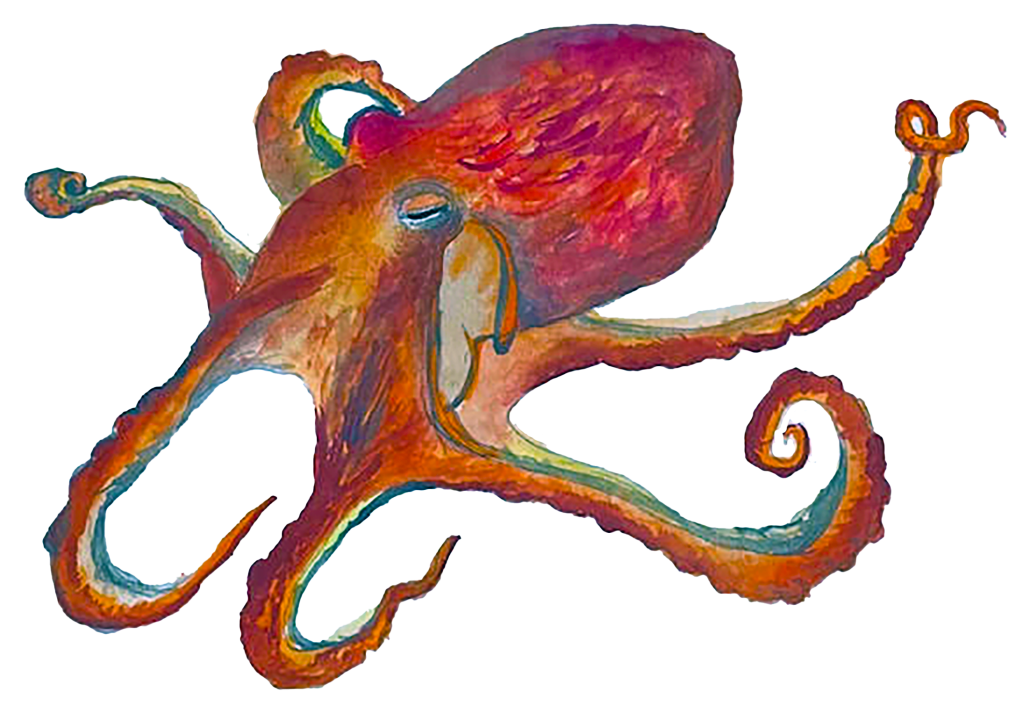
Anyway, somewhere along the way, this happened:
Don’t ask, my friend. I just thought I’d try watercolor painting and this guy showed up. I call him Barney. My first attempt. I hadn’t planned on getting obsessed with watercolors – it was Peter Han‘s fault. Was watching Peter draw something amazing, and he pulled out a little travel palette set. The smooth and striking combination of ink and colored wash fascinated me. Strangely, as I submerged into the very deep and mesmerizing well of watercolor painting in magazines, books, interviews, and tutorials, a new, possibly ultimate and final step has started to take shape.
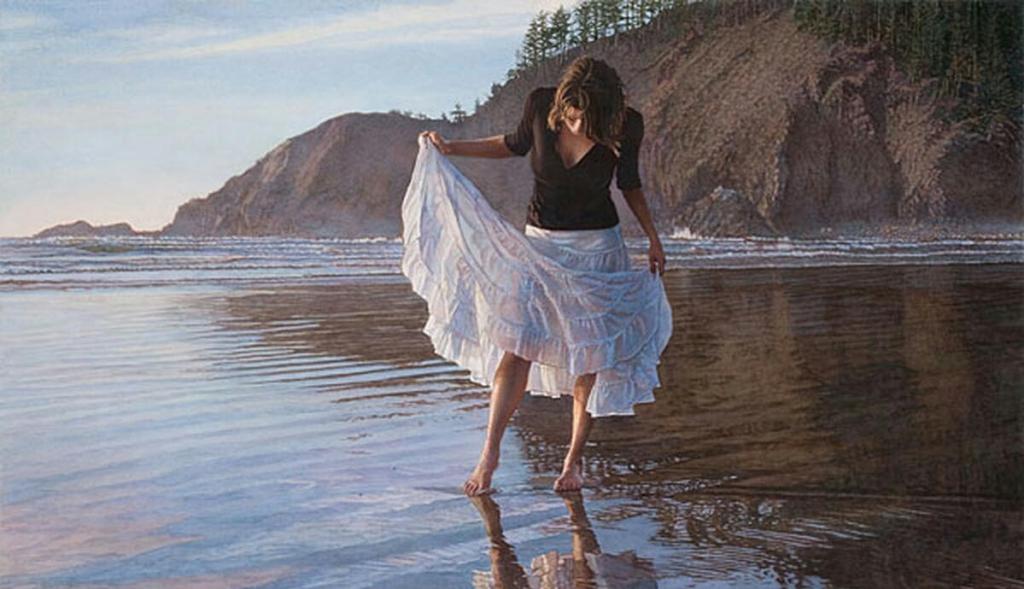
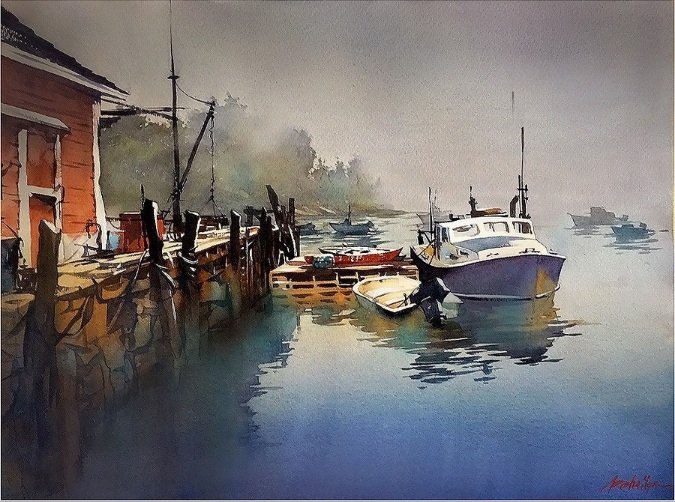
Watercolor pigment does what it feels like doing on the paper. It moves around. Crashes. Blossoms. Ignores your feeble mortal attempts to control it. But it makes incredible gradients and blooms and textures like nothing else. And its mightiest trick, almost its entire reason for being, is to capture light. I’m talking about the translucency of a green leaf in summer with sunlight bleeding through, the broken sunbeam dancing on a marble floor, the ghostly and serene reflections of clouds and seafoam on the beach once the wave goes out. Google “Steve Hanks” and Thomas Schaller to see what I mean.
Reflecting on Indian Beach (Steve Hanks)Foggy Morning – Maine (Thomas Schaller)
The more this got in my head, the more I began to realize there even WAS a third step to this process. I’m not there yet, but I think I can see it taking shape. If I hadn’t started paying so much closer attention to light filtering through trees or bathing morning fog in an orange glow because of all this focus on watercolors, I’d have missed it, I think. This final quote that crystalizes what I’m seeing has popped up a number of times now, so I’m not sure who started it all. It’s a boneshaker though, that I’m still trying to coax into being my buddy:
“Don’t draw what you see, draw what you feel.”
Now that’s an entirely different way to interact with reference imagery, isn’t it! Snapping a picture in the moment during a hike or on the train freezes one of those haiku moments for you, sure. Cobbling together some stock images and a DAZ3d render or a photobash of some AI-generated elements can put together a good and unique composition, of course. And in that first step, you can practice your technique, reproducing it as faithfully as you can.
At some point though, Gi’s second step suggests you vary the angle, maybe reproduce it from above or from a different side…maybe with an armored zebra beside it, or a screaming werewolf. Mess around and don’t stress about perfection, right? It’s a sketchbook; what do you care if every other one turns out trash? Forms start repeating for you: the fact that eyes aren’t really ovals, that lips and noses and hair cast shadows, and that people almost never stand vertically straight on both feet. That sort of thing.
But then, when you’ve maybe gotten to a point where you can somewhat faithfully reproduce an image with variations and additions, with subractions, and perhaps even can summon something to the page entirely from memory and imagination, another step opens up for you.
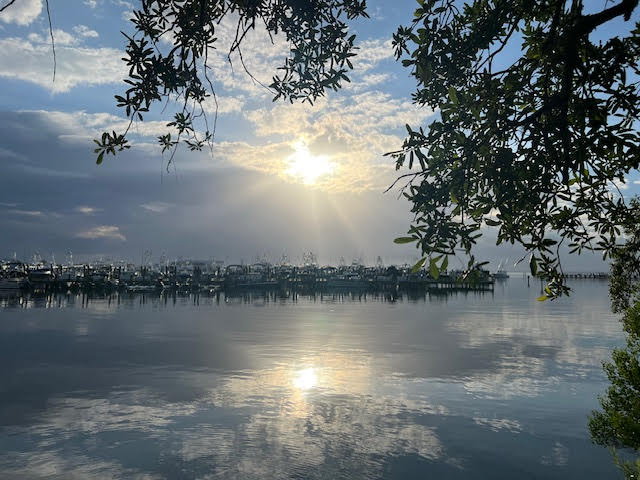
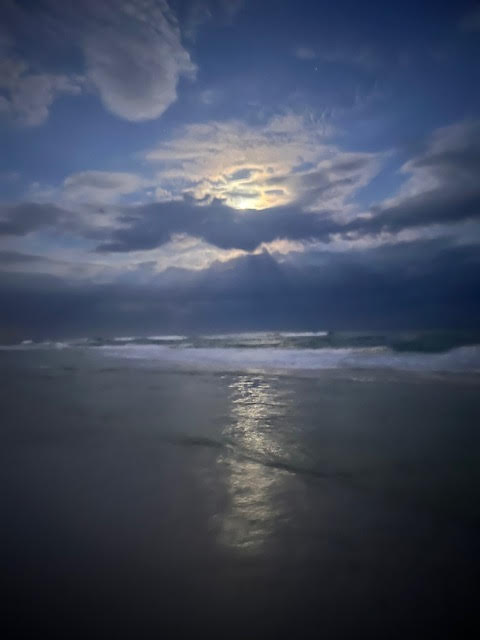
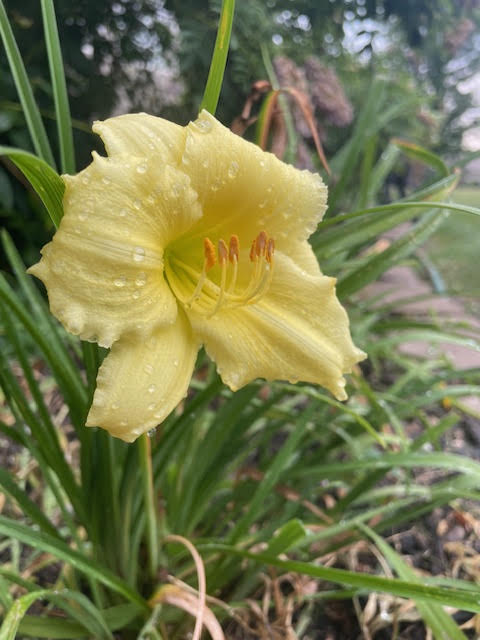
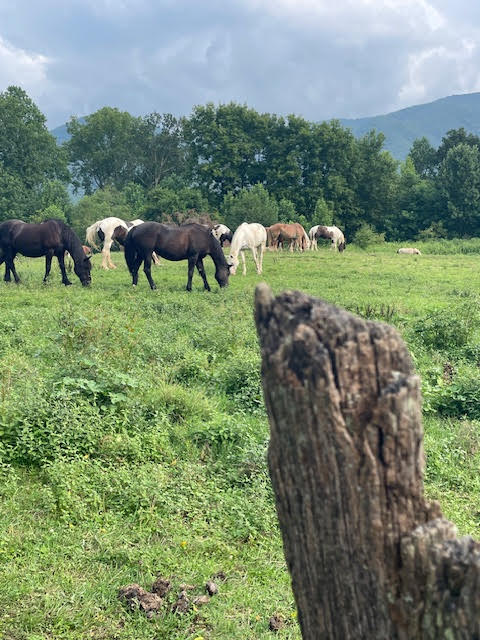
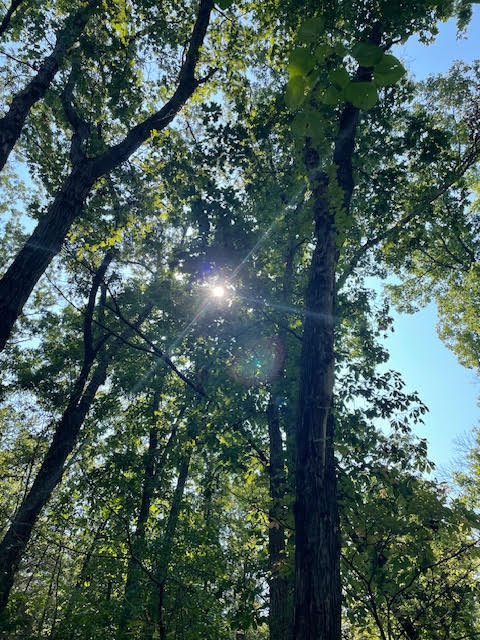
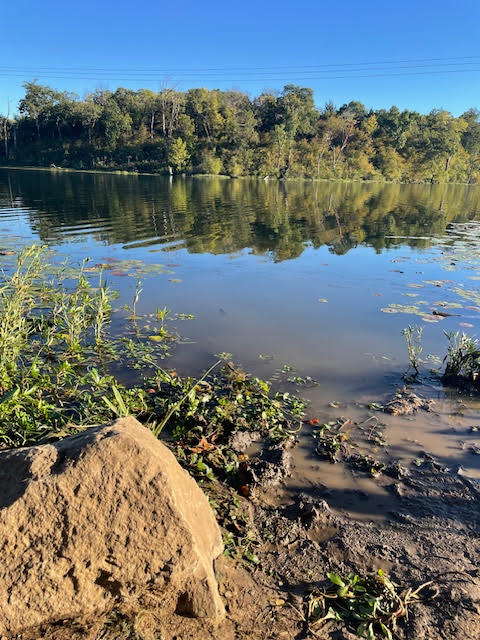
Those are pictures I’ve taken in various spots this summer in Kansas City, Cades Cove in Tennessee, and at Destin, FL. You’ve probably got ones like it on your own phone, those images that caught your eye and made you feel something. A foggy morning, a quiet library with the sunlight streaming off a high window, a busy subway station or airport with interesting faces, or maybe a funny face your dog made. It made you feel something, so you snatched it to stick in your pocket.
That’s the third and ultimate step in art journeys, I think: to capture what you feel on the page. The reference becomes almost beside the point. I’m still working this out for myself. Maybe these musings prod something for you if visual arts are at all of interest to you.
Since some folks appreciated the first uploaded sketchbook, here is an update (paper sketches 1-3, watercolors from 4-13, Procreate digital art from 14-17):
Crazy busy year. I hope yours has gone well. For my part, I’m glad Christmas is on its way. That particular crazy freight train is more than welcome this year.
(Update Mar 2025)
And, in the spirit of accountability to improve, here’s an updated sketchbook of what I’ve been up to since this post went up (watercolors on pages 1-8, Procreate sketches pages 9-18, and physical sketchbook pages 19-24):
When I was a teenager in Tennessee, I had this spot on a mountain bluff I would go to that overlooked the valley. It was a really beautiful place, at least to me. I’d string up a hammock and read or just hang out. One day after a short summer rain, I noticed some ants struggling to push a raindrop out of their little hill’s opening. For whatever reason, the drop wasn’t collapsing and stayed round and clear. And it’s crazy to think after this many decades gone by, I can still see that weird little moment that lasted less than a minute: a tiny little group of 7 or 8 ants pushing against a raindrop.
Stick with me a moment here. I have a suggestion for how to refresh your mind and open a new world of thoughts for you.
I recall another time in some random airport, I saw a young man, short and nervous, clutching his little sea satchel and looking at his dad. The dad was a rough-looking fellow, tattoos on his neck and arms, wrinkled and tanned skin. He had his hand on his son’s arm, giving him some kind of advice. I stole that moment and put it in the background of a novel I was writing it was so striking to me.
Just this week at the beach in Destin, Florida I saw a tiny little boy who I imagine had only just learned to walk, wearing his little white sun-hat and long-sleeved shirt with his tiny legs still bowed out leading the way for his grinning dad following. I’m so used to seeing parents pick little ones up and direct them, but this little guy turned to his dad, stuck an arm and finger awkwardly out forward, and pointed the way he was headed just before he determinedly took off. It was hilarious.
Here’s where I’m headed with this. Go get this book. It’s called Haiku Enlightenment, by Gabriel Rosenstock.
If you sometimes get a little weary of the same old streets, the same old buildings, and if politics or social media circuses are making the world seem just a mean place to you, then there’s a thing I try with myself that might help you too. In my day job as a consultant, I study and manipulate how people view themselves and their work. I’ve studied cult tactics and brainwashing. I’ve studied propaganda and manipulative tactics in media. I’ve worked professionally in change management and the creative process for over 25 years. In many ways, I’ve monetized studying how people think and applying what I’ve learned. What’s the big secret in all that?
Our brains are neuroplastic, meaning we can rewire how we think in a surprisingly short period of time with some effort and the right inputs.
Rosenstock’s book is beautiful, and a nice tool for you to use should it intrigue you – this thought of rewiring how you see the world. I imagine all Gabriel is trying to do with this book is make you see how beautiful haiku moments are and how to write some for yourself. I had no interest in writing poetry, but instead took this as a chance to adjust what information I was paying attention to in my surroundings (and more importantly, what I was NOT).
I’ve written about haiku here on Grailrunner before. Issa is my favorite now – dude went through some stuff and was still funny and poignant and timeless. Rosenstock’s book highlighted several poets that were new to me, which is great. I suggest if any of this resonates with you that you give a think to the sorts of things that are adding stress or negativity to your life and purposefully shoo them away as they pop up and make a very intentional effort to become a hunter of haiku moments – whether you intend to write them down in a poem being irrelevant.
What’s a haiku moment?
It’s a single, striking moment, often seen in nature or among people, where you realize something larger. It’s sometimes beautiful but doesn’t have to be. The point is it’s a tiny little story in an image, a whole vista of insight and wisdom in a single flash.
I promise you – these are everywhere in your life. Pick up Rosenstock’s book or something like it and absorb a little more about what makes for a haiku moment, then start hunting for them. Write them down, even if in prose. Keep a notebook of them so they’re pinned like butterflies for you to admire later.
If you see any cool ones, grab them and send them my way. I’m always interested in bursts of universal insight. You can sell that.
“Interesting shapes” What in the world does that mean? (I’ll come back to that)
Our passion at Grailrunner is the imaginative process, any and every thing that can unlock new ways of creating mind-melting concepts and experiences with a bent towards speculative and fantasy fiction and images. We experiment with immersive storytelling in wargames, in roleplaying games, through a fusion of art and flash fiction, in novels, and in art prints.
On a personal level, as the guy generating practically all of that, I have to spend a ridiculous amount of time developing new skills. Recently, I’ve broken out the old sketchbook and Faber Castell pencils, bought a Pigma brush pen, and started going deep on Youtube with some modern day masters of the arts to get to a point where I’m not just painting in Photoshop over photobashed composites or renders from Daz Studio or Blender.
What’s the dream?
Because I love the awe and surprise of exploration, of not knowing what lies beyond a turn in the road, I’m hoping to get to a point where I can crack open a sketchbook and not just draw what I see, but generate something in simulated three-dimensional glory dredged from my imagination without knowing what I was going to draw when I sat down. Ideas from there would feed the hopper of more purposeful art images and concepts in the fiction and games. (I did this as a child and filled countless sketchbooks, but it was all 2-dimensional super heroes, heavy outlines, terrible shading, and nothing I’d be excited to show anybody).
Is that dream possible?
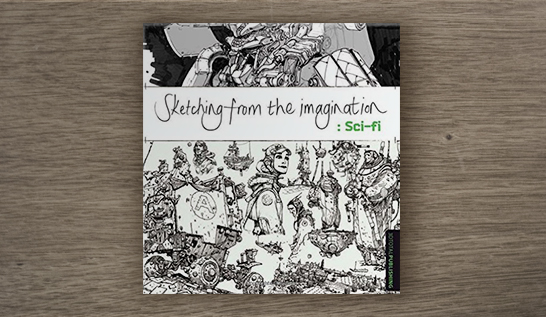
This little gem is called Sketching from the Imagination: Sci-Fi, by 3dTotal Publishing, and though it’s a few years old by this point, it will melt your face off if you’re at all into what I’m talking about here. There is some incredible talent in here. They’re doing it.
Also, these guys at ImagineFX (which is free on Kindle Unlimited now, if that works for you). One thing I especially appreciate about this magazine is the artists explain their desk setups, their materials and software, and their thought processes as they create.
What does all this have to do with “altered perceptions”?
It started with Leonardo Da Vinci’s notebooks, actually. I bought a compilation of them in a used book store in Florida and perusing them, noticing he spent a lot of time talking about the importance of an artist developing their “mental library”. I forget what he called it, but the idea was to look at the world differently and actually notice things like how light falls on an object, how light reflects off the table, where exactly shadows fall. File all that away so you can draw on it in different contexts when you need it.
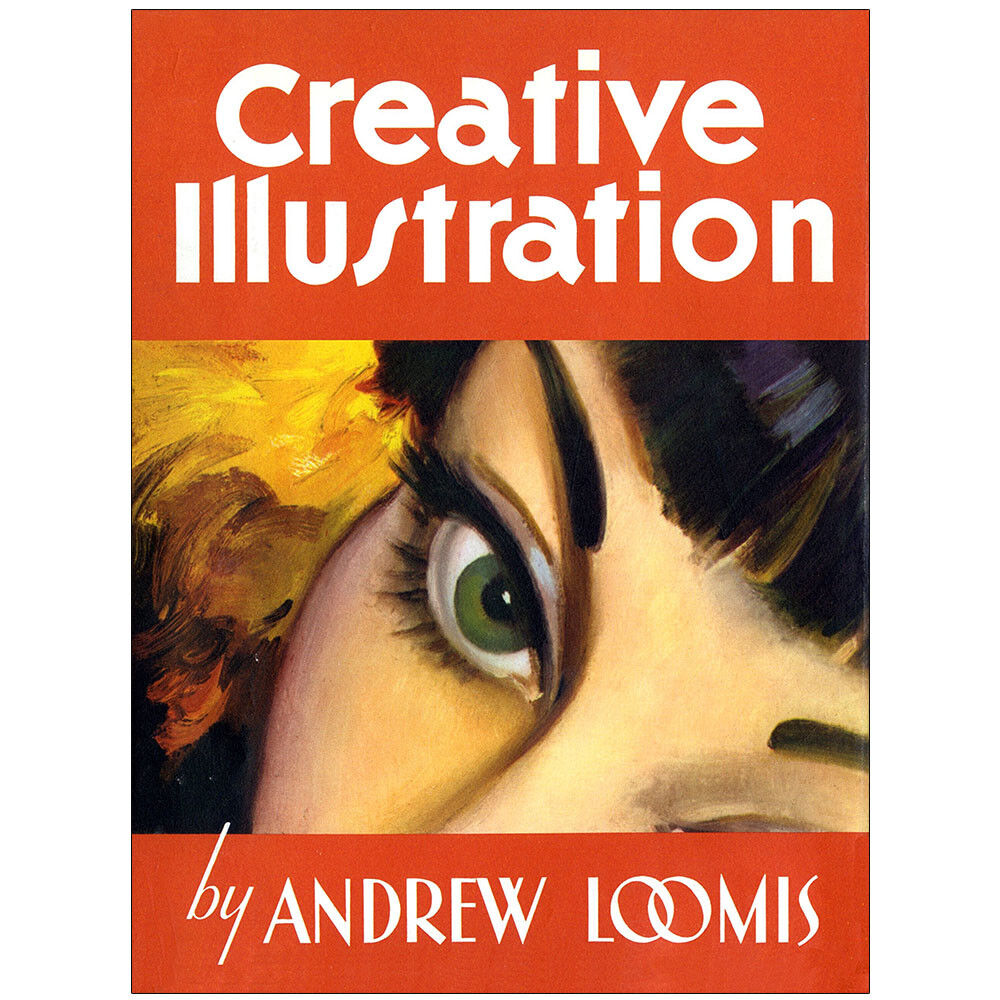
And there in one of the most influential art instruction books ever written, Creative Illustration by Andrew Loomis, he made the same sort of point. One of the first exercises he suggests is to simplify multiple scenes at random and find the “flow” in them. He saw things in terms of basic curves, ovals, and swirls and something like a person just standing there, to Loomis, was a flowing curved line. It made it easier for him to represent it simply and beautifully on the page. Yet, it’s an entirely different way to see the world, which is my point today.
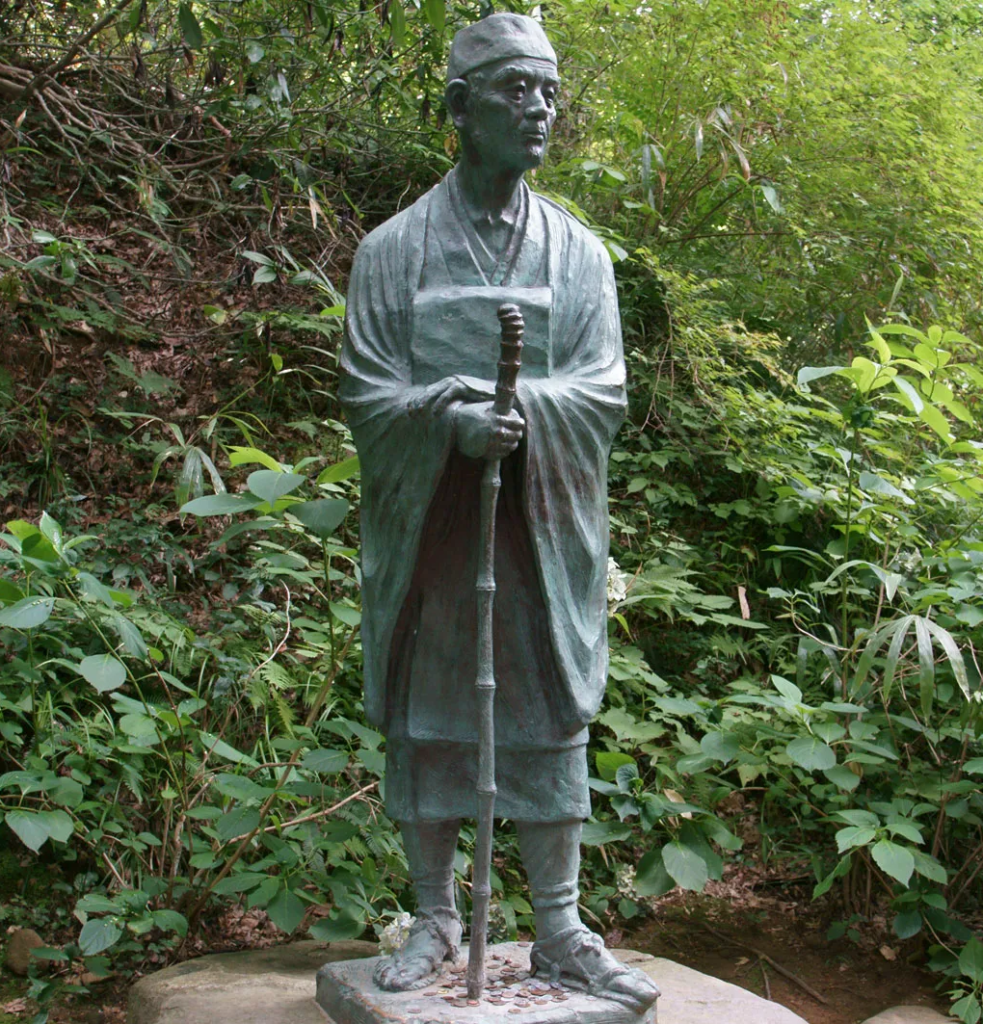
I’ve written here before about the visual power and intellectual punch of haiku. My hero in that world is an astounding 17th century genius named Matsuo Basho. This guy:
I’m reading (again) his poetry, this time in some translations by Andrew Fitzsimons, finding all kinds of new and striking illuminations there. One particular comment by Andrew caught my eye: he referred to Basho as one of the greatest “noticers” of literature.
“Noticers”
That struck me. Basho noticed things. Here:
The old pond
A frog leaps in
The sound of water
That’s his most famous one. For me, it’s not something I would pay a lot of attention to on my own, but just having him point this out – a little frog plopping in to a murky little pond, making that pleasant BLOP noise on a quiet morning – that’s just a relaxing and pretty thing now that I think about it. Basho points things like that out. He notices them and files them away for future contexts, including how it made him feel to see or experience it.
This past weekend, I was in the Smokey Mountains in Tennessee with my wife and stared longer than I should have at a little mossy tree root that had made its way out into the brook, just thinking about this sort of thing. Today, I noticed the way the sunrise light filtered through a bright orange autumn leaf, making it almost glow. Crazy.
And then I found this guy, Kim Jung Gi. Please google him and watch and listen to a freakishly talented and wonderful human being! There are countless Youtube videos. Enjoy yourself watching him go nuts with a brush pen. Sadly, he passed away last year (and the world has lost something truly amazing).
He talked at length about how he looked at the world, things he noticed and filed away about how they look, how shapes curve, what geometries caught his eye, and the textures. Again, not things I’d pay attention to otherwise without someone pointing at it. We make mental shortcuts all day long – in fact, it’s how our minds work – and artists just focus their attention on things you and I might not because they know they’ll need those things later.
In my day job as a consultant focused on management behaviors and people interactions, that sort of thing plays into our daily lives practically every waking moment. One thing I do to explain that is ask an audience the color of the walls behind them or the pattern of the carpet. Nobody knows, and that’s my point. We’re shortcutting and letting information pass by us that doesn’t matter. We have to.
But what that means is there is untapped capacity to see things differently, to alter our perceptions.
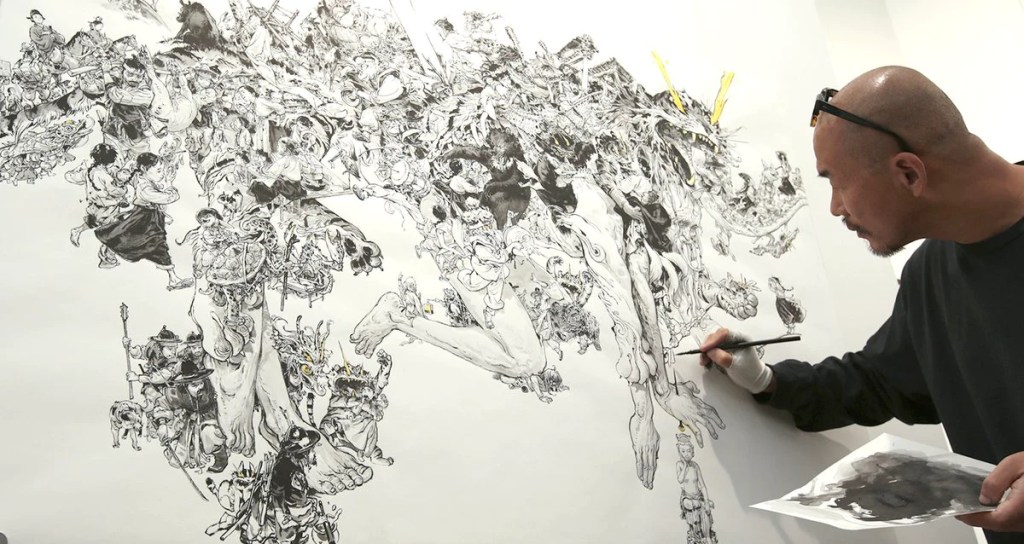
And that leads us to Peter Han. This fellow, you need to meet.
Here’s his Instagram. Here’s his website. Here’s a demonstration of him just riffing on the paper. That’s him, grinning at you in the header image for this article, surrounded by some of his work.
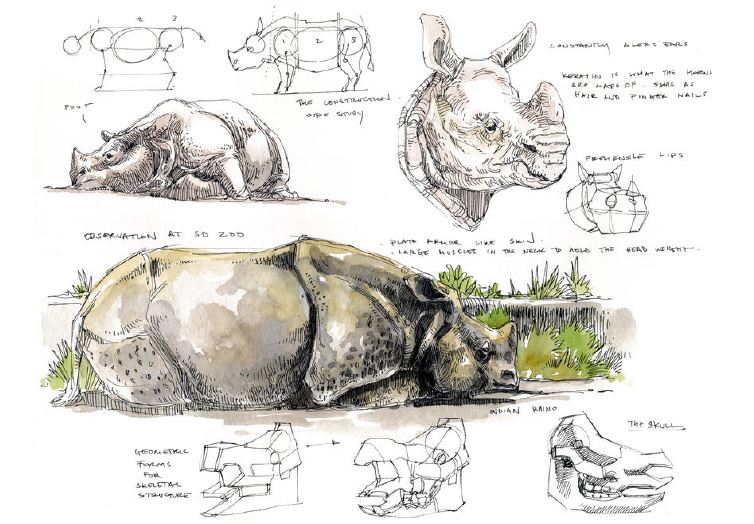
He sees the world like this:
Peter has an inspiring story. He’s been drawing since he was 5, and had an extremely influential teacher when he was studying art (Norm Schureman). Norm apparently impacted him so much that, even with Norm gone now (shot in a senseless and tragic act), Peter has based his life’s work on some of the approaches he learned back then. He’s built a little empire of teaching people like you and me to model any scene at all in terms of basic shapes to get the structure and proportions and silhouettes correct. After that, it’s just shading and texturing, if not also color.
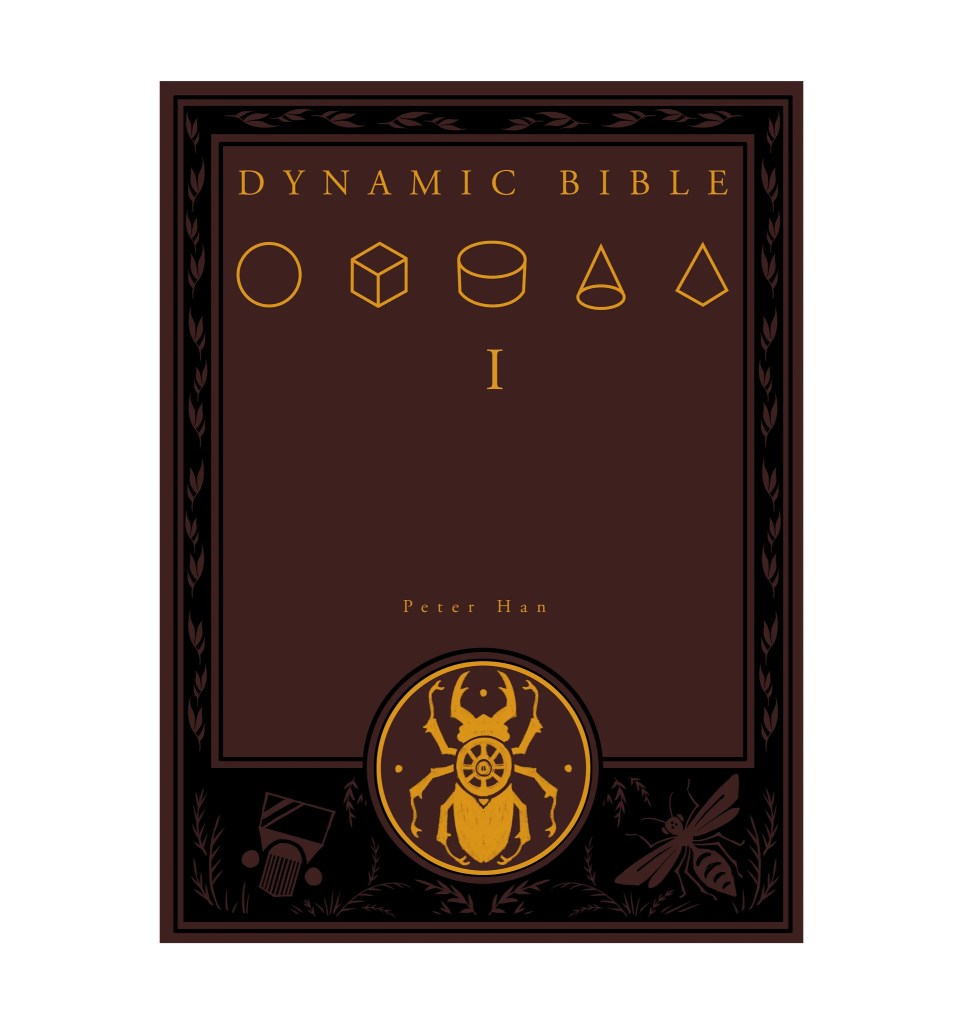
Here’s a sample of a wildly interesting book he’s written and illustrated he calls The Dynamic Bible. But you should really buy yourself the full copy available here.
What are we supposed to take away from all this?
Watch and listen enough to people like those guys highlighted in ImagineFX and Kim Jung Gi and Peter Han, and you’ll hear them talk about “interesting shapes” they encounter in their daily lives. They don’t just see a cricket, they see some fascinating geometry in its belly or legs that has something they appreciate about it. They don’t just see a sunbeam trickling through a dusty window onto a stairway landing, they see its fabric-like ripples and where it fades to one side but gets brighter on the other.
They may not just hear the frog jumping, but experience it more deeply and with more meaning than others.
My point is that’s the sort of untapped perception capacity we can all unleash, with a little focus and determination to do so.
A whole new way to experience the world! That’s what I’m getting at here. Something different and exciting to adventure with.
You likely know if you’ve been here at Grailrunner before that we obsess over the creative process. In fact, the whole point of the company, this site, and essentially anything we’ve produced is to dissect, pick apart, rewire, engineer, and shove ammo clips into the imagination. It’s in the logo, man.
Dreams are engines. Be fuel.
Anyway, there was an interesting riot at a theater on February 25, 1830 in Paris that has a few things to teach us about how to break ground in creative work. And as creators right now, with the looming and worldshaking onset of AI disrupting every outlet of creative work and threatening that age-old security we were all told that computers can’t create, it’s more important than ever that we get really, really good at doing new things.
New things, man. New things. Now AI can’t really do that.
What is the context on this Hernani thing?
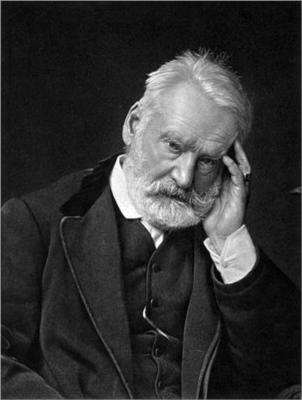
Victor Hugo wrote Les Miserables and the Hunchback Of Notre Dame. That’s where you might know him from.
This guy:
He was a playwright too though, and in his day the structure and content and expectations of plays were widely agreed and rigid. You didn’t mess around with these things if you wanted to be treated seriously and not look like a disrespectful clown. After all, Aristotle analyzed storytelling in tragic drama at an almost divine level 2,000 years before in his Poetics and designed the perfect tragedy, defining the unities:
Unity of time: the action of the play must unfold over a single day
Unity of place: the action must take place in a single setting
Unity of action: the play should comprise only one plot
If you abided by these principles with your play, which was the norm for hundreds of years in Europe, then Aristotle’s intense study of impact and memorability and propriety assured you that you had a well-constructed play. Why deviate from that – you think you know better than Aristotle?
Another non-negotiable was the clear definition of genre: comedy or tragedy. More than just branding, this was crucial to the audience’s interpretation of your work. Is it supposed to be funny, and so pratfalls and misunderstandings and goofy idiots abound? Or is it supposed to be sad, and so have larger-than-life people make key mistakes based on their natures and lose it all?
And finally, you didn’t show things that were grotesque, things that were compulsively ugly or distorted. It was just improper and undignified.
Oh no, what did Victor do?
Well, he wrote this. It’s the preface to a play called Cromwell. It pissed a lot of people off and set the stage for the riots to come later. A few tastes of his blasphemy:
“But the age of the epic draws near its end. Like the society that it represents, this form of poetry wears itself out revolving upon itself. Rome reproduces Greece, Virgil copies Homer, and, as if to make a becoming end, epic poetry expires in the last parturition. It was time. Another era is about to begin, for the world and for poetry.”
“…the grotesque is one of the supreme beauties of the drama.“
“‘But,’ the customs-officers of thought will cry, ‘great geniuses have submitted to these rules which you spurn!’ Unfortunately, yes. But what would those admirable men have done if they had been left to themselves? At all events they did not accept your chains without a struggle.”
Victor was saying that the unities of time and place arbitrarily handicapped the dramatic potential. Check pages 15 and 16 for his blast on unity of place – it being silly to think so much important action would happen in this one spot, and what blah-blah is needed to tell the audience what’s going on elsewhere! He continues on pages 16 and 17 destroying unity of time – it being equal nonsense to expect important events all to happen in a day.
And wow, is that one something Hollywood sequel writers should read!
In summary, he felt the rigid genre conventions of comedy and tragedy were limiting his ability to express wide ranges of emotion and experience, the unities were unnecessary constraints that forced silly adjustments, and, most importantly, he didn’t care for the convention of avoiding the grotesque. He called for a new genre to explore the essentials of life, with beauty and ugliness, good guys and monsters, gold-laid parlors and miserable alleys.
“These rules, man! They’re cramping my style!”
What was Hernani then?
Well, Cromwell was too big in scope to even be staged. It’s 400 pages long and at one point needs the British parliament to enter the stage. His next attempt got banned. Then he wrote Hernani, which censors possibly felt was too ridiculous to bother with.
Plot? Two noblemen and a mysterious bandit are in love with the same woman. A conspiracy is in play, and things get dark ending with a wedding and poison.
Rules broken? Well, the story unfolds over 6 months at various settings. That was naughty of him. You weren’t supposed to show death, violence, or intimate scenes. Hernani opens in the lady’s bedroom and closes with three suicides. Equally naughty. You were supposed to adhere strictly to your chosen genre: comedy or tragedy, but he incorporated farcical dialogue and had a king hiding in a wardrobe. Language should have been clean and high-minded, but he included lines like:
“Is this the stable where you keep the broomstick you ride at night?”
You weren’t supposed to let your lines of a sentence from one line of verse to another, but that happened too. Characters were supposed to be one-note caricatures generally who didn’t change, to represent some trait or concept, though he fleshed them out far more than was typical and allowed transformations (such as Don Carlos becoming a good emperor). And he used stage directions like a madman, which was also strange.
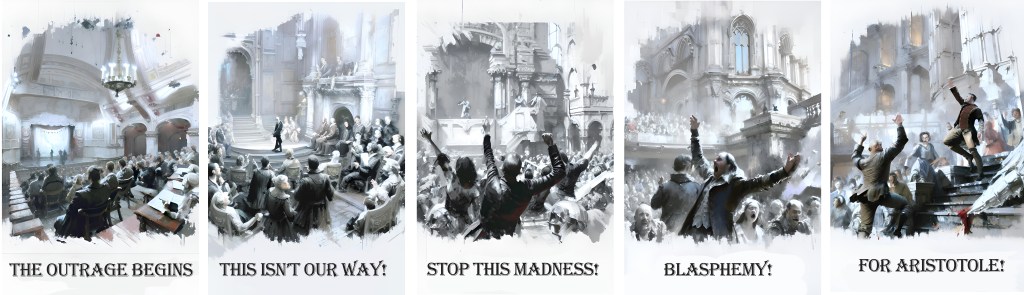
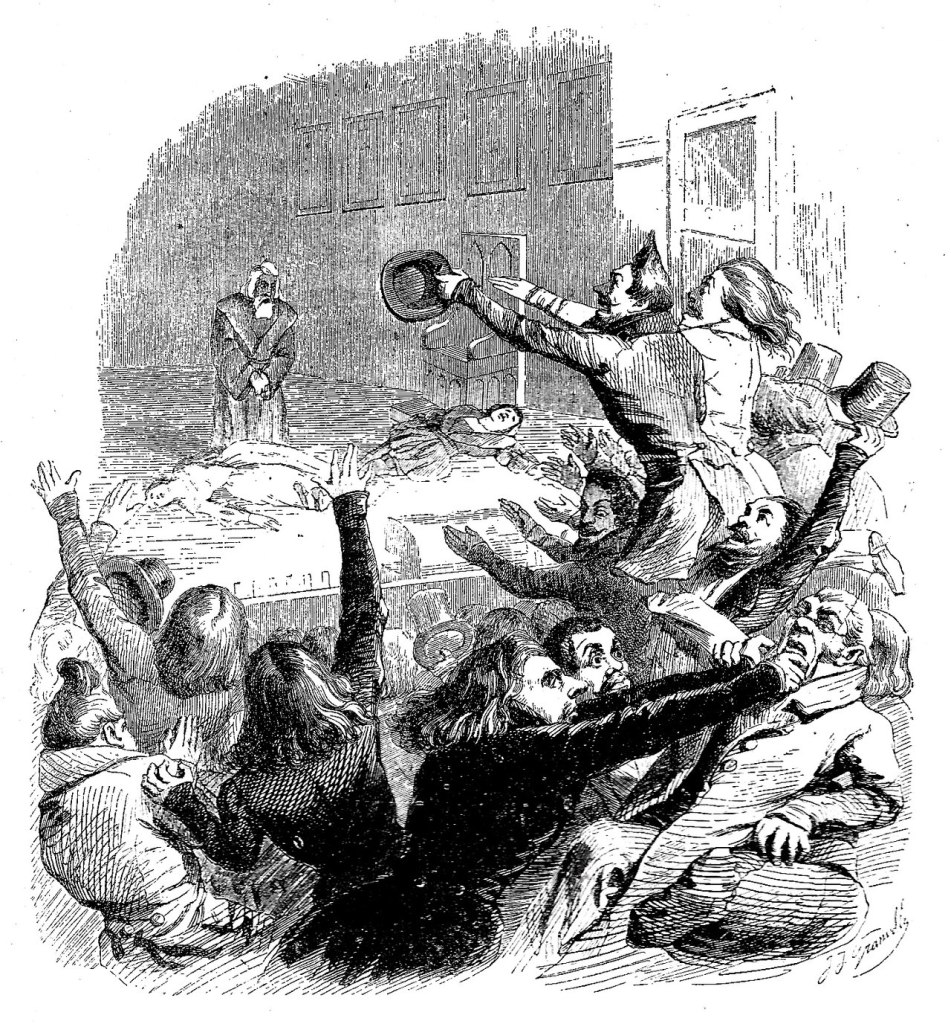
So this happened:
Why was there a riot though?
These Parisians had been through revolutions and guillotines, deaths and restorations of kings, and were reading on a daily basis about massive changes in nations such as Italy and Germany where entire systems of government were being born while others faded. France was still in turmoil politically and censorship was a powerful tool to shut down free thinkers and radicals. Breaking rules in art was linked to breaking other rules, perhaps those tied to abiding by norms set by those in charge.
Today in a politically split country we might feel threatened by those who question gender norms or who bend traditional family structures because we fear what a loss of those foundations might mean for the country’s future, what impact it might have on our children. You see how mad everybody gets about that every day on Twitter. Here in Paris, it was perhaps as scary for them.
In fact, many of those same rioters a few months later in July ousted King Charles X and replaced him with “Citizen King” Louis-Philippe.
Why is this a big deal?
My point today is that it was risky and insightful for Victor Hugo to see these literary conventions as the limiting factors they were and to dare to break them. And when he broke them, it wasn’t for shock value as so many charlatans today offer instead of talent. Victor didn’t break the rules because he was a renegade, he felt they limited his storytelling.
He kept his eye on the point behind what he was doing: telling an impactful story. Maybe Hernani’s plot is nonsense, but that wasn’t what he wanted anybody to take away from it anyway. Read the Cromwell preface. He wanted a new genre free of limits.
Impressive. Impressive to even notice the limits. How many conventions do we abide by and not even notice. Are our prison walls invisible?
What does this have to do with AI ?
AI writing tools like ChatGPT are not going away. They’re seeping into our marketing copy, our kids’ essays, blog and social media posts, even podcast scripts. As creators, there is one important fact behind any AI-based technology like these which can be an asset for us. They are trained on data sets and those data sets include conventions and limitations like those Victor Hugo raged against.
Ask ChatGPT to write you a story about King Arthur or a D&D scenario and it’s painfully generic. We as creators are in an arms race then, as those tools get better. We have to get better.
In my day job, I study and coach the imaginative process. In that case, it’s people in factories trying to solve tricky problems that have them stuck, in some cases for many years. Many times, the reason they’re stuck is because of how they’re thinking about the problem. That isn’t my point today; I’m just letting you know that I think a lot about super-charging imaginations – what makes our creativity go off-road and jump out of ruts and tropes into new lands. It’s pretty fascinating, actually.
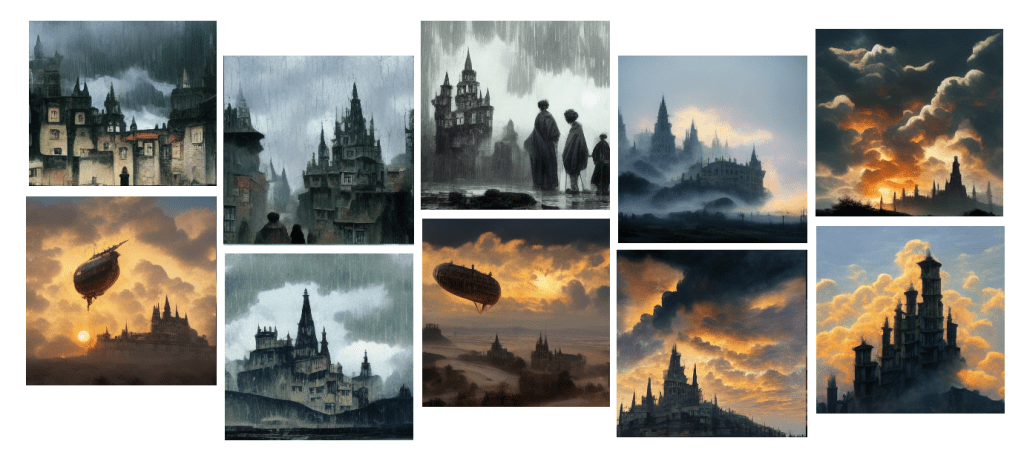
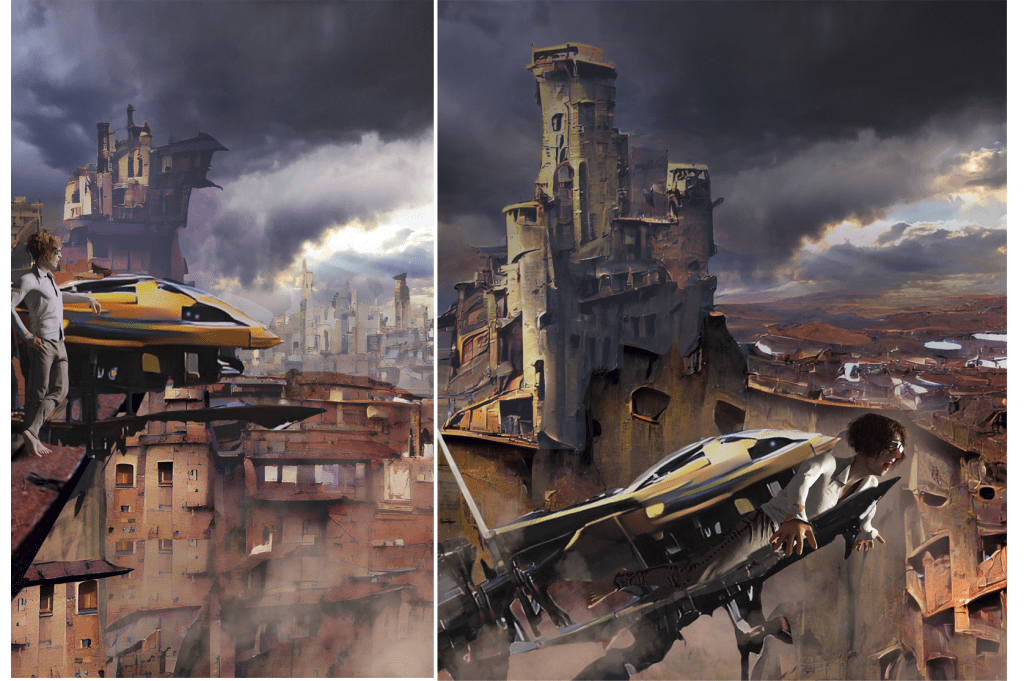
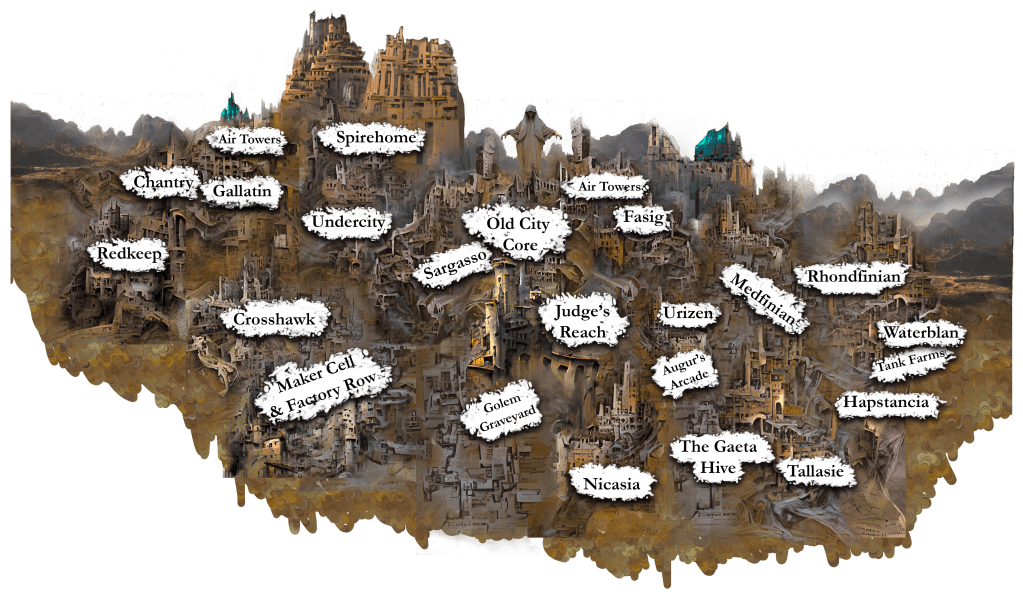
Take, for example, the massive city-state called The Jagganatheum:
A single edifice sprawling as large as a city, teeming with millions, and buzzing with the incandescent dreams of building an infinite republic. One building spanning as far as anyone could see, strapped to a mountain.It was gorgeous then in the heyday of Naraia, gleaming white and gold with banners flying from soaring towers. And they had to come together in a way never before imagined just to build such a complex, which was entirely the point. Once it fell out of use hundreds of years later, all manner of unrooted and shiftless people moved in and shabbily built upon its framework. Entire towns have grown up inside its rambling and incoherent architecture now. It’s a dangerous place of wild people and best left to them.
Let me tell you what that’s about and take you there. It really gets to the heart of how imaginations work and how they can change our lives.
If you’re new to Grailrunner, our thing here is inspiration, specifically using science fiction and fantasy novels and tabletop games to explore immersive storytelling. Our signature IP is a world setting and sandbox called Salt Mystic. You can find more here. We’re building out the next volume of characters and locations, and I’m working feverishly on a novel to accompany a major development in the tabletop game.
To begin, all I had in this case was a name (The Jagganatheum) and the vague idea of a giant city sprawling across a mountainside that was cobbled together. In fact, the city was just one enormous, hideous building, ages old, and so patched together and crumbling. The name came from the original form of ‘juggernaut’, extended from referring to Vishnu to include gigantic carts pulled in worship through the streets. It meant ‘big’ to me, so I liked it for the purpose. I always loved the image my dad used to describe of himself growing up in Brooklyn, NY in the 1950’s where he’d shimmy up to the rooftop of his school and stare at the sky, dreaming. I was going to steal that too.
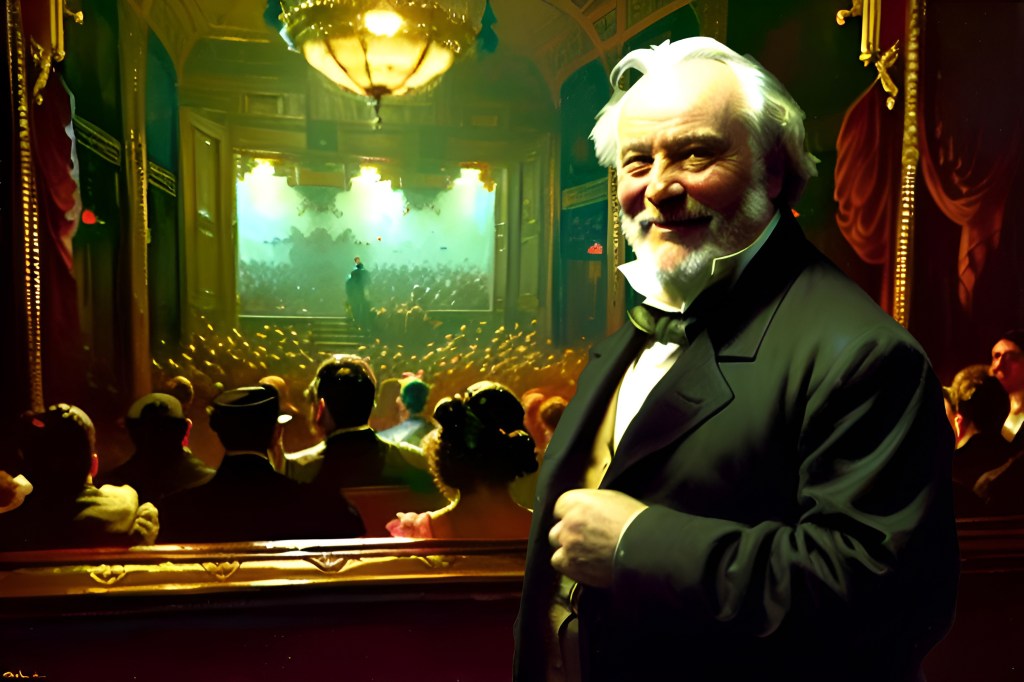
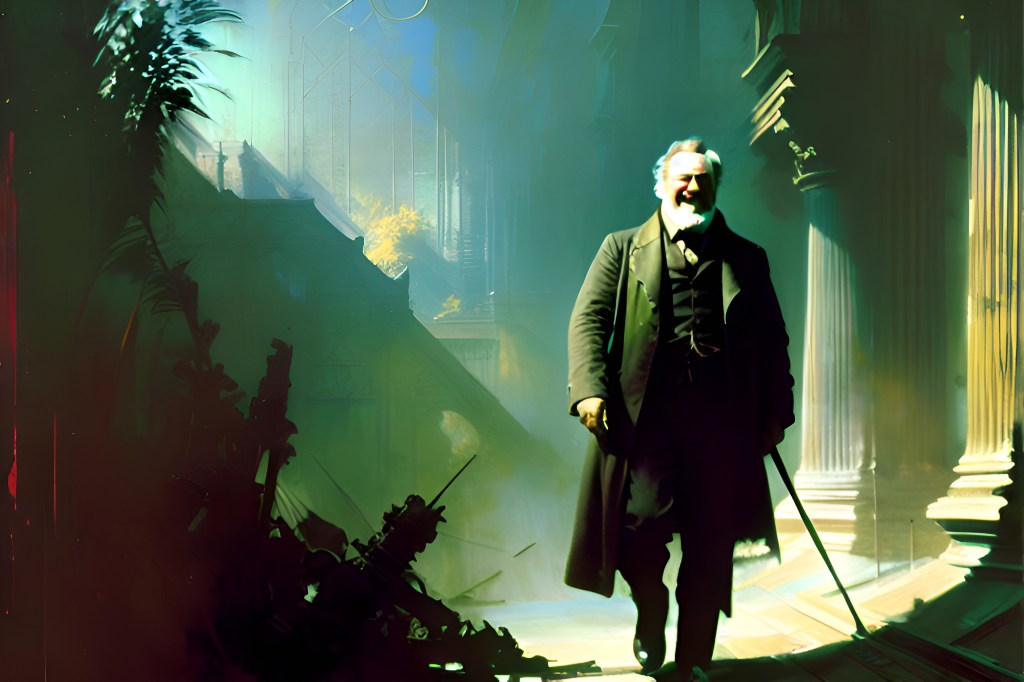
That’s where this guy came from:
Envisioning this big, sprawling, wild place and this nameless dreamer growing up in it, I had to ask why he was such a dreamer looking at the sky? What did he hope to find there? Why did he want to leave? This guy, eventually Lamberghast Mazewater, came of those questions and will ultimately be a war marshal in the service of both The Jagganatheum and beautiful Vimana Station (if he survives these crazy vortex glider experiments!).
All this leads me to the first finding about exploring imagined lands, and we’ll let an old inventor introduce it:
“To invent, you need a good imagination and a pile of junk.” -Thomas Edison
Finding #1: Gather inspirations and ask questions about them
By just following the questions and the possibilities, without worrying over plot or key events I needed for the story, and especially without considering ‘sizzle reels‘, the notebook started filling up with great locations inside the city that I’d like to visit and both mighty and intimate things that had happened there. My point with this is that I’ve found it so much more enjoyable to just garden these imaginary settings, to let them breathe and grow wild before I have to prune for the tale I’m telling. I wanted these Jagganatheum streets and alleys to be there, for real, waiting on whoever I was to send scampering into them.
How about we let a fantasy novelist and screenwriter introduce this one, as he compares this sort of writing to gardening:
“They don’t know how many branches it’s going to have, they find out as it grows.” -George R. R. Martin
Finding #2: Avoid using plot points as mileposts
A few months ago, I caught a terrible head cold and fell asleep with a fever after spending time sketching out this place. I’ll never forget the dream that came about that night. It was incredible. I saw the high ceilings of a train station (looking a lot like Milan’s Central Station) with a mishmash of sculptures and friezes, with all manner of exotic people buzzing about. I saw a red armored ceremonial guard, with intricate filigree on their shoulder boards and chest plates. I was taking this train inside The Jagganatheum’s central complex to its far reaches, which echoed a developing plot point that was still (at the time) only just coming into view.
When I woke up, I rushed to write it all down, because I hadn’t thought of them using trains to get around the city. I hadn’t thought of any sort of guards, and didn’t know at the time what they’d be guarding. And being so focused on the exterior views of this mighty, mad place, I hadn’t considered at all what the interiors would look like. Of course, they’d have old statues and dented inscriptions going back to the city’s founding! It made sense; I just hadn’t gotten there.
Which means it’s time again for one of the most quoted, quotable quotes we go to on this site:
“Chance favors the prepared mind.” -Louis Pasteur
Finding #3: Set your mind thinking about the land you wish to explore and build, then do something else. Even sleep.
In my case, it was fortunate to have such an unsettled mind from the fever, but I often use this trick going kayaking or running. I’ll use it before a long plane trip. Just a framing of the problem, its borders and boundaries, then let the engines run behind the scenes.
What’s come of all this is a fully realized and fascinating city that has started to feel like a place I can travel to. It’s mapped out in broad strokes, but the specifics are waiting for me to visit as the needs arise. I swear, when I sit to write on this book, I’m anxious to get Lamberghast moving just so I can see more of this fascinating place.
That’s what I wanted to offer you today, just a few findings from the field as this book and game volume come together. I hope in some small way, I’ve struck a spark with you. We’ll keep you posted as this wonderful thing builds itself!















 Grailrunner Publishing