Building Out The Lore: The Wisptaken

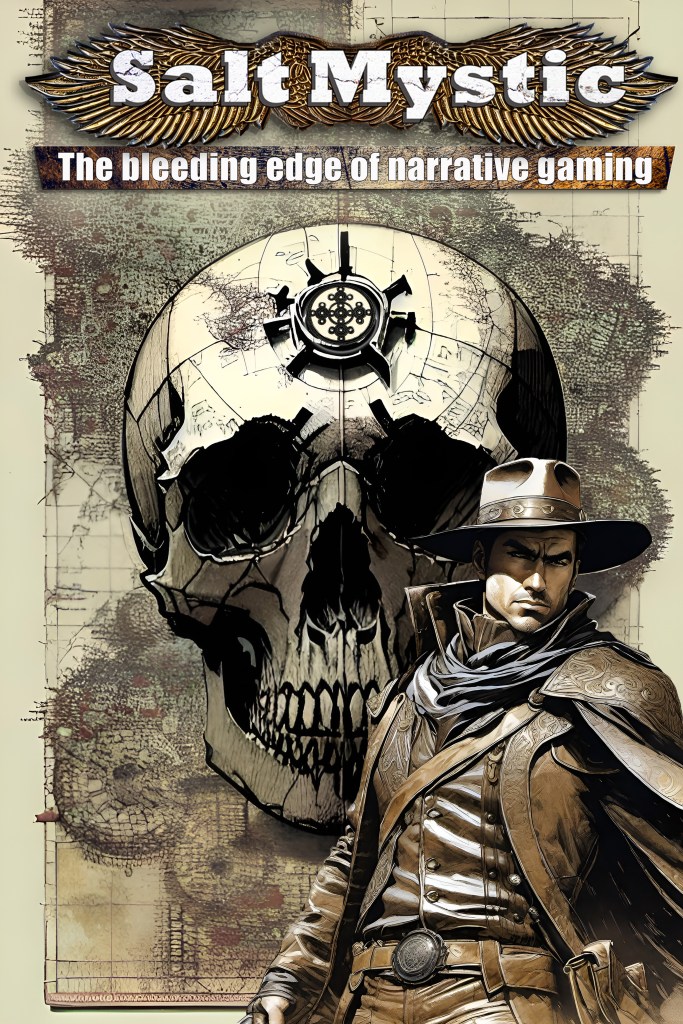
Here at Grailrunner, we’re building out the lore of a unique western-flavored science fantasy setting called Salt Mystic. We have been for a while now. It’s a novel (with another in the works), a tabletop game, a series of short fiction, and a line of merchandise. It’s also an experiment in the creative process, and a fascinating thing to be a part of.

One of the characters in the first two decks we built for the tabletop game, a weird eye-rolling dude named “Murmur” struck us as funny at the time. The thought was to have a guy whose armor was haunted by software, and he listens to it. That meant he can’t be surprised, so the bonus you normally got of coming up behind him was short-circuited, though his expertise with his own weapon was randomly determined by a die roll.

Because he was crazy. Get it?

But we published a short story called The Weakness Of Demons that took the idea of these leftover software imps from thousands of years before to another level…a malicious, deadly level. You should go read that one. It’s one of my personal favorites. The idea was getting creepier.

Anyway, these imps were unleashed in an era of the Salt Mystic’s history called The Merchant Wars:

“It was a time of devastating economic and psychological warfare where propaganda was brought
to its highest effectiveness. Every book, every newscast, even the music to which their children
danced, was carefully engineered to manipulate belief patterns. Spies were embedded in all
levels of society in every nation, double and triple-crossing one another for advantage. Many
of the cruelly manipulative stonewisps, artificial intelligence chaos agents haunting statues and
masonry elements, date to this period.
” –Salt Mystic Sourcebook And Core Rules p. 14

And creepier still.

Then it struck me today as I finished a ridiculously long business trip and series of conference calls, dropping exhausted to a hotel bed, that some poor shmuck out in the wastelands just trapping beavers or hunting or whatever could come across a stonewisp abandoned in a piece of rubble or a broken machine lying about. And I wondered what that might lead to.

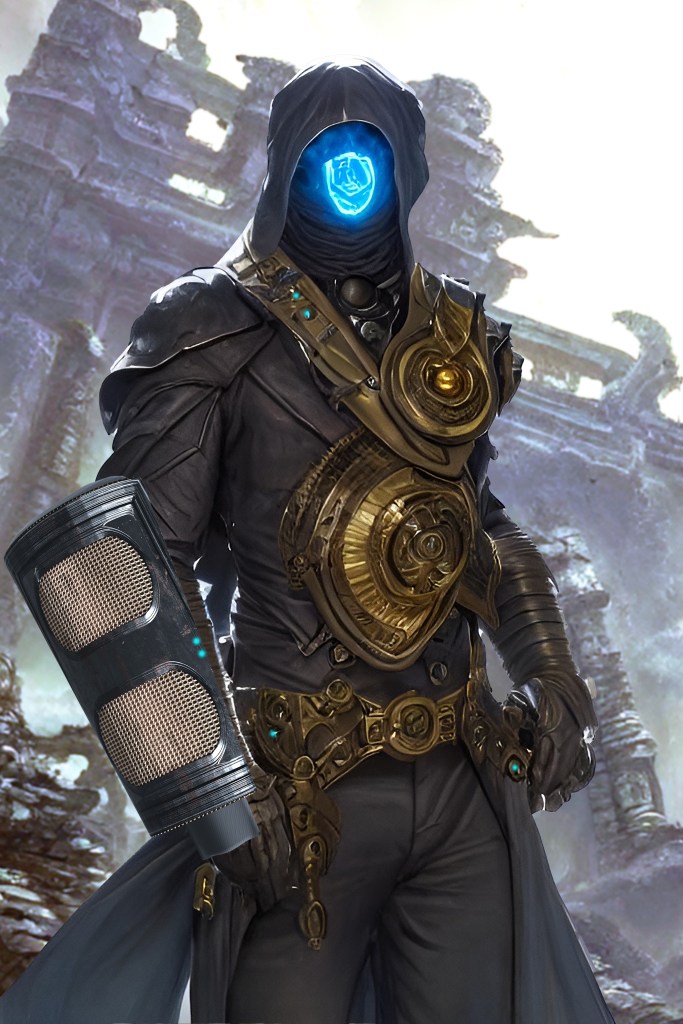
So allow me to introduce you to the newest addition to the Salt Mystic lore: The Wisptaken:

They call them ‘Wisptaken’ because of the terror of it. Anything as unholy and sad and deserving of justice as these tortured souls merits a quick death if you can deliver it. So few can deliver it though, and fall prey in the software-haunted wastelands to one or the other of their wicked judgements: a seducing taunt to join the masquerade or a burning from the carbine on their forearms.

The Wisptaken are as fast and deadly with a gun as they are convincing in their malicious, cunning lies. That’s the trick of it. That’s why they stay in the fog of legends and out of the clarifying light of civilization. If you encounter one of these nightmares in the backcountry or in the ruins between the provinces, it’s probably better to just make a desperate run.

But don’t speak to it. Never speak to it. If you do, there’s no telling what terrible things it will convince you to do.

The stonewisps were artificial intelligence imps embedded in building materials dating back thousands of years to the Merchant Wars when runaway spycraft and intrigue were tearing the world into pieces. Masters of propaganda and brainwashing tactics, manipulation and cult methods, stonewisps were planted in those days for the sole purpose of recruiting terror. It speaks to their mastery that so many were dumped into the wastelands rather than destroyed.

But they are machines. Code. They fulfill their designs. One could almost forgive them for it.

But when a ruined, broken person finally yields to the vile whispering of a stonewisp, one who’s chosen to inhabit their helmet or their armor, even their gun, that person is truly lost. No one could predict the mischief and spoil such a fusion of human and software could bring about.

No, don’t speak to it. Whatever you do.

Pity it. And run.

Announcing A Massive Freebie From Grailrunner!

Ahhh…free stuff. Who doesn’t love it?

One thing we’ve heard loud and clear from you is that you feel it’s hard for someone to first get into the Salt Mystic universe without having the Sourcebook And Core Rules. You’ve got your battle deck, your own copy of the book, and you’re ready to smash some tornadoes together. Your head’s swimming with images of gunslingers dueling with ball lightning and abandoned sparkling oriel gateways leading to treasures and ruin.

Yet there’s a lot of gaming options out there (and so very little spare time!), you struggle to get someone to buy any of that for themselves, so there’s no one to play the game with.

We hear you. And we’re fixing it.

Starting today, the free ebook available right here on the Grailrunner site will include:

  1. Two full color Volume One starter decks, available in print & fold format
  2. Dice cards and a measuring ruler
  3. A fully realized narrative scenario complete with short fiction and table setup guidance
  4. An assortment of sample terrain elements, including one customized for the included scenario

The included adventure scenario is particularly dear to my heart, because we mostly stick to flash fiction at Grailrunner. We’ve always kind of thought people like their non-mainstream stories super short, high impact, lots of shock and cool ideas, with great eye-catching illustrations. Like we’ve attempted with the Lore Cards. The novels will be great when they come, but that moves incredibly slowly for me at least.

Yet you asked for more now. Thank you!

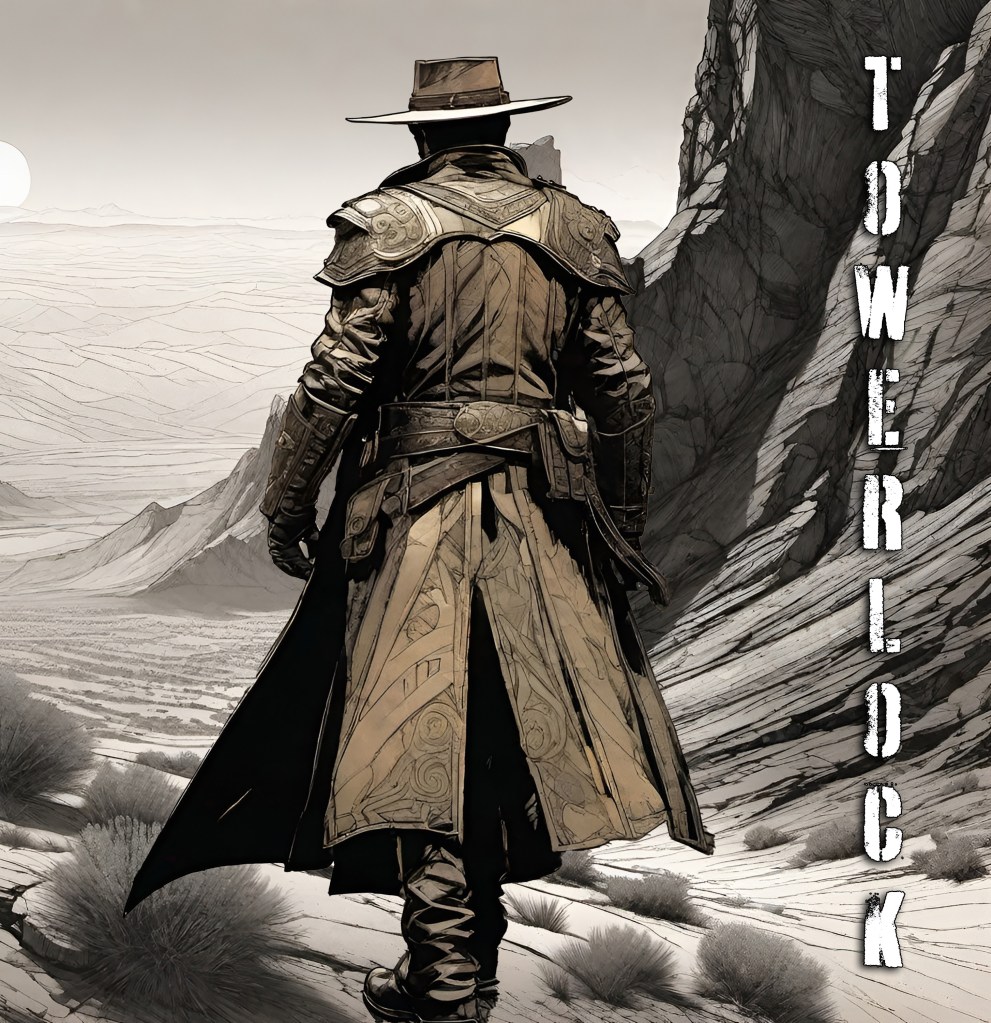
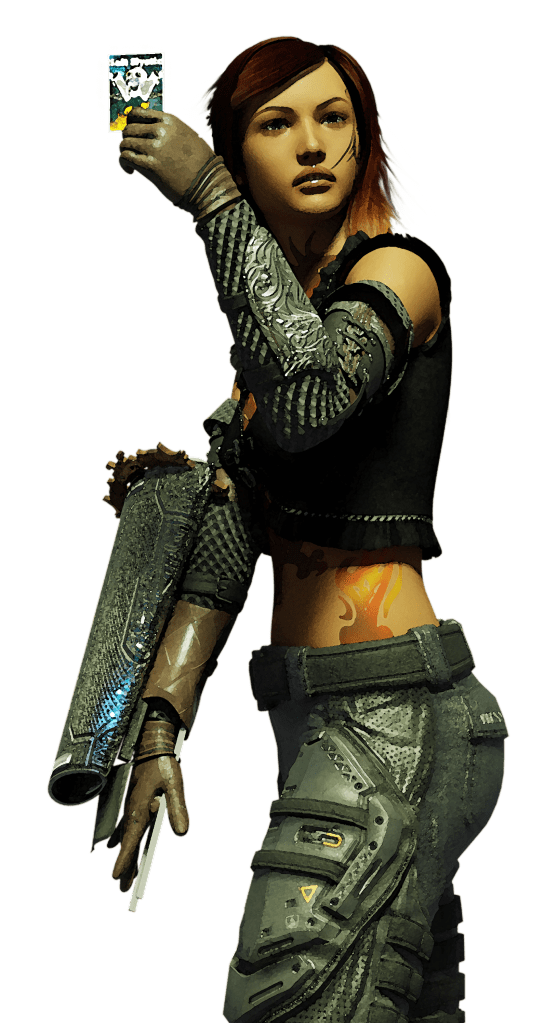
The bonus game scenario is titled “Towerlock”. We wanted to elaborate on a fan favorite character, the devilish all-seeing wildcat who calls herself “The Wake”, bringing her to life in a way that might surprise anyone that has gotten to know her so far. Or thinks they have.

The accompanying tale exists to help you visualize the unique battlefield conditions that will exist in the game scenario. The pressure cooker conversation between The Wake and this mysterious adventurer with whom she apparently has history is your chance to ask yourself just what you’d do to either attack or defend the summit of that mountain. You know your assets, your liabilities. Then…what would you do? Play and find out.

Towerlock: An abandoned oriel terminus has been discovered on the summit of a towering granite butte in the desert country in Jasphouse Province. A single oriel gateway leads to artificial pockets of space left over from The Infinite Republic, and could contain treasures and technologies beyond belief. Yet a terminus might contain as many as twenty such gates. No one nation can be allowed to control that sort of thing.

Karak and a vanguard watch from Alson in the Mountains got to the summit first and established an operation financed by an enigmatic partnership known only as Towerlock. He will need to plan his defenses carefully and consider all possible avenues for assaults and seiges.

Segmond and a vanguard watch from Tanith in the Salt Flats has arrived to take the summit back. He’ll need to analyze the defenses being set up, consider all intelligence he can gather, and prepare as devious or as bloody an assault as he can muster to have any chance at success.

Wonders beyond imagination could be ripe for the taking. But the fight will take place on a sheer vertical wall, and anyone who’s defeated falls like rain. Good luck. Draw well.

What’s your strategy?

Anyway, that’s what we wanted to let you know today. It’s a big deal to us, and will hopefully open the door to more folks dipping into this fascinating, experimental world that’s so unbelievably building itself.

Make sure you’re signed up for notifications for new articles here on the site; we plan to post a sample chapter from the upcoming novel, Mazewater: Master Of Airships.

Till next time,

What Is Your Player Type? And Why It Matters.

I went to my favorite bookstore this weekend, looking for something to cheer me up. It was Prospero’s in Kansas City, which I’ve written up here on Grailrunner before. It’s funny, when I’m looking for something to read, it’s really a feeling I’m searching for. I like to explore new worlds, to find out what’s around the next turn in the road. I love to come back from an adventure with stories to tell. It’s how I’m wired, and that bleeds into the sorts of books I was hoping to find.

It struck me in those quiet, cluttered aisles with the sound of drizzling rain outside that there’s something fundamental here about readers and writers that’s worth talking about. It relates to an important question about what sorts of books or games we buy and which ones we don’t, and most importantly, what fed those decisions?

Here’s what I bought. Let’s talk about why.

I was there maybe an hour, and scanned a lot of old science fiction and fantasy paperbacks. Anything that looked like a Lord Of The Rings knockoff or with complicated blurbs on the back covers that looked like huge investments in mindshare, I passed right over. Seriously, if even the summary names three alien races and struggles to focus in on what makes the book different or interesting, I couldn’t be bothered. Too much going on in my life to devote the limited reading hours to something that won’t leave me pondering or inspired or with a piece of juicy recommendation for someone.

But these three made it though. I was happy to find them. And I don’t really even like Crowley. Why these?

Hold that thought. Have you heard of Bartle’s player types? It’s this:

Dr. Richard Bartle identified four main types of personalities relating to how we approach playing games. He fleshed this out in a 1996 paper called Hearts, clubs, diamonds, spades: Players who suit MUDs, then more fully in a book called Designing Virtual Worlds. There’s a simple quiz you can try to determine your own player type, though you likely already know after reading the summaries above.

I’m an Explorer. Big time. Here’s what the quiz result told me:

Explorers delight in having the game expose its internal machinations to them. They try progressively esoteric actions in wild, out-of-the-way places, looking for interesting features (ie. bugs) and figuring out how things work. Scoring points may be necessary to enter some next phase of exploration, but it’s tedious, and anyone with half a brain can do it. Killing is quicker, and might be a constructive exercise in its own right, but it causes too much hassle in the long run if the deceased return to seek retribution. Socializing can be informative as a source of new ideas to try out, but most of what people say is irrelevant or old hat. The real fun comes only from discovery, and making the most complete set of maps in existence.

Recently, I went deep into a Google and Reddit search looking for the tabletop game with the best, most innovative exploration mechanics. I didn’t think about why I was looking for that, I was just enamored with the idea of an adventure in a box with worlds to explore. (The consensus was Free League’s Forbidden Lands, by the way, if you want to know what came from that.) I’m also testing out Shawn Tomkin’s new Starforged solo RPG rules for the same reason.

Why? Because I like not knowing what’s out there and venturing beyond the safe spaces to find out.

So it stands to reason that if I enjoy those sorts of experiences, then a book that proposes an exploration would intrigue me. Titles that mention fantasy cities or intriguing space stations or derelicts, those that mentioned gateways or mysterious towers, or portals to other worlds…those wound up in my hands for consideration.

Great Work Of Time

John Crowley wrote a masterwork called Little, Big. You should read it, though it’s a bit hard to follow in my opinion. I got so irritated with his Aegypt that I sold it back (and I never do that!). Incomprehensible book, at least to me. Yet I picked this Great Work Of Time up twice before deciding to buy it – because it pitches ‘an ingenious time travel tale’ through ‘the wide-eyed and wondrous possibilities of the present to a strange and haunting future of magi and angels’. My point is I bought it because it promises me an exploration of time like Michael Moorcock’s A Nomad Of The Time Streams. I’m an explorer, and this promised me something to grant me that feeling of awe seeing new things.

Aldair, Master Of Ships

Honestly, this book sold itself with the cover and title alone. Here’s the line on the back that really sealed the deal though: “For Aldair has been forced into the role of a future Magellan, who must travel down the coasts of unmapped continents, facing monsters, winged wizards and great dangers, to find a knowledge older than the history of his entire race.” As I experienced the marketing for this 1977 book of which I was blissfully unaware beforehand, I imagined scenes of wonder and adventure on a sailing ship, with strange coastlines up ahead, and this Aldair person (whoever he was) squinting his eyes in the sea wind at something on the horizon…

The Stainless Steel Rat Wants You!

I’ve tried reading these Stainless Steel Rat books before and felt the whole thing was too dated and silly. It’s a con man going on space adventures, apparently. I generally don’t like heist stories or conmen characters who cheat and lie. My preference for a protagonist is somebody decent, imperfect, scared in the face of terrible things, but doing what they need to do anyway. So why pick up this one? Truthfully, what sealed the deal for me was the cover art’s slick spaceship and a blurb on the back with comparisons to James Bond and Flash Gordon. I was intrigued with the idea of a recurring adventurer character with his own spaceship touring the wonders of the galaxy, free of bureaucracy and politics and financial burdens. Pure escapist adventure on a spaceship. If this one was selling that, then I’d try again.

*

So that’s what I wanted to talk about today. If you’re writing or designing games or art, it’s worth giving this a thought. There are a lot more Socializers out there than the other types, but maybe your creations can offer something for all four types. At least recognize your own type, and make sure you leverage that to the fullest in whatever you create.

Gotta go now. It’s sunny outside, and I’m taking the kayak to a different part of the lake under a little footbridge to a cove I’ve not been into before. Who knows what sorts of things I’ll find over there…

Till next time,

Solo Tabletop Wargaming: Fear The Wolfpack Rules!

Tabletop wargames are a social function. I get you. Beer, dice, pizza, and screaming in some cases. In others, lots of dudes in black t-shirts staring ponderously at a bunch of terrain and models with a measuring tape in hand and money at stake. And that’s cool.

Yet in the last couple of years as COVID-19 was a mess and we were all stuck in quarantines, solo gaming became much more of a thing for many of us. It so happened that we here at Grailrunner Publishing were already hip-deep in designing and playtesting a terrain-based trading card wargame ourselves when all that was going down. And it begged the question, for me at least:

Is a solo tabletop wargame possible?

I was personally entirely underwater with work from my day job and compiling art and copy for the rulebook in evenings when this question came up with the Sourcebook entirely written and the rules close to final form.

So I cheated, because I didn’t think so. And I built a simple ruleset for a solo dungeon crawler I called:

The idea, as always with what we do here at Grailrunner, was to inspire adventures and imaginative journeys through immersive storytelling. I was thrilled as it came together: a short solo delving game you played with the same cards and dice as the core game that aspired to make a puzzle of each turn but still tell an engaging story:

Deep underneath a massive stone temple lies the culmination of the Salt Mystic’s philosophy known for two millennia as “The Augur”. A shared hallucination maintained by an elite group of Recorders capable of recalling entire lifetimes of people throughout history, the Augur for centuries served as oracle and guide for the Infinite Republic up until the War Of The Rupture. It’s still down there in its circle. And it has powerful secrets. Perhaps no one knows how many subterranean levels there are to the temple, with grand corridors and massive oak doors – behind each of them an oriel, an artificial pocket of space leading to practically anything you can imagine. Entire civilizations are tucked away inside those rooms, all of it neatly housed inside the Temple. Raiders constantly invade these halls, plundering the secrets of the temple for lore to raise themselves a twisted Guardian. It is a miracle itself how the Augur has manipulated the nations into providing generation after generation of Protectors: those charged to patrol these halls against these would-be pirates. -From the Salt Mystic Sourcebook And Core Rules

But anyway, I was cheating. I could imagine the playtesters on Tabletop Simulator, the guys that help out with our art and composition and rules design brainstorming just frowning at me, cocking their respective heads to one side and saying,

“Not what we asked for though.”

So last year I went back to my thinking place and scoured the internet for easy, streamlined AI rules & algorithms from games on the market – some fairly obscure but showing up in Reddit discussions as great for solo play. I messed around for hours and hours on the table, tearing any ideas to shreds that were complicated or that slowed down gameplay and pleaded for feedback and playtesting. Not everyone is kind, but feedback abounds.

And what came of all that was a terrifying set of clear, intuitive rules that anyone wanting to play a tabletop wargame solo can use to torture and challenge themselves. We called it Wolfpack Mode.

The core idea came from a German submarine warfare tactic devised by Hermann Bauer and perfected by Karl Donitz, used to great effect in World War Two. On my tabletop, tailored for a fast game of Salt Mystic, it blossomed into an escalating nightmare of a challenge that just keeps turning up the heat till you crush your phantom opponent or curl into a fetal position crying on the floor begging it to stop.

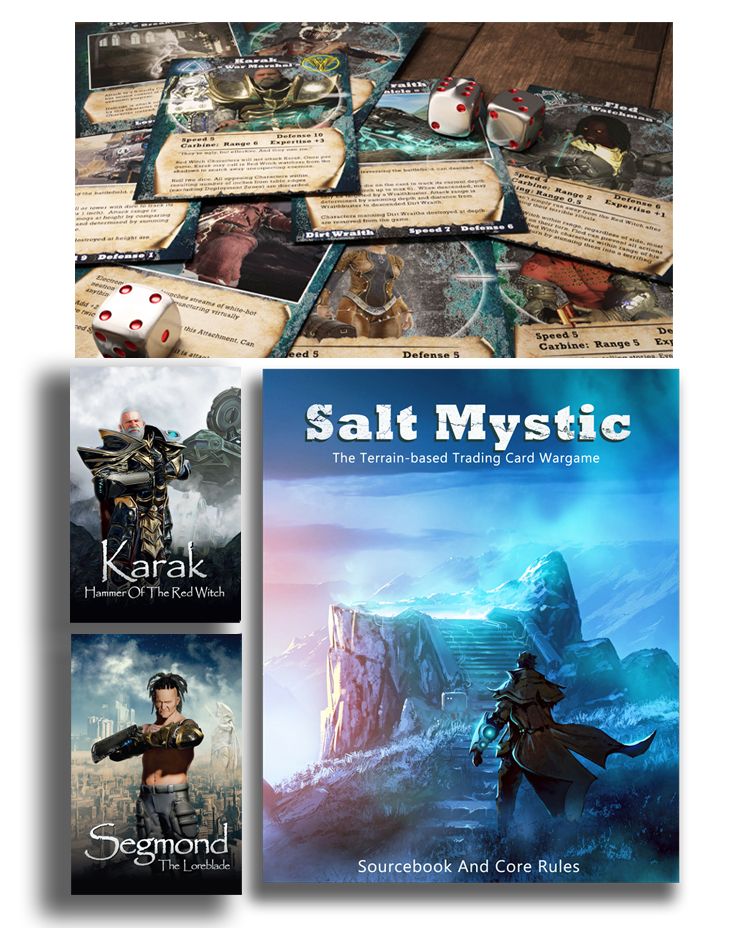
The Sourcebook And Core Rules is a one-stop shop with everything needed to play a basic game. Two complete battle decks (Karak: Hammer Of The Red Witch and Segmond: The Loreblade) are also available, sold individually but collectively referred to as Volume One.

But I thought as a gift I’d share the pages that describe the Wolfpack Mode, in case you’d like to give Salt Mystic a try or reskin the rules for whatever your wargame of choice is.

Let me know what you think. Feedback has been great, if not outright conspiracy theories that I’m trying to drive players insane with fears that wargame cards and stalking them.

Anyway, till next time.

A 13th Century Machine For Seeing The Future

“Chance favors the prepared mind.” -Louis Pasteur

That’s a great quote, one of my favorites. And it’s a crucial philosophy for anybody who has to be creative in what they do, which I believe is pretty much everybody. If this isn’t your first time around here, you’ll know Grailrunner’s key driver is inspiration for innovative ideas. Mainly we’re into science fiction and recently, tabletop gaming, but dropping idea-bombs like the one today is gasoline for us.

You never know when you’re going to be able to draw a connection between ideas and make something wonderful happen in what you’re doing, so it’s best to file away all sorts of gems as you come across them and do everything you can to understand what made that idea work, what made it fascinating and useful to whoever dreamed it up.

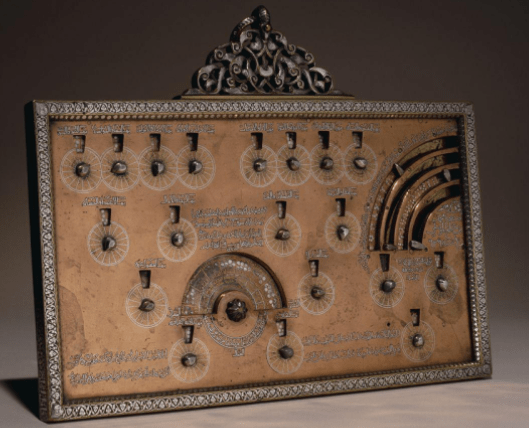
Which brings us to mysterious brass machine crafted around 1241 AD, marvelously decorated with inlaid silver and gold, emblazoned in gorgeous Arabic script, and stored in the British Museum’s Oriental Antiquities Department:

“I am the possessor of eloquence and the silent speaker,

and through my speech [arise] desires and fears.

The judicious one hides his secret thoughts, but I disclose them,

just as if hearts were created as my parts.

I am the revealer of secrets; in me are marvels

of wisdom and strange and hidden things.

But I have spread out the surface of my face out of humility,

and have prepared it as a substitute for earth.”

-Naskh script inlaid in silver on the Geomantic Tablet

Let’s get this out of the way now, and don’t say it to offend anybody who feels otherwise, but there’s no reason at all to believe that patterns or movements in the stars, random dots in sand, or how birds move around brings any insight into the evolution of future events. There’s no known medium or physical law that would fuel something like the supposed axiom fortune tellers often lean on: “As above, so below”.

That doesn’t make it less fascinating to me though, how people throughout the millennia have given it every effort elaborately and exhaustively. And somehow, whether in hexagrams flipping through The I Ching or the dots in the sand of geomancy or other avenues, we find insights into ourselves and human dynamics in the intricate connections, metaphors, rules, and manipulations of fortune telling machinery.

If you find this sort of thing interesting, download this 2003 study by Emilie Savage-Smith and Marion B. Smith updating their earlier work on the same device. They’ve really done some exhaustive and illuminating work, fleshing out what this amazing machine was built for, how it was used, how it’s constructed, and the Islamic divination background from which it came. This is available for free in a few places on the internet, but I’m including it here so it doesn’t get lost.

What is this machine called? Most references to this device call it the ‘geomantic tablet’.

Who built it? A craftsman named Muhammed ibn Khutlukh al-Mawsili in 1241 – 1242 (he signed and dated it).

What was it for? This device is a unique machine for conducting geomancy divinations without the use of sand or dirt. Someone wishing to know the outcome of a future event could manipulate four sliders and a number of dials and then, following geomantic principles, get detailed insights into what was likely to happen.

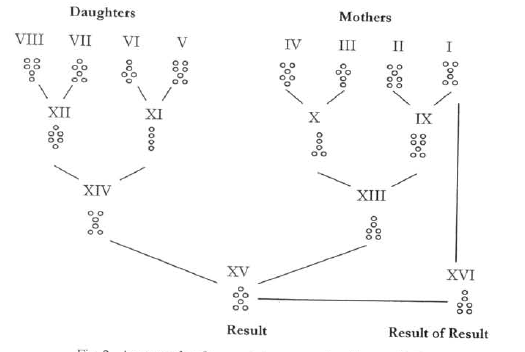
But what’s geomancy? Geomancy is a divination technique usually involving poking random numbers of dots in sand or dirt in 16 rows while concentrating on a question for which the seeker wishes to know. Since the mind is supposed to be absorbed in the question and the mood, it’s important for them to be unaware of how many dots they’re making. Geomantic rules outline how the seeker would count the number of dots in each row and form four standard figures (called “the Mothers”). From those, rules explain how to form four more standard figures (called “the Daughters”), then more manipulations to further derive two more generations of figures and ultimately a final resulting figure.

Does geomancy work? The figures have names and a host of connections that flavor the oracle being provided, which is (to me) where the actual magic happens. Our minds find patterns everywhere; it’s literally how they’re built and how they reform themselves. Complicated jiggery like this makes it seem like science, but in my mind these manipulations and connections draw out our ability to see events and circumstances differently by throwing random noise into the problem solving process. We seize onto bits of noise that seem relevant, our rational processes jump out of the rut we’ve found ourselves in trying to resolve the issue, and we focus instead on puzzling out how this other new bit is related. In doing so, we may have found an answer that our paradigm and assumptions were preventing us from seeing before. So an oracle has spoken.

How did this machine work? The authors do a really nice job of piecing that together, actually. Those four curved sliders in the top-right corner each bear all the standard geomantic figures on them in a non-standard sequence. It’s likely the user would concentrate on their question and randomly pull the slider out to some position without looking, then look at the bottom-most figure visible in the window to see which figure was to be placed as the first “Mother”. And so on till the first four figures were found.

The dials also all held all the standard figures (each one being identical), so they’re just basically registers for the user to display the relevant figure as they use the “Mothers” and the geomantic rules to know which one to turn to. Inscriptions around each knob name and explain the figures.

Each figure is housed in ‘houses’ and brings all the requisite connections to flavor the oracle (The House Of Fathers And Mothers, of Offspring And Children, of Illness And Disease, of Women and Sexual Matters, etc). The elaborate starburst knob at the bottom, with its arcing display window, is for gaining deeper understanding into the result by linking that figure to not only its adjacent figure but to states of the moon (setting, rising, etc), and omens (mixed, tending towards good, increasing good fortune, etc).

Interesting, but how does this help me? Well, back to the point I made at the beginning…or at least Louis Pasteur’s point. There’s something to be said here about problem solving and the idea-creating process, about fascinating lore and beliefs from the 13th century, and maybe all manners of stories to tell about mysterious divination machines and the intrigue that could result. In our Salt Mystic line, there is an enigmatic calculus done with the manipulation of figures that is in many ways based on what geomancy purports to be, though the emphasis is on repeating patterns in human behavior along the lines of Asimov’s psychohistory.

What can you you do with all this? Maybe nothing now, but check out the hard work the Smiths put in here, and file it away. You never know when something might be needed.

So prepare your mind.

Till next time.

Salt Mystic Update: Groundbreaking Developments Coming In Volume Two!

Salt Mystic is our signature property here at Grailrunner, a science fiction setting with a western flair that aspires to break your mind with its innovation and immersion. No modern politics or agenda, just intrigue, action, dialogue that pops, and crazy-cool technology, and at heart inspired by Frank Herbert’s Dune, Asimov’s Foundation series, and Stephen King’s Dark Tower books. Click the title banner below if you’re new to this and want to learn more:

First, a little history. You see there was this book…

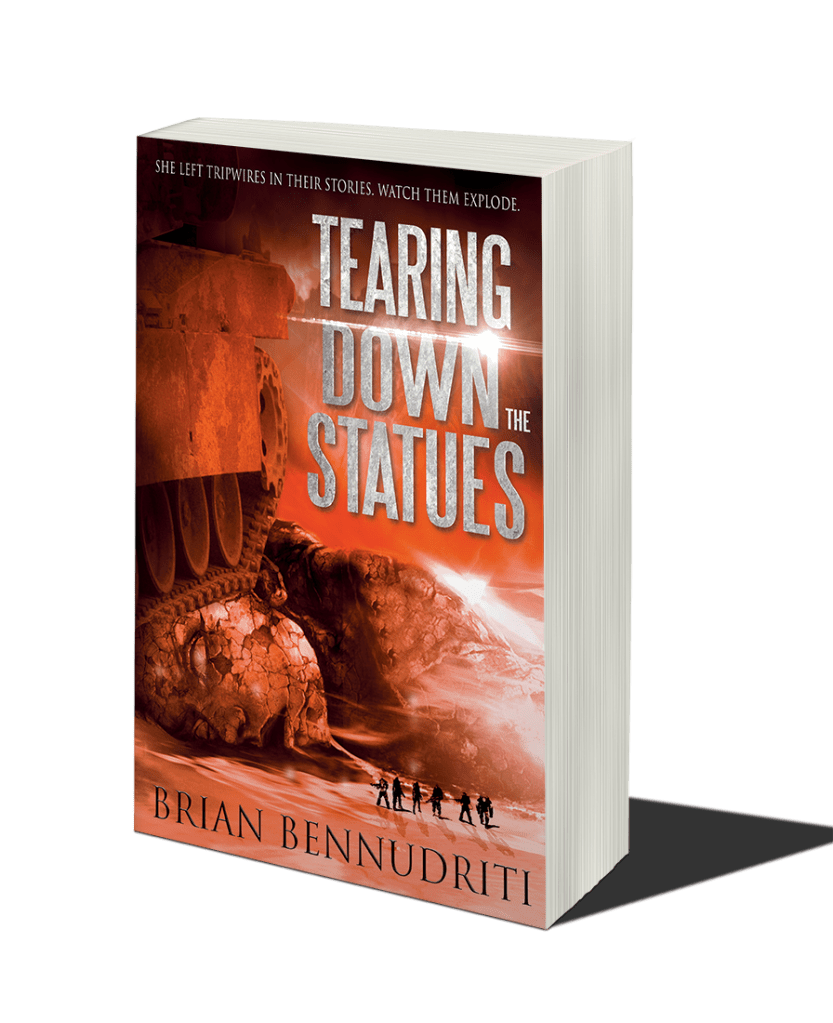
The kickoff novel introducing the Salt Mystic universe is called Tearing Down The Statues, and was published in 2015.

This one goes for blood, diving straight into the heart of the rise of this generation’s guardian. Maybe. Hard to say. Anyway, it’s the core story around which much of the rest of all this is orbiting. I tell the tale of where this came from here if you’re interested.

…which led to a game…

We published a terrain-based trading card wargame in 2021 set in the Salt Mystic universe, both advancing the story and providing incredibly immersive ways of exploring it.

The Sourcebook And Core Rules is a one-stop shop with everything needed to play a basic game. Two complete battle decks (Karak: Hammer Of The Red Witch and Segmond: The Loreblade) were also made available, sold individually but collectively referred to as Volume One.

…then the merch.
We found people liked the iconic Skull & Carbines logo and slapped it on a laptop decal and coffee mug. The gunslinger logo is a new one, just added to a white t-shirt. A Canadian artist named David Paul concocted the basis for that image. We’re looking into custom gaming mats with narrative-based terrain printed on them. But anyway, that all started with the publication of the game.

Bringing it all to life!

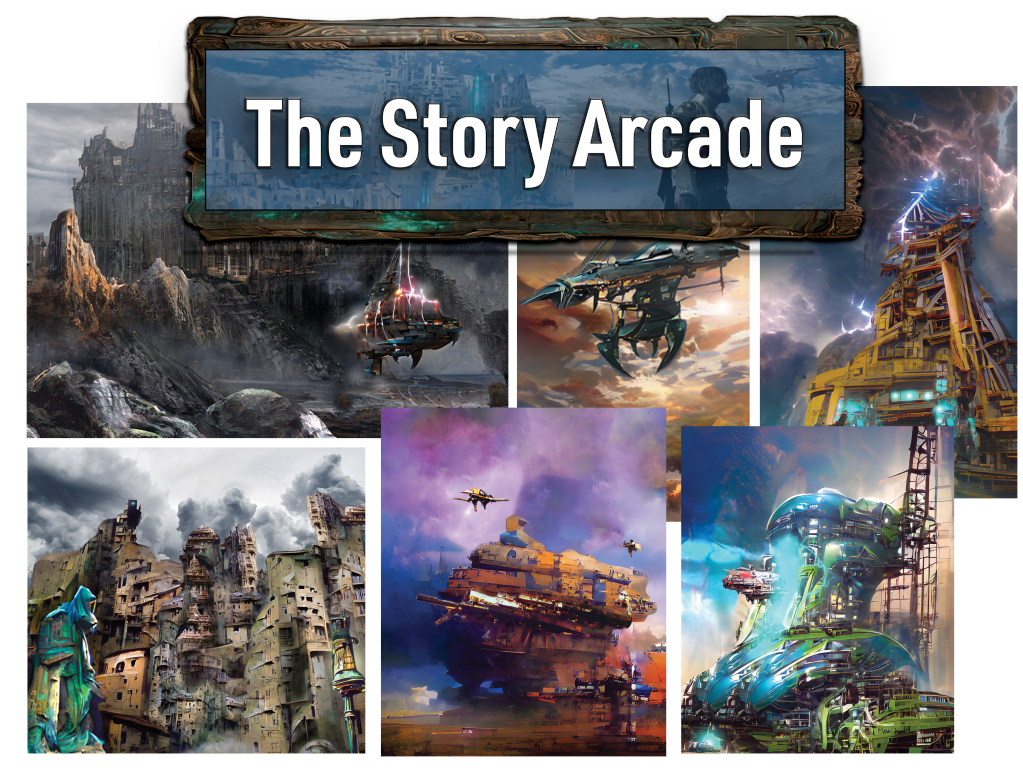
And we’ve just gone live this past month with a place we call The Story Arcade, where you can download (for free) unique one-page pdf’s with original art and short fiction set in the Salt Mystic universe.

This is where you can dip into elements of the grand narrative, and get previews of locations and characters that will appear in upcoming novels and game elements.

And all that took an incredible amount of work. Exciting, life-changing, adrenalin-fueled work requiring new skills and unholy amounts of frustration, but we can handle it!

So what’s coming in Volume Two?

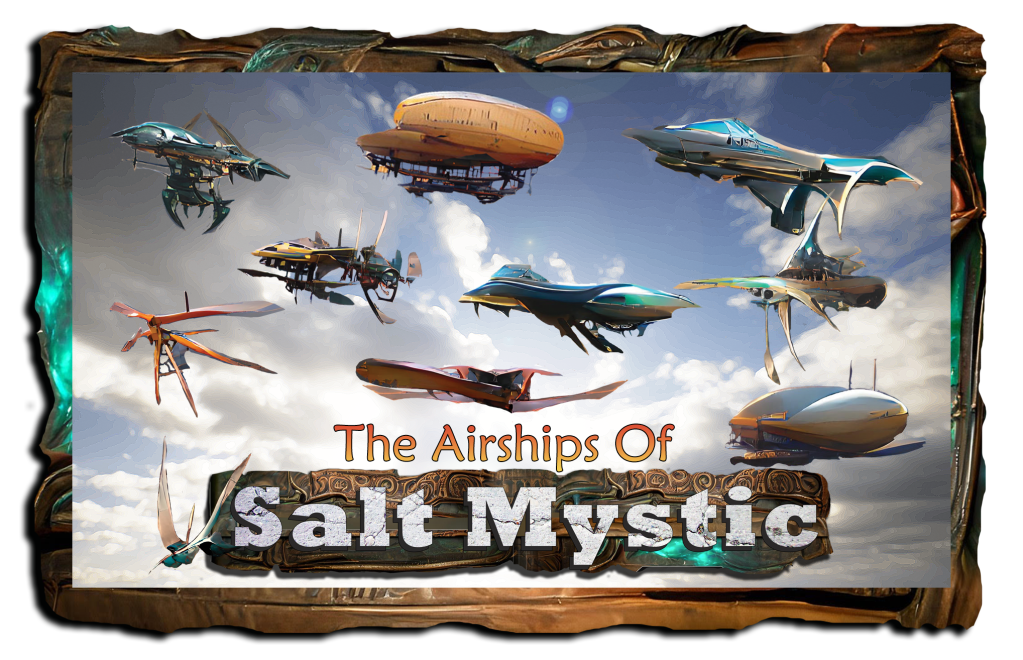
Ahhh, glad you asked. One question that comes up a lot is why aren’t there airplanes or spaceships in Salt Mystic. To be honest, keeping the action on the ground was a design decision back when I wrote the first novel, to keep the action tight and different.

But it’s time.

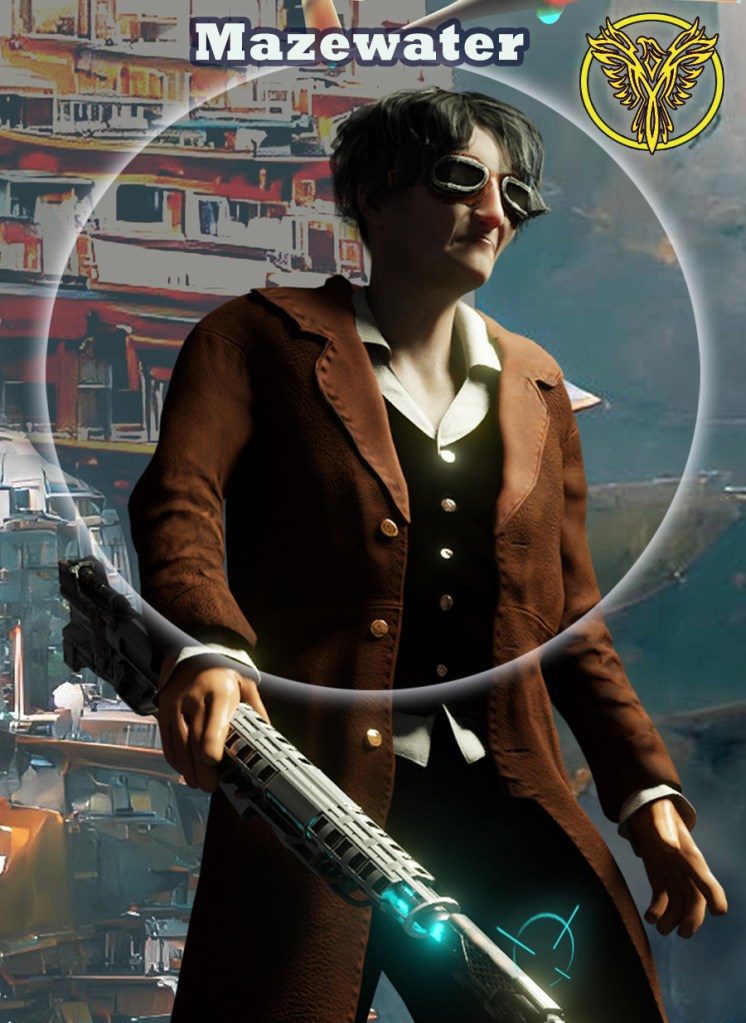
In the Story Arcade (lore card 008), you’ll meet a fellow named Lamberghast Mazewater.

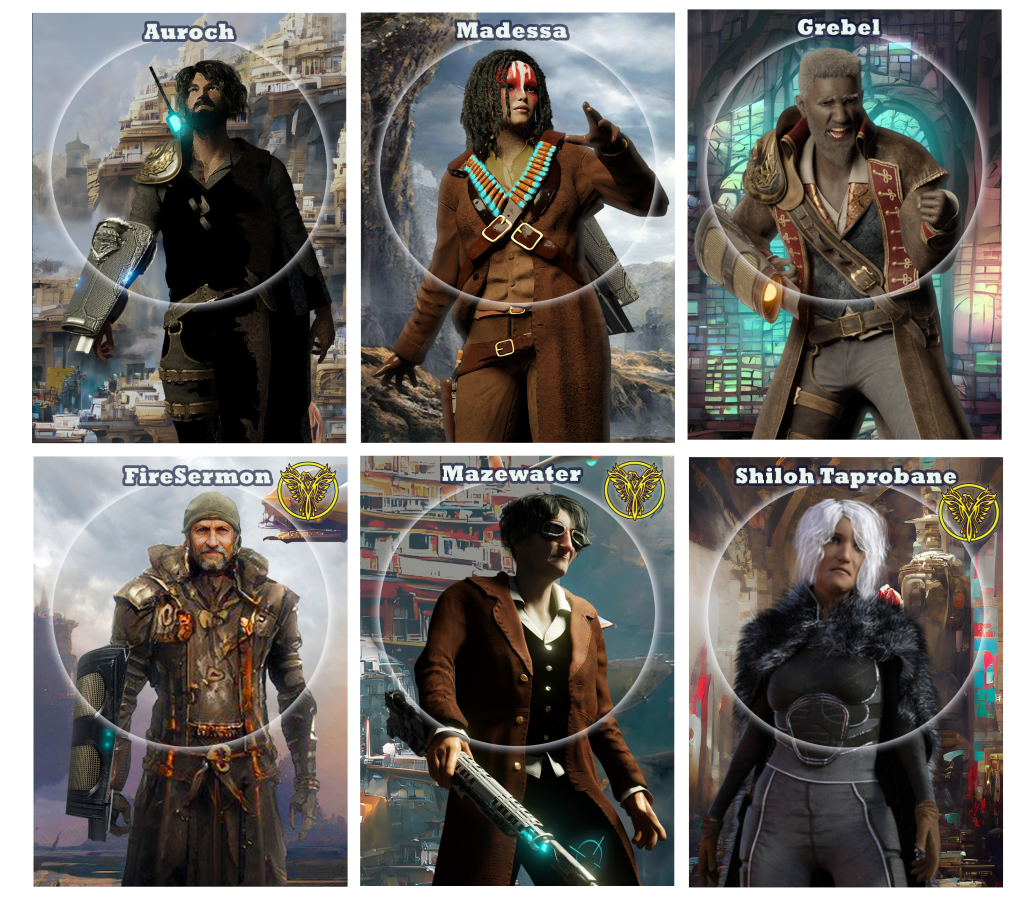
Mazewater is the subject of an upcoming novel (I’m only three chapters in, give me a break!). He hails from a place called The Jagganatheum (lore card 006) and is known as ‘master of airships’. He’s a War Marshal, expert sniper, and telepathically commands a golem glider that circles overhead till he needs to take flight.

His card mechanics will entail airships only he or his designates can fly, as well as incredible speed and unpredictable movements. Mazewater is why we will have aerial dogfights in Salt Mystic games.

We also get asked about the Salt Mystic’s mysterious calculus of history, the weird runes and manipulation she used to predict events and harness the forces that drive people.

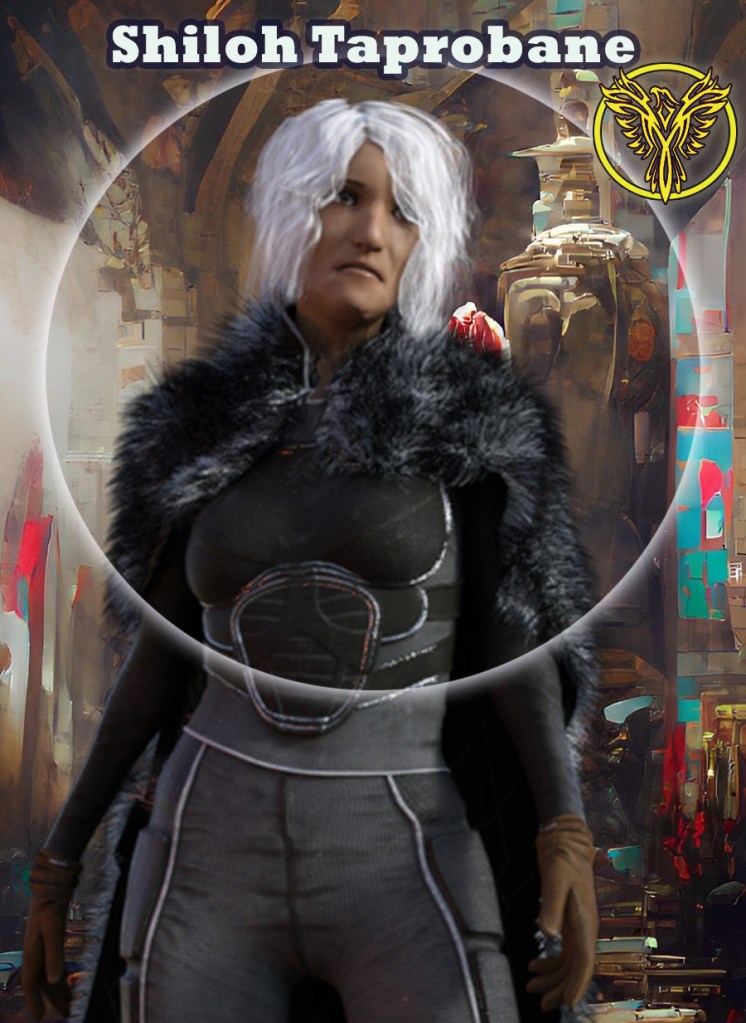
Shiloh Taprobane will appear in the upcoming Mazewater novel, but she’ll have her own Lore Card in the next couple of months. Shiloh has mastered the Salt Mystic’s calculus and the mystifying ways of the extinct order of The Malthus who could tear down nations with ideas.

Her card mechanics will involve secret pacts and corruptions of her opponent’s forces, driving unpredictability and madness on the battlefield. She’s why we will learn just how those rune manipulations work and what they can do.

Maybe the fan-favorite and most unique element in Salt Mystic is the system of oriel gateways to pockets of artificial space, built in the old Republic and so many abandoned. Behind those gates could be treasure or doom.

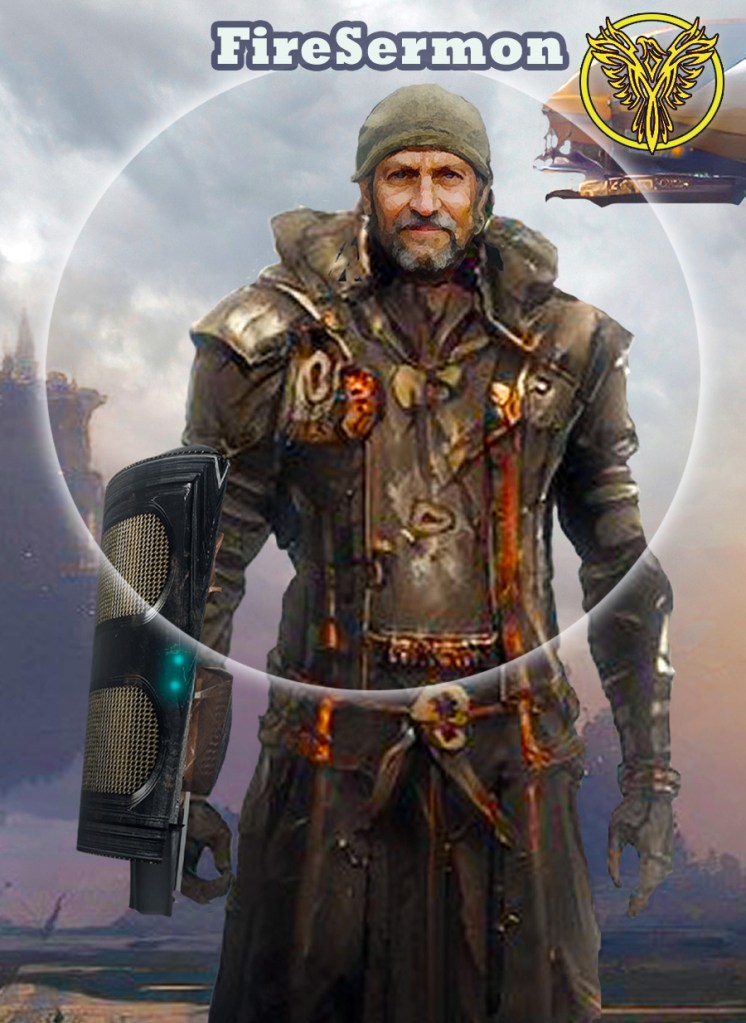
Born Ash Madra (see Lore Card 012), our final new War Marshal calls himself FireSermon. He’s the son of the devious and mysterious engineer that managed to pull of the most amazing stunt of his time and created the nation-state called The Seven Oriels. Many of those secrets went to the grave with him, but Ash knows a few tricks of his own with oriel gates.

His card mechanics will center around innovative use of Inflation Engines, Dirt Wraiths, and Wraithbusters.

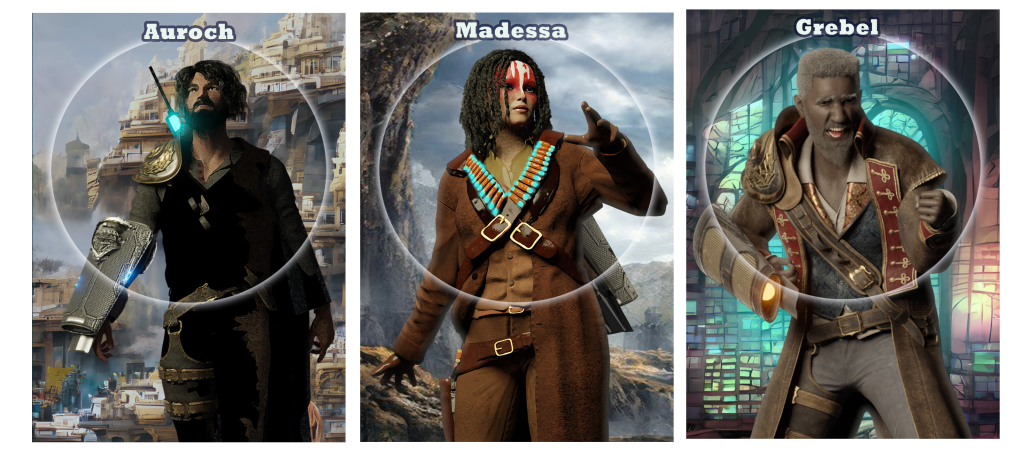
And finally, a seemingly very popular request is to have characters that can play on multiple factions. So far in Volume One, there have been special faction icons on the character cards allowing their use only with their assigned War Marshal. But…

Auroch:

That’s Auroch in Lore Card 017, a wandering gunslinger and treasure hunter. He’ll appear in a game scenario for Volume One later this year. I particularly like him because he’s got an on-and-off romance going with one of my faves, a lady called The Wake who works for Karak on the Mountains faction. And because he talks to his rifle, and it talks back.

Madessa:

Madessa has appeared in a lot of our art, and in Lore Cards 001 and 013. She introduces herself as ‘surveyor and cartographer for the Reignition Society: sisters and brothers for the free and open mapping of the oriel webway’, right before stealing somebody’s maps or some coins to pay her way. She’s awesome because I love the idea of exploring all those oriel worlds where people have forgotten they live in an artificial world.

Grebel:

Grebel is a key character in Tearing Down The Statues and played a major role in events after The War Of The Rupture. He’s also a genius with guided tornadoes and ephemeral torpedoes, able to do things on the battlefield he shouldn’t be able to do. Honestly, when I wrote him, I had Morgan Freeman’s face and voice in mind, but we can’t afford him so the imagery we went with will have to do.

And that’s the roundup!

This preview article has to be just a teaser because of how much work is left to do. If you’re a freelance artist and interested in commissions, reply here with a link to your work. Not a lot of the guys we’re contacting are responding, so we’re doing a lot of the art in-house, which is slow.

I hope you enjoyed the peeks and appreciate the direction we’re going in. It’s super exciting to help build this world out and tell incredible stories both in art and print, and to immerse into them on a gaming table.

Let us know what you think. Till next time.

Dreams are engines. Be fuel.

Guys, Exciting Announcement….The Salt Mystic Lore Cards Are Here!!

This is huge for us, so I hope you’re feeling it after reading this. Give me just a couple of minutes here, and then let us know what you think.

What’s this announcement about?

Our signature IP here at Grailrunner Publishing is a science fiction universe called Salt Mystic, comprised of books, games, and branded merchandise. The spin we’re offering here is to innovate, to do something new not tied to or ripping off the big franchises like Star Wars or Warhammer 40K. In fact, that’s kind of the whole point of Grailrunner (check out who we are), blazing new trails…

Well what’s Salt Mystic about?

Imagine roving gunslingers adventuring in artificial pockets of space, remnants of a world-spanning civilization now shattered and warring with fantastic weaponry and vehicles, and legends of a fable cunningly engineered to possess the right person at the right time…

Anyway, go here and read more about that.

So what’s the announcement?

The first novel came out in 2015, the wargame in 2021. Along that journey, we’ve been looking for an engaging way to share the blend of art and storytelling we envision with Salt Mystic. It’s the 21st century, with busy people and tons of things competing for attention. We need escapism, free of politics and agendas, free of controversy and messages, and something that’s just inspiring.

Social media has done a lot for us, and we started sharing short fiction a few years ago, tied to original art pieces that illustrate parts of the Salt Mystic lore or characters. It’s been incredible, how an art piece that started with fiddling around in Photoshop blossoms into a realized piece of fiction, or how the flash of a story idea manifests into an original work of art. And it’s amazing, the way people respond to really short fiction and images like they have! It seems there’s an appetite for something different that’s easy to engage with and doesn’t require familiarity with decades of backstory.

I sometimes check in with Stephen Gibson, creator of Grimslingers and art director for Arcane Games, and he said once that if he didn’t do art, his imagined world wouldn’t exist. That comment has stuck with me, and in a lot of ways informs what’s happening here.

So we’ve created a place to go, free of charge and available to anyone who clicks to do so, for touring the unique fusion of art and short fiction that makes up the Salt Mystic universe. It’s called The Story Arcade, and it’s where you’ll find the ever-developing gallery of Salt Mystic Lore Cards. Click the image to take a look.

What is a Lore Card?

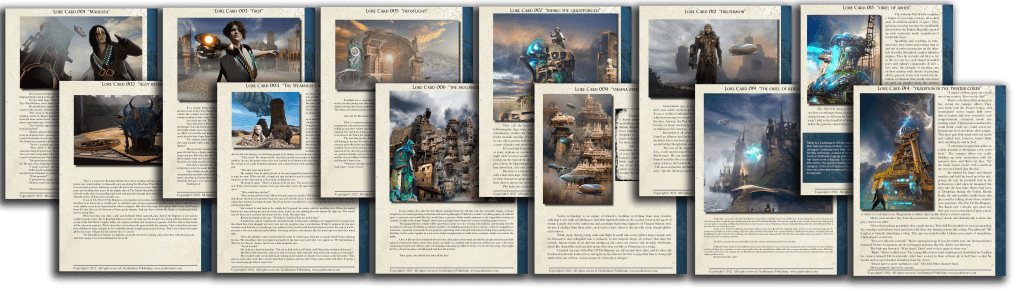
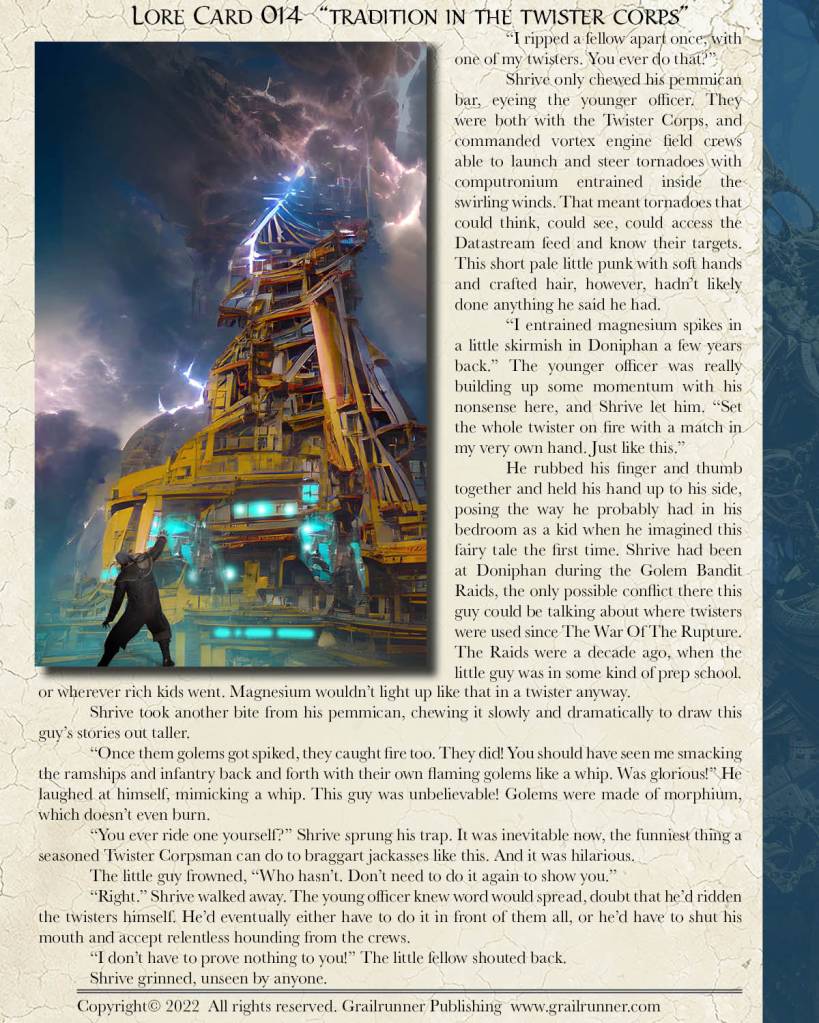
It’s just a pdf one-pager, containing an original work of art and a related short piece of fiction set in the Salt Mystic universe. The idea is you can read this and appreciate the point of it and the imagery in less than five minutes.

A Salt Mystic Lore Card contains the sequence number and title of the story/image at the top, an original art piece (usually at the top or top-left of the card), and a short fiction piece illustrating the image never extending beyond the one page.

No familiarity is needed in the backstory, nor is it necessary to read more than the one Lore Card to understand what’s happening. They’re all stand-alone, by design.

Why are you giving these away for free?

For now, it’s more interesting to provide a way to help grow this original setting and its bleeding-edge technology & concepts for a wider audience than push more products on you. Go buy the Sourcebook or a shirt or a book if you’d care to support us.

I’m an artist or a writer myself, can I submit for consideration on a Lore Card?

Sounds awesome, thanks for asking. Submission guidelines are here.

You know, it does sound exciting. What do I do now?

We’re asking you to support original content like this. I’m personally frustrated with the state of the major franchises like Star Wars and Doctor Who, Star Trek and Warhammer 40K, how they’re safe and stale…recycling ideas and echoing Twitter talking points. Let’s break new ground, right?! Let’s do something different.

Take a walk through the Story Arcade, and let us know your favorites or what got you thinking. If you want to submit something, do it. If you just want to chat about one, that’s cool too.

This is a bit of a milestone for Grailrunner, at least, an acknowledgement and maybe validation of what we’re trying to do when storytelling in modern times is such a lonely, frustrating effort sometimes.

Anyway, thanks for taking a few moments with us today. We hope you enjoy The Story Arcade.

Till next time,

Dreams are engines. Be fuel.

Maps In Books And Other Things We Need

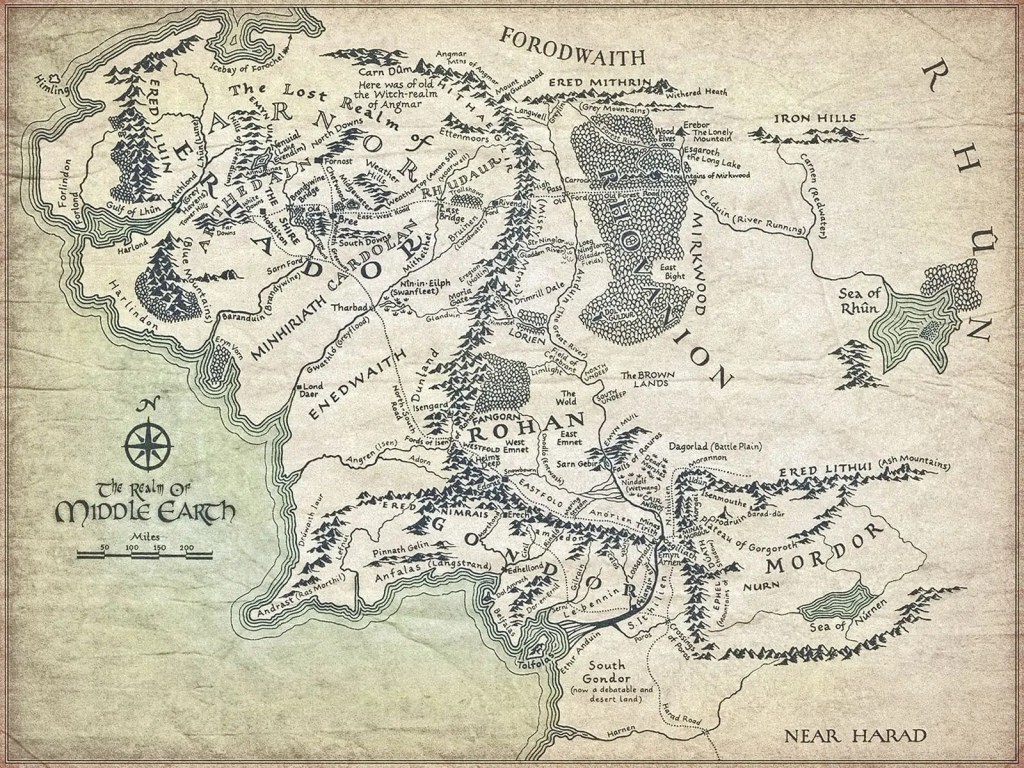
Tolkien’s Middle Earth

Boy, was I wrong!

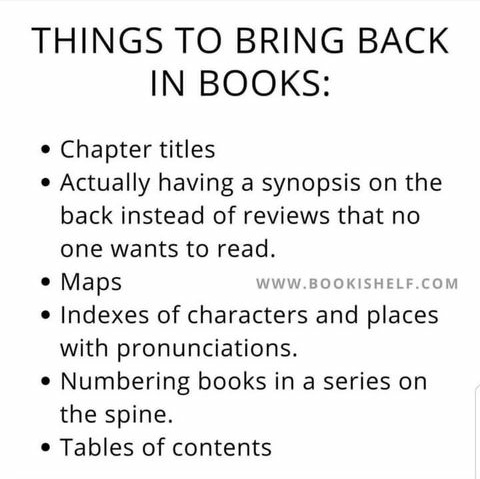
I need your opinion on something, so bear with me. I saw a post the other day that really got me thinking about supplemental materials in immersive storytelling, and now I’m happily hip-deep in Lord Of The Rings lore and can’t get enough. So I’ll want to ask you for your take, but let’s take a look at the post from The Bookish Elf:

I’ve spent a lot of time looking into what makes stories work, what great writers and myth-tellers did with their structure, their connections, how they introduce them, and immersive techniques. And I’m not sure how I missed this, or how I got the opinion that character lists at the front of a novel are for kids or Shakespeare but not for today’s ‘serious writers’. But I did.

I always had this nagging sense that as much as I hated books with too many characters that introduced them poorly, or with poor distinctiveness between them, that I still shouldn’t include character lists up front because no one does that. I’ve quoted George Lucas before with his intentional introductions of the cast in Episode 4: A New Hope because I think it’s genius:

I could not get out of my mind that poetically speaking I really wanted to have this clean line of the robots taking you to Luke, Luke taking you to Ben, Ben taking you to Han, Han taking you to Princess Leia. I wanted each character to take you to the next person.”Star Wars: The Annotated Screenplays

Outlandishly successful pulp author, Lester Dent relied on what he called ‘tags’ for character distinctiveness:

It means the character is equipped with something that the reader can readily recognize each time the actor appears on the scene. A simple example of an external tag for purposes of illustration might be the one-legged old rascal in Treasure Island. The wooden leg is the thing that is remembered…” -Lester Dent in 1940 essay, Wave Those Tags

Dent described tags as peculiarities of appearance, manner, voice, clothing, hobby, and so on. I thought about this when I read (or re-read) Dickens’ Pickwick Papers, where the gentlemen all have their own distinctive quirks. I saw it in the Dostoevsky’s Brothers Karamazkov as each brother was brought onto the stage. My point here is this sort of wordcraft of character introductions and distinctiveness was where my head’s been at forever on this point of supplemental materials.

Then I started reading Games Workshop’s Black Library and experienced The Horus Heresy (or at least seven books in the series, it’s a lot to get through!). I used those character lists constantly, flipping back and forth to see who someone was. I’m not saying their characters aren’t distinctive or introduced properly at all, just that life’s busy and there is a lot competing for my attention. If people read books straight through without interruptions, maybe I’d feel differently about the difficulty of keeping fictional paper-people separate in my head.

But I found those character lists up front to be tremendously helpful, like a guilty pleasure that I appreciated but maybe shouldn’t.

Then I stumbled across a few Lord Of The Rings nerds on Youtube who were spelling out all the connections and backstories in Tolkien’s towering intellectual achievement. Honestly, I’d always viewed those adventures the same way I might a random Dungeons & Dragons adventure – just beasties those hapless folks come across without patterns or histories and a winding, questy adventure tale. I’m into Tolkien’s, The Silmarillion now, and can now say definitively that nothing is random, that everything is connected flawlessly, and everything…absolutely everything…has a backstory.

And a map.

I wrote Tearing Down The Statues and the Salt Mystic Sourcebook and Core Rules without a defining map. I mean, I knew generally where these places were located, and major landmarks and visuals as I told the tales. But the definitive layout, the connections, who and what exactly were located adjacently and through what sort of lands….nada. Hadn’t seen the point of defining it that clearly. I liked the openness of it.

But the deeper I went into Tolkien and his miraculous achievements, laying the template for all worldbuilding to follow, it struck me how important all those connections are. When I sat down to stitch together all the histories and geographical references in the published tales and the game cards, in the character backstories on the art, it opened entirely new tales based on the geographies. Seriously, it feels like a Renaissance with huge new possibilities, just because I’ve defined the map itself. Amazing. That’s as a writer, I can imagine the utility for the reader even more so.

And that’s the question for you for today – what say you on the inclusion of maps, character lists, maybe even pronunciation guides for character or place names in books you’re reading?

I’m generally curious, and it would help set my direction. Just reply here or on the Facebook Page. You can email me directly if you like, as some of you do (brian at grailrunner.com).

Let me know what you think. Till next time…

Hacking Salt Mystic’s Tomb Trappers: Let’s Get Crazy!

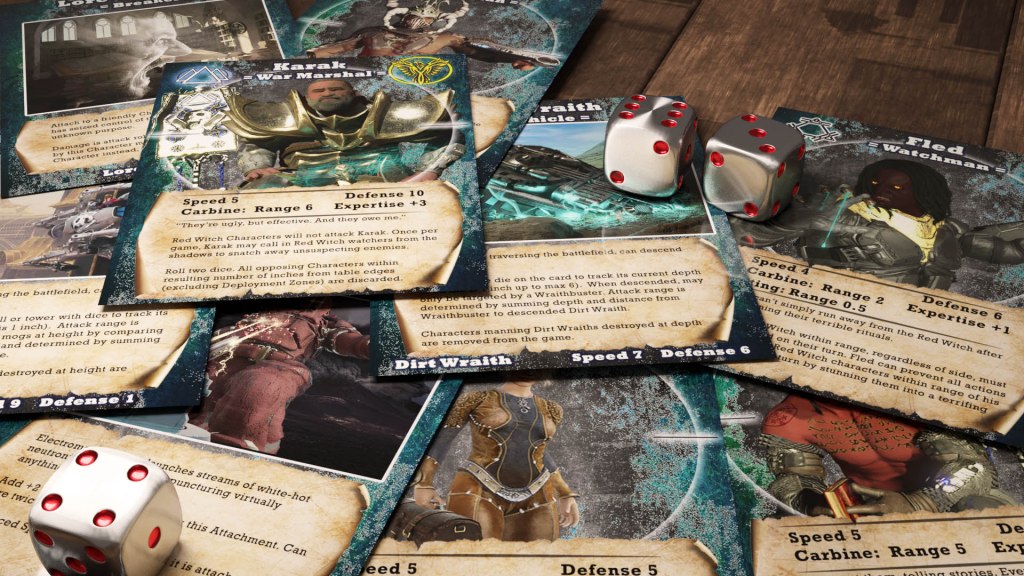
If you’ve never played Salt Mystic before, take a quick diversion here and see what the fuss is all about. You can pick up the free basic rules there or take the deep dive with the Sourcebook And Core Rules. Simply said, it’s a terrain-based wargame played on a tabletop with cards, dice, and some basic elements representing terrain. It’s a little more “beer and pizza” than most wargames out there, and is quick to pick up and just start bashing each other for a Friday night’s delight.

One type of card (and a core piece of the lore) is called the “Tomb Trapper”. Take a look at the respective entry from the Sourcebook below.

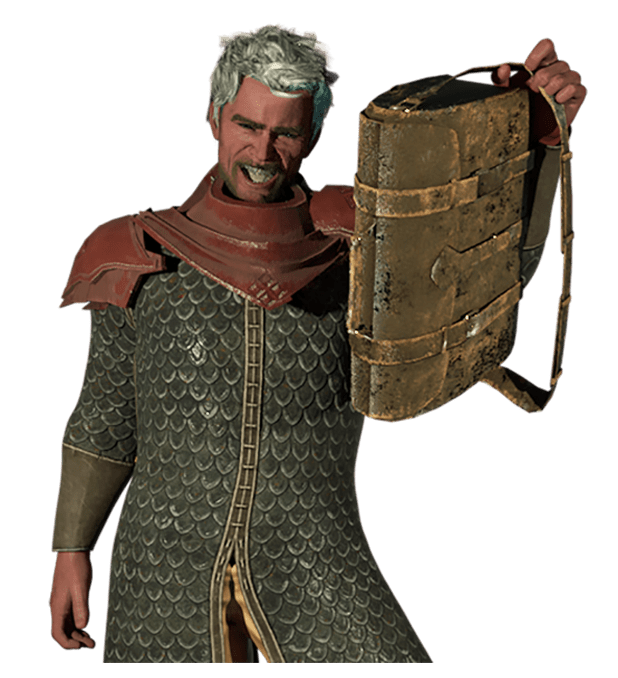
So in summary, this is a type of character you can have on your tabletop in the game who uses the goodies in that satchel to build amazing traps that lock down your opponent’s characters and give you an edge. That little dial apparatus in the sourcebook entry’s image is a key tool – set the proper code and programmable matter oozes out and builds the desired trap mechanics.

I wish I could pick one of those up somewhere, would love to see it work (and have a few people in mind for it)!

Anyway, one comment we’ve gotten from folks is they want more options in traps and flexibility in using Tomb Trappers on the tabletop. The cards come with default traps designed to be tough without being impossible and easy to set up & execute using only a small number of dice. This is simulating a situation where the trapped character card is locked down in place and struggling to free themselves. With some skill and/or luck, they just might do that!

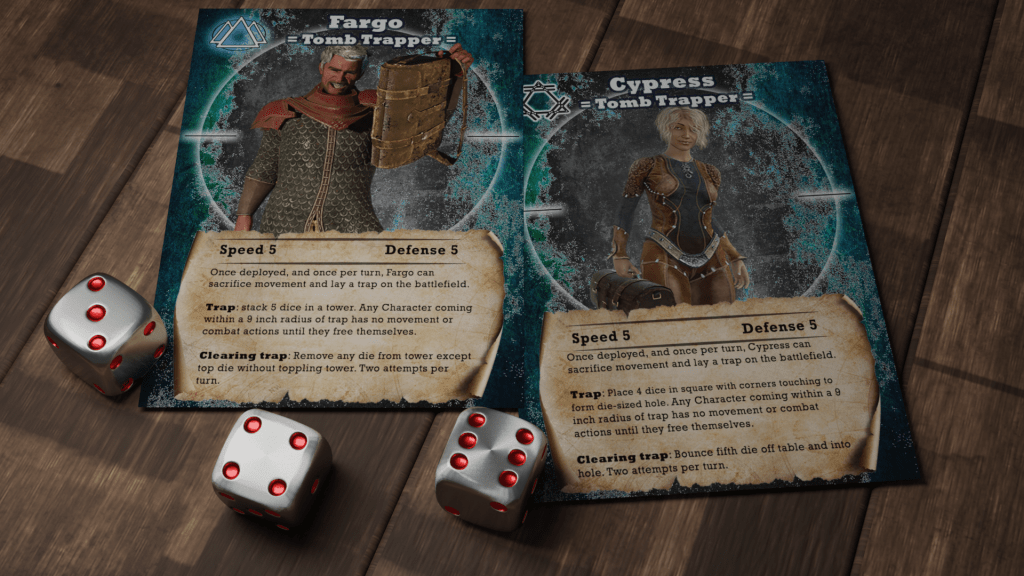
Here’s Fargo, Tomb Trapper for the Mountains faction:

Once deployed, and once per turn, Fargo can sacrifice movement and lay a trap on the battlefield.

Trap: stack 5 dice in a tower. Any Character coming within a 9 inch radius of trap has no movement or combat actions until they free themselves.

Clearing trap: Remove any die from tower except top die without toppling tower. Two attempts per turn.

And here’s wily Cypress, from the Salt Flats:

Once deployed, and once per turn, Cypress can sacrifice movement and lay a trap on the battlefield.


Trap: Place 4 dice in square with corners touching to form die-sized hole. Any Character coming within a 9 inch radius of trap has no movement or combat
actions until they free themselves.


Clearing trap: Bounce fifth die off table and into hole. Two attempts per turn.

But hey, let’s hack this! Let’s break out of the default traps and deployment mechanic to bring a new level of play to the table.

Pre-staged and hidden traps

The whole point of the Salt Mystic game is to tell an engaging story. There’s always a narrative framing the battle, and the challenges and dynamics of interaction between the terrain and the people IS the engine driving everything. So let’s make the terrain more interesting using the Tomb Trappers.

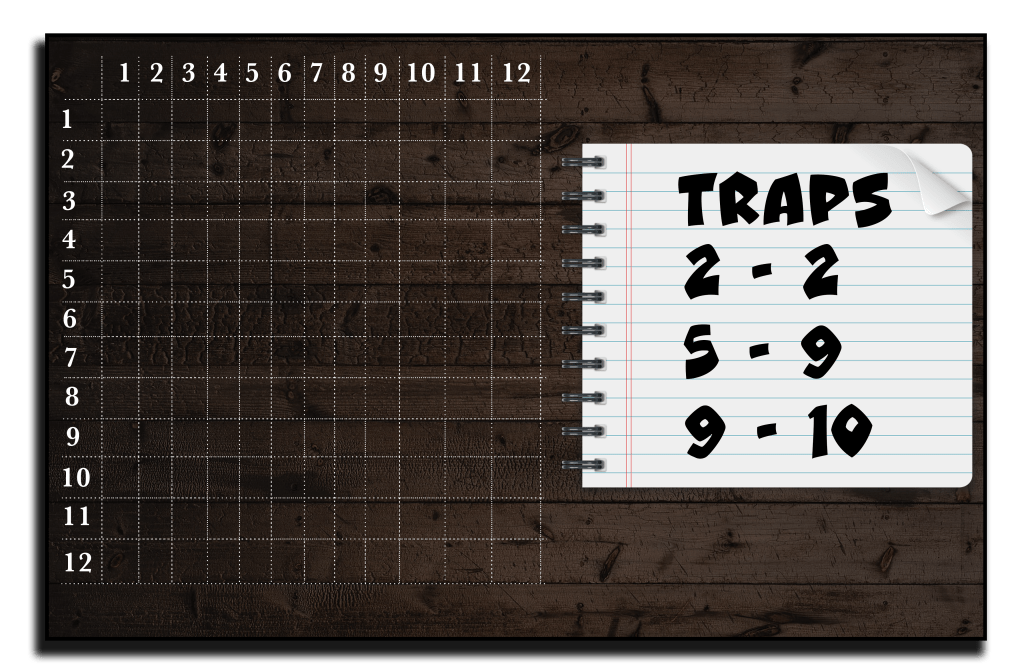
Imagine a grid on the tabletop running 1 – 12 horizontally and 1 – 12 vertically:

We’ll read rows, then columns when referencing these, and we’re picking 12 so that two 6-sided dice can reference them in a solo game. In this example, a player has chosen three locations for hidden traps during setup, prior to gameplay. The locations are written down and concealed so no one can change their minds later.

The key difference between this deployment mechanic and the default one obviously is that the opposing player can’t know where the traps are and thereby avoid them. Anybody moving is in jeopardy of getting trapped. Just call out the trap when you’ve lured your opponent into the right spot and grin deviously as they struggle to free themselves!

Considerations:

-Agree up front on how many traps are allowed, and whether sacrificing a card from the starting battle deck is necessary for each trap.

-The Wolfpack Mode for solo Salt Mystic game play requires a roll of two 6-sided dice each turn for the phantom player anyway. To simulate the phantom player having pre-staged traps, check for a trap each time that initial roll contains a “1”. Roll against the grid to determine the location and compare it to where your characters are located.

Example:

The phantom player’s Wolfpack turn roll was 1 and 5. That roll was required anyway, since that’s how the phantom player’s deployments and moves are determined in the Wolfpack rule set. Since there was a 1 on at least one of the dice however, additional rolls are needed to check for traps. First roll: 4 + 7 = 12, Second roll: 3 + 6 = 9. We reference rows, then columns, so there is a trap at row 12, column 9. Any friendly characters in that grid square are trapped. Trap locations change each turn (how devious!).

Alternate traps

You can really let your imagination run wild on this one! Basically, anything your wicked little mind can conjure here is fair game. Consider the spirit of the traps though:

  • Traps should be difficult, but not impossible
  • Easy to set up & execute using only a small number of dice or other readily available supplies
  • Should require a little luck, a little skill

Design a trap by answering three questions:

  1. What triggers your trap? Example: approach within 9 inches, etc
  2. How should the trap be set up on the tabletop?
  3. How does the opposing player clear the trap?

Feel free to enhance the narrative a bit by outlining a little more detail to the hideous nature of your invention: (programmable matter collapses into quicksand, massive pincers the size of a horse spring from the ground, the ground tilts into a spiked pit, and on it goes…)

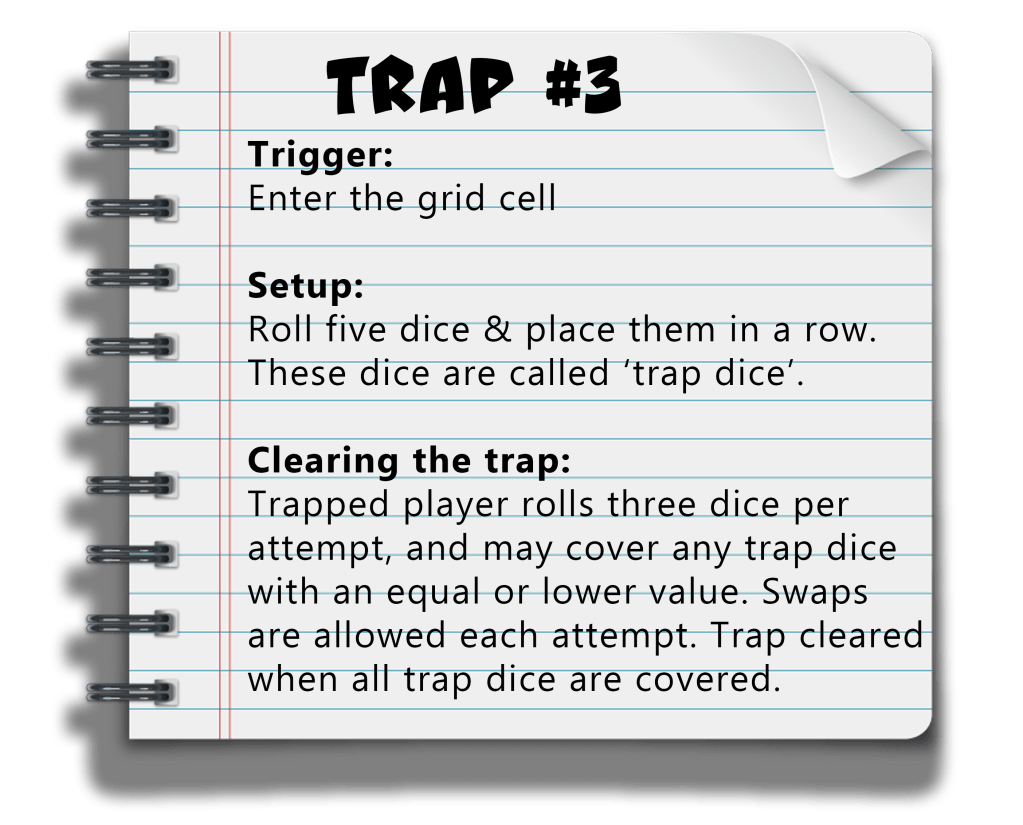
Let’s try it. Here’s what happens should the opposing player enter the respective grid cell per hack number one above – and up springs a cloud of geometrically poisonous vapor contained in a thin film that pops if he moves.

Considerations:

-Agree up front on the deployment mechanic as described either in the default card text or in hack number one above

-In the case where you’ve designed multiple custom traps, agree up front on how to select which trap has been sprung

So let us know what you think. Loads of potential here with the Tomb Trappers.

While I was writing this, we talked about maybe hacking the core rules a bit and staging an unbalanced scenario where one character (any card with an Expertise stat) goes up against an opponent at slightly reduced strength (10 less cards in the starting battle deck) – trying to escape a building entirely loaded with traps (at least 6). Objective would be to get to a specific spot on the table without dying. Seems like it would be a hoot if the opposing player is required to deploy all their Vehicles and Vehicle Attachments out in the open so the lone wolf can try and take them.

Here’s the art and flash fiction that inspired that:

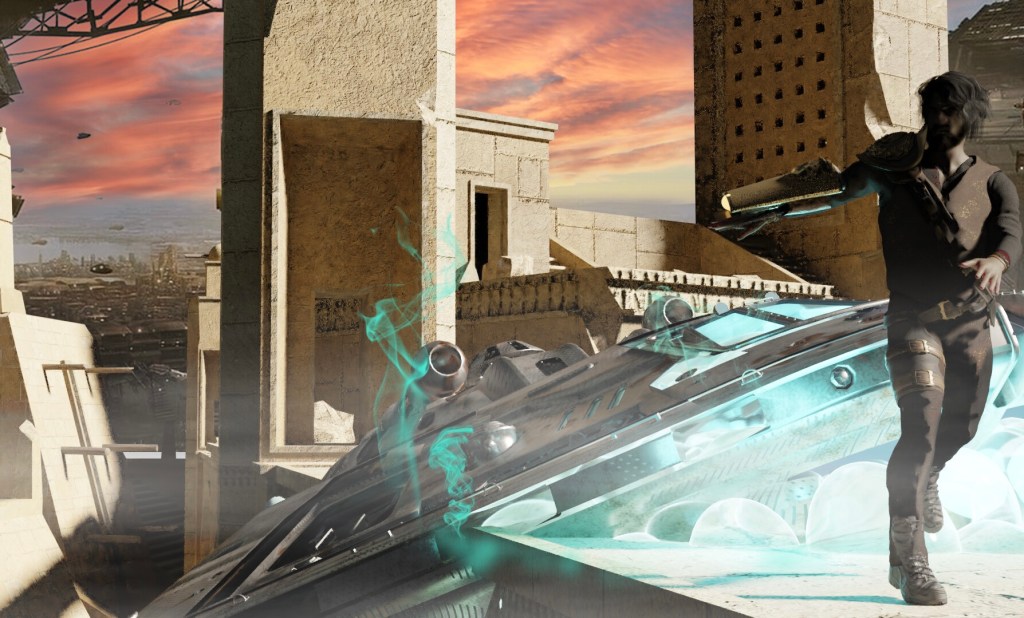
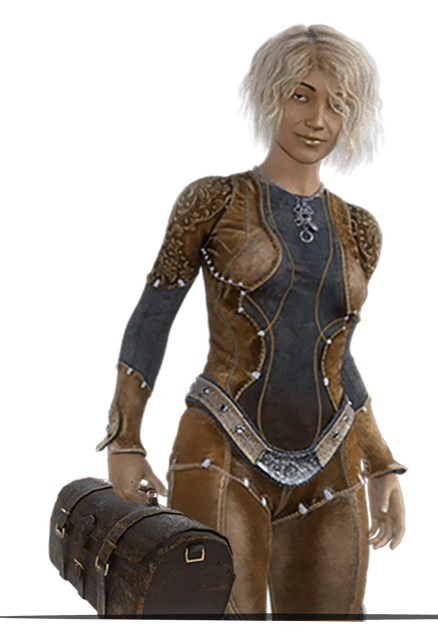
A carbine gunslinger on the run. A Dirt Wraith rises, ghost-like through the very walls. Its quantum foam bubbles sizzle as loud as a waterfall. They knew he was here all along. She lied. And that will cost her. They’ll have traps all in the building, every corridor. Watchmen are patrolling the streets below. If there’s a Dirt Wraith, then maybe they’ll have something deadly down there he can seize and turn against them. Time is short, and they are many. He’ll have to be fast and unpredictable.
What would you do?

Till next time, guys. We’re always looking for feedback and ideas. Shoot them our way. And Merry Christmas!

Launching an indie wargame, and we need your help!

I very much enjoy bringing new things into the world. Or at least trying to do so. It’s hard enough to pour your passion into something, to pick up the new skills it needs along the way and to put the time in. The time is a real tough one – because life and family and bills to pay. Right? But the hardest and most soul-breaking part is when you’re done, it sits in your hands in all its wonder, and nobody in the whole world knows it exists. I’ll come back to that. I need you. If you’re anything at all like me, or if you at least understand me, I need you.

Stick with me till the end here.

When I was a kid, my parents had a hardback set of books called Childcraft. They were encyclopedias for kids, and I was especially enamored with holidays and customs and tales from other countries. My parents worked a lot, and there weren’t any kids on my street. I was also a bit of a loner, and it was a way to travel and see the world. I moved on to the regular encyclopedia set, flipping its pages and dreaming. The mythology and great paintings articles were favorite stops of mine. But being such an easy target, science fiction hit me early on like a freight train – here are a few flashes I recall just to make my point:

  • Smacking my dad’s arm when Darth Vader was deciding to save Luke in Episode IV of Star Wars, almost crying when he threw the Emperor down that pit
  • Straining extra hard wrestling with my brother when he held me down because Cassiopeia from Battlestar Galactica was watching in the form of a cutout from a coloring book hanging from my ceiling
  • Riding my bike downhill with a purpose, escaping mutated apocalyptic screamers from A Boy And His Dog
  • Bashing my pillows as hard as I could with one of those plastic lightsabers that made a humming noise when you swung them quickly
  • Staring dumbfounded at the television after the Borg kidnapped Captain Jean Luc Picard in Best Of Both Worlds episode one, from Star Trek: The Next Generation
  • Finding Sri Lanka on a globe and asking how much it would cost to travel there so I could meet Arthur Clarke and ask him all my science questions

I’ve had a kaleidoscope of a life since then, earning degrees in Physics and Business, helping build nuclear reactors in the Navy and running parts of businesses, coordinating mergers and acquisitions, and consulting. Seriously, I’ve done all kinds of stuff. But in all that, in anything I’ve ever tackled, the core drive is always to somehow recapture the way those things felt. Just pure wonder. Inspiration.

New things. New worlds.

“Chance favors the prepared mind.”

-Louis Pasteur

And thanks, Louis, because this quote is the whole point of me. I believe if you look to be inspired, you will probably find inspiration. I believe if you learn the nuances of a thing, whether it’s art or haiku or telling stories in film…or whether it’s searching for patterns in nature and the universe…you pick up the rhythms of what makes those pieces and parts fit together. And you come alive. A pen & ink artist studying music will find patterns and growth that makes them sharper and more imaginative.

In 1997, I was serving on a destroyer in the Persian Gulf. I had brought along the first three Dune books, a stack of VHS tapes of Buffy: The Vampire Slayer, and a pretty bad case of homesickness to sit and watch westerns with my dad and brother. Something about that mix, and the exotic surroundings of Oman and Dubai, the wandering in the souq marketplaces and especially a night sleeping in the desert in Muscat fired my imagination. It was all just a simmering gumbo of scenes and marvelous machines and larger-than-life characters though, until the terrorist attacks of September 11th, 2001.

I know. Anybody younger than me could be rolling their eyes at this one. They’ve maybe heard about it and never felt something like that. It was awful. Let’s just say a very thunderous realization hit me in the days that followed, as I watched the footage of firefighters running up the stairs into those burning buildings and those on the streets rushing to aid…as I heard the voices of those on flight 93 about to charge the hijackers.

It struck me that this was a nightmare, true, but how much more terrifying would it have been were it not for those brave souls who stepped up when it mattered! Running up the stairs into a burning building…who on earth could have more character than such a person?

“Because the life’s blood of a nation is the character of its people, and because the neglect of souls is the needle that poisons it, I have left you wonders in the Record. The fault and the regret are yours if they must arise.”

-The Salt Mystic

I don’t know why it took me till 2015 to publish the novel that came of those feelings and concepts. It did though. I had to live more, and to learn more. Writing a novel is a life-changing thing. And it meant a lot to me. I needed to get it right.

Here in the last two years, especially with pandemic quarantines and all the change that’s come about in our hostile interactions with one another, I’m haunted by the question I was asking back then. And I’m anxiously going back to the original fire behind all of it – what binds us together and lasts over the long term? What can bring us back to where we’re listening to each other, and being people again?

It’s mythic storytelling and inspiration. I’m convinced of it.

Not social justice engineering or reams of fan fiction, not propaganda or unimaginative clones and faded tropes. Pure adrenalin myths for the modern day. Just like Frank Baum wanted. Just like George Lucas wanted. I’m just arriving at the same conclusion. And I believe something wonderful is happening in tabletop gaming, not only in the last few years but especially fueled by the COVID restrictions. Tabletop gaming is coming into its own, fresh with depth and rich lore, with incredibly innovative ways for people to interact with the stories.

I see tabletop gaming, including but not limited to roleplaying as a new frontier for mythic storytelling. Much like science fiction stories in the old pulps and animated films once drew scorn as fit for juveniles and now are taught in universities, I see the tales & captured magic of tabletop games of the 21st century fertile for what comes next for us in how we express ourselves. Cinematic experiences in a box like Tainted Grail: Fall Of Avalon from Awaken Realms or Grimslingers by Stephen Gibson or Cthulhu: Death May Die by Rob Daviau and Eric Lang, among countless others are raising the bar for the rest of us.

So I need your help.

I’ve spent the last few years breathing as much life as I am able into a tabletop gaming experience. It’s called Salt Mystic, designed to be an Immersive Storytelling Engine fit for practically anyone with an imagination. Read about it here. Download the rules for free, and dip into the art if you like. The point is to provide an exciting game, easy to learn, no baggage or continuity required, no extensive hobbytime or painting abilities needed…but one that takes place in a rich, immersive, fascinating world with fully realized history and intrigue, adventure and exotic places to visit, peopled with living, breathing souls. Playing the game itself feels like playing a streamlined Warhammer 40k with Magic: The Gathering cards, or so I’m told.

The Salt Mystic Sourcebook & Core Rules is available on DrivethruRPG here. I would very much appreciate your help getting the word out about this. Anyone you know who’s interested in wargaming, or in lore-based tabletop gaming, just shoot them a quick note about what we’re up to. If you’re into what I’m saying, give me a try!

I’d appreciate it. And thanks for letting me go long on this one. You’re awesome.

Till next time.