Innovations in Music and Mythmaking (and how to link them!)

I’m told my reading habits are a little out there. I get that. I do.

However, it intrigues me that in almost any field of human endeavor, there is a specific type of personality that thrives on breaking its rules and forging incandescent new ways of doing things. If you’re new here, that’s almost entirely what we do here – find, spotlight, analyze, and celebrate innovation in the creative process.

So I was reading this book about 1960’s beach music:

I don’t like that sort of music at all. I especially detest men singing falsetto and lyrics obsessing over the teenage emotional range. However, I had heard that the Beach Boys album, Pet Sounds, was considered the greatest and most influential album in music history. Knowledgeable people say that. I wanted to understand why in the world that would be, given its niche genre, its terrible album cover and name, and the fact that it isn’t chock full of top 10 hits.

What was so special? And once I knew that, I would of course ask: what inspired it?

I’ll cut to the chase since the answers to those questions don’t actually comprise my point today. I want to extend some of these lessons over to mythmaking and storytelling since that’s my main jam. (If you’re into this crossover of music and storytelling, I wrote about this sort of thing in an article called “Aesthetic Puzzles: When Bach Met Shakespeare”, which you can go catch here.)

Why is Pet Sounds a big deal?

Brian Wilson was the main creative driver behind the 1960’s-era pop band, the Beach Boys, and took a break from touring in 1965 to focus on creating “the greatest rock album ever made”. Till then, their songs were bubble-gum melodies of no real sophistication and lyrics aimed like a piledriver at teenagers having fun, especially in and around the rapidly-growing fad of surfing. Wilson was enamored with the “wall of sound” production techniques of music producer, Phil Spector, which involved using echo chambers and physical studio arrangements augmenting studio manipulation of recorded tracks to generate robust, layered textures of sounds that would come across richly on a jukebox. Spector’s stated logic behind his own innovation was:

“I was looking for a sound, a sound so strong that if the material was not the greatest, the sound would carry the record.”

So it was mono (versus stereo) playback technology and the limited fidelity of speakers available at the time that prompted Spector to layer sounds together and experiment with ways of making the sounds more textured. Wilson felt the Beatles album, Rubber Soul contained some of the most mature lyrics yet for the band, and from these two launch points, he wanted to get more emotional with his lyrics and more experimental with his production techniques to surpass them all.

Wilson wound up innovating in all areas, and indeed developing intriguing ways of making the studio itself an instrument: combining, for example, multiple instruments simultaneously into a blended and new quality that sounded nothing like any of them. He introduced novel instruments like bicycle bells, a variation on the theremin, among others, in a rogue recording marathon of studio musicians while the actual band was out touring. Nobody had done that before, or even went off the trail of a small ensemble like that to make an album that couldn’t actually be played live. He also experimented with chord voicings, meaning how different chords are brought together (a little out of phase, for example, so there’s a slightly noticeable tremor) or avoiding a definitive key signature. By all accounts, Wilson’s efforts with the band surpassed anything Spector had done or would do. He took the inspiration and ran with it.

Studio musicians involved said of the time that they knew something very different was happening. Something important. It was interesting to me, reading what it felt like for the other guys there, the ones just hired to do a thing and realizing they were part of something.

So the idea to hold in your head then, for my point to land, is this: an approach towards recording music where all manner of frequencies and qualities of instruments and voices are layered over each other in a rich texture of sounds that you could listen to a multitude of times with headphones on and the volume turned up and still catch new things.

Texture. That’s the thing to remember. Innovating with texture.

What’s all this got to do with storytelling?

I’ve spent the last 3 years working on an approach to storytelling and tabletop roleplaying that I engineered to be as innovative as I could manage. I tried to rethink how narrative games like Dungeons & Dragons function and streamline everything down to core essentials.

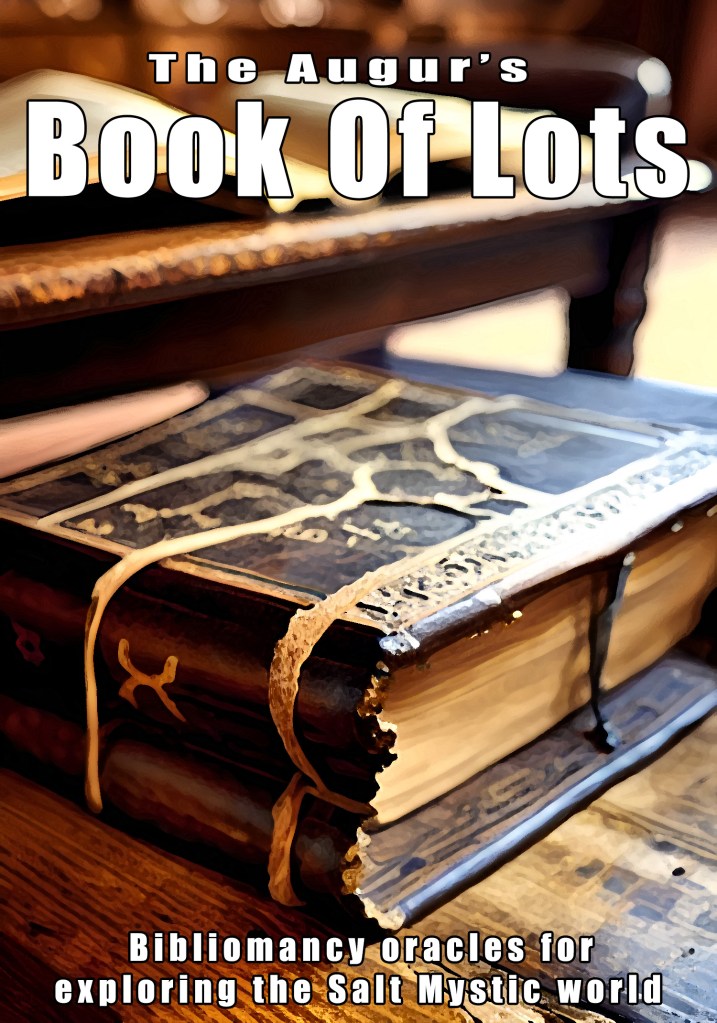
“The awe and danger of exploration inside the covers of a book.” That was my compass. It’s here, called SALT MYSTIC: BOOK OF LOTS. I’m not trying to sell you that right now, though. I want to talk about using it as a recording studio like Wilson did.

This idea now of texture and layered elements building a rich tapestry to transform a familiar art form into something different and new prodded a new question for me:

Can the elements of mythology and storytelling play the same role for the written word that musical notes, chords, and rhythms play? Instead of playing for the ear a rich tapestry like that, can archetypes and themes be arranged to play for the emotions?

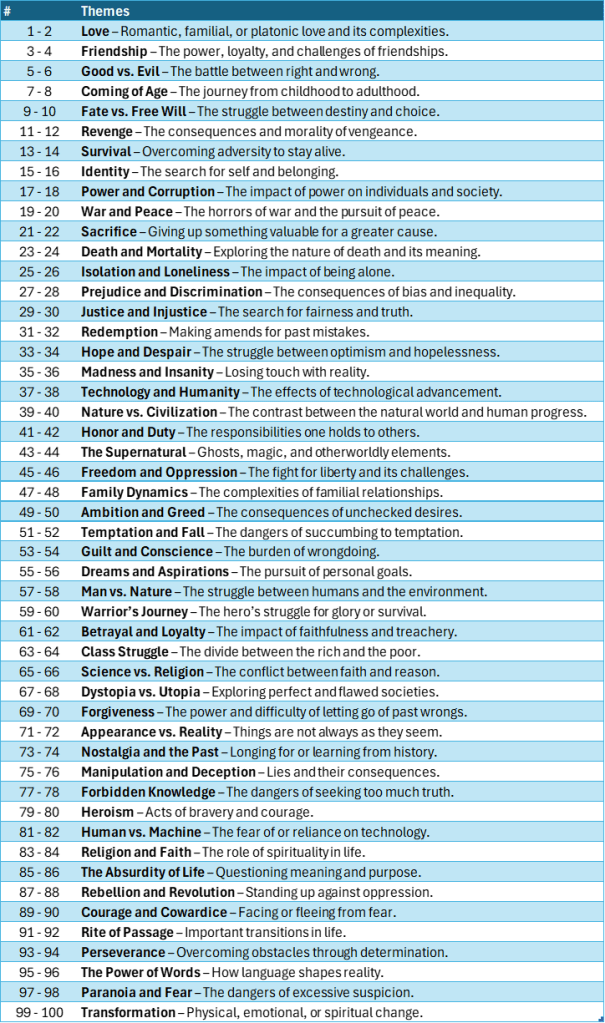
Here are the commonly accepted themes of mythology and folklore in a table, arranged into numbered entries appropriate for a roll of D100 dice:

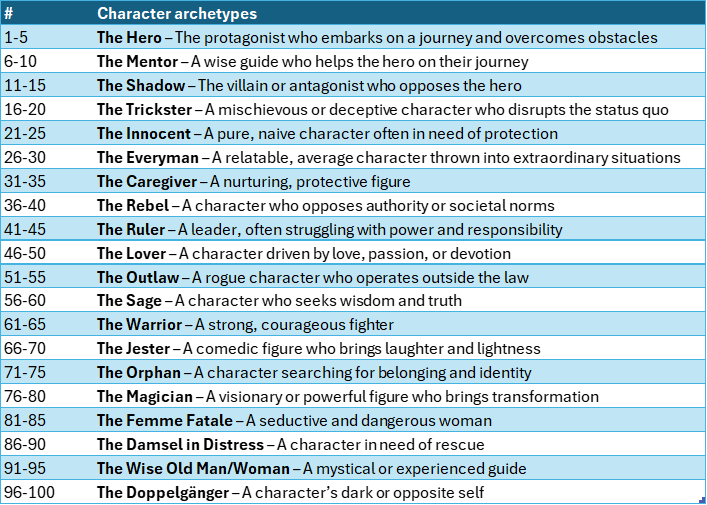
Here are the common character types of mythology, similarly arranged:

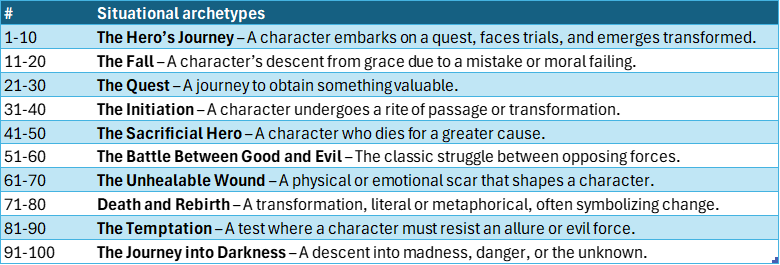
And finally, here are the common situational types of mythology:

SALT MYSTIC: BOOK OF LOTS is designed in a similar manner, with appendix tables for all manner of characters, encounters, and places arranged along the 100-scale like this, appropriate for idle shopping, dice rolls, or use of the bibliomancy mechanic core to the book’s function. The concept with the book is to forge a solo adventure and tell yourself an amazing, resonating story.

The analogy I’m drawing today is that themes and types of mythology have a power and resonance very much like the comforting, stable floor of bass in music. A deep, low melody on bass grounds a melody and makes it richer, makes it seem more important. That’s how myths work. I’m imagining incorporating elements from these tables into a solo tabletop adventure to make them play the same role…

…to summon them so they must work their magic.

I picture roleplaying game rulesets like the one in the BOOK OF LOTS as recording studios: an engine of creation that wasn’t available to previous generations that we can bend to dazzling new heights like Wilson did.

I see elements of oracle tables like those in BOOK OF LOTS or Ironsworn, Starforged, the Dungeon Dozen volumes 1 and 2, and other amazing sourcebooks as chords and notes.

And I see the solo player as a crazy artist, just messing with things to see what new comes out of it all. Telling new stories. Jamming new jams.

My head is swimming at the thought of this. I wonder if it’s too much coffee or if there’s something to be said, truly, about combinations of mythic elements arranged like music. Intriguing idea for me today, at least, to bring it to you today.

Till next time,

Let’s Visit Larry Niven’s Integral Trees

One of my first obsessions was Larry Niven‘s science fiction. Back in the day, we had a pool table in a big living room where the air conditioning was a box unit embedded in the wall. That AC made the most comforting white noise you could imagine, and to lay on my belly under that pool table reading A HOLE IN SPACE, NEUTRON STAR, CONVERGENT SERIES, RINGWORLD, and PROTECTOR (still on my shelf, so I can read off the names for you) was amazing.

I knew he was extrapolating from hard science. Some of what he was describing was just beyond my reach, but I could make out enough at 10 or 12 years old to know this was fascinating stuff. The naughty bits were cool too, and he seemed to revel in those things. I was his target audience.

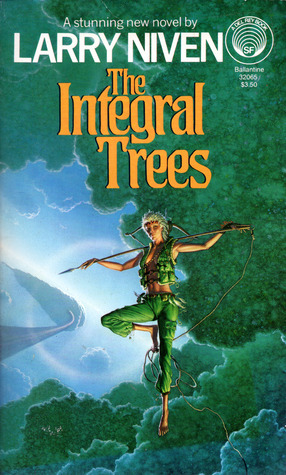
Then in probably 1983 or 1984, I talked my mom into buying me his latest: a book called INTEGRAL TREES.

The text on the back hooked me entirely: “Critics long thought Niven would find it difficult to surpass his Hugo-winning novel RINGWORLD – the story of an artificial world, a ribbon of unreasonably strong material 1 million miles wide and 600 million miles long. They were right. Until now, that is. In THE INTEGRAL TREES Niven presents a fully fleshed culture of evolved humans who live without real gravity in the gas torus that rotates about a neutron star. This is the novel his fans have been awaiting!”

I remember flattening the hardback so I could make out the entire cover image to try and understand better what I was reading, and it’s a real dazzler by the great Michael Whelan:

Unfortunately, I didn’t know what an integral sign was shaped like. I didn’t know what a “torus” or a “tuft” was, and even when I looked these things up in the dictionary (dictionary?!), I couldn’t visualize anything in what I was reading beyond people could float weightlessly. Honestly, it seemed this would be awesome if I knew even half of what these sciencey words meant, but I was 10. So I bailed.

I hated that book for years because of that. On a side note, I went on and earned a Physics degree and worked in nuclear engineering for a while, and now I’ve packed in another 40 years beyond when I first laid beneath that pool table to try and visit Niven’s fascinating setting.

For no other reason than I came across its title on Youtube randomly, a couple of weeks ago, it was time to try again.

I’ve finished THE INTEGRAL TREES as well as its unfortunate sequel, THE SMOKE RING, and I believe I’m prepared to describe the visuals and dynamics to you so you can have an easier time than my early self (and from what I understand from reviews and people on-line, many, many others!). I’m a big fan of environmental science fiction like RENDEZVOUS WITH RAMA, RINGWORLD, RIVERWORLD, SCAVENGER’S REIGN, and others, so if that’s you at all – hang on, here. There’s good and bad, my friend. Good and bad.

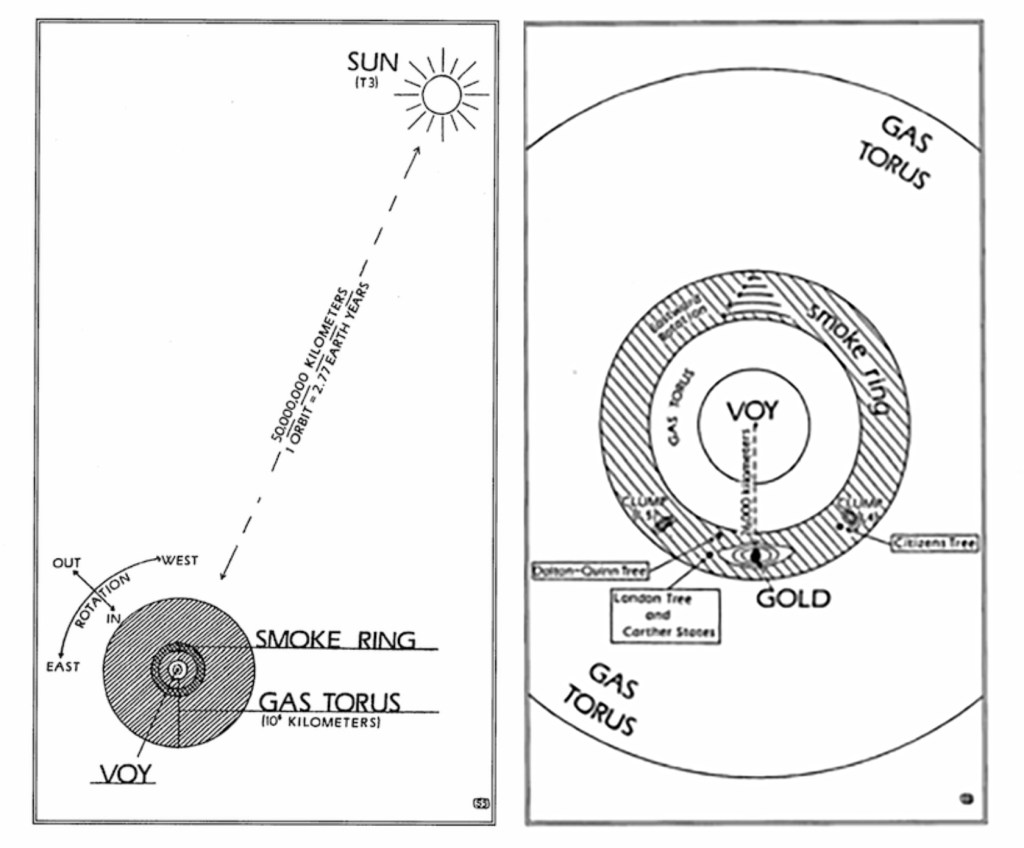
Let’s head to a faraway binary star system where a neutron star (Voy) and a Sun-like star play gravity tug-of-war with each other, locking in a dead planet (Gold). The planet had a thick atmosphere once, but that’s being stripped away by the tidal forces making a stable doughnut-shaped gas torus that, believe it or not, is breathable and inhabitable within a specific zone.

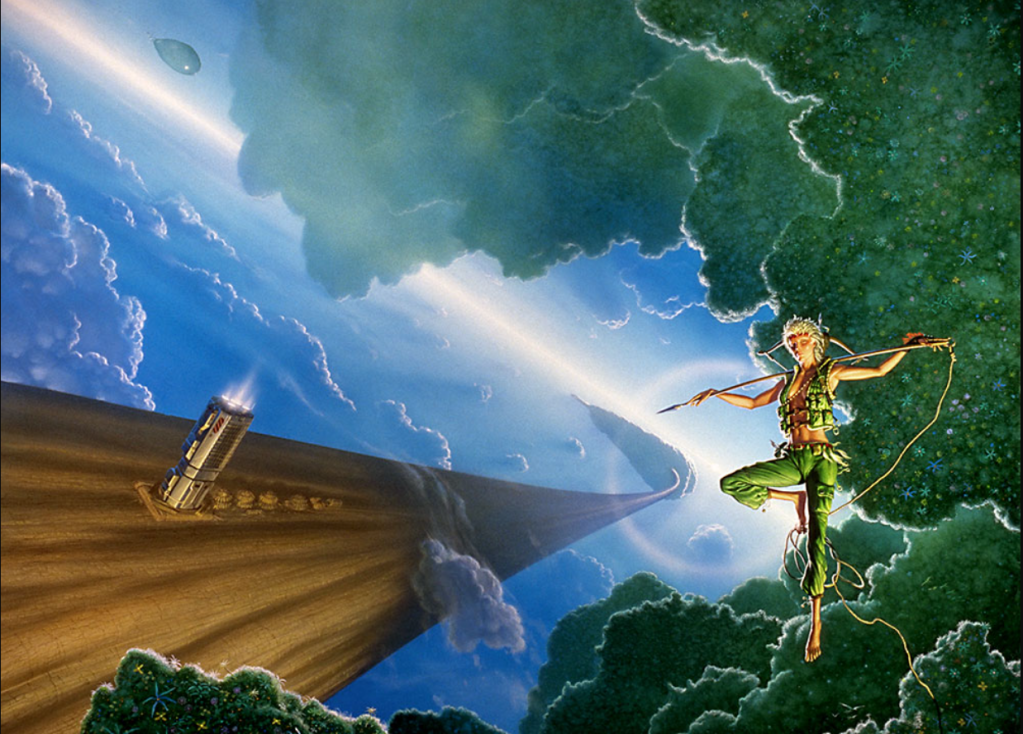
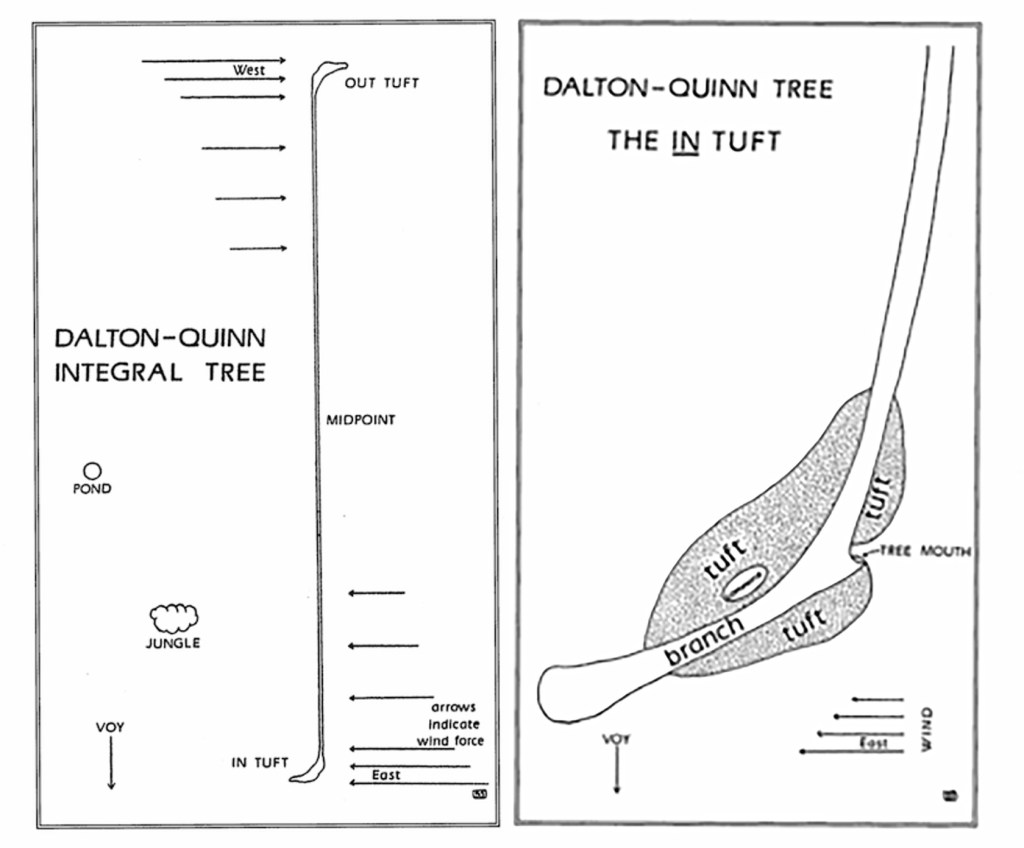
Picture yourself climbing up a thick tree canopy, in fact so thick that people have established tunnels through it and built huts inside. It’s easy for you, as gravity seems to be much lighter than you’re accustomed to here on Earth. You come up on an enormous tree limb and realize this is no normal tree. In fact, as you make your way along its length to the trunk, you find the trunk itself is so incredibly large it appears to be a flat wooden wall. It must be 60 miles long to have a trunk this size.

You press on, climbing upwards to find the top of the canopy and hopefully understand better where you are. There’s light up there, sparkling through the leaves. Bright clouds. Maybe a strong wind – you start to feel a stiff breeze against your skin. A wet mist, like that near a big waterfall, tickles the skin of your forearms as you approach the light. You poke your head up through the canopy and:

Indeed, the tree is bigger than you imagined, stretching into the distance above you as far as you can see, with a yellow sun way up there making a halo around its fuzzy far end. You squint and can just make out against the glare that the massive tree is bare along the bulk of its trunk above your canopy here though it appears to have a similar clump of foliage on the opposite side of the trunk from yours though that’s just a thin hair-like black silhouette to you this far away. The entire tree is shaped like a planetoid-sized elongated “S” with you clinging to the bottom left-hand curve of it. Your tree limb juts off the main trunk, though it’s so large a hundred others like you could just live here.

The wind against your face is strong and constant. You can squint against it, but honestly, it’s easier to just look in the opposite direction. That’s when you notice that the very sky here, blue and hazy and beautiful, is full of life and trees just like this one. In fact, perhaps thousands of such trees drift like spokes inside this gas ring and all around you, all oriented radially so they point down at the neutron star far below your feet.

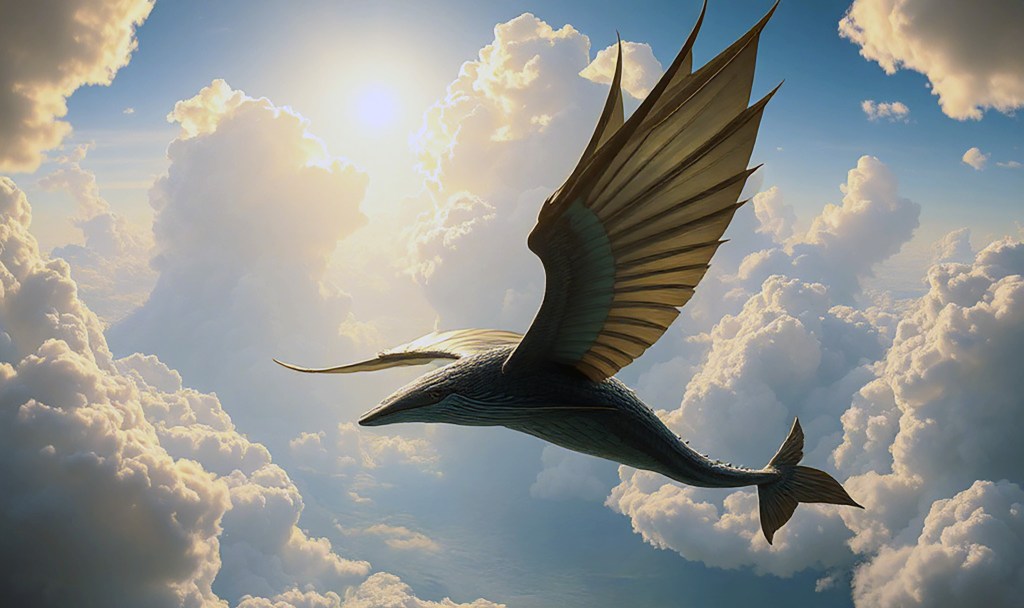
Whale-looking beasts and birds with sharp blades for beaks soar past like airplanes. It’s a bountiful frontier, seemingly ready for hunters. A ball-shaped jungle appears:

In the hazy blue-gray, you see the silhouettes of tall, thin people tied to lines and floating in the sky weightlessly, aiming harpoons at something among the trees of the jungle. It dawns on you that you can stand here atop this mighty tree limb and gaze upwards at them, but were you to climb this trunk, the pull of gravity would fade to nothing.

So you start climbing, because that sounds awesome.

It takes no time at all before you’re having to hold on to knurls and warps in the trunk to avoid drifting into the sky. High above you, people are swimming in a raindrop as big as a sky scraper. It’s a lake, pulled into an elongated sphere by surface tension. And they’re swimming inside!

This place is perhaps the most beautiful thing you’ve ever seen. That’s what you’re thinking as you make it far enough to at least glimpse the far end of the tree, the end closest to the yellow sun. And you realize as other settlements come into view that they’re upside-down to you! The pull of the yellow sun is their down. The pull of the neutron star below was yours.

Now, here in the center, there is no such thing as down.

The thought of jumping into the sky is too much for you. It’s terrifying, but thrilling. You wave at one of the folks in the distance, and a hazy-gray silhouette waves back. You think you can make it to them. At the very least, they might toss you a rope and pull you in.

What the heck! Maybe that big old whale-thing will take you on its back. Whatever! You jump and don’t look back.

*

Anyway, that’s how I saw it. The setting for these two books is amazing, and it gets better as the main characters start exploring and also as you can better visualize where they’re going and what it would look and feel like.

The issue is the writing. The plot of the first book is great until it isn’t. Way too much time is spent in a location and with a plot point that is just annoying and a terrible decision. I believe if you’re going to make the environment the lead, it’s just wrong-headed to add a host of extraneous sideways quests and traps that don’t really add to the feeling many of us were drawn to in the first place. (I’m taking that advice, by the way, in the book I’m writing now based on this very experience!).

The characterization is nonsense too. Everyone speaks the same, and that’s like Larry Niven. An orbital mechanics textbook would have more interesting dialogue. I especially cringe when people obsess over “mating” and “making babies” in Niven’s effort to head off questions about gene pool viability. Ladies in these books are cartoon-like in their willingness to pleasure or be impregnated by pretty much any male. Again, I was the target audience for that sort of thing back in the day. Now, it’s just embarrassing and silly.

Please avoid the sequel, THE SMOKE RING. No reason to read that. You’re not going to get any more great exploration or insight into the ecosystem. Just the idea of growing a round tree. Everything else is silly and very, very difficult to plod through.

So if the writing is so bad, why am I heartily recommending you read THE INTEGRAL TREES?

You know the answer! This setting is incredible and unforgettable. It would make a compelling anime setting, or a video game background. I just wish a stronger story with better characters inhabited it.

Anyway, that’s what I wanted to bring you today. Let me know what you think if you take the plunge too.

Till next time,

Science Fantasy Adventures Fueled By A Bibliomancy Oracle

Back in October of 2023, we celebrated being at the halfway mark in completing a thrilling new project at Grailrunner. Incredibly, and I can’t believe I’m finally typing this, we’re finished! This puppy is ready to run!

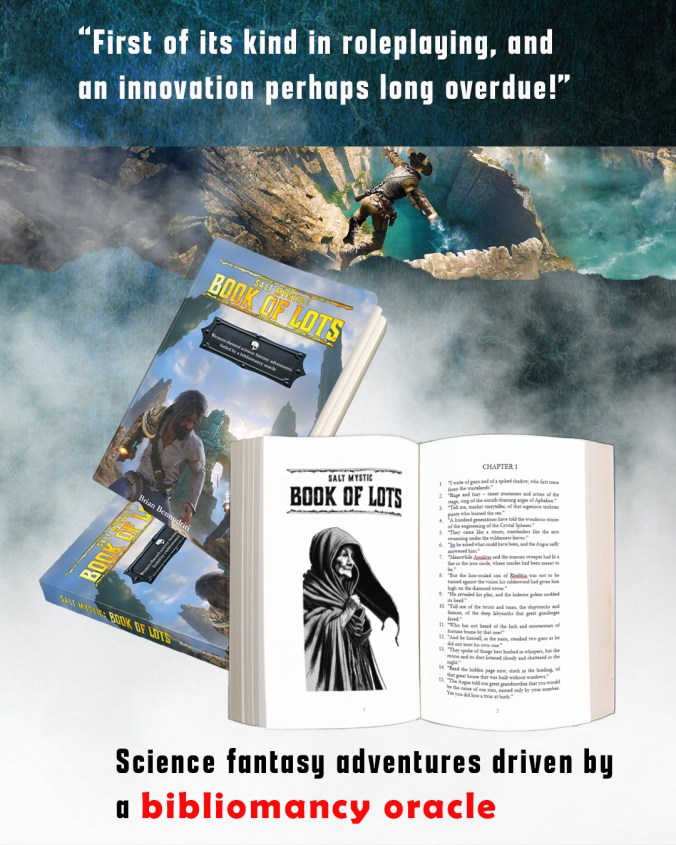
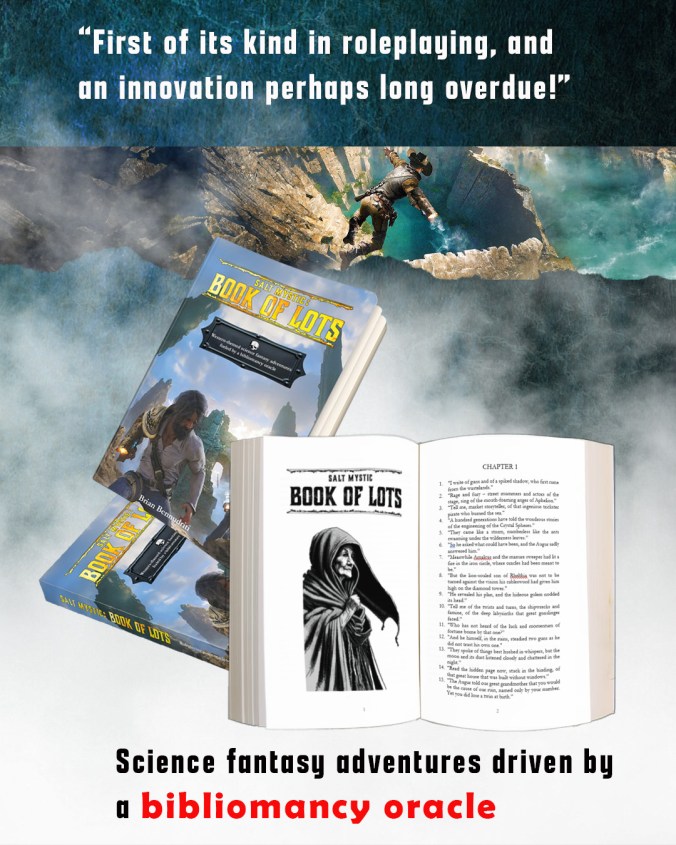
March 1st, 2025, we are launching SALT MYSTIC: BOOK OF LOTS, a roleplaying game & supplement aimed at the solo player providing western-themed science fantasy adventures through a bibliomancy oracle.

Who are we?

If you’re new around here, we’re Grailrunner, an indie publisher of science and speculative fiction fiction and games. Our driving passion and special emphasis is on the creative process – innovations in immersive storytelling. Read about that here.

What is the BOOK OF LOTS?

The spirit behind the whole project was to provide the thrill and danger of exploration and adventure inside the cover of a book and to open a fully realized world accessible through the fortune-telling mechanics of bibliomancy.

Contents of this 265 page book include an introduction to a far-future setting (western-themed, so plasma-gauntlet dueling cowboys delving pocket worlds), a simple, streamlined set of rules enabling a player to use no ruleset at all or even dice outside of the book, and a 40,000+ word set of short passages, consulted via bibliomancy to judge outcomes and events, adding story prompt flavor to judgements. Also included are a map and atlas descriptions of locations in the setting, 13 traditional nested oracle tables to further drive events in the story and a detailed index.

How does it work?

We walk you through it in a prologue with a detailed Quick Start example, but the general idea is to use the setting descriptions, the atlas and map, and the oracles tables to build out the skeleton of a character and story following a framework we call the Five Questions. Then, either use the roleplaying game rules of your choice (like D&D or Free League’s Year Zero system) or use the barebones, streamlined rules of this book to start experiencing your story.

Either once per in-game day or as you see fit, consult the lots by holding a specific question in your mind and turning to a random passage on a random page, locating a 1 -3 line passage (called a “lot”) and its number. A question might be “What will I find on the other side of this hill?” or “What happens when I try to climb the walls of these ruins?”

The rules provide for YES/NO answers as well as more sophisticated outcome judgements, but, more importantly, add a layer of story prompt-style chaos and randomness to what happens.

Where will this be available?

Available on Amazon here. Available globally through Ingram, so hundreds of booksellers around the world (though all in English). On Barnes & Noble here. On Drivethru RPG here.

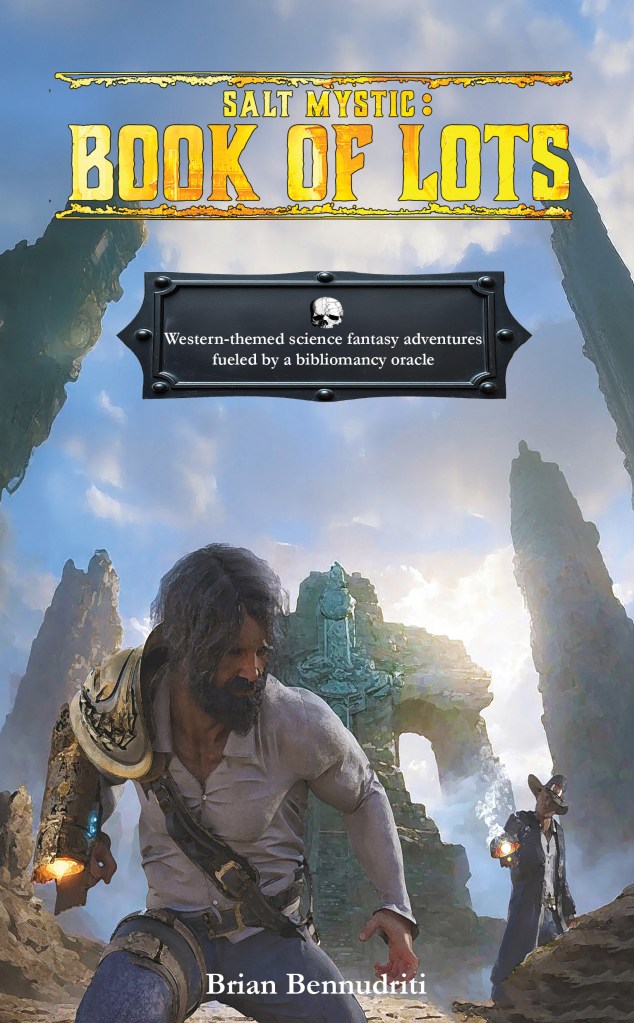
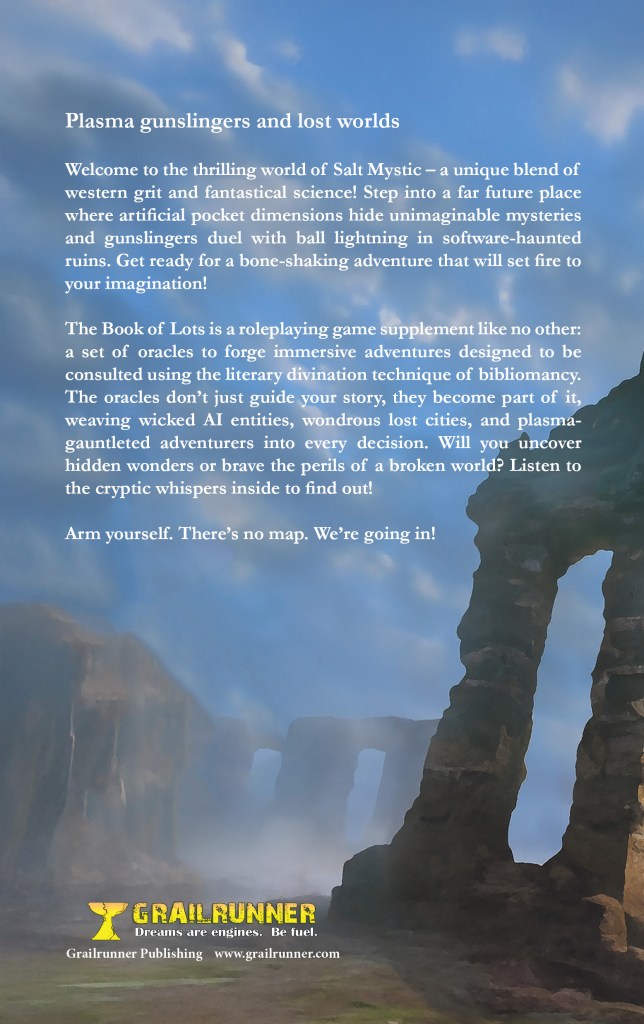
How about the cover?

Here are the front and back:

What next?

Shoot me a comment here on this article if you’d like to know more or if you’re interested in a review copy.

Since we’re a teensie little indie publisher, it’s super hard to get attention and drum up interest in new products, especially if they’re very different or not related to dungeons. If you’re willing to post something for yourself linking to this announcement, it would be tremendously appreciated!

Every little kind word helps!

*

Anyway, that’s the big announcement. I hope you can feel some of the excitement here on our side. This has been an incredible and life-changing amount of work. It’s nice to start telling people about it.

Till next time,

Outtakes: A Way Forward For Writers That Can’t Let It Go

I’ve had a couple of weeks worth of a pause in a very hectic year so far and managed to dig back in to a novel in progress. This week, I had some mind-expanding epiphanies that set the whole novel on fire for me again: the exhilaration and thrill to see this story play out on paper burning with the same heat it did when they were all just ideas.

When they were all just ideas, that is, before words went to paper to ruin my dreams.

Thought I’d share that with you in case writer’s block or a blank canvas is staring back at you, or if the plot that made so much sense suddenly crumbled like burnt toast in your hands.

Mazewater: Master of Airships is a standalone story set in the Salt Mystic universe, existing at around 38k words of a planned 70-80k. The original notion was to introduce a new war marshal with the novel, which would lead the introduction of new playing cards in the Salt Mystic wargame for his faction. “Read the book, love the guy, go buy his cards.” Right?

But it grew to be a lot more than that. A whole world more!

Taking place in a wild, unruly city called the Jagganatheum, it’s the story of a sickly, asthmatic young dreamer from a doomed family and the abandoned sentient weapon he steals. When a wheezing, sickly giant is unleashed at the city’s heart, it reveals intrigues that carry him into adrenalin-fueled adventures in a shattered world and, ultimately, to the heights of legend.

Here, there are lore cards to learn more if you’re interested, all relating to elements that will appear in the novel:

Anyway, I pretty much stopped writing on this back in February. Yes, I was busy with my day job, but the plot I had in mind just kind of fell apart for me. It stopped making sense. I really got the impression back in the dead of winter that all the dazzling imagery I had in mind, those flashes of plot points that made the book worth writing for me, they were just getting strung together with a discount plot that would obviously stall and get contrived in places.

I’m the first guy to complain about poorly written soap opera nonsense like Star Wars: The Acolyte and Amazon’s Rings of Power. Juvenile and inept attempts at high school level drama frustrate me: having lead characters just go be heroes because that’s who they are, people being angry with each other just for the dialogue the writer wanted to include, or sizzle reels glued awkwardly together with coincidences or by having characters do things they just wouldn’t normally do but need to for the plot happen, for a few examples. I truly don’t want to be associated with anything that even smells like that.

No offense if you’re into either of these, but craftmanship in plotting is an aspiration of mine. These two mainstream offerings are stinkers in my opinion.

I read three things over the years that have been screaming at me recently (only one of which I can cite so I’ll paraphrase):

  1. “The only thing worth writing about is people.” – Harlan Ellison
  2. “Villains are interesting because they are often the driver of the plot – they DO things.” -unknown
  3. “Marvel’s Magneto (major villain in the X-Men comics and movies) has one of the most interesting motivations in all of comics.” -unknown, but it was a writer for Wizard Magazine

What I take from all that is:

  1. Stick to realistic motivations and interesting, fleshed-out people who all have their own agendas and desires (not just plot supporters who don’t exist when not in the chapter)
  2. Have protagonists DRIVE the plot (versus villains) by their actions, which have consequences
  3. Make the motivations of villains make sense and be understandable and relatable, almost justified

It’s these principles that set the wrecking ball to the ideas I was holding on to. I’ll give you a few examples of what I’m talking about:

1. A train trip through the wild, jumbled Jagganatheum

Right after I started writing the novel, I caught the flu – it was a nasty one with a fever that wouldn’t go away. One night I had one of the most vivid dreams I’ve ever had. I had been trying to envision what a city two thousand years old and comprised of a single enormous building strapped to a mountainside would look like from the inside (and getting nowhere).

Then the dream – I saw Mazewater’s entire day play out. I watched him get beaten up by a guy who posed as his bully so his mom would stop trying to toughen him up. I saw him in a complex series of barter exchanges and understood how the social networks functioned. I remember being in a subway-style train station with ancient broken marble statues and skylights, hissing through massive corridors like airport concourses. It was a genius picture and made the city make so much more sense for me.

I was enamored with those images for months before I came to realize the whole series of exchanges and even the trip across the city just burned the clock and didn’t move anything. They could be trimmed without cost to the plot, and that hurt tremendously to let them go.

But I had to. And I knew it. Finally.

2. Ilianore, the loose cannon brunette

Oh, I hated to let this one go! No fever dream this time, but still she showed up in my head fully formed such that I could almost hear her voice. She had jet black hair she kept in a pony tail and worked part time for a troll-looking lady chef right out of a Studio Ghibli movie. When the lead character (who had crushed on her since they were in school together) would accidentially get her fired, Ilianore would barge into his apartment in a storm of anger, light a match and drop it to the floor, and sit to demand of him what was he thinking while his carpet burned. Just to make her point.

I found myself cramming in a romantic subplot with awkward flirting, weird secrets she would bring to the story, and a terrible confrontation after you were made to like her where she would die to drive him forward.

All nonsense and didn’t fit at all. It just wasn’t the story the core ideas needed. By keeping her, it forced certain things to happen with her or risk distractions and clutter. Unfortunately, and I breaks my heart to say this, we will not meet Ilianore in this book. We’ll likely never meet her, and I miss her already.

3. An old conspiracy uncovered

I turned this one loose just this past week. Still hurts.

Again, almost fully formed, I saw Mazewater on a stylite pillar doing a vision quest, trying to commune with the sentient weapon he’d stolen for 3 days in the rain. I knew why the pillar was there and what that had to do with the founding of the city. I knew what the weapon would say when it finally spoke, and how that would unlock an old conspiracy that turned the whole story on its head. I could have told you what that had to do with the giant’s attack on the city, what was really going on, and what happened next. I mean, this part of the story was core to the whole remainder of the novel. I really….can’t stress this enough….really didn’t see even the NEED to let this go.

So I was taking a long walk in the woods this past Tuesday, pleased that I had rewritten the work done so far into a tighter, coherent narrative with dynamic characters and that, so far, this story matched what was needed. However, some things about the bigger picture still didn’t make sense for me and felt cluttered. I was really worried heading out on that walk, fearing things might crumble again as I thought them through looking for holes. My plan was to let this walk take as long as it took to iron things out.

At one point, almost audibly, I told myself nothing was sacred. Nothing at all. What would the story look like if I just stopped holding on to cool pictures or imagined moments and let the motivations and personalities decide the course? What was it, exactly, that made me want to write this thing at all?

It turned out, the old conspiracy didn’t add anything useful at all. The weapon needs to say something else entirely. Even the vision quest was just a sizzle-reel for me that I thought was interesting, to add flavor to the history of the city but was useless in the end.

Gone! All of it. I am fascinated with where this wound up though. It’s tight and hangs together like brickwork.

Anyway, what I wanted to offer you today is the wisdom of outtakes. I have entire an entire chapter of Ilianore that I’m keeping for my own files. I’ve got pages of notes about the old conspiracy and what I saw in that fever dream of the city, that will likely never see the light of day – but which I’ll keep.

I’m not going to delete or discard any of that, much like directors struggle to cut scenes from their movies to which they’d become attached. In their case, they might add them to Director’s Cut versions of the movie just to feel good about sharing them with the world. Whether scenes wind up in the world or not though, it was the cutting that made the difference. That’s what tightened the story and made it resonate enough with an audience that anyone would even want a Director’s Cut of it in the first place.

Turn them loose, then. Nothing is sacred. Move on, even if they’re gorgeous.

I had writer’s block for a reason, and it was because I was holding on to nonsense that felt like gold.

Let me know what you think about that. Till next time,

The Worst Art Advice I Ever Got

I lost over thirty years in my art journey because I (stupidly) took a wrong turn based on what should have been great advice. Let me tell you about that, how exactly I went off the rails, and what a ridiculously talented Korean artist said that got me back on the journey.

If you care about the process of visual creation, whether it’s you doing the creating or just a spectator’s interest in how all that works, then this one’s for you.

Why does this matter?

Crap, man, I’d like to be thirty years better in drawing and painting! I hate that I stepped away for that long. I’m the chief illustrator for Grailrunner, and its lead writer, and its game designer. I need to get a lot done myself to control costs, but somehow keep a high standard on quality of art to convey the unique (we think) property we’re trying to build with the Salt Mystic line.

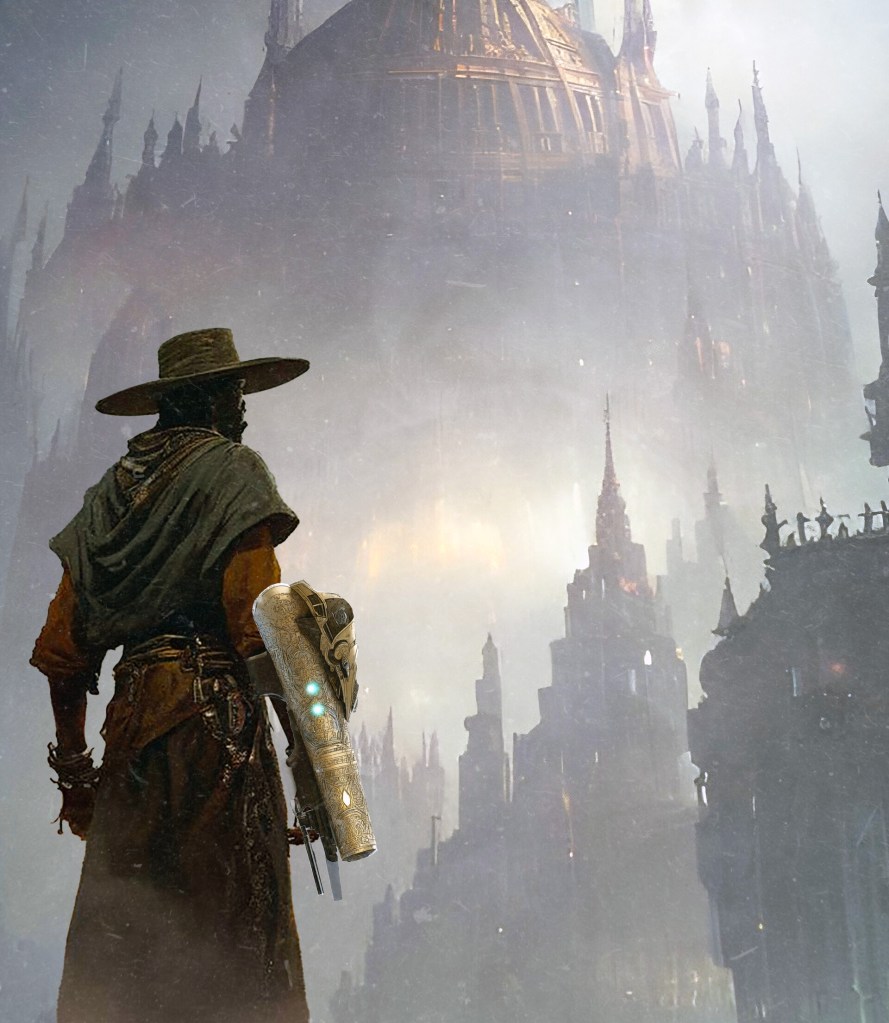
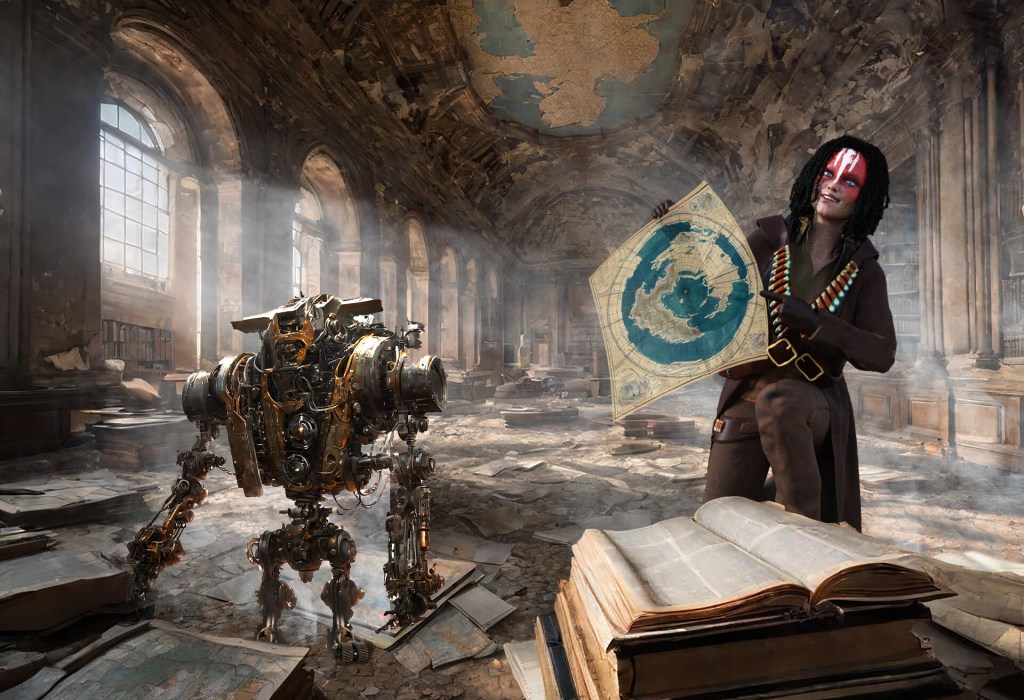
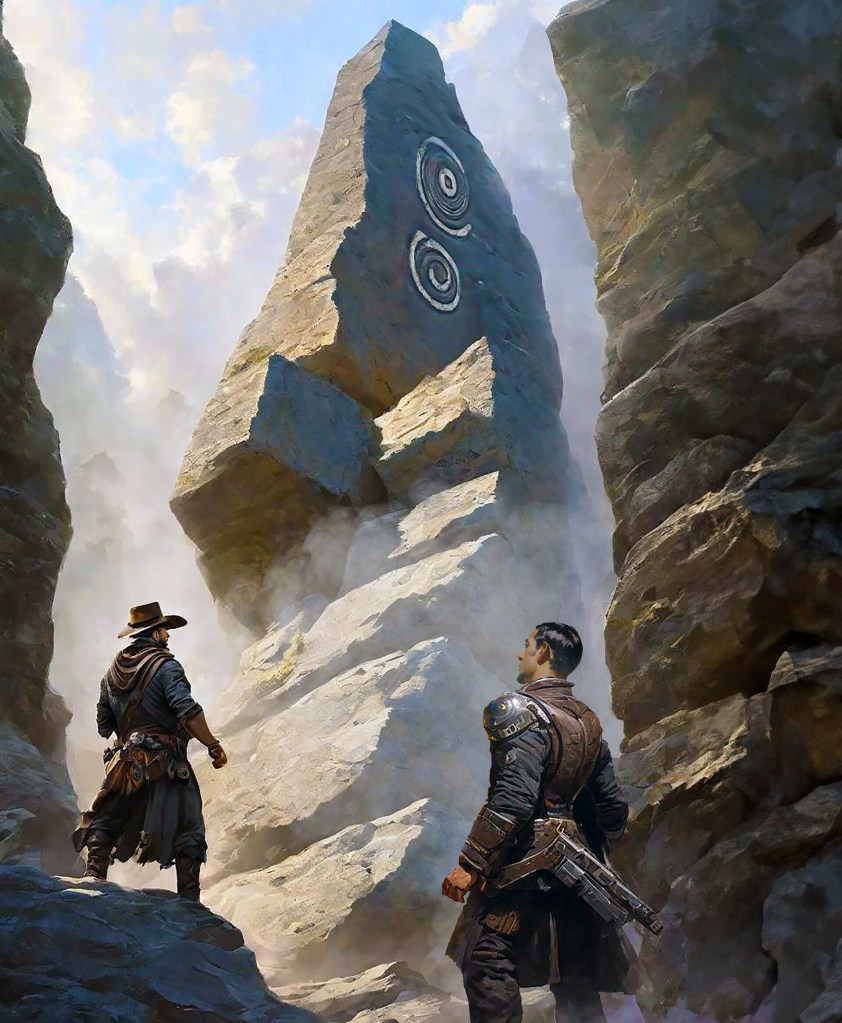
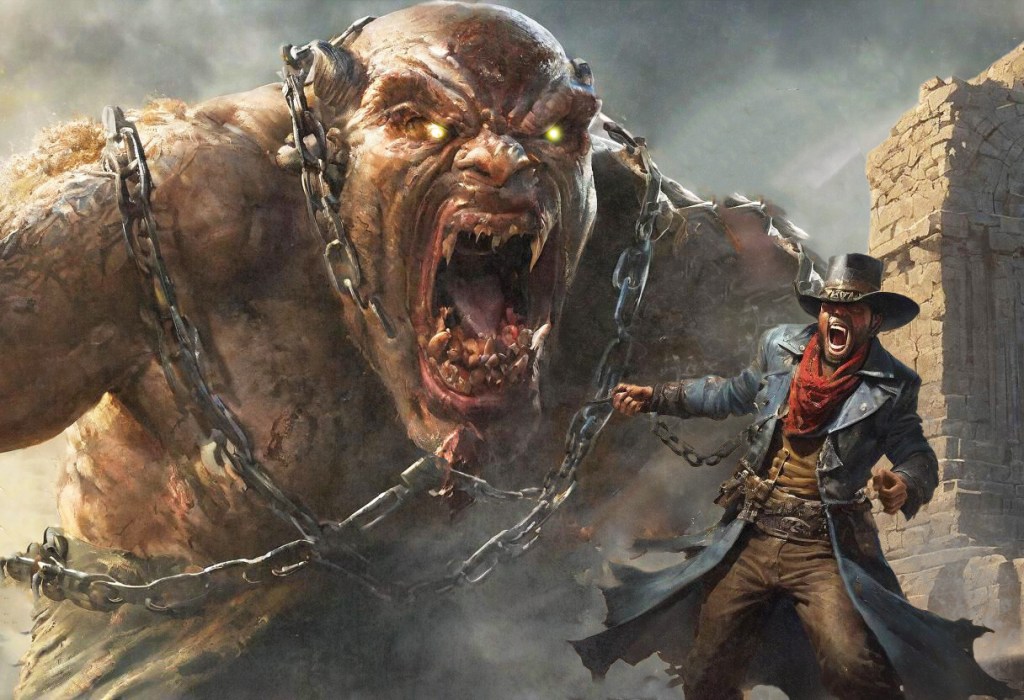
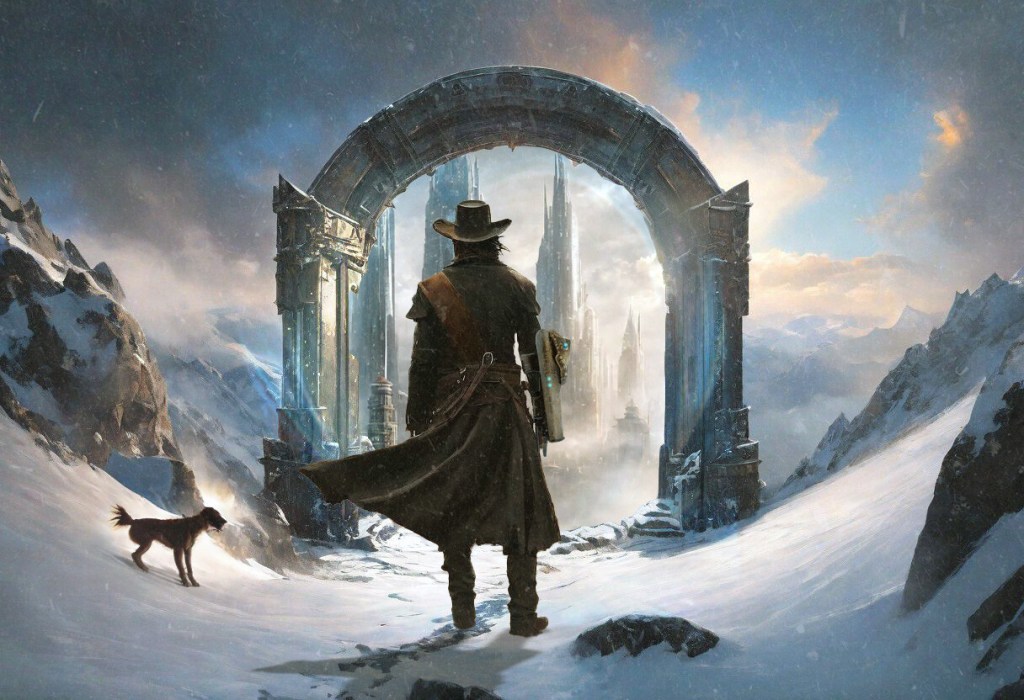
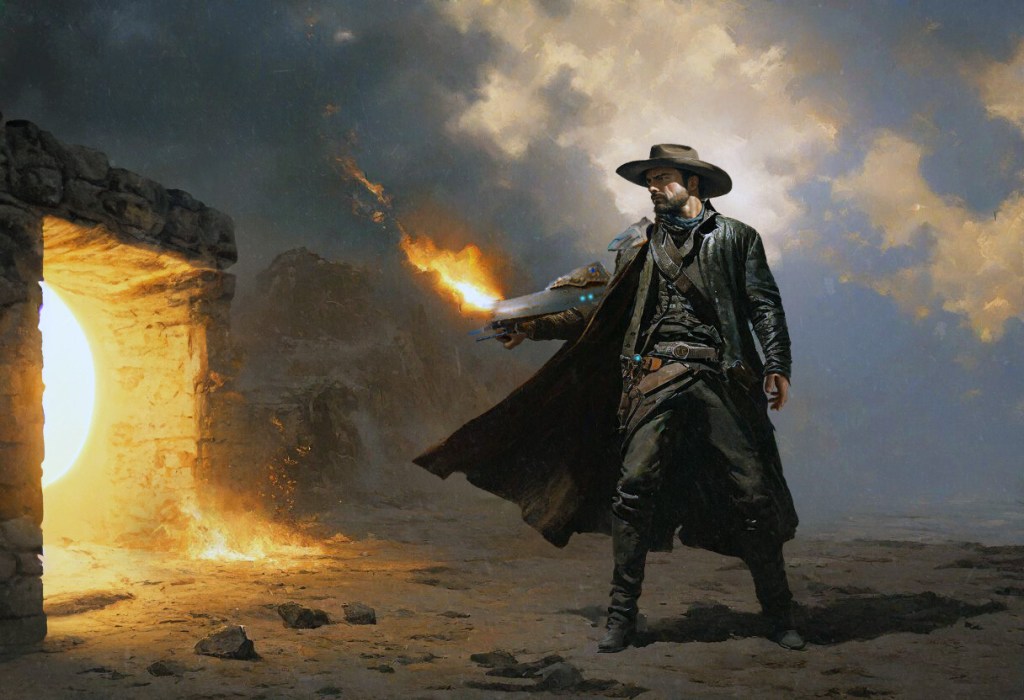
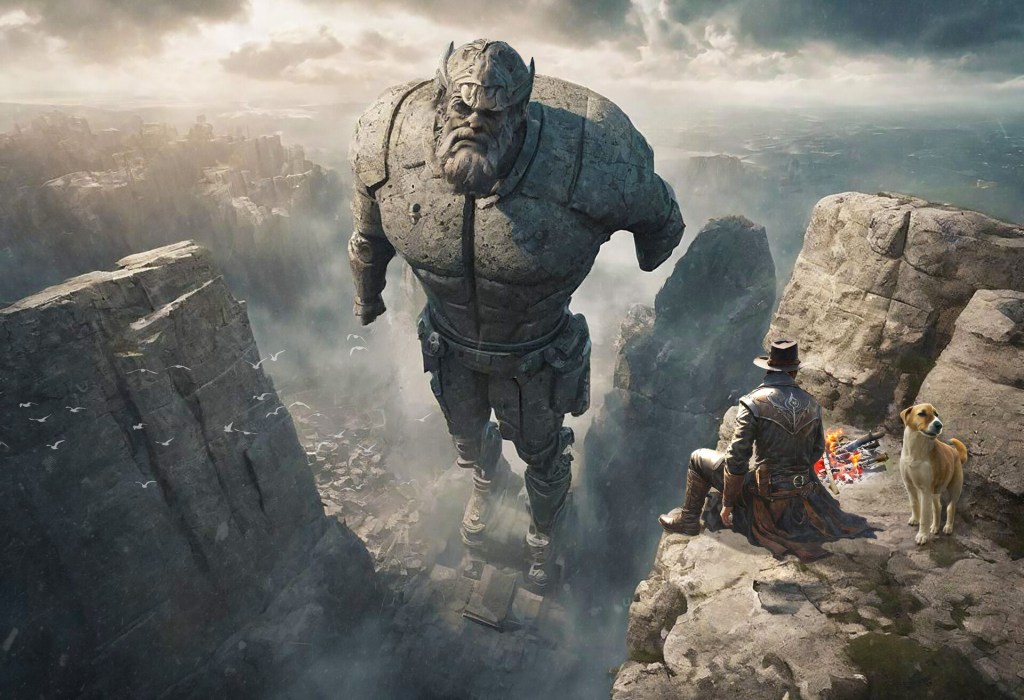
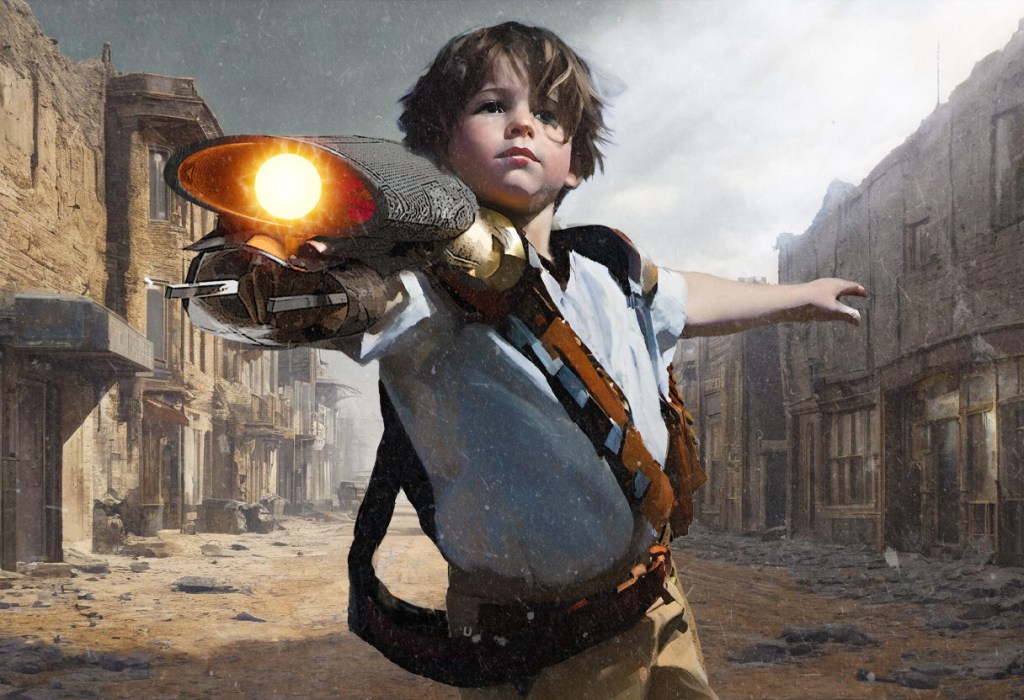
The images below represent the style of work I’m building these days, relying heavily on photobashing and concept art techniques (with folks like Imad Awan as my virtual gurus). The Grailrunner house design standard is semi-realistic digital painting with grungy overlay, western themed adventurers almost always carrying the signature weapon (a gauntlet-based plasma weapon that doubles as a shield in duels), exploring statue-riddled, software-haunted ruins with shimmering dimensional portals. We aim for vibrant or earthy colors, lots of smoke and grit, with implied stories (often illustrating flash fiction on Salt Mystic lore cards).

See the lot of them (and trace my hopefully improving style) at the Artstation account. Yes, I use AI-generated bits to composite exactly like I do with stock images but generally composite everything into something new and paint over them such that the transformation is meaningful and my own.

It gets the job done, at least I think. Still, I wish they were grittier. I wish they broke more new ground than they do. I envy the striking shapes and designs of a lot of concept art out there for cinema and gaming – the kind of images that stick with you even if you don’t know the context. Artstation is great for inspiration, but it can also crush your dreams if you compare yourself to anybody.

Mitchell Stuart, for example. Or Ricardo Lima. Or Raphael LaCoste. Or Greg Rutkowski. Or Ash Thorp. People like this are just on another level.

What’s prompted this reminiscence about bad art advice?

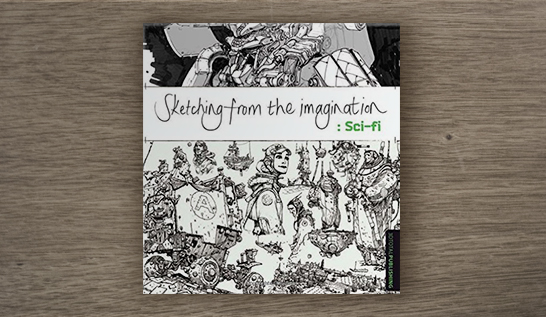
Well, I came across this book called Sketching From The Imagination: Sci Fi by 3DTotal Publishing. I wrote about it here. That was October, which seems like an eternity ago. I posed for myself the challenge of returning to traditional pencil and ink drawing in a sketchbook to push my imagination harder than ever before. The dream is to explore a blank page with loose shapes and vague ideas to summon phantoms into form and create groundbreaking designs and concepts. Then these wild new beasties and tech and colorful characters would then find homes in the fiction or game settings.

How’s that going?

Meh. I was so much rustier than I thought I was. I’ll share some pages here to embarrass myself and stay accountable to you for improving. We’ll get to that. But let’s talk about that advice.

When I was a kid, I filled scores of sketchbooks and countless backs of trashed dot-matrix printer paper my dad had brought home from work. Drawings of super heroes and sci fi vehicles and cities were my jam. Comic books were my main source of imagery, so everything I was drawing had bold outlines and underwhelming composition. The stories weren’t being told by the images in a self-explanatory way – I didn’t think about that sort of thing. I was alone a lot, so I didn’t share these with anybody, nor did I get any feedback.

Flash forward to one day in art class, Middle School I guess, the teacher strolled by to see whatever I was working on and stopped to say something about my approach that resonated with me. He pointed at the paper and said something profound:

“Real world things don’t have outlines. Draw what you see.”

It shook me. Hadn’t thought about that. Good point. So I gave it everything I had to incorporate his advice into how I drew. Back home, hovering the pencil over the paper, for the life of me I couldn’t figure out where or how to make a mark to start the drawing if you couldn’t outline it.

For this post, I looked through some old crates to find a particular drawing that would be humiliating to show but really staked the ground for when I began to turn away from drawing entirely. The picture in my head was a Dungeons & Dragons-style adventure party with a lady wizard, a swordsman, and an elf planning their next move on a morning beach with foamy, ripply water lapping at their feet. Maybe a dying campfire in the foreground with smoke rising in front of them. I couldn’t find it, unfortunately.

Anyway, it was horrid. Everything on the page was so light, you couldn’t even make it out. I was petrified to start drawing outlines again, and I couldn’t see how to force shadows and contrast to draw out the shapes. It threw my perspective. It threw my focus on their faces. It ruined everything. It was the last sketchbook I really did anything with until decades later, at least in any serious way.

Sounds bad. What’s different now then?

I get it now. Youtube changes everything, doesn’t it? Contrasting light and dark, the subtle use of textures, faking details, focusing and directing the viewer’s eyes across the image, and strategic use of busy and rest areas…I never went to art school. That all may be common sense to you, but it’s a glorious rainmaker for me to see all that in action artist after artist, listening to these marvelous and generous people draw magnificent things and explain their thought process as they go. Great time to be alive, isn’t it?

I travel a lot, so I keep an art pack and sketchbook. Pigma FB, MB, and BB brush pens, Staedtler pigment liners, a mechanical pencil, and some Graphix watercolor felt pens. Since October, I’ve put the practice time in almost every night at least for a half hour. It wasn’t a pleasant return.

The dream is to draw from imagination though: new things. What I’ve learned from artist after artist in their podcasts, Youtube or ImagineFX interviews is that drawing from reference is far more common. A lot of the guys you see on video drawing or painting have their reference images off screen.

Reference images! That wasn’t why I got into this gig. If I wanted a copy of an image, I’d take a picture. It was disheartening to me to hear professionals talk about light table tracing for their outlines…to see fantasy illustrators mash up references to form fantasy beasts – all of it copying what they saw. That was my problem back in the first place, right?

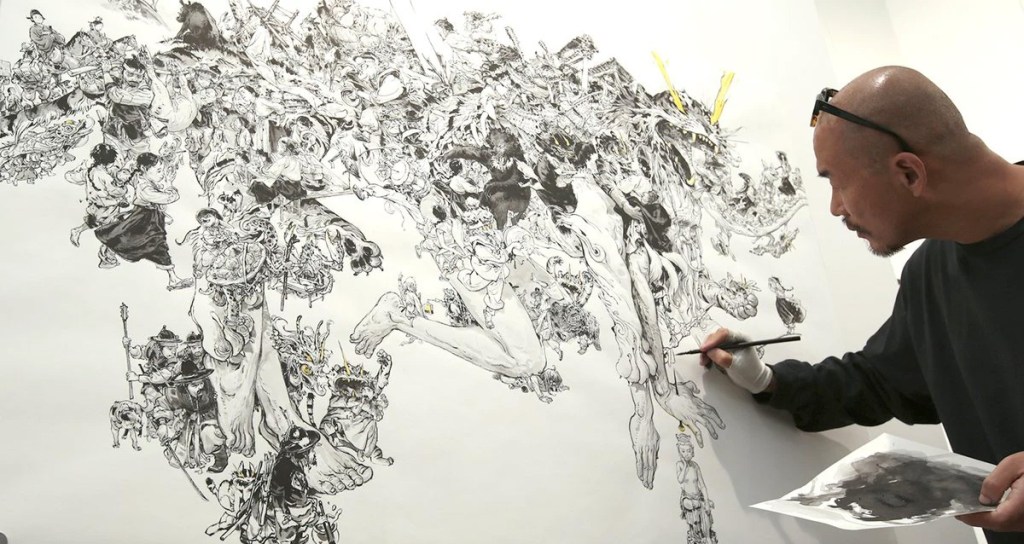
Then I came across this genius: Kim Jung Gi. Rest in peace.

Please google him if this flame of wonder is unfamilar to you. He drew from his imagination like a magical fountain spews sparkly fairies. He just walked up to paper and went nuts, drawing fish-eyed perspective, highly intricate intertwined figures, scores of objects and novel, distinct, and interesting characters at a high rate of speed and without slowing. How’d he do that?

That guy didn’t have any reference images. That’s what I wanted. I had to go deep to understand what he did right that I was doing wrong that could unlock this magic. Exploration on the blank page…finding ideas haphazardly that were uniquely my own…I wanted to bottle this magic for myself. How in the world did he get to the point he could do it so wonderfully. Then I heard him say it (through a translator):

“Don’t draw what you see. Draw what you HAVE seen.”

His point was you have to do the reference images and understand forms and shapes in three dimensional space before you can do what he did. He explained the lifetime of sitting in public places filling thousands of pages drawing what he saw and forcing himself to draw it from another angle. That was the key – he drew what he saw with a lifetime of practice, but still practiced summoning those images from his memory to try them from different angles.

He drew what he HAD seen. It was a big realization for me, this idea of examining the reference image – not just to get better at copying it, but to run your mind’s eye all over it in three dimensions to understand it better and to file that away to fuel your imagination.

Now THAT’s what artists actually do. They don’t copy. They understand.

I wish that guy was still alive. He was amazing.

Agreed. Now how about sharing your progress?

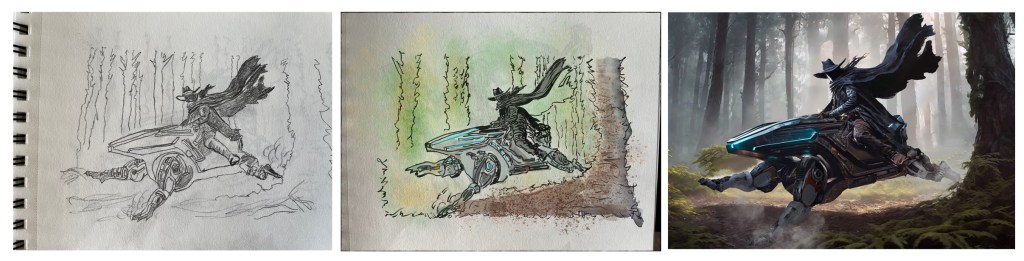
Ugh. Here you go. Don’t be judgey. Wish me luck that things improve. Go ahead. Click the book.

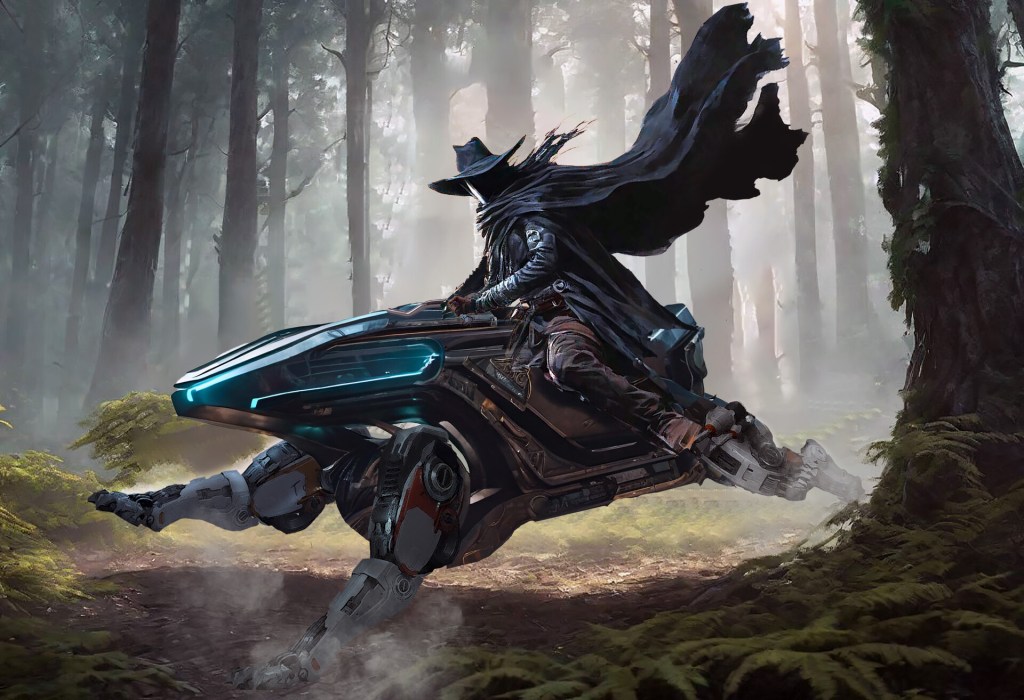
Ouch. I hope you don’t lose all trust in me, should you have had any. Photobashing is an entirely different beast than battling blank pages with a mechanical pencil. I’ll keep at it. The beast-shaped robotic vehicle in the header image was a minor victory in this experiment: called a “sporecutter”, it’s the first concept that’s come from the new approach that might actually make it to the fiction. Page 15 in the sketchbook file here is the front runner for the design of an important vehicle in the Mazewater: Master of Airships novel I’m working on. That’s another possible win.

That’s what I wanted to talk to you about today. I hope it was enlightening or helpful, should this be a journey you find compelling for yourself. Otherwise, I hope I still brightened your day a bit and made you think.

Till next time,

New Salt Mystic Lore Card Available For Free! Meet The Justice Engine.

I’m swimming with stuff I need to get down in the lore for the Salt Mystic universe. There should be more time in the day and less need to pay bills.

Anyway, here’s the background if you aren’t familiar with the original IP we’re building here at Grailrunner called Salt Mystic.

A unique blend of western grit and fantastical science! Step into a far future world where artificial pocket dimensions hide untold mysteries, gunslingers duel with ball lightning, and colossal armies fight for their very survival. Get ready to embark on a boneshaking adventure that will test your courage and set fire to your imagination!

Salt Mystic is an immersive experience that seamlessly weaves together the rugged allure of a wild western tale but with the boundless wonders of science fantasy.

Today, we’re introducing a new threat to this rapidly growing world called the Justice Engine, and we’re doing it with an exciting new lore card, available for download free now!

What is a Salt Mystic lore card?

Smash the Story Arcade button below to see a description and to access all of them, but basically it’s a distinct fusion of art and flash fiction on a single page to build (brick by brick) this expansive new world.

Oh, Grailrunner, what have you done now?

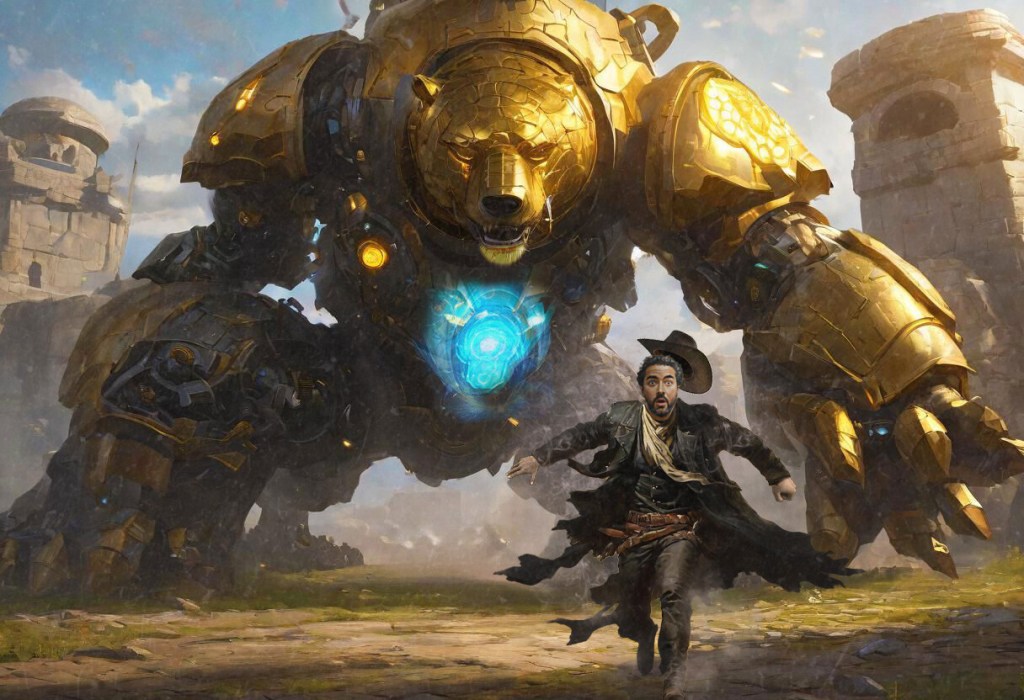
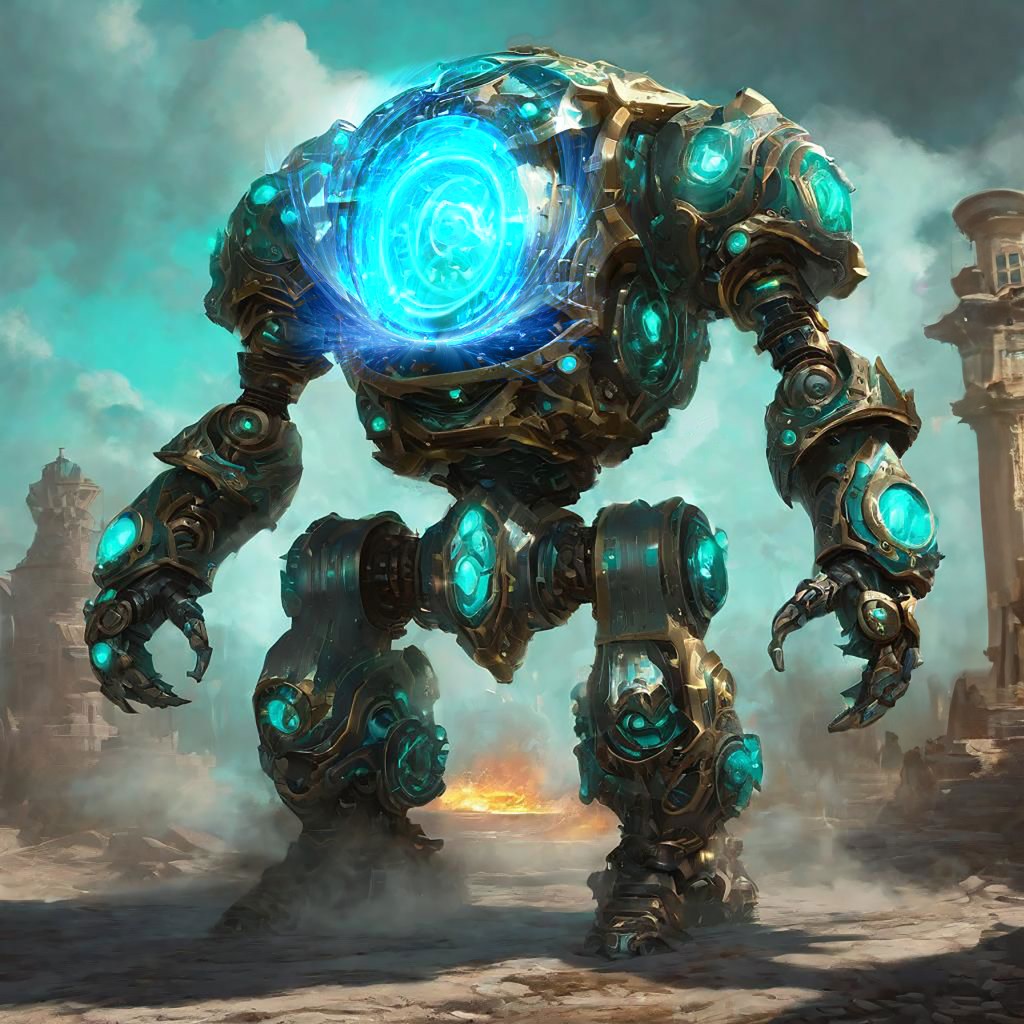
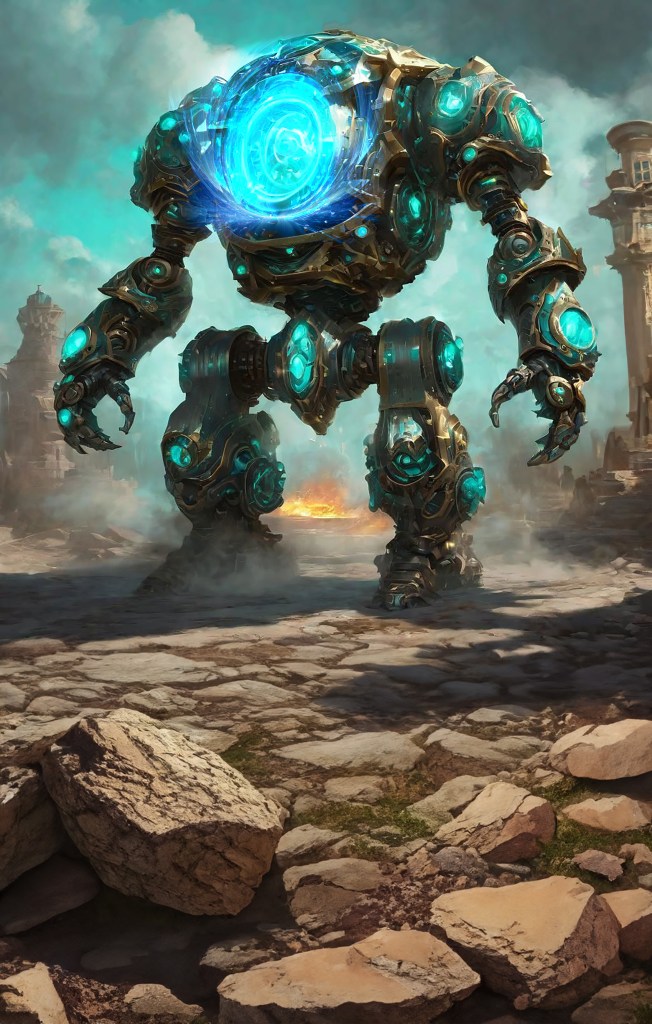
Oh, today’s a whopper! A doozie. A slam-fest to your noggin. It started with the art this time, and the vague idea of a wandering mechanical judge with a dimensional gate in its chest. You can see some of the image in the header and the full image below, though if you’re at all interested, why not just take a peek at the pdf in the Story Arcade?

The art is a photobash paintover, with the golem body itself AI-generated. I altered the background, mainly the tower on the right, and corrected some artifacts that came with it as well as added some clouds and sky. Then I added the rocky ground in the foreground to heighten the image for the card. The dimensional gate swirling was a handful of sparkly and lightning overlays in Color Dodge mode. The idea here is this thingie can just pluck you up and drop you into a pocket dimension should you be found guilty.

But it isn’t Robocop. I didn’t want some Hollywood-style robot going rogue with its own ideas of justice in a dystopian nightmare. There’s a twist to who’s doing the thinking with these and why they’re qualified to do so. There’s a reason they’re wandering these days, and it’s sad but maybe a little hopeful.

And all that is tied distinctly to the history of the Salt Mystic setting. I’m personally really proud of this one in particular, and I can’t wait to write it into something more ambitious.

Anyway, I hope you like it. Full image below and link to the new lore card here.

Please take a peek at the lore card – shouldn’t take you more than a minute or two to read the text and get the flavor of this new beastie. And let me know what you think!

Till next time,
A Gem From The Pulps: The Eyes Of Thar

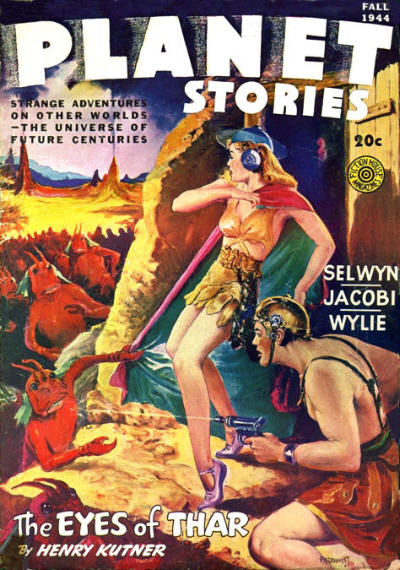
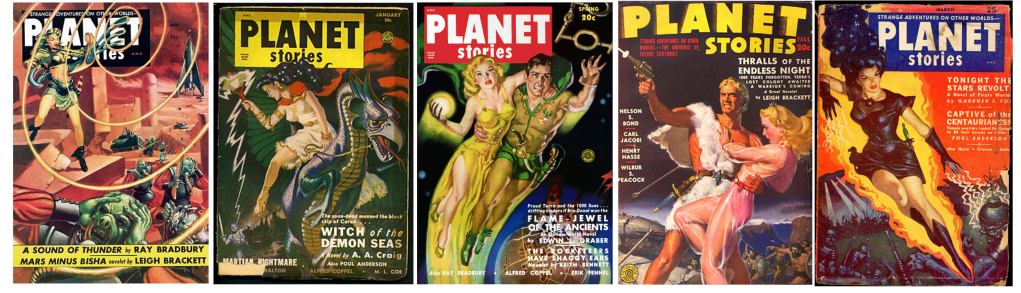
If life is a bit heavy these days, consider the starry-eyed wonder of the science fiction pulps of the 1930’s and 1940’s for a breath of clean air. One well I eternally find refreshing is Planet Stories, a pulp of substance that ran from 1939 to 1955 and which gave birth to many of the mainstream writers of the genre. Today, I want to bring you a low-key page turner of a short story from the Fall of 1944 that highlights the bold energy and high concept speculation typical of the time.

Welcome to Henry Kuttner’s The Eyes of Thar and our latest entry in the Pulp Gems series! (and yes, they misspelled his name on the cover)

Follow the link above to download the Fall 1944 Planet Stories (Kuttner’s story is on page 45), just to keep traffic flowing to the wonderful folks at the Internet Archive. Should you have any troubles with that, download it here.

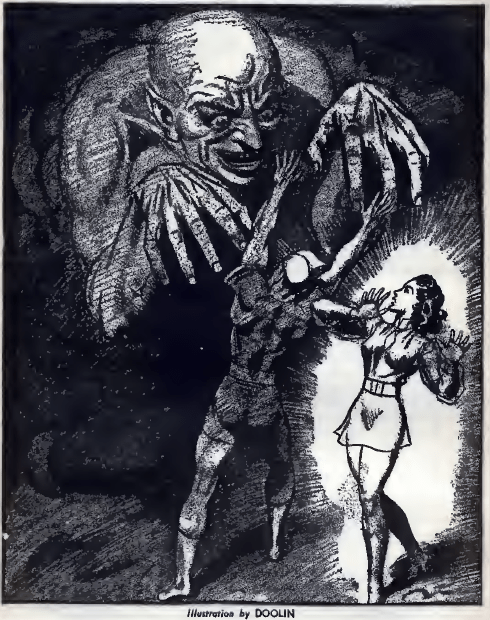
She spoke in a tongue dead a thousand years, and she had no memory for the man she faced. Yet he had held her tightly but a few short years before, had sworn eternal vengeance – when she died in his arms from an assassin’s wounds…

I really think some of those zingers from the tables of contents back in the day were wonderful! This one caught my eye with its dense and compelling mystery summed in those few lines: how was Kuttner going to explain a lady who was dead returning at all, much less one speaking a thousand-year old dead language? And this illustration by Joe Doolin that accompanied it – I was hooked before I started. If you’re unfamiliar with Doolin’s work, read up on him here.

Henry Kuttner co-wrote (with his extremely talented wife, C. L. Moore), one of the first science fiction novels I ever remember reading: Earth’s Last Citadel. I almost hate to re-read that one now, just because I have fond memories of it from then.

Anyway, our tale for today swings right into the action:

“He had come back, though he knew what to expect. He had always come back to Klanvahr since he had been hunted out of that ancient Martian fortress so many years ago. “

Samuel Dantan is a bloodthirsty terror to those on ancient Mars who had killed his lover years ago, returning to kill them mercilessly between bouts in the spacelanes.

“When Dantan came back to Klanvahr, men died, though if all the men of the Redhelm tribe were slain, even that could not satisfy the dull ache in Dantan’s heart.”

Unfortunately, the tables have turned on him this time, and he’s being hunted. In fact, it’s while he’s desperately on the run that he encounters a mysterious artifact in a canyon that has been exposed by a landslide. Climbing inside, he finds it to be an ancient laboratory, buried under the stream for maybe as many as ten thousand years. Then, locked inside and hiding from his pursuers, a familiar voice calls for someone named “Sanfel”…

At first, it’s just her voice speaking in the dead language of old Mars. Dantan knows it because his grandfather was a shaman and used it for ancient rituals. It’s the voice of his dead lover, for sure, though the mystery woman has no idea who he is. She, too is being hunted by nightmare beast-men of her own foreign universe. And she’s just as desperate.

There are different physics in her world, not only slower time passage but also things such as light and thought work very differently. The weapons and aid that Dantan promises her should they open the doorway between worlds would be useless to her. So she says, though he’s ready to die trying. Sanfel so many centuries ago was following her instructions to build a weapon able to help, but he was long turned to dust.

“No, Dantan, you speak in terms of your own universe. We have no common ground. It is a pity that time eddied between Sanfel and me, but eddy it did, and I am helpless now. And the enemy will be upon me soon. Very soon.”

So her beastly enemies are at her door in an unimaginably faraway universe even as the vicious thugs of Redhelm are at Dantan’s own. Somehow, it’s his lover, and she needs him. What can he do?

*

I’ll let you pick the story up from there, just to avoid spoilers. It’s maybe a half-hour read at most. Definitely worth it. Kuttner’s always great, and this one was a fresh take on Burroughs’ old Mars.

Planet Stories never disappoints.

I hope you liked the referral on this one. If you have your own gems from the pulps, feel free to let me know.

Till next time,
Riffing Ideas Like Stan Lee: The Marvel Method With AI

Assuming there is an afterlife, and that I get to hug three people of my choosing for just how wonderful they were and how much they impacted me, I’m thinking (today at least, the list changes):

  1. Robin Williams
  2. Pausanius (explained here)
  3. Stan Lee

Honorable mention to Nicholas of Myra since he was Santa Claus.

Let’s talk about Stan Lee for a minute, and the miraculous collaborative technique he popularized, in many ways pioneered in comics writing called “The Marvel Method”.

Listen to him explain it here.

The stories Stan used to tell of the old days of Marvel are truly fascinating and inspiring. His mom got him the job with a cousin (it was Timely Comics then). Pretty much all the adults quit or didn’t care and were never around the office, leaving him as a teenager who knew nothing about the business pretending everything was fine.

All manner of folks apparently went on business as usual with the in’s and out’s of the office, never really knowing the kid that was always in was the one basically running everything. As he matured in the business, and couldn’t keep up with the many writing responsibilities, he relied on what came to be called “The Marvel Method”, meaning he would provide an outline or maybe just an idea to the artists, and they would go nuts from there, expanding the basic plot thread into intricate panels of story without words.

Stan would take what they sent, whatever they sent, and add the dialogue and narration, riffing off what they had provided since he only knew the basics of the story. With geniuses like Steve Ditko and Jack Kirby to work with, he made magic.

Here’s what you might have seen, for example, sent in by John Buscema:

We’ve stated our position on generative AI tools here at Grailrunner before. Bottom line, although many occupations are threatened by this rapidly evolving technology, it isn’t going away. In fact, it’s a new industrial revolution. We believe tools like Stable Diffusion and ChatGPT have a place in the world, but see them more like stock image websites or reference or idea books.

Like George Lucas did back in the day with Ralph McQuarrie’s mind-expanding images, the art and the ideas can dance together and make beautiful new worlds.

What’s that got to do with Stan Lee?

There’s a new experimental generative AI program called AI Comic Factory hosted on huggingface here. Looks like this:

You select the style and layout, then enter a prompt. When you hit the Generate button, it lays out a set of comic panels based on your choices and entry that are impressive.

While I have no intention of packaging these up for our Salt Mystic line, it really is fun to describe some of the elements of our IP and see what looks like a Humanoids comic illustrated by Phil Gemenez pop up in a few seconds with interesting graphic elements that inspire more ideas to pursue.

Look at these to see what I mean. My prompts were variations of cowboys entering dimensional portals, stone golems (glowing or otherwise), beautiful fantasy cities and majestic airships, that sort of thing. All very much in line with Salt Mystic adventuring.

I’m drooling at this. It’s incredible how inspiring this can be! When I’m looking for descriptions for a character now, or costumes (which I hate describing), or an interesting perspective for a city, I can go back to these and dream.

Recently, I started playing with Actions in Photoshop to turn images to pen & ink drawings with the click of a button. I have a very nice gallery of ball lightning carbines now to drop in to whatever I’m working on. For the header image, I grabbed one of those, color matched and graded it after compositing it in. I cut it off to fit the panel so it would look like it belonged.

Then I grabbed a cartoon dialogue bubble from a Google search and used Comic Sans font in Photoshop to add the gunslinger’s words. Not sure what he’s pissed about, or who in that city is going to pay for it, but it sends my mind reeling.

Anyway, that’s what I wanted to suggest to you today. If you’re going to try it out, don’t forget to be respectful of the artists who worked on the images that trained tools like these, but don’t be afraid to collaboratively build something new with them either.

Let us know what you think.

Till next time,
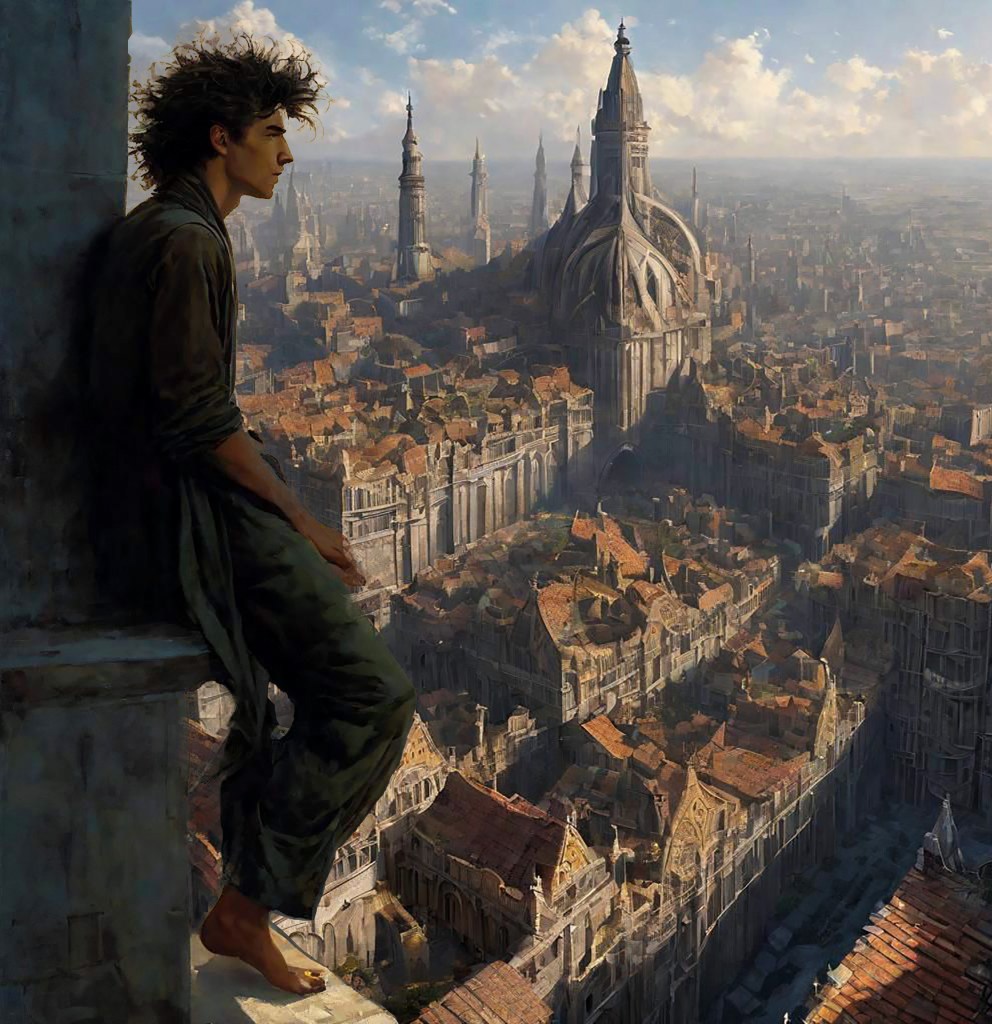
New Salt Mystic Lore Card Available For Free Now: “Chimera”

One of the most exciting things we do around here at Grailrunner is introduce new bits of the lore of our Salt Mystic setting in the form of Lore Cards. A fusion of art and short fiction, it’s an important mechanism for us to introduce and test these mini-expansions of concepts that will wind up ultimately as game cards or in the books or stories.

You can download any or all of the Lore Cards here at the Story Arcade.

A product we have heavily active in development right now is a bibliomancy-based oracle book for roleplaying in the Salt Mystic universe to be called The Augur’s Book Of Lots.

In order to bring that to life, all manner of new encounter types, new places, and historical figures and their stories are needed. It’s an incredible, life-changing experience for me personally to explore all that and watch it unfold like a big, crazy flower, and I can’t wait for you to see it. Seriously, this whole world is building itself and waiting for you to slide a ball lightning carbine on your arm and take a cautious step through the gates…

Today, we thought we’d introduce you to a new exciting, and sometimes terrifying, addition to the world of the Salt Mystic: the chimera.

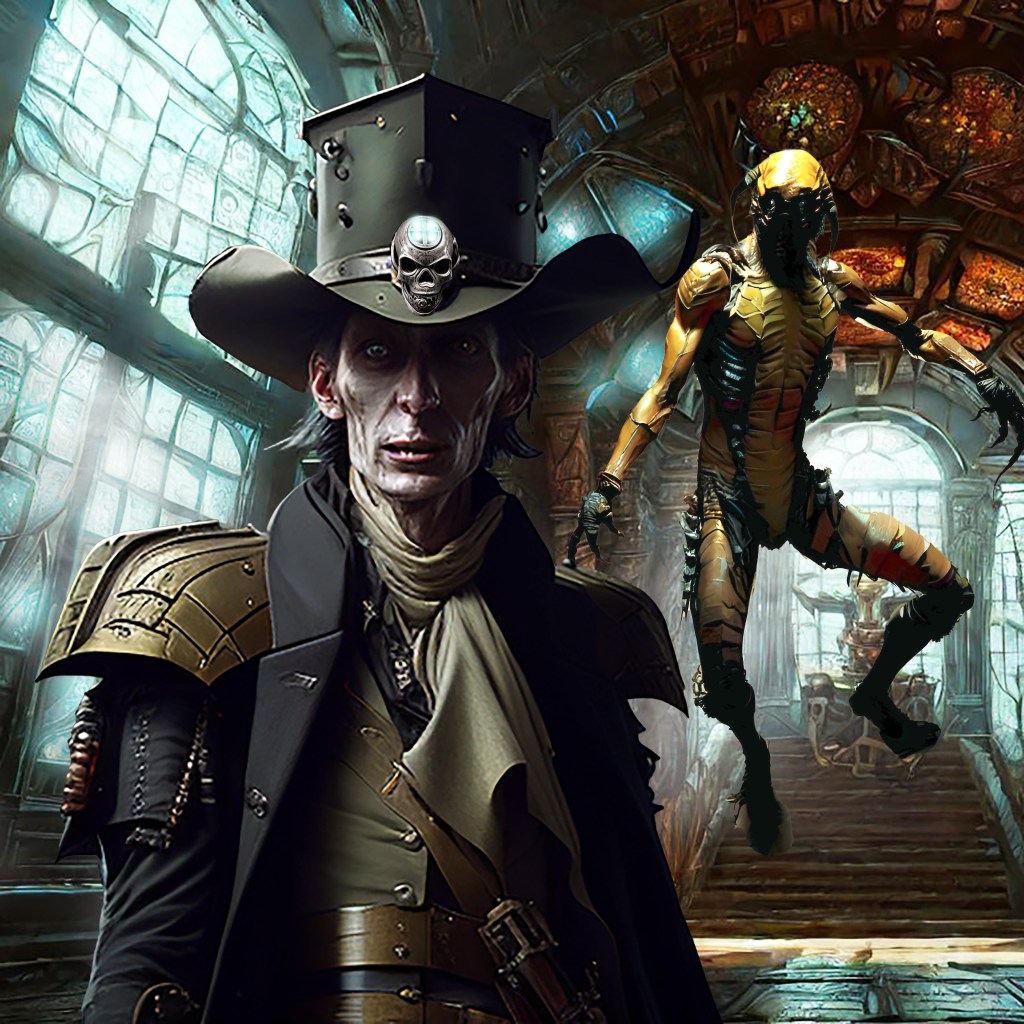
The sneaky fellow leaping on our hapless narrator today is part man / part scorpion. In the oracle book so far, we’ve met countless hybrids like this already, though this particular combination freaks me out the most.

Download the new card here

As for the art, as always it’s a paintbash with the heavy lifting done in Photoshop. In this case, the bounty hunter, the skull on his hat, the backdrop, and the scorpion-man were all drawn from various iterations of Stable Diffusion or Wonder, with heavy correction and repair. I discovered the ‘puppet warp’ in Photoshop, which is my new favorite trick!

After compositing them together and color grading everything, I added some Stock nebulosity overlays from Nucly to make the diffuse smoke around the windows, blending them in Screen mode. The positioning of the scorpion-man was tricky – it made more sense for him to be creeping around behind our clueless bounty hunter, but the more I looked at him in mid-air, the creepier and more interesting I found it to be.

I wanted the skull on the bounty hunter’s hat to glow, so that along with the window glow was just some soft brush painting in Color Dodge blend mode.

Anyway, we hope you like the final product. Let us know what you think, and please check back periodically for updates on the stuff we’ve got cooking.

Till next time,
“Jeweled Warriors In The Merchant Wars” – Free New Salt Mystic Lore Card!

Grailrunner is excited to announce the latest addition to our growing Salt Mystic Lore Card set: “Jeweled Warriors In The Merchant Wars”. Download it for free here!

Welcome to the Grailrunner Story Arcade!

If you need to know a bit more about what we’re doing with Salt Mystic, feel free to check this out here.

In the Salt Mystic Sourcebook And Core Rules, we define seven different ages into which the long history of this setting is divided. The brief snapshots there allowed us to drop maddening hints of some intriguing twists and adventures that occurred thousands of years ago, but we never really get the chance to dig in to those earlier time periods. Maybe one day these will all be their own novel series or art lines – but for now, we’re in the Guardian Age, man. It’s enough work bringing that to glorious life!
So this new lore card was a chance to flesh something out that I thought was interesting. There’s already a guy named Murmur in the Salt Flats character cards that has an Artificial Intelligence sprite inhabiting his armor that we’ve always thought was funny. This lore card was where we go big with that.

Horrifyingly big.

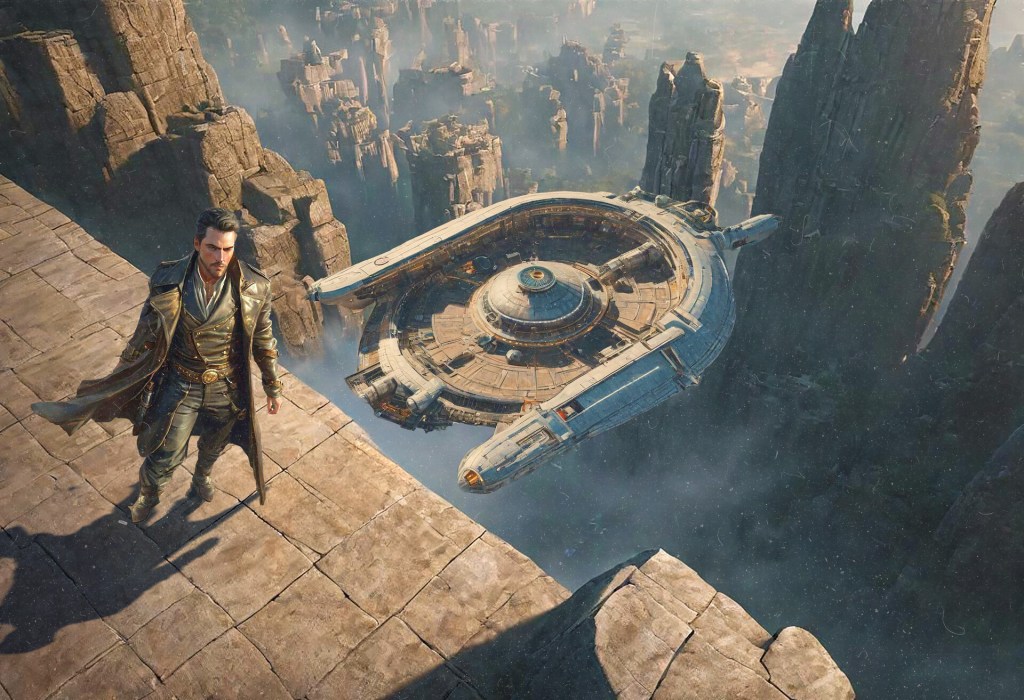
As for the art, as always it’s a photobash and paintover of some different elements pulled from a few sources. The background is an AI-generated image of a battlefield. The warriors’ jeweled armor was inspired by Grant Morrison’s 18 Days art book (which accompanied the web series), based on the storyline of the Mahabharata. The carbine was built in Blender as a 3d model, textured with a steel plating from Textures.com. The ruby faceplate of the guy turning on his general was taken from a freely available png – literally just googled “ruby gemstone” or something like that.
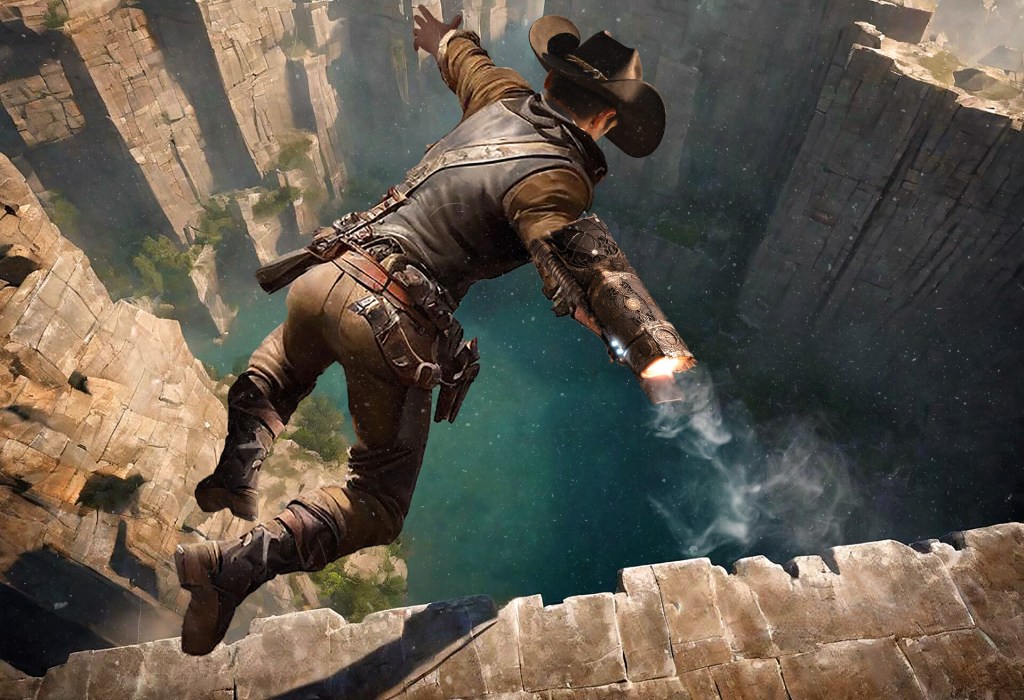
I especially love the way the smokey flames turned out, spewing from that fellow’s gauntlet-based plasma weapon. There are at least three overlays on that, all from Nucly. I wanted it to seem like he’s firing that weapon up, and his general has just now realized that he’s stepped over some kind of line.

Anyway, we hope you like the art piece and accompanying flavor text. Let us know what you think.

Till next time,